A fascinating reading list of the work by Armenian women writers. Reblogging from Anahit of Erebunis, “an online platform that aims at celebrating the strength, resilience and wisdom of Armenian women in order to give them the place they deserve in our history and the knowledge of our common heritage and culture.”
We congratulate our own Yelena Furman on her first ever fiction publication. Her story “Naming” appears in the Fall 2019 issue of Narrative Magazine. It centers an immigrant protagonist — Sofia, Sonia, Sonechka — who moves back to Moscow in 1992 for a job copyediting “one of the many publications springing up in the newly liberalized atmosphere now that the Soviet Union had collapsed.” This is a delightful tale of search for identity, romance, a connection with the place, and, of course, books.
The story is available online after a free registration to the website. If it resonates with you, please leave a comment on the website, write back to us or to the author directly. Publishing short stories can be a lonely business, and the most effective way to support a writer is to comment on the work you love.
From early on, the most significant episodes of my life were bound up with books. I was reading Eugene Onegin when we left the Soviet Union, The Seagull when I lost my virginity, and the Russian realists when I fell in love, a process that spanned several authors. I was in my last year of college, in 1992, when I met Daniel, a graduate student. I caught him looking at me during our first class meeting for a seminar on nineteenth-century Russian fiction. He didn’t look away when I met his stare, which betrayed too much self-confidence on his part yet was oddly intriguing. We didn’t speak, but for the next few weeks I would continually feel his bright-green eyes on me. Daniel’s eyes were his most striking feature; they had the ability to bore into you with an unearthly intensity and leave you feeling as though you’d just been seen through to the inside.
When: Monday, November 25, 2019 at 6:30 PM – 9 PM Where: Alley Cat Books, 3036 24th St, San Francisco, California 94110
This reading gathers together translators, writers, and scholars whose writing is connected, in various ways, with the literatures of the former Soviet Union.
We’re grateful to the Association for Slavic, East European, & Eurasian Studies that’s hosting its annual conference in San Francisco this year, which has allowed us to put this reading together with participants from across the United States.
A participatory reading means that, in addition to the announced readers, we’ll have a first come first served sign-up sheet for people who want to speak up and introduce their projects. We ask that each participant limits their reading or presentation to five minutes.
We’re delighted to have: Olga Breininger with her book There Was No Adderall in the Soviet Union Shelley Fairweather-Vega with A Life At Noon by Talasbek Asemkulov Yelena Furman with her story “Naming” from Narrative Magazine Wayne Goodman with an excerpt of his novel-in-progress Borimir: Serving the Tsars James Kates with Aigerim Tazhi‘s poetry collection Paper-thin Skin Maggie Levantovskaya with her essay “To Conjure Up the Dead” from Michigan Quarterly Review Dmitri Manin with translations of Nikolay Zabolotsky‘s Stolbtsy Masha Rumer with her book Parenting with an Accent: An Immigrant’s Guide to Multicultural Parenting Sasha Vasilyuk, with her novel in progress about a Soviet prisoner of war Mary Jane White with Marina Tsvetaeva translations Olga Zilberbourg with stories from her collection Like Water and Other Stories Josie von Zitzewitz introducing Russophone Literature by Young Writers
and more! Please reach out to puncturedlines [at] gmail.com if you want to be a part of this.
Jorge Ferrer and his English translator Jacqueline Loss, writing for World Literature Today, offer us an interesting glimpse of Svetlana Alexievich’s reception in Spain. Ferrer was born in Havana and now lives in Barcelona and translates Russian-language writers, including Svetlana Alexievich, into Spanish. I love knowing that a character from Secondhand Time has a life of her own on the stage of a Barcelona theatre.
I’m just going to simplify the problem for us to understand: (1) A Belarusian writer who operates by means of a method usually called “novel of voices” includes in a book a woman’s testimony; (2) An actress reads that testimony in Spanish translation, falls in love with the witness, takes that text to the theater, and constructs, in a parallel manner, a life in the real and digital worlds; (3) The actress asks the translator of the original text into the language in which she represents the character to write a new monologue for the witness, that is, to take her out of the realm of reality and transport her into fiction—from being a person, to turn her into a character and, instead of translating the life transcribed for her, write a future life for her.
Beyond the encounter with Alexievich herself, Ferrer takes us on several delightful tangents in this essay. This piece feels particularly appropriate this week, when we’re celebrating the 30th anniversary of the fall of the Berlin wall.
When: Saturday, November 9, 2019 at 7 PM – 10 PM EST Where: Java’s Cafe, 16 Gibbs St, Rochester, New York 14604
Join us for a lively evening of stories, poems, and performance art by nonconformist writers from the former Soviet Union, in English.
Olga Livshin‘s book A LIFE REPLACED braids together poems on immigration in America with translations from Anna Akhmatova and our contemporary Vladimir Gandelsman, winner of Russia’s highest award for poetry, the Moscow Reckoning. Many poems are responses to these two voices; some are stand-alone works. Maggie Smith comments: “Livshin, who immigrated to the US from Russia as a child, acknowledges the two Americas she knows firsthand: the one that fears and demonizes, and the one that welcomes. A LIFE REPLACED is astonishingly beautiful, intelligent, and important.”
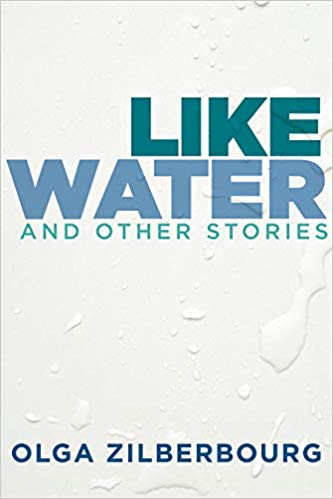
A graduate of Rochester Institute of Technology, Olga Zilberbourg will introduce her English-language short story collection LIKE WATER AND OTHER STORIES. “The thread connecting these tales,” Anna Kasradze writes for The Moscow Times (ed. Michele Berdy), “is each protagonist’s attempt to come to terms with an identity that is always in flux, transitioning between various contexts such as emigration, motherhood, partnership, and employment.” Olga is the author of three Russian-language books (the latest of which “Хлоп-страна,” Издательство Время, 2016). She has published fiction and essays in Alaska Quarterly Review, Scoundrel Time, Narrative Magazine, Lit Hub, Electric Literature, the San Francisco Chronicle, and elsewhere. She co-moderates the San Francisco Writers Workshop.
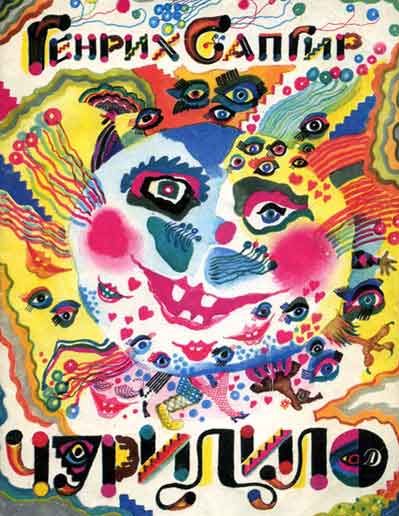
Opening for the two Olgas is a poetry performance by translator Dmitri Manin. Avant-garde sonnets by Genrikh Sapgir will be presented on shirts, worn by both Olgas and Dmitri. Sapgir (1928-1999), a hugely acclaimed poet in Russia, first presented his philosophical and funny Sonnets on Shirts–on actual men’s shirts–in 1975. His performance made a sensation amidst an atmosphere of official, staid, highly traditional, print-only Soviet literature. Manin revives his work and re-enacts it in English, using contemporary bodies and presences to channel Sapgir.
Java’s–a ten-minute walk or three-minute Lyft drive from the Floreano Convention Center–will have food and drink for us to regale us into the night with literature and pleasure.
In May, Zephyr Press and publisher and translator J. Kates brought to us a collection of poetry by Aigerim Tazhi, a writer who lives in Almaty, Kazakhstan and writes in Russian. According to the Press’s announcement, “Fish, insects, birds, the sea, the sky, humans seeking connection, and death figure frequently in these succinct poems, as do windows, mirrors, and eyes: these are poems of observation and deep reflection. Tazhi gently insists that we look at words and the world “in the eye,” as she seeks to create what translator J. Kates calls a “mystic community of communication.”
A beautiful bilingual book, produced with care and attention to white space around the poems, Paper-Thin Skin speaks to layers of loss–from personal and private to the loss of the country (I read these poems in the post-Soviet context) to climate change and the loss of habitats.
Translating Tazhi to English, Kates makes carefully weighted choices for clarity. In the example below, he changes the poet’s line “Чёрным вестям из нечёрного ящика” — literally “Black news from the not-black box” to read “At dark news from the bright box,” making sure that the English-speaking reader will understand the image of television. He makes this change with attention to the rhetoric device that the poet employs and finding an opportunity to create a sense of parallel and contrast in the image.
There has been a lot of talk, including on this blog, about literary prizes, translation, and gender imbalance. The Russian Booker Prize is one of the country’s most prestigious awards. The writers in the title have had their winning novels translated into English, and there is also a list of other winners whose novels haven’t been translated but with links to their translated shorter works. Of the seven writers in the title, three are women: Ludmila Ulitskaya, The Kukotsky Enigma (2001, trans. Diane Nemec Ignashev); Olga Slavnikova, 2017 (2006, trans. Marian Schwartz); and Elena Chizhova,The Time of Women (2009, trans. Simon Patterson and Nina Chordas; my review here). But no prizes for guessing whether this relative gender balance holds true for the Russian Booker overall.
We love to see the growing momentum for the conversation about gender in translation. We particularly love to see how creative these initiatives have been.
A New York City group is starting up Jill!, a bimonthly Women+ in Translation reading series that spotlights women or nonbinary translators or translators of women or nonbinary authors (or both!).
The inaugural reading will take place this coming Wednesday, October 30th, at 7 pm. Location: Pen and Brush. 29 East 22nd street, New York, New York 10010.
The readers will be: Charlotte Whittle, reading work by the mid-century Argentinian avant-garde novelist and poet Norah Lange; Hilah Kohen, reading from a narrative poem by contemporary Russian author Lida Yusupova; and Larissa Kyzer, reading an excerpt from the novel A Fist or a Heart by Icelandic poet, playwright, and novelist Kristín Eiríksdóttir.
I am a recent convert into the world of podcasts. Once I’d heard a few New Yorker Fiction Podcasts (highly recommend) and the Paris Review podcasts and the Kenyon Review podcasts, among others, I started looking for Russian literature podcasts.
Castbox, the app that I use to listen, turned up very little when I searched for “Russian Literature” in English — well, it turns up audio books from War and Peace to Memoirs of a Revolutionist. Russian-language search connected me with Radio Mayak and Evgeniy Stakhovskiy who, on his podcast Chtenie (I’m transliterating Russian titles for this English-language blog) reads short fiction in Russian. Most often, these are works by foreign authors, from O’Henry to Hu Bo to Herta Müller, in Russian translation. Not exactly what I was looking for, but fascinating nevertheless. I’ve become a dedicated listener and am loving this exposure to world literature through the short form.
Of course, I wanted more and reached out to the Russian Literary Twitter community for their recommendations. Michele Berdy of The Moscow Times sent in this list of podcasts:
Арзамас — Radio Arzamas provides a seemingly inexhaustible list of cultural topics, only some of which are directly related to literature. Here’s a link to their intro to literary theory.
Полка — Polka is a project by literary critics Yuriy Saprykin, Varvara Babitskaya, Lev Oborin, and Polina Ryzhova and defines itself as a podcast about the way literature is connected to life, in its everyday challenges and existential dilemmas. I’m yet to listen, and look forward to it.
Ковен дур — Coven dur — starting from the title, this podcast seems to be very much of the contemporary, millennial approach to literature. It’s a podcast by four female authors, Kozinaki, Spashchenko, Stepanova, and Ptiseva who work in the mode of “literary standup.” I haven’t tuned in yet, but am very excited to check it out.
Читатель — Chitatel. This podcast is hosted by Bookmate, an ebook reading app with a subscription service. The host, Pavel Grozny, invites guests from different walks of life (often book industry related) to talk about the books that have changed them. I have listened to a few episodes and have enjoyed them a great deal. This podcast gives me a glimpse into a whole different Russia (Moscow?) that feels open and connected to the global marketplace of ideas and trends. I particularly enjoyed Grozny’s conversation with Sasha Shchadrina, who started a No Kidding feminist reading group and writing seminars Write Like A Grrrl Russia. So inspiring!
(Apparently, there was also a Чтец — Chtets podcast, by Radio Mayak, that featured a colloquial reading situation, a host reading a story to a friend in the recording studio. It looks like they no longer record regular episodes. I’ve listened to a few and found them engaging.) (In Russian, chtenie means to read, chitatel is the person who reads, and chets is the same thing except usually it means the person who reads out loud in public settings.)
I’m sure this list is not exhaustive. If you know more Russian lit podcasts, send them my way, and I’ll follow up on this post soon. BTW, anyone wants to start a contemporary post-Soviet lit podcast in English? There seems to be an opportunity out there!
Thank you, as always, to Lisa Hayden of Lizok’s Bookshelf for keeping us all up to date on prize-related announcements. We are happy to share the list here, particularly as it contains her very helpful, and entertaining, descriptions of the nominated works. Less happy is the subject we’ve talked about previously on this blog (and which, in the wake of the Nobel, some of us have debated in a – let’s go with “spirited” – manner on Twitter): of the sixteen titles, only three are by women. While no one in their right mind would suggest that gender should be the sole criterion for anything, really, there is a real issue with Russian literary prizes being overwhelmingly skewed toward male writers (googling the major award winners will confirm this in short order). This is not meant as a slight to any of the men on the list, but it is a question that needs to be asked, over and over, until we arrive at a workable solution: how do we honor good writing whoever the writer may be while at the same time ensure more balanced representation in terms of nominations and winners? Suggestions welcome; perhaps someone can forward them to the Russian prize committees.

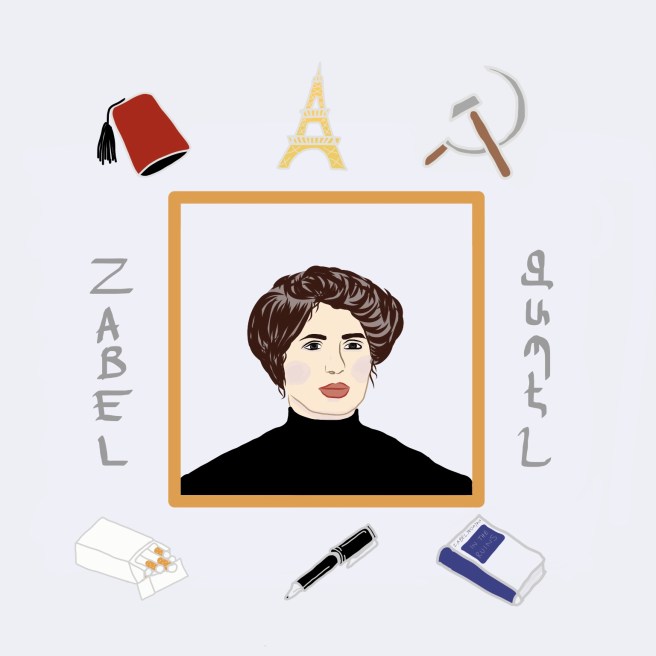 Zabel Yesayan, @anahitoferebuni, originally for ARMAT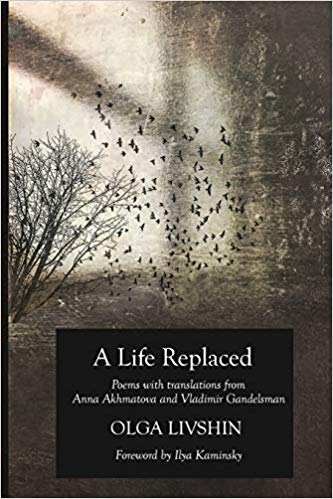


 Punctured Lines