Evgeny Shtorn, a writer, activist, and scholar, was born and raised in Soviet Kazakhstan and later lived, studied, and worked in St. Petersburg, Russia. His LGBTQ+ activism made him a target of Russia’s intensifying state-managed homophobia, and in 2018, Shtorn was forced to leave the country. A human rights organization helped him obtain a visa to Ireland, where he received refugee status. As a refugee, Shtorn entered the system of “direct provision” that funnels asylum seekers in Ireland through a series of dormitory-style housing centers. Deprived of the right to work, surviving on basic assistance, and repeatedly questioned and probed by government bureaucrats, Shtorn was forced to share his personal space with strangers, often with incompatible backgrounds.
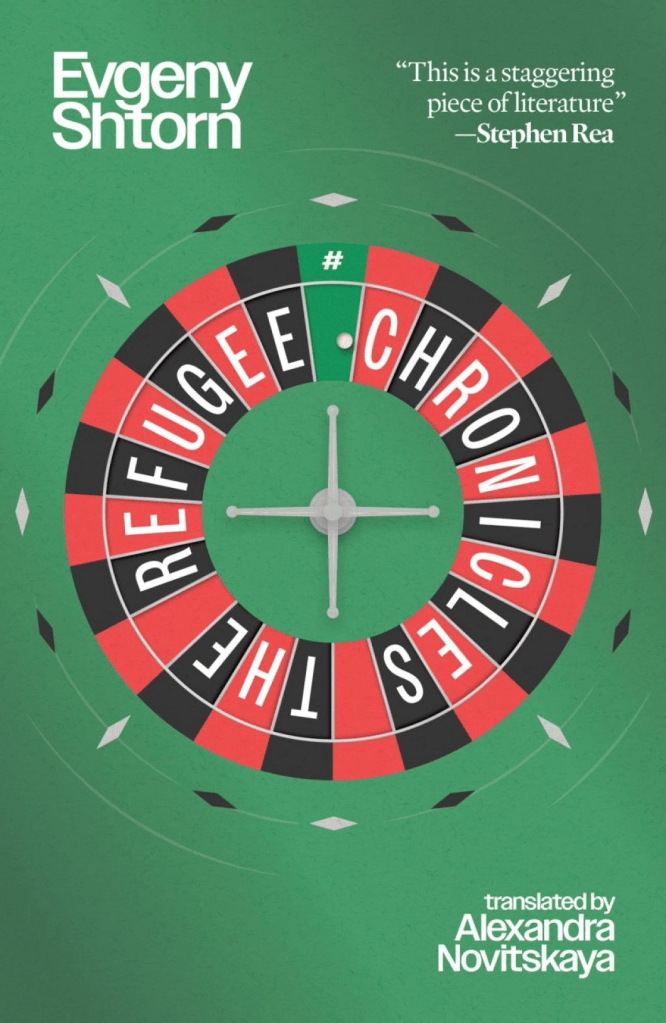
Shtorn began writing The Refugee Chronicles (Skein Press, 2026) as a series of Facebook posts and letters to friends, his way of coping with dehumanizing, at times terrifying and bewildering situations that this life under direct provision entailed. Two years later, he collected his diary-style notes and rewrote them as an autobiographically informed novel that first appeared in Russian in 2020 under the title #хроники_беженства. In the introduction to that edition, Masha Gessen (now M. Gessen) wrote: “Refugees neither see nor understand their surroundings, and they are themselves invisible to the locals and, often, to fellow refugees, because human beings are unable to understand that which they don’t know. This invisibility particularly affects LGBT refugees, as the author affirms again and again” (transl. OZ, original: “[Беженцы] не видят и не знают ничего вокруг себя, и сами они невидимы для окружающих и зачастую друг для друга, ведь мы не способны увидеть то, чего мы не знаем. Для ЛГБТ-беженцев это правда вдвойне, и автор убеждается в этом вновь и вновь.”)
We are grateful to translator Alexandra Novitskaya and Skein Press, founded in 2017 to publish “thought-provoking stories not commonly featured in the literary arts in Ireland,” for bringing us this delightful and unexpected book. They ensure that Shtorn’s work will continue finding its worldwide audience even as the Russian government has doubled down on homophobic censorship laws, forcing publishers and bookstores to remove books on LGBTQ+ topics from their lists.
Read the excerpt below, order the book, read and review. These actions help support independent literature and vibrant intellectual culture.
The International Day Against Homophobia: An Excerpt from Evgeny Shtorn’s The Refugee Chronicles, translated by Alexandra Novitskaya
I was walking back to the camp. It was well past midnight, the buses had stopped running, and I’d nobly pocketed the thirty euros meant for the cab. As it was the International Day Against Homophobia, I’d spent the evening with a friend of mine from Dublin – the first person to invite me over for dinner – and I was more than a little tipsy. We’d had a lovely chat, polished off a bottle of wine and then decided to sample the gin that had clearly been gathering dust on her top shelf for some time. It turned out to be so deliciously aromatic that we couldn’t deny ourselves the pleasure of polishing it off too. The night ended, predictably, with mutual declarations of brotherhood and sisterhood. She offered me the sofa, but I declined and set off in the middle of the night for the outskirts. The streets and buildings quickly gave way to stretches of waste ground, as I sang out loud, ‘How can it be that I, surrounded by three streetlights . . .’1
To get to my building I had to walk past a tiny makeshift laundry with washers and dryers. Some people, especially people who would work during the day, had to do their washing at night. As I was passing the laundry, I heard, ‘Heeey, Russiaaaa, Russiaaaa! ’ It was the Albanians.
I must have been swaying a little – though I didn’t notice – because Otzen, the only one who spoke English, asked, ‘Are you drunk?’
I admitted that I’d been to see a friend and might have had one too many. Otzen translated this to his friends, who laughed and said something back to him. Otzen told me that his friends were wondering why I hadn’t stayed over at her place. I said I didn’t feel like spending the night on a sofa at a home that wasn’t mine. Otzen said I should have slept in her bed, not on her sofa.
‘She didn’t invite me to sleep in her bed,’ I said to him.
‘If she invited you to sleep on her sofa, she must have invited you into her bed too,’ Otzen said with an air of authority.
‘I don’t think so,’ I countered earnestly.
Here I should pause for a moment. These four Albanians were remarkably good-looking. Of the group, Otzen was probably the least attractive, but since his friends didn’t speak any English, he was the one I would usually chat to whenever we crossed paths in the cafeteria or outside, though all of them would greet me warmly.
Otzen was friendly and sociable, and I’d never found any of them the least bit threatening – quite the opposite. The Albanians tended to keep to themselves – they always stuck together and rarely interacted with the other people there. I was probably one of the few people they knew and occasionally shared a few trifling words with. For my part, I enjoyed the aesthetic pleasure of these encounters with Mediterranean male beauty. Raised with a Eurocentric worldview, I couldn’t help but see in them the heirs to the splendour of antiquity. Their tracksuits lent them an additional note of athleticism and a particular chavtastic Greco-Roman energy.
I sat down on a tiny stool. Two of the Albanians were perched on top of the washers, and when the centrifuge kicked into its full spin, they started rocking them even harder and pretended to be riding on horseback. While they chatted to each other in Albanian, I – sluggish from the gin – admired the innocent antics of these young refugees. At some point, I caught Otzen’s piercing gaze. He flashed me a sly smile but said nothing. I had a fleeting thought: maybe I’d been watching them too intently. Or maybe something in my ‘absinthe drinker’ posture betrayed the eroticism of my silent contemplation. When our eyes met, it was wordlessly clear: he knew, and I knew that he knew.
Once they were done with the laundry, the Albanians decided to go to Otzen’s room to smoke pot.
‘Weed, weed,’ one of them said, mimicking smoking.
‘Let’s go with us! ’ Otzen said.
We went to his room, where they masterfully rolled up a joint and started smoking. I took a couple of hits and, not used to marijuana, felt woozy right away. I was really stoned. Whenever Otzen said something to me, I stared at him for a long time before replying with a nod.
Otzen would smile and say something else, and I would stare at him again for a while, then start nodding again in wholehearted agreement. At some point, we began indulging in a form of entertainment beloved of all people since time immemorial. I taught the Albanians Russian swearwords, and the Albanians taught me theirs. Every time I repeated an Albanian swearword – none of which, of course, I can now remember – they rolled around on the floor laughing. Although I was a bit out of it, I noticed that Otzen was discreetly recording me on his phone. I asked whether he was filming us.
‘No,’ Otzen said, visibly caught off guard. ‘I’m watching porn.’ There was defiance in his voice. He started scrolling on this phone and then shoved a photo of a naked woman in my face.
‘Do you like it?’
I said nothing.
‘Do you like it?’ Otzen asked, staring intensely at me, gauging my response.
I knew he was trying to provoke me, but something in me rebelled. Sometimes, when you’re being bent over, you reach a point where, like it or not, you won’t bend any more. I knew I could have answered differently – without exposing myself or having to put on an act – but right then I just couldn’t be bothered to pretend to be someone I wasn’t.
‘No,’ I said to Otzen, looking him straight in the eye.
In that moment, I sobered up completely.
His friends weren’t paying us much attention. They were caught up in some animated conversation. Otzen stared at me, unblinking.
‘Are you married?’
I said nothing.
‘Do you have children?’ he asked, still staring at me.
‘No! ’ I said, now with defiance.
‘Why?’ Otzen asked, also defiant. We were both staring at each other in silence, attentively, without anger, but without pity either. Otzen’s mates seemed to sense the tension that had arisen between us.
‘Why?’ Otzen asked again.
‘You know why! ’ I said. I could feel the other lads looking at me with curiosity. They hadn’t been paying attention to the start of our conversation and didn’t know what we were talking about.
Suddenly, Otzen said something to them in Albanian. I didn’t understand a word, but everything inside me tensed. I knew I’d crossed a dangerous line. Was I scared? Not exactly. I felt uneasy, wanted to go outside, yet at the same time I felt trapped in that room. One of Otzen’s friends started putting his jacket on.
- A line from the song ‘Neuzheli ne ja’ (‘Isn’t it me’) by rock band Surganova i Orkestr, based on Joseph Brodsky’s 1962 poem ‘Ot Okrainy k Tsentru’ (‘From the Outskirts to the Centre’). ↩︎
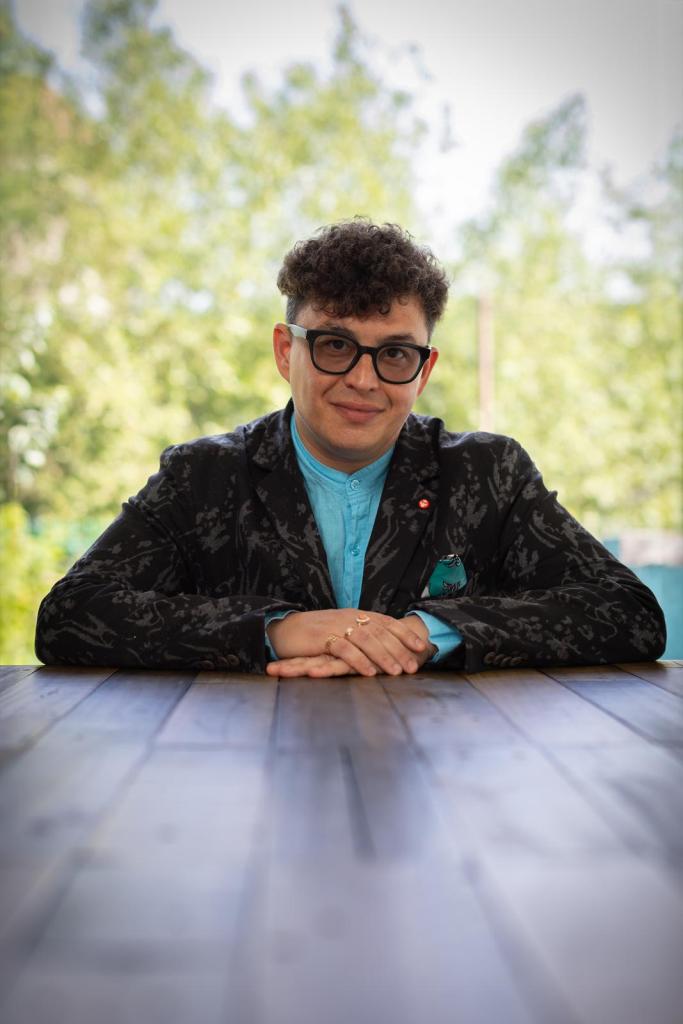
Evgeny Shtorn is an Irish Russophone writer, activist, and researcher. He left Russia in 2018 due to his civil society work and was granted international protection in Ireland in 2019. He defended his PhD dissertation at the University of Helsinki, examining violence against LGBTIQ+ people in Russia. His work focuses on confronting authoritarian governance, analyzing its effects on civil society, and supporting human rights work on the ground. In parallel, he develops autoethnographic writing grounded in lived experience, bridging research, advocacy, and narrative practice. He also collaborates with international partners on initiatives supporting human rights defenders at risk.
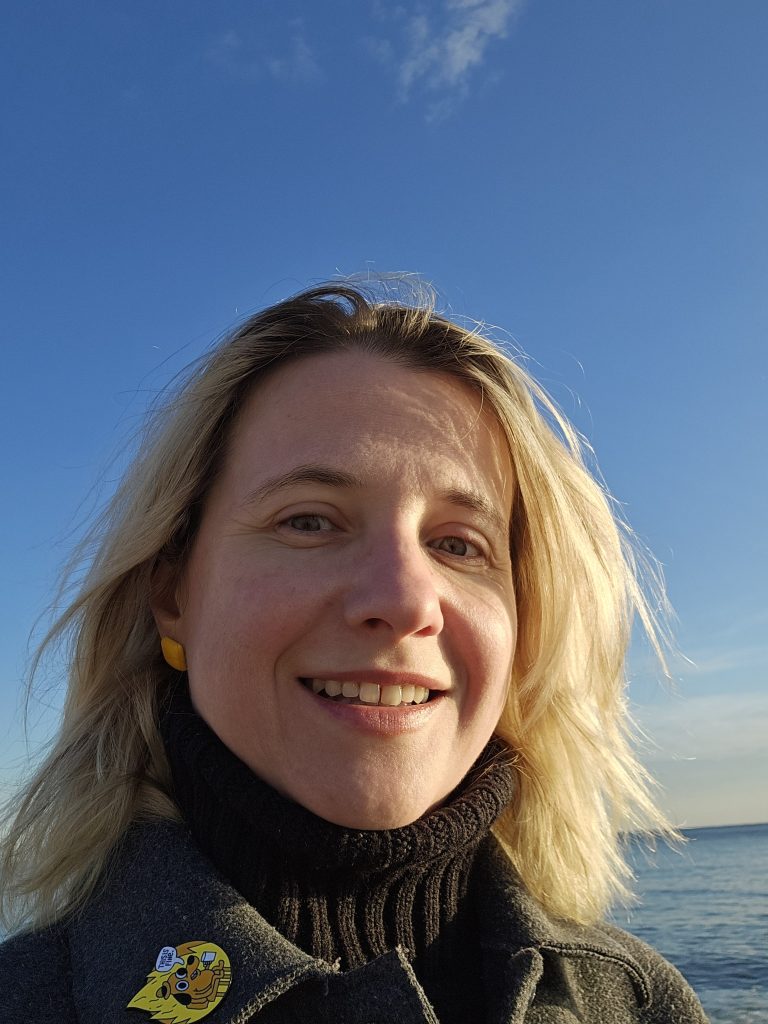
Alexandra Novitskaya was born in Leningrad, USSR, just before the latter collapsed and the former became St. Petersburg – where she grew up and which she left in the early 2010s. She has been calling the United States her home ever since, and currently lives between Brooklyn and Baltimore, where she is a Visiting Assistant Teaching Professor at the University of Maryland-Baltimore County. A PhD in Women’s, Gender, and Sexuality Studies, Novitskaya has published articles, book chapters, and blog posts for both academic and non-academic readers. The Refugee Chronicles is her first literary translation.