“This Bone-Deep Memory of Movement”: A Conversation between Alina Adams and Irena Smith

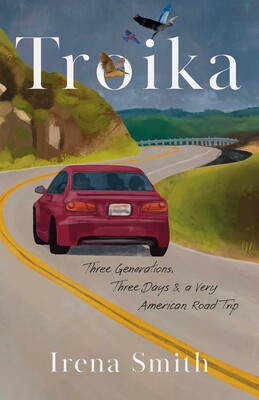
It is our pleasure to present a conversation between Alina Adams, whose writing has been featured several times on Punctured Lines (here and here) and Irena Smith, whom we welcome for the first time. They happened to have crossed paths as newly arrived immigrant children in the U.S., and now they both have come out with new books. Alina Adams is the author of Go On Pretending (History Through Fiction, 2025; her essay about it is on the blog). Irena Smith is the author of Troika: Three Generations, Three Days, and a Very American Road Trip (She Writes Press, 2026). I met her earlier this year at her reading of Troika at LA’s beloved independent bookstore Book Soup; the reading was hosted by Prof. Lilya Kaganovsky, the chair of our department at UCLA, and as it turns out, Irena’s close friend from childhood. Alina and Irena conducted the conversation over Zoom and transcribed it, and it was edited for clarity and expanded in parts.

Continue reading ““This Bone-Deep Memory of Movement”: A Conversation between Alina Adams and Irena Smith”
Writing is the Closest We Will Ever Get to Time Travel: A Guest Essay by Dana Kanafina

Today we are featuring a personal essay by Dana Kanafina, a writer from Kazakhstan, currently living in Germany. Although I have never been to Kazakhstan, I have (an admittedly tenuous) connection with it: my grandmother and her family were evacuated to Alma-Ata (now Almaty) from Ukraine during WWII, which is how she and my great-grandmother survived. In a more recent and less life-and-death way, Almaty is where students from our department at UCLA have been going to study abroad, given that, even before the outbreak of the war in Ukraine, they have been unable to study in Russia (I “entertained” the first cohort of such students by telling them that I was sure their experiences would be much better than my grandmother’s). We have previously highlighted contemporary Kazakhstani literature on Punctured Lines; the essay by Dana Kanafina focuses on Kazakhstan’s literary scene, both what it looks like today and what it might look like in the future.

Continue reading “Writing is the Closest We Will Ever Get to Time Travel: A Guest Essay by Dana Kanafina”

Queering Peripheries: Lara Vapnyar’s “Lydia’s Grove”: Soviet-Born: The Afterlives of Migration in Jewish American Fiction by Karolina Krasuska

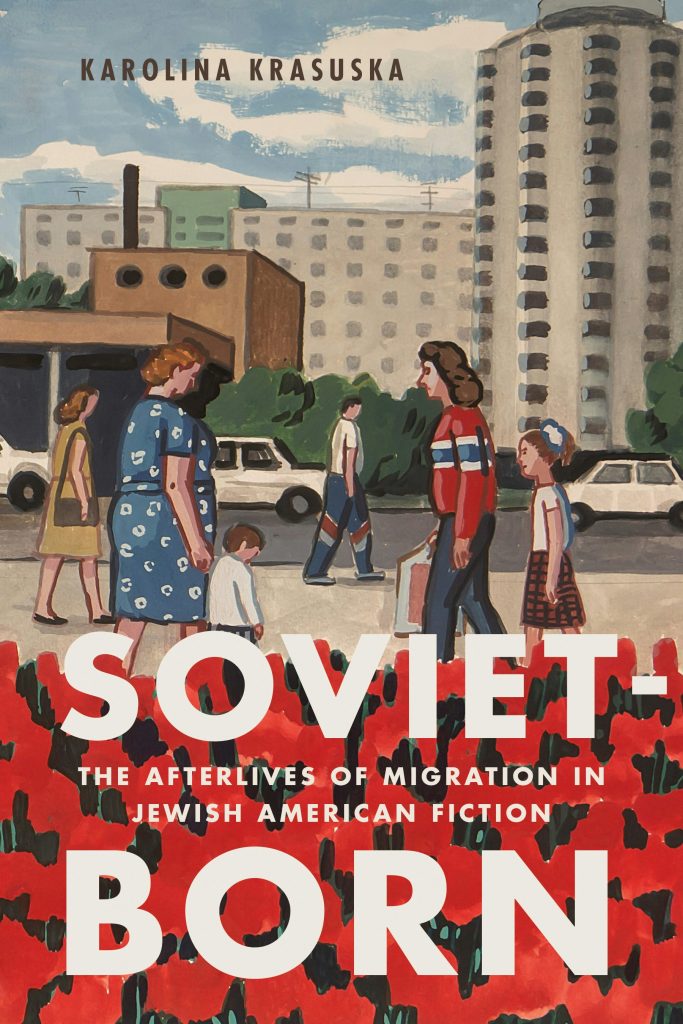
Today we are featuring an excerpt from Soviet-Born: The Afterlives of Migration in Jewish American Fiction (Rutgers UP, 2024) by Karolina Krasuska, associate professor at the American Studies Center and co-founder of the Gender and Sexuality MA Program at the University of Warsaw, Poland. Starting in the early 2000s, Jewish immigrant writers from the former Soviet Union have appeared on the US literary scene in increasing numbers. While Gary Shteyngart, who can give lessons in self-promotion, is the most well known, the list comprises more women, including Lara Vapnyar (a Q&A with whom we have featured on this blog), Anya Ulinich, Irina Reyn, and Ellen Litman, to name only a few. As their books continued to be published, academics began to take note, organizing conference panels and writing on the subject (I am happy to have contributed to this field of study from its inception). The first and foundational monograph was Adrian Wanner’s Out of Russia: Fictions of a New Translingual Diaspora (Northwestern UP, 2011), which discussed the global phenomenon of ex-Soviet immigrant writers in the various countries to which they immigrated. Krasuska’s is the first academic volume specifically devoted to ex-Soviet Jews living and writing in the US, where the largest number of such immigrants resides.

Continue reading “Queering Peripheries: Lara Vapnyar’s “Lydia’s Grove”: Soviet-Born: The Afterlives of Migration in Jewish American Fiction by Karolina Krasuska”

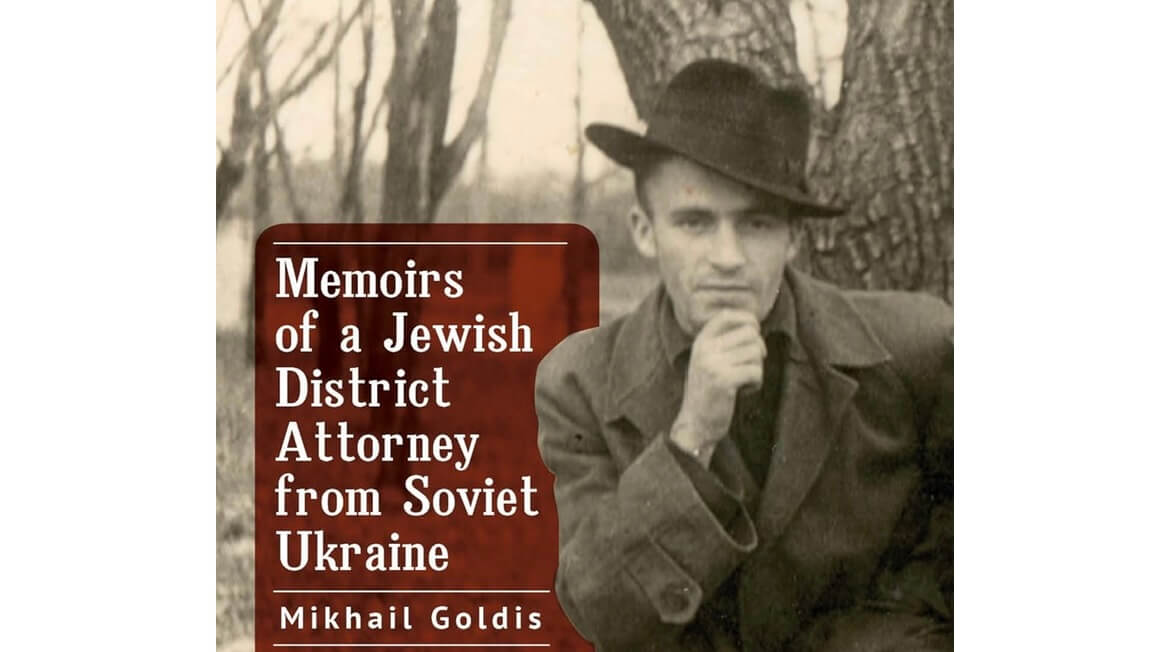
Seven Forty: Memoirs of a Jewish District Attorney from Soviet Ukraine by Mikhail Goldis, translated, edited, and with an Introduction by Marat Grinberg

Memoirs of a Jew who prosecuted criminals in Soviet Ukraine – The Forward

We are happy to feature an excerpt from Mikhail Goldis’s Memoirs of a Jewish District Attorney from Soviet Ukraine (Academic Studies Press, 2024), translated by Marat Grinberg, professor of Russian and humanities at Reed College and Goldis’s grandson. Grinberg’s previous book was the highly informative The Soviet Jewish Bookshelf: Jewish Culture and Identity Between the Lines (Brandeis University Press, 2022). The Soviet Jewish Bookshelf makes the original argument that, in the anti-Semitic Soviet Union, Jews circumvented the proscriptions on public expression of Jewish identity “through their ‘reading practices'”: they built up home libraries of books on Jewish subjects, which, given “the heavy censorship of Jewish content,” they often had to read “between the lines” (the citations are from my review). Olga interviewed Marat about his book, and you can listen to their rich conversation here, which includes reading suggestions of the various writers the book discusses.

Continue reading “Seven Forty: Memoirs of a Jewish District Attorney from Soviet Ukraine by Mikhail Goldis, translated, edited, and with an Introduction by Marat Grinberg”

How Moscow’s 1957 World Youth Festival Inspired Me to Go On Pretending: Guest Essay by Alina Adams

Today we welcome Alina Adams back to the blog with an essay about her interracial family’s trip to Moscow (before the war in Ukraine) and its connection to her recently released novel, Go On Pretending (History Through Fiction, 2025), featuring a fictional interracial family. You can read our previous conversations with Alina here and here. As one of the excerpts below shows, a key element in her novel is the 1957 World Youth Festival in Moscow, during Khrushchev’s Thaw, which was meant to demonstrate the Soviet Union’s liberalization and racial tolerance (you can guess how that turned out). The reference to the festival immediately made me think of a different novel by another ex-Soviet Jewish immigrant writer in which it is an important plot element: Petropolis (Penguin Random House, 2008) by Anya Ulinich. If you would like to know more about this lesser-known event and about the Soviet Union/post-Soviet Russia and race, let Alina explain below and then order Go On Pretending (and Petropolis).

Continue reading “How Moscow’s 1957 World Youth Festival Inspired Me to Go On Pretending: Guest Essay by Alina Adams”

I Think that Everything I Do Is a Form of Translation: A Conversation with Michele A. Berdy

We at Punctured Lines are thrilled to feature a conversation with Michele A. Berdy, longtime editor and columnist for The Moscow Times, now living in Riga, Latvia. Given both the political and personal upheavals of the last few years, this interview was long in the making. We are so glad to now publish this wide-ranging discussion about, among other things, cataclysmic changes, Soviet life hacks, art and culture, and of course, the war in Ukraine; there are many organizations you can support, including this one. This interview was conducted over email.

Yelena Furman: Let’s start with your intriguing reverse immigration story: you left the U.S. in 1978 to live in what was then the Soviet Union (the same year, as it happens, that my family left Soviet Ukraine for the U.S.). What inspired you to make that move, several years before the country began opening up under Gorbachev?

Continue reading “I Think that Everything I Do Is a Form of Translation: A Conversation with Michele A. Berdy”

The Soviet-Jewish Experience in North America: A Conversation Between Masha Rumer and Lea Zeltserman

Today we welcome Masha Rumer and Lea Zeltserman back to Punctured Lines. They have both done Q&As with us previously (here and here), and each has participated in one of two different readings we organized by FSU immigrant writers (the recordings are here and here). We are extremely grateful to them for generating both the thought-provoking questions and answers in this exchange. This piece was a long time in the making, as all of us dealt, in various combinations, with the pandemic, the war, cross-country moves, and personal upheavals. We are thrilled to feature their wide-ranging and poignant conversation about immigration, writing, food, and more.

Continue reading “The Soviet-Jewish Experience in North America: A Conversation Between Masha Rumer and Lea Zeltserman”

Poems Betwixt Paths: Herb Randall in Conversation with Irina Mashinski

We are grateful to Herb Randall and Irina Mashinski for bringing us this interview about poetry, translation, music, and more. Both of them have appeared on Punctured Lines previously. An excerpt from Irina Mashinski’s hybrid poetry and prose collection The Naked World can be found here (while Herb Randall’s review of it in the Los Angeles Review of Books is here). At Punctured Lines, Herb Randall has contributed a personal essay about visiting Kharkiv and looking for traces of an English woman who moved there during Stalin’s reign and a review of Sana Krasikov’s The Patriots, about an American Jewish woman who also moves to Stalin’s Soviet Union (a clearly misguided endeavor from any country). We are very happy to have them back with the following in-depth discussion.

Continue reading “Poems Betwixt Paths: Herb Randall in Conversation with Irina Mashinski”

Three Poems from Disbelief: 100 Russian Anti-War Poems, edited by Julia Nemirovskaya

Today we feature three poems from the Russian-language anthology Disbelief: 100 Russian Anti-War Poems (edited by Julia Nemirovskaya; various translators; Smokestack Books, 2023). We are grateful for the following introduction written for Punctured Lines by Maria Bloshteyn, one of the translators of the collection. As she notes below, one of the featured poets, Galina Itskovich, is a therapist helping those in Ukraine; you can donate here to support this work.

Continue reading “Three Poems from Disbelief: 100 Russian Anti-War Poems, edited by Julia Nemirovskaya”

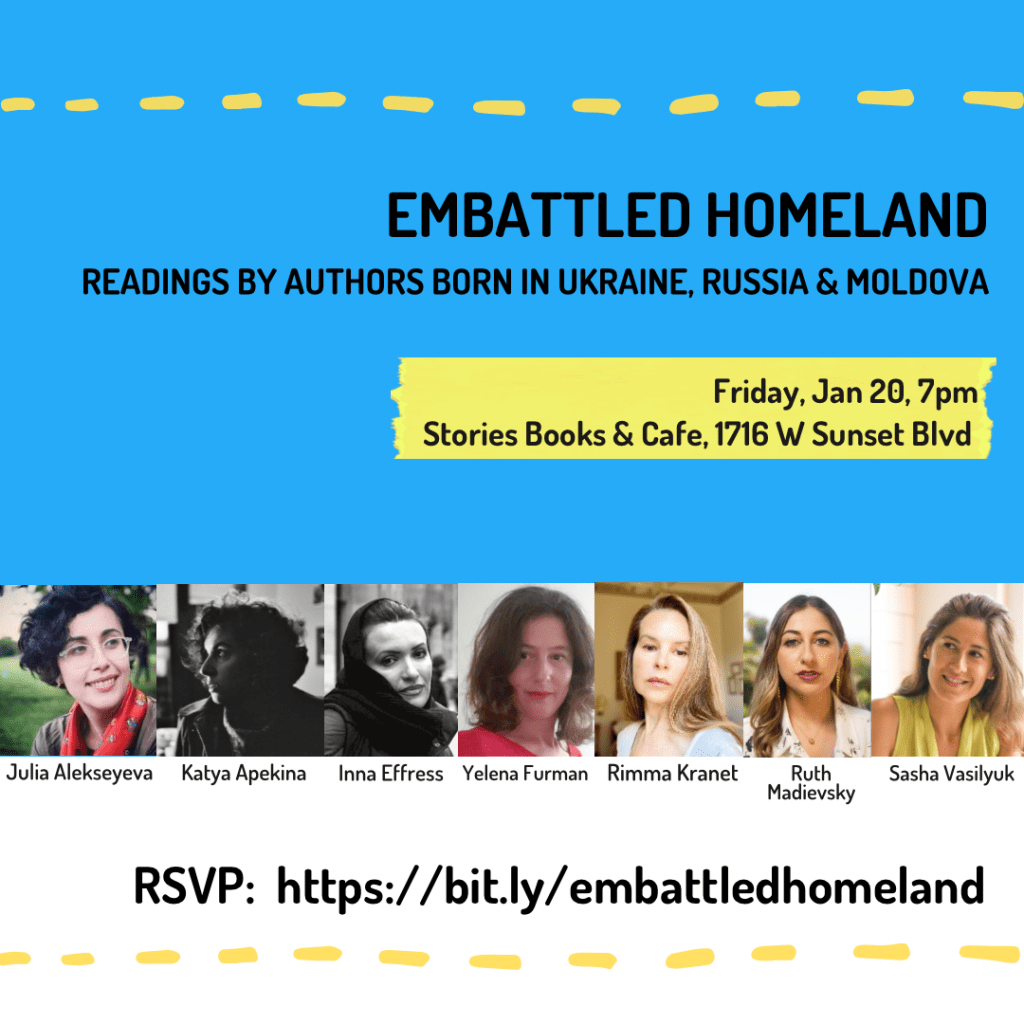
Embattled Homeland: Readings by Authors Born in Ukraine, Russia, and Moldova

Punctured Lines is happy to announce an in-person reading by seven women writers who emigrated from the former Soviet Union and now live in (or in one case, coming to visit) Los Angeles. This event follows the original Embattled Homeland reading during LitCrawl in San Francisco in 2022, with ex-Soviet immigrant writers living in the Bay Area. Like its San Francisco predecessor, the Los Angeles event is in support of Ukraine, which has been defending itself against Russia’s unprovoked attack for nearly a year. While the reading is free, we encourage people to donate to the vetted organizations below. Many thanks to Sasha Vasilyuk for organizing this event.

The reading will take place on Friday, January 20, 2023 at 7 pm at Stories Books & Cafe (1716 W. Sunset Blvd.). Please RSVP here.

Continue reading “Embattled Homeland: Readings by Authors Born in Ukraine, Russia, and Moldova”