New Perspectives on a Familiar Past: An Interview with Maxim Matusevich by Svetlana Satchkova

Maxim Matusevich’s fiction is filled with people crossing borders — between countries, languages, identities, and versions of the past. That seems fitting for a writer whose own life has taken him from a communal apartment in Soviet Leningrad to army barracks, from pizza delivery in Oklahoma to academic archives in Nigeria, and eventually to a career as a historian and writer in the United States. Now Professor and Chair of the Department of History at Seton Hall University, Matusevich has recently published his first book of fiction, the short story collection Six Trains of No Return (Academic Studies Press, 2026). We spoke on Zoom about the unlikely path that led him to fiction, the relationship between history and memory, and why he keeps returning to lives shaped by displacement and reinvention.

— Svetlana Satchkova

Svetlana Satchkova: Maxim, let’s start with your story. It seems to have a direct connection to much of your fiction. Could you tell me a little about yourself?

Maxim Matusevich: I was born in Leningrad, in what used to be the Soviet Union, and grew up in the very center of the city. We lived in a large communal apartment, which I think is significant when it comes to some of the stories I write because it was my introduction to life in the USSR. My parents and I shared space with people with whom we otherwise wouldn’t have had much in common. My family was urban Jewish intelligentsia, and our neighbors came from all walks of life and different ethnic backgrounds.

Growing up, I wanted to be an archaeologist and joined the archaeological section at the Leningrad Palace of Pioneers. It sounded very official, but it was really part of an informal counterculture, and through it I made lifelong friends who were interested in history and literature. I didn’t go to college because being Jewish made it difficult to be admitted to Leningrad State University, so I went to a teacher training institute. But since the institute didn’t grant military deferment, I had to go into the army, which I did in the late 1980s.

Svetlana Satchkova: Was that also a formative experience?

Maxim Matusevich: Yes, and it found its way into some of my stories. When I think about it, there is a connection between those two stages of my life: growing up in a large communal apartment and later sharing space in the barracks. At first, I went into the army with great trepidation because I was Jewish. But it also took me far beyond the world I knew. I had spent most of my life in Leningrad. If we traveled, we went to Crimea or the Baltic coast. I didn’t really know the country. So finding myself on a military base in a small provincial town in central Russia was eye-opening. Once again, I was surrounded by people from very different backgrounds, people I wouldn’t have crossed paths with otherwise. Some barely spoke Russian because they came from Turkmenistan or Tajikistan. It was also a period of great change, but we knew nothing about it because we were so isolated on that base. When I got out, I found a country that looked and felt very different from the one I remembered.

Svetlana Satchkova: What changed so dramatically?

Maxim Matusevich: One sign of the changes was that people began to leave. Mostly Jews, but not only Jews. It seemed like one farewell party after another. I had come back expecting to pick up my old life where I had left off: reconnect with my girlfriend, see my friends, carry on as before. Instead, it felt as though my whole future was thrown into question.

My girlfriend and I married within weeks of my leaving the army; people got married very young then. It turned out that her father, who hadn’t really been part of her life, had emigrated in the 1970s and was living in the United States. Soon after our wedding, he came to visit with his American wife and suggested that we move to the United States. Eventually, we left with our little son and ended up in Oklahoma. It felt like the middle of nowhere: strange landscapes, a completely unfamiliar environment. We lived there for a while, and I had no idea what I was doing.

Svetlana Satchkova: How did you end up becoming a historian?

Maxim Matusevich: I enrolled at the University of Oklahoma. I didn’t know what to major in, but I had always been interested in history, so I more or less continued what I had been doing in Russia. My wife was already ahead of me academically and started graduate school there. To make money, I delivered pizzas, so during my first years in America, much of my life revolved around pizza delivery. It also introduced me to people I would never have met otherwise. My coworkers were fascinating: American and foreign students, but also local guys who felt they had few opportunities in life. It was a very diverse crowd, and we all came together in this late-night pizza joint that was cinematic in many ways. I even published a few pieces about it in Russian back in the 1990s.

Later, my wife and I both went on to graduate school at the University of Illinois. I pursued African studies and history because African history was something that had long fascinated me, while she studied for a PhD in French literature.

Svetlana Satchkova: And then you went back to Russia for a while?

Maxim Matusevich: In the early 1990s, people began returning to Russia because of all the new opportunities. It seemed as though the country was finally becoming normal. By then my marriage fell apart, and I went back to St. Petersburg, where I worked as a translator and journalist. It was a mind-boggling time to be in Russia. I was writing for some of the trendiest newspapers and felt part of the intellectual and cultural scene. For a while, I thought that would be my life. I had no intention of returning to the United States and my pizza delivery routine there.

But that didn’t last. There were things about Russia that made me uncomfortable. Society remained harsh, and people seemed increasingly obsessed with status, which never appealed to me. I also realized that I still wanted to be a historian, and if I stayed in Russia, that path would likely remain out of reach. So I returned to the United States, went back to graduate school to earn my PhD, and eventually spent some time in Africa.

Svetlana Satchkova: Africa appears to fit the pattern you’ve been describing: a new place, a new world to discover.

Maxim Matusevich: Nigeria was certainly one of those places. I went there to do research for my PhD dissertation, spent time in the archives, and even taught a little at the University of Lagos and the University of Ibadan. Afterward, I returned to the United States, finished my PhD, and started looking for an academic job. My first position was at a small liberal arts college in Missouri, and it was a wonderful job. But I always wanted to live in a city, which I missed desperately. It took me a few years to find my way to the East Coast, and eventually I landed at Seton Hall University.

Svetlana Satchkova: Let’s talk about how you first started writing fiction.

Maxim Matusevich: Where I come from in Leningrad, everyone wrote poetry. A lot of people who should never have touched a typewriter or a pencil still did it. I wasn’t immune, so I did too. My family is a very literary family: writers, playwrights, journalists, people deeply immersed in the literary scene. But I never dared to write fiction in English.

Then I became a professor of history, which means I had to write a lot. I wrote academic prose in English, and the more secure I felt in the language, the more I wanted to do something beyond academic writing. At the same time, I had accumulated certain ideas about the past, my own past and the past of my generation. I realized I was in a somewhat privileged position: I had the language skills, but I also had professional training as a historian. Millions of people went through that experience, but very few write it down, and even fewer write it down in a language other than Russian. About eight or nine years ago, I finally felt ready to try. I started writing short stories, and the very first one was picked up by The Kenyon Review. The next one was accepted by the New England Review. That encouragement convinced me to keep going, and over the next few years I continued writing and publishing stories.

Svetlana Satchkova: And how did those stories become a book?

Maxim Matusevich: One of the editors at Academic Studies Press, the acclaimed literary scholar and writer Maxim Shrayer, reached out to me after reading some of my work. I was surprised because I knew them as an academic publisher. But they had recently launched a fiction imprint, particularly for work by academics. Around the same time, they published a novel by a good and very talented friend of mine, Pavel Lembersky, and I began to think the idea might actually work. My collection became one of their early fiction titles. I don’t expect to sell hundreds of thousands of copies, but so far, so good.

Svetlana Satchkova: How does your academic work on Africa inform your creative writing?

Maxim Matusevich: When I came to the United States, I became interested in the African American experience because growing up Jewish in the Soviet Union I could see certain parallels. Africa itself also fascinated me. As a young man, it seemed like the ultimate Other – so distinct from the drabness of the Soviet everyday, a world completely different from my own. That’s not a fashionable thing to admit today, but I was in my early twenties and had not yet read Edward Said.

When I finally went to Nigeria, I was surprised by how familiar it felt. It was different, frustrating, and often difficult, but in some ways, it reminded me of Russia. That realization fascinated me and shaped much of my academic work. I became interested in the connections between Africa, the Soviet Union, and the Cold War, especially in how people from different historical backgrounds perceived the same place differently. When I wrote about African Americans visiting the Soviet Union, I was also writing about my own country through someone else’s eyes. In a way, that search for new perspectives on a familiar past is what eventually led me to fiction.

But I have to say that, apart from one story set in Nigeria, my academic work on Africa is not very overtly present in my fiction.

Svetlana Satchkova: I’m interested in how you build a plot. Some of these stories seem closely rooted in real life. Take the first story about your father, for example. How much of it comes directly from family history, and how much did you invent?

Maxim Matusevich: The first story in the collection is actually quite different from the others. It’s the closest I come to documentary writing. It’s based on family archives and on stories my father told me about his childhood and the war. My father and I were very close, and I was always fascinated by his life. At the center of the story is my parents’ quest to obtain a private apartment, which in the Soviet Union was a life-changing event. After years in communal apartments, they were desperate to have a place of their own, and when a once-in-a-lifetime opportunity finally appeared, it became a quest that lasted for years. What attracted me to this memory as a writer was that this seemingly simple goal gradually took on the scale of an epic quest.

There is one story that’s almost completely imagined: the Cambodia story. It was based on something I saw in a museum while my wife Alina and I were traveling in Cambodia. I came across the story of a Cambodian actress who had once been very famous. Then the Khmer Rouge came to power, her family was destroyed, but she somehow survived the genocide and eventually made it to France. Those were the historical pieces. The rest I imagined. While I was in Cambodia, I met a number of people, including a tuk-tuk driver, and some of them found their way into the story as well. In the end, I took these different people and fragments of history and brought them together into a single narrative.

Svetlana Satchkova: Where do your stories typically begin?

Maxim Matusevich: I think there are a couple of things that usually motivate me to write a story. One is a strong feeling or emotion that I would like to give shape to. It could be an obsession, a fear, or a very intense sense of nostalgia. Often, I build a plot around that emotion. It’s important to me not just to tell a story, but to find a way to make other people feel what I felt.

The other is a set of ideas about the past that I keep coming back to. There’s this film by Kurosawa, Rashomon, where the same dramatic event is interpreted in completely different ways by the people involved. I’ve always found that fascinating because we see it all the time in real life. People share the same experiences, the same marriage, the same country, and yet when they look back, they tell very different stories about what happened. A lot of my fiction is built around those questions: what is real in our past, what is imagined, and why do the things we imagine sometimes become so real to us?

Svetlana Satchkova: We’ve talked about a story rooted in your life. Are there others that began with something you experienced firsthand?

Maxim Matusevich: I can think of one story that grew directly out of something that happened to me. Imagine getting a call from someone you haven’t seen or thought about in twenty years. This person wants to talk about your shared past and tells you that you played a central role in their life. You feel guilty because you barely remember any of it. Then, as the conversation continues, you realize they have confused you with someone else.

I found that situation intriguing. On the one hand, it’s humbling. On the other, it raises all sorts of questions about memory and the stories people tell themselves. Maybe this person really has built an important part of their identity around the past. Or maybe they need that story for reasons that have more to do with the present than with what actually happened. Those ambiguities interested me, and I built a plot around them.

Svetlana Satchkova: There’s a story in your collection that’s almost the opposite of that: “Red Dress.”

Maxim Matusevich: So “Red Dress is partly about obsession, but it’s also about memory. The protagonist spends decades remembering a woman and a relationship that once felt overwhelming. When they meet again, he realizes that he can still remember the intensity of those feelings, but he no longer feels them. I think many of us have experiences like that. At the time they seem all-consuming. Years later, they survive mostly as stories we tell ourselves about who we once were.

I’ve always been interested in stories about people losing control over their emotions. Perhaps that’s because I have a deep-seated fear of losing control myself. I remember one episode from my youth when I sat down at a slot machine and suddenly found myself completely absorbed. Forty-five minutes later, I had lost all my money and barely understood what had happened. It frightened me because I realized how quickly a person can slip into that state. I’ve never really struggled with addiction, but that experience left an impression on me.

Svetlana Satchkova: What are you working on now? Do you plan to write more fiction?

Maxim Matusevich: Since the book came out earlier this year, I’ve been trying to juggle my academic responsibilities with fiction writing. Being department chair entails a lot of administrative busy work and sometimes I find it challenging to shift gears and switch back to writing non-academic stuff. But I have started four different stories; all four for now remain uncomplete. The four are quite distinct from each other, and only one of them is autobiographical. It’s about a Texas road trip, which I took in the company of my two then girlfriends — one American, one Russian. The situation was both absurd and fascinating because it featured a combination of romantic tension and relentless culture clashes. It also definitely belonged to a very specific time, to a very particular historical context. The same three characters placed in different surroundings would’ve acted and expressed themselves completely differently. I’m often drawn to such situations that undermine our conceptions of normalcy, wreak havoc with our expectations and moral certitudes.

Besides continuing to write short stories, I have a still rather vague idea for a novel, which will feature characters who defy constraints of time, geography, age, and gravity. I know, I know … this sounds like The Master and Margarita. It’s quite difficult to step out of the looming shadow of one’s favorite writer. But one can try. One should always try.

Punctured Lines: Buy Six Trains of No Return from Academic Studies Press or at your favorite bookstore.

Maxim Matusevich was born and raised in Leningrad (now St. Petersburg) and immigrated to the United States in 1991, as the Soviet Union teetered on the brink of collapse. He is Professor of History and Department Chair at Seton Hall University in New Jersey. Maxim has published extensively on African–Soviet encounters and the history of race during the Cold War. His fellowships and residencies include the Fulbright Program (Russia), the Woodrow Wilson International Center for Scholars, the Jordan Center for the Advanced Study of Russia at NYU (Writer-in-Residence), and the W. E. B. Du Bois Research Institute at Harvard University, where he served as a Sheila Biddle Ford Research Fellow.

In addition to his academic work, Matusevich writes fiction. His short stories, novellas, and essays have appeared in literary magazines in the United States, Canada, Israel, the United Kingdom, Germany, and elsewhere, including The Kenyon Review, New England Review, BigCityLit, San Antonio Review, Fatal Flaw Literary Magazine, among many others. Six Trains of No Return (Academic Studies Press, 2026) is his debut book of fiction. The collection brings together twelve short stories and novellas that explore immigrant lives and dislocations that are at once deeply personal and broadly universal. These are stories of past lives and loves, of fragile and unreliable memories, and of individual destinies entwined with larger historical forces.
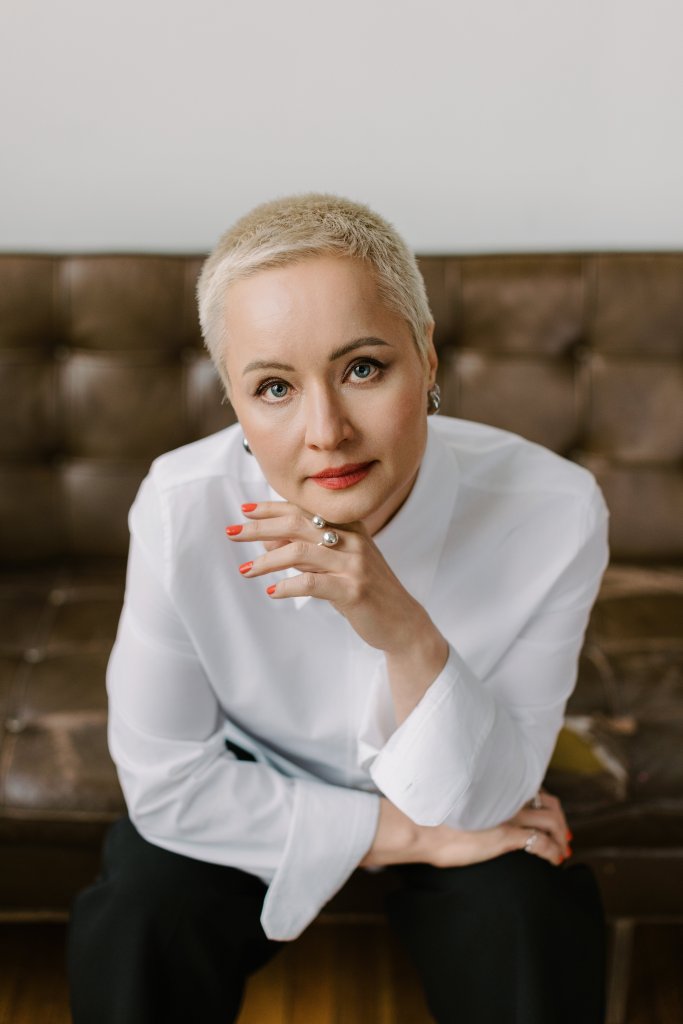
Svetlana Satchkova is a New York-based journalist and novelist. She covers culture and politics, with bylines in Literary HubThe Rumpus, Newsweek, LARB, the Independent, and others. Currently a research fellow at the Jordan Center for the Advanced Study of Russia at NYU, she holds an MFA from Brooklyn College. Svetlana has published three novels in Russian; The Undead: A Novel of Modern Russia, is her English-language debut.
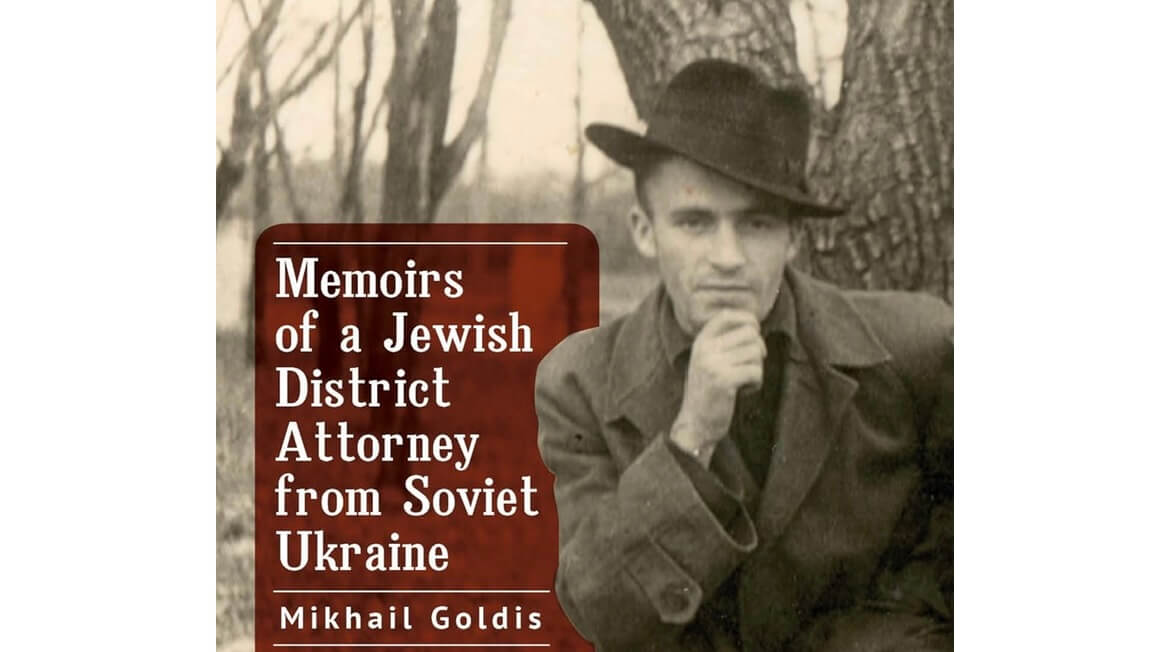
Seven Forty: Memoirs of a Jewish District Attorney from Soviet Ukraine by Mikhail Goldis, translated, edited, and with an Introduction by Marat Grinberg

Memoirs of a Jew who prosecuted criminals in Soviet Ukraine – The Forward

We are happy to feature an excerpt from Mikhail Goldis’s Memoirs of a Jewish District Attorney from Soviet Ukraine (Academic Studies Press, 2024), translated by Marat Grinberg, professor of Russian and humanities at Reed College and Goldis’s grandson. Grinberg’s previous book was the highly informative The Soviet Jewish Bookshelf: Jewish Culture and Identity Between the Lines (Brandeis University Press, 2022). The Soviet Jewish Bookshelf makes the original argument that, in the anti-Semitic Soviet Union, Jews circumvented the proscriptions on public expression of Jewish identity “through their ‘reading practices'”: they built up home libraries of books on Jewish subjects, which, given “the heavy censorship of Jewish content,” they often had to read “between the lines” (the citations are from my review). Olga interviewed Marat about his book, and you can listen to their rich conversation here, which includes reading suggestions of the various writers the book discusses.

Continue reading “Seven Forty: Memoirs of a Jewish District Attorney from Soviet Ukraine by Mikhail Goldis, translated, edited, and with an Introduction by Marat Grinberg”

Aikanush: An Excerpt from Akram Aylisli’s Stone Dreams, translated by Katherine E. Young

On February 9, 2013, Akram Aylisli’s books were burned in his native village. For more than six decades, Azerbaijan’s most prominent writer has written fiction about the mountain village of Aylis, from which he took his pen name; Aylisli called the day of the burning “the most terrible day of my life.” Why were his books burned? Aylisli had published a novella, Stone Dreams, that challenged official propaganda erasing the role played by Armenians in the history of Azerbaijan, a country currently dominated by ethnic Azeris (Azerbaijan and neighboring Armenia have engaged in military hostilities since before the collapse of the Soviet Union). Stone Dreams is among the first fictional works in the greater Turkic-speaking world to depict both historical and contemporary violence against ethnic Armenians, and it includes sympathetic portrayals of Armenian villagers residing in Azerbaijan. The novella also portrays the corruption and authoritarianism of modern-day Azerbaijan. In the uproar that greeted the novella’s publication, Aylisli was stripped of his presidential honors and pension. An empty coffin was paraded around the courtyard of his residence, and a bounty—later rescinded under international pressure—was offered to anyone who would cut off the writer’s ear. In 2014, international supporters nominated Aylisli for the Nobel Peace Prize for “his efforts to reconcile Azerbaijani and Armenian people.” In 2016, trumped-up legal charges were filed against Aylisli by the Azerbaijani government, a case that is still pending. Ten years after his books were burned, Akram Aylisli continues to live under de facto house arrest in Azerbaijan, unable to leave the city of Baku. He is 85.

Continue reading “Aikanush: An Excerpt from Akram Aylisli’s Stone Dreams, translated by Katherine E. Young”

To Fairyland: An Excerpt from Yelena Lembersky and Galina Lembersky’s Memoir Like a Drop of Ink in a Downpour

Like a Drop of Ink in a Downpour (Academic Studies Press, 2022) is a rare dual memoir co-written by Yelena Lembersky and her mother Galina. Born and raised in the USSR, following the death of her prominent painter father in 1970, Galina decides to emigrate with her young daughter and aging mother. In anticipation of her departure, Galina quits her job and becomes a refusenik. Yet, once her immigration papers go through, instead of boarding an airplane, she finds herself behind bars of a Leningrad prison on a criminal charge. Her mother has already left for the United States. Her young daughter Yelena–nicknamed Alëna in the book–is left in the care of friends, in danger of finding herself in an orphanage.

The chapter below is narrated by Yelena, eleven years old at the time of these events. We are deeply grateful to the author and publisher for permission to excerpt a chapter from this revealing and touching memoir. To continue reading, please buy the book from Academic Studies Press.

Continue reading “To Fairyland: An Excerpt from Yelena Lembersky and Galina Lembersky’s Memoir Like a Drop of Ink in a Downpour”

“Only happy children are loved” — A Review of Daughter of the Shtetl: The Memoirs of Doba-Mera Medvedeva

Most of us who grew up in the Soviet Union will remember Samuil Marshak’s rhyming dramatic tale Koshkin dom — The Cat’s House. A wealthy angora cat builds herself a new residence. Two destitute kittens show up at her doorstep, begging her to share her house with them: We’re your nephews, they say. We’re poor orphans. Won’t you let us in and feed us? The wealthy angora cat has her servant shoo them away, setting off the action of the drama in which the angora cat eventually gets her punishment for refusing help to the kittens in need, and the orphan kittens prove to be in the position to give her shelter.

Marshak’s rhymes were at the tip of my tongue while I was reading Daughter of the Shtetl: The Memoirs of Doba-Mera Medvedeva (Academic Studies Press, 2019), as though Doba-Mera and her brothers were the original orphans, the prototypes behind Marshak’s dramatic tale — except their life’s story didn’t make room for happy endings.

Doba-Mera Gurevich was born in 1892 in the shtetl of Khotimsk on the eastern edge of Belarus and the Pale of Settlement — that part of the Russian empire where Jews were allowed to live. Her mother died in 1903, when Doba-Mera was eleven, and as she was dying, she left Doba-Mera this parting message: “From the moment I close my eyes, the whole world will reject you. Because only happy children are loved.”

This is, indeed, what happened: Doba-Mera had to leave school to take care of her brothers; Doba-Mera’s father, a teacher, remarried, and because his new wife didn’t have the resources to raise the children from his previous marriage, Doba-Mera and her two younger brothers went from relative’s house to relative’s house, working and suffering their way through their childhood. Several years later, her baby brother, of poor health from birth, succumbed to an illness and died.

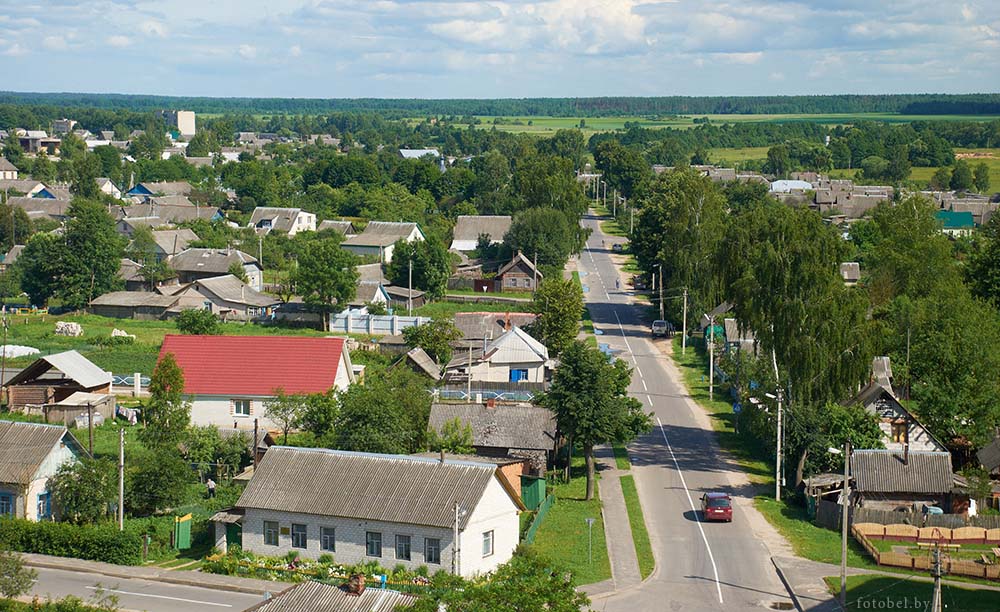
Khotimsk in 2013, photo by Dmitriy Ivchenko from Photo Encylopedia Belarus

Doba-Mera describes one occasion on which, after spending time with their grandfather for High Holidays, she and her brothers were sent by a hired wagon to their uncle’s house:

Uncle himself came out and asked in a saccharine way, “Who are these children you have brought me?” “They are the orphans of your younger sister Rokhl”… “So why did you bring them to me? asked Uncle. “You, Veniaminovich,” said the driver, “take them off the wagon, warm them up and feed them — they are hungry and wet — then ask your questions. Look, the poor little ones are frozen stiff.”…. And Uncle stood by the door and stroked his beard and said, addressing the driver by name: “I have nowhere to put them, but they have an aunt here, their father’s sister. They don’t live very far; take them there.”

Eventually, Doba-Mera’s family put together the money to apprentice her to a tailor, and after learning how to fend for herself in a male-dominated environment, she acquired a trade. She witnessed a pogrom and was lucky to come out unscathed physically. She married a distant relative whose parents hated her and made her married life very difficult. She describes years of fear, poverty, and anguish during WWI. After October 1917, she and her husband were eventually able to leave their shtetl and settle in Leningrad, improving their fortunes somewhat, but then came WWII and its attendant horrors.

I won’t overstate the matter if I say that this was a relentlessly sad book down to the very last page. In fact, the most horrific incident comes in a footnote on that page: in this footnote, Michael Beizer, Doba-Mera’s grandson and the force behind the publication of this book, recounts a story told by a resident of the town of Klintsy (not far from Khotimsk), who had been forced to bury the dead after the Nazi shooting of the Jewish residents. I won’t tell this story here — it’s painful. I have to admit, at first, I was deeply angry at Beizer for leaving me with this story on the last page of Doba-Mera’s book, and it’s only with time that I came to realize how appropriate it was to end the book with this Holocaust story. Though Doba-Mera and her children had been able to escape it, it is the Holocaust and the loss of so many lives and so much knowledge that necessitated if not the writing than the publishing of her book. It still hurts to recall that story though.

Doba-Mera began writing her memoirs in the 1930s, living in Leningrad and wanting to tell her children something about her past. Having left school at the age of eleven, she clearly took a lot of pride at her abilities as a learner and deeply regretted that life hadn’t allowed her to use those skills more. She wrote in Russian and addressed herself to her Russian-speaking children and grandchildren, explaining Jewish customs and a way of life. The memoir comes to us in English in a deeply nuanced translation by Alice Nakhimovsky, who in her accompanying note marvels at Doba-Mera, ascribing to her membership in “a vanishingly small group of memoirists who are neither elite nor highly literate but whose observations from the ground cast a vivid light on a lost world.” Nakhimovsky helps to illuminate that world by bringing into English Doba-Mera’s particular idiom, a Russian infused with concepts and a particular cadence taken from Yiddish — the memoirist’s first language.

To me, this memoir feels valuable also because of the way Doba-Mera not only captures her personal experience but constantly connects it to the larger social structures that governed her life. For instance, this is how she recounts life at the edge of the Pale of Settlement (her town was apparently right on the border of what is now Belarus and Russia):

One summer day after work I went with my girlfriends to walk along Barabanovka Street. The street was on the other side of the river, where everybody used to go walking. Jews were allowed to walk but not to live there. A landowner lived there by the name of Robert. He couldn’t stand Jews, but as our stetl was in Mogilev Province, and Jews were permitted to live there, he got the government to make his street part of Orel Province, where Jews were forbidden to live. And he got all the Jews sent away from there. The empty houses where the Jews had lived were boarded up, and nobody would buy them because the Russians were confident that they would get everything anyway.

So on the Sabbath and holidays everybody would stroll there. The street was beautiful, with a lot of greenery, and so everybody liked to stroll along it.

This moment from the year 1907 is probably one of the happiest in Doba-Mera’s life. She goes on to describe her encounters with various socialist revolutionary groups during this period of her life. She wasn’t a revolutionary herself — she had her brothers to provide for — but she recalls going to underground gatherings and gives us the outline of the underground activity in her area.

The other distinct pleasure of reading this memoir is the candid way Doba-Mera writes about her own emotions, including the times when they turned ugly. She doesn’t shy away from describing her feelings of regret, sadness, jealousy. In one particularly devastating moment, she drops her work for several months to travel with her ailing father to Kiev, in the vague hope that he might be saved by the doctors there. She gets recommendation letters to distant family members and with trepidation approaches them upon arrival, encountering in their way of life such luxury and wealth that she hadn’t seen in the Pale.

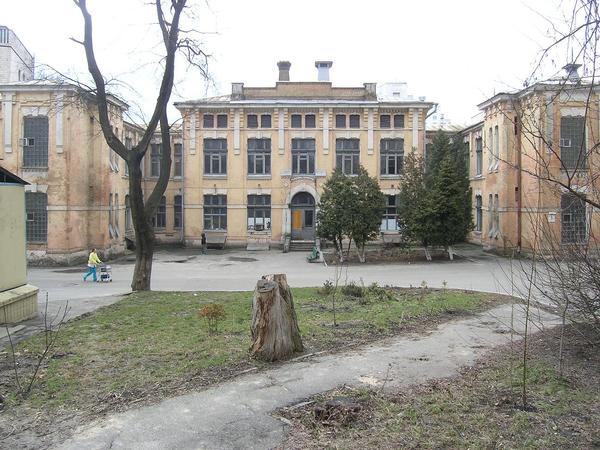
Brodsky’s free Jewish clinic in Kiev (image circa 2011 from the website Interesting Kyiv)

I was seized with anger and at the same time envy, because [a relative’s son] was a student and could get nothing but Cs and was given everything he could possibly need, while I studied so well but had to become a tailor and live a life of piteous need and, to make matters worse, turn up in a big, unknown city where Jews weren’t allowed to live with a sick father, without money, wondering every minute whether I would get him home alive. At every step I cursed the day of my birth and came to the conclusion that only rich people should have children, because poor people get only suffering from them and the children also suffer.

The bitterness of Doba-Mera’s voice felt deeply familiar to me and eventually I realized that it was bringing back the intonations of my grandmother’s speech. My grandmother Raissa (Reesya) was born in Tikhinichi, another Belarusian stetl, about 130 miles from Khotimsk in 1912 or 13, about the same time as Doba-Mera’s first child. Like Doba-Mera, Raissa received her first education in a male cheder (elementary school where boys learned to read Hebrew and studied the Torah), though being a generation younger and having her mother to help her, she was able to continue her education in Leningrad. Nevertheless, life, to Raissa was a series of trials and punishments for sins she didn’t commit, and though she believed that she improved her lot by hard work and sacrifice, she refused to talk about things like “love” and “happiness.” When I tried to ask her about these things, the most she would tell me was pozhivesh–uvidish, which loosely translates as “just wait and see what life is really like.”

As a child in the 1980s, I resented this attitude and was only too happy to have a chance to escape “my lot” by moving to the United States. I have escaped, and so completely that I needed Doba-Mera’s book as a reminder of this way of thinking. Today, I find myself deeply grateful to Michael Beizer and Alice Nakhimovsky and to Academic Studies Press for this brave book. Its nonconformity to the expectations we place on the genre of the memoir (tell us what your struggles have taught you; or in any case, please land on an uplifting note) is liberating and feels deeply true to my ancestors’ ways of conceptualizing their own lives.

Archipelagic Model of Global post-Soviet Cultures (*)

About a year ago, when Yelena Furman and I decided to get serious about our ongoing Twitter conversation about Russian literature and to start this blog, I read Maria Rubins’s essay “A Century of Russian Culture(s) ‘Abroad’: The Unfolding of Literary Geography,” published in Global Russian Cultures (edited by Kevin M. F. Platt; a volume in which Yelena Furman’s own essay “Rewriting Gender: Russian-American Women Writers and the Challenge to Russian Femininity” also appears). In this programmatic essay, Rubins argues that “A polycentric, nonhierarchical model of global Russian cultures may be visualized as an archipelago, a chain of islands that appear independent and isolated but in fact are interconnected in space, as well as time, often owing their origins to a series of volcanic eruptions.” In this model, Rubins argues, “the metropolitan Russian ‘continent,’ … can be seen as just the largest island within the global archipelago of Russian culture.”

Prior to encountering this essay, I had heard of archipelagic studies from a friend and a colleague, Olga Blomgren, who is working on her dissertation in Comparative Literature. Olga pointed me toward this theory and to the ideas of de-colonization, as distinct from post-colonization, as promising ways of conceptualizing literatures born of multiple languages and cultural influences. In her own work, Olga discusses the writing of the multilingual authors from the Caribbean, Rosario Ferré and Edwidge Danticat. The notion of an “archipelago” offers a compelling vision and a path to undoing the hierarchies of values imposed by colonial regimes. “Landmasses traditionally conceived of as continents may be reframed as islands that are constituent parts, rather than continental administrators, of the global meta-archipelago,” write scholars Brian Russel Roberts and Michelle Stephens in their essay “Archipelagic American Studies and the Caribbean.” Just because a traditionally conceived continent is physically larger than an island, its claim on culture and influence isn’t more valid than that of an island.

Rubins applies these ideas to Russophone literature, including in Paris during the interwar period, literature created in the US during the Cold War Era, and in Israel in the more recent times. She quotes from the famed theorist Homi Bhabha, who argued in his book The Location of Culture that “peripheral locations are rich in innovation and can destabilize and refashion stagnating ‘centers’.” In fact, with the introduction of the archipelagic model, the very terms for “center” and “periphery” (so important to the 19th Century Russian writers, from Gogol to Chekhov) may become obsolete. “Diasporic authors and communities contest their alleged marginality and assert their hybrid character. Yet diasporic consciousness and patterns of writing inevitably spill over into the metropolitan world, eroding monolithic identities and discourses even as they participate in transnational literary systems,” Rubins suggests.

These ideas deeply influenced my thinking about what I wanted to accomplish with Punctured Lines, and it was exciting to find that Yelena was thinking along the same lines. In her draft of our mission statement, she wrote that we want to amplify the traditionally underrepresented voices from the post-Soviet diasporas. If I were to translate this into the language of the archipelagic theory, the idea is to unsettle the colonial maps of literary value that tend to place Russia at the center of the Soviet literary space and that of the Russian Empire, and to treat Russophone literature as one island among many of the metaphorical post-Soviet archipelago. This work feels all the more necessary to me on the personal level because in the earlier draft of this post (displayed in the comments), I have unconsciously defaulted to the colonialist language while actively seeking to avoid it. I’m very grateful to the comments that Shelley Fairweather-Vega, Christopher Fort, Mirgul Kali, and Kevin M. F. Platt offered on this post that helped me to unpack my own unconscious bias and tendency to conflate “Russia” and “the Soviet Union.”

(*) Title and content have been edited; the original version is in the comments below.

Moving from theory to practice, here’s a few recently published and upcoming books from the post-Soviet archipelago to read this summer.

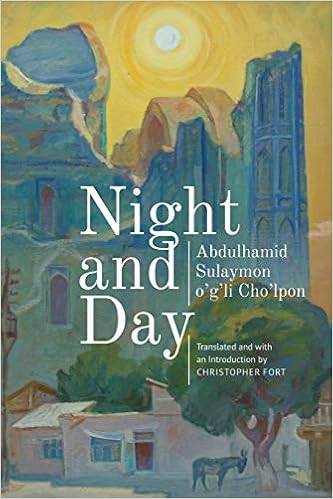
Night and Day by Abdulhamid Sulaymon o’g’li Cho’lpon, translated from Uzbek by Christopher Fort. This novel comes to us from the 1930s and is set at an earlier time, in Turkestan under Russian Imperial rule. “Despite increasing censorship and previous arrests by Soviet authorities, Cholpon subtly employs a variety of techniques including satire and farce to undermine the legitimacy of the Soviet government that was being established around him. Bitterly portraying the hypocrisy and collusion of jadid reformists, Muslim clerics and local Russian officials, this unfinished novel, which was halted by the author’s execution in 1938, remains as one of the darkest comments on Soviet Central Asian history in the Uzbek language,” wrote Shawn T. Lyon about this novel. An illuminating interview with the translator aired on a podcast New Books Network.

Pub Date: November 26, 2019
Publisher: Academic Studies Press

Translated from Uzbek by Shelley Fairweather-Vega, Hamid Ismailov’s GAIA, Queen of Ants is set in England in the milieu of Central Asian immigrants. ” The pivotal relationship in the novel is that between septuagenarian Uzbek émigré Gaia and Domrul, her young Turkish carer. Readers may recognize hints of Harold and Maude,” writes Joshua Bird in a review of this novel. “Contact with Gaia brings up [for Domrul] conflicting feelings of lust, shame and longing, and through their complex relationship, Gaia draws the young man into her dark world of infidelity, sexuality and secrets.”

Pub date: February 11, 2020
Publisher: Syracuse University Press

Good Citizens Need Not Fear is the first book by Maria Reva, who was born in Ukraine and grew up in Canada, and has published a number of the stories from this linked collection in the most prestigious journals of the English-language world, including Electric Literature, Granta, McSweeney’s, The Atlantic, and others. “Set in the Ukrainian town of Kirovka in the 1980s and starring a set of characters who live in the same block of flats, Maria Reva’s enthralling debut of interlinked short stories achieves the double effect of timelessness and timeliness,” Kapka Kassabova writes in The Guardian.

In addition to her fiction writing, Reva translates from French and writes opera libertti!

Pub date: March 10, 2020
Publisher: Doubleday Books

Nino Haratishvili’s The Eighth Life, translated from German by Ruth Martin and Charlotte Collins has been probably the best publicized book on my list. It is currently listed as #11 in “Russian Literature” on Amazon — woo hoo! This book opens in contemporary Berlin, but the family saga begins in Georgia, at the turn of the 20th Century, and follows the central characters to St. Petersburg during the Russian Revolution, and then on through time and geographical locations. “The Eighth Life is narrated by Niza Jashi, a Georgian expatriate living in Berlin, as she writes a history of her family for Brilka, her niece. The novel explores the ways that various characters are fated not only by the political tumult and government brutality of 20th-century Georgia but also by the legacy of a family curse,” explains Lori Feathers in an interview with Haratishvili on Lit Hub.

Pub Date: April 14, 2020
Publisher: Scribe US

Three Apples Fell From the Sky by Narine Abgaryan comes to English in translation by Lisa C. Hayden. Abgaryan was born in a small town in Soviet Armenia, and later moved to the capital of Armenia, Yerevan, and from there, to Moscow. Abgaryan fictionalizes her hometown in her work with tenderness and care, showing us a range of fascinating characters and a lifestyle that seems as though of a different century. This is Abgaryan’s seventh novel, and the first to be translated to English. Due to the pandemic, the pub date for this novel has been delayed to late August, but I encourage all of our readers to pre-order this book (it is already available for pre-order).

While we wait, read Katherine E. Young’s translation of an excerpt from Abgaryan’s earlier novel, People Who Are Always With Me, in Two Lines 31.

Pub Date: August 4, 2020
Publisher: ONEWorld Publications

Don’t forget to order from your favorite local bookshop, they need our help! Bookshop.org is a good second choice.

Making People Feel Uneasy: Joanna Chen in Conversation with Katherine Young

Katherine Young, a poet and translator, gave this interview on BLARB, the blog of the esteemed Los Angeles Review of Books. In 2018, Academic Studies Press published Young’s translation of the trilogy, Farewell, Aylis, by Akram Aylisli, currently a political prisoner in his native Azerbaijan (Young has spearheaded efforts to free him, including a recent petition circulated on social media). Olga Zilberbourg reviewed this novel, which Punctured Lines noted in our post. As we also noted, an excerpt from his novella, A Fantastical Traffic Jam, translated by Young, can be found here.

Young’s latest project is the translation of Look at Him by Anna Starobinets (Slavica, forthcoming 2020), an open, unflinching account of her abortion that was controversial when it came out in Russia. As Young says, “Women don’t talk about these things, even with their partners, so to write a book in which you expose the most intimate details of your body and the choices you made medically is a violation of a lot of subtle taboos about women who are supposed to grin and bear their trials and tribulations.”

Young also talks about being a poet and how much Russian poetry has shaped her own: “I feel very much more informed by Russian poets than most American poets. I’ve read Walt Whitman, but I don’t identify with him the same way I might say Alexander Pushkin or Mikhail Lermontov or Anna Akhmatova.”

You can read the full interview here: https://blog.lareviewofbooks.org/interviews/making-people-feel-uneasy-joanna-chen-conversation-katherine-young/

Notable Books: Russian Titles in English Translation, 2009-2019

The impetus for creating this post came from a recent Twitter discussion. We at Punctured Lines decided to accept a dare and came up with a list of notable Russian titles available in English translation from the last decade. This has been an opportunity to take stock of the years 2009-2019, both to remember the books we’ve read and to look back at those that we might have missed.

In this task, we relied heavily on Lisa Hayden’s blog, Lizok’s Bookshelf, where Lisa keeps chronological track of the English translations – our deep gratitude for creating and maintaining this resource. Our methodology for choosing among all those works was based on several factors. Rather obviously, for our purposes we only considered works by women. We also wanted to highlight writers whose names may not be very familiar to English-speaking readers but whose work we feel deserves wider exposure and shows the range of contemporary Russian women’s literature.

For this reason, we chose not to include writers who are well-known in the Anglophone world, but of course we love them too. We note proudly the women whose work has been translated into English numerous times: Anna Akhmatova, Svetlana Alexievich, Eugenia Ginzburg, Ludmilla Petrushevskaya, Dina Rubina, Olga Slavnikova, Marina Tsvetaeva, Ludmila Ulitskaya, and Tatyana Tolstaya (whose problematic views on women and feminism may be less known).

One or both of us have read many of titles below, and we’re happy to report that the field is larger than our reading capacity. We included a few books we haven’t read because they sparked our curiosity and to encourage ourselves and our followers to return to these publications. An important factor for consideration was translators whose work we’re interested in. Here we would like to say a huge thank you to translators for their often unacknowledged efforts that allow English speakers to know Russian literature.

Our list has four categories: Contemporary Prose, Contemporary Poetry, Recent Translations of Earlier Prose Works, and a rather catch-all Drama, a Graphic Novel, and an Anthology. The titles in each category are given chronologically by year of the translation. This list reflects our personal opinions and is in no way meant to be comprehensive or conclusive. We welcome your comments and suggestions about these and other titles by Russian women who you think should be on this list. This is, hopefully, the beginning of that conversation.

Contemporary Prose

Elena Chizhova, The Time of Women, translated by Simon Patterson and Nina Chordas; Glagoslav, 2012. 

Linor Goralik, Found Life: Poems, Stories, Comics, a Play, and an Interview, edited by Ainsley Morse, Maria Vassileva, and Maya Vinokur; Columbia University Press, 2017.

Ksenia Buksha, The Freedom Factory, translated by Anne Fisher; Phoneme Media, 2018.

Alisa Ganieva, Bride and Groom, translated by Carol Apollonio; Deep Vellum, 2018.

Margarita Khemlin, Klotsvog, translated by Lisa C. Hayden; Columbia University Press, 2019.

Guzel Yakhina, Zuleikha, translated by Lisa C. Hayden; Oneworld Publications, 2019.

Contemporary Poetry

Anzhelina Polonskaya, Paul Klee’s Boat, translated by Andrew Wachtel; Zephyr Press, 2012. 

Polina Barskova, Anna Glazova, and Maria Stepanova, Relocations: Three Contemporary Russian Women Poets, translated by Catherine Ciepiela, Anna Khasin, and Sibelan Forrester; Zephyr Press, 2013.

Maria Rybakova, Gnedich, translated by Elena Dimova; Glagoslav, 2015.

Inna Kabysh, Blue Birds and Red Horses, translated by Katherine E. Young; Toad Press, 2018.

Aigerim Tazhi, Paper-Thin Skin, translated by James Kates; Zephyr Press, 2019.

Olga Livshin, A Life Replaced: Poems with Translations from Anna Akhmatova and Vladimir Gandelsman, Poets & Traitors Press, 2019.

Recent Translations of Earlier Prose Works

Teffi, Memories: From Moscow to the Black Sea, translated by Robert Chandler and Elizabeth Chandler, Anne Marie Jackson, and Irina Steinberg; NYRB Classics and Pushkin Press, 2016.

Sofia Khvoshchinskaya, City Folk and Country Folk, translated by Nora Seligman Favorov; Columbia University Press, 2017.

Olga Berggolts, Daytime Stars: A Poet’s Memoir of the Revolution, the Siege of Leningrad, and the Thaw, translated by Lisa A. Kirschenbaum; University of Wisconsin Press, 2018.

Doba-Mera Medvedeva, Daughter of the Shtetl: The Memoirs of Doba-Mera Medvedeva, translated by Alice Nakhimovsky; Academic Studies Press, 2019.

Karolina Pavlova, A Double Life, translated by Barbara Heldt; Columbia University Press, 2019.

Irina Odoevtseva, Isolde, translated by Bryan Karetnyk and Irina Steinberg; Pushkin Press, 2019.

Drama, a Graphic Novel, and an Anthology

Yaroslava Pulinovich, Olga Rimsha, Ksenia Stepanycheva, Ekaterina Vasilyeva, Russian Drama: Four Young Female Voices, translated by Lisa Hayden; Glas, 2014.

Victoria, Lomasko, Other Russias, translated by Thomas Campbell; Penguin and n+1, 2017.

Teffi, Marina Tsvetaeva, Anna Akhmatova, Lydia Ginzburg, Galina Scherbakova, Ludmila Ulitskaya, Svetlana Alexievich, Olga Slavnikova, Irina Muravyova, Ludmila Petrushevskaya, Margarita Khemlin, Slav Sisters: The Dedalus Book of Russian Women’s Literature, edited by Natasha Perova; Dedalus, 2018.

Translator Christopher Fort on Uzbek writer Abdulhamid Sulaymon o’g’li Cho’lpon

A note from the publisher: This November, Academic Studies Press will publish the first English translation of Cho’lpon’s Night, the first half of an unfinished dilogy whose intended second book, Day, was lost when Chol’pon was executed by Stalin’s secret police in 1938.

Stalinism undoubtedly robbed the Uzbek people and the world of an incredible talent at a young age—Cho’lpon was most likely 41 when Stalin’s secret police, the NKVD, took his life—but it is because of Stalinism and Cho’lpon’s erasure from Soviet Uzbek life that the author is so interesting and enigmatic a figure today. The absence of information about his life and his oeuvre echoes across history and continues to affect how Uzbek audiences relate to the author. This absence provides opportunities for individuals to offer differentiated and heterogenous interpretations of the author’s biography, his art, and consequently, Uzbekistan’s past, present, and future.

Continue reading the essay here.

National Translation Month 2019: Featured Excerpts from Russian, French, and Uzbek Literature in Translation — Academic Studies Press

Academic Studies Press has published an impressive sampler that includes excerpts from their upcoming books and back catalogue. I can’t help but wish the list included more female writers, but I’m intrigued by Luba Jurgenson’s work–she’s a fellow bilingual, combining Russian and French.

https://www.academicstudiespress.com/asp-blog/national-translation-month-2019

The books included are:

Farewell, Aylis: A Non-Traditional Novel in Three Works by Akram Aylisli, translated from the Russian by Katherine E. Young

Night and Day by Abdulhamid Sulaymon o’g’li Cho’lpon, translated from the Uzbek by Christopher Fort

Beyond Tula: A Soviet Pastoral by Andrei Egunov-Nikolev, translated from the Russian by Ainsley Morse

Where There Is Danger by Luba Jurgenson, translated from the French by Meredith Sopher

21: Russian Short Prose from an Odd Century, edited by Mark Lipovetsky

The Raskin Family: A Novel by Dmitry Stonov, translated from the Russian by Konstantin Gurevich & Helen Anderson with a forward and afterword by Leonid Stonov

Russian Cuisine in Exile by Pyotr Vail and Alexander Genis, translated from the Russian by Angela Brintlinger and Thomas Feerick