Emily Couch on The Ethnic Avant-Garde and Diversity in Russia Studies

By Emily Couch

In 2015, Steven S. Lee published the monograph The Ethnic Avant-Garde: Minority Cultures & World Revolution. It may seem strange to write about a book four years after its publication, but the continued lack of racial and ethnic diversity in Russia studies makes Lee’s work more relevant than ever. Today we should consider The Ethnic Avant-Garde as not only a valuable source of information and analysis on a much neglected topic, but also as a springboard for reconsidering the field’s methodologies, as well as dominant political discourses on the region and its Soviet past. 

WHAT IS THE BOOK ABOUT?

Lee defines the “Ethnic Avant-Garde” as referring to the diverse artists and writers who engaged with the Soviet Union from beyond its borders, but his central contention is that the phrase defines a  “largely unrealized utopian aspiration […] the dream of advancing simultaneously ethnic particularism, political radicalism, and artistic experimentation, debunking the notion that particularism yields provincialism.”  The Ethnic Avant-Garde, he adds, “foregrounds a distinct way of seeing – a ‘transnational optic’ that, for the contemporary reader, makes it possible to discern unexpected connections among radical artists and writers from many different countries.” The book does not idealize the Soviet system or its minority policy, but rather argues that foregrounding the Ethnic Avant-Garde facilitates a “minority and Soviet-centered remapping of global modernism” and “provides for new scholarly and creative communities in the present day.”

Chapter 1 analyzes the cultural exchange between Vladimir Mayakovsky and Langston Hughes by looking at the way in which the latter translated and adapted the poetry of the former. Chapter 2 considers Sergei Tretyakov’s play Roar, China and its reception in the United States. Chapter 3 looks at Hughes’ famous dismissal of the planned Soviet movie about African American struggles, and Chapter 4 addresses the complex attitude of American Jews towards socialist internationalism.  Overall, the book covers the inter-war period from 1918 to 1939.

REVIEW OF THE BOOK 

The strongest suit of The Ethnic Avant-Garde is the multitude of significant, but little known, examples of cultural interaction between Western ethnic minorities and the Soviet Union. Perhaps the most emblematic of these is Lee’s analysis of Vladimir Mayakovsky’s “Black & White” (1925) – a poem in which Willie, a black sweeper at an American cigar company in Havana, slowly gains awareness of racial inequity – and its subsequent translation into English by Langston Hughes in the 1930s. Through analysis of word choice, form, and rhythm, Lee reveals the cultural collaboration that took place between these seemingly disparate authors (even though Mayakovsky was no longer alive by the time of Hughes’ translation), and highlights the way in which Hughes not only translated Russian into English, but also represented Afro-Cuban culture in a way that was comprehensible to an American audience.  Another strength of The Ethnic Avant-Garde is that its content – the book covers multiple ethnicities, including African American, Asian, Afro-Cuban, and Jewish – reflects Lee’s mission to “delineate an avant-garde grouping that cuts across racial, ethnic, and national boundaries.”

This ambitious motivation is, in part, responsible for the book’s shortcomings.  The concept of the Avant-Garde is inherently abstract (think of Kazimir Malevich’s paintings), so it is not surprising that Lee’s writing style is heavily theoretical – his use of Vladimir Tatlin’s Monument to the Third International (1919 – 1920) as a visual metaphor for the Ethnic Avant-Garde is a prime example of this tendency.  The plethora of abstract concepts with which Lee grapples frequently leads to dense and obtuse paragraphs that would make little sense to a reader who was not well-versed in the theoretical underpinnings of modernism. Terms such as “Freudian melancholia” and “Now-Time,” for example, receive little explanation. This trend carries through to the final chapter which, instead of bringing the book’s narrative to a close, offers yet more theorization – this time, focusing on how Karen Tei Yamashita’s I Hotel (2010) negotiates the “eternal idea” of Mao’s Cultural Revolution and its reality.  While the discussion of Yamashita’s work is rigorous, it does feel like something of a non sequitur in a book that primarily discusses the Soviet Union.

WHY IS IT SIGNIFICANT?

Let’s turn to methodologies. Russia studies, like every field of area studies, is an umbrella term that houses multiple disciplines – namely, international relations, political and social science, history, literature, art, and language.  Yet, while Russia studies is a broad church, there is a strange lack of interdisciplinary dialogue, particularly when it comes to the international relations and political science strands.  For scholars of literature and art, it is natural to draw on the research in these fields in order to understand the backdrop of, and worldview encoded in, the work. However, there is little in the way of reciprocal influence due to the unfortunate tendency among IR and political science scholars to see their disciplines as detached from the “softer” realm of cultural studies. The Ethnic Avant-Garde embodies the fruitful results of this kind of interdisciplinarity work.  Lee himself is an Associate Professor of English Literature at Berkeley, but he uses the techniques of literary analysis in order to draw wider conclusions about the social and political nature of the relationship between the Soviet Union and ethnic minorities abroad.  

Interdisciplinary methodologies, in turn, prompt a rethinking of Western political discourse on the Soviet Union. Understanding the cultural ties and, indeed, the cultural attraction that it exerted for Western ethnic minorities invites a critical reassessment of the traditionally antagonistic Cold War rhetoric. The dominant U.S. rhetoric of the Cold War period posited the Soviet Union as the antithesis to American ideals of democracy and capitalism.  Encoded in this rhetoric, however, was the pervasive inequity in racial relations, especially regarding the African American community. Thus, anti-Soviet discourses erased the experiences of those ethnic/racial groups who were not included within these “patriotic” ideals. Granted, The Ethnic Avant-Garde does not technically cover the Cold War (i.e. post-World War II) period.  However, its final chapter does suggest that the People’s Republic of China – founded in 1949 – offered a beacon of hope for Western ethnic minorities. The nuancing called for by Lee’s work, in turn, spotlights the ever growing need for greater diversity among the practitioners and scholars who study the region.

THE PERSONAL IS POLITICAL 

The iconic slogan of the 1960s and 70s women’s movement has been repeated to the point of banality over the last six decades, but this does not mean that it is any less relevant today. Academic book reviews rarely mention the author’s personal biography, but in this discussion of racial and ethnic diversity in Russia studies it is salient to point out that Lee himself – as he writes in the Acknowledgements – is the child of Korean immigrants to the United States.  He is among the few ethnically East Asian scholars in Russia studies (other examples being Notre Dame’s Emily Wang and UPenn’s Brian Kim). Lee’s personal background makes The Ethnic Avant-Garde political: beyond its specific content, the very fact that a seminal contribution to the field has been made by a person of color is, in itself, worthy of celebration. Most significantly, however, is that The Ethnic Avant-Garde points to the way diversity in the profession can facilitate a dramatic reinterpretation of the Soviet Union’s place in the global cultural space by foregrounding the inter-ethnic and inter-racial connections that the present Eurocentric scholarship has overlooked.

Emily Couch is a Staff Intern at the Kennan Institute.  She recently completed a double Master’s degree in Russian & East European Studies at University College London and the Higher School of Economics (Moscow). She has just returned from a year living in Russia where, in addition to her degree, she interned with the independent Russian pollster, The Levada Center.  Earlier this year, she defended her thesis entitled The Inter-regional Diffusion of Russian Protest Repertoires in a Trans-National Context, 2008 – Present.  Her articles have been published by news outlets including The Moscow Times and The Calvert Journal.
Twitter: @EmilyCouchUK

Looking Back on Our First Event: Participatory Reading in Post-Soviet Literatures, in Pictures

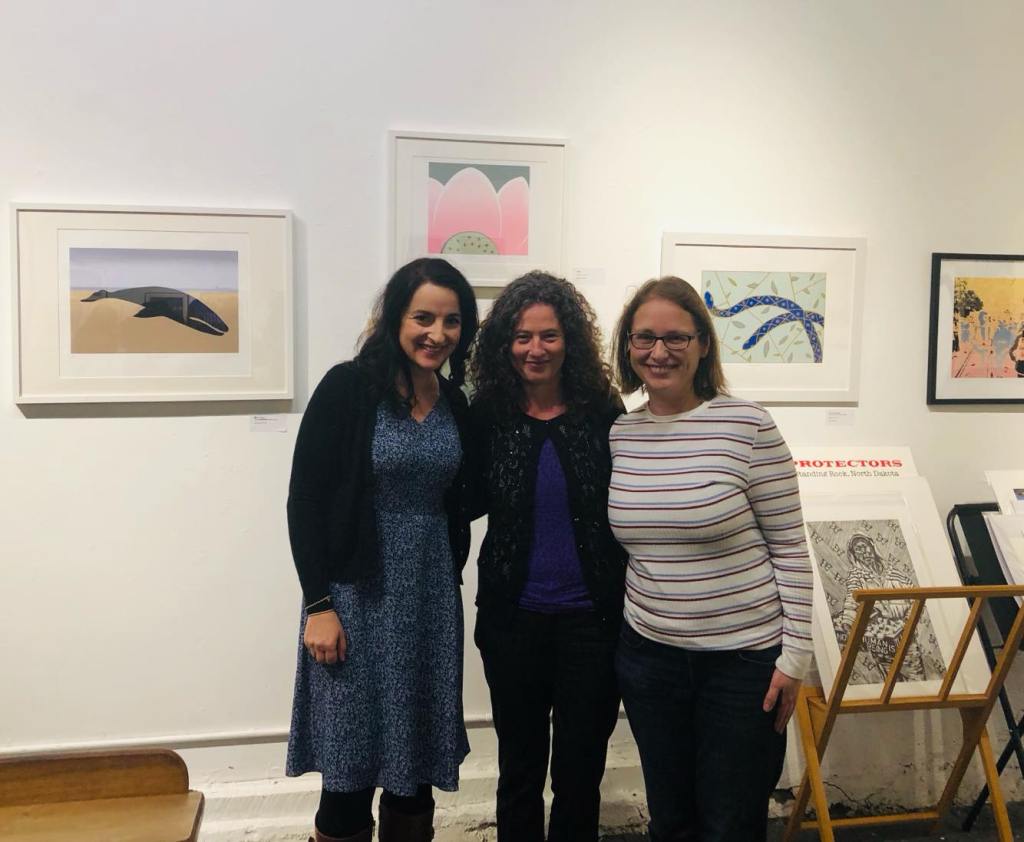
On November 25th, Punctured Lines hosted our first literary event in San Francisco. Thanks to a conference that brought to San Francisco scholars, translators, and writers in Slavic, East European, and Eurasian Studies, we were able to gather a star list of participants. A few of the readers have appeared in Punctured Lines, and we certainly hope to feature more of their work. Following the scheduled portion of the event, we hosted an open mic that turned out to be a great crowd-pleaser. Below are the pictures we captured that night and brief descriptions of everyone’s contributions.

Shelley Fairthweather-Vega opened with an excerpt from her recently published translation of Talasbek Asemkulov’s novel A Life at Noonavailable for purchase here. A story about a musician growing up in Soviet Kazakhastan and learning his art form from his father.

Yelena Furman read the opening from her short story “Naming,” recently published in Narrative Magazine, and available in full online (free, with free registration required).

Wayne Goodman read a few brief excerpts from his historical novel Borimir: Serving the Tsars that re-imagines gay romance in Imperial Russia. There’s lots of awkward flirting! This book is available for purchase on Amazon.

Maggie Levantovskaya read from her essay about a trip to Auschwitz concentration camp “To Conjure Up the Dead,” published in Michigan Quarterly Review. The bizarreness of Holocaust tourism with the post-Soviet twist. An excerpt from this essay appears online.

Dmitri Manin wore the T-shirt with Genrikh Sapgir’s poem on the back, and read to us his translations from Sapgir’s “Poems on Shirts” book. We have published three of these translations in an earlier post.

Masha Rumer shared an essay about exposing an unsuspecting date to the delights of pickled herring-and-boiled beet salad, aka “Seledka pod shuboj.” He lived long enough to propose. We’re hoping to read the follow up on this story in her upcoming book, Parenting with an Accent: An Immigrant’s Guide to Multicultural Parenting. More about Masha and her book in the Q&A she gave Punctured Lines.

Sasha Vasilyuk followed with an excerpt from her novel-in-progress about a Soviet prisoner of war. We will be following the development of this project closely.

Mary Jane White delighted us with her translations from Marina Tsvetaeva — her delivery of the “Ode to the Rich” landed particularly well with our audience. Mary Jane’s book of her own poetry and translations from Tsvetaeva Starry Sky to Starry Sky is available online. We will be following up with news of her upcoming book of translations from Tsvetaeva’s Berlin and Prague years, Poems of an Emigrant: After Russia, Poem of the Hill, Poem of the End, and New Year’s.

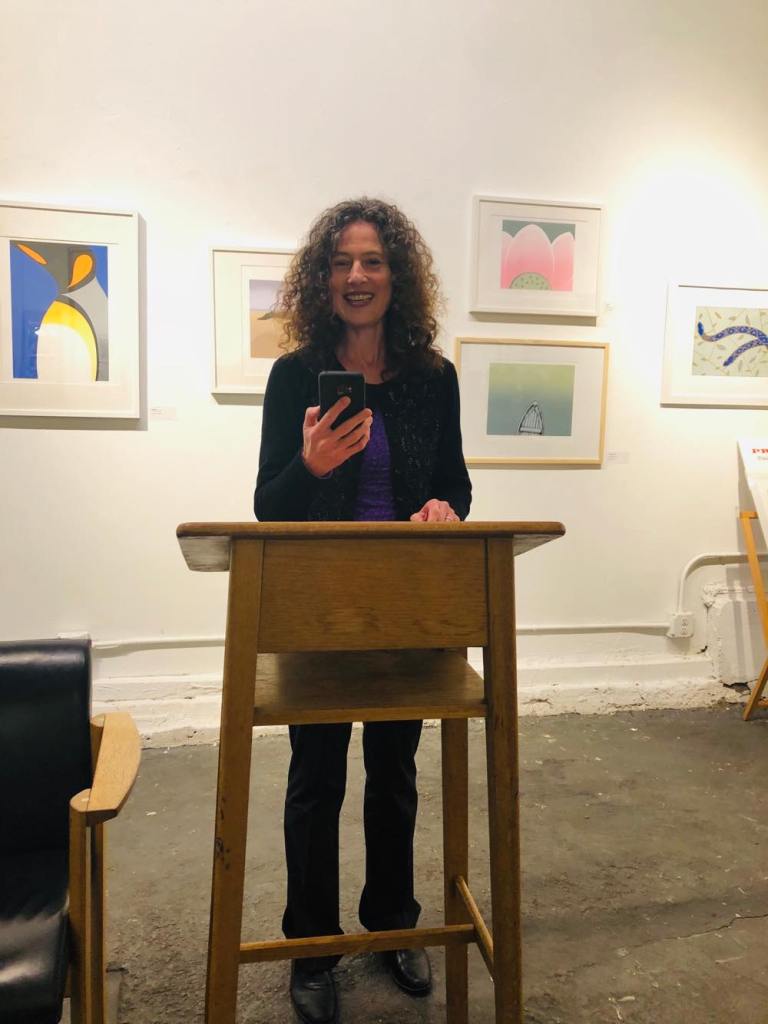
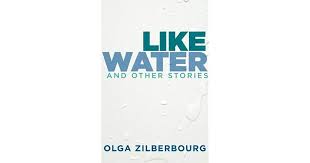
I read the opening of “Rubicon,” a short story from my collection Like Water and Other Stories.

Josie von Zitzewitz followed up on the thread of discussion about the lack of visibility of contemporary Russian literature in the United States, and introduced a project that she’s developing with Marian Schwartz and Hilah Cohen, soliciting work from young Russophone writers to create a feature publication in an American magazine (possibly more than one).

Joining us for the open mic portion of the show, we had Maxim Matusevich, a writer and a historian of USSR intersections with African countries. He delivered an excerpt from his hilarious short story about cultural encounters between American students going to study abroad in St. Petersburg.

Christopher Fort closed the evening with a poem that he read in both Uzbek and English, bringing our attention to a particular rhyming pattern of Turkic languages. We have previously linked to Christopher’s interview about translating Abdulhamid Sulaymon o’g’li Cho’lpon novel Night and Day. This novel is now available for purchase online.


Overdue Praise for Karolina Pavlova’s Work

Karolina Pavolva was born in 1807 in Yaroslavl, Russian Empire, and published her novel A Double Life in 1848. This year, 171 years after the original publication, Columbia University Press gave this book a new life by releasing Barbara Heldt’s translation in their stellar Russian Library series.

The publisher calls the book “an unsung classic,” and I’m so pleased to see that this book is receiving the attention it deserves. In November, Talia Zax wrote a wonderful review of it for The Atlantic:

The slim mixed-genre novel . . . follows the 18-year-old Cecily von Lindenborn as her mother attempts to find her a husband. Cecily’s days, written in prose, are filled with the pleasures of a rotely feminine aristocratic life: romance, balls, and new dresses. But at night, her dreams are narrated in poetry, sensual verses with an intense pull toward the natural world. Pavlova constructed a strikingly prescient psychological vision: a mind responding to extreme social pressure by slowly and completely separating itself into parts, but giving few external indications of change.

https://www.theatlantic.com/entertainment/archive/2019/11/karolina-pavlova-double-life-translated-barbara-heldt-review/601342/

Pavlova had a long and underappreciated career in Russia as a poet, and I’m very pleased to share a recent translation of her poem “Moscow” by Katherine E. Young. (Scroll down to the third entry.)

Genrikh Sapgir’s Sonnets: A Performance from ALTA

On November 9th, 2019, Olga Livshin, Dmitri Manin, and I hosted an off-off-site at ALTA (American Literary Translators Conference) in Rochester, NY. Olga Livshin introduced A LIFE REPLACED, her hybrid collection combining own and translated poems; and I introduced LIKE WATER AND OTHER STORIES, my English-language collection of fiction. Both books deal with issues around parent and children relationships, immigration, and processing the complex inheritance that we brought to the US from the Soviet Union.

To open the evening, we staged a brief performance of Dmitri Manin’s translations from the work of Genrikh Sapgir. A Soviet Jewish poet, Sapgir combines a whimsical imagination with the sharp eye for telling details. Watching this video a few weeks after the performance, I’m surprised to see how effectively Sapgir’s images and Dmitri Manin’s words helped us to recreate a certain spirit of the late Soviet Union, a kind of festive carnivalesque environment in the face of increasing challenges of everyday life and crumbling social structures. Obviously, none of us are trained actors, but we all reveled in the performative aspect of Sapgir’s work.

These poems come from Sapgir’s book “Sonnets on Shirts” that was first published outside of the Soviet Union, in Paris in 1978. Dmitri Manin is working on translating the complete manuscript, and we’re publishing these sonnets in English with his permission.

Thanks to Shelley Fairweather-Vega for recording the performance, and to our lovely and supportive audience! The sonnets below are reproduced in the order in which they appear in the video.

Sonnet of Things Gone Missing

To Ian Satunovsky

At times there is — no beef or ham or cheese
Now hats are gone from store shelves everywhere
But I have known calamities to spare
No place to live. No health. No relatives

No happiness no moral sense no peace
For one’s own labor no respect nor care
No warm and comfy place to take a piss
No prospects for a harvest come next year

But there are FISH-BASED MEATBALLS in a can
And goals — both hazy and utopian
Betrayal cosmos vodka boredom missiles

There’s forest, steppe, construction and ballet
And even people — somewhere far away
And God’s my witness! — though God’s also missing

Something — Nothing

A metaphysical sonnet

A sphere swings. Towards the sphere
A sphere swings. Where they meet, they all
Collapse: one — a pair, one — a pair, one — a pair
We watch from a spherical mirror hall

Everything’s a reflection. A ball or a troll
A thing or a cloudю It swells like a nightmare
Then without a crash… a ball disappears a ball disappears a ball disappears
Gobbled up by a ball

Streaking and splitting they fold and go —
In the third — in the tenth — all the host to the faux
Infinity: one after the next the next the next the next the next the next the next the next the next the next etc.*

Stop it! Enough! I can’t stand this ordeal!
A ball on a thread in an infinite reel —
A universal game on a childish pretext

*The line stretches to a misconceived infinity. 

Chart of Life

Three wise old men bent over to review
A chart of life in their benevolent wisdom
“He’ll be a poet… under socialism…”
“A wretched fate, indeed” said Lao Tzu

So I was born here not without a reason…
Wartime… cat scavenging the yard for cukes…
Oppression by the bastards and the crooks…
The tedium was stifling like a prison!

And suddenly — a trip to Singapore
On this sweet break from the routine and chore
I saw a mural in a Buddhist temple

On which among pagodas and bamboo
Three wise old men bent over to review
A chart of life and smiled around the table

Podcast: Olga Zilberbourg in Conversation with Jennifer Eremeeva

Olga Zilberbourg spoke with Jennifer Eremeeva about Like Water and Other Stories (WTAW Press) in a podcast for The New Books Network. It’s a fantastic interview, including about cultural misunderstandings, which starts with Olga reading the inventive and touching “Dandelion” from her collection. Listen to the conversation and follow Jennifer on Twitter @JWEremeeva – we do!

“A new generation of Russian emigres is blessed — or cursed — with the ease of long-haul flights and frequent flyer miles, Skype and FaceTime, Google translate, and regulations that seem anyway to be more forgiving about former citizens traveling to and fro. For them, the border has become far more porous than it ever was, and the choices are now more nuanced. However, there are still plenty of cultural minefields to navigate. To this generation that includes writers as disparate as Gary Shteyngart and Irina Reyn comes Olga Zilberbourg with a new collection of short stories, ‘Like Water and Other Stories.'”

https://jennifereremeeva.com/like-water/

Interview with Olga Zilberbourg by Odette Heideman

A Q&A with Olga Zilberbourg in Epiphany Magazine about LIKE WATER AND OTHER STORIES (WTAW Press):

“As a writer, when I’m structuring a collection of stories, I make an assumption that, like me, my readers are interested in the human being who shows up most fully in the white spaces between one’s story ending and another’s beginning. From the information on the cover alone, my reader knows that I’m a woman, that I grew up in the Soviet Union, and that I live in the US and I write in English. So, yes, nearly automatically, my story is framed as an immigrant’s story. Then comes the interesting part.”

http://epiphanyzine.com/features/2019/11/27/short-form-olga-zilberbourg  

Image result for like water and other stories images

Alicia J. Rouverol on Olga Zilberbourg’s Like Water and Other Stories (WTAW Press, 2019)

A recent review singing the richly deserved praises of our own Olga Zilberbourg’s debut English-language collection, LIKE WATER AND OTHER STORIES, out now:

“In an era of ‘short shorts’ hailed in by the venerable Lydia Davis—and culminating in ‘the fragmentary’ in the recent Nobel Prize-winning work of Olga Tokarczuk—one wonders if there remains space for a new collection of shorts: stories that up-end expectation and offer distinctive voice and lesser charted areas of exploration. San Francisco-based, Russian émigré writer Olga Zilberbourg, in her first story collection published in English, allays that concern. Zilberbourg is author of three Russian-language story collections; her fiction has been widely published in esteemed US literary journals; and she has won numerous prizes, including the Willesden Herald International Short Story Prize in 2016. A native of Leningrad, raised in St Petersburg, Zilberbourg moved to the US in 2006 to study at the Rochester Institute of Technology, later earning the MA in Comparative Literature at San Francisco State University.”

http://www.themanchesterreview.co.uk/?p=11103

A recap of the Russian-language panels from the American Literary Translators Conference #ALTA42

At the beginning of November 2019, the American Literary Translators Association hosted its annual conference in Rochester, NY. This annual conference is a delightful opportunity to hear about issues that concern translators across the board, and also to dive deeply into conversations about specific language tracks. We asked Dr. Muireann Maguire and Dr. Cathy McAteer, attending from the UK, to share Twitter log of their conference experience.

Drs. Cathy McAteer and Muireann Maguire’s visit to the conference was in conjunction with the project they’re running at the University of Exeter. It’s called RusTrans: ‘The Dark Side of Translation: 20th and 21st Century Translation from Russian as a Political Phenomenon in the UK, Ireland and the USA’ (Horizon 2020, Grant Agreement No.: 802437). This project looks at the practice of translation as a political activity, “often subverted by ideological prejudice or state interference.” They are using very creative and unexpected ways to analyze this political side to translation, looking at the reception of Russian literature in (primarily) English-speaking countries.

To learn more, please visit their gorgeous website. Their project email is rustrans.exeter.ac.uk and twitter handle is @Rustransdark.

Friday 08th:

First #alta42 session of the afternoon: slavic bilingual readings. We’re kicking off with Jim Kates’s reading of Aigerim Tazhi’s Kazakh poetry.

Next up, Bulgarian. Izidora Angel reading her translation of Nataliya Deleva. Sounds fabulous in the original!

Tatiana Samsonova reading an excerpt and her translation of a novella by the Georgian-born, Canada-living writer Elena Botchorishvili

A vibrant, colourful reading. Feels like USSR meets Laura Esquivel. Excellent. I’ll look forward to reading more back home #ALTA42

Fabulous and courageous impromptu poetry recital, Chukovsky’s Мойдодыр becomes ‘Gotta Scrub’. Anna Krushelnitskaya, good luck with your pitch! #ALTA42

#ALTA42 cold readings at the Rochester spirit room bar

Saturday 09th day at ALTA42:

At the #ALTA42 independent presses’ round table with editors from (left to right from second left)@FeministPress @NewDirections @CatapultStory and@nyrbclassics. They all welcome direct submissions from translators – hoping they get out of this room alive!

Acquisitions editor for @nyrbclassics being honest – “interesting manuscripts come in every day. They are a joy, but we are few, and sometimes we just cannot make a decision quickly. It takes about two years just to fit a new publication into our schedule”.

Reminiscing the fall of the Berlin wall, a significant moment in our lives #ALTA42

And now it’s@OlgaLivshin‘s turn to take the stage with #translations of Akhmatova, Gandelsman and her own poetic treats. And the audience keeps growing! #ALTA42

It was great. Well done @bowlga! I loved the short story about you staying at your grandmother’s in Karelia 🙂 Lovely to have coincided with you here!!

Sunday 10th: A bumper day for Russian!

Gilded Cage tweets

And now for something really special! Russian fiction outside its gilded cage with @mbs51, @Hilah_Kohen, Shelley Fairweather-Vega, and Olga Bukhina. #russianliterature #translation #ALTA42

Intro by Marian Schwartz:

We (Russian literary translators) have very poor visibility, we don’t publish with the publishers that win prizes, our books don’t make it to the shortlists

Russian literature is a “goldmine, not a golden cage”, says Olga Bukhina (far right) at the #ALTA42 “Russian Fiction Out of Its Gilded Cage” panel. Shelley Fairweather-Vega (far left) is about to talk about Uzbek and Central Asian authors.

First up, Olga Bukhina discussing the explosion of #YAfiction in Russia in last 10yrs and its invisibility outside of Russia in #translation #ALTA42

Translation publishing of #YAfiction still can’t resist a #Russian stereotype even tho there’s a huge cohort of Russian writers for teens, writing about normal, everybody kids

And now Shelley Fairweather-Vega speaking about her work translating #Russian, #Uzbek, #Kazakh literature into English. Complexities include relay translation, language overlap, no publishing infrastructure (beyond a Sovietised Writers’ Union). Fascinating!

And now it’s @Hilah_Kohen speaking about new writers, new media: examining how we serve the writers we have, what writers publish outside of print, how they shape a persona digitally and using which media. An #alta42 tour de force!

The Politics of Being Heard

Our panel started by going back in time for an overview of who translated and published what and why and when. Muireann started proceedings: she examined the political reasons behind Ireland’s era of translating Russian literature into Irish in the early 20th century, and homed in on the translation career of a young Irish woman called Daisy Mackin who had spent time in Stalin’s Russia and translated Turgenev and Chekhov for the Irish Free State’s literary translation project An Gum.

Cathy shifted the historical focus to the mid-twentieth century, examining Penguin’s contribution to Russian literature in Anglophone translation. She introduced the Penguin Russian Review, with its pro-Russian sentiments, the Penguin Russian Classics and the translators who aspired to project a more accurate image of Russia abroad via translation, and Penguin’s role in publishing Soviet literature: the (expensive and hasty) race to publish Solzhenitsyn.

Boris succeeded in succinctly summarising all eras of Russian literature in translation(!), reminding us that the first copy of Gogol’s Dead Souls was wrongly but quite deliberately depicted as real life, and that the doyenne of Russian literary translation Constance Garnett herself had been galvanised to become a translator because of the highly politicised Russian company she kept in London. Boris neatly brought us back to the present day with his thoughts on where Russian literary translation is currently at, and how the translator (rather than the author) can be a vehicle for selling books; trust in the translator can be all the encouragement a devoted reader needs to try an author they’ve never read before.. which led nicely to Kate Young’s overview of the industry today…

Kate discussed her own proximity to the politics of being heard, touching on the role her translation has played in publicising Azerbaijani author Akram Aylisli’s Farewell, Alys. Kate had also gathered a breadth of views from (absent) Ruth Akhmedzai Kemp and Lisa Hayden who both had observations and questions about the Russian literary translation industry. Discussion ranged from extolling the good work of small publishers and exploring reasons why big publishers are cautious to commission contemporary Russian literature (it’s the Classics that keep on selling!); the role of agents, prizes, and how maybe the time has come for publishers to set aside some of the funds for supporting bigger translation samples, in other words: compensating translators while they prepare for a pitch.

The @ExeterModLangs #RusTrans team, Dr@MuireannMaguire and Dr@CathyMcAteer1, presenting on our panel #ThePoliticsOfBeingHeard at #ALTA42 with translator and editor Boris Dralyuk and panel organiser, poet & translator Katherine Young.
Read Armenian Women: Suggestions

A fascinating reading list of the work by Armenian women writers. Reblogging from Anahit of Erebunis, “an online platform that aims at celebrating the strength, resilience and wisdom of Armenian women in order to give them the place they deserve in our history and the knowledge of our common heritage and culture.”

anahitoferebuni's avatarAnahit of Erebuni

Following my Op-Ed for the Armenian Weekly titled Searching for Our Voice(s) amidst the Erasure of Armenian Women’s Writings, I have started a (non-exhaustive) list of writings by Armenian women (mostly in English) that I have read or would like to read, in case it can interest you too!

There are both resources available online, and books with links to online shops. I will keep adding up to the list as I learn more! Hope you enjoy it!

IMG_2414 Zabel Yesayan, @anahitoferebuni, originally for ARMAT

View original post 175 more words

Yelena Furman’s short story “Naming” published in Narrative Magazine

We congratulate our own Yelena Furman on her first ever fiction publication. Her story “Naming” appears in the Fall 2019 issue of Narrative Magazine. It centers an immigrant protagonist — Sofia, Sonia, Sonechka — who moves back to Moscow in 1992 for a job copyediting “one of the many publications springing up in the newly liberalized atmosphere now that the Soviet Union had collapsed.” This is a delightful tale of search for identity, romance, a connection with the place, and, of course, books.

The story is available online after a free registration to the website. If it resonates with you, please leave a comment on the website, write back to us or to the author directly. Publishing short stories can be a lonely business, and the most effective way to support a writer is to comment on the work you love.

From early on, the most significant episodes of my life were bound up with books. I was reading Eugene Onegin when we left the Soviet Union, The Seagull when I lost my virginity, and the Russian realists when I fell in love, a process that spanned several authors. I was in my last year of college, in 1992, when I met Daniel, a graduate student. I caught him looking at me during our first class meeting for a seminar on nineteenth-century Russian fiction. He didn’t look away when I met his stare, which betrayed too much self-confidence on his part yet was oddly intriguing. We didn’t speak, but for the next few weeks I would continually feel his bright-green eyes on me. Daniel’s eyes were his most striking feature; they had the ability to bore into you with an unearthly intensity and leave you feeling as though you’d just been seen through to the inside.

https://www.narrativemagazine.com/issues/fall-2019/fiction/naming-yelena-furman