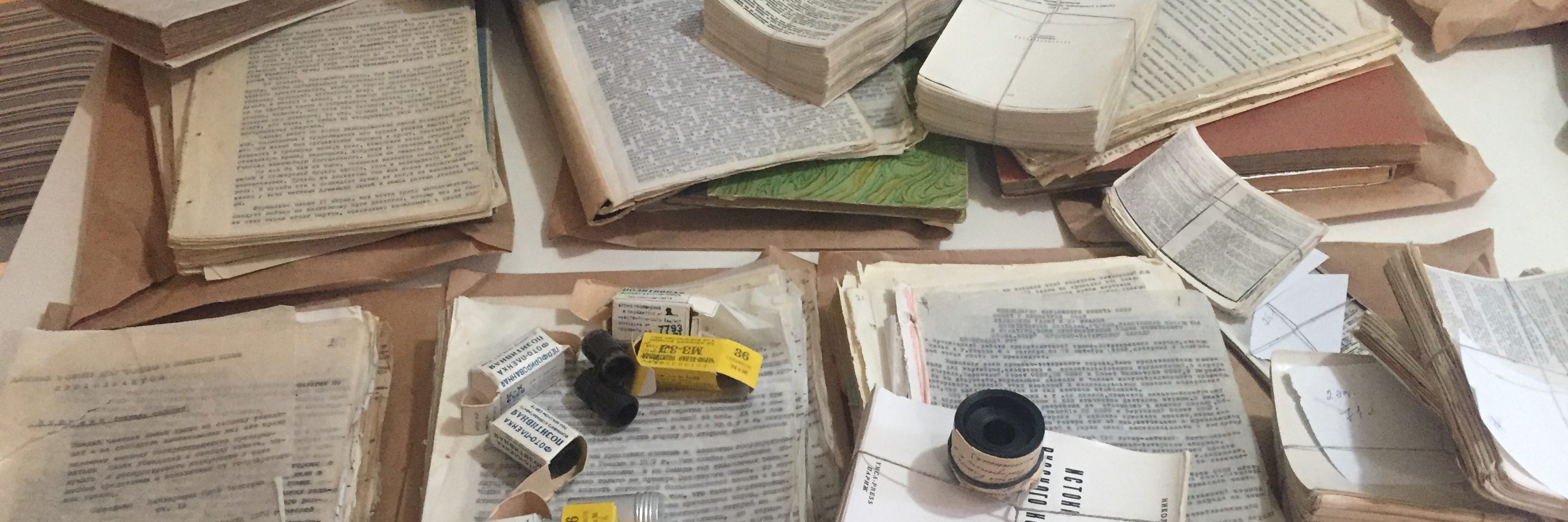
On September 27, 2020, Punctured Lines hosted our first ever Zoom event dedicated to the publication of LOOK AT HIM by Anna Starobinets, translated from Russian by Katherine E. Young. The author and the translator were joined on Zoom by scholar Dr. Muireann Maguire from the University of Exeter, UK to discuss this important book and the what it has to give to its English-language audiences.
To keep up with the conversation about Look at Him, including interviews, reviews, and other links, please visit translator Katherine E. Young’s website.
Anyone interested in the cover artist can find Ghislaine Howard’s work on her website.
Anna Starobinets is a Russian journalist, novelist, screenwriter, and children’s book author. Her only book of non-fiction, Look at Him, is coming out in September from Slavica Publishers in Katherine E. Young’s translation. It was originally published in Russia in 2017 and caused an extraordinary public discussion. In Look at Him, Starobinets describes how, in 2012, she found out that the baby she was carrying had a congenital condition incompatible with life, and how, following a dehumanizing experience with the medical system in her own country, she had to travel to Germany to terminate her pregnancy and to receive grief counseling – a thing practically unheard of in Russia at the time.
The incredible outpouring of outrage and vicious criticism that followed the book’s publication is perhaps explained by the fact that it was the first of its kind: in Russia, it’s still the norm to keep silent about one’s grief. I spoke with Anna about her book in order to better understand why it had created such a scandal and what changes in medical practices it had helped bring about.
When did you come up with the idea of writing this book?
The thought first occurred to me when I spoke to a psychologist in Berlin and I saw all the books she had on her shelves about losing a child, in many different languages. I guessed that there were no books of this kind in Russian, which later proved to be true. After I terminated my pregnancy, I felt a need to absorb somebody else’s experience that was similar to mine, so I read a couple of books in English, but, even though my English is pretty good, there’s still an invisible wall between me and a text in this language. That’s when I started seriously thinking about writing about my own experience – I felt that it was my social mission. After the book came out, the most benign criticism I received was that I’d written it in order to sublimate my suffering and to dump it onto other people. I have no idea if there’s any truth to this accusation: you never know where the subconscious is concerned. But I can tell you that that was not my conscious goal. I felt that I had a duty to change the world using the only power I had – the power of the written word. My overarching goal was to break the silence, and I also had some smaller goals. For example, I wanted the doctors who had behaved unprofessionally towards me to stop working with women. That’s why I decided to use their real names.
Have these micro goals been accomplished?
Partially. One doctor I’d written about left his job. I don’t know if my book was the reason, but I know for certain that his reputation suffered. The clinic he’d worked in also organized a training session for their staff with the purpose of teaching them how to deliver bad news to pregnant women. I know that the director of one large private clinic in Moscow made all the obstetricians and gynecologists on his staff read my book. Also, some time later, a hospice was founded in Moscow for women who are pregnant with babies with congenital conditions. There, the women can receive medical help, no matter what decision they ultimately make.
I feel that we have to explain to American readers why everything that has to do with obstetrics and gynecology in Russia carries so much violence towards women. What are your thoughts on that?
There are historical reasons for that. In the USSR, a spartan outlook on life was widespread and almost official: only the strongest were supposed to survive. If you were weak, you couldn’t be a part of the great Soviet system. If you were in pain, you had to keep a low profile. This spartan ideology was curiously fused with even more ancient concepts. For instance, childbirth was considered to be a punishment for pleasure: if you’d been with a man, you had to bear the consequences. A woman in labor wasn’t supposed to cry out in pain and ask for special treatment, more so because this whole sphere was viewed as obscene and dirty, connected to blood and slime. All of that had come from the depths of a conservative peasant mentality. A lot of traditional cultures hold similar views, but in developed countries these have been replaced by modern-day values.
In Look at Him, you write about coming to a state women’s clinic in Moscow together with your husband for a consultation and him not being allowed inside. Why do you think men are barred from entering these clinics in Russia?
This, of course, is true only of state clinics [vs. privately funded – PL] that are still under the influence of old Soviet traditions. It was believed that no woman who had any sense would want her man to see her under those indecent circumstances where she gave birth or underwent a gynecological checkup. And if, for some reason, her man would actually want to be there with her, he’d embarrass all the other women, because he’d see them in this awkward indelicate situation: he’d know that, in a couple of minutes, they’d go in and spread their legs in front of a doctor. Presumably, men were and are barred from the clinics to protect the women.
As a result, Russian men are often separated from women’s experiences. When a woman loses a baby, her own husband often tells her to forget about it as soon as possible. Why do you think most well-wishers in Russia are so bent on making you forget about your loss instead of live through it?
Because we still lack the language to talk about it, and most people, medical professionals included, don’t realize that to talk about your pain is much more therapeutic than to keep silent about it. Paradoxically, when they tell you to forget, they are being helpful. If you don’t talk about it, they believe, the thing will just disappear. For example, my relatives told my 8-year-old daughter not to talk to me about the baby I’d lost, and I was stunned by her silence. I kept wondering if she didn’t care about what happened, and then I found out that she was trying to protect me.
What are your views on psychotherapy? There’s still a lot of prejudice against it in Russia.
Speaking abstractly, I’m all for it, of course. But I’ve encountered a huge number of ignorant and unprofessional psychotherapists in Russia. Finally, I got lucky – I did meet a great psychologist after a long while. The thing is, there isn’t a system in place that certifies therapists and makes sure that if somebody shows you a psychotherapist’s diploma, they are adequately trained to treat you. Anyone in Russia can take a three-month course, call themselves a therapist, and start taking clients.
Let’s talk about the scandal your book caused. How did it develop?
First of all, no publisher wanted to publish my book: they were scared of the subject matter. When it did finally find a home, I was worried that people wouldn’t buy it and that my work would turn out to have been for nothing. When Look at Him was ready to come out, journalists became very interested in it, and fragments of it appeared in various media outlets. I began to read the comments, and my hair stood up! There was so much hate: people were insulting me, saying that I was a disgrace to my country and that I should go and live in Germany if I liked it so much. The commenters also said that our doctors were not overly emotional, but that they had hearts of gold, and that I was demonstrating my dirty bloody underwear. I was shocked. I’d been preparing for a backlash from the medical community, but I’d thought that regular people, especially women, would be on my side because we were all patients, we all had similar experiences with our medical system. It turned out that I’d been mistaken: regular women were my most violent haters, and those who’d lost their children were especially vicious. In the public space, at least: privately, I received hundreds of messages where other women shared their own stories and thanked me for writing about what nobody else wanted to address.
What happened after the book came out?
It sold out in a month, and additional copies had to be printed. Most journalists reacted positively to it, but I would say that fifty percent of regular readers reacted negatively. Then the book was nominated for the National Bestseller award. I knew the people who worked on the committee and was on friendly terms with them: I’d been on the jury several times over the years, and we’d met at various literary events. Those people were outraged by my book too. When it was shortlisted, the judges who were supposed to make the selection among the books on the shortlist violated ethical norms by lashing out against me publicly. Which is ironic, because the book is about ethics, among other things. For example, Aglaya Toporova who is a journalist and who’d lost a three-year-old daughter, wrote a review of my book (you can still see it on the National Bestseller website) where she called my baby a fragment of my body and my book socially dangerous. What most of these people held against me was that I was, in their opinion, trying to capitalize on my grief.
How exactly?
Here, I have to explain to the American audience that the money one makes in Russia as a writer is laughable, and these people knew it perfectly well because they were part of the book industry. At first, I didn’t understand what they meant, but soon it dawned on me: they meant that I was trying to become famous by demonstrating my dirty underwear. The bottom line was that I lost a lot of friends after the book had come out. Fun fact: I live in the same building with a family of writers, and we used to be very friendly. Now, they behave as though I don’t exist.
How did you feel while all of that was going on?
It hurt a great deal, of course – I’m a live human being. But I’d accomplished my goal, and that made me feel better. The public discussion I’d been hoping to start not only happened, but turned out to be huge. My book was everywhere. I remember, someone said during that time that if you turned on the tap at home, Anna Starobinets and her book would start pouring out.
Did the doctors you’d mentioned in the book try to reach out to you?
Their friends and acquaintances did. They tried to shame me: how dare I tarnish the image of those great people? A lady from the clinic called me about Dr. Demidov, who’d brought fifteen students into the examination room without my consent, while I was lying there naked with my legs spread out, and proceeded to talk to them about the “interesting pathology” as though I wasn’t there at all. The lady said that I’d lied in my book. I said, okay, what did I say that wasn’t true? That Demidov hadn’t brought the students into the room? She said that she didn’t doubt that he had, but that I’d written that I had to buy plastic overshoes while those were free of charge at their clinic! I just laughed. I asked her if she wanted an official retraction where I’d say that the clinic confirmed all the facts except for overshoes, and she said no.
Did you get any positive feedback?
There appeared a couple of publications by medical professionals who thanked me for my book and said that everything I’d described in it was true and needed to be changed. And, as I’ve mentioned, I received a lot of personal messages with words of support from women who’d experienced something similar to what I’d gone through. But the overall situation still seemed to me sort of crazy, because the medical community reacted mostly positively, and most of the regular readers were scandalized.
I know that Look at Him has been made into a theater production. Tell me about that.
Roman Kaganovich, a young theater director from Saint Petersburg, wrote to me and said that he’d read the book and that it had changed his outlook on life. He wanted to adapt it for the stage, and the idea seemed plain crazy to me, but I liked him so much that I agreed. In a few months, I came to see the production and was absolutely blown away by it. It was incredible: the actors sang and danced, and the show was not only poignant, but also very funny – I would say it had elements of burlesque. It turned out to be very entertaining and, at the same time, very true to the spirit of my book. It was about personal grief and the Kafkian absurdity of our medical system. Roman said that during the very first performances the audience had been silent the whole time, and he realized that people had been afraid to laugh because the theme was so serious. So, he started saying before every performance that it was okay to laugh – and people started laughing.
Do you think you’ll write any more non-fiction?
I won’t. When I started writing Look at Him, I did it knowing that it would be my only non-fiction book.
Why?
First of all, I’m an active Facebook user, and I post on my page whenever I feel like sharing something of my life. Secondly, I love to make up my own stories and to create my own reality – I do it not just for the money, but because it brings me joy. For me, a book of non-fiction isn’t a creative act, but rather community service. I write speculative fiction and horror fiction for adults, and I’ve been writing a lot for children. I have a very popular children’s book series that’s called Beastly Crime Chronicles and that’s been translated into several languages. These are crime mysteries that take place in a forest, and all the characters are animals. There are two detectives: a middle-aged Chief Badger and his assistant Badgercat, who’s undergoing a personal identity crisis. This is my most successful project to date: it’s being made into a cartoon and a show for the stage.
You also write for film and TV. How do you manage to do so many things at once?
I have catastrophically little time: I work a lot. I have two kids; my daughter is a teenager, so she doesn’t care about spending time with me, but my son is five, and he really misses me. But I love writing – it’s the only thing I know how to do. Screenwriting is basically the same thing – you’re creating a story. It differs from fiction writing only in some technical aspects.
I read your Facebook on a regular basis, and I remember reading about a trip you made to China because you needed some material for a novel. What was that about?
I’m writing a novel for adults, and it takes place in 1945 in Manchuria. I’d tried to research online, of course: I didn’t want to go to China at first because I had to spend my own money, and the trip took a lot of time and effort. But I finally realized that I had to go there because I couldn’t feel what I was writing about. I had a feeling that I was writing while wearing thick rubber gloves, and that nothing would change if I didn’t go there.
Why didn’t you just change the place?
I couldn’t because there’s a story behind this novel. In 2008, my husband Alexander Garros [Alexander Garros died in 2017 – PL] and I wrote a script for Russian Channel Two. It was a 20-episode fantastic series that took place in Manchuria in 1945, with demons and werefoxes – a mix of historical truth and mythology. For two years, we lived off the money they’d paid us, but they never actually produced it because the 2008 crisis happened, and the story was really expensive to make. They thought of it as the Russian Game of Thrones. To this day, it hasn’t been produced, and possibly never will be. This gnawed at me for years because I really liked the story and I wanted it to be realized in some way, so I started to talk the producers into giving me the right to write it in the form of a novel. It took a long time, but finally they gave in. This is really ironic because when you’re a writer, the most money you can hope to make is when you sell the screen rights to your novel, and in this case it’s already happened. So, I’m only doing it because I want to tell the story. When you’re writing for the screen, however, you don’t really need a lot of details, but with a novel, you need to dive into the atmosphere. I couldn’t travel back in time to 1945, obviously, but I needed at least something – to see the landscapes, the faces that populated the land, to smell the smells, things like that. Sometimes I teach creative writing to teenagers, and I always tell them the same thing: write what you know, otherwise it won’t sound true. This is especially important in science fiction or fantasy. To make the reader believe you, you need to be true to life in every possible detail, then they’ll believe in werefoxes and demons, too.
This interview was conducted in Russian and translated by the interviewer Svetlana Satchkova.
Anna Starobinets is a writer and scriptwriter. She writes horror and supernatural fiction for adults, and also fairy tales and detective stories for children. Awarded with several Russian and European literature prizes, her books have been translated into many world languages.
Svetlana Satchkova is a writer and journalist from Moscow, Russia, who currently lives in New York City and is working on her MFA at Brooklyn College. Her new novel People and Birds is coming out from Eksmo in September.
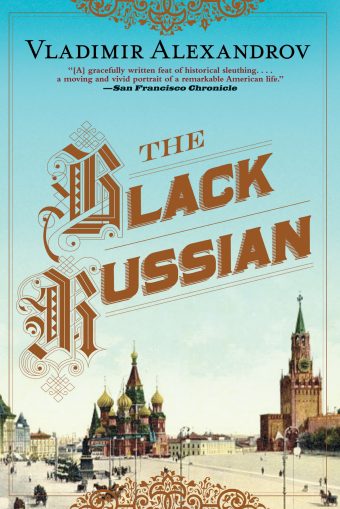
Several years ago, when one still did such things, I went to a guest lecture in my department by Vladimir Alexandrov, a Slavic professor at Yale (now retired). Prof. Alexandrov was giving lots of talks at that time on the new book he had written: The Black Russian(Grove Press, 2013). The book, which has since won awards and been translated into several languages including Russian, was a biography of one Frederick Bruce Thomas – Alexandrov refers to him as Frederick throughout – whose life followed an absolutely astounding trajectory: born the son of freed slaves in Coahoma County, Mississippi, he made his fortune in the entertainment business in turn-of-the-century Moscow (and again in Constantinople, after the 1917 Revolution forced him to leave). Although hugely famous in Moscow, he was forgotten after he died. As Prof. Alexandrov explained, he discovered Frederick through a passing reference in the memoir by Alexander Vertinsky, who knew him in Moscow and Constantinople, which so fascinated Alexandrov that he set out to learn everything he could about who this Black American Moscow resident was (Alexandrov spent years researching the book, including going through archival documents and court and government records, as well as tracking down and interviewing Frederick’s grandson in France). The lecture was riveting in a way that sticks with you long after it’s over; you can get a taste by listening to Alexandrov’s recent interview on Sean Guillory’s SRB Podcast. Even though I don’t often read biographies, I immediately ordered the book, and then couldn’t put it down and raved about it to anyone who would listen.
It’s an incredible story from start to finish, told in highly engaging, fast-moving prose. Frederick’s parents were former slaves who became prosperous farm owners in post-Civil War Mississippi. His mother died when he was young, and his father remarried; when a white landowner attempted to cheat the couple out of the farm, they took him to court, where they proceeded to win. The case did get dragged out after that, and a horrific death befell the family. By that point, the Thomases had left Mississippi, which Alexandrov notes “was becoming the ‘lynchingest’ state,” and eighteen-year-old Frederick soon set out on his own on a journey that literally lasted a lifetime.
At first, his travels took him out of the South to major American cities, including Chicago and New York, where he worked as a waiter and a hotel bellboy, and then, because he wanted to become a singer, to Europe. The singing career never materialized, but he did well by working in hotels and restaurants in several West European cities, with Paris being a particular favorite. Moving to Western Europe to escape the Jim Crow-dominated U.S. was not unheard of among Black Americans. But then Frederick did something very few Americans of any background did at the time: in 1899, he moved to Russia. While it sounds unbelievable given the levels of racism there today, early twentieth-century Moscow was where Frederick Bruce Thomas – or rather, “Fyodor Fyodorovich Tomas,” as he renamed himself – came into his own.
As Alexandrov writes, Moscow was a very multicultural city, with many inhabitants from the Caucasus and Central Asia. This made it a comfortable place for Frederick despite his being in a tiny minority: “During Frederick’s years in the city, there were probably no more than a dozen other permanent black residents amid a population of well over a million. But because the parade of humanity on the city’s streets was so varied, Frederick did not stand out nearly as much as his actual rarity might have led one to expect.” It was in Moscow that Frederick achieved what would seem unimaginable for a child of former slaves from Mississippi: gradually working his way up, he became the owner of one and then another “entertainment garden,” amassing a fortune and becoming one of the city’s leading entrepreneurs. His establishments, Aquarium and Maxim, catered to an upper-crust native and foreign clientele, who watched often risque performances while enjoying expensive food and drink in lavish surroundings. Given the nature of many of the acts, the atmosphere in these places was rather non-family-friendly, with female performers being expected to offer themselves as tableside companions to the male patrons whenever the latter requested it. To be sure, there is no suggestion that there was any rape or sexual assault in these venues; moreover, Alexandrov points out that, unlike other bosses, Frederick went out of his way to protect his female employees. Yet my one criticism of the book is that Alexandrov stops short of admitting that Frederick, like the other male entertainment entrepreneurs, was complicit in that he made his fortune by literally instrumentalizing women’s bodies for male pleasure.
Part of what makes this book so rich is Alexandrov’s deft weaving in the broader historical background with Frederick’s biography, understandable given that the outcome of Frederick’s life was directly affected by the turbulence of the times. After the Bolshevik takeover, as a wealthy business owner, he was forced to flee Moscow with his wife and some of his children (his third wife, previously his mistress; he had an eventful personal life). They first went to their villa in Odessa, which was under Allied control, but as Alexandrov describes in what has to be one of the most gripping prologues ever, they then had to escape to Constantinople along with thousands of others as the Bolsheviks closed in. Amid the wrenching misery and poverty of displaced Russians in Constantinople, Frederick once again showed his singularity and ability to persevere in dire circumstances. He opened up Western-style entertainment venues in a Muslim city, often employing Russian formerly upper-class women as waitresses (despite not being particularly invested in the Russian upper classes, I found the discussion of their very genuine plight extremely affecting).
In the end, external forces shattered Frederick. In 1923, Turkish nationalists overthrew the old regime and made it extremely difficult for foreigners to do business; he also faced stiff competition from another entertainment venue. Frederick attempted to reapply for his American passport so he could potentially get himself and his family out of Constantinople. As a Black man from the South, he knew first-hand to what conditions he would be subjecting himself and his children were he to go back to the U.S., where his marriage to a white woman would moreover be considered illegal, which shows how desperate his situation was. His attempts, however, came to nothing; while some American diplomats tried to help him, the racism of other embassy personnel sabotaged the application (as bad as this was, it would have been even worse had anyone discovered – which Alexandrov says no one had until he himself did in the course of his research – that Frederick renounced his American citizenship in Moscow in favor of a Russian one, which is unique indeed). Ultimately, he went bankrupt, was arrested for nonpayment of debts, and died in prison in 1928.
But he lives – extravagantly, sometimes not totally decently, always resiliently against extreme adversity – in the pages of The Black Russian. He has been rescued from oblivion by a writer who said during his lecture that he was given a native son’s welcome by the community in Frederick’s birthplace, whom this book put on the map. In the Epilogue, Alexandrov brings the story up to the present by describing the fates, at least to the extent that this information is available, of Frederick’s children; while most of their stories are tragic, in some sense, the book resurrects them, too. With many in the United States currently engaged in a long-overdue conversation about systemic racism, one of the things happening is the various attempts to center Black voices and experiences and to bring to the fore histories that should be much more widely known. Perhaps this book contributes to that by telling the story of Frederick Bruce Thomas’s, aka Fyodor Fyodorovich Tomas’s, remarkable and unexpected life.
Today we’re excited to feature Herb Randall’s essay about his visit, inspired by a volume of collected letters, to #16 Tchaikovsky Lane in Kharkiv, Ukraine, a building with a fascinating history in the field of science. Yet as Olga discovered as we were working on this, it has a much more sinister history, as well. After the revolution of 1917, this building was used by the city’s branch of the Cheka, Lenin’s secret police, to imprison, torture, and execute those termed enemies of the Bolsheviks. The dead bodies were thrown into a ditch behind the building; unofficial estimates suggest that between 1,500 and 3,000 people were killed here.After the Cheka was dissolved in 1922 (only to be reconstituted under different names, including Stalin’s NKVD), over 200 bodies were discovered on the grounds behind #16. There is no verifiable evidence that the letter writer knew this; in any event, there’s no mention of it in the letters.
Images accompanying this piece are courtesy of Herb Randall.
A QUESTION IN TCHAIKOVSKY LANE
No sugar plum fairies greet us as we turn the corner onto Tchaikovsky Lane. Yet almost immediately, the rush and roar of Pushkin Street dissipates and we escape into this sleepy neighborhood, stepping into another time and another’s story.
A curious old collection of letters written here brings us to this forgotten residential street in Kharkiv. I Married a Russian is the work of an Englishwoman identified only as “Eddie.” She fell in love with a visiting Soviet scientist while both studied at Cambridge and set off on a grand adventure into the wild East of this rapidly modernizing new nation. Eddie’s first letter to her sister in England was in May 1930 while the newlyweds sailed to their new home. She posted the final letter in 1945, after surviving wartime evacuation to Kazakhstan and returning to the ruins of Kharkov (Eddie uses this Russian-based spelling of the city’s name, which is used here when referring to the book). The letters were quickly published by George Allen and Unwin in London, and though the book is barely remembered today, it was discovered and recommended by a friend who shares my affection for Ukraine. I carry my weathered copy with me as we walk.
The couple met through their love of music. “Kira” played piano beautifully, and Eddie could have made a career with her violin. Joyful hours spent around the piano quickly led to romance and marriage. Two marriages, in fact: first at the Soviet consulate and shortly thereafter a proper English wedding. Her parents feared the marriage could be dissolved too easily if only bound by Soviet law.
We are here to find Eddie and Kira’s flat and the physics institute that brought them to the new capital of Soviet Ukraine (Kharkiv was used as the capital from 1919 until 1934). It was a backwater in a building frenzy. Eddie wrote of sledding in winter from a hill in the city center to nearby villages, places that today are incorporated into Ukraine’s second largest city. The Soviet Union granted special privileges to scientists, citizen and foreign, to attract them to the institute. It was a welcome haven for some escaping antisemitism at home, while others were drawn to the Soviet experiment, or the chance to work with some of the most famous scientists in the world. The institute flourished and critical work in cryogenics and nuclear physics was done here by such renowned scientists as Lev Landau, Piotr Kapitsa, Lev Shubnikov, and George Gamow.
Eddie was a sensation among Kira’s family and colleagues. She was charming, witty, intelligent, determined. Flirtatious and pretty, but unwaveringly devoted to Kira. She threw herself into her new life, soon editing a physics journal published in English and German by the institute, establishing the gardens on the grounds, even joining a women’s cavalry regiment for an October Revolution parade. After much difficulty, some dubious medical treatments, but seemingly by her sheer force of will, Eddie gave birth to a daughter. After a few years, a son followed.
Questions abound when reading Eddie’s letters today, in turn fascinating, frustrating, charming, harrowing, maddening. They swirl around us as we walk further into the lane, and we see a small wooded park and playground. Could this have been part of the gardens she tended?
Her dear, endlessly patient sister is unnamed in the letters, and her replies can only be inferred. In the opening pages, the list of characters we will meet is full of pseudonyms and presents today’s reader with the first mystery. Who were these people really? The Soviet Union was a riddle to contemporary readers, and the subjects of Eddie’s missives could be reasonably sure of obscurity.
Not today. With some quick research their real names surface. Rather than clarifying, the mysteries deepen and darken. Eddie’s breezy letters often omit important details. There are gaps in the letters, sometimes for years. These lapses often coincide with particularly turbulent events. One of the starkest gaps is between January 1931 until February 1934, so that nowhere does Eddie mention Stalin’s forced famine that brought starving villagers swarming into the city and that she could not have avoided seeing. People described in her letters disappear with no explanation, as if airbrushed from a photograph. Eddie obliquely references “scandals and intrigues” at Kira’s institute that were actually part of Stalin’s brutal wave of purges and executions in 1937-38. Was this Eddie’s way of getting her letters through the censors, or something else?
“Is this it?” my companion asks, squeezing my hand in front of a small red and sand brick building: 16 Tchaikovsky Lane. It appears to be older than it should be based on Eddie’s letters, predating the revolution. We look up at the second-floor balconies and try to guess which belonged to them.
#14 Tchaikovsky Lane
This building isn’t quite as we had imagined. It is unexpectedly tidy, too purposefully built. Eddie wrote that the flats in her building were still under construction when they arrived in 1930, rapidly renovated to house the physicists working at the institute next door. We walk back to the previous building, number 14. It is certainly more imposing, but as we walk around the side, slightly ramshackle. Here in the courtyard, we discover a plaque near an entrance commemorating one of Kira’s fellow scientists, Lev Shubnikov, who lived in this building. Until 1937, when his career and life were ended. Astoundingly, neither Kira nor his foreigner wife were touched by these repressions.
Plaques for Lev Shubnikov (1901-1937) and Abram Slutskin (1891-1950)
We stand for a moment, reflecting. A gentle piano and sinuous violin intertwine, tendrils of Scriabin and Prokofiev. Laughter, gossip, chatter. Clattering of dishes and clinking glasses. A baby fussing, unsoothed. Sounds we once would have heard here but today there is only silence.
Other sounds we do not hear, and that go untold in Eddie’s letters: boots echoing in these stairwells, sharp knocks on doors, whispers and cries. Fearful reassurances and promises made in vain. Car doors slamming, silence descending.
Kira and Eddie were fervent believers in the socialist future they suffered so long to build. Her accounts of the circle of famous scientists who lived and worked here are among the only contemporary sources available. Today we must read Eddie’s letters with some questions about their accuracy and the motivation for publishing them. Her letters, while filled with personal stories and valuable historical details of the period, often parrot the Soviet propaganda of the day uncritically and enthusiastically. Even when speaking of shortages, unpaid salaries, or other difficulties, she minimizes and explains them away when possible. Her sister likely found Eddie’s frequent criticisms of English life and government policies tiresome.
How could this young woman from a comfortable English upbringing come to almost revel in the hardships she endured? Especially at the beginning, most of her efforts were devoted to scrounging furnishings for the apartment, ensuring adequate food, and with regular shipments of Keating’s powder from England, warding off the persistent bugs. Despite the hardships, Eddie never wavered in her belief in the Communist project.
Another puzzle is how these letters came to be published, first in London in 1944 and 1946, followed by an American edition in 1947. Edited by Lucie Street, one of Eddie’s friends, possibly another pseudonym. Her introduction and connecting texts are uncomfortable reading today as we now know more of the facts from that era. Lucie certainly echoed the message the Soviet regime hoped to advance among wavering and then erstwhile allies in the chaotic end of the war.
Eddie’s delightful hand-drawn map in the endpapers of I Married a Russian shows the two main buildings of the Ukrainian Physico-Technical Institute (UPTI) on either side of her flat. We don’t see those buildings today. Her map is not to scale, though, and as we walk behind the apartment building, we see a dilapidated brick and concrete wall nearly hidden by trees. A sign on the guard building indicates that we have found the physics institute. Whether abandoned, still in use, or contaminated, it is clear that we are not meant to enter.
It’s getting late and shadows begin to crowd around the narrow lane. A question half-formed, taking shape along with other unseemly notions, now seems urgent and necessary to ask.
Edna Cooper’s and her husband Kirill Sinelnikov’s intriguing, nearly-forgotten lives deserve their chronicler, but it cannot be me. My fragmentary Russian would be no help researching the now-available archives and secret police files. I also sympathize strongly with Eddie, while recoiling from what I’m beginning to understand about her and Kira’s possible accommodations with the regime. Someone more objective should ask the question.
The answer I don’t want to learn is both obvious and eighty years later may be unprovable. And yet, glancing at my companion, I don’t know if this question should be voiced. She looks at me lovingly, having indulged another of my quests to dig into a long-forgotten history. Am I really so different from Eddie, here for a romance that stretches across a continent and a culture that perhaps can never fully be bridged?
We begin walking back, elated with our success. But the truth is, we aren’t sure if we have seen Eddie and Kira’s flat or the institute as they knew them. What remains was heavily reconstructed after the war, and this part of the world is not overly-fond of preserving the past. Perhaps the many flowerbeds and trees clustered around these buildings are Eddie’s true legacy. We are simply pleased to know that we’ve visited the place they once called home, and to have honored the memory of their friends and colleagues unfortunate enough to have sought refuge in their life’s work here, only to be unjustly accused, jailed, or executed.
It’s already dark and we want to enjoy an evening in the city. Suddenly, my question slithers out, darting formless and hideous between us. I am ashamed and I curse myself for what I could not suppress.
A few steps together in silence. Then another squeeze of the hand and a sad smile. “Of course,” she answers. “Of course they did.” She points to another building. And another. “Just like someone who lived there, and over there.”
“They survived,” she whispers, looking away. Finally reaching the end of the lane, we leave Tchaikovsky’s shades behind us and are whisked along with the bustle of Pushkin’s street.
March 2019
Kharkiv
#16 Tchaikovsky LaneSign for the institute
Herb Randall lives among the idyllic mountains, forests, and waters of northern New Hampshire. He has travelled extensively in Ukraine, Poland, Sweden, and Estonia. He enjoys exploring lesser-known places, reading with a special focus on fiction in translation, and writing about forgotten people and places. This is his first published piece. Twitter: @herbrandall
This post reproduces and documents a Twitter thread that began on June 3, 2020, with articles by Aisha Powell, Sarah Valentine, B. Amarilis Lugo de Fabritz, and Jennifer Wilson. Various members of the Eurasian Studies community gradually added to the thread, creating an informal list of resources that, while useful, would also be ephemeral and difficult to find if left on social media. Here, in Punctured Lines’s more easily searchable archive, these resources are available for you to use and remix through a Creative Commons Attribution 4.0 International License. This license applies only to the tweets by Hilah Kohen below and not to any of the content linked to them. You can use the license to create your own version of this resource list for a specific community or publication.
Both the Jordan Center for the Advanced Study of Russia at NYU and the American Association of Teachers of Slavic and East European Languages (AATSEEL) have also published organized lists of texts, lectures, and podcasts relating to race and racism. While these databases intersect with the Twitter thread reproduced here, they focus on offering additional materials that are relevant to scholars and teachers of Eurasian languages and cultures.
To keep things maximally readable, we chose to preserve Twitter’s format for some posts and to transpose others to a text-based layout. We welcome all feedback and links to additional resources. To access the thread below directly on Twitter, click here.
Especially for fellow Eurasianists just starting out, tho, this is work to read as we wade into the bs going forward. Not comprehensive– just what comes to mind re: student experiences, teaching, and what our field does on a systemic level. Less material here on research. /2
“Russian Studies’ Alt-Right Problem” by Sarah Valentine for the Chronicle (paywalled but important– if anyone has a non-paywalled link or is willing to share access, please say so) /4
Please add more if you have time/energy somehow (I’ve only read narrowly & also haven’t included any books here) and add your essential readings related to research on race in Eurasian and Russian studies /13
One last “goes without saying” is that this thread is an addendum to concrete monetary/physical/logistical action right now and in the coming weeks. Thanks for reading /15
Am learning that I don’t know how to keep up with Twitter replies very well, so I’m sorry if I miss something! I really appreciate the words of thanks, but they should be directed elsewhere. I respect all of you beyond words, but there’s a misunderstanding of scale here.
For white scholars who want the field to change, these conversations about race in the field have so far meant working on ourselves, supporting students, and responding to individual incidents. Necessary steps. This category of responses to the thread is passing by another:
Black scholars and scholars of color have worked constantly for years against the racism of a thousands-strong field and gotten crap in return. Our field’s record is one of forcing all Black scholars out. That there are still meaningful experiences to be had doesn’t change this.
That’s the scale we’ve got to be on. I don’t know how to frame this rhetorically– I fit into the first tweet above, not the second. This is just a total split in the responses to this thread, and it’s also (quite sickeningly) evident in the thread itself.
Our colleagues have pushed the field’s leadership & their mentors out of personal necessity and at daily personal cost; built successful, growing programs at their institutions from precarious positions; written numerous papers about the concept of them having room in the field.
Sometimes, we don’t know we even can do things on that scale because we don’t have to be on that scale to stay in the field, plus the field doesn’t ask it of us. Meanwhile, there’s prolific work being done under extreme pressure. We have to be on that scale.
I feel ill writing these things in this bizarre tone and as if from outside. Obviously, nobody has denied all this; you know this; everybody here is being so supportive. The question is what’s next & can it possibly be enough.
Most readers of Punctured Lines are likely familiar with the name of Constance Garnett — English-language translator from Russian par excellence — and so I’ll begin this post with a bit of a tangent.
I forget who of my friends had recommended to me, years ago, mystery novels by Amanda Cross, whose fictional detective Kate Fansler solved crimes while quoting W.H. Auden. These were highly literary mysteries, and, intrigued, I looked up the author’s biography to discover a fascinating story. Amanda Cross was a pseudonym of an academic, Carolyn Gold Heilbrun, the first woman to be tenured in Columbia’s English department. In the course of her life, she became an outspoken feminist, and in 1992 accused her department of discriminating against women. Her oeuvre includes a book about Gloria Steinem and a collection of essays How to Write a Woman’sLife.
I’ve been slowly making my way through Heilbrun’s work, both fiction and nonfiction, and recently I finished her first published book The Garnett Family (The Macmillan Co, 1961). Heilbrun was trained in Modern British Lit, and, in particular, studied the Bloomsbury group. This book, as she announced in the introduction, “is the history of a literary family,” — the “literary intelligentsia,” as we might call it in Russian. By the by, Heilbrun makes a very good case that studying literary dynasties makes very good sense for historians of literature, and that the work of Constance Garnett needs to be examined next to the work of her husband Edward, who in his position as a Publisher’s Reader presided over so much of what we consider today Modern — and Modernist — British Lit, from John Galsworthy to Joseph Conrad and D.H. Lawrence, among others. (And by suggesting that her work needs to be examined next to his, I mean exactly that — stressing the lack of a hierarchical relationship between the wife’s and husband’s work, and their ongoing conversation.)
Heilbrun is a very engaging and opinionated writer, and I only wish her treatment of Constance had been fuller. Brief as it is, it gave me a portrait of Constance in a vastly different light than I’ve been accustomed to seeing. For instance,
An obituary in the New Republic said of Constance Garnett that “she was a product of the Victorian Age and shared the prejudices and pruderies of her time.” Apart from the fact that she was born in the Victorian Age, the statement is the direct opposite of the truth; it would be nearer the mark to say that the post-Victorian Age, with its lost prejudices and pruderies, was the product of her generation, and, to a significant extent, of her own work. Born in 1862, she belonged to the first generation of women that received an education comparable to a man’s, and, shaping its life according to its own, rather than society’s, or parental, decision, remained in a very real sense in control of its own destiny.
Heilbrun’s monograph contains four chapters: 1) Background of the Garnett Family, including the Elder Richard Garnett (1789-1850), 2) The Younger Richard Garnett (1835-1906), 3) Edward Garnett (1868-1937), 4) Constance Garnett (1862-1946), and concludes with the Epilogue about Edward and Constance’s son David (1892-[1981]). The book was written, apparently, in a close collaboration with David, who as a prolific writer himself, I imagine, had some stakes in the shape of Heilbrun’s monograph. (One could probably study his writing and that of his descendants for further insights on the family.)
In her chapter on Edward Garnett, Heilbrun tells a “meet cute” story: Edward and Constance Black were introduced by Constance’s sister Clementina Black (a writer herself), who was a regular at the British Library’s reading room, where Edward’s father Richard assisted her. The sisters came to tea at the Garnett house, and 18-year old Edward immediately fell in love with 24-year old Constance. Constance was lukewarm.
In the evenings Constance took him to various Fabian and Socialist meetings, which he refused to take seriously. They quarrelled because Edward said that Land Nationalization would not come in England for the next ten or even twenty years. This was to Constance a terrible lack of faith, and a real grief. George Bernard Shaw, with whom she had often gone to political meetings before, asked her who was the pretty young man he had seen her with. She replied that he was a boy whose education she was undertaking.
Heilbrun’s chapter on Constance provides one other fascinating facet of the fabled translator’s biography. From the stories I’d read about her (for instance, in this David Remnick piece in the New Yorker), I’d gotten a sense that she fell to translating from Russian almost randomly, without any particular reason. This was, apparently, not quite so.
Her grandfather, Peter Black, was Naval Architect to the Tsar, Nicholas I; Peter Black’s daughter is supposed to have danced with the Tsar at a Court Ball. When this daughter married, in Petersburg, the Tsar presented her with a glass salad bowl as a wedding present. Peter Black was buried in the Russian naval fortress of Kronstadt; his son, David Black, Constance’s father, having spent much of his youth in Russia, came to live in London as a law student . . . went on to Canada . . . was recalled to England by a telegram from his brother Peter, who was French Consul in Brighton.
Aha! This background, from family ties to Russia to strong interest in socialism, makes it so much easier to understand why Constance would choose to dedicate her life to translating from Russian. And to return to the question of how far Constance had been removed from “the pruderies of her time,” Heilbrun paraphrases this story from a manuscript by Constance’s son David:
She was never particularly outspoken on the subject [of sex], nor militant about it, having strong views about the privacy of sexual matters, which she thought no business of society or the State. However, when, on vacation from Newnham, she had been entertained in London and had seen the prostitutes in Haymarket and Trafalgar Square, that ‘hideous spectacle of coarse cynical brutality and degradation accepted by everybody as a matter of course’ threw her into despair. Believing prostitution to be chiefly the fault of women putting a high premium on their own chastity for economic reasons, she thought that if women were brought up to expect to earn their own living and have love affairs, it would disappear.
From the advantage of time, we may judge her naive, but her thought is far from prudish. We may also perhaps glean how she might be a much more sympathetic translator for, say, Chekhov and Turgenev than for Dostoevsky. Here would be an interesting project: to re-read her Dostoevsky with her politics in mind… because, of course (and as we learn from our friends at the RusTrans project), translation has politics.
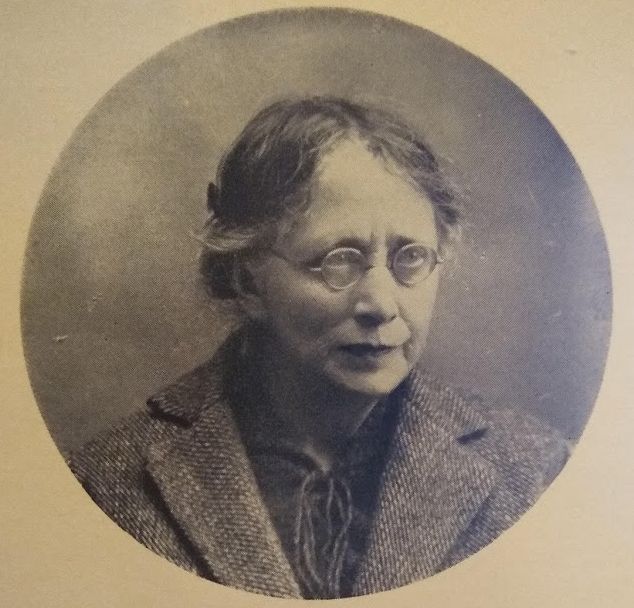
Constance Garnett in later years (photo from the book)Constance Garnett in old age (photo from the book)
In the approximately month and a half that California has been on lockdown, I have barely read anything. This seems counter-intuitive, since I basically read for a living. It also feels like a particularly vulnerable admission, given how much of my personal identity is tied to being a serious reader of “high” literature; not reading feels like failing somehow. But all I’ve managed in the last few weeks is Pushkin’s very short “Пир во время чумы” (“A Feast in Time of Plague”) because it was mentioned on Twitter, a few pages of Proust’s Swann’s Way (thanks to a Twitter reading challenge), and skimming the Chekhov stories I’m teaching this quarter (which I’ve read many times before because I would never skim for teaching. Just to be clear.). My concentration, which was bad even before the pandemic, is abysmal. Zoom has taken over my life. I spend too much time on Twitter, where I envy all the people capable of reading right now.
But I’ve been writing. And every Tuesday and Thursday, my students and I bridge the divide of our Zoom screens by discussing Chekhov’s works. And my Twitter conversations are about literature, which means they’re about a lot of different things. I may not be actively reading at the moment, but books are, like always, very much a part of my life. They’re like that close friend who you might not be in touch with for a long time, but who, unfailingly and warmly, will be there when you finally reach out.
Independent bookstores are having a really hard time. They were having a really hard time before the pandemic, but now they are only able to exist online in a climate of drastically reduced general spending, as so many people have lost their jobs (while we’re at it: if you can, please support your local foodbanks, restaurants, healthcare workers, the post office, etc., etc.). Due to a surge in support, Powell’s hired back some of their employees, while City Lights’ GoFundMe campaign saved them from closing permanently. We’re thrilled for them and want all independent bookstores to have this kind of success.
Below are some of the bookstores we love and would love to help. If you are in the fortunate position to be able to, please order from them and/or support their fundraising efforts. Chekhov – both the writer and the humanitarian, who provided free medical treatment, built schools, donated to libraries, helped with famine relief and a cholera epidemic, and went all the way to Sakhalin Island to write about conditions in a penal colony that led to some reforms – would, I’m sure, appreciate it very much.
Alley Cat Books, San Francisco, CA: This bookstore holds a special place in Punctured Lines’ heart. Olga co-hosts the weekly San Francisco’s Writing Workshop there. The workshop is free and open to the public and is the longest continually running workshop in San Francisco–and, having started in 1946, maybe anywhere. (They are meeting on Zoom at the moment.) Last year, Alley Cat graciously hosted our first Punctured Lines reading. They have a GoFundMe campaign and a Patreon page.
Book Soup, West Hollywood, CA: Many of my family members and friends, and occasionally myself, have received gifts from this local-to-me institution.
City Lights, San Francisco, CA: An iconic beat-era bookstore and a related indie press that published Allen Ginsberg’s “Howl.” This bookstore is a tourist destination, and it’s also a destination for locals. They boast a dedicated poetry room and an amazing collection of books in translation. Their GoFundMe campaign is still running.
McNally Jackson, NYC. The fact that they’re in New York, one of the worst-hit areas of the pandemic, is reason enough. We can fight over whether New York is still the center of U.S. publishing or whether CA is making them very nervous later. We love you, New York. Please get well soon.
Powell’s Books, Portland, OR: If I’m ever in Portland again, I’m going here because I want to see this giant of a bookstore for myself. Until then, I will do what I’ve been doing for years: redeeming gift certificates from family members who know me well.
Skylight Books: Los Angeles, CA: My first-ever reading was here, organized for our class by my amazing creative writing instructor.
The Last Bookstore, Los Angeles, CA: I’ve only browsed here, but it’s pretty amazing.
Vroman’s, Pasadena, CA: I honestly can’t remember if I’ve ever been here, an oversight that needs to be rectified when it’s safe.
Audre Lorde’s name and work is familiar to many of us who have studied feminist movements in high school and college. Some of her seminal essays, including “Poetry Is Not a Luxury” and “Uses of the Erotic: The Erotic as Power” are commonly included in syllabuses of literature classes and used as entry points into the conversation about the politics of literature and how combinations of race, gender, and sexuality affect one’s construction of self and point of view on the world.
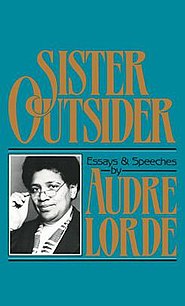
Less well known is Lorde’s essay “Notes from a Trip to Russia” that opens her book Sister Outsider. A footnote to this essay explains that Lorde spent two weeks in the Soviet Union in 1976 as an American observer to the African-Asian Writers Conference sponsored by the Union of Soviet Writers. Having returned from that trip, she finds herself haunted by it in her dreams, including a particular image of “making love to a woman behind a stack of clothing in Gumm’s Department Store in Moscow.” In Lorde’s dream, the woman falls ill and Lorde needs to seek medical help for her, and is floored by the realization that in Soviet Russia, medical treatment is free and available to all.
I read this essay just a few years ago and at first struggled with how to react to it. To me, everything starting from that opening image seemed both familiar and bizarre. It took me a moment, for instance, to recognize that Lorde is talking about GUM–an acronym for Gosudarstvennuiy Universalniy Magazin, a State Department Store–which in her version acquires an almost poetic personal quality, related to somebody named Gumm. I was born in 1979, three years after Lorde took this trip, and I had a personal mythology of GUM. As a child growing up in Leningrad, I had read about it in books and newspapers–as far as State Department Stores went, this one was well written about. I imagined it as a toy palace–I had an idea that that’s where most of the world’s toys were hidden from us kids. The keepers of the toys were, in my mind, not unlike the angry guards at the museums of the world or the tired, worn-out women working behind the counters of Leningrad’s stores: their job was to keep desirable items away from unworthy hands. To imagine a Soviet prodavshchitsa take part in a sex dream seemed unthinkable.
But then, I thought, why not? This is what it’s like to see the world I grew up in from a stranger’s eyes–it’s an opportunity to examine my premises. There must’ve been lesbians in the Soviet Union, even if I didn’t know anything about that until I was seventeen and living in the United States. So, my first approach to Lorde’s book took me into a completely unexpected direction: it sent me rethinking my relationships to all the women I had known growing up, imagining them as heroines of sexually charged international lesbian love stories. (I even started plotting a novel along these lines, thank you very much, Audre.)
During her trip to the Soviet Union, Lorde visited Moscow and from there traveled to Uzbekistan, the location of the Conference–she went to two towns there, Tashkent and Samarkand. The essay is very much a travelogue, the best of the genre, in which the writer is keenly aware of being a stranger to the places she’s moving through and as she’s documenting her experiences, she’s writing about her own thoughts and feelings and provides a window into her assumptions and biases. Reading the piece all of these years later, it feels like a gift of a guide into the study of Russian and Soviet literature and the field’s lingering struggle to include people of color and women into the conversation.
This essay champions the kind of work that we hope to do with Punctured Lines: bringing together unexpected voices and stories from and about the (post) Soviet space. Unfortunately, for rights reasons, we are unable to reprint the essay online, so to encourage a cross-cultural dialogue, we asked our Twitter followers to submit personal responses to this essay. We also reached out to a few scholars and writers who we expected might have unique insights into the issues that Lorde addresses. Below are responses we received from Emily Couch, Shelley Fairweather-Vega, Elena Gapova, and Maggie Levantovskaya. If you want to join this conversation, please comment below or reach out to puncturedlines [at] gmail.com.
We have been planning this post for several months, and are finishing it under conditions of quarantine. As I’m writing this, the world is struggling with the mounting numbers of COVID-19 cases and many of us have had to severely curb our activities–so the very nature of a travelogue feels radical at the moment. Universal medical care that, in Lorde’s notes of her trip to the Soviet Union, appeared too good to be true, today remains our most urgent need. Yet, as Levantovskaya mentions in her piece, the Soviet Union is a poor guide for a functional medical system–the conditions of care there were often inhumane and bribes were exchanged as a matter of course. We also want to acknowledge and honor the invisible, unpaid and low-paid women’s labor that goes into allowing each family and each hospital and each business and each state to keep going. We urgently need to change this situation so that the burden of this invisible labor does not disproportionately fall to women.
Katherine Young, a poet and translator, gave this interview on BLARB, the blog of the esteemed Los Angeles Review of Books. In 2018, Academic Studies Press published Young’s translation of the trilogy, Farewell, Aylis, by Akram Aylisli, currently a political prisoner in his native Azerbaijan (Young has spearheaded efforts to free him, including a recent petition circulated on social media). Olga Zilberbourg reviewed this novel, which Punctured Lines noted in our post. As we also noted, an excerpt from his novella, A Fantastical Traffic Jam, translated by Young, can be found here.
Young’s latest project is the translation of Look at Him by Anna Starobinets (Slavica, forthcoming 2020), an open, unflinching account of her abortion that was controversial when it came out in Russia. As Young says, “Women don’t talk about these things, even with their partners, so to write a book in which you expose the most intimate details of your body and the choices you made medically is a violation of a lot of subtle taboos about women who are supposed to grin and bear their trials and tribulations.”
Young also talks about being a poet and how much Russian poetry has shaped her own: “I feel very much more informed by Russian poets than most American poets. I’ve read Walt Whitman, but I don’t identify with him the same way I might say Alexander Pushkin or Mikhail Lermontov or Anna Akhmatova.”
Punctured Lines: You publish a newsletter, The Soviet Samovar, “a monthly round-up of Russian-Jewish news, events and culture,” with the emphasis on (ex-)Soviet Jews in the North American diaspora. What motivated you to start this project? What audience(s) is it aimed at and what do you hope they get out of it?
Lea Zeltserman: When I first started writing about Russian-Jewish issues, there was nothing out there. We were all just starting to get online, starting to come into ourselves as a community. I was excited each time I saw an article about Russian Jews in the media, and I simultaneously realized that there are many things we ourselves don’t know about our history. TheSoviet Samovar was a way to bring that together. By now, there’s so much great work coming out of the Russian-Jewish world that I can be more selective. It’s shifted into a more literary, culture and book-focused round-up.
A lot of my work is for broader North American audiences, but the newsletter is aimed at Russian Jews. Though of course everyone should subscribe! The content is for everyone, and articles featured are often published in mainstream publications. But when I’m writing my commentary, there’s a distinct sense of “we, Russian Jews and our experiences, and here’s what we think about the world and our place in it.” I don’t tiptoe around, or hold back if I think something is damaging to our community. Which is not to suggest that it’s a monthly rant. Not even close. There is lots of thoughtful, smart, insightful writing out there, which I’m always excited to feature. There’s much to be proud of in our accomplishments, and The Soviet Samovar is a way to bring that together, draw attention to one another, and hopefully, give us all something to think about – about our history and the people and events that shaped us.
PL: You write a lot about Soviet-Jewish food, specifically how it reflects Soviet-Jewish culture and history. As you say in your essay for Tablet Magazine, “Defining Soviet Jewish Cuisine,” “For most Jews, the first bite of pork is a transgressive, often formative, moment. But for Soviet Jews, pork-laden sosiski [PL: wieners/hot dogs] were an everyday food.” Why the focus on food – what can looking at what Soviet Jews ate and continue to eat tell us more broadly about Soviet-Jewish life, both in the former Soviet countries and in the diaspora?
LZ: I’ve always been interested in food. When Tablet published their “100 Jewish Foods” feature online, I was surprised to see everyday Russian food on the list (borsch, cabbage rolls, rye bread, pickles, herring) associated instead with “Old World Russia.” This food might be “Old World” for many Jews whose Russianness lies several generations in the past, but for us, this is the food we grew up on. It’s our “now food.” This oversight is symbolic of the frozen-in-time understanding of Russian Jewry that habitually ignores the existence of the contemporary Russian-Jewish community. That really bothered me. So I wrote them, and they were great and very interested, and my article came out of that (and then was included in the 100 Jewish Foods book).
The sosiski, of course. They’re such a powerful image for Jews. For Russian Jews they’re real and nostalgic, and for North American Jews, they were something that was used dismissively toward Russian Jews to question our legitimacy. So yes, you start with jokes about sosiski and suddenly, there’s a whole story about who we are and what we overcame, why we stopped keeping kosher but still felt so strongly about our Jewish identity. And that happens over and over – you ask a few questions about our food and, because everything was so centralized and controlled, entire historical episodes, Jewish and not, come tumbling out.
Many Russian Jews don’t reflect on our food either. I’ve been so touched by the reactions to my writing and my talks on the subject. People really respond to hearing that this everyday “stuff” matters. That what their mothers and grandmothers do (or did) is relevant and weighty, and has significance to Jewish history and Jewish lives. Our dishes get at the story of our lives in a different way, especially for Soviet families, where getting and preparing food was such a major part of daily routine, never mind bigger moments like war, famines, the Shoah.
I also think about it as a parent, and what I want my children to know of their heritage. Kugel, brisket, and knishes aren’t our recent history. I don’t want them thinking that’s their food, or wondering why their food isn’t legitimately Jewish. Our stock list of Jewish food needs a shaking up and I strongly believe that our Soviet-era food, from all the republics, has a rightful place on that list. As for why are we still eating it? That’s something I’m still exploring, that intimate relationship between comfort and familiarity, how it fits into immigration and being refugees, all mixed up with the worst parts of the USSR. It reflects all the complexity and contradictions of our heritage, which we, quite literally, fill our bellies with every day. It’s part of our identity. It would be a betrayal to sweep it away and replace it with knishes and bagels (well, maybe the bagels).
Food is a little scrap of the past that I can touch and taste. I’ll never hear the sounds of the train station from which my paternal grandmother escaped the coming Nazis when she evacuated from Zhitomir. But a pot of soup, I can make an attempt at.
PL: The discussion of Soviet-Jewish pork consumption brings up something else you’ve written about, namely, the often stark differences between (ex-)Soviet and North American Jews. These differences exist not only in terms of food, but more generally: as you point out, they manifest themselves in terms of attitudes toward Soviet-Jewish immigration (“Why Russian Jews Don’t Want to Hear About Being Saved”), experiences of the Holocaust (“On #FirstSurvivor and the Russian-Jewish Holocaust experience”), and more playfully, treasured customs like New Year trees (“O Yolka Tree, O Yolka Tree”). Can you talk about what you see as the main differences between the two communities and also what, if anything, can be done to bring them closer together – or whether this is necessary?
LZ: Hmm, that’s a great question. And an unexpectedly difficult one. I’m going to start with the second question. Which is that, I don’t know anymore what will “work.” As time passes, we naturally become more integrated. Even myself, as an example – I grew up in the mainstream Canadian Jewish community, but always feeling like an outsider. My kids will feel less that way, I imagine. There are more writers now in Jewish media who straddle both worlds and bring a Soviet perspective as the norm – look at someone like Avital Chizhik-Goldschmidt at the Forward. But, I still get comments about going back where I came from in response to my work. There are still separate Limmud conferences, as one major example of communal non-integration. If you go to Jewish events, at least in Toronto, there’s rarely anything Russian/Soviet – you have to go to the Russian-Jewish events for that. That’s not always about exclusion though. Those types of communal spaces and events are important for Russian Jews too. It’s a space for us to talk among ourselves, to share experiences and find commonalities (and stop explaining ourselves). There are programs like the J-Academy camp in Toronto, which build Russian-Jewish culture and identity. There’s tremendous value in that separation, too.
On the flip side, there are great examples of “cross-cultural moments,” like Yiddish Glory, spearheaded by Anna Shternshis and Psoy Korolenko, which has been rightfully recognized all over the world and brought legitimacy to our experiences, especially in the Holocaust. (Yad Vashem has a special focus on the Holocaust on Soviet territories, for example; writers like Izabella Tabarovsky have done a lot of work in bringing that history to broader audiences.) I think that it’s partly because Yiddish Glory taps into the Holocaust and yiddishkeit and nostalgia. And to be clear, it’s an amazing project and I talk it up at every opportunity – I’m thrilled it’s received the acclaim it has. But I do think its popularity in the wider Jewish community is partially tied into the reasons above. Hopefully though, these types of projects will start to bridge that gap. It’s changing, but slowly.
There’s increasing interest in Soviet Jews and our experiences. My “Soviet-Jewish Decade” series generated strong interest from a Russian and non-Russian Jewish audience. At the same time, I still see frequent reminders that we’re not part of the mainstream. Minor things like headlines about “old world borsch,” as if we’re not eating that in the here and now. It’s disconcerting to see your everyday discussed as if it’s some relic left behind, belonging to impoverished shtetl immigrants. Other examples are more blatant and angering, but I don’t want to get into a list of outrages here. We remain an afterthought; not part of a broader understanding of what the Jewish community is. We don’t fit tidily into existing narratives of Jewishness. Occasionally, I’ll see a writer who isn’t a Russian Jew mention us as a matter of course in articles about the American-Jewish community. And standout examples like Rokhl Kafrissen, whose Tablet column on Yiddish culture and history regularly includes Soviet Jewry as a “normal” topic. I suspect that this feeling exists across other minority groups within the Jewish community too.
To the first part of your question, I think our differences are muting over time. But we’re still seen as an Other, someone to be remembered or included, but not a group that’s inherently part of the North American-Jewish world. And we’re still referenced as a means to an end, part of the narrative that the Soviet Jewry movement enabled US Jewry to grow, which, well, no one wants their suffering to be someone else’s stage of development. Anecdotally, I’ve talked to many Russian Jews who feel that they’re looked down upon and seen as inferior. Highly successful people in their careers and lives, and yet, this feeling persists. And culturally, there are genuine differences. Language, obviously. Food, history, family stories. Anekdoty [PL: jokes] – those never fully translate. Our fundamental definition of Jewish identity is still different, though that’s several articles in itself.
PL: As a writer one of whose major topics is Soviet-Jewish immigration, do you find yourself connecting with other diaspora writers?
LZ: Absolutely! I’m still amazed at finding all these people, and the many, many points of connection among our experiences. I never had that growing up. Though I mostly felt very Canadian, there were always gaps and differences that I tried to ignore – or often took as a sign there was something wrong with me or my family. I’m still exploring that and still finding a lot of meaning in those connections and the realization that my experiences weren’t alone.
I read a lot of other immigrant writing and I often share it online and find those pieces that I can relate to. But in terms of what I’d consider my writing circle, it tends to be Russian-Jewish online, and more generally friends and other writers in my physical life.
PL: How do you relate to feminist ideas and navigate the gap between the different gender expectations in Canadian vs. Russian cultures? Do you see any shift of Russian gender norms in the diaspora?
LZ: I’ve been fortunate in that regard. I grew up in a city that didn’t have a large Russian community, and we didn’t have a lot of family around. So I was generally shielded from the worst parts of Russian misogyny, and had more of that stereotypical Soviet intellectual experience where everyone was expected to function at a high level, to be well-read, successful in school, go to university and so forth. Most of the gender issues I encounter are more broadly Canadian issues, and will be familiar to anyone in the US.
I get irate when people cheer about how feminist the USSR was, or talk it up on March 8, in particular. And that’s where my food work comes in – the more I delve into food, and read about Russian households and kitchens and labor, I see more clearly how deeply gendered the roles were. Russian women started working and got to “lean in” that much sooner. In fact, I’m working on a personal essay right now about my grandmothers and Russian food, so I’m full of facts and stories about just how hard they worked on keeping their families alive. (Though, to be fair, my grandfathers did too.)
I’m not sure I can speak to how the broader community has changed. I’m sorry to disappoint but I don’t have direct, personal experience with it, and I think the people I interact with the most are a self-selecting group. With gender issues, I’m just more tuned into, and concerned about, Canada than the Russian community specifically.
PL: Lastly, what are some of your favorite Soviet-Russian-Jewish dishes? If our readers want to find out more about this cuisine – and/or make it themselves – where would you recommend they look?
LZ: Top of my list are tinned sprats, pelmeni [PL: meat dumplings], and grechnevaya kasha [PL: buckwheat] fried up with butter. And then soups – kharcho, solyanka, shchi and rassolnik are all in our basic rotation. My loyalty to mayonnaise as a life essential, I’ve learned, is very Russian, so I have to include that.
And of course, I’d be remiss if I don’t plug my own work – in addition to my article in Tablet, I recently published a piece on Soviet history as reflected in the Russian grocery store, in Heated. I’ve given several talks on defining Soviet-Jewish food and I’m speaking at a few upcoming conferences this spring.