A Psychological Thriller with a Touch of Mythology: An Excerpt from Svetlana Satchkova’s The Undead

Svetlana Satchkova’s English-language debut, The Undead: A Novel of Modern Russia, was published earlier this year by Melville House Publishing to rave reviews. It’s a story of an aspiring Moscow filmmaker, Maya Kotova, who makes an arthouse horror movie as a commentary on the fragility of human nature, and then finds herself arrested and prosecuted because her movie is deemed a threat to the Russian government. In Moscow circa 2017, during the era of the Kirill Serebrennikov trial, there is no longer room for apolitical art. Satchkova, who had just ended her career in film journalism at the time when her novel is set, beautifully captures the sense of an extravagant party mixed with paranoia gripping Moscow’s film industry at the time.
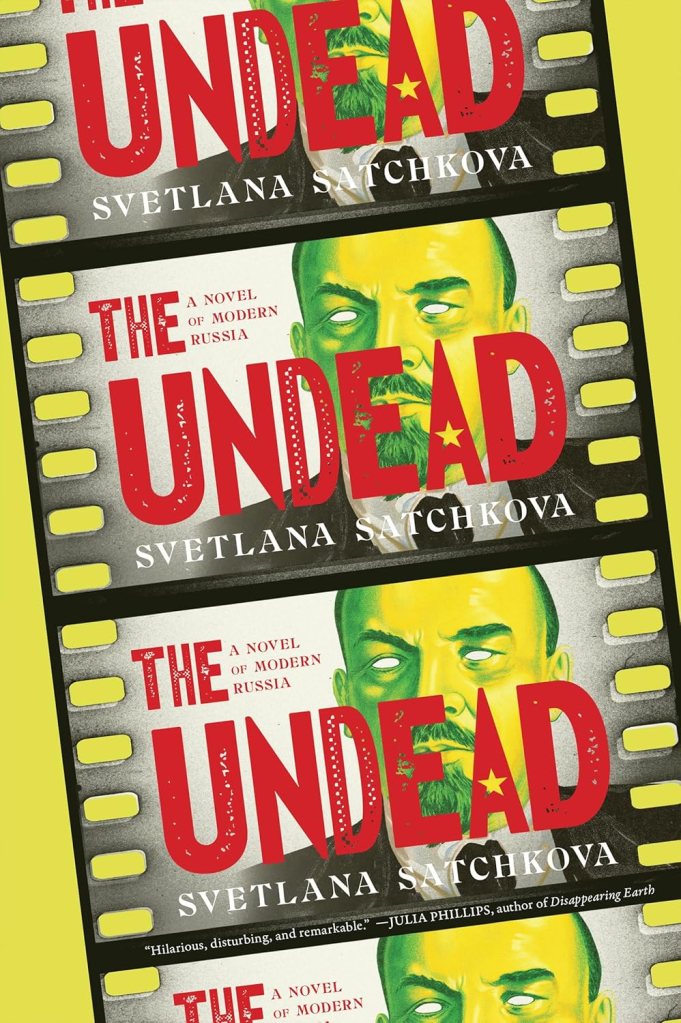
Book Cover of Svetlana Satchkova's The Undead

Satchkova has previously published three novels in Russian and is a longtime contributor to Punctured Lines. She has brought us interviews with some of the preeminent writers working in Russian today: her interview with Tatsiana Zamirovskaya back in 2020 (first published in Storytel and translated to English by Fiona Bell), her conversations with Anna Starobinets and Maria Stepanova, and a translation of an interview Satchkova gave to Egor Mikhailov of Afisha Daily about a Russian-language novel of hers published in 2021, Люди и птицы [People and Birds].

We’re grateful to Melville House Publishing for allowing us to run an excerpt from this highly entertaining and illuminating novel. This excerpt comes from Chapter Three of the novel, when Maya and her sister Polina visit their parents, and Maya shares the good news of signing a film contract for the movie she wrote.

Continue reading “A Psychological Thriller with a Touch of Mythology: An Excerpt from Svetlana Satchkova’s The Undead”
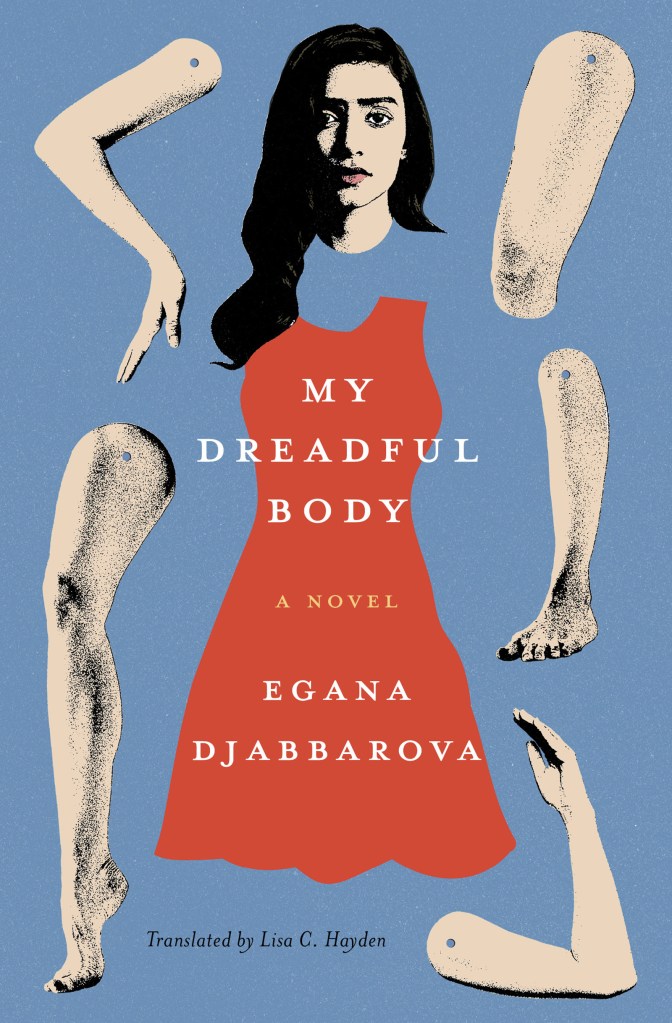
Tongue: An Excerpt from Egana Djabbarova’s My Dreadful Body, translated by Lisa C. Hayden

We’re celebrating today the arrival of an eagerly anticipated novel that portrays the life of a young woman from a traditional Azerbaijani community in Russia. A feminist poet, essayist, scholar, and educator, Egana Djabbarova is the author of five books in Russian. In English, her work has previously appeared in the anthology F Letter: New Russian Feminist Poetry, edited by Galina Rymbu, Eugene Ostashevsky, and Ainsley Morse (read our conversation with Ostashevsky and Morse). My Dreadful Body is Djabbarova’s first book in translation to English. The team behind this book includes Lisa C. Hayden, a beloved and celebrated translator from Russian, and New Vessel Press, an indie publisher specializing in literature in translation with a very strong list of titles from the countries of the former Soviet Union.

Continue reading “Tongue: An Excerpt from Egana Djabbarova’s My Dreadful Body, translated by Lisa C. Hayden”

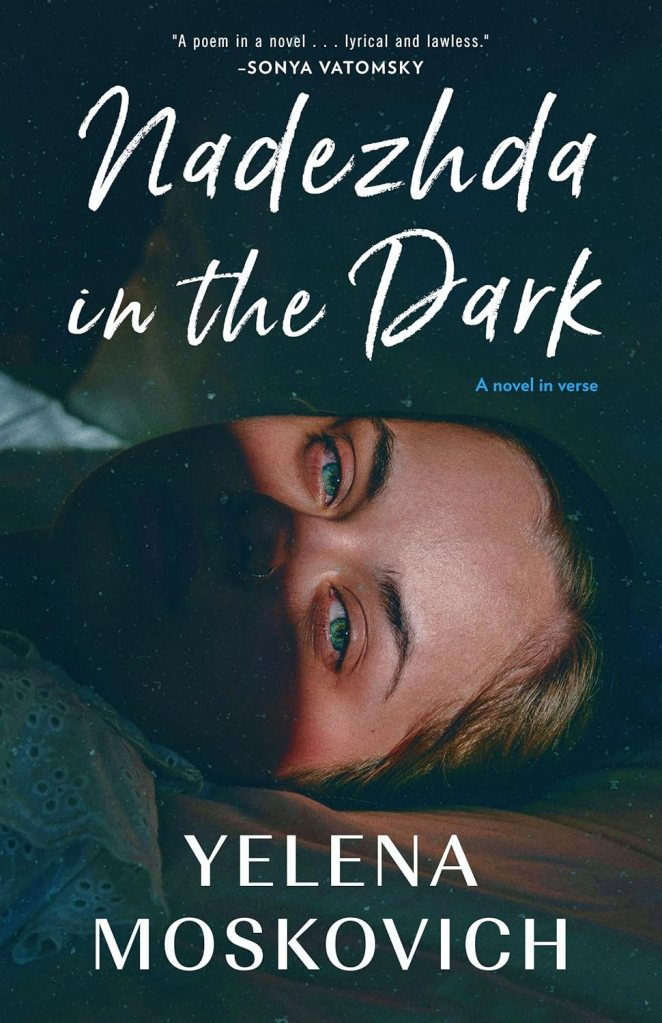
“everybody knows . . .” An Excerpt from Nadezhda in the Dark by Yelena Moskovich

Today, in the US, we welcome a new book by Ukrainian-born American and French author Yelena Moskovich. Innovative Dzanc Books is bringing to us Nadezhda in the Dark, a novel-in-verse, previously published in the United Kingdom by Footnote Press. We’re deeply grateful to independent presses that make great books accessible to readers across the world. Please support Dzanc Books by ordering your copy today!

When asked to contribute our responses to this book, Yelena Furman said:

“Brimming with references from Russian and Ukrainian literatures to Alla Pugacheva and the Moscow 1990s gay club scene, Nadezhda in the Dark is a poetic disquisition on global history and self-identity. Discussions of Soviet anti-Semitism and the war in Ukraine merge with explorations of immigration and queer love. In language simultaneously lyrical and sharp, Moskovich shows how the personal and political, the present and past, are inextricably linked in ways that are often traumatic but also occasionally hopeful.”

Continue reading ““everybody knows . . .” An Excerpt from Nadezhda in the Dark by Yelena Moskovich”

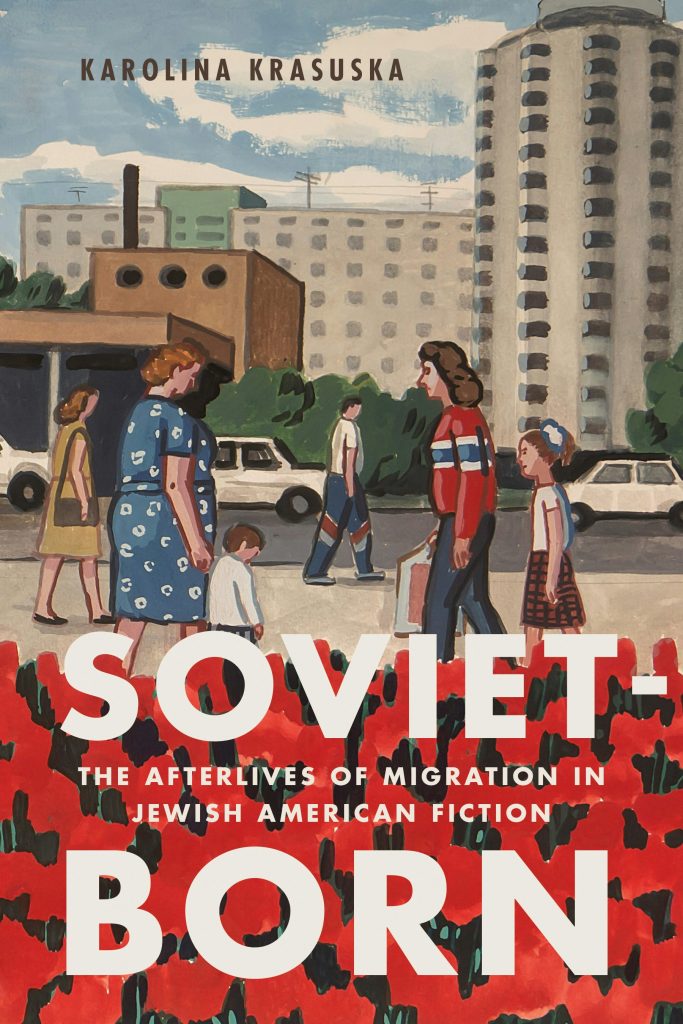
Queering Peripheries: Lara Vapnyar’s “Lydia’s Grove”: Soviet-Born: The Afterlives of Migration in Jewish American Fiction by Karolina Krasuska

Today we are featuring an excerpt from Soviet-Born: The Afterlives of Migration in Jewish American Fiction (Rutgers UP, 2024) by Karolina Krasuska, associate professor at the American Studies Center and co-founder of the Gender and Sexuality MA Program at the University of Warsaw, Poland. Starting in the early 2000s, Jewish immigrant writers from the former Soviet Union have appeared on the US literary scene in increasing numbers. While Gary Shteyngart, who can give lessons in self-promotion, is the most well known, the list comprises more women, including Lara Vapnyar (a Q&A with whom we have featured on this blog), Anya Ulinich, Irina Reyn, and Ellen Litman, to name only a few. As their books continued to be published, academics began to take note, organizing conference panels and writing on the subject (I am happy to have contributed to this field of study from its inception). The first and foundational monograph was Adrian Wanner’s Out of Russia: Fictions of a New Translingual Diaspora (Northwestern UP, 2011), which discussed the global phenomenon of ex-Soviet immigrant writers in the various countries to which they immigrated. Krasuska’s is the first academic volume specifically devoted to ex-Soviet Jews living and writing in the US, where the largest number of such immigrants resides.

Continue reading “Queering Peripheries: Lara Vapnyar’s “Lydia’s Grove”: Soviet-Born: The Afterlives of Migration in Jewish American Fiction by Karolina Krasuska”

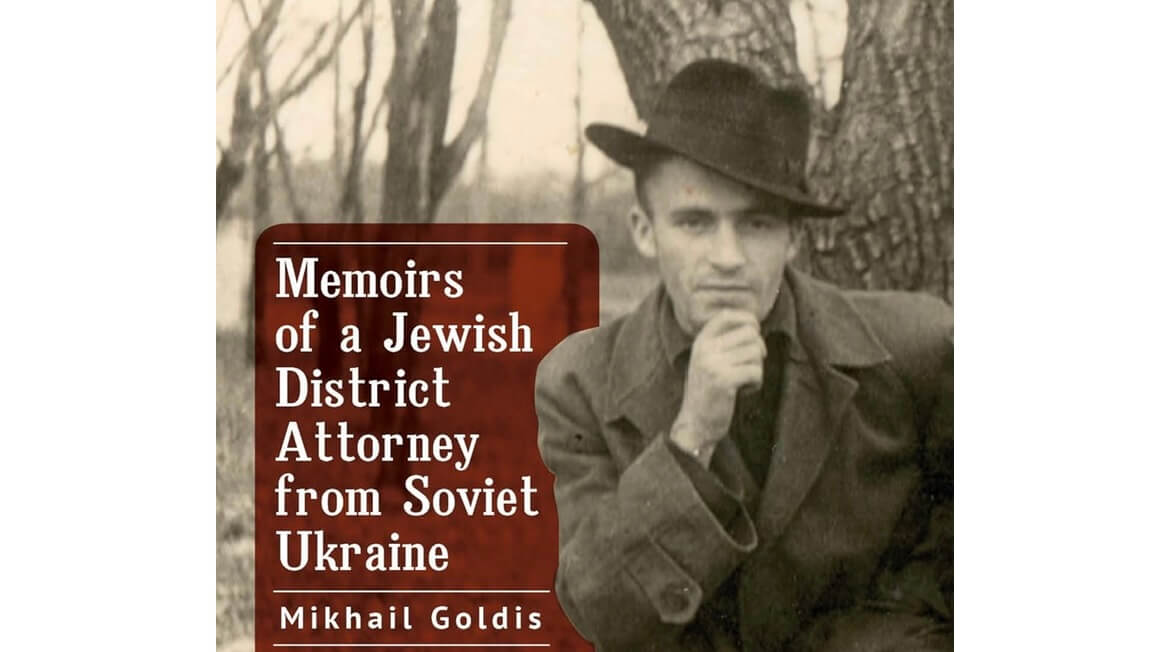
Seven Forty: Memoirs of a Jewish District Attorney from Soviet Ukraine by Mikhail Goldis, translated, edited, and with an Introduction by Marat Grinberg

Memoirs of a Jew who prosecuted criminals in Soviet Ukraine – The Forward

We are happy to feature an excerpt from Mikhail Goldis’s Memoirs of a Jewish District Attorney from Soviet Ukraine (Academic Studies Press, 2024), translated by Marat Grinberg, professor of Russian and humanities at Reed College and Goldis’s grandson. Grinberg’s previous book was the highly informative The Soviet Jewish Bookshelf: Jewish Culture and Identity Between the Lines (Brandeis University Press, 2022). The Soviet Jewish Bookshelf makes the original argument that, in the anti-Semitic Soviet Union, Jews circumvented the proscriptions on public expression of Jewish identity “through their ‘reading practices'”: they built up home libraries of books on Jewish subjects, which, given “the heavy censorship of Jewish content,” they often had to read “between the lines” (the citations are from my review). Olga interviewed Marat about his book, and you can listen to their rich conversation here, which includes reading suggestions of the various writers the book discusses.

Continue reading “Seven Forty: Memoirs of a Jewish District Attorney from Soviet Ukraine by Mikhail Goldis, translated, edited, and with an Introduction by Marat Grinberg”

Vinegret, a Recipe for Disaster by Jane Muschenetz

I want to tell you something small, in the great turning of this world, intimate as your grandmother’s soup. When you boil beets, carrots, and potatoes together, the potatoes will soften first, even if they are bigger than the other vegetables.

It is summer 2020, and my hands are Shakespearian (“out, damned spot!”)—beet stained. Our mid-century dining table is a stage set for “Salat Vinegret,” the Soviet-era culinary staple featuring ingredients that are readily available and inexpensive, even in wintertime. The supporting cast of bowls, knives, etc., isn’t from the old country, but is well practiced in recipes that travel back to my early childhood in L’viv, Ukraine.

Continue reading “Vinegret, a Recipe for Disaster by Jane Muschenetz”

Three Poems from Disbelief: 100 Russian Anti-War Poems, edited by Julia Nemirovskaya

Today we feature three poems from the Russian-language anthology Disbelief: 100 Russian Anti-War Poems (edited by Julia Nemirovskaya; various translators; Smokestack Books, 2023). We are grateful for the following introduction written for Punctured Lines by Maria Bloshteyn, one of the translators of the collection. As she notes below, one of the featured poets, Galina Itskovich, is a therapist helping those in Ukraine; you can donate here to support this work.

Continue reading “Three Poems from Disbelief: 100 Russian Anti-War Poems, edited by Julia Nemirovskaya”

Aikanush: An Excerpt from Akram Aylisli’s Stone Dreams, translated by Katherine E. Young

On February 9, 2013, Akram Aylisli’s books were burned in his native village. For more than six decades, Azerbaijan’s most prominent writer has written fiction about the mountain village of Aylis, from which he took his pen name; Aylisli called the day of the burning “the most terrible day of my life.” Why were his books burned? Aylisli had published a novella, Stone Dreams, that challenged official propaganda erasing the role played by Armenians in the history of Azerbaijan, a country currently dominated by ethnic Azeris (Azerbaijan and neighboring Armenia have engaged in military hostilities since before the collapse of the Soviet Union). Stone Dreams is among the first fictional works in the greater Turkic-speaking world to depict both historical and contemporary violence against ethnic Armenians, and it includes sympathetic portrayals of Armenian villagers residing in Azerbaijan. The novella also portrays the corruption and authoritarianism of modern-day Azerbaijan. In the uproar that greeted the novella’s publication, Aylisli was stripped of his presidential honors and pension. An empty coffin was paraded around the courtyard of his residence, and a bounty—later rescinded under international pressure—was offered to anyone who would cut off the writer’s ear. In 2014, international supporters nominated Aylisli for the Nobel Peace Prize for “his efforts to reconcile Azerbaijani and Armenian people.” In 2016, trumped-up legal charges were filed against Aylisli by the Azerbaijani government, a case that is still pending. Ten years after his books were burned, Akram Aylisli continues to live under de facto house arrest in Azerbaijan, unable to leave the city of Baku. He is 85.

Continue reading “Aikanush: An Excerpt from Akram Aylisli’s Stone Dreams, translated by Katherine E. Young”

To Fairyland: An Excerpt from Yelena Lembersky and Galina Lembersky’s Memoir Like a Drop of Ink in a Downpour

Like a Drop of Ink in a Downpour (Academic Studies Press, 2022) is a rare dual memoir co-written by Yelena Lembersky and her mother Galina. Born and raised in the USSR, following the death of her prominent painter father in 1970, Galina decides to emigrate with her young daughter and aging mother. In anticipation of her departure, Galina quits her job and becomes a refusenik. Yet, once her immigration papers go through, instead of boarding an airplane, she finds herself behind bars of a Leningrad prison on a criminal charge. Her mother has already left for the United States. Her young daughter Yelena–nicknamed Alëna in the book–is left in the care of friends, in danger of finding herself in an orphanage.

The chapter below is narrated by Yelena, eleven years old at the time of these events. We are deeply grateful to the author and publisher for permission to excerpt a chapter from this revealing and touching memoir. To continue reading, please buy the book from Academic Studies Press.

Continue reading “To Fairyland: An Excerpt from Yelena Lembersky and Galina Lembersky’s Memoir Like a Drop of Ink in a Downpour”

Irina Mashinski’s The Naked World, Three Excerpts

Irina Mashinski’s The Naked World, recently published by MadHat Press after many years in the making, is an impressive achievement in the hybrid genre. The collection combines pieces of original and translated poetry and prose that together illuminate not only the author’s past but also her way of seeing. Thematically, this book centers four generations of a Soviet family from the Stalin era to the 1990s and immigration to the United States. Writer, translator, and editor Irina Mashinski has penned ten books of poetry in Russian, and this is her English-language debut that also includes her Russian-language poems in translation by Maria Bloshteyn, Boris Dralyuk, Angela Livingstone, Tony Brinkley, Alexander Sumerkin, and Daniel Weissbort. Mashinski is co-editor, with Robert Chandler and Boris Dralyuk, of The Penguin Book of Russian Poetry and of the Cardinal Points Journal.

Continue reading “Irina Mashinski’s The Naked World, Three Excerpts”