Q&A with Masha Rumer: Parenting with an Accent (forthcoming from Beacon Press)

Today on Punctured Lines, we have a Q&A with Masha Rumer, author of Parenting with an Accent: An Immigrant’s Guide to Multicultural Parenting, whose arrival we previously announced here and are very excited about. Masha answered our questions by email.

Punctured Lines: Describe, briefly, your process in writing this book.

Masha Rumer: My decision to write the book was pretty simple: I wished there was something like that when I became a parent, and since there wasn’t, I figured I’d write it. I was born in Russia and my partner was born in the U.S., so in addition to navigating differences common to a multicultural relationship, having a baby brought up questions, nostalgia and my awareness of straddling multiple cultural identities. How do I teach my kids Russian, without forcing it?  How do I connect with other parents, even if I lack certain shared childhood experiences? Is a peanut butter sandwich an acceptable meal? How much borscht is too much? The more I spoke to others, parents or not, the more I realized that these concerns are very much shared, but people don’t always feel comfortable discussing it.

Surprisingly, I found no nonfiction book about the contemporary immigrant parenting experience, even though there is a record high of 43 million immigrants in America today and over 18 million kids with at least one foreign-born parent.

I realized there needs to be a research-driven, accessible look at what it’s like for immigrants to raise kids in the U.S., not a “how-to” parenting manual, but a realistic portrait of sorts. The book will have a bit of everything: candid conversations with families across the U.S., personal narrative and interviews with experts in psychology, language development and sociology. And beets. Lots of beets.

PL: What is your relationship with contemporary Russian literature? Who are some of the writers that inspire you?

MR: I really wish I’d read more contemporary Russian literature, but a significant chunk of my reading is in English (unless we’re talking news or kid lit – I try to read Russian books with my children daily). That said, I’ve recently been enjoying the work of Dina Rubina and of the investigative journalist Svetlana Alexievich, and have been getting into translation more (just finished a delightful Russian translation of A Man Called Ove [PL: This Swedish title by Fredrik Backman has also been translated into English]).

PL: Do you find yourself working against some Russian cultural stereotypes?

MR: Sometimes I find myself dodging jokes about being a spy, especially in the wake of the 2016 presidential election (I’m not a spy). I’ve also been questioned whether I came to the U.S. “on my own” and “with papers” or if my husband ordered me via a catalog. The people who ask are demure and almost apologetic, but they want to know. Recently, though, a job recruiter was pretty explicit about questioning my immigration status and any political connections. And something many female-identifying Russian speakers have probably experienced – there’s often an assumption that our closets have this secret compartment where we stash sable fur coats and leather outfits from a James Bond movie.

PL: As a writer who addresses stories of immigrant families, do you find yourself connecting with other diaspora writers?

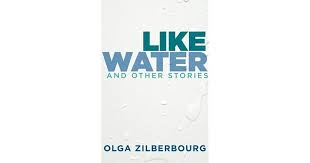
MR: I definitely find myself connecting with other diaspora writers. It’s probably due to the shared immigrant experiences of reinventing and translating yourself and the trauma of having been uprooted. I love the work of Lara Vapnyar and Dinaw Mengestu; they both write so incisively and honestly about diaspora realities. Eva Hoffman and Jhumpa Lahiri were among the first contemporary immigrant authors I read, and it felt so validating. Then there’s the work of Edwidge Danticat, Anya Ulinich and Natalia Sylvester, particularly her recent essay on being bilingual, and the Foreignish blog, run by Yaldaz Sadakova. I’m also excited to read the new collection Like Water by Olga Zilberbourg. It’s thrilling to see that the contemporary immigrant narratives are no longer othered as “niche,” but are becoming a part of the “mainstream” literary canon. 
Notable Books: Russian Titles in English Translation, 2009-2019

The impetus for creating this post came from a recent Twitter discussion. We at Punctured Lines decided to accept a dare and came up with a list of notable Russian titles available in English translation from the last decade. This has been an opportunity to take stock of the years 2009-2019, both to remember the books we’ve read and to look back at those that we might have missed.

In this task, we relied heavily on Lisa Hayden’s blog, Lizok’s Bookshelf, where Lisa keeps chronological track of the English translations – our deep gratitude for creating and maintaining this resource. Our methodology for choosing among all those works was based on several factors. Rather obviously, for our purposes we only considered works by women. We also wanted to highlight writers whose names may not be very familiar to English-speaking readers but whose work we feel deserves wider exposure and shows the range of contemporary Russian women’s literature.

For this reason, we chose not to include writers who are well-known in the Anglophone world, but of course we love them too. We note proudly the women whose work has been translated into English numerous times: Anna Akhmatova, Svetlana Alexievich, Eugenia Ginzburg, Ludmilla Petrushevskaya, Dina Rubina, Olga Slavnikova, Marina Tsvetaeva, Ludmila Ulitskaya, and Tatyana Tolstaya (whose problematic views on women and feminism may be less known).

One or both of us have read many of titles below, and we’re happy to report that the field is larger than our reading capacity. We included a few books we haven’t read because they sparked our curiosity and to encourage ourselves and our followers to return to these publications. An important factor for consideration was translators whose work we’re interested in. Here we would like to say a huge thank you to translators for their often unacknowledged efforts that allow English speakers to know Russian literature.

Our list has four categories: Contemporary Prose, Contemporary Poetry, Recent Translations of Earlier Prose Works, and a rather catch-all Drama, a Graphic Novel, and an Anthology. The titles in each category are given chronologically by year of the translation. This list reflects our personal opinions and is in no way meant to be comprehensive or conclusive. We welcome your comments and suggestions about these and other titles by Russian women who you think should be on this list. This is, hopefully, the beginning of that conversation.

Contemporary Prose

Elena Chizhova, The Time of Women, translated by Simon Patterson and Nina Chordas; Glagoslav, 2012. 

Linor Goralik, Found Life: Poems, Stories, Comics, a Play, and an Interview, edited by Ainsley Morse, Maria Vassileva, and Maya Vinokur; Columbia University Press, 2017.

Ksenia Buksha, The Freedom Factory, translated by Anne Fisher; Phoneme Media, 2018.

Alisa Ganieva, Bride and Groom, translated by Carol Apollonio; Deep Vellum, 2018.

Margarita Khemlin, Klotsvog, translated by Lisa C. Hayden; Columbia University Press, 2019.

Guzel Yakhina, Zuleikha, translated by Lisa C. Hayden; Oneworld Publications, 2019.

Contemporary Poetry

Anzhelina Polonskaya, Paul Klee’s Boat, translated by Andrew Wachtel; Zephyr Press, 2012. 

Polina Barskova, Anna Glazova, and Maria Stepanova, Relocations: Three Contemporary Russian Women Poets, translated by Catherine Ciepiela, Anna Khasin, and Sibelan Forrester; Zephyr Press, 2013.

Maria Rybakova, Gnedich, translated by Elena Dimova; Glagoslav, 2015.

Inna Kabysh, Blue Birds and Red Horses, translated by Katherine E. Young; Toad Press, 2018.

Aigerim Tazhi, Paper-Thin Skin, translated by James Kates; Zephyr Press, 2019.

Olga Livshin, A Life Replaced: Poems with Translations from Anna Akhmatova and Vladimir Gandelsman, Poets & Traitors Press, 2019.

Recent Translations of Earlier Prose Works

Teffi, Memories: From Moscow to the Black Sea, translated by Robert Chandler and Elizabeth Chandler, Anne Marie Jackson, and Irina Steinberg; NYRB Classics and Pushkin Press, 2016.

Sofia Khvoshchinskaya, City Folk and Country Folk, translated by Nora Seligman Favorov; Columbia University Press, 2017.

Olga Berggolts, Daytime Stars: A Poet’s Memoir of the Revolution, the Siege of Leningrad, and the Thaw, translated by Lisa A. Kirschenbaum; University of Wisconsin Press, 2018.

Doba-Mera Medvedeva, Daughter of the Shtetl: The Memoirs of Doba-Mera Medvedeva, translated by Alice Nakhimovsky; Academic Studies Press, 2019.

Karolina Pavlova, A Double Life, translated by Barbara Heldt; Columbia University Press, 2019.

Irina Odoevtseva, Isolde, translated by Bryan Karetnyk and Irina Steinberg; Pushkin Press, 2019.

Drama, a Graphic Novel, and an Anthology

Yaroslava Pulinovich, Olga Rimsha, Ksenia Stepanycheva, Ekaterina Vasilyeva, Russian Drama: Four Young Female Voices, translated by Lisa Hayden; Glas, 2014.

Victoria, Lomasko, Other Russias, translated by Thomas Campbell; Penguin and n+1, 2017.

Teffi, Marina Tsvetaeva, Anna Akhmatova, Lydia Ginzburg, Galina Scherbakova, Ludmila Ulitskaya, Svetlana Alexievich, Olga Slavnikova, Irina Muravyova, Ludmila Petrushevskaya, Margarita Khemlin, Slav Sisters: The Dedalus Book of Russian Women’s Literature, edited by Natasha Perova; Dedalus, 2018.

Podcast: Olga Zilberbourg in Conversation with Jennifer Eremeeva

Olga Zilberbourg spoke with Jennifer Eremeeva about Like Water and Other Stories (WTAW Press) in a podcast for The New Books Network. It’s a fantastic interview, including about cultural misunderstandings, which starts with Olga reading the inventive and touching “Dandelion” from her collection. Listen to the conversation and follow Jennifer on Twitter @JWEremeeva – we do!

“A new generation of Russian emigres is blessed — or cursed — with the ease of long-haul flights and frequent flyer miles, Skype and FaceTime, Google translate, and regulations that seem anyway to be more forgiving about former citizens traveling to and fro. For them, the border has become far more porous than it ever was, and the choices are now more nuanced. However, there are still plenty of cultural minefields to navigate. To this generation that includes writers as disparate as Gary Shteyngart and Irina Reyn comes Olga Zilberbourg with a new collection of short stories, ‘Like Water and Other Stories.'”

https://jennifereremeeva.com/like-water/

Interview with Olga Zilberbourg by Odette Heideman

A Q&A with Olga Zilberbourg in Epiphany Magazine about LIKE WATER AND OTHER STORIES (WTAW Press):

“As a writer, when I’m structuring a collection of stories, I make an assumption that, like me, my readers are interested in the human being who shows up most fully in the white spaces between one’s story ending and another’s beginning. From the information on the cover alone, my reader knows that I’m a woman, that I grew up in the Soviet Union, and that I live in the US and I write in English. So, yes, nearly automatically, my story is framed as an immigrant’s story. Then comes the interesting part.”

http://epiphanyzine.com/features/2019/11/27/short-form-olga-zilberbourg  

Image result for like water and other stories images

Alicia J. Rouverol on Olga Zilberbourg’s Like Water and Other Stories (WTAW Press, 2019)

A recent review singing the richly deserved praises of our own Olga Zilberbourg’s debut English-language collection, LIKE WATER AND OTHER STORIES, out now:

“In an era of ‘short shorts’ hailed in by the venerable Lydia Davis—and culminating in ‘the fragmentary’ in the recent Nobel Prize-winning work of Olga Tokarczuk—one wonders if there remains space for a new collection of shorts: stories that up-end expectation and offer distinctive voice and lesser charted areas of exploration. San Francisco-based, Russian émigré writer Olga Zilberbourg, in her first story collection published in English, allays that concern. Zilberbourg is author of three Russian-language story collections; her fiction has been widely published in esteemed US literary journals; and she has won numerous prizes, including the Willesden Herald International Short Story Prize in 2016. A native of Leningrad, raised in St Petersburg, Zilberbourg moved to the US in 2006 to study at the Rochester Institute of Technology, later earning the MA in Comparative Literature at San Francisco State University.”

http://www.themanchesterreview.co.uk/?p=11103

Yelena Furman on Olga Zilberbourg’s Like Water and Other Stories

“In ‘Rubicon,’ which opens Olga Zilberbourg’s Like Water and Other Stories, the narrator, on her way to pick up her son from preschool, says, ‘spring came on hard and much too early this year, which must be why the dimensions of reality shifted.’ If the story’s realistic beginning gives the impression that this shift is figurative, it soon becomes apparent that reality really does alter: on a street in San Francisco, a young man she knew back in 1990s Russia, who is ‘still seventeen on this day in 2018,’ drives up to hand her a ‘TDK compact cassette, the exact kind he and I used to exchange in high school.'”

http://jordanrussiacenter.org/news/review-olga-zilberbourgs-english-language-debut-like-water-and-other-stories/#.XaItf0ZKiyI  

A profile of Ilya Kaminsky

The Guardian has published a lovely profile of Ilya Kaminsky, related to Deaf Republic, his second collection of poetry.

Odessa was a cosmopolitan place, a “city of laughter” in which poetry was revered, and from an early age Kaminsky wrote and learned it by heart. When he was 12 his prose writing was published in the local newspaper, after he answered a call-out to schoolchildren to contribute, because the paper had no money to pay journalists. At 15, though he thought of poetry as “a private thing”, he produced his first chapbook. He had graduated from school by the time the family was forced into exile.

Olga Zilberbourg on Keith Gessen’s “A Terrible Country”

” Novels about Russia written in English for a U.S. audience are numerous enough that they could be grouped into a genre of their own. Keith Gessen’s second novel, “A Terrible Country,” is a solid contribution to this genre, particularly promising because of the author’s deep personal connection to the country and his prior body of work as a journalist, an analyst and a critic of Russia.”

https://www.sfchronicle.com/books/article/A-Terrible-Country-by-Keith-Gessen-13184005.php

Forthcoming Book Announcement: Masha Rumer, Parenting with an Accent: An Immigrant’s Guide to Multicultural Parenting

From Masha Rumer comes the following announcement:

“Very excited to share that my nonfiction book, Parenting with an Accent, will be published by Beacon Press and distributed by Penguin Random House. There’s no better time for this book, which will explore the everyday stories and challenges of immigrant families as they raise kids in their adopted American home. (And yes, there will be beets.)”

Agent Katelyn Hales, Robin Straus Agency

We’re very excited too. Having read Masha’s work before, we know this will be an insightful and engagingly written book. If you haven’t read her yet, you can do so here:

What Do You Do When Your Beloved Childhood Books Scare the Crap Out of Your Kids?

Lessons From Nabokov: Finding Freedom in a Foreign Language: Rajia Hassib on Mastering a Third Language

A Russian immigrant helped an Egyptian immigrant start writing in English. Then she found her own voice:

“To Nabokov, who probably would neither have approved of nor cared about my writing, I say this: thank you for opening this door through which I now walk.

Now, I make my own path.”