Creating a Vivid World: A Q&A with Lisa C. Hayden, the translator of Egana Djabbarova’s My Dreadful Body

The publication of Egana Djabbarova’s My Dreadful Body by New Vessel Press earlier this year is an important contribution to feminist russophone literature available to readers in English translation. Following the excerpt from this novel we published recently from the opening of the seventh chapter, “Tongue,” we’re taking the opportunity to dive a little deeper into the context, structure, and language of this remarkable book in our interview with its translator, Lisa C. Hayden. We are deeply grateful to Hayden, who also brought to anglophone readers books by Guzel Yakhina, Margarita Khemlin, Narine Abgaryan, Marina Stepnova, and Katerina Gordeeva, among others, for insights into her translation work.

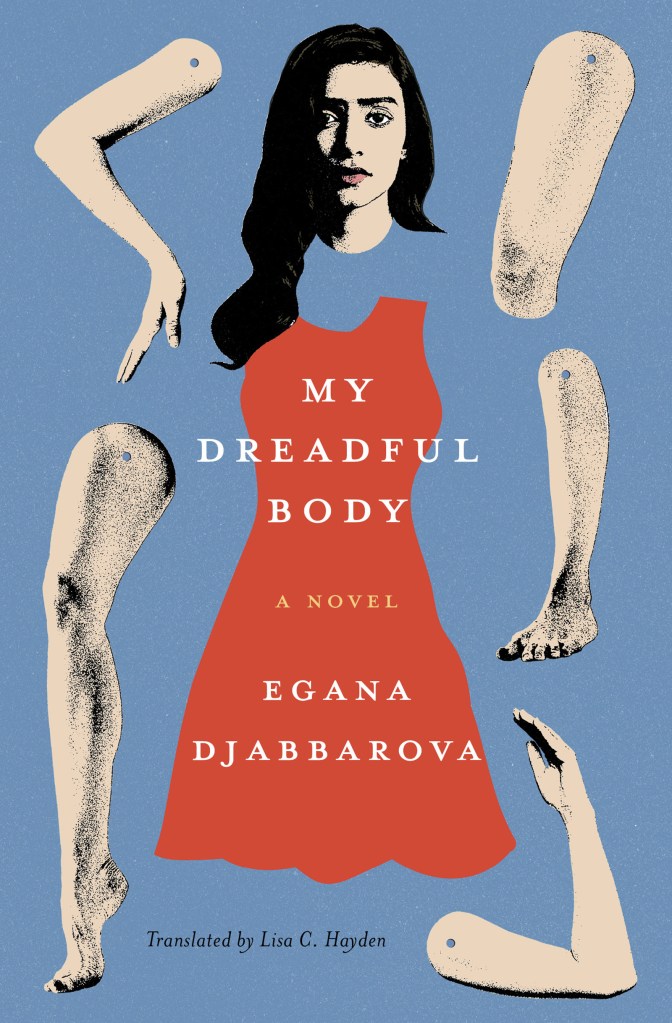
Book cover of My Dreadful Body

Olga Zilberbourg: What considerations went into your decision to translate My Dreadful Body?

Lisa Hayden: The simplest answer is that I enjoyed the book and had a very clear sense of the narrative voice during my first reading. Clarity and enjoyment are always my initial cues to take a translation project. There were other factors, too, including the fact that Azerbaijan, a country I visited several times during the 1990s, features in this novel. And then there’s Egana herself, with her angles on feminism and family strife. The health themes interested me, too, since I used to write, as a freelancer, articles about drug discovery and medical devices. Among other things, I’d long wanted to translate a book for New Vessel Press. All the emotions flowing through Egana’s text felt stronger to me with each draft, telling me I’d made the right decision. I was nearly in tears by the time I finally read the version I turned in to New Vessel. And again when I read an advance copy of the book. I’d never received a printed advance copy of a translation before My Dreadful Body and it was a very moving experience to hold a book I’d translated before the book was finalized.

Olga Zilberbourg: Djabbarova first came to literature as a feminist poet. She has published three collections of poetry in Russian (as well as novels), and in English her work has appeared in F Letter: New Russian Feminist Poetry, edited by Galina Rymbu, Eugene Ostashevsky, and Ainsley Morse. Did her poetry affect your approach to this translation?  

Lisa Hayden: There is a bit of poetry in My Dreadful Body, so Egana’s poetry definitely affected my translation work! It was especially interesting (and challenging, since I rarely translate poetry) to work with lines from an Azeri lullaby and Russian-language responses to it. Egana’s prose often feels poetic, too, with lovely imagery and a rich compactness. That compactness and lovely imagery combine with beautiful cadences and use all five senses, creating a very vivid world. I recommend watching Egana recite some of her poetry during an online event held in May 2025 at Amherst College, hosted by Polina Barskova and Catherine Ciepiela. Egana’s event felt like a litmus test to me because it happened right around the time my translation was due. Had I gotten her tones right in my translation? I’m very voice-oriented, so hearing Egana speak – and recognizing many of the themes and even wording in her poems – was (how to say it?) an amazing experience. I love her strong feminist voice, both on the page and in speech. I tend to work very intuitively, so it feels almost as if I absorb Russian voices and then attempt to transform them into English. I don’t know quite how else to explain things.

Olga Zilberbourg: The narrator’s medical condition alters the course of her life quite dramatically. She describes it with precision and vivid details. Vivid descriptions of suffering can be emotionally challenging to read, let alone translate. How did this affect your work?

Lisa Hayden: I see the narrator’s medical condition and treatments as one of the most important layers of the novel, for all sorts of physiological, emotional, and metaphorical reasons. This layer of the book is medical, scary, and perhaps even physically painful, too, since I suspect that most of us have fears about our health. I certainly find it significantly harder to translate texts with physical and/or emotional pain than to read them; all the text’s words and emotions flow through me many, many times during the course of the work, even when I’m away from my desk. I can’t claim that my translation process is even close to, say, method acting, but, as a colleague and I were discussing just a few hours before I sat down to answer your question, translations about human pain and suffering leave traces on us. Just as they leave traces on their readers. There’s a ripple effect.

Olga Zilberbourg: Though this novel has a chronologically unfolding plot that has to do with the course of the narrator’s neurological condition, it’s also delightfully nonlinear. The book is divided into eleven sections, each titled for a particular body part: “Eyebrows,” “Eyes,” “Hair,” etc. In each section, the narrator often circles back to the attitude of her mother and grandparents to a particular subject. I wonder if this unique structure presented any challenges for you as a translator?

Lisa Hayden: I love the way Egana structured the novel, focusing on one body part per chapter. This is the sort of framework that keeps me interested, both as a reader and as a translator. I love that there’s always a new perspective, another way to enter the text and the issues it presents. Her chapters combine numerous motifs and threads from her characters’ lives: childhood and adulthood, family and Egana’s own personal life, healthiness and illness… One passage, in the “Hair” chapter, uses very poignant repetition when discussing Egana’s grandmothers. Egana’s writing is so wonderfully clean and clear that I didn’t find the translation unusually difficult. Though of course it was difficult! Every translation is difficult in its own way. The biggest challenges in translating Egana’s text lay in writing the translation as cleanly, clearly, and concisely as possible. Fortunately, Egana patiently answered many (many!) questions so I could feel comfortable with the wording and details in the translation.

I’m also beyond grateful that New Vessel Press is publishing the book. Publisher Michael Wise, who’s also a fantastic editor, takes tremendous care of his books, their writers, and their translators. It was a joy to work with him. My Dreadful Body was expertly and very thoroughly edited and proofread in several stages. Michael’s advice and ideas enabled us to replicate as many of Egana’s text’s rhythms as possible while retaining lots of Azeri words, too. I’m thankful that loads of patient and creative suggestions from Michael and his team improved the translation so much by admirably and tactfully balancing the wonderfully unique and nuanced aspects of Egana’s writing with understandability and clarity for anglophone readers.

Olga Zilberbourg: Do you see Djabbarova’s feminism influencing the structure, themes, or language of this book?

Lisa Hayden: One of the reasons I love My Dreadful Body so much is that I identify very closely with how Egana writes about the limitations that society, traditions, and family members inflict on women. The strictures she mentions range from things like grooming to choices of bathing suits to behavior at diaspora weddings. The fact that each chapter is titled for a body part goes a long way in demonstrating linkages between a woman’s physical body and how her upbringing affects her thought processes. Egana’s account of her relationships and interactions with family members is also telling. I’m hesitant to write too much about any of these aspects of My Dreadful Body because I hope readers will discover details and meanings that are especially significant to them so they can form their own relationships with Egana and her story. I love the power of her writing and hope our readers will, too!

Punctured Lines: Buy Egana Djabbarova’s My Dreadful Body in Lisa Hayden’s translation from New Vessel Press or at your favorite bookstore. Rate and review!

Lisa Hayden is a literary translator who lives in New England.

Tongue: An Excerpt from Egana Djabbarova’s My Dreadful Body, translated by Lisa C. Hayden

We’re celebrating today the arrival of an eagerly anticipated novel that portrays the life of a young woman from a traditional Azerbaijani community in Russia. A feminist poet, essayist, scholar, and educator, Egana Djabbarova is the author of five books in Russian. In English, her work has previously appeared in the anthology F Letter: New Russian Feminist Poetry, edited by Galina Rymbu, Eugene Ostashevsky, and Ainsley Morse (read our conversation with Ostashevsky and Morse). My Dreadful Body is Djabbarova’s first book in translation to English. The team behind this book includes Lisa C. Hayden, a beloved and celebrated translator from Russian, and New Vessel Press, an indie publisher specializing in literature in translation with a very strong list of titles from the countries of the former Soviet Union.

Continue reading “Tongue: An Excerpt from Egana Djabbarova’s My Dreadful Body, translated by Lisa C. Hayden”

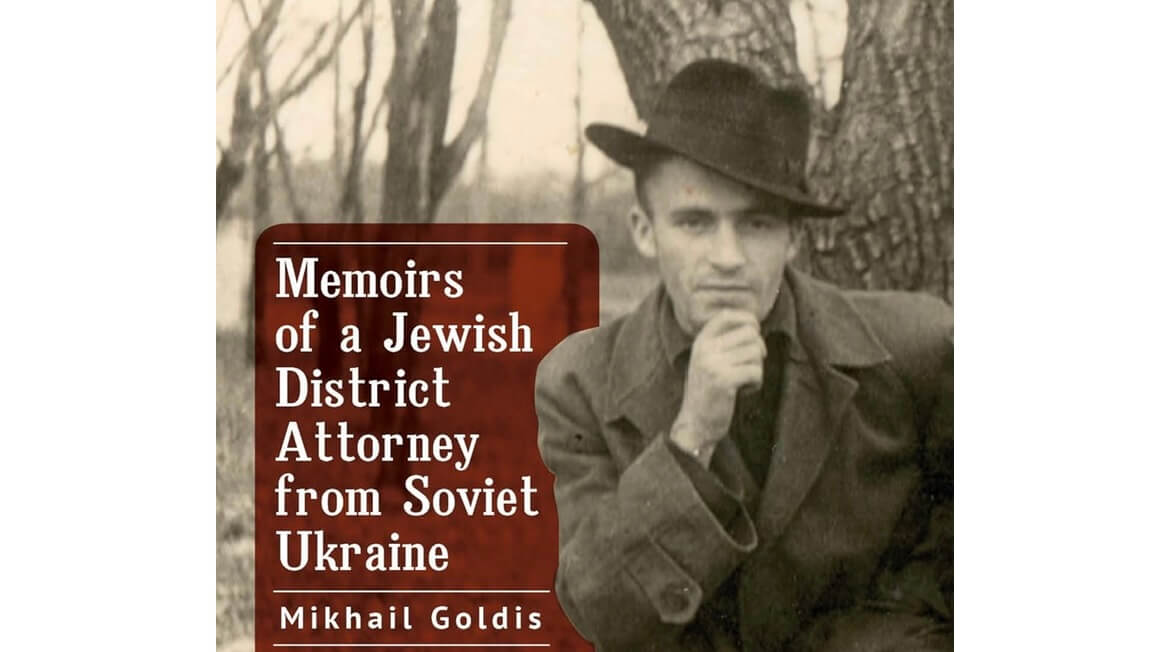
Seven Forty: Memoirs of a Jewish District Attorney from Soviet Ukraine by Mikhail Goldis, translated, edited, and with an Introduction by Marat Grinberg

Memoirs of a Jew who prosecuted criminals in Soviet Ukraine – The Forward

We are happy to feature an excerpt from Mikhail Goldis’s Memoirs of a Jewish District Attorney from Soviet Ukraine (Academic Studies Press, 2024), translated by Marat Grinberg, professor of Russian and humanities at Reed College and Goldis’s grandson. Grinberg’s previous book was the highly informative The Soviet Jewish Bookshelf: Jewish Culture and Identity Between the Lines (Brandeis University Press, 2022). The Soviet Jewish Bookshelf makes the original argument that, in the anti-Semitic Soviet Union, Jews circumvented the proscriptions on public expression of Jewish identity “through their ‘reading practices'”: they built up home libraries of books on Jewish subjects, which, given “the heavy censorship of Jewish content,” they often had to read “between the lines” (the citations are from my review). Olga interviewed Marat about his book, and you can listen to their rich conversation here, which includes reading suggestions of the various writers the book discusses.

Continue reading “Seven Forty: Memoirs of a Jewish District Attorney from Soviet Ukraine by Mikhail Goldis, translated, edited, and with an Introduction by Marat Grinberg”

Video from Born in the USSR: Diaspora Writers Against War

Thanks to those of you who could attend our event, Born in the USSR: Diaspora Writers Against War, hosted by the Wende Museum on March 28. We loved having you as our audience and hope to continue the conversations in various ways.

Thank you for donating to Ukraine Trust Chain. Ukraine needs all of our support. Please continue to spread the word and donate here: https://www.ukrainetrustchain.org/

The video from our event is now online:

Continue reading “Video from Born in the USSR: Diaspora Writers Against War”

Born in the USSR: Diaspora Writers Against War

This one of a kind reading brings together Soviet-born writers as they weave together an intricate story of identity, memory, cultural intersections, immigration, and war. From fiction to poetry, memoir and journalism, and work in translation, the reading presents a deep dive into the individual and collective experiences of the Soviet-born diaspora in the U.S. This free event includes a fundraiser in support of humanitarian aid in Ukraine and aligns with The Wende Museum’s current exhibition “Undercurrents II: Archives and the Making of Soviet Jewish Identity.” Autographed books will be on sale, courtesy of Village Well.

Hosted by The Wende Museum, readers include poets, writers, and translators: Katya Apekina, Yelena Furman, Kristina Gorcheva-Newberry, Julia Kolchinsky, Arina Kole, Maria Kuznetsova, Olga Livshin, Ruth Madievsky, Ainsley Morse, Luisa Muradyan, Jane Muschenetz, Asya Partan, Irina Reyn, Diana Ruzova, Timmy Straw, Vlada Teper, Sasha Vasilyuk, and Olga Zilberbourg.

Continue reading “Born in the USSR: Diaspora Writers Against War”

Narrating a Violent Childhood: A Q&A with Fiona Bell and Margarita Vaysman about Avdotya Panaeva’s The Talnikov Family

Avdotya Panaeva was born in 1820 and first began publishing her work in one of Russia’s premier literary magazines, Sovremennik, in 1846. The author of numerous short stories, novels, memoirs, as well as collaborative projects, she has only recently begun to achieve the recognition that she deserves in the English-speaking world.

On October 8, 2024, Columbia University Press published Fiona Bell’s translation of Panaeva’s first novel, The Talnikov Family. This became the second full-length translation of Panaeva’s work to English. In my review of the book in On the Seawall, I mention several social and historical factors that have kept this delightful novel from English-language readers for so long. In writing about this book, I have relied, in part, on Bell’s introduction to the novel and on the research by Margarita Vaysman, whose book Self-Conscious Realism: Metafiction and the Nineteenth-Century Russian Novel devotes a section to Panaeva’s work, including an excerpt that ran in Punctured Lines.

Today, it is my pleasure to discuss this novel and Panaeva’s work more broadly with her translator Fiona Bell and scholar Margarita Vaysman.

Continue reading “Narrating a Violent Childhood: A Q&A with Fiona Bell and Margarita Vaysman about Avdotya Panaeva’s The Talnikov Family”

Ugrinovich and the Sex Giant: Fiction by Anna Natalia Malachowskaja, translated by Anastasia Savenko-Moore

Anna Natalia Malachowskaja is a well-known Soviet and Russian author, feminist, and dissident. In 1979, together with Tatiana Goricheva, Tatiana Mamonova, and Julia Voznesenskaya, she wrote and edited a feminist samizdat publication Женщина и Россия [Woman and Russia] and later Maria. These publications were deemed anti-Soviet; the women were questioned by the KGB and forced to emigrate. Having settled in Austria, Malachowskaja completed her Ph.D. at the University of Salzburg. She turned her research into the Russian folklore character of Baba Yaga into a series of published books where she argues that the fairy tale character is a marginalization and amalgamation of three goddesses of the ancient world. In addition to her scholarship, Malachowskaja is the author of novels, collections of stories, and poems. Malachowskaja’s fiction is frequently accompanied by art. As an artist, she has exhibited her work in St. Petersburg, Vienna, and Salzburg.

Continue reading “Ugrinovich and the Sex Giant: Fiction by Anna Natalia Malachowskaja, translated by Anastasia Savenko-Moore”

Poems Betwixt Paths: Herb Randall in Conversation with Irina Mashinski

We are grateful to Herb Randall and Irina Mashinski for bringing us this interview about poetry, translation, music, and more. Both of them have appeared on Punctured Lines previously. An excerpt from Irina Mashinski’s hybrid poetry and prose collection The Naked World can be found here (while Herb Randall’s review of it in the Los Angeles Review of Books is here). At Punctured Lines, Herb Randall has contributed a personal essay about visiting Kharkiv and looking for traces of an English woman who moved there during Stalin’s reign and a review of Sana Krasikov’s The Patriots, about an American Jewish woman who also moves to Stalin’s Soviet Union (a clearly misguided endeavor from any country). We are very happy to have them back with the following in-depth discussion.

Continue reading “Poems Betwixt Paths: Herb Randall in Conversation with Irina Mashinski”

Three Poems from Disbelief: 100 Russian Anti-War Poems, edited by Julia Nemirovskaya

Today we feature three poems from the Russian-language anthology Disbelief: 100 Russian Anti-War Poems (edited by Julia Nemirovskaya; various translators; Smokestack Books, 2023). We are grateful for the following introduction written for Punctured Lines by Maria Bloshteyn, one of the translators of the collection. As she notes below, one of the featured poets, Galina Itskovich, is a therapist helping those in Ukraine; you can donate here to support this work.

Continue reading “Three Poems from Disbelief: 100 Russian Anti-War Poems, edited by Julia Nemirovskaya”

Olga Krauze, a profile by Sonja Franeta

“Обстрел прекратился в 11:30. Пока всё тихо. У нас в квартире тепло, работает водопровод и центральное отопление. Нет электричества, но светит солнце и на улице тает снег.” [The shelling stopped at 11:30. For now everything is quiet. Our apartment is warm, and there’s running water and central heating. No electricity, but the sun is shining and the snow is melting outside.]

—my friend Olga Krauze writes from Kharkiv, the second largest city in Ukraine. I was interviewing her on Zoom for this profile and we got interrupted. Olga is a poet and singer and I’ve known her since 1991. She has lived in Kharkiv for 12 years with her partner Elina, who is Ukrainian.

Continue reading “Olga Krauze, a profile by Sonja Franeta”