Book Love: Julia Voznesenskaya’s The Women’s Decameron

(This blog post had to happen sometime.)

Sure, we’ve all fallen in love with people, but some of us have also fallen in love with books. I was in my early twenties, living in a newly post-Soviet Moscow, where I’d gone to work after college. Censorship had collapsed along with the Soviet Union, and many types of previously banned literature were flooding the Russian market. Tables with piles of books for sale were regular features outside many of the city’s metro stations. They were an incongruous mix of serious fiction by the likes of Bulgakov and Solzhenitsyn, self-help manuals, erotica of dubious provenance, and Russian translations of detective novels by James Hadley Chase. I don’t have an exact memory, but given that a good number of my books from that period were purchased off such tables, it is highly likely that this is where I found a novel titled Zhenskii Dekameron — The Women’s Decameron (transl. W.B. Linton, publ. Atlantic Monthly Press; other editions in Russian and English exist). Without a doubt, the fact that the word zhenskii was in the title was a major selling point. It was by a writer named Julia Voznesenskaya (here and elsewhere, I am using the spelling of authors’ names as they appear on their English translations, but given my willingness to die on the hill of Library of Congress transliteration, I am absolutely cringing inside). I’d never heard of her. She changed my life.

Voznesenskaya wrote The Women’s Decameron in 1985 while in exile in what was then West Germany. Many writers were expelled from the Soviet Union, but what makes her case highly unusual was that it was due to feminist activity. She came to feminism via her involvement in the dissident movement in the 1970s, for which she was arrested and imprisoned. Although she wasn’t initially interested in women’s issues, time in all-women’s camps and prisons changed her mind. She and three other women founded the Soviet feminist movement (it was tiny, but still a thing); they formed a women’s club and put out journals of women’s writing, for which they were hounded by the KGB and made to leave. Three of the four founders, including Voznesenskaya, were religious, and their views resembled Russian Orthodox teachings more than feminist theory, but The Women’s Decameron bears little trace of this. In the West, they broke up over their religious-secular divide, but not before being interviewed by Ms. Magazine. In the process of editing this post, Olga found a Calvert Journal article about the exhibition Leningrad Feminism 1979, devoted to this Soviet feminist collective; it was shown in St. Petersburg earlier this year, and once COVID-19 conditions allow, will move to Moscow and then to locations in Western Europe. Thank you so much, Olga, for this amazing, and unexpected find — hopefully, this exhibition is a start to making these Soviet feminists better known in both Russia and the West. Voznesenskaya herself won’t know about it: she died in Berlin in 2015. There’s a good chance, though, that she wouldn’t want anything to do with it. After emigration, she wrote detective novels, but then spent some time in a French monastery, whereby she renounced her previous works and turned to writing Russian Orthodox fantasy (don’t ask; I don’t know).

The Women’s Decameron is Voznesenskaya’s first, and best-known work, although in this case, “best-known” is a relative term (I was surprised and overjoyed when several people on Twitter responded to my, um, numerous posts saying they’d read it, although given all the brilliant Russian literature people on Twitter, I shouldn’t have been surprised). Because Voznesenskaya was exiled, The Women’s Decameron was not published in the Soviet Union; when it became available in post-Soviet Russia, it went seemingly unnoticed. She may be most familiar in Slavic academia in the West, and even then, not so much.

My poor love deserves better. A reworking of Boccaccio’s Decameron from a female point of view, the novel features ten women of different backgrounds and life experiences quarantined together after giving birth in a late Soviet-era maternity ward because of a spreading infection (if nothing else, read it for the unintentional parallel with our current situation, although I promise you, there’s much more to it than that). They pass the time telling stories about their lives and those of their friends and families in ten chapters containing each of their ten stories, with an author-narrator who opens and closes the pieces. Each chapter is devoted to a different theme; when I teach this novel in my course Writing the Body in Contemporary Russian Women’s Fiction, we read “First Love,” “Sex in Farcical Situations,” “Rapists and their Victims,” and “Happiness.” Love and happiness (or, rather, a distinct lack thereof) are common themes in Russian literature; but the two other titles, and the all-female space of this novel, signal that The Women’s Decameron is a different type of book.

Russian literature has no shortage of women writers and female protagonists. But as Barbara Heldt notes in Terrible Perfection: Women and Russian Literature, which I could cite directly if it weren’t for the pandemic-induced closure of our university library, what is considered the Russian canon is overwhelmingly made up of male writers and male protagonists. Female protagonists, while crucial to the plot, are usually complements to their male counterparts, and their own development is rarely shown. Other scholars have pointed out Russian literature’s puritanical approach to the body and sexuality, which were not considered appropriate subjects for “high” literature. Once in a while, male characters got to be physical, but women rarely did, and one was thrown under a train for trying.

This changed in the liberalized atmosphere of glasnost’ and the early post-Soviet period, which witnessed an explosion of women’s voices. In defiance of Russian and Soviet patriarchy and puritanism, writers such as Svetlana Vasilenko, Ludmilla Petrushevskaya, Valeria Narbikova, and Marina Palei, among many others, created a female-centered space in Russian literature, with women protagonists who were both intellectual and physical beings. Their works, often explicitly concerned with the act of writing, were characterized by a palpable presence of female bodies in various manifestations: sex, violence, pregnancy, abortion, disease, etc. While none of them had read French feminist theory, and several openly eschewed any association with feminism, they were, in Hélène Cixous’s formulation, writing the body. In Slavic Studies in the West, these writers, who do not form a coherent whole but have enough in common to be talked about together, became known as New Women’s Prose, first and foremost due to the pioneering efforts of Helena Goscilo, in such publications as Dehexing Sex: Russian Womanhood During and After Glasnost (having relied on it extensively in my dissertation, this one I have on my shelves).

The few scholars who have written on Voznesenskaya place her in the general category of Soviet women’s literature, while those who write on New Women’s Prose don’t include her. This is understandable, since living in West Germany, she had no connections with the other Russian women writers. But the striking similarity is that Voznesenskaya also writes the body: The Women’s Decameron centers women’s narratives of sexuality, violation, etc. It’s a pretty convincing argument, if I do say so myself (I did say so myself, in my dissertation and in the article I wrote about The Women’s Decameron).

An account of sex on the roof due to a lack of privacy in an acute Soviet housing shortage – that’s in there. The story about appearing in front of a theater audience in bed with your lover due to the mechanism of an inopportunely revolving stage — that’s in there too, as is a romp with an American “spy” on top of the heads of three KGB agents hiding under the bed during a room search gone awry. Also in there are the more somber stories of child sexual abuse and the many instances of rape, some of which the women verbalize for the first time to each other. Powerless to stop being raped in life, they support each other and try to heal themselves through telling their stories. And in one instance, they, and we, are overcome by unadulterated hilarity and gratitude because a character was able to get highly painful revenge on her would-be attacker with a pair of imported mittens. Female bodies, both their pleasures and pains, are very much written here.

Admittedly, in a novel that consciously tries to represent a spectrum of women’s experiences, making them all mothers is a regressive move. That said, Voznesenskaya goes against convention in allowing motherhood to coexist with sexuality (take that, Tolstoy), and notably, the characters bond over a range of topics, not motherhood itself. Indeed, she espouses several ideas that make her ahead of her time. She openly terms one protagonist a feminist, which, let’s just say isn’t something one expects from late Soviet-era works (or, really, many other eras). There is also a recognition that other types of oppression intersect with gender: several protagonists’ lives are shaped by their economic standing, whereas another’s is by being Jewish, the latter also indicative of Voznesenskaya’s rejection of Soviet anti-Semitism. A storyline about one of the protagonists’ love interests mentions racism toward those from the Caucasus. There’s more to say about what else The Women’s Decameron does, including revealing aspects of Soviet life that the regime tried to silence, but that would require another post.

When I say Voznesenskaya changed my life, partially I mean that she largely determined my academic path, handing me my dissertation topic and leading me to discover the other contemporary women writers, whom I teach and have written on. More fundamentally, I mean that The Women’s Decameron was my first time reading a Russian work that gave voice to viscerally honest, specifically female experiences. Over the years, I’d had lots of amazing conversations with Russian books, but this was the first one that spoke back in a shared language. In the women writers course, my students really respond to this novel. Some of them say about all the writers that they didn’t know there was Russian literature like this. I didn’t either, until Voznesenskaya, and through her several others, showed me that there could be.

Below is the opening of The Women’s Decameron. The right-hand image underneath that shows the never-to-be-detached Post-it notes from graduate school. Although this novel is, sadly, out of print, the English translation is still available here and, as much as I don’t want to recommend a particular mail-order giant, here. In Russian, it seems to be available here and online here (although I have no personal knowledge of either of those sites). Try it. Who knows; you might fall in love, too.

The Women’s Decameron by Julia Voznesenskaya

“How is it possible to read in this bedlam!” thought Emma. She turned over on to her stomach, propped the Decameron between her elbows, pulled the pillow over her ears and tried to concentrate.

She could already visualize how the play would begin. As they entered the auditorium and spectators would not be met by the usual theatre attendants, but by monks with their cowls drawn down over their eyes; they would check the tickets and show the spectators to their seats in the dark auditorium, lighting the way and pointing out the seat numbers, with old-fashioned lanterns. She would have to call in at the Hermitage, look out a suitable lantern, and draw a sketch of it … The stage would be open from the very beginning, but lit only by a bluish moon. It would depict a square in Florence with the dark outlines of a fountain and a church door, over which would be the inscription “Memento Mori” – remember you must die. Every now and then some monks would cross the stage with a cart – the corpse collectors. And a bell, there must definitely be a bell ringing the whole time – “For whom the bell tolls.” It was essential that from the very beginning, even before the play started, there should be a feeling of death in the theatre. Against this background ten merry mortals would tell their stories.

Yet it was difficult to believe that it happened like that: plague, death and misery were all around and in the midst of this a company of cavaliers and ladies were amusing each other with romantic and bawdy stories. These women; on the other hand, did not have the plague but a simple skin infection such as frequently occurs in maternity hospitals, and yet look at all the tears and hysterics! Perhaps people were much shallower nowadays. Stupid women, why were they so impatient? Were they in such a hurry to

start the nappy-changing routine? God, the very thought was enough to make you want to give up: thirty liners, thirty nappies and as many swaddling sheets, rain or shine. And each one had to be washed, boiled and ironed on both sides. It could drive you crazy. In the West they had invented disposable nappies and plastic pants long ago. Our people were supposed to be involved in industrial espionage, so why couldn’t they steal some useful secret instead of always going for electronics?

“Hey, girls! You could at least take it in turns to whine! The noise is really bugging me. If my milk goes off I’ll really freak out!” This outburst came from Zina, a “woman of no fixed abode” as the doctors described her on their rounds; in other words, a tramp. Nobody came to visit her, and she was in no hurry to leave the hospital.

“If only we had something nice to think about!” sighed Irina, or Irishka as everyone called her, a plump girl who was popular in the ward because of her kind, homely disposition.

And then it suddenly dawned on Emma. She lifted the Decameron high above her head so that everyone could see the fat book in its colourful cover. “Dear mothers! How many of you have read this book? “Naturally about half of them had. “Well,” continued Emma, “for those who haven’t I’ll explain it simply. During a plague ten young men and women leave the city and place themselves in quarantine for ten days, just as they’ve done to us here. Each day they take it in turns to tell each other different stories about life and love, the tricks that clever lovers play and the tragedies that come from love. How about all of us doing the same?”

That was all they needed. They immediately decided that this was much more interesting than telling endless stories about family problems.

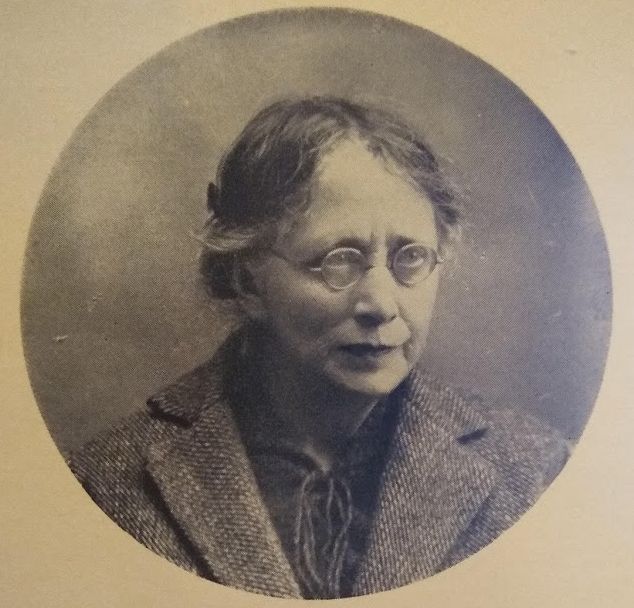
Carolyn Gold Heilbrun on Constance Garnett

Most readers of Punctured Lines are likely familiar with the name of Constance Garnett — English-language translator from Russian par excellence — and so I’ll begin this post with a bit of a tangent.

I forget who of my friends had recommended to me, years ago, mystery novels by Amanda Cross, whose fictional detective Kate Fansler solved crimes while quoting W.H. Auden. These were highly literary mysteries, and, intrigued, I looked up the author’s biography to discover a fascinating story. Amanda Cross was a pseudonym of an academic, Carolyn Gold Heilbrun, the first woman to be tenured in Columbia’s English department. In the course of her life, she became an outspoken feminist, and in 1992 accused her department of discriminating against women. Her oeuvre includes a book about Gloria Steinem and a collection of essays How to Write a Woman’s Life.

I’ve been slowly making my way through Heilbrun’s work, both fiction and nonfiction, and recently I finished her first published book The Garnett Family (The Macmillan Co, 1961). Heilbrun was trained in Modern British Lit, and, in particular, studied the Bloomsbury group. This book, as she announced in the introduction, “is the history of a literary family,” — the “literary intelligentsia,” as we might call it in Russian. By the by, Heilbrun makes a very good case that studying literary dynasties makes very good sense for historians of literature, and that the work of Constance Garnett needs to be examined next to the work of her husband Edward, who in his position as a Publisher’s Reader presided over so much of what we consider today Modern — and Modernist — British Lit, from John Galsworthy to Joseph Conrad and D.H. Lawrence, among others. (And by suggesting that her work needs to be examined next to his, I mean exactly that — stressing the lack of a hierarchical relationship between the wife’s and husband’s work, and their ongoing conversation.)

Heilbrun is a very engaging and opinionated writer, and I only wish her treatment of Constance had been fuller. Brief as it is, it gave me a portrait of Constance in a vastly different light than I’ve been accustomed to seeing. For instance,

An obituary in the New Republic said of Constance Garnett that “she was a product of the Victorian Age and shared the prejudices and pruderies of her time.” Apart from the fact that she was born in the Victorian Age, the statement is the direct opposite of the truth; it would be nearer the mark to say that the post-Victorian Age, with its lost prejudices and pruderies, was the product of her generation, and, to a significant extent, of her own work. Born in 1862, she belonged to the first generation of women that received an education comparable to a man’s, and, shaping its life according to its own, rather than society’s, or parental, decision, remained in a very real sense in control of its own destiny.

Heilbrun’s monograph contains four chapters: 1) Background of the Garnett Family, including the Elder Richard Garnett (1789-1850), 2) The Younger Richard Garnett (1835-1906), 3) Edward Garnett (1868-1937), 4) Constance Garnett (1862-1946), and concludes with the Epilogue about Edward and Constance’s son David (1892-[1981]). The book was written, apparently, in a close collaboration with David, who as a prolific writer himself, I imagine, had some stakes in the shape of Heilbrun’s monograph. (One could probably study his writing and that of his descendants for further insights on the family.)

In her chapter on Edward Garnett, Heilbrun tells a “meet cute” story: Edward and Constance Black were introduced by Constance’s sister Clementina Black (a writer herself), who was a regular at the British Library’s reading room, where Edward’s father Richard assisted her. The sisters came to tea at the Garnett house, and 18-year old Edward immediately fell in love with 24-year old Constance. Constance was lukewarm.

In the evenings Constance took him to various Fabian and Socialist meetings, which he refused to take seriously. They quarrelled because Edward said that Land Nationalization would not come in England for the next ten or even twenty years. This was to Constance a terrible lack of faith, and a real grief. George Bernard Shaw, with whom she had often gone to political meetings before, asked her who was the pretty young man he had seen her with. She replied that he was a boy whose education she was undertaking.

Heilbrun’s chapter on Constance provides one other fascinating facet of the fabled translator’s biography. From the stories I’d read about her (for instance, in this David Remnick piece in the New Yorker), I’d gotten a sense that she fell to translating from Russian almost randomly, without any particular reason. This was, apparently, not quite so.

Her grandfather, Peter Black, was Naval Architect to the Tsar, Nicholas I; Peter Black’s daughter is supposed to have danced with the Tsar at a Court Ball. When this daughter married, in Petersburg, the Tsar presented her with a glass salad bowl as a wedding present. Peter Black was buried in the Russian naval fortress of Kronstadt; his son, David Black, Constance’s father, having spent much of his youth in Russia, came to live in London as a law student . . . went on to Canada . . . was recalled to England by a telegram from his brother Peter, who was French Consul in Brighton.

Aha! This background, from family ties to Russia to strong interest in socialism, makes it so much easier to understand why Constance would choose to dedicate her life to translating from Russian. And to return to the question of how far Constance had been removed from “the pruderies of her time,” Heilbrun paraphrases this story from a manuscript by Constance’s son David:

She was never particularly outspoken on the subject [of sex], nor militant about it, having strong views about the privacy of sexual matters, which she thought no business of society or the State. However, when, on vacation from Newnham, she had been entertained in London and had seen the prostitutes in Haymarket and Trafalgar Square, that ‘hideous spectacle of coarse cynical brutality and degradation accepted by everybody as a matter of course’ threw her into despair. Believing prostitution to be chiefly the fault of women putting a high premium on their own chastity for economic reasons, she thought that if women were brought up to expect to earn their own living and have love affairs, it would disappear.

From the advantage of time, we may judge her naive, but her thought is far from prudish. We may also perhaps glean how she might be a much more sympathetic translator for, say, Chekhov and Turgenev than for Dostoevsky. Here would be an interesting project: to re-read her Dostoevsky with her politics in mind… because, of course (and as we learn from our friends at the RusTrans project), translation has politics.

RusTrans Award Winners for Russian-to- English Translations of Contemporary Fiction, 2020

Exciting news from the exciting RusTrans project. As its website explains, “’The Dark Side of Translation: 20th and 21st Century Translation from Russian as a Political Phenomenon in the UK, Ireland, and the USA’ (RusTrans for short) is a project funded by the European Research Council (ERC) under the European Union’s Horizon 2020 research and innovation programme (grant agreement no. 802437), and located at the University of Exeter. The project is led by Dr Muireann Maguire (Principal Investigator) and Dr Cathy McAteer (Post-doctoral Fellow).

What is the dark side of translation? Most of us think of translation as a universal good. Translation is valued, taught, and often funded as a deterrent to monolingual nationalism and cultural parochialism. Yet the praxis of translation – the actual processes of selecting and translating literary texts, and of publishing and publicizing translations – is highly politicized, often subverted by ideological prejudice or state interference. Translators necessarily have a personal agenda, as do editors, publishers, and other agents.  Every translation is an act of cultural appropriation, reinventing the thoughts of one language in the words of another.

[…] RusTrans investigates how individuals, and governments, exploit this ‘dark side’ of translation to reap cultural capital by translating lesser-known literature into global languages (and the reverse).

[…] The project’s main aim is to research why translators, publishers, and funding bodies support the translation of certain texts, and not others.” 

Ealier this year, RusTrans held a competition for funding English translations of contemporary literary fiction written in Russian and have just announced the twelve winning projects by fourteen translators (two are co-translations). The conditions for these awards, which will fund excerpts of larger works, are rather unique. RusTrans is asking the translators to keep them posted over the next two years about the process to secure publication for the works in their entirety: as they explain, “we plan to follow selected translators through the process of pitching and/or submitting a new translation to publishers in real time” to gain a fuller understanding of the “dark side” of translation, driven by politics, economics, and personal biases.

One of RusTrans’ stated criteria for picking the projects was diversity, and the final list has a number of women writers, a queer writer, writers from non-Russian parts of the former Soviet Union, as well as those who now live outside of the post-Soviet space. Punctured Lines joins RusTrans in congratulating the winners below (as listed on the RusTrans website) and looks forward to following this fantastic endeavor:

  1. William Barclay, with Bulat Khanov’s novel about an angry academic, Gnev.
  2. Michele Berdy, with various stories and a novella by Tasha Karlyuka.
  3. Huw Davies, with Dmitry Bykov’s historical novel June.
  4. Shelley Fairweather-Vega, with short fiction  “Aslan’s Bride” by Nadezhda Chernova and “Black Snow of December” by Asel Omar.
  5. Annie Fisher and Alex Karsavin, co-translating Ilya Danishevsky’s queer modernist experimental novel Mannelig in Chains.
  6. Polly Gannon, with Sana Valiulina’s Soviet-Estonian historical novel, I’m Not Afraid of Bluebeard.
  7. Lisa Hayden, with Alexei Salnikov’s debut novel The Department.
  8. Alex Shvartsman, with K.A. Teryna’s science fiction novella The Factory.
  9. Isaac Sligh and Viktoria Malik, co-translating Viktor Pelevin’s novel iPhuck 10.
  10. Sian Valvis, with Narine Abgaryan’s semi-autobiographical novel of an Armenian childhood, Manunia.
  11. Sarah Vitali, with Figgle-Miggle (Ekaterina Chebotaryova)’s novel You Love These Films So Much. 
  12. Lucy Webster, with Andrei Astvatsaturov’s satirical novel on Russian academia, People in Nude.

Archipelagic Model of Global post-Soviet Cultures (*)

About a year ago, when Yelena Furman and I decided to get serious about our ongoing Twitter conversation about Russian literature and to start this blog, I read Maria Rubins’s essay “A Century of Russian Culture(s) ‘Abroad’: The Unfolding of Literary Geography,” published in Global Russian Cultures (edited by Kevin M. F. Platt; a volume in which Yelena Furman’s own essay “Rewriting Gender: Russian-American Women Writers and the Challenge to Russian Femininity” also appears). In this programmatic essay, Rubins argues that “A polycentric, nonhierarchical model of global Russian cultures may be visualized as an archipelago, a chain of islands that appear independent and isolated but in fact are interconnected in space, as well as time, often owing their origins to a series of volcanic eruptions.” In this model, Rubins argues, “the metropolitan Russian ‘continent,’ … can be seen as just the largest island within the global archipelago of Russian culture.”

Prior to encountering this essay, I had heard of archipelagic studies from a friend and a colleague, Olga Blomgren, who is working on her dissertation in Comparative Literature. Olga pointed me toward this theory and to the ideas of de-colonization, as distinct from post-colonization, as promising ways of conceptualizing literatures born of multiple languages and cultural influences. In her own work, Olga discusses the writing of the multilingual authors from the Caribbean, Rosario Ferré and Edwidge Danticat. The notion of an “archipelago” offers a compelling vision and a path to undoing the hierarchies of values imposed by colonial regimes. “Landmasses traditionally conceived of as continents may be reframed as islands that are constituent parts, rather than continental administrators, of the global meta-archipelago,” write scholars Brian Russel Roberts and Michelle Stephens in their essay “Archipelagic American Studies and the Caribbean.” Just because a traditionally conceived continent is physically larger than an island, its claim on culture and influence isn’t more valid than that of an island.

Rubins applies these ideas to Russophone literature, including in Paris during the interwar period, literature created in the US during the Cold War Era, and in Israel in the more recent times. She quotes from the famed theorist Homi Bhabha, who argued in his book The Location of Culture that “peripheral locations are rich in innovation and can destabilize and refashion stagnating ‘centers’.” In fact, with the introduction of the archipelagic model, the very terms for “center” and “periphery” (so important to the 19th Century Russian writers, from Gogol to Chekhov) may become obsolete. “Diasporic authors and communities contest their alleged marginality and assert their hybrid character. Yet diasporic consciousness and patterns of writing inevitably spill over into the metropolitan world, eroding monolithic identities and discourses even as they participate in transnational literary systems,” Rubins suggests.

These ideas deeply influenced my thinking about what I wanted to accomplish with Punctured Lines, and it was exciting to find that Yelena was thinking along the same lines. In her draft of our mission statement, she wrote that we want to amplify the traditionally underrepresented voices from the post-Soviet diasporas. If I were to translate this into the language of the archipelagic theory, the idea is to unsettle the colonial maps of literary value that tend to place Russia at the center of the Soviet literary space and that of the Russian Empire, and to treat Russophone literature as one island among many of the metaphorical post-Soviet archipelago. This work feels all the more necessary to me on the personal level because in the earlier draft of this post (displayed in the comments), I have unconsciously defaulted to the colonialist language while actively seeking to avoid it. I’m very grateful to the comments that Shelley Fairweather-Vega, Christopher Fort, Mirgul Kali, and Kevin M. F. Platt offered on this post that helped me to unpack my own unconscious bias and tendency to conflate “Russia” and “the Soviet Union.”

(*) Title and content have been edited; the original version is in the comments below.

Moving from theory to practice, here’s a few recently published and upcoming books from the post-Soviet archipelago to read this summer.

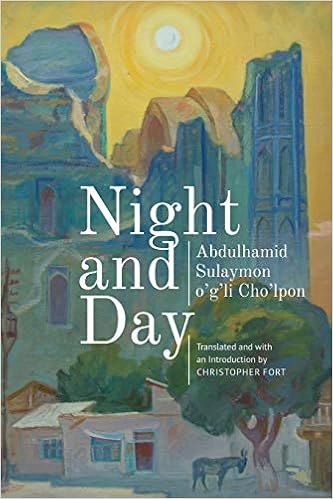
Night and Day by Abdulhamid Sulaymon o’g’li Cho’lpon, translated from Uzbek by Christopher Fort. This novel comes to us from the 1930s and is set at an earlier time, in Turkestan under Russian Imperial rule. “Despite increasing censorship and previous arrests by Soviet authorities, Cholpon subtly employs a variety of techniques including satire and farce to undermine the legitimacy of the Soviet government that was being established around him. Bitterly portraying the hypocrisy and collusion of jadid reformists, Muslim clerics and local Russian officials, this unfinished novel, which was halted by the author’s execution in 1938, remains as one of the darkest comments on Soviet Central Asian history in the Uzbek language,” wrote Shawn T. Lyon about this novel. An illuminating interview with the translator aired on a podcast New Books Network.

Pub Date: November 26, 2019
Publisher: Academic Studies Press

Translated from Uzbek by Shelley Fairweather-Vega, Hamid Ismailov’s GAIA, Queen of Ants is set in England in the milieu of Central Asian immigrants. ” The pivotal relationship in the novel is that between septuagenarian Uzbek émigré Gaia and Domrul, her young Turkish carer. Readers may recognize hints of Harold and Maude,” writes Joshua Bird in a review of this novel. “Contact with Gaia brings up [for Domrul] conflicting feelings of lust, shame and longing, and through their complex relationship, Gaia draws the young man into her dark world of infidelity, sexuality and secrets.”

Pub date: February 11, 2020
Publisher: Syracuse University Press

Good Citizens Need Not Fear is the first book by Maria Reva, who was born in Ukraine and grew up in Canada, and has published a number of the stories from this linked collection in the most prestigious journals of the English-language world, including Electric Literature, Granta, McSweeney’s, The Atlantic, and others. “Set in the Ukrainian town of Kirovka in the 1980s and starring a set of characters who live in the same block of flats, Maria Reva’s enthralling debut of interlinked short stories achieves the double effect of timelessness and timeliness,” Kapka Kassabova writes in The Guardian.

In addition to her fiction writing, Reva translates from French and writes opera libertti!

Pub date: March 10, 2020
Publisher: Doubleday Books

Nino Haratishvili’s The Eighth Life, translated from German by Ruth Martin and Charlotte Collins has been probably the best publicized book on my list. It is currently listed as #11 in “Russian Literature” on Amazon — woo hoo! This book opens in contemporary Berlin, but the family saga begins in Georgia, at the turn of the 20th Century, and follows the central characters to St. Petersburg during the Russian Revolution, and then on through time and geographical locations. “The Eighth Life is narrated by Niza Jashi, a Georgian expatriate living in Berlin, as she writes a history of her family for Brilka, her niece. The novel explores the ways that various characters are fated not only by the political tumult and government brutality of 20th-century Georgia but also by the legacy of a family curse,” explains Lori Feathers in an interview with Haratishvili on Lit Hub.

Pub Date: April 14, 2020
Publisher: Scribe US

Three Apples Fell From the Sky by Narine Abgaryan comes to English in translation by Lisa C. Hayden. Abgaryan was born in a small town in Soviet Armenia, and later moved to the capital of Armenia, Yerevan, and from there, to Moscow. Abgaryan fictionalizes her hometown in her work with tenderness and care, showing us a range of fascinating characters and a lifestyle that seems as though of a different century. This is Abgaryan’s seventh novel, and the first to be translated to English. Due to the pandemic, the pub date for this novel has been delayed to late August, but I encourage all of our readers to pre-order this book (it is already available for pre-order).

While we wait, read Katherine E. Young’s translation of an excerpt from Abgaryan’s earlier novel, People Who Are Always With Me, in Two Lines 31.

Pub Date: August 4, 2020
Publisher: ONEWorld Publications

Don’t forget to order from your favorite local bookshop, they need our help! Bookshop.org is a good second choice.

Welcome, MumberMag!

In April, as COVID19 was already changing our lives, a new literary magazine entered the world. “Literature pretends only to reflect the way things really are, and it is always there for you when everything else has failed,” writes Harry Leeds in his editor’s note to the first issue. “I hope that our magazine is a distraction while you are stuck the hell home.” Leeds is a writer, editor, a translator from Russian, “cat papa,” and is on his way to becoming a nurse. He has a sick sense of humor, he says, which I think gives him a leg up in the whole literary mag game.

We are so delighted to welcome MumberMag’s stellar Mumber One issue. (Gosh, some sense of humor really went into the making of this mag–and I LOVE IT!) Joining Harry in the editorial team is a much beloved poet D. A. Powell, who serves as a Founding Poetry Editor (here’s a profile of him in The New Yorker).

The first issue holds many wonderful gifts for the readers, and for us, interested in post-Soviet literature, there are Boris Dralyuk’s translations from Julia Nemirovskaya who lives in the U.S. and writes poetry and fiction in Russian, and teaches Russian literature and culture at the University of Oregon. Three poems appear in Mumber One, Lamp, Little Box, and Toilet Paper — “Kin to napkin and book.” (Poets really know what’s important in life, long before any crisis strikes.)

Also included in Mumber One is an interview with Maxim Matusevich, whom we at Punctured Lines had the joy to meet in person during our reading at Alley Cat Books in November of 2019. Matusevich lives in the US and writes fiction, essays, and academic work in English. His particular research interest is Russian-African relationships and I highly recommend the book that he edited in 2006: Africa in Russia, Russia in Africa: Three Centuries of Encounters. He has also published fiction in magazines such as The Kenyon Review and New England Review. In his conversation with Leeds, Matusevich talks about St. Petersburg’s legendary cafe Saigon, Soviet hippies, Soviet questionable attempt at being an ally of “the oppressed,” Russia’s current involvement in conflicts across Africa, and lots more. I recommend it!

Last but not least our MumberMag editors are working on creating their list of Top Literary Magazines Ranked By Influence on Social Media. As a huge literary magazine fan, I deeply appreciate the dedication that it takes to create a list like this — and a sense of joy from the fun of it all. Thank you, people!

Help Independent Bookstores Survive Quarantine

In the approximately month and a half that California has been on lockdown, I have barely read anything. This seems counter-intuitive, since I basically read for a living. It also feels like a particularly vulnerable admission, given how much of my personal identity is tied to being a serious reader of “high” literature; not reading feels like failing somehow. But all I’ve managed in the last few weeks is Pushkin’s very short “Пир во время чумы” (“A Feast in Time of Plague”) because it was mentioned on Twitter, a few pages of Proust’s Swann’s Way (thanks to a Twitter reading challenge), and skimming the Chekhov stories I’m teaching this quarter (which I’ve read many times before because I would never skim for teaching. Just to be clear.). My concentration, which was bad even before the pandemic, is abysmal. Zoom has taken over my life. I spend too much time on Twitter, where I envy all the people capable of reading right now.

But I’ve been writing. And every Tuesday and Thursday, my students and I bridge the divide of our Zoom screens by discussing Chekhov’s works. And my Twitter conversations are about literature, which means they’re about a lot of different things. I may not be actively reading at the moment, but books are, like always, very much a part of my life. They’re like that close friend who you might not be in touch with for a long time, but who, unfailingly and warmly, will be there when you finally reach out.

Independent bookstores are having a really hard time. They were having a really hard time before the pandemic, but now they are only able to exist online in a climate of drastically reduced general spending, as so many people have lost their jobs (while we’re at it: if you can, please support your local foodbanks, restaurants, healthcare workers, the post office, etc., etc.). Due to a surge in support, Powell’s hired back some of their employees, while City Lights’ GoFundMe campaign saved them from closing permanently. We’re thrilled for them and want all independent bookstores to have this kind of success.

Below are some of the bookstores we love and would love to help. If you are in the fortunate position to be able to, please order from them and/or support their fundraising efforts. Chekhov – both the writer and the humanitarian, who provided free medical treatment, built schools, donated to libraries, helped with famine relief and a cholera epidemic, and went all the way to Sakhalin Island to write about conditions in a penal colony that led to some reforms – would, I’m sure, appreciate it very much.

Alley Cat Books, San Francisco, CA: This bookstore holds a special place in Punctured Lines’ heart. Olga co-hosts the weekly San Francisco’s Writing Workshop there. The workshop is free and open to the public and is the longest continually running workshop in San Francisco–and, having started in 1946, maybe anywhere. (They are meeting on Zoom at the moment.) Last year, Alley Cat graciously hosted our first Punctured Lines reading. They have a GoFundMe campaign and a Patreon page.

Book Soup, West Hollywood, CA: Many of my family members and friends, and occasionally myself, have received gifts from this local-to-me institution.

City Lights, San Francisco, CA: An iconic beat-era bookstore and a related indie press that published Allen Ginsberg’s “Howl.” This bookstore is a tourist destination, and it’s also a destination for locals. They boast a dedicated poetry room and an amazing collection of books in translation. Their GoFundMe campaign is still running.

McNally Jackson, NYC. The fact that they’re in New York, one of the worst-hit areas of the pandemic, is reason enough. We can fight over whether New York is still the center of U.S. publishing or whether CA is making them very nervous later. We love you, New York. Please get well soon.

Powell’s Books, Portland, OR: If I’m ever in Portland again, I’m going here because I want to see this giant of a bookstore for myself. Until then, I will do what I’ve been doing for years: redeeming gift certificates from family members who know me well.

Skylight Books: Los Angeles, CA: My first-ever reading was here, organized for our class by my amazing creative writing instructor.

The Last Bookstore, Los Angeles, CA: I’ve only browsed here, but it’s pretty amazing.

Vroman’s, Pasadena, CA: I honestly can’t remember if I’ve ever been here, an oversight that needs to be rectified when it’s safe.

If you can’t decide, here’s a way to support Bay Area bookstores collectively.

If you want to help laid-off employees directly, you can give here.

Do you have a favorite indie bookstore not on this list? Let us know and we’ll help spread the word.

Queer Science Fiction in Russian, a Meduza podcast with Hilah Kohen

We are very grateful to Hilah Kohen for investigating and reporting on one of the most fascinating developments in contemporary Russian literature: a few weeks ago, she hosted an episode of Meduza’s The Naked Pravda, where she talked to a writer, an editor, and a scholar about the intriguing place that science fiction–and queer science fiction–play in the contemporary literary landscape in the Russophone world.

We have been following the story of Совсем другие, the anthology under discussion on this podcast, in previous Punctured Lines posts (here and here), and we love seeing this conversation develop further.

LGBTQ activists in the Russophone world face obstacles that many in the Anglophone world do not, but that means they also find ways to survive that defy the imagination. One way queer Russian speakers have found to work through those life-and-death decisions is writing science fiction. Through stories about augmented reality, lesbian seduction in space, sentient plants, and more, activists have offered political commentary on post-Soviet oppression that’s impossible to find in the mainstream opposition.

https://meduza.io/en/episodes/2020/03/28/queer-science-fiction-in-russian-what-space-epics-and-tech-dystopias-tell-us-about-post-soviet-minority-activism

It is absolutely delightful to hear Syinat Sultanalieva’s voice as she reads from her story Element 174, translated to English by Lesya Myata and Samuel Goff. I loved learning from the podcast that the narrator’s name, Ambassador Jenry, is an homage to Ursula Le Guin’s Genly Ai, the beloved protagonist of The Left Hand of Darkness.

I was also fascinated by the thread of the conversation with Mikhail Suslov, a professor at the University of Copenhagen, that situates this anthology against the socially conservative mainstream of contemporary Russian-language science fiction, and points to the history of how contemporary science fiction diverged from its anti-authoritarian and relatively progressive (anti) Soviet roots.

All of this mind-blowing content–and more!– is packed into 30 minutes of airtime. If you haven’t heard it already, listen to it here, and subscribe to The Naked Pravda. Kevin Rothrock, Meduza’s English-language editor, has been producing lots of creative content here.

A Forum of Reflections on Audre Lorde’s Notes from a Trip to Russia

Audre Lorde’s name and work is familiar to many of us who have studied feminist movements in high school and college. Some of her seminal essays, including “Poetry Is Not a Luxury” and “Uses of the Erotic: The Erotic as Power” are commonly included in syllabuses of literature classes and used as entry points into the conversation about the politics of literature and how combinations of race, gender, and sexuality affect one’s construction of self and point of view on the world.

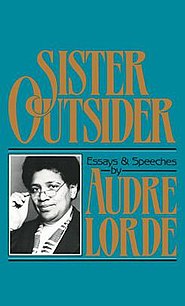
Less well known is Lorde’s essay “Notes from a Trip to Russia” that opens her book Sister Outsider. A footnote to this essay explains that Lorde spent two weeks in the Soviet Union in 1976 as an American observer to the African-Asian Writers Conference sponsored by the Union of Soviet Writers. Having returned from that trip, she finds herself haunted by it in her dreams, including a particular image of “making love to a woman behind a stack of clothing in Gumm’s Department Store in Moscow.” In Lorde’s dream, the woman falls ill and Lorde needs to seek medical help for her, and is floored by the realization that in Soviet Russia, medical treatment is free and available to all.

I read this essay just a few years ago and at first struggled with how to react to it. To me, everything starting from that opening image seemed both familiar and bizarre. It took me a moment, for instance, to recognize that Lorde is talking about GUM–an acronym for Gosudarstvennuiy Universalniy Magazin, a State Department Store–which in her version acquires an almost poetic personal quality, related to somebody named Gumm. I was born in 1979, three years after Lorde took this trip, and I had a personal mythology of GUM. As a child growing up in Leningrad, I had read about it in books and newspapers–as far as State Department Stores went, this one was well written about. I imagined it as a toy palace–I had an idea that that’s where most of the world’s toys were hidden from us kids. The keepers of the toys were, in my mind, not unlike the angry guards at the museums of the world or the tired, worn-out women working behind the counters of Leningrad’s stores: their job was to keep desirable items away from unworthy hands. To imagine a Soviet prodavshchitsa take part in a sex dream seemed unthinkable.

But then, I thought, why not? This is what it’s like to see the world I grew up in from a stranger’s eyes–it’s an opportunity to examine my premises. There must’ve been lesbians in the Soviet Union, even if I didn’t know anything about that until I was seventeen and living in the United States. So, my first approach to Lorde’s book took me into a completely unexpected direction: it sent me rethinking my relationships to all the women I had known growing up, imagining them as heroines of sexually charged international lesbian love stories. (I even started plotting a novel along these lines, thank you very much, Audre.)

During her trip to the Soviet Union, Lorde visited Moscow and from there traveled to Uzbekistan, the location of the Conference–she went to two towns there, Tashkent and Samarkand. The essay is very much a travelogue, the best of the genre, in which the writer is keenly aware of being a stranger to the places she’s moving through and as she’s documenting her experiences, she’s writing about her own thoughts and feelings and provides a window into her assumptions and biases. Reading the piece all of these years later, it feels like a gift of a guide into the study of Russian and Soviet literature and the field’s lingering struggle to include people of color and women into the conversation.

This essay champions the kind of work that we hope to do with Punctured Lines: bringing together unexpected voices and stories from and about the (post) Soviet space. Unfortunately, for rights reasons, we are unable to reprint the essay online, so to encourage a cross-cultural dialogue, we asked our Twitter followers to submit personal responses to this essay. We also reached out to a few scholars and writers who we expected might have unique insights into the issues that Lorde addresses. Below are responses we received from Emily Couch, Shelley Fairweather-Vega, Elena Gapova, and Maggie Levantovskaya. If you want to join this conversation, please comment below or reach out to puncturedlines [at] gmail.com.

We have been planning this post for several months, and are finishing it under conditions of quarantine. As I’m writing this, the world is struggling with the mounting numbers of COVID-19 cases and many of us have had to severely curb our activities–so the very nature of a travelogue feels radical at the moment. Universal medical care that, in Lorde’s notes of her trip to the Soviet Union, appeared too good to be true, today remains our most urgent need. Yet, as Levantovskaya mentions in her piece, the Soviet Union is a poor guide for a functional medical system–the conditions of care there were often inhumane and bribes were exchanged as a matter of course. We also want to acknowledge and honor the invisible, unpaid and low-paid women’s labor that goes into allowing each family and each hospital and each business and each state to keep going. We urgently need to change this situation so that the burden of this invisible labor does not disproportionately fall to women.

(Continued)

Soviet Diaspora Poetry Reading by the Cheburashka Collective

We love seeing creative artists adjust to the current time. Being on the West Coast, I have often regretted not having access to the literary events that take place on the East Coast (to speak nothing of events in Russia proper.) Here comes the recording of the Cheburashka Collective reading recorded on April 1st, 2020 on Zoom, via Kelly Writers House at the University of Pennsylvania.

Making People Feel Uneasy: Joanna Chen in Conversation with Katherine Young

Katherine Young, a poet and translator, gave this interview on BLARB, the blog of the esteemed Los Angeles Review of Books. In 2018, Academic Studies Press published Young’s translation of the trilogy, Farewell, Aylis, by Akram Aylisli, currently a political prisoner in his native Azerbaijan (Young has spearheaded efforts to free him, including a recent petition circulated on social media). Olga Zilberbourg reviewed this novel, which Punctured Lines noted in our post. As we also noted, an excerpt from his novella, A Fantastical Traffic Jam, translated by Young, can be found here.

Young’s latest project is the translation of Look at Him by Anna Starobinets (Slavica, forthcoming 2020), an open, unflinching account of her abortion that was controversial when it came out in Russia. As Young says, “Women don’t talk about these things, even with their partners, so to write a book in which you expose the most intimate details of your body and the choices you made medically is a violation of a lot of subtle taboos about women who are supposed to grin and bear their trials and tribulations.”

Young also talks about being a poet and how much Russian poetry has shaped her own: “I feel very much more informed by Russian poets than most American poets. I’ve read Walt Whitman, but I don’t identify with him the same way I might say Alexander Pushkin or Mikhail Lermontov or Anna Akhmatova.”

You can read the full interview here: https://blog.lareviewofbooks.org/interviews/making-people-feel-uneasy-joanna-chen-conversation-katherine-young/