
I didn’t grow up reading graphic novels. Back in the USSR and Russia comics did not exist as a genre. To this day, some of my contemporaries from that part of the world might occasionally dismiss the whole field of graphic literature as meant only for children. But as time goes on, this genre has been asserting itself within the field of literary studies and has been taken up by an ever-increasing number of creators from the countries of the former USSR and diaspora. It’s become a vibrant source of nuanced, memorable narratives. Many contemporary artists and writers are turning to graphic forms of storytelling to explore creative possibilities that the form has to offer.
UC Santa Barbara’s library keeps a thorough list of Slavic and Eastern European comics and graphic novels available in English, including scholarly books on the topic. Elsewhere, Svitlana Pidoprygora and others have written about how Ukrainian comic artists have reflected on Russia’s war of aggression (additional articles on the topic are available behind a paywall from academic publishers here and here). This Library of Congress blog post does a good job summarizing the history of Russian-language comic books.
The list below includes both graphic memoirs and graphic novels written by women with personal or familial connections to the former Soviet Union. Some of these books are targeted toward younger readers, while others are for adults. No matter the age of their readers, these writers and artists often choose to address personal and historical trauma through the medium of art, embracing the immediacy of the form to examine and reimagine their past and present experiences. The effect is often striking and haunting. Other books on this list (Ulinich, Nayberg) use art in a different way, sharing their gifts of humor and whimsy with us. I recommend reading several of these books at once and observing ways in which they speak to one another, transforming often similar traumatic experiences (rooted, broadly speaking, in the Soviet disregard for individual human lives) in their own, unique ways.
This list is arranged by date of publication.

CHERNOBYL, LIFE, AND OTHER DISASTERS by Yevgenia Nayberg
Forthcoming in April 2026, this memoir by Yevgenia Nayberg, an acclaimed illustrator and picture book author, builds on her earlier work that involved autobiographical elements, including Anya’s Secret Society and Typerwriter. On Punctured Lines, we’ve featured several panels from her delightful I Hate Borsch!, part of the proceeds from the sale of which she gave to benefit her native Ukraine.
This new book is aimed at 8-12 year-olds, but personally I am planning to buy it as much for myself as for my kids, to learn more of the artist’s story and to see our shared heritage reflected through her eyes. I am already in love with the cover art.
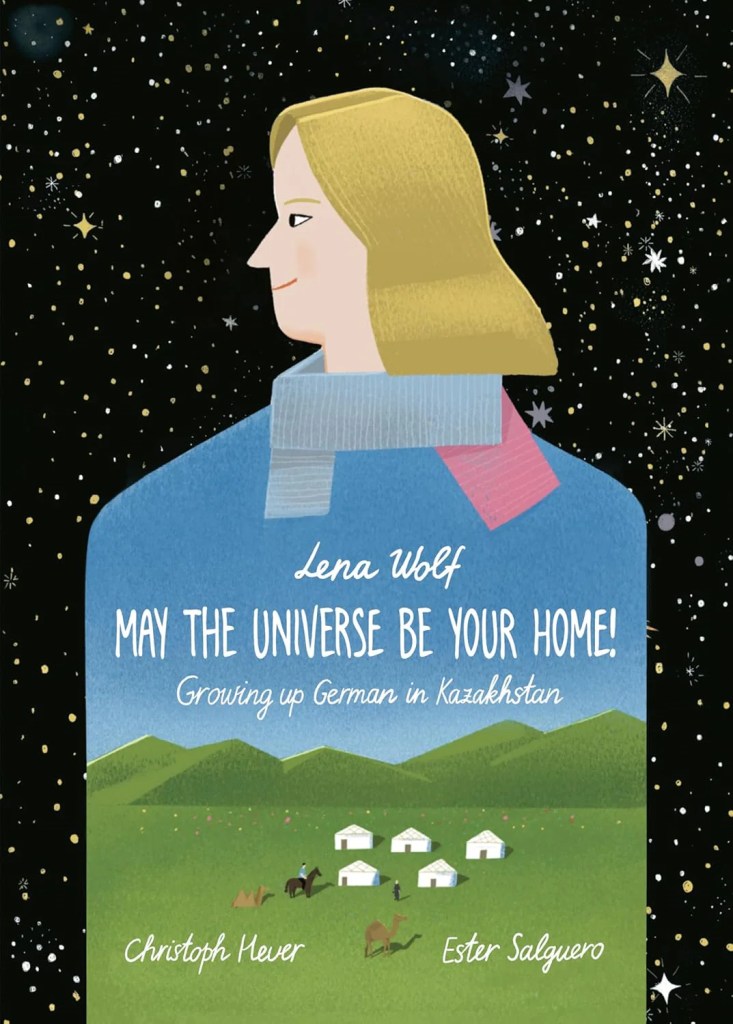
MAY THE UNIVERSE BE YOUR HOME! GROWING UP GERMAN IN KAZAKHSTAN by Lena Wolf, illustrator Christoph Heuer, and colorist Ester Salguero
Ethnically German from a family that lived in the Russian Empire for over 200 years, Wolf was born in Latvia, grew up in Kazakhstan, where her family was forcibly exiled to from Ukraine and Russia by the Soviet government in the 1940s, immigrated to Germany with her family in the 1990s, and now resides in the UK. Her decision to write a graphic novel about her family history resulted in many years of scrupulous work with her illustrator Heuer to produce gorgeous panels that not only tell the story but portray the textures and histories of the places and eras she tells about.
Published in 2024, this book is available in English, Russian, and German in a beautiful hardcover edition as well as in ebook formats. In the UK and Germany, the book can be purchased on Amazon, as well as in Pushkin House London. In the US, it’s distributed by the American Historical Society of Germans from Russia.
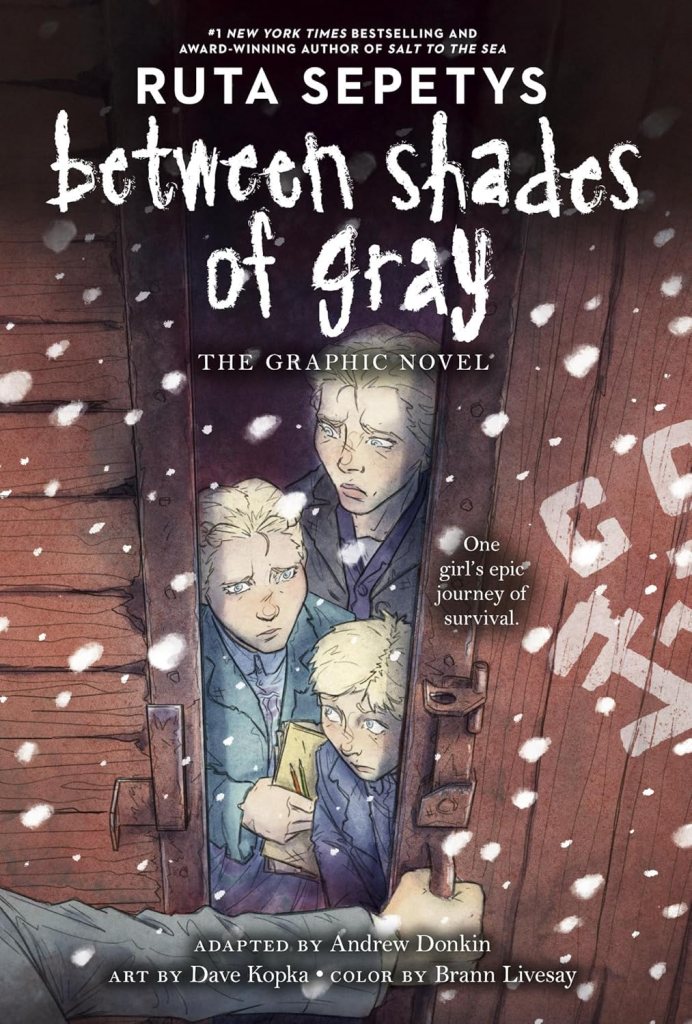
BETWEEN SHADES OF GRAY: THE GRAPHIC NOVEL by Ruta Sepetys, adapted by Andrew Donkin, art by Dave Kopka, color by Brann Livesay, lettering by Chris Dickey
Published in 2021, this graphic novel aimed at teen and young adult readers is a retelling of Sepetys’s bestselling novel for adults, published under the same title in 2011. This novel dramatizes historic events dealing with a series of mass deportations of Lithuanians to labor camps and forced settlements in Siberia following the Soviet occupation of Lithuania in 1940.
Though fictional, this book is based on research and the accounts of the surviving refugees. 15 year-old Lina is a compelling protagonist, her teenage preoccupations balanced by her deep concern for her family.
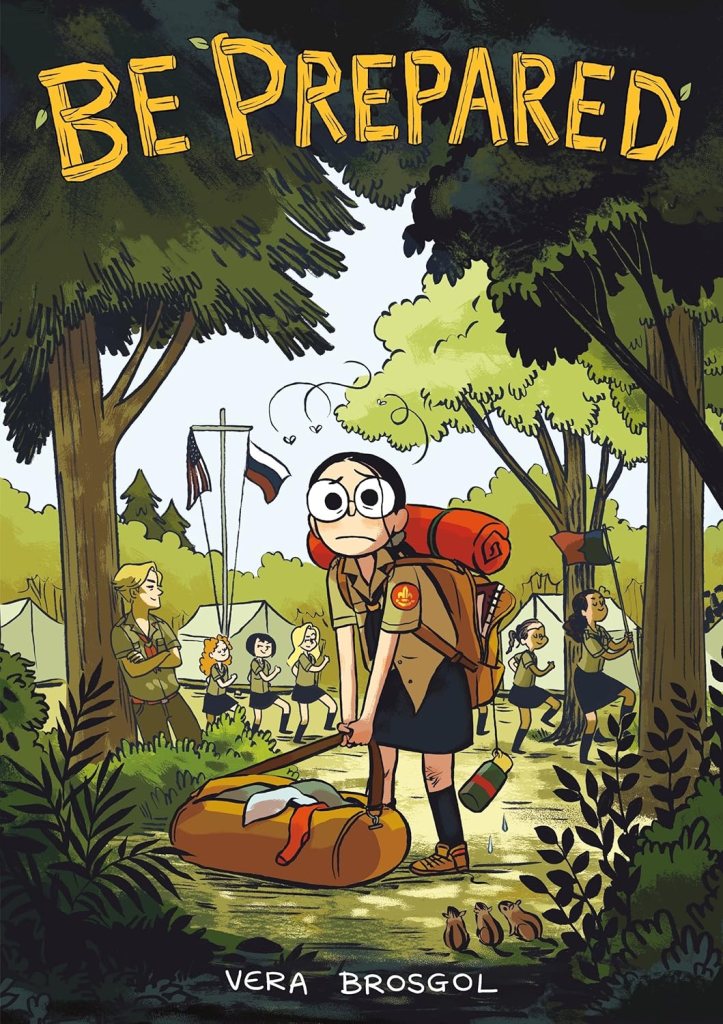
BE PREPARED by Vera Brosgol, color by Alec Longstreth
Brosgol was born in Moscow in 1984 and moved to the US at the age of five. She published this book in 2018, recounting her experiences at a Russian summer camp for children of recent immigrants. Humorous and touching, this book for 8 to 10 year-old readers also reflects all the confusions of immigrant identity construction and culture shock amplified by the lack of basic indoor plumbing.
Personally, I also love how one of the mottos of the scouting organization–“Be Prepared”–is subverted here to mean something very different in the Russian cultural context. Can one ever truly be prepared for whatever is coming next?

SOVIET DAUGHTER: A GRAPHIC REVOLUTION by Julia Alekseyeva
Published in 2017, this graphic memoir is a great-grandmother and great-granddaughter story. The story of Lola, a Jewish woman growing up in Kiev (now Kyiv) in the 1910s and becoming a devoted revolutionary, eventually building a career for herself as a typist for the NKVD, is presented alongside her great-granddaughter’s story of growing up as a young immigrant in the United States, alienated from her family and culture. While the political elements of this narrative might feel lacking in reflection (Lola’s job for NKVD, for instance, raises more questions than are answered here), the book is engaging and particularly raw in its memoir aspects.

LENA FINKLE’S MAGIC BARREL by Anya Ulinich
Reviewing this book for the LA Times when it came out in 2014, critic David Ulin called it a “new literary form.” Visually creative and narratively complex, it tells a story of a recently divorced Brooklyn-based novelist and a mom of two, Lena, who is invited to go to Russia on a book tour. Having grown up in Moscow and immigrated to the US as a teen, Lena takes this opportunity to visit St. Petersburg, where she has never been, and dives deep into the emotional roller-coaster of love, parenthood, writing, and longing for independence and stability. Lena’s immigrant experience underpins and complicates her journey.
Bonus:

KANNAS by Hanneriina Moisseinen
This book, first published in Finnish in 2016, technically doesn’t fit in this list because it has not yet been translated to English. Translations to German and Russian do exist, and I read it in the Russian of Anna Sidorova. I include the book in this list as a plea for an English-language publisher to take it up. It’s sooo good!
A unique mix of graphic art and documentary photographs, this book tells the harrowing story of the Karelian Peninsula. During the Winter War and later in WWII, the Soviet Union occupied much of this territory just north of Leningrad / St. Petersburg, and forced the local Finnish population to pick up what possessions they could and evacuate to Finland, under threat of being sent to the Gulag or murdered outright. Moisseinen pays particular attention to the fates of the animals–especially cows–who had been part of these households and some of whom had to be abandoned in the evacuation.
A harrowing and lovingly told story, this book is of particular significance to those of us, who, like me, spent our summers in the Karelian Peninsula in the 1980s and 1990s, without any clue about this history. My friends and I were still finding shells from the fighting of WWII, but we had no access to the stories of the people who had lived there before us. Now we do. I’m deeply grateful to Moisseinen for writing this book.

 Punctured Lines
Here’s a new addition to this list:
Siberian Haiku Words by Jurga Vilé Art by Lina Itagaki
https://selfmadehero.com/books/siberian-haiku
LikeLike