“I felt that it was my social mission”: an Interview with Anna Starobinets

By Svetlana Satchkova

Anna Starobinets is a Russian journalist, novelist, screenwriter, and children’s book author. Her only book of non-fiction, Look at Him, is coming out in September from Slavica Publishers in Katherine E. Young’s translation. It was originally published in Russia in 2017 and caused an extraordinary public discussion. In Look at Him, Starobinets describes how, in 2012, she found out that the baby she was carrying had a congenital condition incompatible with life, and how, following a dehumanizing experience with the medical system in her own country, she had to travel to Germany to terminate her pregnancy and to receive grief counseling – a thing practically unheard of in Russia at the time.

The incredible outpouring of outrage and vicious criticism that followed the book’s publication is perhaps explained by the fact that it was the first of its kind: in Russia, it’s still the norm to keep silent about one’s grief. I spoke with Anna about her book in order to better understand why it had created such a scandal and what changes in medical practices it had helped bring about.

When did you come up with the idea of writing this book?

The thought first occurred to me when I spoke to a psychologist in Berlin and I saw all the books she had on her shelves about losing a child, in many different languages. I guessed that there were no books of this kind in Russian, which later proved to be true. After I terminated my pregnancy, I felt a need to absorb somebody else’s experience that was similar to mine, so I read a couple of books in English, but, even though my English is pretty good, there’s still an invisible wall between me and a text in this language. That’s when I started seriously thinking about writing about my own experience – I felt that it was my social mission. After the book came out, the most benign criticism I received was that I’d written it in order to sublimate my suffering and to dump it onto other people. I have no idea if there’s any truth to this accusation: you never know where the subconscious is concerned. But I can tell you that that was not my conscious goal. I felt that I had a duty to change the world using the only power I had – the power of the written word. My overarching goal was to break the silence, and I also had some smaller goals. For example, I wanted the doctors who had behaved unprofessionally towards me to stop working with women. That’s why I decided to use their real names.
Have these micro goals been accomplished?

Partially. One doctor I’d written about left his job. I don’t know if my book was the reason, but I know for certain that his reputation suffered. The clinic he’d worked in also organized a training session for their staff with the purpose of teaching them how to deliver bad news to pregnant women. I know that the director of one large private clinic in Moscow made all the obstetricians and gynecologists on his staff read my book. Also, some time later, a hospice was founded in Moscow for women who are pregnant with babies with congenital conditions. There, the women can receive medical help, no matter what decision they ultimately make.

I feel that we have to explain to American readers why everything that has to do with obstetrics and gynecology in Russia carries so much violence towards women. What are your thoughts on that?

There are historical reasons for that. In the USSR, a spartan outlook on life was widespread and almost official: only the strongest were supposed to survive. If you were weak, you couldn’t be a part of the great Soviet system. If you were in pain, you had to keep a low profile. This spartan ideology was curiously fused with even more ancient concepts. For instance, childbirth was considered to be a punishment for pleasure: if you’d been with a man, you had to bear the consequences. A woman in labor wasn’t supposed to cry out in pain and ask for special treatment, more so because this whole sphere was viewed as obscene and dirty, connected to blood and slime. All of that had come from the depths of a conservative peasant mentality. A lot of traditional cultures hold similar views, but in developed countries these have been replaced by modern-day values.

In Look at Him, you write about coming to a state women’s clinic in Moscow together with your husband for a consultation and him not being allowed inside. Why do you think men are barred from entering these clinics in Russia?

This, of course, is true only of state clinics [vs. privately funded – PL] that are still under the influence of old Soviet traditions. It was believed that no woman who had any sense would want her man to see her under those indecent circumstances where she gave birth or underwent a gynecological checkup. And if, for some reason, her man would actually want to be there with her, he’d embarrass all the other women, because he’d see them in this awkward indelicate situation: he’d know that, in a couple of minutes, they’d go in and spread their legs in front of a doctor. Presumably, men were and are barred from the clinics to protect the women.

As a result, Russian men are often separated from women’s experiences. When a woman loses a baby, her own husband often tells her to forget about it as soon as possible. Why do you think most well-wishers in Russia are so bent on making you forget about your loss instead of live through it?

Because we still lack the language to talk about it, and most people, medical professionals included, don’t realize that to talk about your pain is much more therapeutic than to keep silent about it. Paradoxically, when they tell you to forget, they are being helpful. If you don’t talk about it, they believe, the thing will just disappear. For example, my relatives told my 8-year-old daughter not to talk to me about the baby I’d lost, and I was stunned by her silence. I kept wondering if she didn’t care about what happened, and then I found out that she was trying to protect me.

What are your views on psychotherapy? There’s still a lot of prejudice against it in Russia.

Speaking abstractly, I’m all for it, of course. But I’ve encountered a huge number of ignorant and unprofessional psychotherapists in Russia. Finally, I got lucky – I did meet a great psychologist after a long while. The thing is, there isn’t a system in place that certifies therapists and makes sure that if somebody shows you a psychotherapist’s diploma, they are adequately trained to treat you. Anyone in Russia can take a three-month course, call themselves a therapist, and start taking clients.

Let’s talk about the scandal your book caused. How did it develop?

First of all, no publisher wanted to publish my book: they were scared of the subject matter. When it did finally find a home, I was worried that people wouldn’t buy it and that my work would turn out to have been for nothing. When Look at Him was ready to come out, journalists became very interested in it, and fragments of it appeared in various media outlets. I began to read the comments, and my hair stood up! There was so much hate: people were insulting me, saying that I was a disgrace to my country and that I should go and live in Germany if I liked it so much. The commenters also said that our doctors were not overly emotional, but that they had hearts of gold, and that I was demonstrating my dirty bloody underwear. I was shocked. I’d been preparing for a backlash from the medical community, but I’d thought that regular people, especially women, would be on my side because we were all patients, we all had similar experiences with our medical system. It turned out that I’d been mistaken: regular women were my most violent haters, and those who’d lost their children were especially vicious. In the public space, at least: privately, I received hundreds of messages where other women shared their own stories and thanked me for writing about what nobody else wanted to address.

What happened after the book came out?

It sold out in a month, and additional copies had to be printed. Most journalists reacted positively to it, but I would say that fifty percent of regular readers reacted negatively. Then the book was nominated for the National Bestseller award. I knew the people who worked on the committee and was on friendly terms with them: I’d been on the jury several times over the years, and we’d met at various literary events. Those people were outraged by my book too. When it was shortlisted, the judges who were supposed to make the selection among the books on the shortlist violated ethical norms by lashing out against me publicly. Which is ironic, because the book is about ethics, among other things. For example, Aglaya Toporova who is a journalist and who’d lost a three-year-old daughter, wrote a review of my book (you can still see it on the National Bestseller website) where she called my baby a fragment of my body and my book socially dangerous. What most of these people held against me was that I was, in their opinion, trying to capitalize on my grief.

How exactly?

Here, I have to explain to the American audience that the money one makes in Russia as a writer is laughable, and these people knew it perfectly well because they were part of the book industry. At first, I didn’t understand what they meant, but soon it dawned on me: they meant that I was trying to become famous by demonstrating my dirty underwear. The bottom line was that I lost a lot of friends after the book had come out. Fun fact: I live in the same building with a family of writers, and we used to be very friendly. Now, they behave as though I don’t exist.

How did you feel while all of that was going on?

It hurt a great deal, of course – I’m a live human being. But I’d accomplished my goal, and that made me feel better. The public discussion I’d been hoping to start not only happened, but turned out to be huge. My book was everywhere. I remember, someone said during that time that if you turned on the tap at home, Anna Starobinets and her book would start pouring out.

Did the doctors you’d mentioned in the book try to reach out to you?

Their friends and acquaintances did. They tried to shame me: how dare I tarnish the image of those great people? A lady from the clinic called me about Dr. Demidov, who’d brought fifteen students into the examination room without my consent, while I was lying there naked with my legs spread out, and proceeded to talk to them about the “interesting pathology” as though I wasn’t there at all. The lady said that I’d lied in my book. I said, okay, what did I say that wasn’t true? That Demidov hadn’t brought the students into the room? She said that she didn’t doubt that he had, but that I’d written that I had to buy plastic overshoes while those were free of charge at their clinic! I just laughed. I asked her if she wanted an official retraction where I’d say that the clinic confirmed all the facts except for overshoes, and she said no.

Did you get any positive feedback?

There appeared a couple of publications by medical professionals who thanked me for my book and said that everything I’d described in it was true and needed to be changed. And, as I’ve mentioned, I received a lot of personal messages with words of support from women who’d experienced something similar to what I’d gone through. But the overall situation still seemed to me sort of crazy, because the medical community reacted mostly positively, and most of the regular readers were scandalized.

I know that Look at Him has been made into a theater production. Tell me about that.

Roman Kaganovich, a young theater director from Saint Petersburg, wrote to me and said that he’d read the book and that it had changed his outlook on life. He wanted to adapt it for the stage, and the idea seemed plain crazy to me, but I liked him so much that I agreed. In a few months, I came to see the production and was absolutely blown away by it. It was incredible: the actors sang and danced, and the show was not only poignant, but also very funny – I would say it had elements of burlesque. It turned out to be very entertaining and, at the same time, very true to the spirit of my book. It was about personal grief and the Kafkian absurdity of our medical system. Roman said that during the very first performances the audience had been silent the whole time, and he realized that people had been afraid to laugh because the theme was so serious. So, he started saying before every performance that it was okay to laugh – and people started laughing.

Do you think you’ll write any more non-fiction?

I won’t. When I started writing Look at Him, I did it knowing that it would be my only non-fiction book.

Why?

First of all, I’m an active Facebook user, and I post on my page whenever I feel like sharing something of my life. Secondly, I love to make up my own stories and to create my own reality – I do it not just for the money, but because it brings me joy. For me, a book of non-fiction isn’t a creative act, but rather community service. I write speculative fiction and horror fiction for adults, and I’ve been writing a lot for children. I have a very popular children’s book series that’s called Beastly Crime Chronicles and that’s been translated into several languages. These are crime mysteries that take place in a forest, and all the characters are animals. There are two detectives: a middle-aged Chief Badger and his assistant Badgercat, who’s undergoing a personal identity crisis. This is my most successful project to date: it’s being made into a cartoon and a show for the stage.

You also write for film and TV. How do you manage to do so many things at once?

I have catastrophically little time: I work a lot. I have two kids; my daughter is a teenager, so she doesn’t care about spending time with me, but my son is five, and he really misses me. But I love writing – it’s the only thing I know how to do. Screenwriting is basically the same thing – you’re creating a story. It differs from fiction writing only in some technical aspects.

I read your Facebook on a regular basis, and I remember reading about a trip you made to China because you needed some material for a novel. What was that about?

I’m writing a novel for adults, and it takes place in 1945 in Manchuria. I’d tried to research online, of course: I didn’t want to go to China at first because I had to spend my own money, and the trip took a lot of time and effort. But I finally realized that I had to go there because I couldn’t feel what I was writing about. I had a feeling that I was writing while wearing thick rubber gloves, and that nothing would change if I didn’t go there.

Why didn’t you just change the place?

I couldn’t because there’s a story behind this novel. In 2008, my husband Alexander Garros [Alexander Garros died in 2017 – PL] and I wrote a script for Russian Channel Two. It was a 20-episode fantastic series that took place in Manchuria in 1945, with demons and werefoxes – a mix of historical truth and mythology. For two years, we lived off the money they’d paid us, but they never actually produced it because the 2008 crisis happened, and the story was really expensive to make. They thought of it as the Russian Game of Thrones. To this day, it hasn’t been produced, and possibly never will be. This gnawed at me for years because I really liked the story and I wanted it to be realized in some way, so I started to talk the producers into giving me the right to write it in the form of a novel. It took a long time, but finally they gave in. This is really ironic because when you’re a writer, the most money you can hope to make is when you sell the screen rights to your novel, and in this case it’s already happened. So, I’m only doing it because I want to tell the story. When you’re writing for the screen, however, you don’t really need a lot of details, but with a novel, you need to dive into the atmosphere. I couldn’t travel back in time to 1945, obviously, but I needed at least something – to see the landscapes, the faces that populated the land, to smell the smells, things like that. Sometimes I teach creative writing to teenagers, and I always tell them the same thing: write what you know, otherwise it won’t sound true. This is especially important in science fiction or fantasy. To make the reader believe you, you need to be true to life in every possible detail, then they’ll believe in werefoxes and demons, too.

This interview was conducted in Russian and translated by the interviewer Svetlana Satchkova.
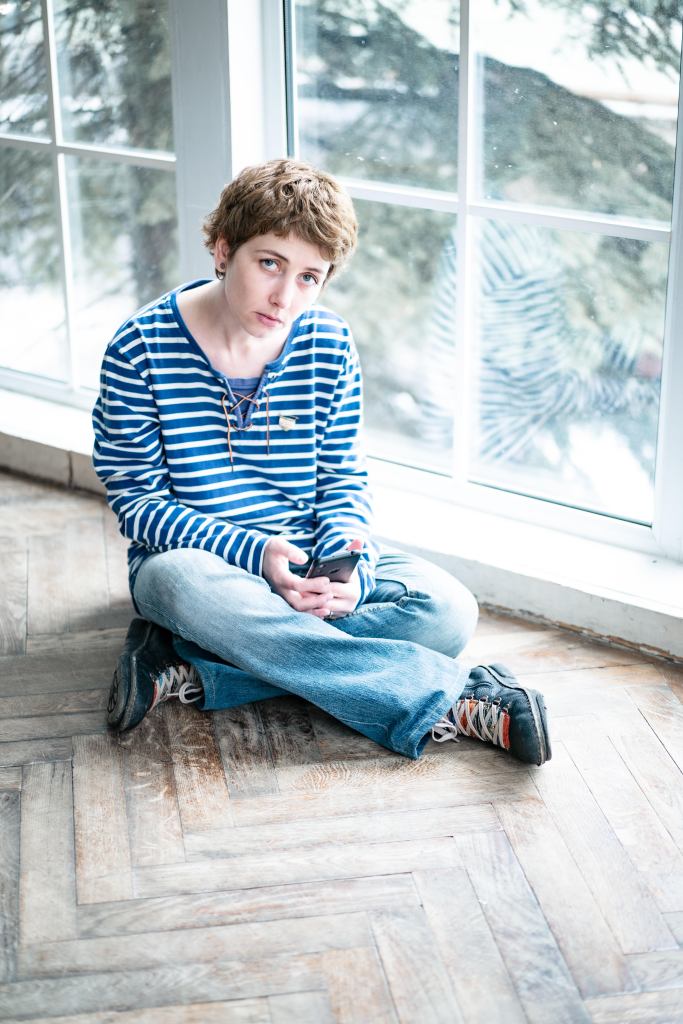
Anna Starobinets is a writer and scriptwriter. She writes horror and supernatural fiction for adults, and also fairy tales and detective stories for children. Awarded with several Russian and European literature prizes, her books have been translated into many world languages.

Her website is: https://starobinets.ru/eng/

Svetlana Satchkova is a writer and journalist from Moscow, Russia, who currently lives in New York City and is working on her MFA at Brooklyn College. Her new novel People and Birds is coming out from Eksmo in September.
Facebook: https://www.facebook.com/svetlana.satchkova

Archipelagic Model of Global post-Soviet Cultures (*)

About a year ago, when Yelena Furman and I decided to get serious about our ongoing Twitter conversation about Russian literature and to start this blog, I read Maria Rubins’s essay “A Century of Russian Culture(s) ‘Abroad’: The Unfolding of Literary Geography,” published in Global Russian Cultures (edited by Kevin M. F. Platt; a volume in which Yelena Furman’s own essay “Rewriting Gender: Russian-American Women Writers and the Challenge to Russian Femininity” also appears). In this programmatic essay, Rubins argues that “A polycentric, nonhierarchical model of global Russian cultures may be visualized as an archipelago, a chain of islands that appear independent and isolated but in fact are interconnected in space, as well as time, often owing their origins to a series of volcanic eruptions.” In this model, Rubins argues, “the metropolitan Russian ‘continent,’ … can be seen as just the largest island within the global archipelago of Russian culture.”

Prior to encountering this essay, I had heard of archipelagic studies from a friend and a colleague, Olga Blomgren, who is working on her dissertation in Comparative Literature. Olga pointed me toward this theory and to the ideas of de-colonization, as distinct from post-colonization, as promising ways of conceptualizing literatures born of multiple languages and cultural influences. In her own work, Olga discusses the writing of the multilingual authors from the Caribbean, Rosario Ferré and Edwidge Danticat. The notion of an “archipelago” offers a compelling vision and a path to undoing the hierarchies of values imposed by colonial regimes. “Landmasses traditionally conceived of as continents may be reframed as islands that are constituent parts, rather than continental administrators, of the global meta-archipelago,” write scholars Brian Russel Roberts and Michelle Stephens in their essay “Archipelagic American Studies and the Caribbean.” Just because a traditionally conceived continent is physically larger than an island, its claim on culture and influence isn’t more valid than that of an island.

Rubins applies these ideas to Russophone literature, including in Paris during the interwar period, literature created in the US during the Cold War Era, and in Israel in the more recent times. She quotes from the famed theorist Homi Bhabha, who argued in his book The Location of Culture that “peripheral locations are rich in innovation and can destabilize and refashion stagnating ‘centers’.” In fact, with the introduction of the archipelagic model, the very terms for “center” and “periphery” (so important to the 19th Century Russian writers, from Gogol to Chekhov) may become obsolete. “Diasporic authors and communities contest their alleged marginality and assert their hybrid character. Yet diasporic consciousness and patterns of writing inevitably spill over into the metropolitan world, eroding monolithic identities and discourses even as they participate in transnational literary systems,” Rubins suggests.

These ideas deeply influenced my thinking about what I wanted to accomplish with Punctured Lines, and it was exciting to find that Yelena was thinking along the same lines. In her draft of our mission statement, she wrote that we want to amplify the traditionally underrepresented voices from the post-Soviet diasporas. If I were to translate this into the language of the archipelagic theory, the idea is to unsettle the colonial maps of literary value that tend to place Russia at the center of the Soviet literary space and that of the Russian Empire, and to treat Russophone literature as one island among many of the metaphorical post-Soviet archipelago. This work feels all the more necessary to me on the personal level because in the earlier draft of this post (displayed in the comments), I have unconsciously defaulted to the colonialist language while actively seeking to avoid it. I’m very grateful to the comments that Shelley Fairweather-Vega, Christopher Fort, Mirgul Kali, and Kevin M. F. Platt offered on this post that helped me to unpack my own unconscious bias and tendency to conflate “Russia” and “the Soviet Union.”

(*) Title and content have been edited; the original version is in the comments below.

Moving from theory to practice, here’s a few recently published and upcoming books from the post-Soviet archipelago to read this summer.

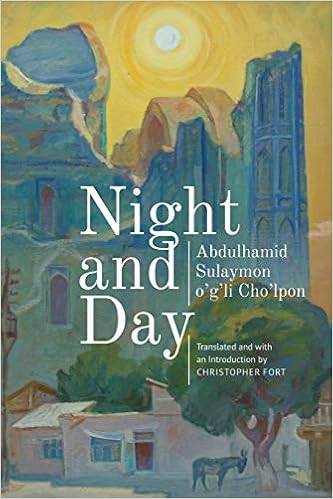
Night and Day by Abdulhamid Sulaymon o’g’li Cho’lpon, translated from Uzbek by Christopher Fort. This novel comes to us from the 1930s and is set at an earlier time, in Turkestan under Russian Imperial rule. “Despite increasing censorship and previous arrests by Soviet authorities, Cholpon subtly employs a variety of techniques including satire and farce to undermine the legitimacy of the Soviet government that was being established around him. Bitterly portraying the hypocrisy and collusion of jadid reformists, Muslim clerics and local Russian officials, this unfinished novel, which was halted by the author’s execution in 1938, remains as one of the darkest comments on Soviet Central Asian history in the Uzbek language,” wrote Shawn T. Lyon about this novel. An illuminating interview with the translator aired on a podcast New Books Network.

Pub Date: November 26, 2019
Publisher: Academic Studies Press

Translated from Uzbek by Shelley Fairweather-Vega, Hamid Ismailov’s GAIA, Queen of Ants is set in England in the milieu of Central Asian immigrants. ” The pivotal relationship in the novel is that between septuagenarian Uzbek émigré Gaia and Domrul, her young Turkish carer. Readers may recognize hints of Harold and Maude,” writes Joshua Bird in a review of this novel. “Contact with Gaia brings up [for Domrul] conflicting feelings of lust, shame and longing, and through their complex relationship, Gaia draws the young man into her dark world of infidelity, sexuality and secrets.”

Pub date: February 11, 2020
Publisher: Syracuse University Press

Good Citizens Need Not Fear is the first book by Maria Reva, who was born in Ukraine and grew up in Canada, and has published a number of the stories from this linked collection in the most prestigious journals of the English-language world, including Electric Literature, Granta, McSweeney’s, The Atlantic, and others. “Set in the Ukrainian town of Kirovka in the 1980s and starring a set of characters who live in the same block of flats, Maria Reva’s enthralling debut of interlinked short stories achieves the double effect of timelessness and timeliness,” Kapka Kassabova writes in The Guardian.

In addition to her fiction writing, Reva translates from French and writes opera libertti!

Pub date: March 10, 2020
Publisher: Doubleday Books

Nino Haratishvili’s The Eighth Life, translated from German by Ruth Martin and Charlotte Collins has been probably the best publicized book on my list. It is currently listed as #11 in “Russian Literature” on Amazon — woo hoo! This book opens in contemporary Berlin, but the family saga begins in Georgia, at the turn of the 20th Century, and follows the central characters to St. Petersburg during the Russian Revolution, and then on through time and geographical locations. “The Eighth Life is narrated by Niza Jashi, a Georgian expatriate living in Berlin, as she writes a history of her family for Brilka, her niece. The novel explores the ways that various characters are fated not only by the political tumult and government brutality of 20th-century Georgia but also by the legacy of a family curse,” explains Lori Feathers in an interview with Haratishvili on Lit Hub.

Pub Date: April 14, 2020
Publisher: Scribe US

Three Apples Fell From the Sky by Narine Abgaryan comes to English in translation by Lisa C. Hayden. Abgaryan was born in a small town in Soviet Armenia, and later moved to the capital of Armenia, Yerevan, and from there, to Moscow. Abgaryan fictionalizes her hometown in her work with tenderness and care, showing us a range of fascinating characters and a lifestyle that seems as though of a different century. This is Abgaryan’s seventh novel, and the first to be translated to English. Due to the pandemic, the pub date for this novel has been delayed to late August, but I encourage all of our readers to pre-order this book (it is already available for pre-order).

While we wait, read Katherine E. Young’s translation of an excerpt from Abgaryan’s earlier novel, People Who Are Always With Me, in Two Lines 31.

Pub Date: August 4, 2020
Publisher: ONEWorld Publications

Don’t forget to order from your favorite local bookshop, they need our help! Bookshop.org is a good second choice.

Making People Feel Uneasy: Joanna Chen in Conversation with Katherine Young

Katherine Young, a poet and translator, gave this interview on BLARB, the blog of the esteemed Los Angeles Review of Books. In 2018, Academic Studies Press published Young’s translation of the trilogy, Farewell, Aylis, by Akram Aylisli, currently a political prisoner in his native Azerbaijan (Young has spearheaded efforts to free him, including a recent petition circulated on social media). Olga Zilberbourg reviewed this novel, which Punctured Lines noted in our post. As we also noted, an excerpt from his novella, A Fantastical Traffic Jam, translated by Young, can be found here.

Young’s latest project is the translation of Look at Him by Anna Starobinets (Slavica, forthcoming 2020), an open, unflinching account of her abortion that was controversial when it came out in Russia. As Young says, “Women don’t talk about these things, even with their partners, so to write a book in which you expose the most intimate details of your body and the choices you made medically is a violation of a lot of subtle taboos about women who are supposed to grin and bear their trials and tribulations.”

Young also talks about being a poet and how much Russian poetry has shaped her own: “I feel very much more informed by Russian poets than most American poets. I’ve read Walt Whitman, but I don’t identify with him the same way I might say Alexander Pushkin or Mikhail Lermontov or Anna Akhmatova.”

You can read the full interview here: https://blog.lareviewofbooks.org/interviews/making-people-feel-uneasy-joanna-chen-conversation-katherine-young/

Virtual Happy Hour of writers with the former Soviet Union connection

This week AWP, or Association of Writers and Writing Programs, is holding its annual conference in San Antonio, TX. Many of the attendees, however, have opted to stay home due to the increased risk of the corona virus outbreak. An important component of this conference is a massive book fair, at which hundreds of independent presses and literary journals sell their stock. To compensate for the losses of this already financially strained community, people are organizing several initiatives.

First of all, there’s #AWPVirtualBookfair Twitter hashtag, under which you will find links to lots of publishers who are offering significant discounts of their stock. Trevor Ketner started the #AWPVirtualBookfair Google Doc, where you can find a comprehensive list of participating publishers, and Natalie Eilbert creating the AWP Virtual Bookfair for Authors Doc. Justin Greene created a handy list of publishers on Entropy, that includes the discount codes. Point being: the best way to support literary arts and independent publishing is to buy our books.

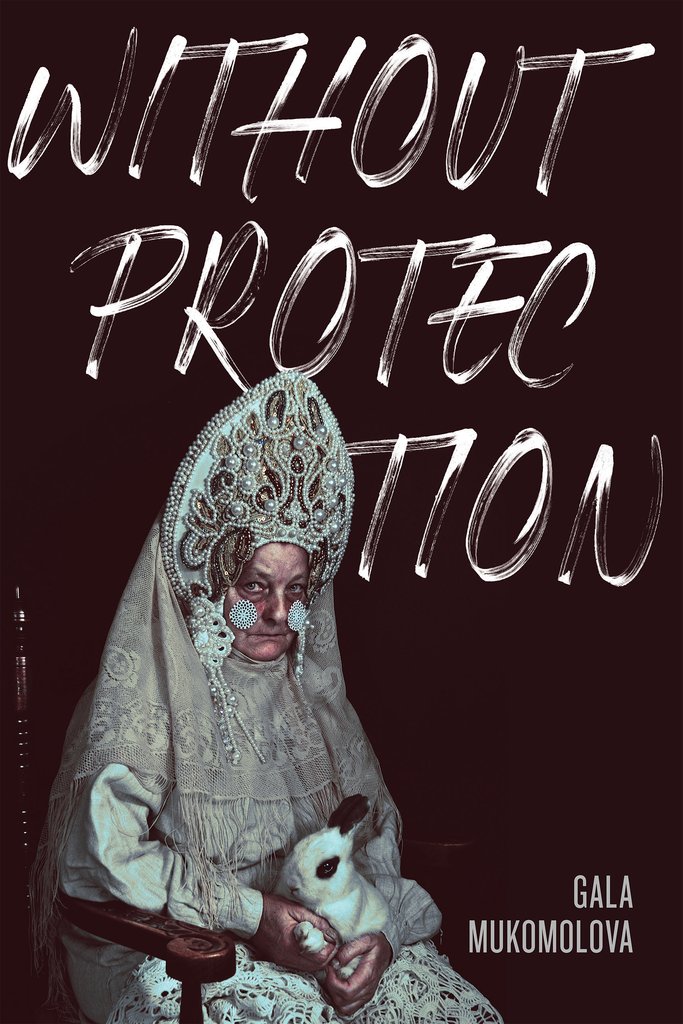
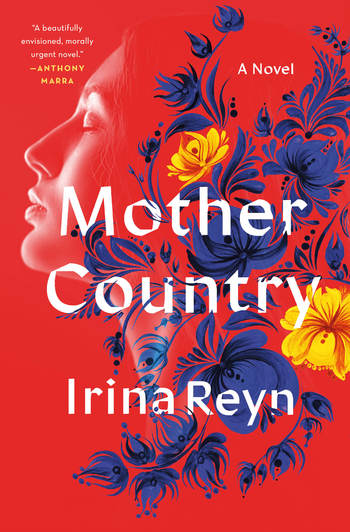
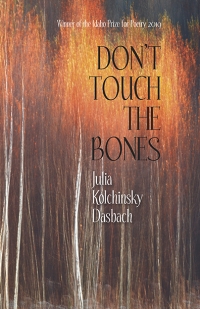
One of my plans for this conference was to co-host a happy hour for writers and translators working on material related to the former Soviet Union. Unfortunately, both my co-host Olga Livshin and I decided to cancel, as did most of the people we hoped would take part. I envisioned that this happy hour would help us, in part, to build a sense of community and help us brainstorm ways in which we can support each other’s work. So, in that spirit, here is an image gallery followed by a list of these titles with links, where you can buy the books.

Gala Mukomolova, Without Protection, from Coffee House Press

Irina Reyn, Mother Country, from St. Martin’s Publishing Group

Julia Kolchinsky Dasbach, Don’t Touch the Bones, from Lost Horse Press

Olga Livshin, A Life Replaced, from Poets & Traitors Press

Olga Zilberbourg, Like Water and Other Stories, from WTAW Press

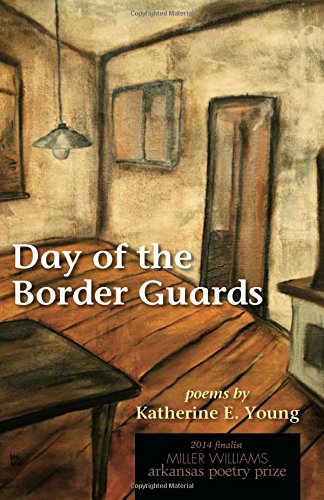
Katherine E. Young, Day of the Border Guards, The University of Arkansas Press

Larissa Shmailo, Sly Bang, from Spuyten Duyvil

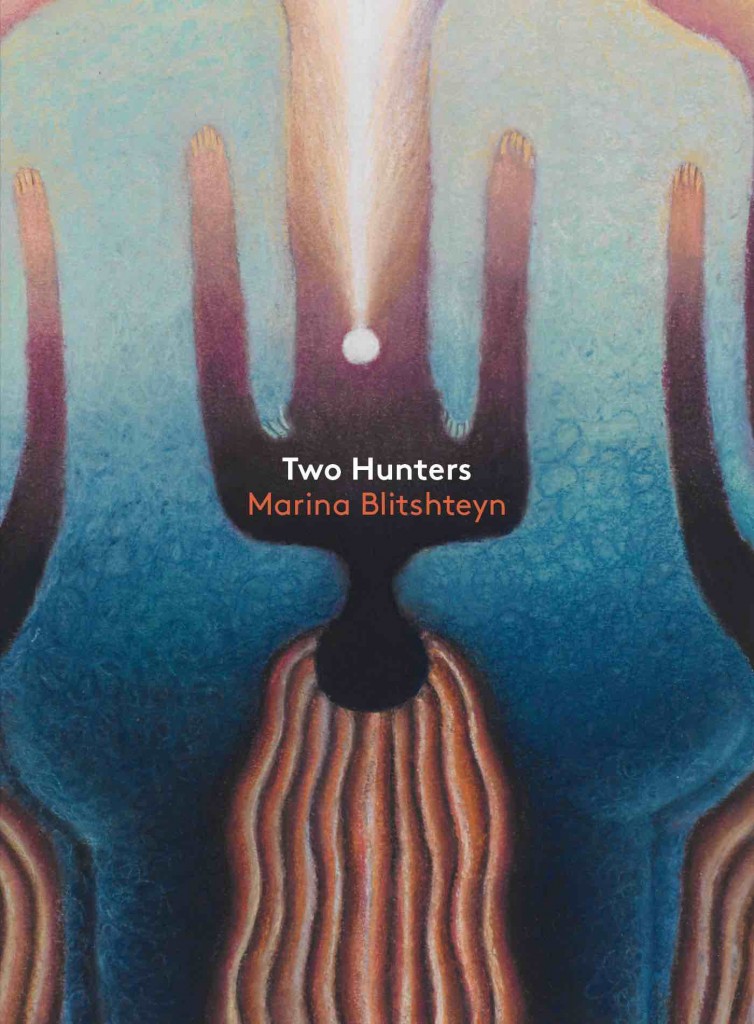
Marina Blitshteyn, Two Hunters, from Argos Press

Mariya Deykute, her website

Mary Jane White, Starry Sky to Starry Sky, from Holy Cow! press

Ruth Madievsky, Emergency Brake, from Tavern Press

Valzhyna Mort, Music for the Dead and Resurrected, from FSG

* If you don’t see a book that you wish to be included, please leave a comment!

Notable Books: Russian Titles in English Translation, 2009-2019

The impetus for creating this post came from a recent Twitter discussion. We at Punctured Lines decided to accept a dare and came up with a list of notable Russian titles available in English translation from the last decade. This has been an opportunity to take stock of the years 2009-2019, both to remember the books we’ve read and to look back at those that we might have missed.

In this task, we relied heavily on Lisa Hayden’s blog, Lizok’s Bookshelf, where Lisa keeps chronological track of the English translations – our deep gratitude for creating and maintaining this resource. Our methodology for choosing among all those works was based on several factors. Rather obviously, for our purposes we only considered works by women. We also wanted to highlight writers whose names may not be very familiar to English-speaking readers but whose work we feel deserves wider exposure and shows the range of contemporary Russian women’s literature.

For this reason, we chose not to include writers who are well-known in the Anglophone world, but of course we love them too. We note proudly the women whose work has been translated into English numerous times: Anna Akhmatova, Svetlana Alexievich, Eugenia Ginzburg, Ludmilla Petrushevskaya, Dina Rubina, Olga Slavnikova, Marina Tsvetaeva, Ludmila Ulitskaya, and Tatyana Tolstaya (whose problematic views on women and feminism may be less known).

One or both of us have read many of titles below, and we’re happy to report that the field is larger than our reading capacity. We included a few books we haven’t read because they sparked our curiosity and to encourage ourselves and our followers to return to these publications. An important factor for consideration was translators whose work we’re interested in. Here we would like to say a huge thank you to translators for their often unacknowledged efforts that allow English speakers to know Russian literature.

Our list has four categories: Contemporary Prose, Contemporary Poetry, Recent Translations of Earlier Prose Works, and a rather catch-all Drama, a Graphic Novel, and an Anthology. The titles in each category are given chronologically by year of the translation. This list reflects our personal opinions and is in no way meant to be comprehensive or conclusive. We welcome your comments and suggestions about these and other titles by Russian women who you think should be on this list. This is, hopefully, the beginning of that conversation.

Contemporary Prose

Elena Chizhova, The Time of Women, translated by Simon Patterson and Nina Chordas; Glagoslav, 2012. 

Linor Goralik, Found Life: Poems, Stories, Comics, a Play, and an Interview, edited by Ainsley Morse, Maria Vassileva, and Maya Vinokur; Columbia University Press, 2017.

Ksenia Buksha, The Freedom Factory, translated by Anne Fisher; Phoneme Media, 2018.

Alisa Ganieva, Bride and Groom, translated by Carol Apollonio; Deep Vellum, 2018.

Margarita Khemlin, Klotsvog, translated by Lisa C. Hayden; Columbia University Press, 2019.

Guzel Yakhina, Zuleikha, translated by Lisa C. Hayden; Oneworld Publications, 2019.

Contemporary Poetry

Anzhelina Polonskaya, Paul Klee’s Boat, translated by Andrew Wachtel; Zephyr Press, 2012. 

Polina Barskova, Anna Glazova, and Maria Stepanova, Relocations: Three Contemporary Russian Women Poets, translated by Catherine Ciepiela, Anna Khasin, and Sibelan Forrester; Zephyr Press, 2013.

Maria Rybakova, Gnedich, translated by Elena Dimova; Glagoslav, 2015.

Inna Kabysh, Blue Birds and Red Horses, translated by Katherine E. Young; Toad Press, 2018.

Aigerim Tazhi, Paper-Thin Skin, translated by James Kates; Zephyr Press, 2019.

Olga Livshin, A Life Replaced: Poems with Translations from Anna Akhmatova and Vladimir Gandelsman, Poets & Traitors Press, 2019.

Recent Translations of Earlier Prose Works

Teffi, Memories: From Moscow to the Black Sea, translated by Robert Chandler and Elizabeth Chandler, Anne Marie Jackson, and Irina Steinberg; NYRB Classics and Pushkin Press, 2016.

Sofia Khvoshchinskaya, City Folk and Country Folk, translated by Nora Seligman Favorov; Columbia University Press, 2017.

Olga Berggolts, Daytime Stars: A Poet’s Memoir of the Revolution, the Siege of Leningrad, and the Thaw, translated by Lisa A. Kirschenbaum; University of Wisconsin Press, 2018.

Doba-Mera Medvedeva, Daughter of the Shtetl: The Memoirs of Doba-Mera Medvedeva, translated by Alice Nakhimovsky; Academic Studies Press, 2019.

Karolina Pavlova, A Double Life, translated by Barbara Heldt; Columbia University Press, 2019.

Irina Odoevtseva, Isolde, translated by Bryan Karetnyk and Irina Steinberg; Pushkin Press, 2019.

Drama, a Graphic Novel, and an Anthology

Yaroslava Pulinovich, Olga Rimsha, Ksenia Stepanycheva, Ekaterina Vasilyeva, Russian Drama: Four Young Female Voices, translated by Lisa Hayden; Glas, 2014.

Victoria, Lomasko, Other Russias, translated by Thomas Campbell; Penguin and n+1, 2017.

Teffi, Marina Tsvetaeva, Anna Akhmatova, Lydia Ginzburg, Galina Scherbakova, Ludmila Ulitskaya, Svetlana Alexievich, Olga Slavnikova, Irina Muravyova, Ludmila Petrushevskaya, Margarita Khemlin, Slav Sisters: The Dedalus Book of Russian Women’s Literature, edited by Natasha Perova; Dedalus, 2018.

Overdue Praise for Karolina Pavlova’s Work

Karolina Pavolva was born in 1807 in Yaroslavl, Russian Empire, and published her novel A Double Life in 1848. This year, 171 years after the original publication, Columbia University Press gave this book a new life by releasing Barbara Heldt’s translation in their stellar Russian Library series.

The publisher calls the book “an unsung classic,” and I’m so pleased to see that this book is receiving the attention it deserves. In November, Talia Zax wrote a wonderful review of it for The Atlantic:

The slim mixed-genre novel . . . follows the 18-year-old Cecily von Lindenborn as her mother attempts to find her a husband. Cecily’s days, written in prose, are filled with the pleasures of a rotely feminine aristocratic life: romance, balls, and new dresses. But at night, her dreams are narrated in poetry, sensual verses with an intense pull toward the natural world. Pavlova constructed a strikingly prescient psychological vision: a mind responding to extreme social pressure by slowly and completely separating itself into parts, but giving few external indications of change.

https://www.theatlantic.com/entertainment/archive/2019/11/karolina-pavlova-double-life-translated-barbara-heldt-review/601342/

Pavlova had a long and underappreciated career in Russia as a poet, and I’m very pleased to share a recent translation of her poem “Moscow” by Katherine E. Young. (Scroll down to the third entry.)

A recap of the Russian-language panels from the American Literary Translators Conference #ALTA42

At the beginning of November 2019, the American Literary Translators Association hosted its annual conference in Rochester, NY. This annual conference is a delightful opportunity to hear about issues that concern translators across the board, and also to dive deeply into conversations about specific language tracks. We asked Dr. Muireann Maguire and Dr. Cathy McAteer, attending from the UK, to share Twitter log of their conference experience.

Drs. Cathy McAteer and Muireann Maguire’s visit to the conference was in conjunction with the project they’re running at the University of Exeter. It’s called RusTrans: ‘The Dark Side of Translation: 20th and 21st Century Translation from Russian as a Political Phenomenon in the UK, Ireland and the USA’ (Horizon 2020, Grant Agreement No.: 802437). This project looks at the practice of translation as a political activity, “often subverted by ideological prejudice or state interference.” They are using very creative and unexpected ways to analyze this political side to translation, looking at the reception of Russian literature in (primarily) English-speaking countries.

To learn more, please visit their gorgeous website. Their project email is rustrans.exeter.ac.uk and twitter handle is @Rustransdark.

Friday 08th:

First #alta42 session of the afternoon: slavic bilingual readings. We’re kicking off with Jim Kates’s reading of Aigerim Tazhi’s Kazakh poetry.

Next up, Bulgarian. Izidora Angel reading her translation of Nataliya Deleva. Sounds fabulous in the original!

Tatiana Samsonova reading an excerpt and her translation of a novella by the Georgian-born, Canada-living writer Elena Botchorishvili

A vibrant, colourful reading. Feels like USSR meets Laura Esquivel. Excellent. I’ll look forward to reading more back home #ALTA42

Fabulous and courageous impromptu poetry recital, Chukovsky’s Мойдодыр becomes ‘Gotta Scrub’. Anna Krushelnitskaya, good luck with your pitch! #ALTA42

#ALTA42 cold readings at the Rochester spirit room bar

Saturday 09th day at ALTA42:

At the #ALTA42 independent presses’ round table with editors from (left to right from second left)@FeministPress @NewDirections @CatapultStory and@nyrbclassics. They all welcome direct submissions from translators – hoping they get out of this room alive!

Acquisitions editor for @nyrbclassics being honest – “interesting manuscripts come in every day. They are a joy, but we are few, and sometimes we just cannot make a decision quickly. It takes about two years just to fit a new publication into our schedule”.

Reminiscing the fall of the Berlin wall, a significant moment in our lives #ALTA42

And now it’s@OlgaLivshin‘s turn to take the stage with #translations of Akhmatova, Gandelsman and her own poetic treats. And the audience keeps growing! #ALTA42

It was great. Well done @bowlga! I loved the short story about you staying at your grandmother’s in Karelia 🙂 Lovely to have coincided with you here!!

Sunday 10th: A bumper day for Russian!

Gilded Cage tweets

And now for something really special! Russian fiction outside its gilded cage with @mbs51, @Hilah_Kohen, Shelley Fairweather-Vega, and Olga Bukhina. #russianliterature #translation #ALTA42

Intro by Marian Schwartz:

We (Russian literary translators) have very poor visibility, we don’t publish with the publishers that win prizes, our books don’t make it to the shortlists

Russian literature is a “goldmine, not a golden cage”, says Olga Bukhina (far right) at the #ALTA42 “Russian Fiction Out of Its Gilded Cage” panel. Shelley Fairweather-Vega (far left) is about to talk about Uzbek and Central Asian authors.

First up, Olga Bukhina discussing the explosion of #YAfiction in Russia in last 10yrs and its invisibility outside of Russia in #translation #ALTA42

Translation publishing of #YAfiction still can’t resist a #Russian stereotype even tho there’s a huge cohort of Russian writers for teens, writing about normal, everybody kids

And now Shelley Fairweather-Vega speaking about her work translating #Russian, #Uzbek, #Kazakh literature into English. Complexities include relay translation, language overlap, no publishing infrastructure (beyond a Sovietised Writers’ Union). Fascinating!

And now it’s @Hilah_Kohen speaking about new writers, new media: examining how we serve the writers we have, what writers publish outside of print, how they shape a persona digitally and using which media. An #alta42 tour de force!

The Politics of Being Heard

Our panel started by going back in time for an overview of who translated and published what and why and when. Muireann started proceedings: she examined the political reasons behind Ireland’s era of translating Russian literature into Irish in the early 20th century, and homed in on the translation career of a young Irish woman called Daisy Mackin who had spent time in Stalin’s Russia and translated Turgenev and Chekhov for the Irish Free State’s literary translation project An Gum.

Cathy shifted the historical focus to the mid-twentieth century, examining Penguin’s contribution to Russian literature in Anglophone translation. She introduced the Penguin Russian Review, with its pro-Russian sentiments, the Penguin Russian Classics and the translators who aspired to project a more accurate image of Russia abroad via translation, and Penguin’s role in publishing Soviet literature: the (expensive and hasty) race to publish Solzhenitsyn.

Boris succeeded in succinctly summarising all eras of Russian literature in translation(!), reminding us that the first copy of Gogol’s Dead Souls was wrongly but quite deliberately depicted as real life, and that the doyenne of Russian literary translation Constance Garnett herself had been galvanised to become a translator because of the highly politicised Russian company she kept in London. Boris neatly brought us back to the present day with his thoughts on where Russian literary translation is currently at, and how the translator (rather than the author) can be a vehicle for selling books; trust in the translator can be all the encouragement a devoted reader needs to try an author they’ve never read before.. which led nicely to Kate Young’s overview of the industry today…

Kate discussed her own proximity to the politics of being heard, touching on the role her translation has played in publicising Azerbaijani author Akram Aylisli’s Farewell, Alys. Kate had also gathered a breadth of views from (absent) Ruth Akhmedzai Kemp and Lisa Hayden who both had observations and questions about the Russian literary translation industry. Discussion ranged from extolling the good work of small publishers and exploring reasons why big publishers are cautious to commission contemporary Russian literature (it’s the Classics that keep on selling!); the role of agents, prizes, and how maybe the time has come for publishers to set aside some of the funds for supporting bigger translation samples, in other words: compensating translators while they prepare for a pitch.

The @ExeterModLangs #RusTrans team, Dr@MuireannMaguire and Dr@CathyMcAteer1, presenting on our panel #ThePoliticsOfBeingHeard at #ALTA42 with translator and editor Boris Dralyuk and panel organiser, poet & translator Katherine Young.

National Translation Month 2019: Featured Excerpts from Russian, French, and Uzbek Literature in Translation — Academic Studies Press

Academic Studies Press has published an impressive sampler that includes excerpts from their upcoming books and back catalogue. I can’t help but wish the list included more female writers, but I’m intrigued by Luba Jurgenson’s work–she’s a fellow bilingual, combining Russian and French.

https://www.academicstudiespress.com/asp-blog/national-translation-month-2019

The books included are:

Farewell, Aylis: A Non-Traditional Novel in Three Works by Akram Aylisli, translated from the Russian by Katherine E. Young

Night and Day by Abdulhamid Sulaymon o’g’li Cho’lpon, translated from the Uzbek by Christopher Fort

Beyond Tula: A Soviet Pastoral by Andrei Egunov-Nikolev, translated from the Russian by Ainsley Morse

Where There Is Danger by Luba Jurgenson, translated from the French by Meredith Sopher

21: Russian Short Prose from an Odd Century, edited by Mark Lipovetsky

The Raskin Family: A Novel by Dmitry Stonov, translated from the Russian by Konstantin Gurevich & Helen Anderson with a forward and afterword by Leonid Stonov

Russian Cuisine in Exile by Pyotr Vail and Alexander Genis, translated from the Russian by Angela Brintlinger and Thomas Feerick

A Fantastical Traffic Jam by Akram Aylisli (Excerpt) Translated from the Russian by Katherine E. Young

From National Translators Month Page:

“We’re thrilled to share with you today an excerpt from the novella A Fantastical Traffic Jam by Azerbaijani political prisoner Akram Aylisli, translated from the Russian by the award-winning poet and translator Katherine E. Young. In her own words, “Many knowledgeable observers, including Aylisli himself, believe it was this novella that provoked the wrath of Azerbaijan’s current rulers and led to Aylisli’s persecution. He currently lives under de facto house arrest; his books have been burned, his wife and son were fired from their jobs, and at one time a bounty was offered to whomever would cut off his ear.” At NTM, we take pride in publishing brave works that speak truth to power, and this excerpt accomplishes exactly that.”

Excerpt on National Translators Month page.

A review of Akram Aylisli’s Farewell, Aylis

Here’s a review Olga wrote for The Common of a remarkable book that comes to us from Azerbaijan, published thanks to the advocacy of its translator, Katherine E. Young,

Contemporary books emerging from post-Soviet countries often deal with the dehumanizing effect of the region’s systems of government on its victims, seeking to trace and partially redeem the psychological and physical harm many have suffered. For understandable reasons, few authors care to look at the perpetrators, at the people who committed murders and mass murders, informed on and denounced their neighbors. Yet, in the post-Soviet reality, often it’s these people and their descendants who have risen to the top, taken charge of the new nation states, and written their laws.

It is in this context that Akram Aylisli, in post-Soviet Azerbaijan, gathers together the three novellas and closing essay that comprise his “non-traditional novel,” Farewell, Aylis. Born in 1937, Aylisli achieved fame in the Soviet Union for his earlier trilogy People and Trees. Though pieces of this new, remarkable book have appeared in Russia, the collected Farewell, Aylis, published as a result of the efforts of his American translator, Katherine E. Young, does not yet exist in any other language.

Click here to read the rest of the review.