Video from Eastern European Voices for Resistance and Reinvention

Thanks to those of you who could attend our event, Eastern European Voices for Resistance and Reinvention, hosted by Library Nineteen in Baltimore on March 7. We loved having you as our audience and hope to continue the conversations in various ways.

Ukraine needs all of our support. While there are many ways to help, we’re asking for donataions to Ukraine TrustChain, an organization that helps evacuate civilians out of war zones: https://www.ukrainetrustchain.org/

Book sales during the event were provided by Bergstrom Press & Books who donated $300 of proceeds to Ukraine TrustChain.

This event was co-hosted by Turkoslavia, a translation collective and a journal celebrating literature in Turkic and Slavic languages. Check out their latest issue!

Please support our writers by buying and reading their books, following them online, and reviewing.

The video from our event is now online. Our gratitude to Victoria Juharyan for facilitating the videography. Take a look:

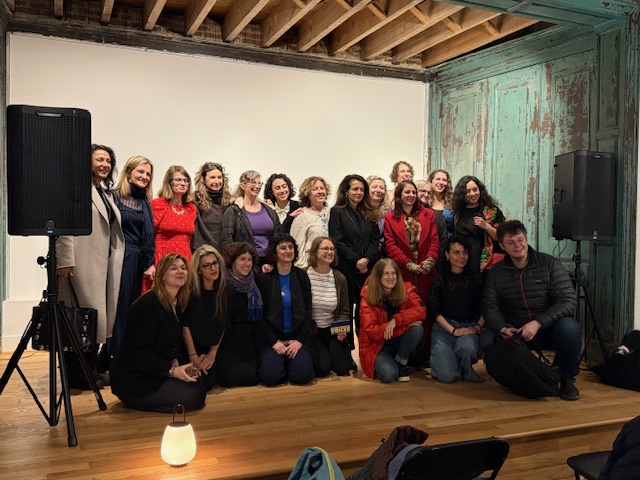
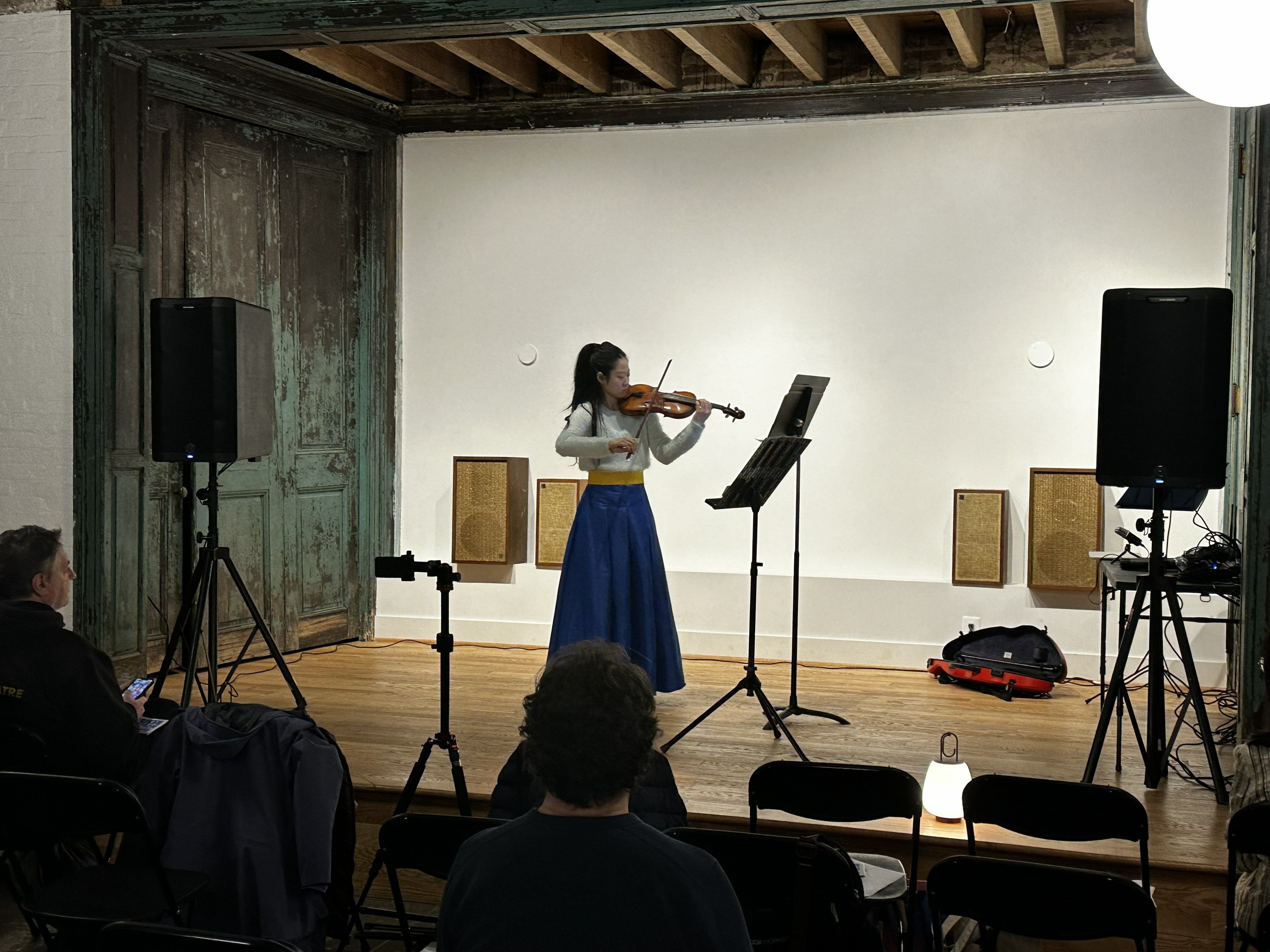
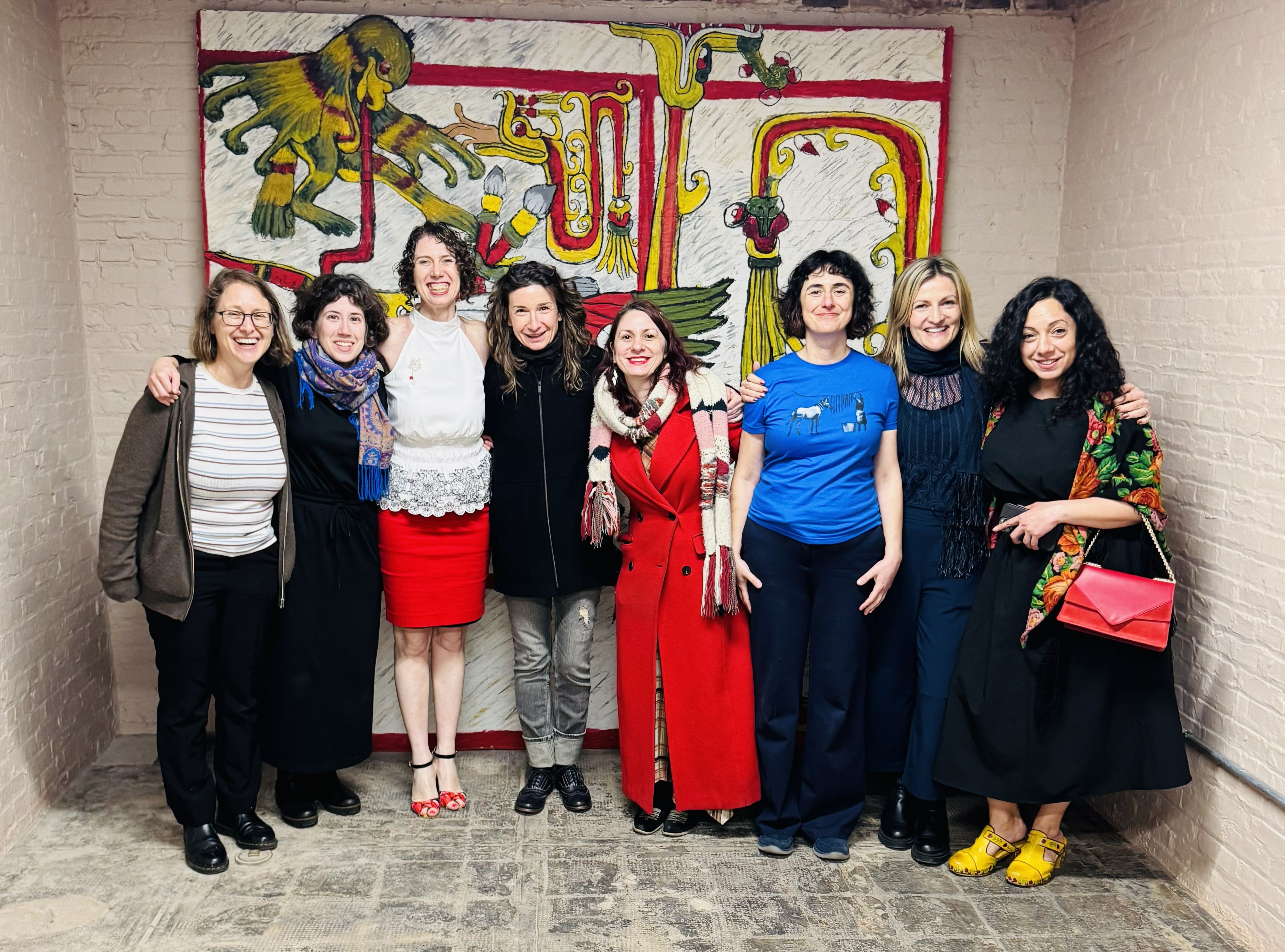
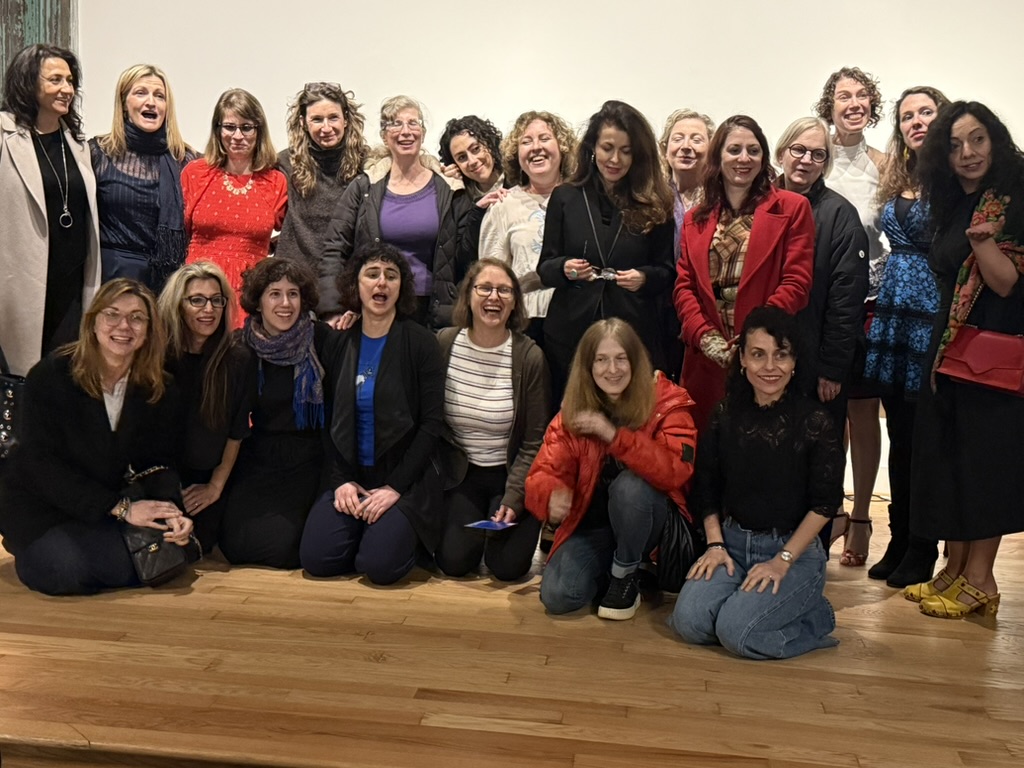
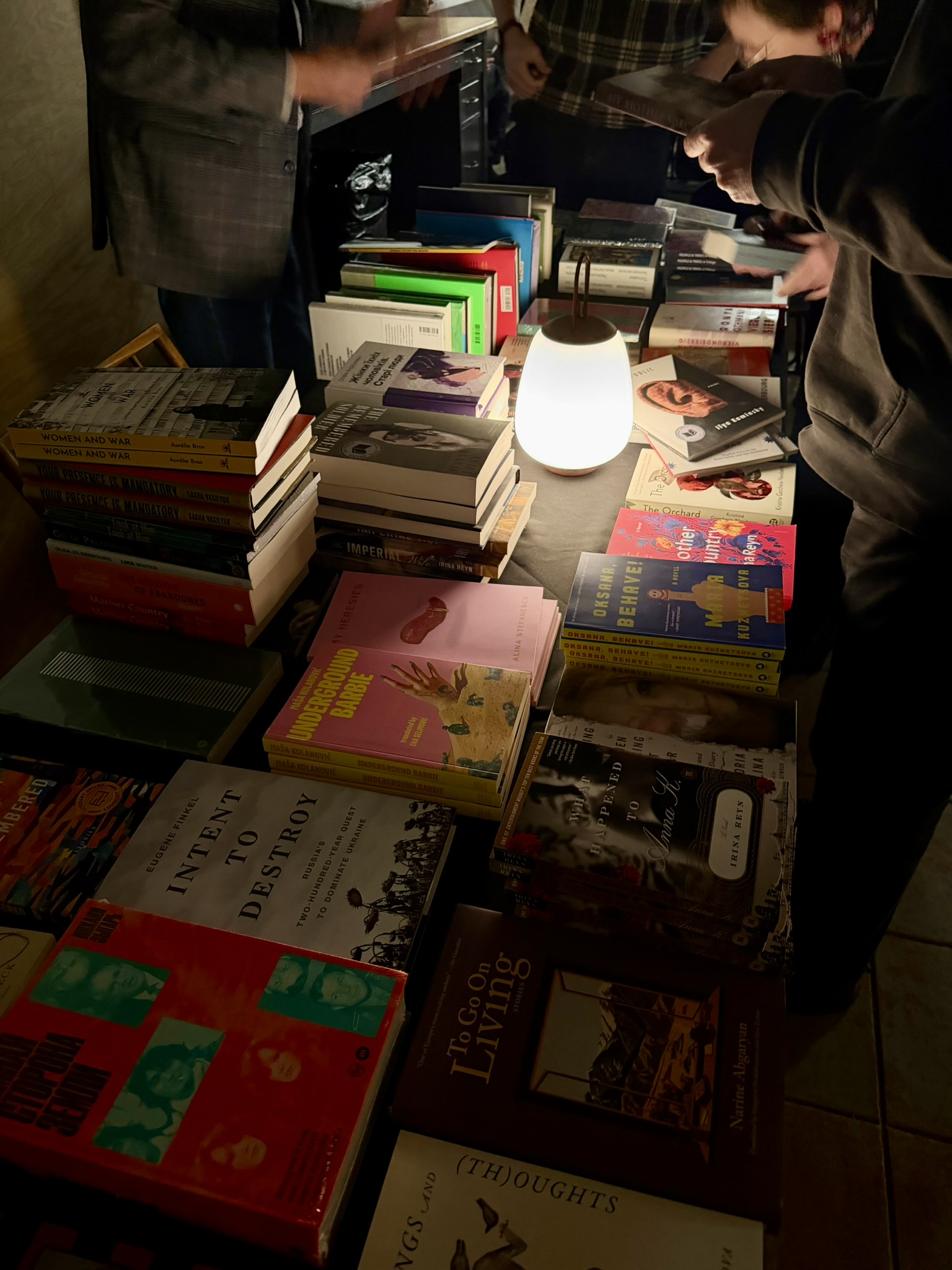
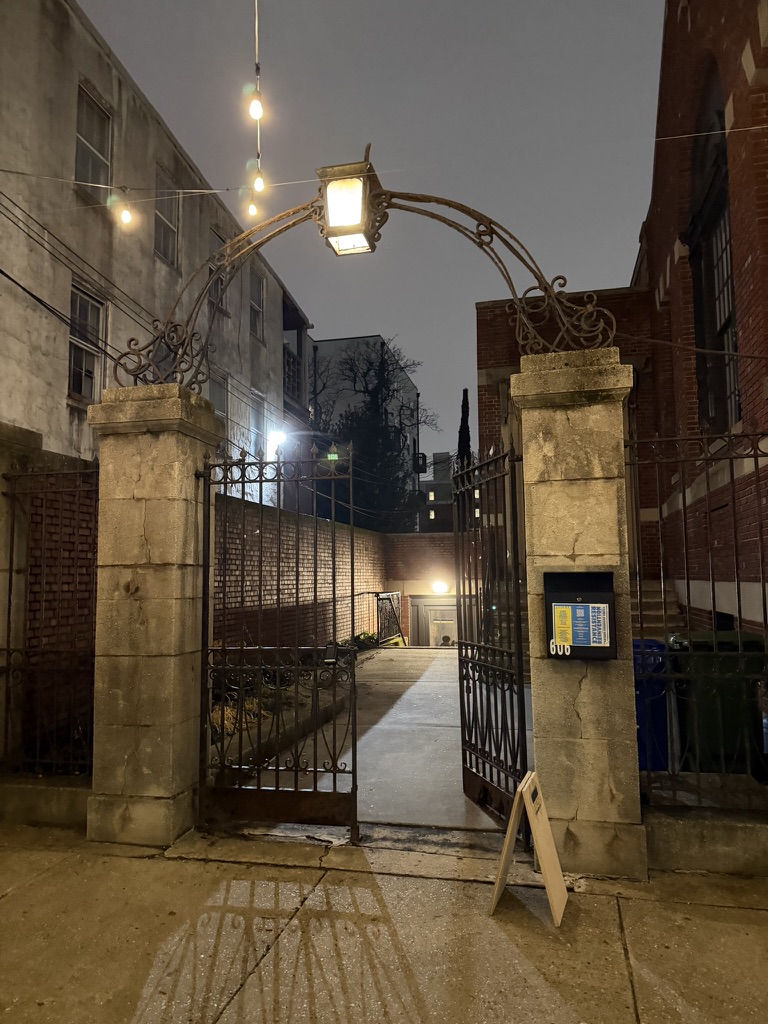
Thank you to our photographers, including Asya Partan, Victoria Juharyan, Vlada Teper, Olga Livshin, and Estefania Konarek. Pictured: Book table, courtesy of Bergstrom Books; entrance to Library Nineteen, our event venue; group shot with the readers; Barbarie Merie, a musician from Peabody Conservatory of Johns Hopkins University; group shot with event organizers; group shot with the readers.
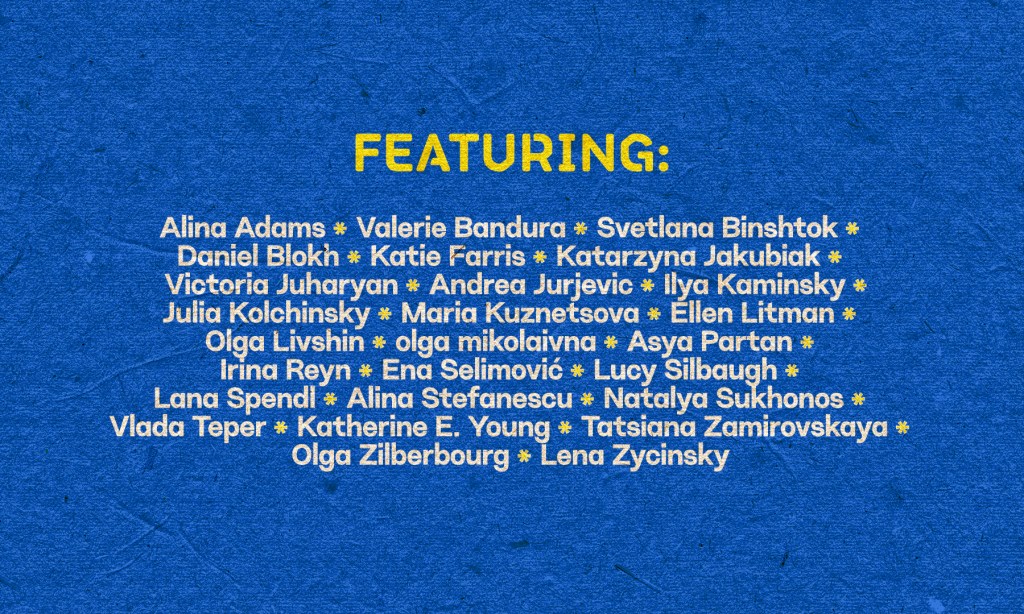
Readers in Order of Appearance:
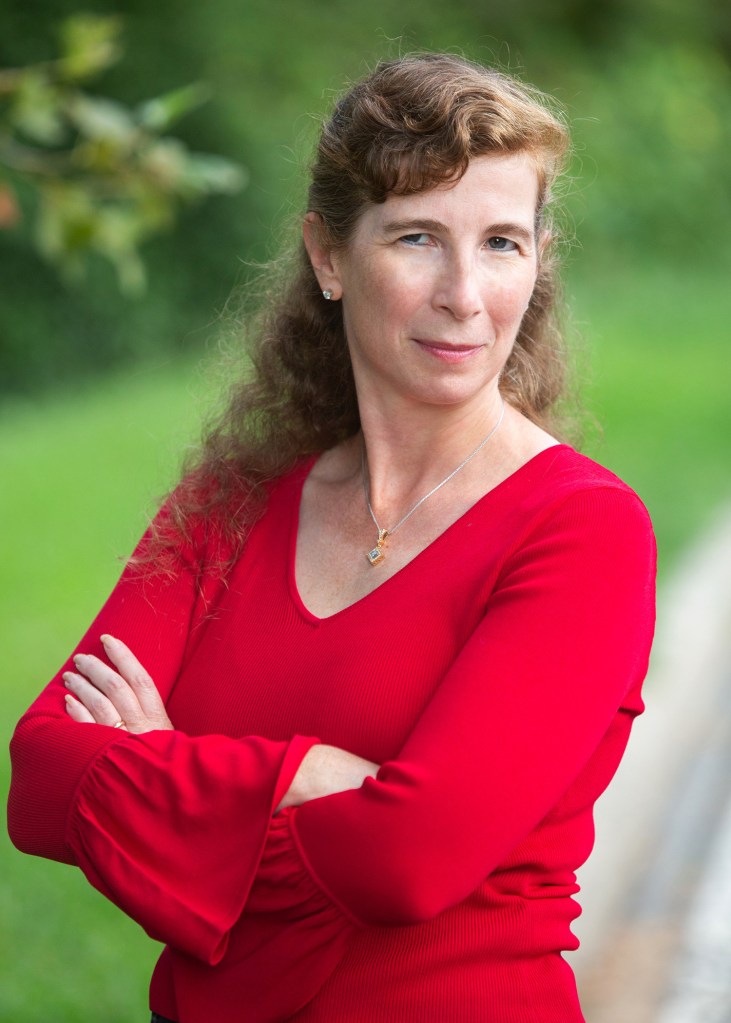
Alina Adams is the NYT best-selling author of soap opera tie-ins, figure skating mysteries and romance novels. Her Soviet historical fiction includes The Nesting Dolls, My Mother’s Secret: A Novel of the Jewish Autonomous Region and Go On Pretending. www.AlinaAdams.com
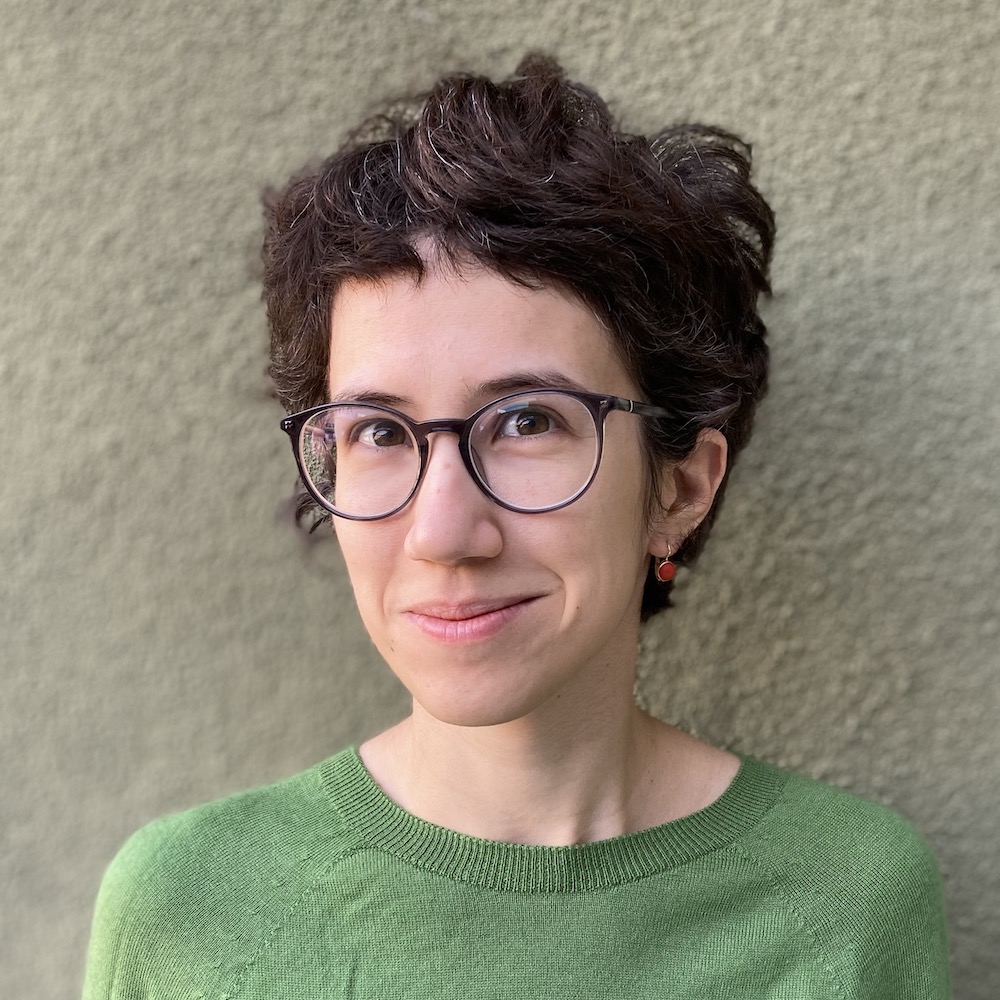
Ena Selimović is a writer, translator, and co-founder of Turkoslavia, a translation collective and literary journal. Her work has appeared in Words Without Borders, The Paris Review, and elsewhere. https://www.turkoslavia.com/
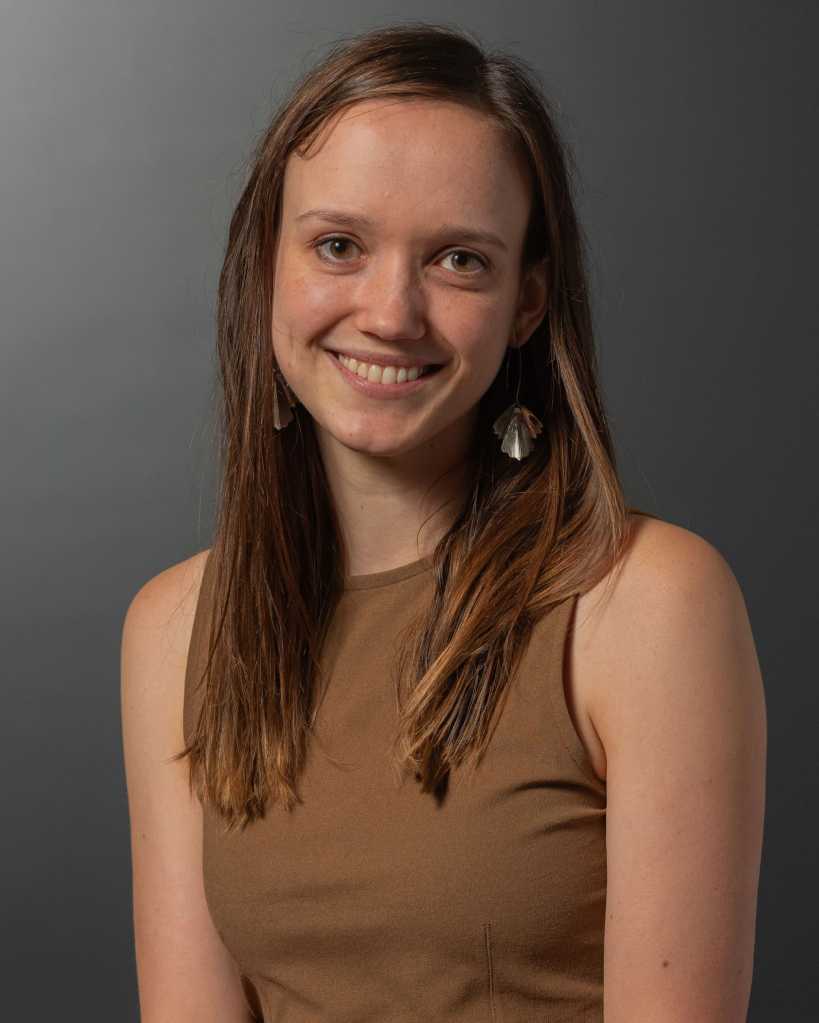
Lucy Silbaugh is an MFA student in poetry at Johns Hopkins. Her poems have appeared in the TLS and Gulf Coast and are forthcoming in the The Iowa Review and The Bennington Review. She has published essays on Nabokov, Gazdanov, and Henry James.
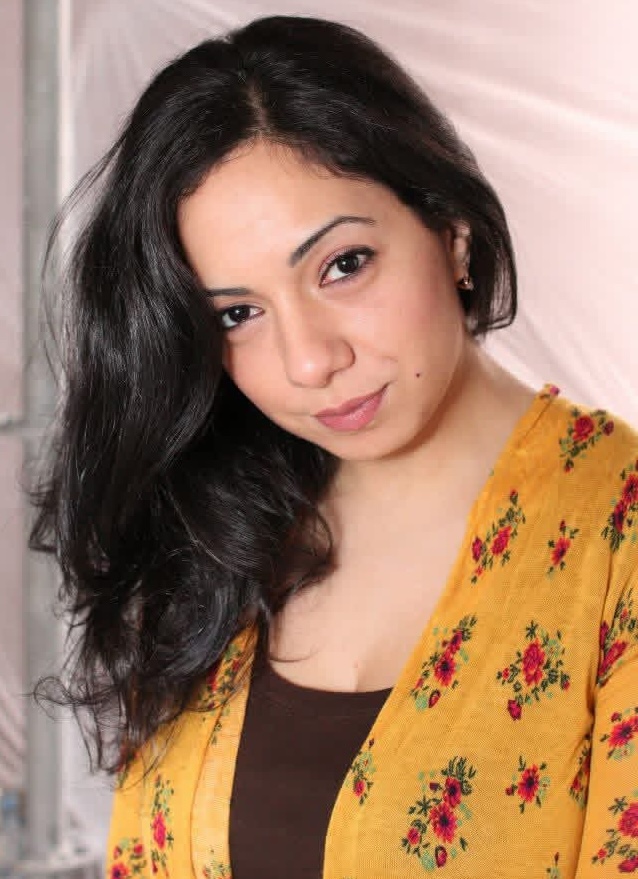
Victoria Juharyan teaches literature and philosophy at Johns Hopkins University. She has been writing poetry since she was three years old but first time she agreed to read her work in public was in 2022 after Russia’s invasion of Ukraine, at a similar event during AWP. Consequently, her poems were published in Symposeum Magazine (https://api.symposeum.us/author/victoria/) and set to music. 
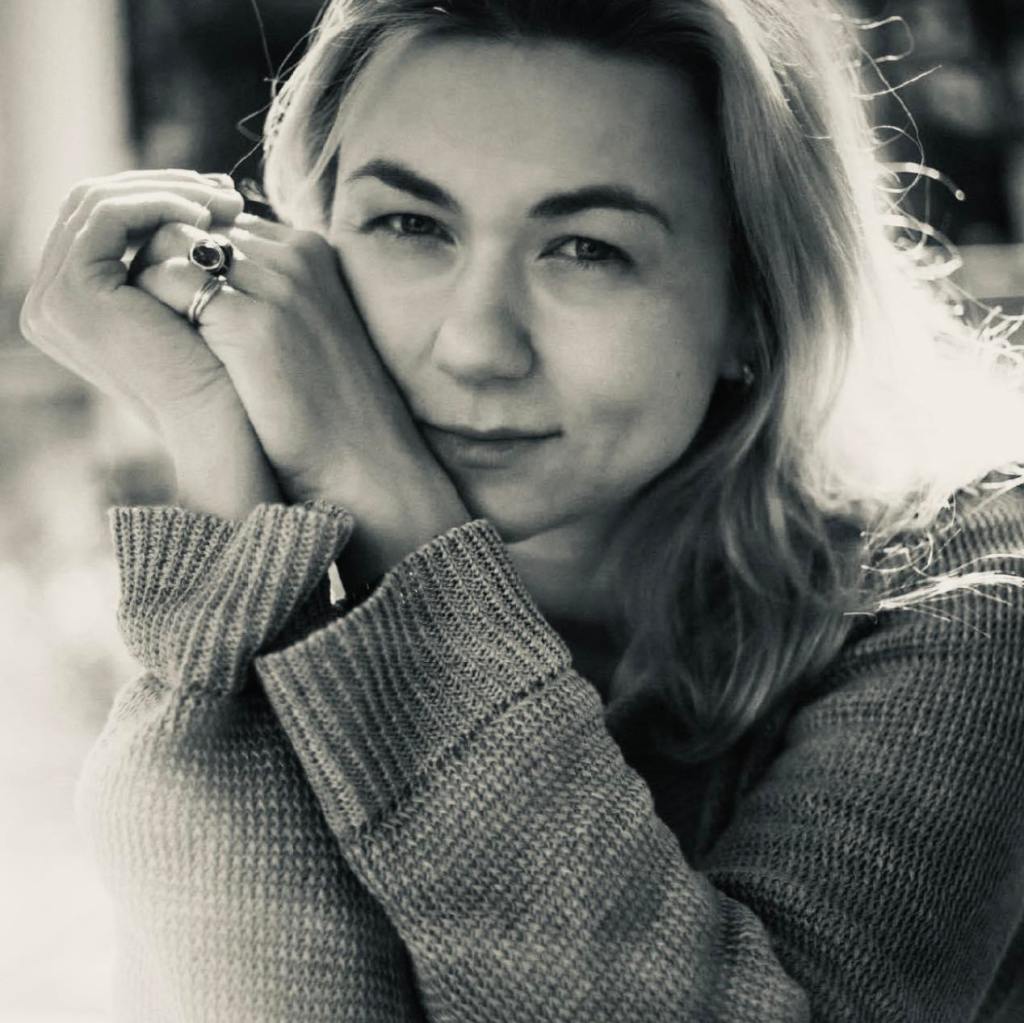
Lena Zinski (Zycinsky) is a Belarusian-American poet and artist, working across languages and disciplines. The author of several poetry collections and art exhibitions in Russian, Lena holds an MFA from New York University. Her work has been published in the New York Times and selected for the Poetry Archive. Born in Minsk, Lena has lived in the United States, the United Kingdom, and Greece, and is currently based in London. More at: www.lenazycinsky.com
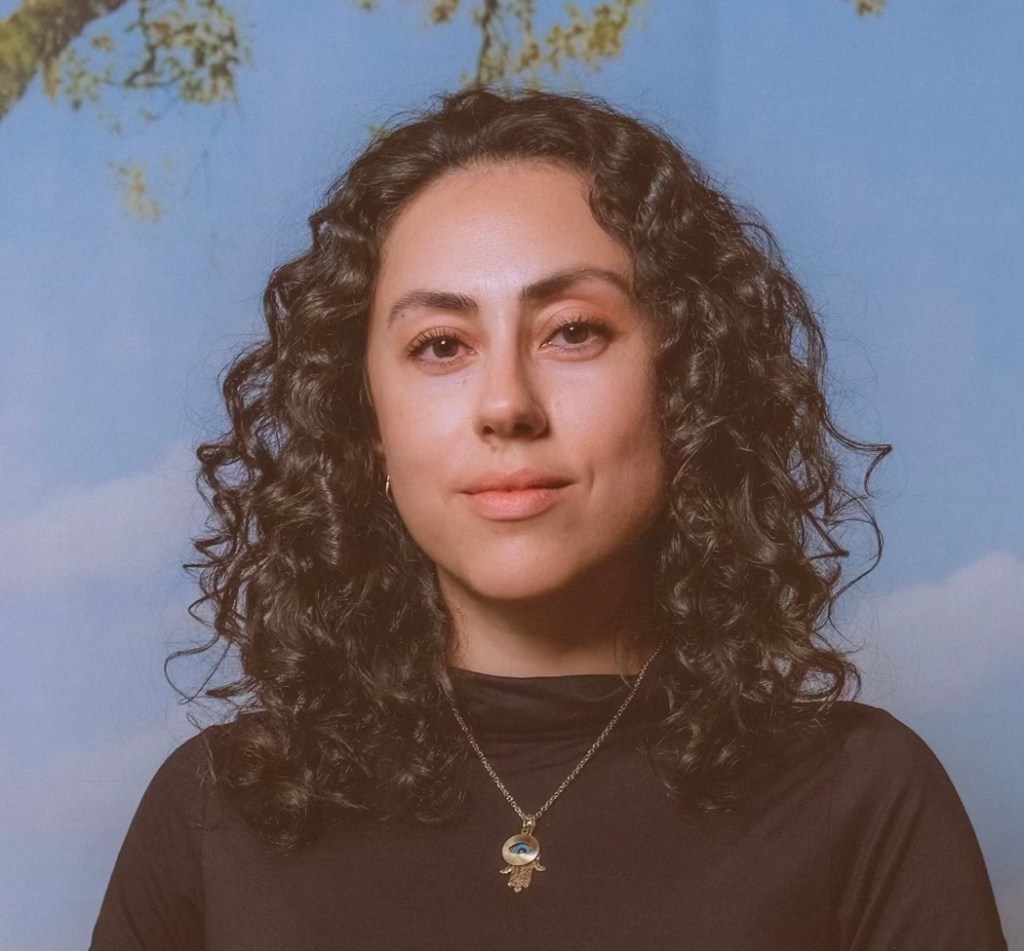
Svetlana Binshtok is a writer and storyteller whose work has appeared in The Louisville Anthology, The Second City, 80 Minutes Around the World, and Fillet of Solo Festival.
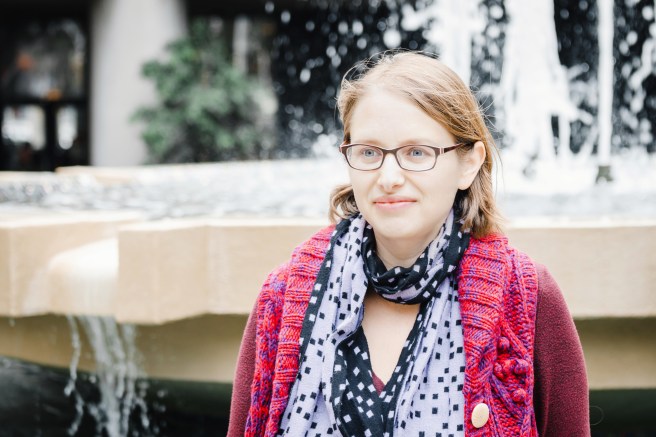
Olga Zilberbourg is the author of LIKE WATER AND OTHER STORIES (WTAW Press). She co-facilitates the San Francisco Writers Workshop and co-founded Punctured Lines, a blog about literatures from the former USSR. https://zilberbourg.com/
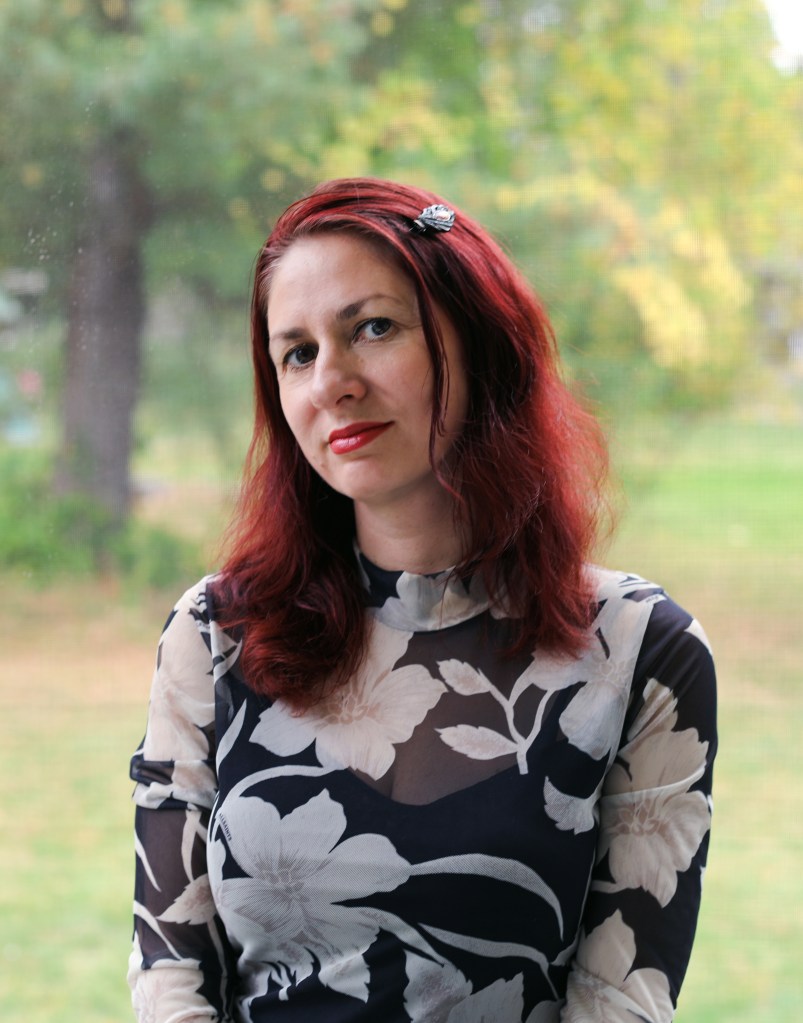
Natalya Sukhonos is a poet who was born in Odesa, Ukraine and now lives in Upstate NY. She is the author of Sunlight Trapped in Stone (Green Writers Press 2026) and two other collections. natalyasukhonos.com
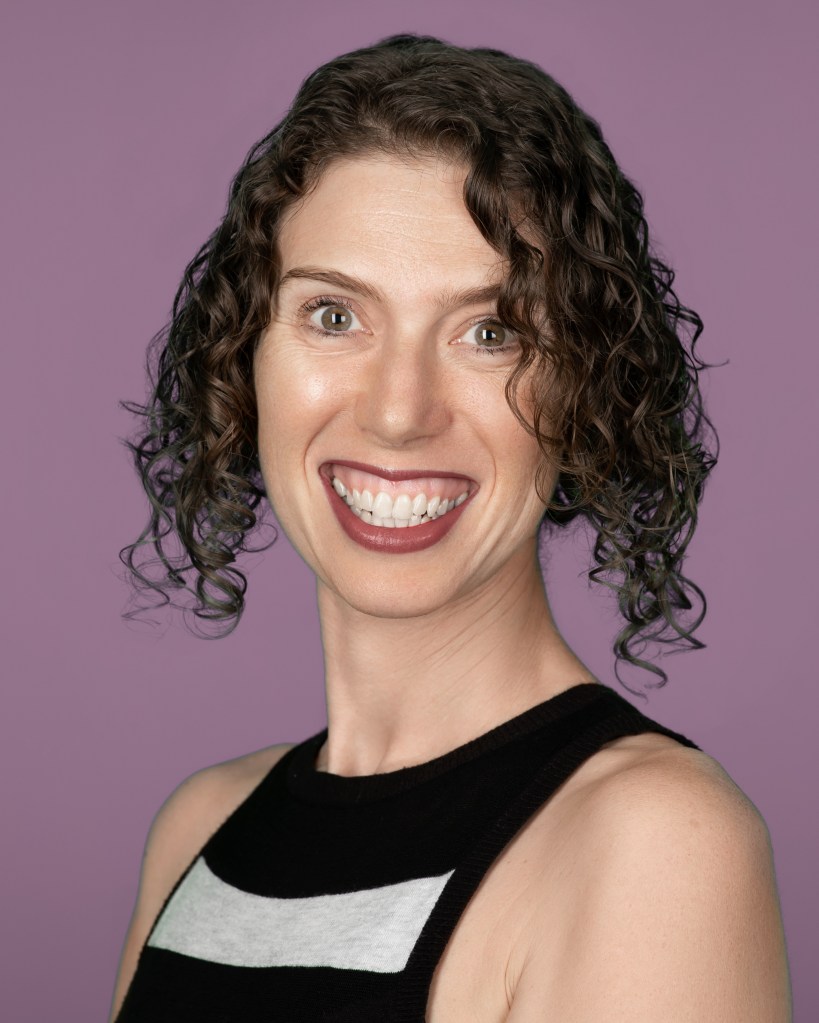
Vlada Teper is a writer and educator from Moldova. Her work has appeared in Newsweek, NPR, World Literature Today, and others. She is the founder of the nonprofit Inspiring Multicultural Understanding. www.vladateper.com
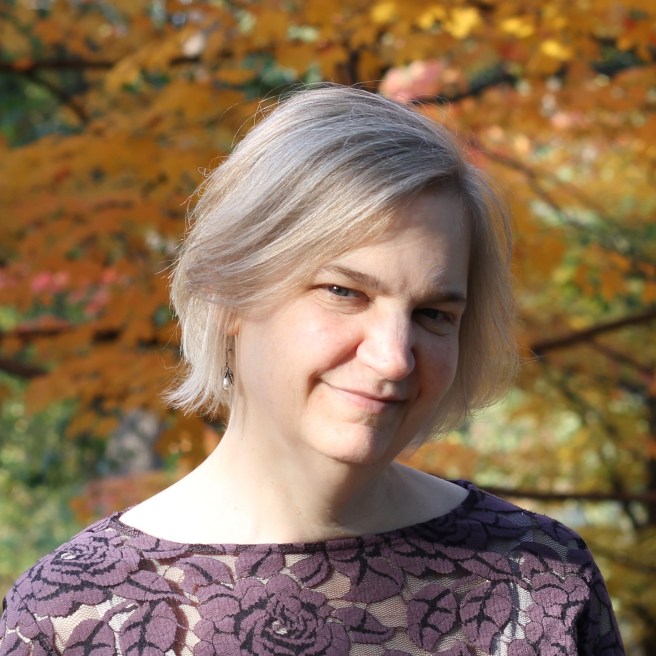
Katherine E Young by Samantha H. Collins

Katherine E. Young is the author of Day of the Border Guards and Woman Drinking Absinthe and served as the inaugural Poet Laureate of Arlington, VA. She translates Azerbaijani, Kazakh, Russian, and Ukrainian writers. https://katherine-young-poet.com/
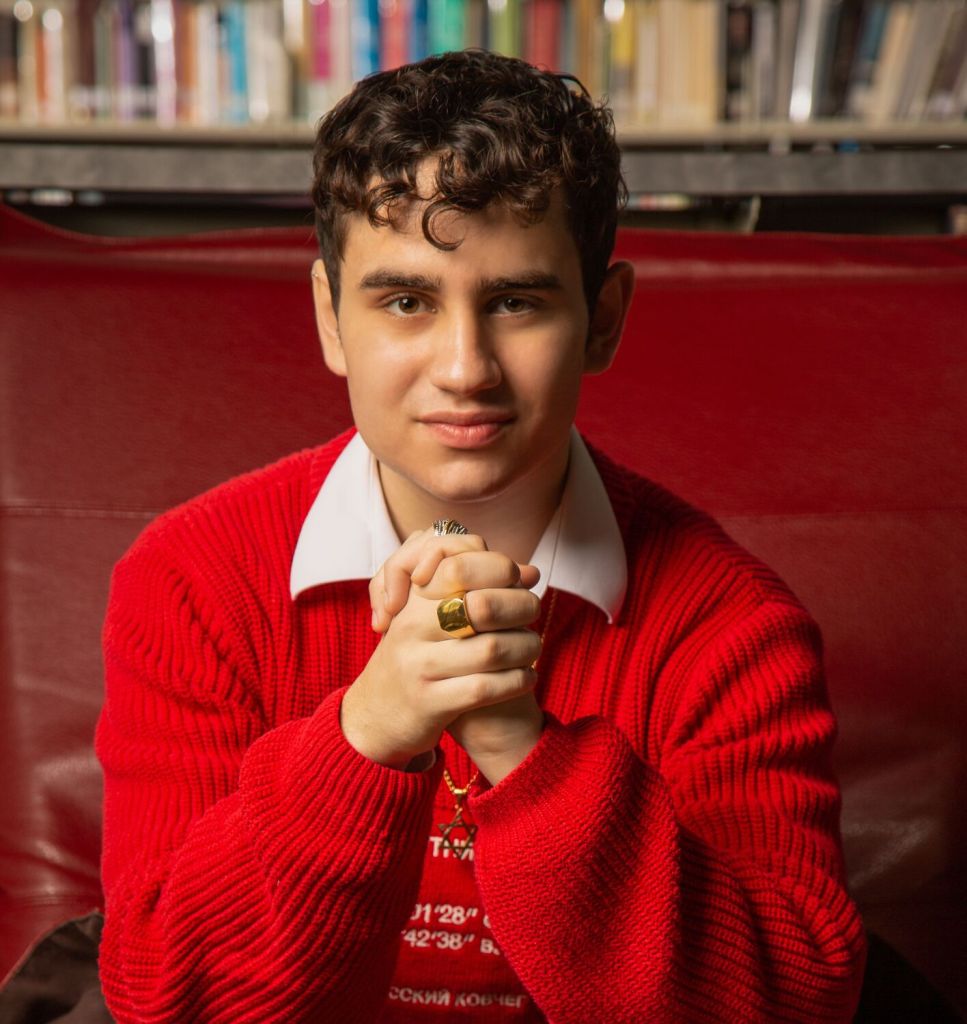
Danya Blokh is a poet from Birmingham, Alabama. He received his bachelor degree in Comparative Literature and Russian from Yale University, and is now pursuing an MFA in Poetry at Johns Hopkins.
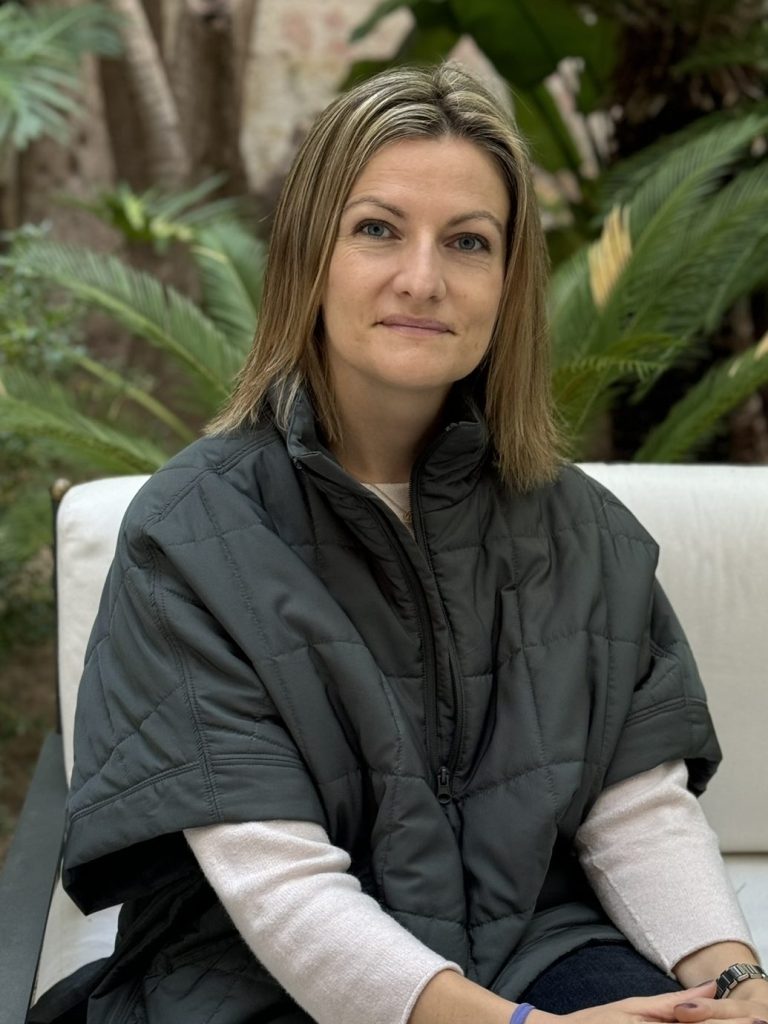
Asya Partan’s writing appears in The Boston Globe, The Rumpus, Pangyrus, NPR‘s Cognoscenti, and The Brevity Blog, and is forthcoming from Liberties. An MFA (Emerson College) and a memoir are in the works. www.asyapartan.com
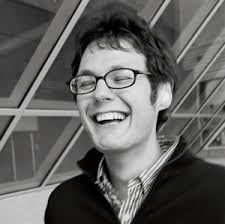
Ilya Kaminsky was born in Odesa, Ukraine and lives in New Jersey. He is the author of Dancing in Odessa (Tupelo) and Deaf Republic (Graywolf) and translator & editor of many other books.
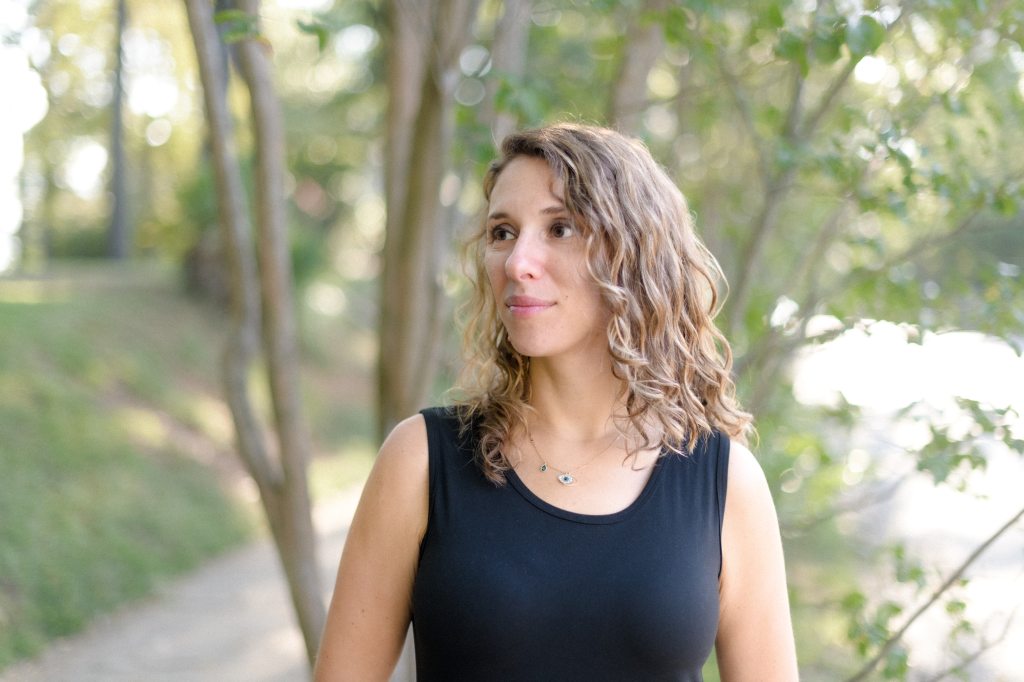
Julia Kolchinsky is the author of four poetry collections, most recently, PARALLAX (The University of Arkansas Press, 2025). Her next book, When the World Stopped Touching (YesYes Books, 2027) is a collaborative collection of letter-poems with Luisa Muradyan, written during the first year of COVID . She is Assistant Professor of English and Creative Writing at Denison University.
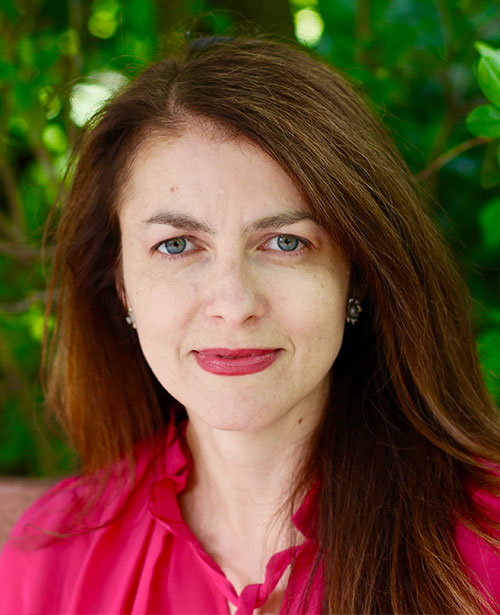
Irina Reyn is the author of three novels: Mother CountryThe Imperial Wife, and What Happened to Anna K, which won the Goldberg Prize for Debut Fiction. Her work has appeared in One StoryPloughsharesTin House, and other publications. She teaches fiction writing at the University of Pittsburgh.
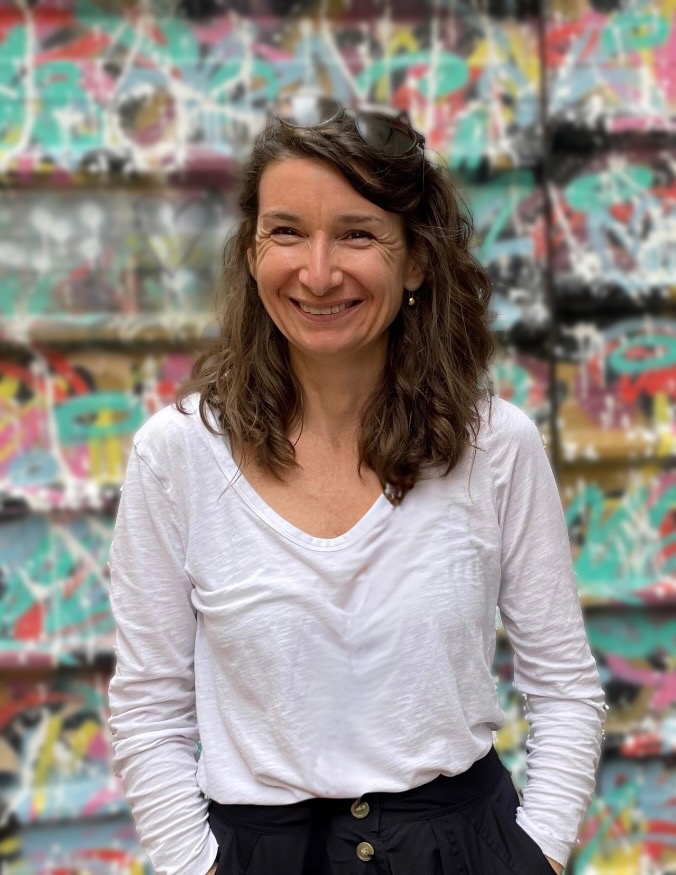
Born in the former Soviet Union, Valerie Bandura is the author of two collections of poems, Human Interest and Freak Show. Her poems have appeared in American Poetry Review, The Gettysburg Review, and Ploughshares, among others. She teaches writing at Arizona State University. https://valeriebandura.com/
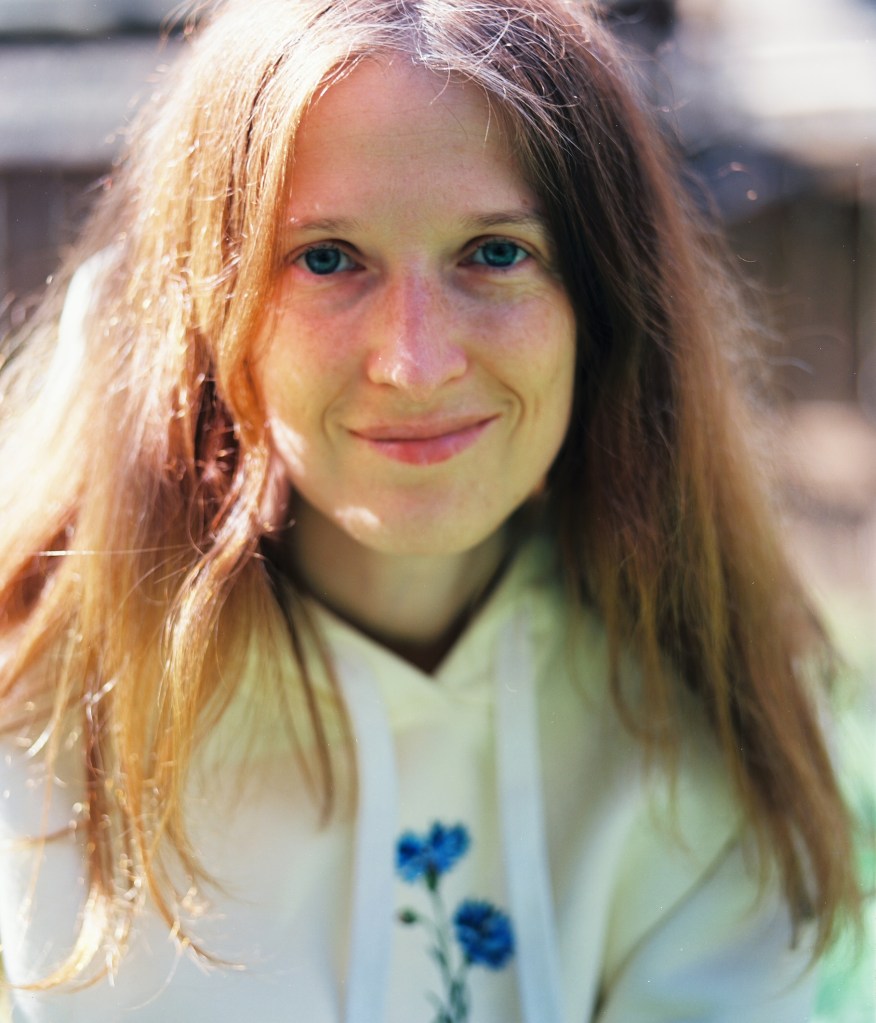
Tatsiana Zamirovskaya is a bestselling Belarusian author who writes metaphysical and socially charged fiction. She is the author of three short story collections in Russian and two highly acclaimed novels, The Deadnet and Candles of Apocalypse. She worked for Voice of America as an editor and journalist until its shutdown in March 2025.
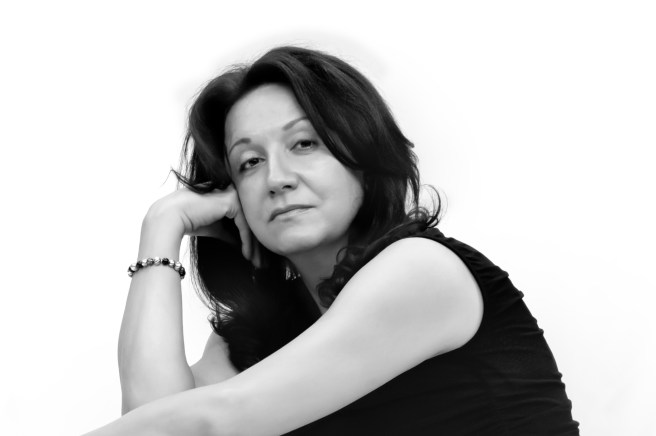
Kristina Gorcheva-Newberry was born in Armenia and raised in Soviet Russia. Kristina is the winner of the Katherine Anne Porter Prize for Fiction and the Raz/Shumaker Prairie Schooner Book Prize in Fiction for her first collection of stories, What Isn’t Remembered, long-listed for the PEN/Robert W. Bingham Prize and shortlisted for the William Saroyan International Prize. Her debut novel, The Orchard, was a finalist for the 2023 Chautauqua Prize and was picked by the New York Post as one of the best books of the year. It has been translated into many languages.
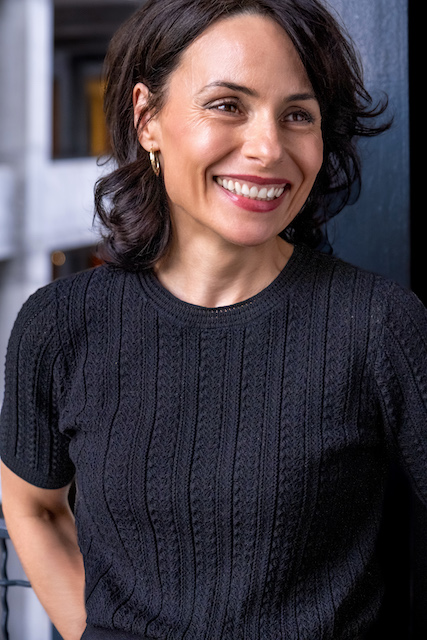
Andrea Jurjevic headshot by Sean Patrick

Andrea Jurjević is a poet, translator, and painter from the Adriatic coast of Croatia. Her latest collection is In Another Country (2022 Saturnalia Books Prize). Read her Substack Lovesong to Elsewhere: https://andreajurjevic.substack.com/
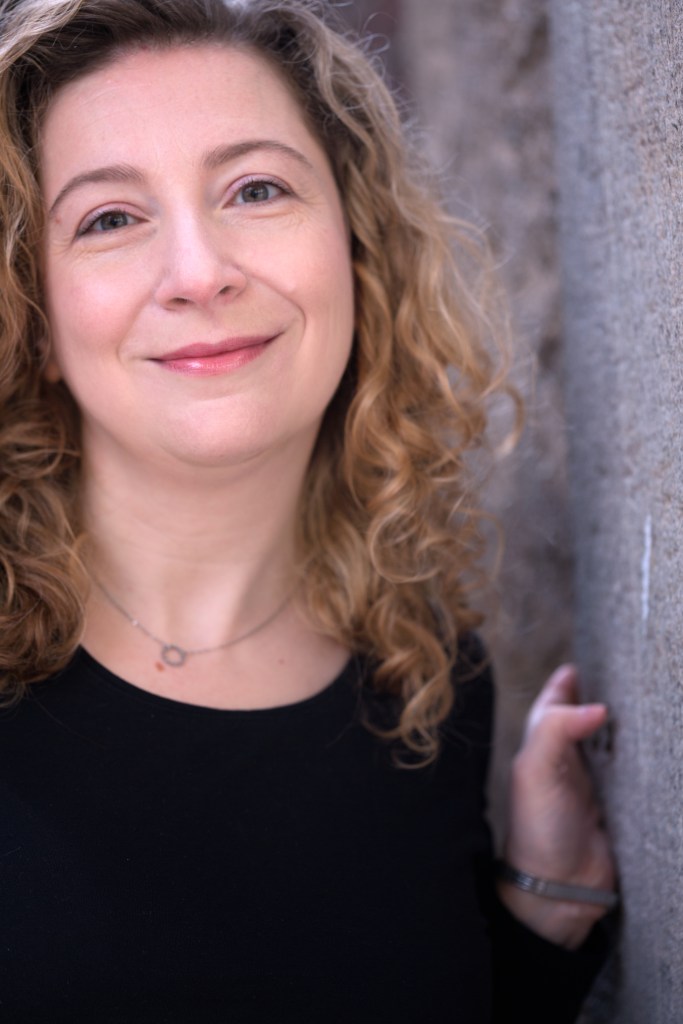
Ellen Litman is the author of two novels, The Last Chicken in America and Mannequin Girl. She teaches at UConn. Born in Moscow, she immigrated to the US in 1992.
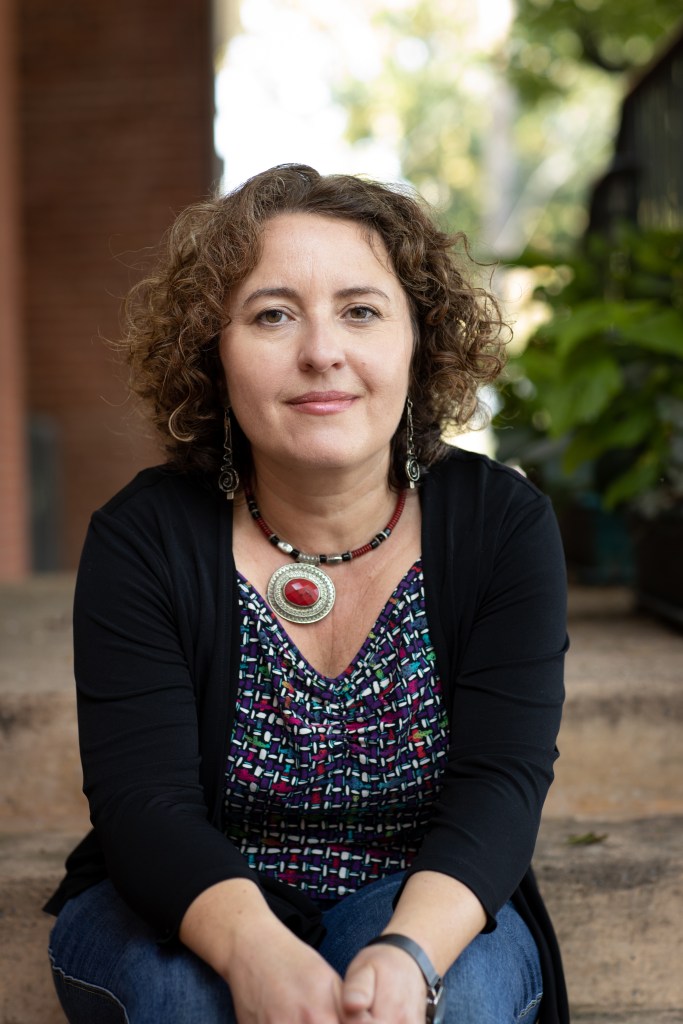
Katarzyna Jakubiak’s recent nonfiction collection is Obce stany (Alien States; Poland, 2022). She is also a short story writer, translator, scholar, and Associate Professor of English at Millersville University.
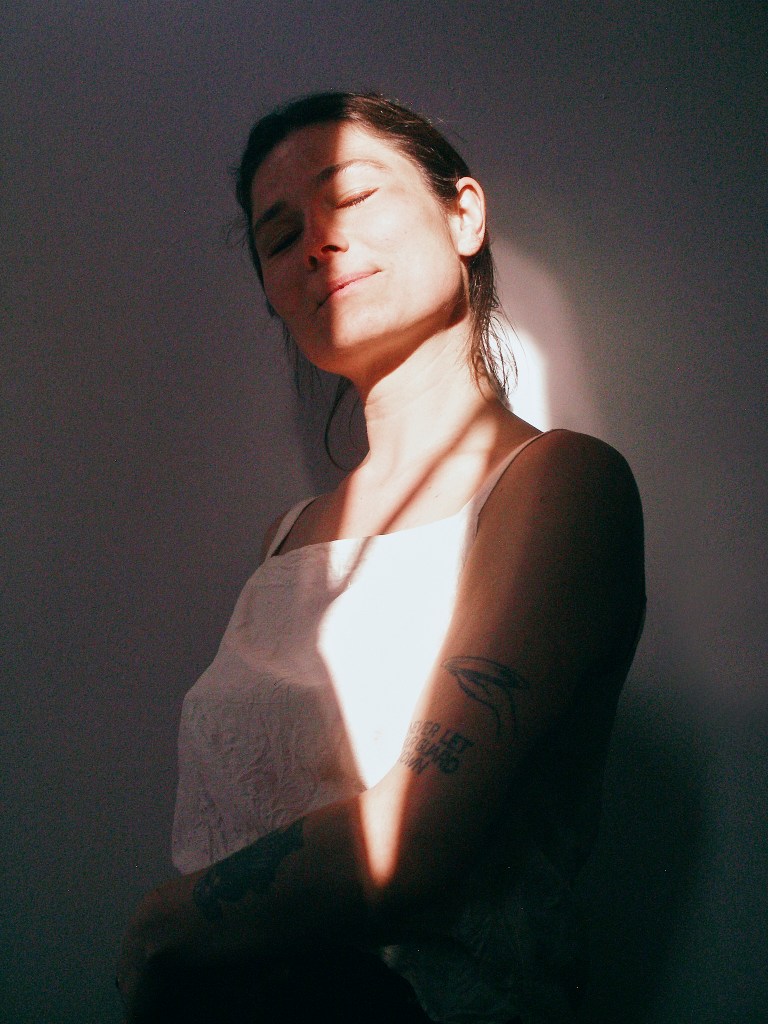
olga mikolaivna was born in Kyiv and works in the (intersectional/textual) liminal space of photography, word, translation, and installation. Her debut chapbook cities as fathers is out with Tilted House and “our monuments to Southern California,” she calls them is forthcoming with Ursus Americanus Press. She lives in Philadelphia and teaches at Temple University. https://www.olgamikolaivnapetrus.org
Alina Stefanescu is a unique poetic voice of the Romanian American diaspora. Her poetry collection Dor won the Wandering Aengus Press Prize (September, 2021). In the collection, My Heresies (Sarabande, 2025), she has “translated” Romanian childhood myths into the present as spaces for ontology.
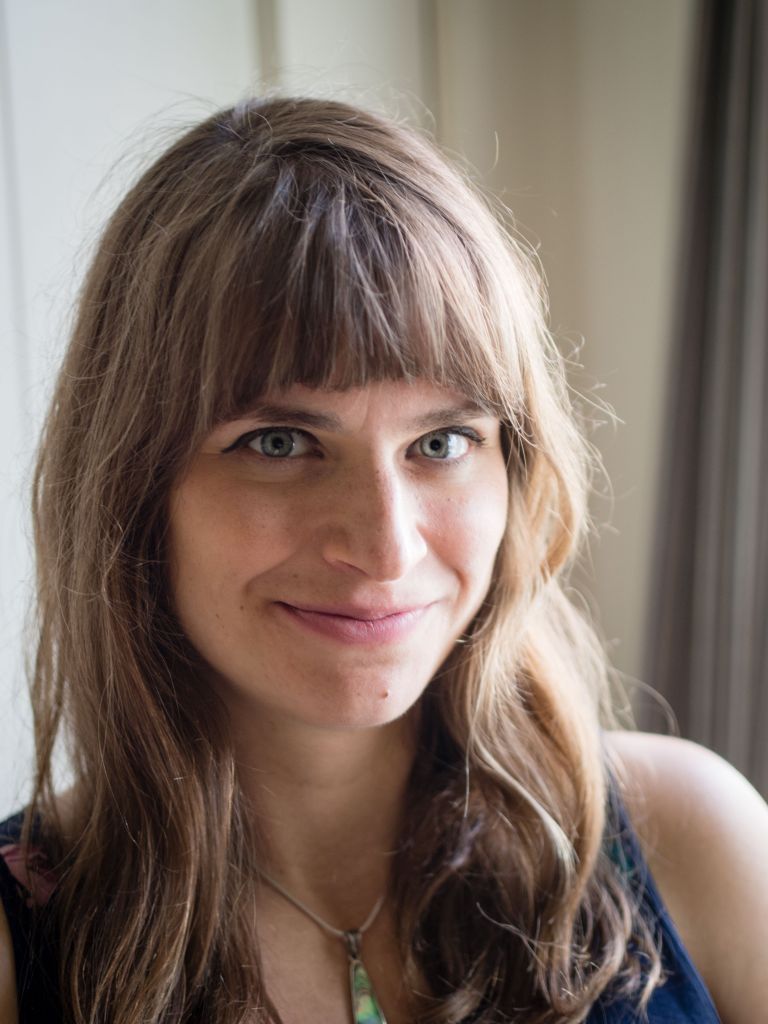
Maria Kuznetsova was born in Kyiv, Ukraine. She is the author of the novels Oksana, Behave!  and Something Unbelievable and is an Associate Professor at Auburn University. https://mariakuznetsova.com/
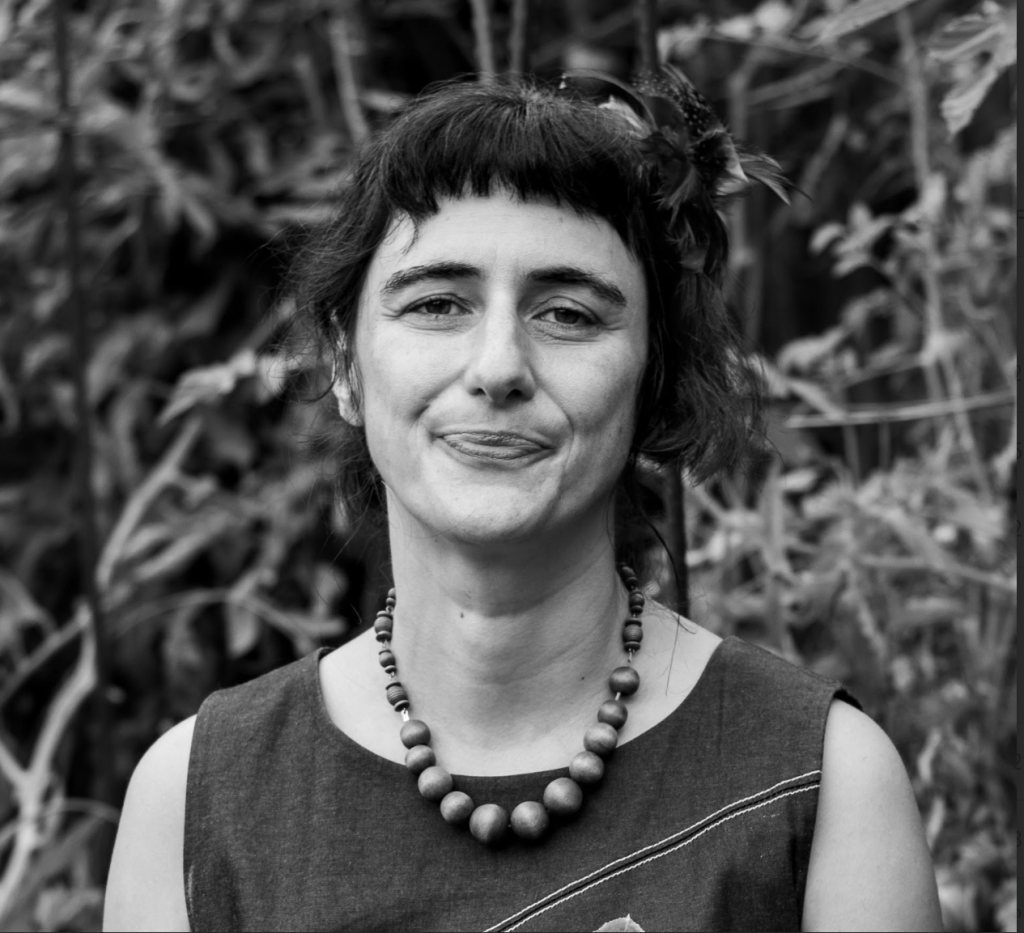
Olga Livshin’s poetry appears in Poetry magazine, the Southern Review, and Ploughshares. She is the author of A Life Replaced: Poems with Translations from Anna Akhmatova and Vladimir Gandelsman. olgalivshin.com 
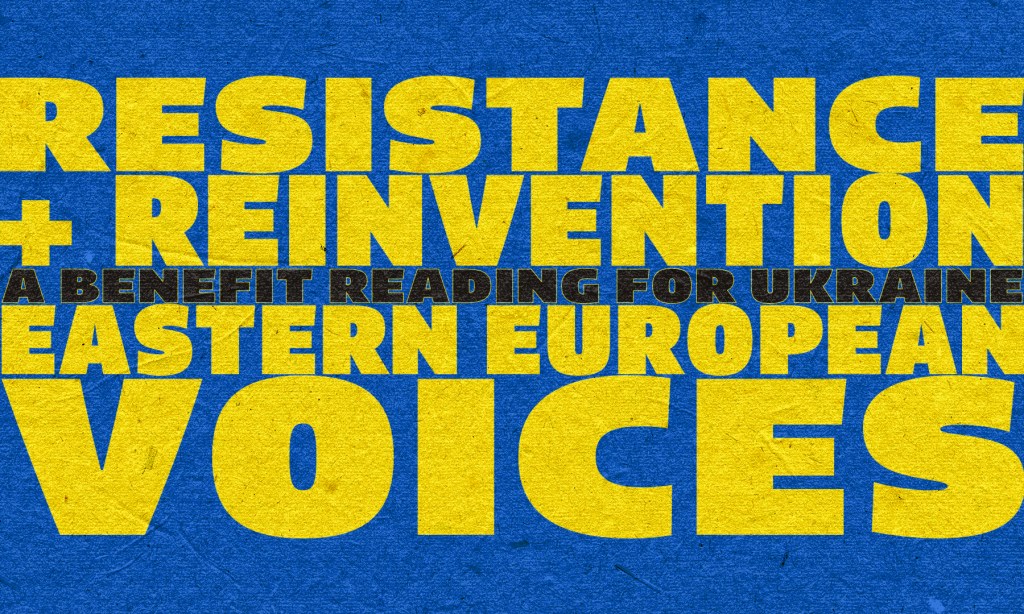
Eastern European Voices for Resistance and Reinvention

When: March 6, 7:00 pm

Where: Library Nineteen
606 S. Ann St, Baltimore MD, 21231

This one-of-a-kind reading brings together writers from Eastern Europe and the post-Soviet countries who now make their homes across the United States. Taking place during the 2026 AWP Conference, the event celebrates a growing circle of poets, prose writers, and translators from complex, cross-cultural identities whose work is shaped by displacement and immigration, survival and resilience.

Continue reading “Eastern European Voices for Resistance and Reinvention”

Pocket Samovar: Interview with Konstantin Kulakov, Founding Editor, by Alex Karsavin

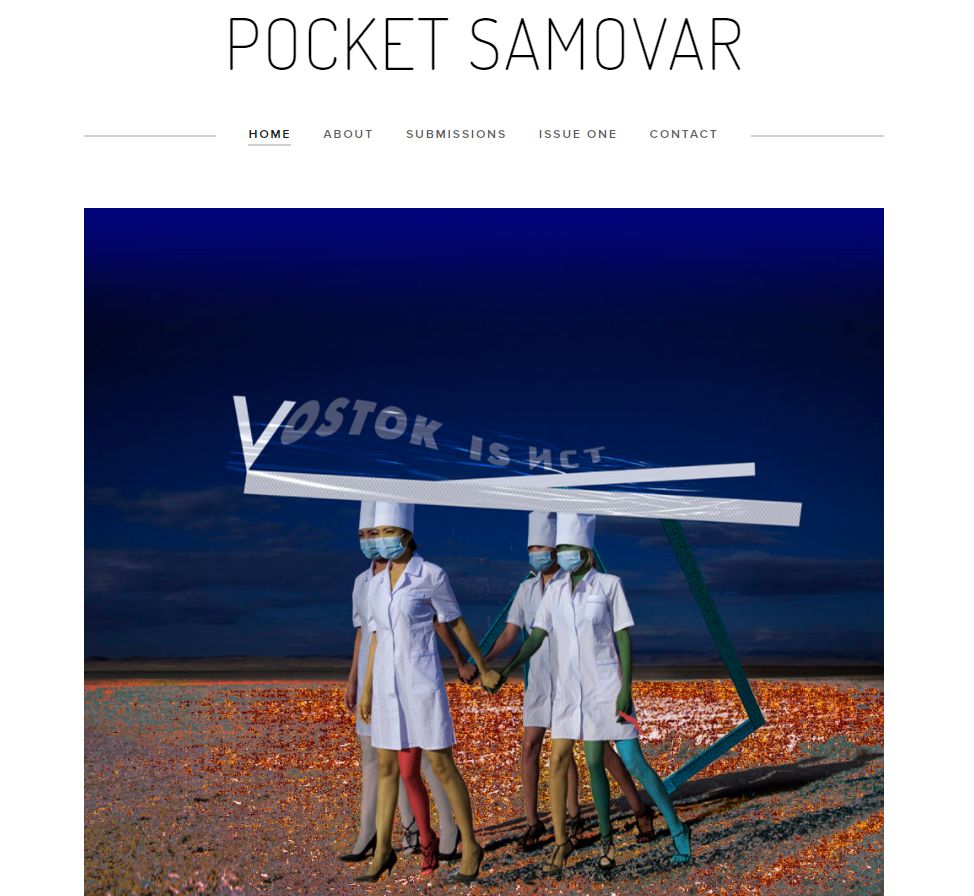
Today Punctured Lines is delighted to feature Alex Karsavin‘s interview with Konstantin Kulakov, Founding Editor of Pocket Samovar, “an international literary magazine dedicated to underrepresented post-Soviet writing, art & diaspora.” A huge thank you to Alex for the initiative to do this interview for the blog and to both Alex and Konstantin for their work on this piece. An equally huge thank you to the editors of Pocket Samovar for creating a space for post-/ex-Soviet writers. Submission guidelines can be found here.

Alex Karsavin:  Can you briefly give me the origin story of Pocket Samovar? How did a project that began as a localized conversation between two students at Naropa University’s Jack Kerouac School end up involving so many international actors? How did you go about establishing these lines of communication? And finally: how has Pocket Samovar been able to, in a remarkably short spate of time, reach such a dispersed and disparate audience?

Yevgeny Yevtushenko (1932-2017)

Konstantin Kulakov: It started in fall 2019, in Boulder, Colorado at the Jack Kerouac School. It was Kate Shylo, who’s from Yalta, Crimea, me from Russia, and Ryan Onders, who’s from Ohio. Late in the summer, Ryan and I struck a relationship over poetry performance, especially our obsession with Yevtushenko and the orality of Soviet poetry. Shortly, the three of us got together over borscht and spoke about a magazine dedicated specifically to diasporic communities.  At first, the word we used was “Eurasia.” Later we realized that “post-Soviet” would be a more accurate term, and we brought it up to Jeffrey Pethybridge, who connected us with Matvei Yankelevich. Matvei was brilliant; he put us in contact with Boris Dralyuk and Eugene Ostashevsky, which ultimately led to the establishment of an advisory board. We didn’t just want this to be a trendy journal that’s translating East European writing. We wanted to highlight underrepresented writers of the post-Soviet space: queer, LGBTQ, Muslim, writers of color, including writers from Transcaucasia, Central Asia, and so on. The hardest part, of course, was to establish these links across time zones, languages, and cultures. Our advisory board proved extremely useful in finding people like Paata Shamugia and Hamid Ismailov. I myself found people like Evgeniy Abdullaev, whose pen-name is Suhbat Aflatuni; he’s based out of Tashkent. It is important to emphasize, for us, the diasporic part of our mission does not center writers in the west; instead, the magazine aspires to be rhizomatic, bridging the gap between North American and Eurasian literary communities. 

Alex Karsavin:  I was struck by the claim on your site that Pocket Samovar was influenced but not necessarily determined by its editors’ relationship to “Soviet cultural memory.” This is a very rich and arguably fraught territory. Before we go into the particulars, would you mind delving into your (or your colleagues’) relationship to the region at large (be it personal, literary, or academic)?

Konstantin Kulakov:  I can only confidently speak for myself. I left Russia when I was 10 years old: a kind of identity rupture or separation at a formative time. And that longing for homeland is really what it’s about for me. The only way I could connect to Russian contemporary literature was online or books. And there was something missing in that, like: Oh, here’s a poem. Here’s an anthology of contemporary Russian poetry by Dalkey Archive Press. And that’s it. I opened the book, and I never felt that it offered me an opportunity to improve my Russian, or to meet Russian people. (Before the pandemic hit we had hopes of actually having events and things of that nature.) So for Kate and me, it really was founded around diasporic longing for a connection to the post-Soviet space, and specifically the kind of literary culture where people can stand up and recite a poem by heart. Living and going to school in Russia as a kid, I hated recitation, because it was required and I wasn’t good at it. In my early childhood, I was moved between Russia, England, and America. I was bilingual and confused, often wonderstruck by language, and maybe that’s why I’m a poet. In many ways, for me, editing this magazine is a return to the language at a time when I feel ready to appreciate it. In Kate’s case, she was born in Yalta and also traveled; she has this nomadic sensibility. I think what interested her was the emphasis on publishing underrepresented voices (particularly feminist and queer). Ryan, of course, came to us via Yevtushenko and translation. 

Alex Karsavin:  Could you say a bit more about your personal relationship to Soviet cultural memory specifically (given the prominent role it plays in the site’s call for submissions)?

Konstantin Kulakov:  Soviet cultural memory. Hmm. I mean, I was born in 1989 in Zaoksky, a town outside of Moscow. 

Alex Karsavin:  Right at the tipping point …

Bella Akhmadulina (1937-2010)

Konstantin Kulakov:  Yeah. I entered a world of collapse, in a state of flux. My memory of that time is mostly of things falling apart and being built up. I actually grew up during the construction of the first Protestant seminary co-founded by my father. So there’s this idea of: “Look! Democracy, religious liberty, international dialogue, etc. are finally coming to Russia!” But at the same time, having been in the United States for 20 years (I’m 31), having experienced individualistic consumerism, there’s now this longing for the samovar, for the communal aspect of poetic memorization and recitation, a longing for something as immense as the stadium poetry of Yevtushenko and Bella Akhmadulina. The longing was also in part a reaction to this feeling among some exiles that Russia is authoritarian, that the arts are neglected or backwards, etc. And something in me always knew the latter was false. I thought: “I know there are poets in Russia and all over the post-Soviet space.” 

Alex Karsavin:  Why Pocket Samovar for the title? To my mind, the samovar draws obvious connotations to the Tsarist Empire, and nationalism more broadly. Yet, and correct me if I’m off mark, there seems to be a dislocation happening here (even in the simple reimagining of this bulky static object as something miniature and mobile). Am I wrong to interpret this as a sort of queering?

Konstantin Kulakov:  There are some things to unpack here. In fact, the mission statement used to be a history of the samovar. It actually emerged in Azerbaijan. The samovar finds archeological origin in the tea drinking devices of Azerbaijan, not Russia. So we were not trying to center the Russian space but rather the region as a whole, its complex, boundary-crossing geography and culture. The communal aspect is also very important. The samovar is circular and presents a spatial situation that is meant to be enjoyed among friends, conversing as equals in a non-hierarchical, free, and spontaneous manner. In the end, we’re trying to be more like a tea room than just a competitive journal that publishes the best of post-Soviet writing. So, if the samovar, something bulky, fits in the pocket, you can definitely say this is a queering; in many ways, the situation of the diasporic writer demands an understanding of fluidity. For us, national identity can change overnight, and language, when queered, affords that fluidity. 

Alex Karsavin:  Pocket Samovar appears to be the newest in a series of recent publications which take this particular region as their focus (Mumber Mag, Alephi, to some degree Homintern). The magazine is unique, however, in its attempt to put the stateside literary diaspora in communication with its FSU (former Soviet Union — PL) roots. Why is this emphasis on dialogue so important for Pocket Samovar? How does it relate to the magazine’s stated desire (to paraphrase Madina Tlostanova) to reimagine the post-Soviet condition not as a lamentation of lost paradise, but as a way to re-existence?

Konstantin Kulakov:  We emerged in Boulder, Colorado, although we are expanding now. One of our editors is in Brooklyn; I might be moving to Brooklyn soon, actually. And then two of our editors are based in Europe, specifically in Luxembourg and in Basel, Switzerland. Daily operation and editorial decisions present new limits and opportunities. So the idea behind Tlostanova’s quote is that we’ve already opened Pandora’s box, so to speak. We can’t go back. Globalization is everywhere. And I think the name “pocket samovar” speaks to that question very concretely.  Being in this globalized, fast-paced world, everything is now pocket-sized, everything is mobile, it’s almost like you have to be that way to survive. Ryan Onders, our managing editor, asked me one day: How would the magazine exist physically as a print edition? And I said: It’s a diasporic thing. It’s nomadic. So it has to fit in the pocket, right? That’s when I realized it had to be Pocket Samovar

The thing is, we can’t go back in time, nor can we escape the Soviet legacy. The “re-existence” Tlostanova speaks of is the ability to create something new and necessary, something that’s based around community in an individualistic and competitive globalized world. For this reason, our new issue emphasized the virtual tea room recordings (of which Stanislava Mogileva‘s was my favorite). We strategically decided to put the video at the top of the page to make it central, and the text secondary. So when you click the link and open the video, there’s this feeling that we’re still honoring that tradition of orality and community, a re-existence of sorts. 

Alex Karsavin:  Perhaps it’s too early to tell, but what kind of international reception has Pocket Samovar had so far? Also, I want to dive a little deeper into the question of inter-scene dialogue. Given that your contributors represent such disparate literary (and feminist) movements, what kind of exchange (intellectual or affective) have you noticed cropping up in your virtual tea room? Do you think the formal arsenal and thematic concerns of the writers featured in the first issue coalesce into some sort of recognizable whole? Particularly I’m interested in the way writers deal with the theme of dislocation (for example, Stanislava Mogileva appears to recoup the folk song and oral epic genre in the service of Russian feminism, while Elena Georgievskaya queers the biblical language of Revelation).

Bulat Okudzhava (1924-1997)

Konstantin Kulakov:  It’s interesting. International communication is definitely happening, even as we speak, on social media.  That’s where I’m seeing it and I can’t really talk about the nature of the dialogue yet because we first need to have more events. But it’s generally a sense of excitement that I’m seeing. To borrow a term from Durkheim, it was something of a collective effervescence, albeit virtual. At first, there was this fear among the editors that in calling ourselves post-Soviet, people would freak out and not want to be affiliated with that authoritarian, violent legacy to which we all have our own complicated relationship. However, I think the nature of the post-Soviet space is integrated in such weird ways that there is always literal and discursive travel occurring between the various republics and Russia. For example, Evgeniy Abdullaev is based in Tashkent and has a manifesto called “Tashkent Poets,” but he writes in Russian (not dissimilar to the Soviet-era poet, Bulat Okudzhava, who was of Georgian and Armenian descent). So there’s always this traversing of borders going on. In terms of the response to Pocket Samovar (going off the website traffic), it’s clear that it went completely international. It hit every continent. Because some of the contributors shared it in Azerbaijan, it ended up going all over Central Asia, Transcaucasia, and even to parts of the Middle East, like Afghanistan and Iraq. That, to me, was really encouraging.

It is important to emphasize how literature of the post-Soviet space and literature of the post-Soviet diaspora define the issue. In regards to writing from the region, I would like to highlight Stanislava Mogileva, Elena Georgievskya, Vitaliy Yukhimenko. They are all queer/non-binary poets. Although they have differences, they are united by the similar role sociality, orality, and free verse plays in their work. Learning from these writers and movements–through their work, talks, essays, interviews– is exactly what future issues of Pocket Samovar will be devoted to. 

The post-Soviet diasporic writer, on the other hand, finds themselves in a contrasting position to homeland. The post-Soviet diasporic writer may reject their homeland, share an ambivalent attitude to it, adopt a hyphenated identity, or alternate between all of these. Alina Stefanescu’s poetry definitely does not shy away from the brutality of the Soviet experience, but nor does she reject it. “Pickled Plums” celebrates familial traditions illustrating how a planted sapling or thimble of tuica can impart her diasporic life with a sense of safety or vitality of speech. Anatoly Molotkov’s “Poison in the DNA” is aware of the powerful role of the past, but the speaker firmly resists identification with his Russian roots because the roots are “rotten.” However, after reading his poem, “Letting the Past In,” we see Molotkov’s more positive kinship to another Soviet artist: Andrei Tarkovsky. Nonetheless, given the complexities of nationality, our magazine conceives of diaspora very broadly. For example, Steve Nickman’s poetry concerns itself not with land, but with the lives of post-Soviets in the United States. It is too soon to tell, but I can only expect that such literary encounters will continue to demonstrate the need for further exchange and connection, especially given the global challenges we face. 

Alex Karsavin:  What’s the long-term vision for the magazine?

Konstantin Kulakov:  We eventually want to turn the magazine into a nonprofit similar in format to that of Brooklyn Poets. We of course want to grow in funding. We imagine ourselves as a platform for the diasporic community that features poetry and translation workshops, reading events, and conferences. We want to serve as our own social platform, where poets can comment on each other’s published poems. We want to optimize interaction and user experience. The fact is that everything nowadays is becoming more mobile; for example, 60% of the people visiting the website are using phones. At the same time, we don’t want to lose the physicality of a print magazine, of literary evenings (to use a Russian term), which is why our current emphasis is on raising funds for the print issue. 

Konstantin Kulakov is a Russian-American poet, educator, and translator born in Zaoksky, former Soviet Union. His debut chapbook, Excavating the Sky, was published by Dialogue Foundation Books (2015). Kulakov is the recipient of the Greg Grummer Poetry Award judged by Brian Teare and holds a Master of Divinity degree from Union Theological Seminary in the City of New York. His poems and translations have appeared in Spillway, Phoebe, Harvard Journal of African American Policy, and Loch Raven Review, among others. He is currently an MFA candidate at Naropa University’s Jack Kerouac School in Boulder, Colorado and co-founding editor of Pocket Samovar magazine. 

Alex Karsavin is a Russian-American literary translator, with translations and writing published in the F Letter: New Russian Feminist Poetry anthology, PEN America, Columbia Journal, New Inquiry, Sreda, and HOMINTERN magazine. Ilya Danishevsky’s hybrid prose-poetry novel Mannelig v tsepyakh (Mannelig in Chains) forms Alex’s main translation project, a collaboration with veteran Russian-English translator Anne Fisher, funded by the University of Exeter’s RusTrans project. They are currently pursuing a Ph.D. in Slavic Languages and Literatures at UIUC. They are a 2020 ALTA travel fellow.