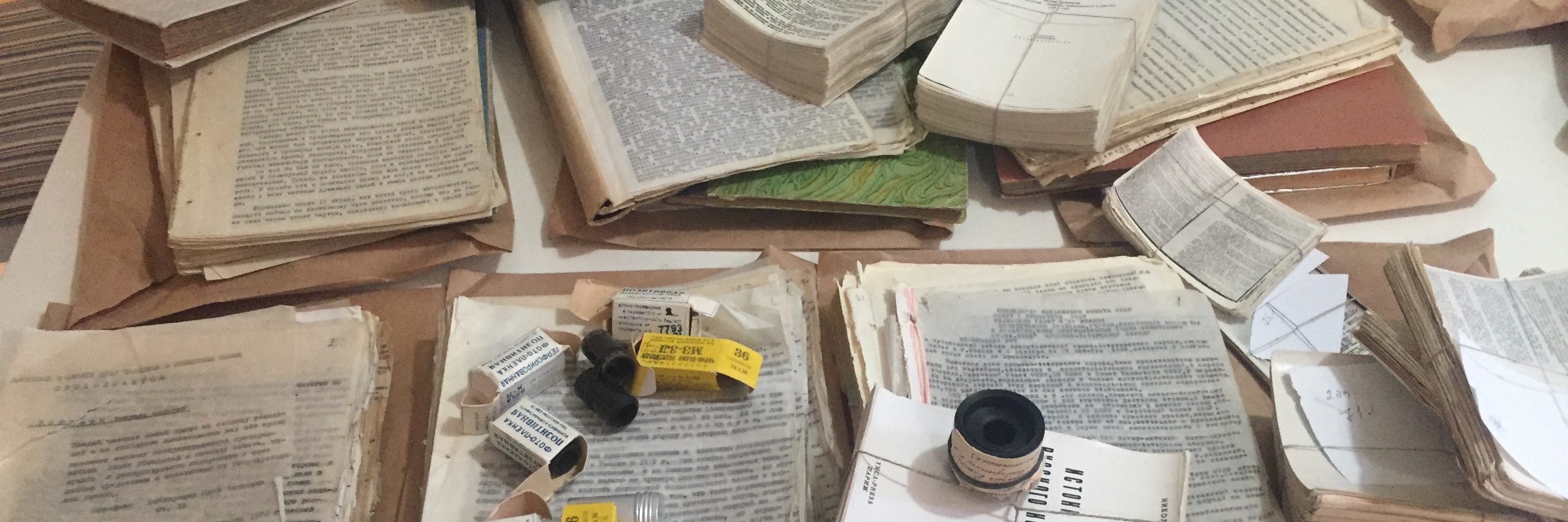
Today’s review gives me special pleasure to feature on Punctured Lines, as Dante Matero was my student several years ago at UCLA. As he discusses below, Putin’s Russia is virulently homophobic, while as he also notes, the U.S. has its own share of highly regressive elements. In a heart-breaking and maddening coincidence, this review is coming out just after Russia has enacted its most far-reaching anti-LGBTQ law and in the aftermath in the U.S. of another mass shooting targeting LGBTQ members. Words cannot prevent homophobic laws or stop bullets. What they can do is offer a space of community and solidarity and to amplify marginalized voices. We at Punctured Lines stand with the LGBTQ communities in our old and new homes and are grateful to Dante for highlighting this unique and necessary collection. To support LGBTQ organizations, you can donate to RusaLGBTQ, which helps former Soviet immigrants in the U.S., and which, because of Russia’s attack on Ukraine, has started a GoFundMe for Ukrainian refugees in the U.S.
Continue reading “Every Story Deserves a Beautiful Happy Ending: A Review of Contemporary Queer Plays by Russian Playwrights, Edited and Translated by Tatiana Klepikova, by Dante Matero”Readings by Authors Born in Ukraine, Russia, and Moldova at San Francisco’s Lit Crawl
Update: there has been a venue change. This event is now happening at Stage Werx Theatre, 446 Valencia Street.
Punctured Lines is co-hosting a Lit Crawl reading by six Bay Area writers born in Ukraine, Russia, and Moldova. Shaken by the horrific tragedy of the Russian invasion of Ukraine, we will read pieces exploring our connections, direct and indirect, to the part of the world we associate with home and exile, and where many of our friends and relatives are suffering as a result of the war. We work in the genres of nonfiction, literary and historical fiction, YA, flash, and other literary forms to tell our stories, and will read excerpts from our published and new work.
This event will take place at 5 pm on October 22nd at Blondie’s Bar Stage Werx Theatre, 446 Valencia Street in San Francisco .

“Writing Fiction Allows Us to Build Bridges”: Ian Ross Singleton and Kristina Gorcheva-Newberry in Conversation
Punctured Lines is happy to host a conversation between Ian Ross Singleton, author of Two Big Differences (M-Graphics Publishing, 2021) and Kristina Gorcheva-Newberry, author of The Orchard (Ballantine Books, 2022). The novels’ synopses are below, and you can listen to the writers read excerpts here. Both of these works feature post-/late Soviet space, Ukraine in Two Big Differences and late Soviet/post-Soviet Russia in The Orchard. To support Ukraine in its fight against Russia, you can donate here and here, as well as to several other organizations doing work on the ground. If in addition you would like to support Russian protesters, you can donate for legal help here.
Continue reading ““Writing Fiction Allows Us to Build Bridges”: Ian Ross Singleton and Kristina Gorcheva-Newberry in Conversation”From Black Panthers to Ukraine’s Orange Revolution and More: A Conversation with the Author of Revolutions of All Colors Dewaine Farria
Revolutions of All Colors (Syracuse UP, 2020) first came to my attention when we were putting together Punctured Lines’ 2021 Books for Review list. The novel’s description indicated that it featured African-American characters and was set, in part, in Ukraine. Intrigued, I looked it up and found myself completely immersed in the multi-generational saga that intertwines locations and histories that I had not previously seen connected.
This novel opens in New Orleans in the 1970s, with Ettie, a young African-American woman who, unsatisfied with what she perceives as her preacher father’s complacence in the face of racial violence, becomes involved with the Black Panther Party. The story details a dramatic incident of police brutality against the Panthers and the long-term repercussions of this violence.
Continue reading “From Black Panthers to Ukraine’s Orange Revolution and More: A Conversation with the Author of Revolutions of All Colors Dewaine Farria”Books for Review, 2022
Punctured Lines is looking for reviews of the following recent and upcoming titles. Reviewers should have some expertise in terms of their chosen work, engaging substantively with its themes, structure, and techniques and using direct citation to back up claims. Each piece we receive for review undergoes a rigorous editing process, and we will provide potential reviewers with the guidelines. If you are interested in reviewing a work not on the list but that fits our overall themes of feminism, LGBT, diaspora, decolonialism, etc., please let us know. Thank you, and we look forward to working with you. Email us at PuncturedLines [at] gmail [dot] com.
We especially welcome reviews of Ukrainian titles.
Continue reading “Books for Review, 2022”To Fairyland: An Excerpt from Yelena Lembersky and Galina Lembersky’s Memoir Like a Drop of Ink in a Downpour
Like a Drop of Ink in a Downpour (Academic Studies Press, 2022) is a rare dual memoir co-written by Yelena Lembersky and her mother Galina. Born and raised in the USSR, following the death of her prominent painter father in 1970, Galina decides to emigrate with her young daughter and aging mother. In anticipation of her departure, Galina quits her job and becomes a refusenik. Yet, once her immigration papers go through, instead of boarding an airplane, she finds herself behind bars of a Leningrad prison on a criminal charge. Her mother has already left for the United States. Her young daughter Yelena–nicknamed Alëna in the book–is left in the care of friends, in danger of finding herself in an orphanage.
The chapter below is narrated by Yelena, eleven years old at the time of these events. We are deeply grateful to the author and publisher for permission to excerpt a chapter from this revealing and touching memoir. To continue reading, please buy the book from Academic Studies Press.
Continue reading “To Fairyland: An Excerpt from Yelena Lembersky and Galina Lembersky’s Memoir Like a Drop of Ink in a Downpour”No One Is Guilty, Everyone Is Guilty: An Interview with Elena Gorokhova, by Sasha Vasilyuk
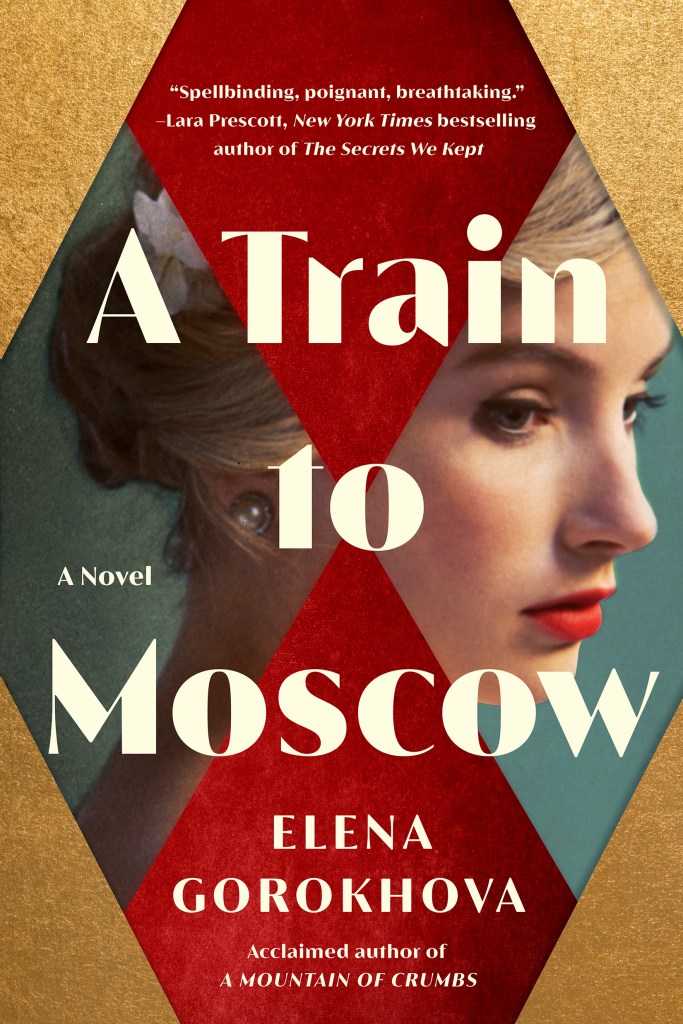
Elena Gorokhova’s A Train to Moscow (Lake Union Publishing) came out earlier this year to praise by J.M. Coetzee, Lara Prescott, and Kate Quinn, among others. Gorokhova was born and raised in Leningrad, Soviet Union, now St. Petersburg, Russia. After graduating from Leningrad State University, she moved to the United States, carrying one suitcase with twenty kilograms of what used to be her life. Elena is the author of two memoirs published by Simon & Schuster: A Mountain of Crumbs (2011) and Russian Tattoo (2015). A Train to Moscow is her first novel. Her work has appeared in The New York Times, The Daily Beast, New Jersey Monthly, and The Daily Telegraph, on NPR and BBC Radio, and in a number of literary magazines. She lives and teaches English as a Second Language in New Jersey.

The Everyday and Invisible Histories of Women: A Review of Oksana Zabuzhko’s Your Ad Could Go Here by Emma Pratt
We at Punctured Lines are grateful to Emma Pratt for her review of Oksana Zabuzhko’s Your Ad Could Go Here (trans. Nina Murray and others). This review was planned before the war broke out and was delayed, among other things, by my inability to focus on much when it did. I am thankful to Emma for her patience with this process and for bringing Zabuzhko’s work to the attention of our readers. Please donate here to support Ukrainian translators and here to support evacuation and relief efforts.
Continue reading “The Everyday and Invisible Histories of Women: A Review of Oksana Zabuzhko’s Your Ad Could Go Here by Emma Pratt”Irina Mashinski’s The Naked World, Three Excerpts
Irina Mashinski’s The Naked World, recently published by MadHat Press after many years in the making, is an impressive achievement in the hybrid genre. The collection combines pieces of original and translated poetry and prose that together illuminate not only the author’s past but also her way of seeing. Thematically, this book centers four generations of a Soviet family from the Stalin era to the 1990s and immigration to the United States. Writer, translator, and editor Irina Mashinski has penned ten books of poetry in Russian, and this is her English-language debut that also includes her Russian-language poems in translation by Maria Bloshteyn, Boris Dralyuk, Angela Livingstone, Tony Brinkley, Alexander Sumerkin, and Daniel Weissbort. Mashinski is co-editor, with Robert Chandler and Boris Dralyuk, of The Penguin Book of Russian Poetry and of the Cardinal Points Journal.
Continue reading “Irina Mashinski’s The Naked World, Three Excerpts”A Motherland of Books: An Essay by Maria Bloshteyn
Taking your beloved books with you into immigration is intimately familiar to those of us who left the Soviet Union. My parents’ двухсоттомник—”200-volume set”—of Russian and world literature, was quite literally my lifeline to the language and culture that I may have otherwise forgotten, and they are still the editions I turn to today. The covers of the volumes are different colors, and some key moments of my life are associated with them, such as the dark green of Gogol’s Мертвые души (Dead Souls) when I started college. Reading Maria Bloshteyn’s essay was genuinely heart-wrenching, because the experience she describes is that of an acute loss of books that mean so much to us, not just for their content, but perhaps even more so because they have made the immigrants’ journey with us and sustained us in our new homes. In the current moment, this poignant essay is framed by the war in Ukraine, where people like us are losing not just their books, but their lives. If you are able to help, please support translators who are struggling due to the war and this initiative to give Ukrainian-language books to refugee children in Poland. Ukraine’s cultural sphere has been badly damaged by Russian forces, and we will continue to look for ways in which those of us in the West can help. Maria recently participated in the Born in the USSR, Raised in Canada event hosted by Punctured Lines, and you can listen to her read from an essay about reacting to the war in Ukraine while in the diaspora.
Continue reading “A Motherland of Books: An Essay by Maria Bloshteyn” Punctured Lines