Alicia J. Rouverol on Olga Zilberbourg’s Like Water and Other Stories (WTAW Press, 2019)

A recent review singing the richly deserved praises of our own Olga Zilberbourg’s debut English-language collection, LIKE WATER AND OTHER STORIES, out now:

“In an era of ‘short shorts’ hailed in by the venerable Lydia Davis—and culminating in ‘the fragmentary’ in the recent Nobel Prize-winning work of Olga Tokarczuk—one wonders if there remains space for a new collection of shorts: stories that up-end expectation and offer distinctive voice and lesser charted areas of exploration. San Francisco-based, Russian émigré writer Olga Zilberbourg, in her first story collection published in English, allays that concern. Zilberbourg is author of three Russian-language story collections; her fiction has been widely published in esteemed US literary journals; and she has won numerous prizes, including the Willesden Herald International Short Story Prize in 2016. A native of Leningrad, raised in St Petersburg, Zilberbourg moved to the US in 2006 to study at the Rochester Institute of Technology, later earning the MA in Comparative Literature at San Francisco State University.”

http://www.themanchesterreview.co.uk/?p=11103

Yelena Furman’s short story “Naming” published in Narrative Magazine

We congratulate our own Yelena Furman on her first ever fiction publication. Her story “Naming” appears in the Fall 2019 issue of Narrative Magazine. It centers an immigrant protagonist — Sofia, Sonia, Sonechka — who moves back to Moscow in 1992 for a job copyediting “one of the many publications springing up in the newly liberalized atmosphere now that the Soviet Union had collapsed.” This is a delightful tale of search for identity, romance, a connection with the place, and, of course, books.

The story is available online after a free registration to the website. If it resonates with you, please leave a comment on the website, write back to us or to the author directly. Publishing short stories can be a lonely business, and the most effective way to support a writer is to comment on the work you love.

From early on, the most significant episodes of my life were bound up with books. I was reading Eugene Onegin when we left the Soviet Union, The Seagull when I lost my virginity, and the Russian realists when I fell in love, a process that spanned several authors. I was in my last year of college, in 1992, when I met Daniel, a graduate student. I caught him looking at me during our first class meeting for a seminar on nineteenth-century Russian fiction. He didn’t look away when I met his stare, which betrayed too much self-confidence on his part yet was oddly intriguing. We didn’t speak, but for the next few weeks I would continually feel his bright-green eyes on me. Daniel’s eyes were his most striking feature; they had the ability to bore into you with an unearthly intensity and leave you feeling as though you’d just been seen through to the inside.

https://www.narrativemagazine.com/issues/fall-2019/fiction/naming-yelena-furman

7 Russian Booker Prize winners and their must-read novels

There has been a lot of talk, including on this blog, about literary prizes, translation, and gender imbalance. The Russian Booker Prize is one of the country’s most prestigious awards. The writers in the title have had their winning novels translated into English, and there is also a list of other winners whose novels haven’t been translated but with links to their translated shorter works. Of the seven writers in the title, three are women: Ludmila Ulitskaya, The Kukotsky Enigma (2001, trans. Diane Nemec Ignashev); Olga Slavnikova, 2017 (2006, trans. Marian Schwartz); and Elena Chizhova,The Time of Women (2009, trans. Simon Patterson and Nina Chordas; my review here). But no prizes for guessing whether this relative gender balance holds true for the Russian Booker overall.

https://www.rbth.com/arts/331193-russian-booker-prize-winners

The NOS(E) Award’s 2019 Longlist

Thank you, as always, to Lisa Hayden of Lizok’s Bookshelf for keeping us all up to date on prize-related announcements. We are happy to share the list here, particularly as it contains her very helpful, and entertaining, descriptions of the nominated works. Less happy is the subject we’ve talked about previously on this blog (and which, in the wake of the Nobel, some of us have debated in a – let’s go with “spirited” – manner on Twitter): of the sixteen titles, only three are by women. While no one in their right mind would suggest that gender should be the sole criterion for anything, really, there is a real issue with Russian literary prizes being overwhelmingly skewed toward male writers (googling the major award winners will confirm this in short order). This is not meant as a slight to any of the men on the list, but it is a question that needs to be asked, over and over, until we arrive at a workable solution: how do we honor good writing whoever the writer may be while at the same time ensure more balanced representation in terms of nominations and winners? Suggestions welcome; perhaps someone can forward them to the Russian prize committees.

http://lizoksbooks.blogspot.com/2019/10/the-nose-awards-2019-longlist.html

A Soviet YA Classic: Aleksandra Brushtein’s Дорога уходит в даль (The Road Goes off into the Distance)

It is hard to overstate just how much Aleksandra Brushtein’s autobiographical novel about Aleksandra (Sasha) Yanovskaya, a young Jewish girl growing up in Vilna at the turn of the century, was beloved by generations of Soviet children. At a time when I have completely forgotten plots of books I read much later, I can still recall various episodes from this one. A copy of the book, which my family took with us when we left the Soviet Union, is one of my prized possessions. My mom loved this book so much she wanted to name me Sasha (an attempt ended by my great-grandmother Aleksandra’s announcement post my birth that Ashkenazi Jews cannot name children after living relatives). A remarkable thing about this novel is that it has a Jewish protagonist and depicts Jewish life but still became so popular in a country as anti-Semitic as the Soviet Union. Its popularity has endured in contemporary Russia, where “since 2005, a new printing of the book by different publishers has appeared almost every two years,” including an annotated edition.

Yet as Liza Rozovsky’s article notes, Brushtein “is barely known outside the Russian-speaking world.” To date, there is no English translation. If there is a translator out there who could take on this project, many in the diaspora would be eternally grateful on behalf of their children and their English-speaking friends’ children. In any case, it’s great to see this book being written about at length and we — and our inner younger selves — are thrilled to highlight it on Punctured Lines.

“The book that is imprinted in my memory as a moral and political compass, and the book I would like my children to know, is a Soviet-era work for children and juveniles titled “The Road Slips Away into the Distance.” It’s an autobiographical trilogy by the Jewish children’s playwright and memoirist Aleksandra Brushtein, who is barely known outside the Russian-speaking world. The first volume of the work was translated into Hebrew in the 1980s, but Brushtein (1884-1968) remains unknown in Israel, too. In the Soviet Union, where it ran through many editions of tens of thousands of copies each, the trilogy achieved cult status.”

The Novel That Introduced Soviet Jews to Their Forgotten History
Yelena Furman on Olga Zilberbourg’s Like Water and Other Stories

“In ‘Rubicon,’ which opens Olga Zilberbourg’s Like Water and Other Stories, the narrator, on her way to pick up her son from preschool, says, ‘spring came on hard and much too early this year, which must be why the dimensions of reality shifted.’ If the story’s realistic beginning gives the impression that this shift is figurative, it soon becomes apparent that reality really does alter: on a street in San Francisco, a young man she knew back in 1990s Russia, who is ‘still seventeen on this day in 2018,’ drives up to hand her a ‘TDK compact cassette, the exact kind he and I used to exchange in high school.'”

http://jordanrussiacenter.org/news/review-olga-zilberbourgs-english-language-debut-like-water-and-other-stories/#.XaItf0ZKiyI  

Yelena Furman on Ksenia Buksha’s “The Freedom Factory”

“A NOVEL ABOUT a Soviet military factory whose workers must eventually adjust to a post-Soviet way of life does not sound like a thrilling read. Yet there’s a very good reason why Ksenia Buksha’s The Freedom Factory (Zavod “Svoboda”) won Russia’s National Bestseller Prize in 2014 (Buksha is only the second of three women to do so since the prize’s founding in 2001) and was also a finalist for the Big Book Award. In the author’s hands, this unpromising raw material is skillfully transformed into a genuinely and unexpectedly compelling narrative.” 

https://lareviewofbooks.org/article/shintity-fug-these-vulstes-on-ksenia-bukshas-the-freedom-factory

Olga Tokarczuk Wins the Nobel Prize

The Nobel winners have been announced and Olga Tokarczuk of Poland has won for 2018 (there was no prize given out last year because the Swedish Academy was mired in a sexual assault scandal; with the announcement of the winner for 2019, it quickly became mired in a genocide denial scandal). Tokarczuk is the author of Flights (trans. Jennifer Croft), which won the Man Booker International Prize in 2018, and Drive Your Plow Over the Bones of the Dead (trans. Antonia Lloyd-Jones; both out from Riverhead Books).

You can read Tokarczuk’s statement about receiving the prize here: https://lithub.com/read-olga-tokarczuks-response-to-winning-the-nobel-prize/

And here is an excerpt from Flights: https://www.asymptotejournal.com/fiction/olga-tokarczuk-flights/

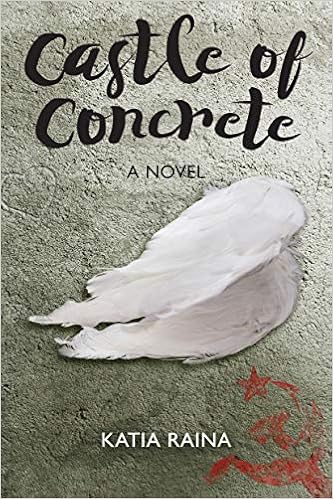
New Book: Katia Raina’s Castle of Concrete

Thanks to Lea Zeltserman and her Soviet Samovar newsletter for the mention of this novel. This is labeled as “Young Adult,” which means might fly under the radar when I look at reviews of contemporary fiction. This also means, it might be a gripping and fast-paced read. The description and preview of the first few pages are certainly promising.

Sonya is a daughter of a “dissident poetess moneyless famous jobless” mother, who had nearly aborted her. Jewish, too–being Jewish in the Soviet Union seems to be a major theme of this book. The novel takes place just before the collapse of the Soviet Union, and emigration looms large. Sounds both familiar and intriguing.

Publisher: Young Europe Books

Agent: Jessica Regel

Russian Samizdat, Children’s Literature, and the Sunset Years of the Soviet Empire

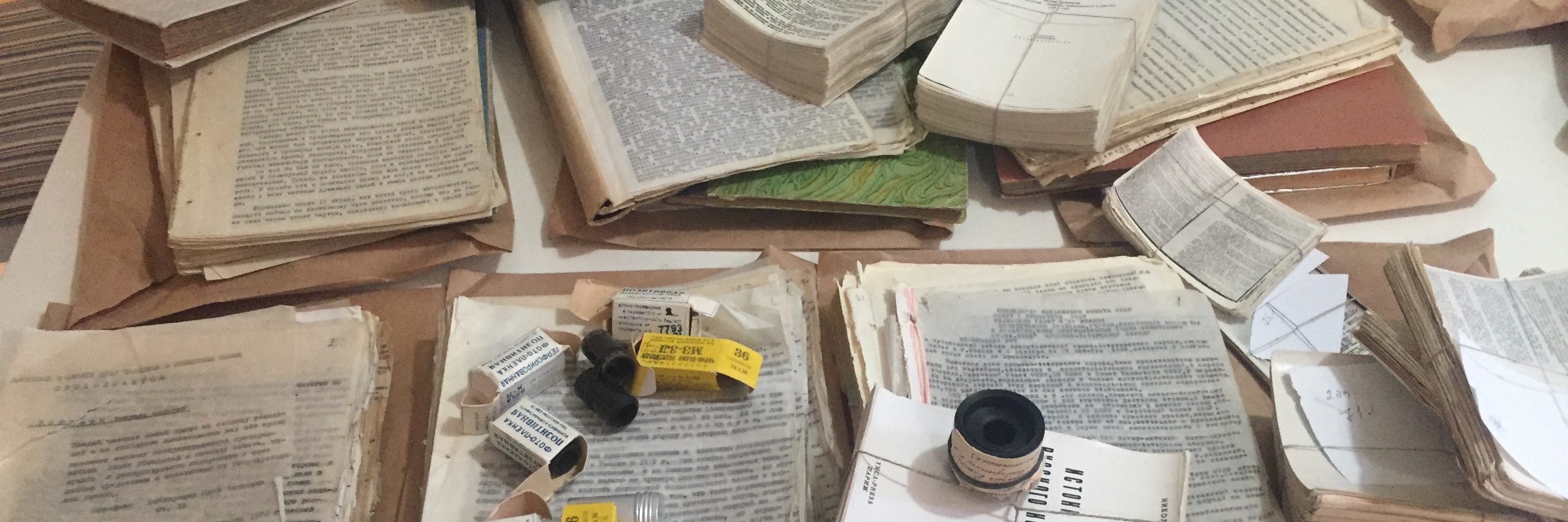
Olga Bukhina wrote a fascinating piece on the C.S. Lewis’s Chronicles of Narnia in the Soviet Union. My parents were regular consumers of Samizdat, but I don’t remember seeing the Narnia books in their hands — perhaps, it’s the overtly Christian message that put them off. My parents weren’t interested in religion or science fiction, but I was, and just a few years later I devoured Lord of the Rings when it was officially published in 1991. (Of course, it’s entirely possible that my parents read it without my knowledge. Parents are apt to do things like that…)

https://childlitassn.wixsite.com/intlcommittee/single-post/2019/09/25/Russian-Samizdat-Children%E2%80%99s-Literature-and-the-Sunset-Years-of-the-Soviet-Empire

Narnia was not just a religious threat; in the Soviet context, it was clearly political. The message of these fairytales turned out to be much more dangerous than particular words and images that could be eliminated by censorship. The words of the faun Mr. Tumnus, “It is winter in Narnia, and has been for ever so long… Always winter and never Christmas; think of that,” in The Lion, the Witch and the Wardrobe (The Chronicles of Narnia. New York: HarperCollins Publisher, 2001, p. 118), resonated to the reader as an image of the Soviet political winter without any hope for change; the change being symbolized by Christmas.