NYC, October 30: Meet Jill! a bimonthly Women+ in Translation reading series

http://www.penandbrush.org/event/jill-reading

We love to see the growing momentum for the conversation about gender in translation. We particularly love to see how creative these initiatives have been.

A New York City group is starting up Jill!, a bimonthly Women+ in Translation reading series that spotlights women or nonbinary translators or translators of women or nonbinary authors (or both!).

The inaugural reading will take place this coming Wednesday, October 30th, at 7 pm. Location: Pen and Brush. 29 East 22nd street, New York, New York 10010.

The readers will be: Charlotte Whittle, reading work by the mid-century Argentinian avant-garde novelist and poet Norah Lange; Hilah Kohen, reading from a narrative poem by contemporary Russian author Lida Yusupova; and Larissa Kyzer, reading an excerpt from the novel A Fist or a Heart by Icelandic poet, playwright, and novelist Kristín Eiríksdóttir.

For more details and full bios, check out announcement on Pen and Brush’s website. RSVP on Facebook.

Russian Literature Podcasts, a roundup

I am a recent convert into the world of podcasts. Once I’d heard a few New Yorker Fiction Podcasts (highly recommend) and the Paris Review podcasts and the Kenyon Review podcasts, among others, I started looking for Russian literature podcasts.

Castbox, the app that I use to listen, turned up very little when I searched for “Russian Literature” in English — well, it turns up audio books from War and Peace to Memoirs of a Revolutionist. Russian-language search connected me with Radio Mayak and Evgeniy Stakhovskiy who, on his podcast Chtenie (I’m transliterating Russian titles for this English-language blog) reads short fiction in Russian. Most often, these are works by foreign authors, from O’Henry to Hu Bo to Herta Müller, in Russian translation. Not exactly what I was looking for, but fascinating nevertheless. I’ve become a dedicated listener and am loving this exposure to world literature through the short form.

Of course, I wanted more and reached out to the Russian Literary Twitter community for their recommendations. Michele Berdy of The Moscow Times sent in this list of podcasts:

  • Арзамас — Radio Arzamas provides a seemingly inexhaustible list of cultural topics, only some of which are directly related to literature. Here’s a link to their intro to literary theory.
  • Полка — Polka is a project by literary critics Yuriy Saprykin, Varvara Babitskaya, Lev Oborin, and Polina Ryzhova and defines itself as a podcast about the way literature is connected to life, in its everyday challenges and existential dilemmas. I’m yet to listen, and look forward to it.
  • Ковен дур — Coven dur — starting from the title, this podcast seems to be very much of the contemporary, millennial approach to literature. It’s a podcast by four female authors, Kozinaki, Spashchenko, Stepanova, and Ptiseva who work in the mode of “literary standup.” I haven’t tuned in yet, but am very excited to check it out.
  • Чтение — Chtenie (see my note above).
  • Читатель — Chitatel. This podcast is hosted by Bookmate, an ebook reading app with a subscription service. The host, Pavel Grozny, invites guests from different walks of life (often book industry related) to talk about the books that have changed them. I have listened to a few episodes and have enjoyed them a great deal. This podcast gives me a glimpse into a whole different Russia (Moscow?) that feels open and connected to the global marketplace of ideas and trends. I particularly enjoyed Grozny’s conversation with Sasha Shchadrina, who started a No Kidding feminist reading group and writing seminars Write Like A Grrrl Russia. So inspiring!
  • (Apparently, there was also a Чтец — Chtets podcast, by Radio Mayak, that featured a colloquial reading situation, a host reading a story to a friend in the recording studio. It looks like they no longer record regular episodes. I’ve listened to a few and found them engaging.) (In Russian, chtenie means to read, chitatel is the person who reads, and chets is the same thing except usually it means the person who reads out loud in public settings.)

I’m sure this list is not exhaustive. If you know more Russian lit podcasts, send them my way, and I’ll follow up on this post soon. BTW, anyone wants to start a contemporary post-Soviet lit podcast in English? There seems to be an opportunity out there!

Lara Vapnyar’s Essay: On Being a Cool Parent

*Post updated to include a second excerpt from Vapnyar’s Divide Me by Zero.

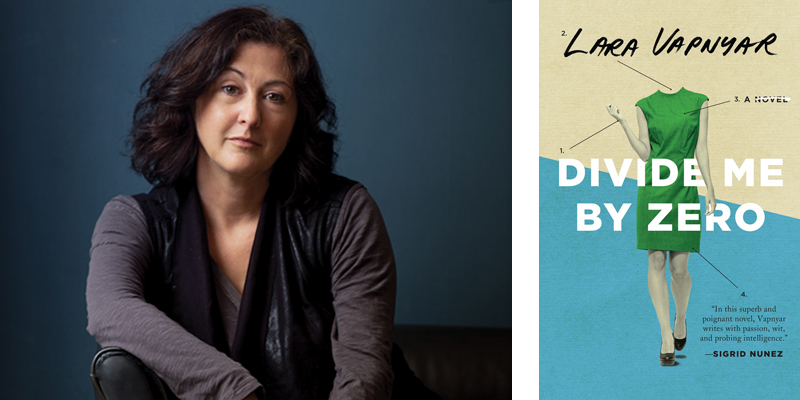
In a Facebook post, Lara Vapnyar mentioned that she adapted this touching, lyrical essay into a chapter in her new book, Divide Me by Zero. Read the piece and use Powells.com to order the novel.

Shortly after my mother died, the kids and I established the routine of taking long beach walks about an hour before sundown. We lived on Staten Island then, the long beautiful stretch of Great Kills beach was only seven minutes away by car. My husband and I had separated just a few months before my mother’s death, and all three of us were still reeling from these two blows. David was almost 18 then, Stephanie had just turned 15; I would look at our shadows and see that they were about the same lengths. We looked like three orphaned siblings rather than a mother and her kids.

https://www.powells.com/post/original-essays/on-being-a-cool-parent

An excerpt from a different chapter of Vapnyar’s Divide Me by Zero appears in Lit Hub:

One week before my mother died, I went to a Russian food store on Staten Island to buy caviar. I was brought up in the Soviet Union, where caviar was considered a special food reserved for children and dying parents. I never thought of it as extravagant or a romantic delicacy. My mother would offer me some before important tests in school, because it was chock-full of phosphorus that supposedly stimulated brain cells. I remember eating caviar before school, at seven am, still in my pajamas, shivering from the morning cold, seated in the untidy kitchen of our Moscow apartment, yawning and dangling my legs, bumping my knees against the boards of our folding table, holding that piece of bread spread with a thin layer of butter and thinner layer of caviar.

https://lithub.com/divide-me-by-zero/

On a personal note, this observation about caviar did hold up in my family, in part. When my grandmother was dying, my mother fed her caviar sandwiches. (Before the tests, though, I got a chocolate bar.) I’ve never seen this detail about caviar captured in prose before–it resonates so deeply.

National Book Award Finalist: Julia Phillips

A debut novel by Julia Phillips, Disappearing Earth, set on the Kamchatka peninsula, was recently selected as a finalist for a major US book award. It’s one of the five books from which a panel of judges will pick a winner, to be announced at a ceremony on November 20.

Fun fact: the largest active volcano in the Northern Hemisphere, Klyuchevskaya Sopka, is located on Kamchatka. (Apparently, there are 29 active volcanoes there altogether.)

USSR’s Impact on the lives of Muslim Women in Central Asia

Here’s a fascinating study about the role that the Soviet Union played in the lives of Muslim women from Central Asia. This was filed by Özge Öz Döm, a scholar at Yildirim Beyazit University in Anakara, Turkey. Her thesis is that “even though the Soviet officials had a genuine intention for the emancipation of Central Asian women from the patriarchal structure both in the public and private spheres of life, the policies and their implementation were shaped in accordance with the basic motive of regime survival. In the first years of the Soviet regime, mostly ideological intentions shaped the women’s emancipation project. However, in time, the Soviet officials needed to make more reforms in the political, economic and socio-cultural areas not just for the ideological aims such as emancipation of the women, but also for the survival of the Soviet Union.”

Muslim Women in Central Asia

In fiction, I have seen this conflict reflected most directly in Guzel Yakhina’s novel, Zuleikha, recently translated to English by Lisa Hayden. This history also provides useful context for Akram Aylisli‘s work, in particular his trilogy from the 1960s, People and Trees (I read this book in Russian under the title Люди и деревья).

The researcher makes a point in this paper that seems relevant for Punctured Lines: “The studies about women in the Soviet and post-Soviet eras are mostly concerned with the European parts of the Soviet Union, and neglect the Muslim women under Soviet rule. Therefore, the first problem related to the literature regarding Central Asian women is that there are insufficient numbers of studies regarding this area; and the second problem is that the Western scholars studying this subject sometimes fail to understand the meaning of Islamic based customs and traditions to Central Asian women as well as men. So, this study also attempts to make a contribution to gender studies literature regarding Central Asian women “

2019 Warwick Prize in Translation, Long List

We congratulate Lisa Hayden, whose translation of Guzel Yakhina’s novel Zuleikha has been included among thirteen books longlisted for the third annual award of the Warwick Prize for Women in Translation. We love this book and we are delighted with this news.

Read the full announcement here.

The list of longlisted titles, in alphabetical order, is as follows:

· Brother In Ice by Alicia Kopf, translated from Catalan by Mara Faye Lethem (And Other Stories, 2018)

· Convenience Store Woman by Sayaka Murata, translated from Japanese by Ginny Tapley Takemori (Granta, 2018)

· Disoriental by Négar Djavadi, translated from French by Tina Kover (Europa Editions, 2018)

· Drive Your Plow Over the Bones of the Dead by Olga Tocarczuk, translated from Polish by Antonia Lloyd-Jones (Fitzcarraldo Editions, 2018)

· Katalin Street by Magda Szabó, translated from Hungarian by Len Rix (Maclehose Press, 2019)

· Negative of a Dual Photograph by Azita Ghahremann, translated from Farsi by Maura Dooley with Elhum Shakerifar (Bloodaxe, 2018)

· People in the Room by Norah Lange, translated from Spanish by Charlotte Whittle (And Other Stories, 2018)

· Picnic in the Storm by Yukiko Motoya, translated from Japanese by Asa Yoneda (Little, Brown Book Group (Corsair), 2018)

· Season of the Shadow by Léonora Miano, translated from French by Gila Walker (Seagull Books, 2018)

· Shadows on the Tundra by Dalia Grinkevičiūtė, translated from Lithuanian by Delija Valiukenas (Peirene, 2018)

· The Years by Annie Ernaux, translated from French by Alison L. Strayer (Fitzcarraldo Editions, 2018)

· Thick of It by Ulrike Almut Sandig, translated from German by Karen Leeder (Seagull Books, 2018)

· Zuleikha by Guzel Yakhina, translated from Russian by Lisa C. Hayden (Oneworld, 2019)

Zhivago’s great passion inspires plagiarism row | News | The Sunday Times

Here’s a bit of upsetting news. The Sunday Times (paywall) reports that Anna Pasternak, the author of Lara, a biography of Olga Ivinskaya, has accused Lara Prescott of plagiarism. Lara Prescott is the author of the recently published novel The Secrets We Kept that in fictional form follows the story of Olga Ivinskaya. Lara Prescott’s publisher is standing by her, and we will follow the story of the legal complaint as it develops, but I feel that the situation is unfortunate on many levels.

The story of Olga Ivinskaya, who was Boris Pasternak’s partner at the end of his life and through the writing of Doctor Zhivago, continues to fascinate writers and readers of Pasternak’s novel, in particular, for its parallels to that of Lara, the character of Pasternak’s novel. Olga Ivinskaya has told her story herself, in her memoir A Captive of Time that was translated to English by Max Hayward and published by HarperCollins in 1979, and there have been a number of retellings since then (not all of them translated to English).

Penguin Random House pointed out that the story of Olga Ivinskaya has been the subject of multiple books before Anna Pasternak’s, including Ivinskaya’s 1978 autobiography, a book by her daughter Irina Emelyanova, and Peter Finn and Petra Couvee’s 2014 book The Zhivago Affair.

https://www.theguardian.com/books/2019/oct/01/lara-prescott-doctor-zhivago-boris-pasternak-plagiarism-penguin-random-house

One of the reasons I find the legal complaint unfortunate is because it carries on the notes of scandal and sensationalism, associated with Doctor Zhivago from the beginning. I fear that the book and the nuance of the stories of the women behind it get lost in the fray.

On the other hand, given this interest to her story, I do hope that Olga Ivinskaya’s book might see a new English-language edition. And, perhaps, an enterprising English-language writer will take up Zinaida Pasternak’s story. If we’re writing the story of the affair, Zinaida’s side of it is no less captivating than Olga’s.

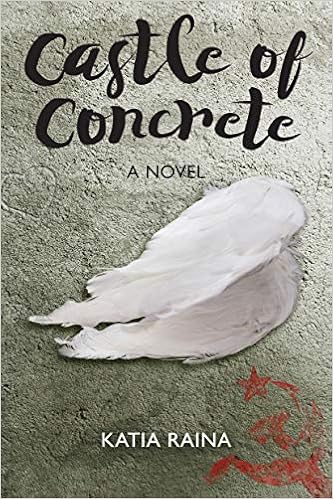
New Book: Katia Raina’s Castle of Concrete

Thanks to Lea Zeltserman and her Soviet Samovar newsletter for the mention of this novel. This is labeled as “Young Adult,” which means might fly under the radar when I look at reviews of contemporary fiction. This also means, it might be a gripping and fast-paced read. The description and preview of the first few pages are certainly promising.

Sonya is a daughter of a “dissident poetess moneyless famous jobless” mother, who had nearly aborted her. Jewish, too–being Jewish in the Soviet Union seems to be a major theme of this book. The novel takes place just before the collapse of the Soviet Union, and emigration looms large. Sounds both familiar and intriguing.

Publisher: Young Europe Books

Agent: Jessica Regel

Yuri Tynianov’s Permanent Evolution

Translators and scholars Ainsley Morse and Phillip Redko are bringing out a new volume of Yuri Tynianov’s work. Permanent Evolution contains his essays on literature, theory and film, many of which are translated here for the first time. Daria Khitrova of Harvard University penned the intro.

Publisher’s intro: “Yuri Tynianov was a key figure of Russian Formalism, an intellectual movement in early 20th century Russia that also included Viktor Shklovsky and Roman Jakobson. Tynianov developed a groundbreaking conceptualization of literature as a system within—and in constant interaction with—other cultural and social systems. His essays on Russian literary classics, like Pushkin’s Eugene Onegin and works by Dostoevsky and Gogol, as well as on the emerging art form of filmmaking, provide insight into the ways art and literature evolve and adapt new forms of expression. Although Tynianov was first a scholar of Russian literature, his ideas transcend the boundaries of any one genre or national tradition. Permanent Evolution gathers together for the first time Tynianov’s seminal articles on literary theory and film, including several articles never before translated into English.”

Russian Samizdat, Children’s Literature, and the Sunset Years of the Soviet Empire

Olga Bukhina wrote a fascinating piece on the C.S. Lewis’s Chronicles of Narnia in the Soviet Union. My parents were regular consumers of Samizdat, but I don’t remember seeing the Narnia books in their hands — perhaps, it’s the overtly Christian message that put them off. My parents weren’t interested in religion or science fiction, but I was, and just a few years later I devoured Lord of the Rings when it was officially published in 1991. (Of course, it’s entirely possible that my parents read it without my knowledge. Parents are apt to do things like that…)

https://childlitassn.wixsite.com/intlcommittee/single-post/2019/09/25/Russian-Samizdat-Children%E2%80%99s-Literature-and-the-Sunset-Years-of-the-Soviet-Empire

Narnia was not just a religious threat; in the Soviet context, it was clearly political. The message of these fairytales turned out to be much more dangerous than particular words and images that could be eliminated by censorship. The words of the faun Mr. Tumnus, “It is winter in Narnia, and has been for ever so long… Always winter and never Christmas; think of that,” in The Lion, the Witch and the Wardrobe (The Chronicles of Narnia. New York: HarperCollins Publisher, 2001, p. 118), resonated to the reader as an image of the Soviet political winter without any hope for change; the change being symbolized by Christmas.