Today we welcome Masha Rumer and Lea Zeltserman back to Punctured Lines. They have both done Q&As with us previously (here and here), and each has participated in one of two different readings we organized by FSU immigrant writers (the recordings are here and here). We are extremely grateful to them for generating both the thought-provoking questions and answers in this exchange. This piece was a long time in the making, as all of us dealt, in various combinations, with the pandemic, the war, cross-country moves, and personal upheavals. We are thrilled to feature their wide-ranging and poignant conversation about immigration, writing, food, and more.
The Soviet-Jewish Experience in North America: A Conversation Between Masha Rumer and Lea Zeltserman
What are your most recent writing project(s) and how did it/they come about? What’s been the most interesting and also the most challenging aspect?
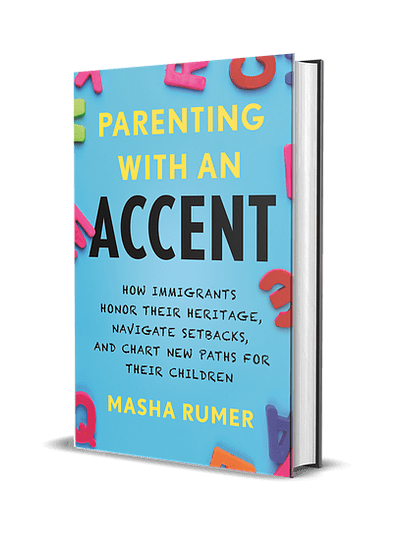
Masha Rumer: I recently wrote a nonfiction book, Parenting with an Accent, published by Beacon Press in 2021 and released in paperback in October, 2022 with a few updates. It’s a blend of memoir and research. I describe my experiences of immigration and early parenthood, such as trying to teach my kids the family language, making sense of my multicultural identity, awkward interactions as a new arrival and a new parent and so on. I also dove into academic research and interviewed immigrants from all over the world, as well as practicing psychologists, language acquisition specialists, and sociologists. The resulting book is something I wish I’d had as a new parent: it’s informative but non-dogmatic and conversational and (I’m told) funny. It took four years to complete, part-time at first and then after signing with my publisher in 2019, I left my day job (without telling my immigrant parents about it, of course) and worked on it full-time. I’ve always been fascinated by the immigrant experience, even before having kids. It’s been at the forefront of my reading choices, writing, and even interactions with my foreign-born students. So the book is a culmination of years of planning, in a way.
While working on this book, I found common threads across cultures and immigrant generations and gained more empathy than ever before. I also got to tackle family traumas common for many people from the former USSR. The roster includes Holodomor, World War II, the Holocaust, the Gulag, antisemitism, and the infamous Soviet kindergarten. Yikes, that’s a long list. Needless to say, it was not easy to revisit those family stories, some of which I wasn’t even aware of.
As for challenges, I had to push the manuscript deadline because of COVID lockdowns: I homeschooled my children during the day and wrote nights and weekends. I also canceled travel plans in 2020 to complete a couple of remaining interviews and ended up pulling together a few local socially distanced interviews instead. I also do not recommend launching a book at the height of a pandemic. (Watch this brilliant video about an indoor book tour. It features an author in pajamas singing in her apartment. And a cat. There’s probably a sourdough starter somewhere, too.)
Even though writing is a solitary activity and the pandemic has made it even more isolating, I found a tremendous amount of support on social media while completing the manuscript. I connected with some amazing interview sources and got to interact with strangers—some of whom ended up becoming friends—about translation, historical facts, and the writing process. And to ruminate about Soviet chocolates and the versatility of canned fish when you can’t buy much else in stores.
Lea Zeltserman: At the moment, I’m working on some personal essays related to my grandparents’ lives, exploring themes around food and hunger, and what’s knowable and not about previous generations (and inherited traumas). I’ve also been working on a children’s story about the 1970s-era immigration, which I recently picked up again. The children’s book grew out of the realization that there isn’t much available for kids that explains this period in our family life and in Jewish history more broadly. When it comes to Jewish immigration stories, we’re still largely stuck on the early 1900s, Lower East Side of New York tropes. Which was a major and significant moment, of course, but it’s not the entirety of our story, and it doesn’t speak to my kids and many kids I grew up around. I should mention I also publish a monthly newsletter, The Soviet Samovar, which is a mix of my own writing and a round-up of writing on Soviet/Russian/Ukrainian-Jewish topics.
As for challenges, there have been plenty. For me, it’s mostly about time. I have kids, and a day job (though we moved last year, so I’m job-hunting, which gives me a little more flexibility). The pandemic had been an ongoing challenge, since I worked in hospital communications, which meant that peak pandemic intensity tended to coincide with school closures. That really slowed down my ability to dedicate time to my writing. A familiar story for many people these past few years, I think. And then I’d say simply having too many ideas that I want to follow at any given time. I often need to push myself to focus on just one or two at a time, and find ways to grab hold of other ideas, but “park them” somewhere outside my head without forgetting them. It makes for a lot of noise in my head, which, again, makes it harder to focus.
What was it like for you to immigrate to North America from the former Soviet Union?
Masha Rumer: I came to the United States as a teen refugee with my family. We flew directly from Russia to northern California with a stopover in Alaska, where I gaped at the expensive cheeseburgers in the airport cafeteria and at the water faucets with touch sensors. It took some time to get used to the new life. After arriving, I learned English by translating song lyrics from The Beatles and reading the thesaurus dictionary. Plus lots of ESL classes. Not the best ways to get in with the popular kids in high school.
Lea, you came as a young child to Canada. What was it like for you?
Lea Zeltserman: I came here as a toddler, actually, so I don’t have direct immigration memories. We flew from Leningrad to Vienna, and then a couple weeks later, to Rome, where we lived for six months while awaiting our Canadian visas. Growing up, most of this was nothing more than a talking point—something I was told, but didn’t feel. Instead, I think it seeped out in the ways I was raised, and all the ways I thought my family was weird, without fully understanding that it was because we were immigrants with some intense family history of trauma. I have some distinct memories of things like asking my parents how to say “ресторан” in English (spoiler: it’s pretty much the same word) when I was six. But often it was more subtle, like the lack of tooth fairy visits, which I internalized as “why can’t my parents be normal?” without realizing that the tooth fairy simply didn’t exist in their child-rearing playbook.
Masha, when I read your book, I found myself relating to you and your interviewees both as a parent myself, but also as a child of those parents. It was an odd feeling. I imagine you must have experienced a bit of that yourself while writing the book.
Masha Rumer: For sure. Sometimes I identify with the children of immigrants and at other times with the parents, just like you describe. Bring on the double culture shock. As to the tooth fairy, I still don’t get the pricing structure for teeth in America (that’s the immigrant parent in me talking).
What role does food play in your immigrant experience and writing? How does the cuisine of your upbringing shape your identity as well as family meals?
Masha Rumer: Food plays a huge role in my immigrant experience. It’s practically a love language. I mean, the second chapter of my book is titled “The Beet Test” and talks about the starring role the Soviet Herring Under a Fur Coat salad played in my personal life. Beets were among the first foods my kids ate as babies and they’re fans of borscht and buckwheat. I also started celebrating Jewish holidays that my family had been unable to do for generations, due to antisemitism and religious repression. So home-baked challah is a part of many Friday nights for Shabbat. I’m also trying to recreate old Ukrainian-Jewish recipes from my grandmothers, like stuffed chicken necks, admittedly, not everyone’s favorite.
Lea, I’m a longtime fan of your newsletter, The Soviet Samovar, and of the way you center the Soviet-Jewish experience, including food. It doesn’t always enjoy the same level of inclusivity as, say, the North American Ashkenazi identity. How did you start writing about food and its context?
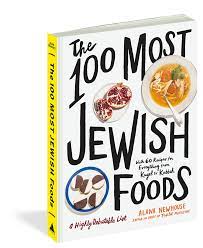
Lea Zeltserman: I stumbled into the food side of Soviet-Jewish identity somewhat accidentally. At the time, I was already writing about the ways in which North American Jewry didn’t understand, and was often dismissive of, Soviet-Jewish culture and identity. And that led into writing about food in Tablet, in response to a piece they’d done on 100 Jewish Foods. To be fair, they were wonderfully open about my response and I ended up writing an essay for their book on the same topic. From there, it really spiraled. I was raised in a very food-centered family, where “What’s for dinner?” is more of an event than a task, so it was a very natural area to explore.
Masha Rumer: I own The 100 Most Jewish Foods and it’s such a great book! I loved your essay about the secrets of Soviet cuisine that’s featured in the book. It really captures the Soviet—and Jewish-Soviet—culinary experience, its history and the overlap between “Soviet” and “Jewish.”
Lea Zeltserman: Thank you, that’s really so gratifying to hear. One of the things I find satisfying about food writing is that it’s so relatable to people across the Soviet-Jewish world. Food was such a major part of life in the USSR—because of, or despite, the shortages and other issues around it—and that’s something that was carried across the ocean to our lives here.
And as a parent, food is such an easy way to help my kids connect to that part of their heritage. It’s something tangible we can all share, and most of the Russian words they know are food names. It’s every cliché in the book, but that’s because it’s true. Ironically, for my kids, the Russian grocery store that we used to shop at in Toronto (we recently moved west to Edmonton) became a source of magical wish fulfillment, which is about as far from the Soviet food experience as you can get. But that same abundance that exists in the Russian stores here exists across our culture, and so I find that my biggest challenge is ensuring I keep feeding them the buckwheat, the shchi, the pelmeni, because it’s so easy to opt for sushi or pizza or tacos instead. It’s a conscious choice that I have to keep making, while also ensuring they’re exposed to food from other cultures, too.
Now that you’re bringing up bicultural kids, what’s the one thing about Soviet-era parenting that took you a while to understand and accept? And about Western parenting?
Masha Rumer: The notion of shame, or позор, is something I do not practice. Soviet-style parenting was very authoritarian, particularly after the devastation of World War II, Stalin’s repressions, constant food shortages, and untreated PTSD. Many of us grew up with “This is all the food we’ve got, so quit whining and eat up” or if your kid cries on the subway, that means you’re a crappy parent. Oh, and don’t get me started on the topic of spanking and corporal punishment, which is abusive and wrong.
When it comes to American parenting, on the other hand, I struggle with how isolated parents, especially new ones, are in our culture. We need more community support and safety nets, like affordable childcare, healthcare, and humane parental leave policies. I imagine the Canadian experience is more positive in that regard!
Lea Zeltserman: I’ll refrain from bragging about Canadian parental leave policies, but certainly, it makes for a far more humane and less isolating first year (and now up to 18 months, after changes in our parental leave policies). But I very much agree with you about the downsides of Soviet-era parenting. It’s a very harsh, very shame-based and authoritarian, approach towards children. Now that I’m a parent too, and having lived the first 13 years of parenting in a city far from any family support, I can see more of how the trauma and isolation of immigrating was layered onto those old Soviet parenting styles. Our parents were raised in a repressive regime by a traumatized generation, and then ended up completely alone, giving up everyone they knew and loved (permanently, in the case of my family and others who left in the 1970s). They had no safety net, no reprieve, no one but themselves. Of course, as a child you don’t understand that, and what you see is that your friends’ parents are, well, I’ll just say, different, towards their children. It doesn’t make it ok, but it does provide some context.
One thing I think is true in both Canada and the U.S., is that we’re awash in information, and yet—or maybe because of it—we’re so uncertain of our parenting. We question everything, we tend to over-research and over-think, and still, no matter what we do, there’s someone to tell you that you’re doing it wrong and will damage your child for life. I found it very debilitating, and it was hard to function sometimes, especially with my first child. We’re a very scoldy culture, and as a result, we’ve become very uncertain of ourselves as parents. And that’s something I don’t think existed for our parents’ generation (both Soviet and Western), however wrong many of their parenting methods were. I’d like to think we’ll find a middle ground at some point.
We talk so often about our confusing identity, often laughing at the time involved in explaining what we mean when we call ourselves Soviet Jews, or sometimes Russian Jews. With the war in Ukraine, this has taken on even more complexity (now we’re all Ukrainian Jews!). How has the situation affected the way you think about your identity, and how you talk about it in public? Or how you talk to your kids about their heritage/roots?
Masha Rumer: This is a hard one to talk about. Russia’s invasion of Ukraine is shameful and inexcusable. I was born in Leningrad, in Russia that was a part of the USSR, and, like for so many of us, my roots are from Ukraine, as are my family members and friends. Ukrainian heritage has always been a part of family history, cuisine, and even a particular style of jokes. Yet in the Soviet Union, we weren’t seen as Russian or Ukrainian or Belarussian, but as Jews. It even said so in our passports on that formidable line #5.
The war has had a tremendous impact on my relatives in Ukraine, who had to evacuate, and on my Russian family, who were punished for protesting. There are so many people in Russia who oppose the war and speak out against the regime, and they did so long before 2022. In spite of their protests, it’s by far not the first time the Russian military drove tanks through sovereign nations and claimed them as its own. I talk about the war with my children, as well as about Stalin and the Gulag. Last summer, my daughter made friendship bracelets to raise money for a relief organization helping Ukraine. I continue to teach my kids Russian, realizing many immigrant parents are grappling with language transmission because of the war’s devastating impact. A Soviet-born immigrant I interviewed for an article said it best: “It’s like losing your home, again.”
Lea Zeltserman: Like you, I think this one is so difficult. To clarify, it’s really not, on so many levels—it’s Russia’s appalling attack on Ukrainian sovereignty and innocent people, full stop. I’ve written about this before. Bombs dropping on children is a pretty clear line between right and wrong. In other ways though, it’s become more complicated. Selfishly, it’s upended a lot of the “stability” I’d finally started to feel around the Soviet-Jewish identity, where the explanations around who we were and where we were from had become something of a wry joke. I was also born in Leningrad, and raised to think of myself as more Russian-Jewish than Ukrainian-Jewish (which also has to do with where various parts of my family were from). For my family, the horrors of the Holocaust and the Ukrainian involvement in that is a stain that will never go away. It’s colored a lot of my underlying feelings towards the country and Ukrainian nationalism. So I hesitate to call myself Ukrainian, or even partially Ukrainian. It doesn’t feel like me—and I resent the need to re-label myself just because there’s a maniac in charge. We’re also fortunate in that nearly all our family has left both countries, so I feel less personally affected; though always with the specter of “but for a few visa stamps, I could have still been there.” But it’s also resurfaced a lot of my childhood fears about what I’ll call, for simplicity, The Kremlin—that it’s, at best, a sleeping giant, which can awaken to varying levels of horror at any time. To me, nothing about that part of the world will ever be innocent or safe. There are just temporary reprieves.
And in many ways, nothing has changed, in that, much of my relationship(s) with current and past Soviet spaces is about the people. Most of whom, in my circles, are still the same decent people they were beforehand. So I focus on that and the ways we connect, and that keeps me grounded and keeps me going.
We immigrated to countries that have many similarities and also many differences. How do you think being a Canadian, or an American, has impacted your sense of Soviet-Jewish identity? Any comments on differences you’ve noticed in encounters with Soviet-Jewish immigrants from the other country (i.e., Canada vs. U.S.)?
Masha Rumer: The Soviet-Jewish experience is markedly different from the American-Jewish experience. Antisemitism was very real, starting in childhood. On top of that, we weren’t allowed to practice our traditions openly, so many families abandoned the Yiddish language, holiday celebrations, and rituals. We have a strong ethnic and cultural identification and a shared collective trauma; we could even be “outed” as Jews based on our looks in the old country. Nonetheless, many Soviet Jews grew up eating ham, changing their names to Slavic ones, and putting up a New Year’s tree in December (it has nothing to do with Jesus!). This comes as a shock to the American-born Jewish population, especially those who used to advocate for Jewish dissidents in the USSR. When we started arriving in America, we looked nothing like Tevye the Milkman, and we didn’t always feel comfortable sharing stories of suffering at American seders.
At the same time, it’s great to see that many immigrants in the U.S. looking for a connection to their roots, something their parents and grandparents were unable to do.
Lea Zeltserman: What you describe holds true in Canada, as well. I’d also add that there was often surprise—and confusion—that, generally as a group, we were highly educated, because, despite quotas and other numerous barriers, Soviet Jews pushed hard on education as it was one of the few routes to a slightly “freer” life. I think people expected the tropes of plucky immigrants working in the factories or peddling on the streets (immigrants from the shtetl, I should add).
A major difference in Canada is that we have a far smaller Jewish population overall. Unless you ended up in a major center (really, just Toronto and Montreal), people moved to communities with small Jewish populations, and even fewer Soviet Jews. For us, it meant that, while my family maintained Soviet-Jewish friendships, there wasn’t a sufficiently large community that we could stick to Russian-speaking circles. There weren’t any Russian stores, Russian-Jewish community centers, restaurants and banquet halls, and so forth. I realize that areas like Brighton Beach are very unique to that particular part of New York, but nonetheless, bigger centers with bigger communities tend to support stronger connections to a heritage community, and I’ve noticed that Soviet Jews who immigrated to most Canadian cities were forced to integrate in a different way than people I know who came to New York or Toronto.
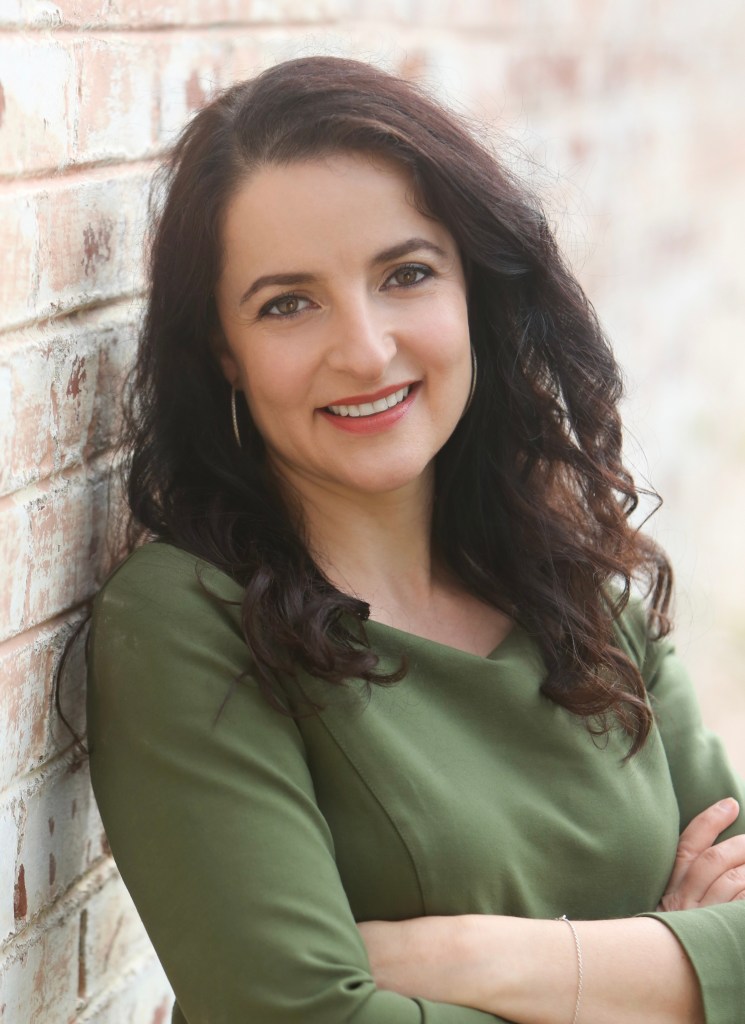
Masha Rumer is the author of a nonfiction book, Parenting with an Accent: How Immigrants Honor Their Heritage, Navigate Setbacks, and Chart New Paths For Their Children, published by Beacon Press in 2021 (hardcover) and 2022 (paperback). Masha is a former adjunct English instructor and journalist, whose writing has appeared in The New York Times, The Washington Post, Los Angeles Times, Parents, and other publications, winning awards from the New York Press Association. She was born in Leningrad and now lives in California with her family and a hamster. She can be found online at masharumer.com, on Instagram at @masha545, and on Twitter at @mashaDC.
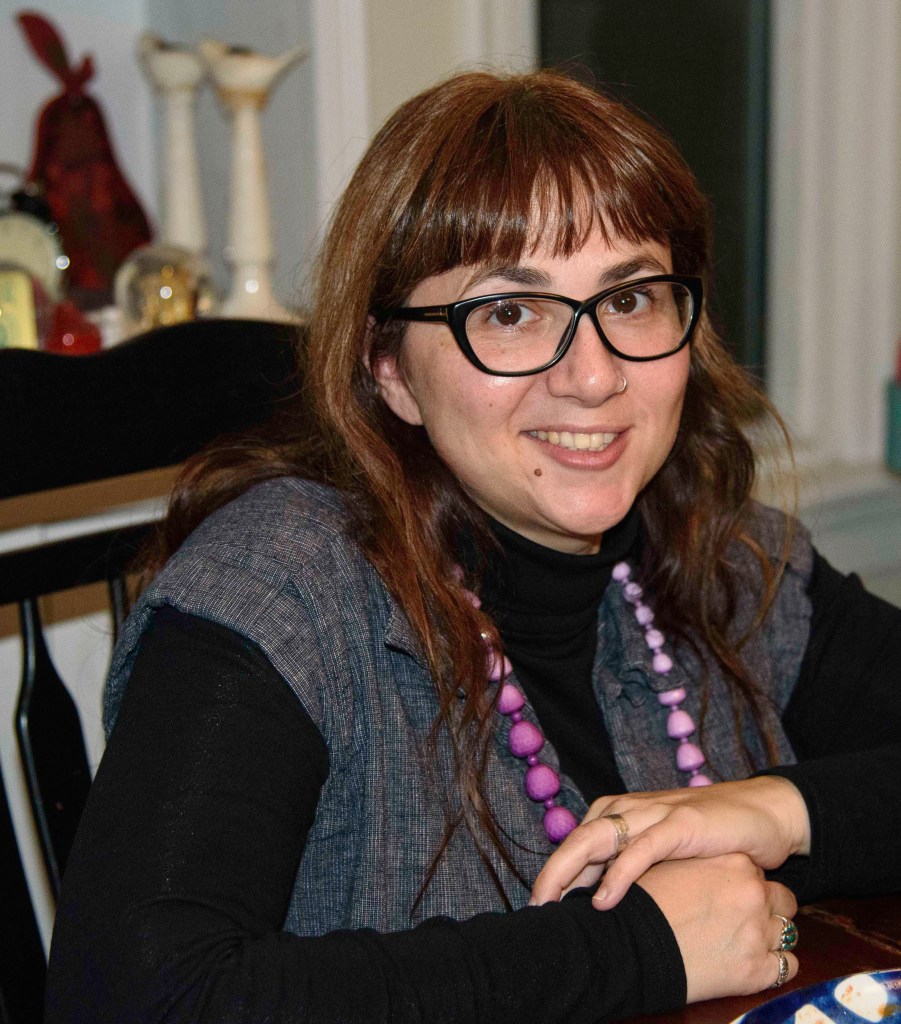
Born in St. Petersburg back when it was Leningrad, Lea Zeltserman was raised in Edmonton, Canada, where she recently moved back after nearly two decades in Toronto. She’s a writer, speaker, cultural observer, and sometime recipe developer, on all things Soviet-Russian and Jewish, focusing particularly on immigration, food, and history. Her work has appeared in the Globe and Mail, Tablet, the Forward, Chatelaine, Today’s Parent, Walrus, Saveur, and others. An essay on Soviet-Jewish food was included in the 100 Jewish Foods anthology from Tablet Magazine. She also publishes The Soviet Samovar, a round-up of FSU writing and literature. Find her online at https://leazeltserman.com.

 Punctured Lines