We are grateful to Herb Randall and Irina Mashinski for bringing us this interview about poetry, translation, music, and more. Both of them have appeared on Punctured Lines previously. An excerpt from Irina Mashinski’s hybrid poetry and prose collection The Naked World can be found here (while Herb Randall’s review of it in the Los Angeles Review of Books is here). At Punctured Lines, Herb Randall has contributed a personal essay about visiting Kharkiv and looking for traces of an English woman who moved there during Stalin’s reign and a review of Sana Krasikov’s The Patriots, about an American Jewish woman who also moves to Stalin’s Soviet Union (a clearly misguided endeavor from any country). We are very happy to have them back with the following in-depth discussion.
Poems Betwixt Paths: Herb Randall in Conversation with Irina Mashinski
2022 was a busy year for the American-by-way-of-Moscow poet Irina Mashinski. With not just one but two collections published last year, and in a first for her work, in English, Mashinski is gathering accolades from across the publishing world. Reviewers and readers have been impressed by her effortless, evocative blending of prose and poetry. While these are often experienced as two distinct realms, Mashinski’s inherent sense of place, of words as her guide through any landscape, familiar or threatening, brings a stark beauty to her vivid reflections on journeys from one life to another, and beyond.
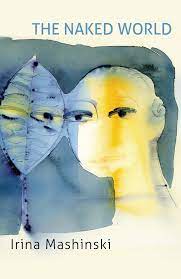
The Naked World (MadHat Press) is a geography of memory and longing for freedom, rooted in profound observations of nature and landscape. Mashinski beautifully muses on the nature of language and how the poet, like an innocent child, inherently recognizes the essence of things and instinctively feels that the labels we employ to describe them can exist in their own right: a rake and a fork are fundamentally the same thing, yet only the child and the poet will entertain stashing the garden tool in the cutlery drawer alongside the spoons.
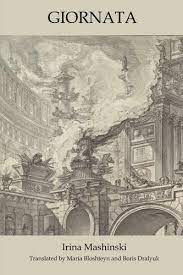
That wide-eyed, poetic sense of wonder, while rooted in landscapes real and metaphorical, continues effortlessly in her second English collection, Giornata (Červená Barva Press). These lines from “Ophelia” evoke the playfulness of a dreamy summer, a flash of creation more than pastoral yearning:
I wove July with you – I wove and sang,
parting the silt like arras.
A longing for the ephemeral past, which is made eternal through art, reaches an apotheosis in the remarkable title poem “Giornata” and its metaphor of what can be created in the fleeting time allotted to us:
You are born a master only once.
Life flies onward, laughing, dry flakes falling –
paintwork on the sun-warmed frame is sloughing,
while the plaster of the day’s prepped fresco
takes on the celestial forest grove.
As the painter’s race against the day’s drying plaster stretches into its final moments, so our lives flit by, illuminated by the memories and relationships we brush across our own circumscribed canvasses.
In our wide-ranging conversation, Irina reflects on the elusiveness of landscape, how art can thread a path through real and metaphysical in-between spaces, and how poetry might help us bridge this dangerous moment the world finds itself in, as headlines of war and looming environmental catastrophe overwhelm us every day.
Herb Randall: How would you explain the difference between your two recent books in English, with the newest, Giornata, containing many of the poems that were previously published in the earlier The Naked World?
Irina Mashinski: The most obvious distinction is that Giornata has three authors: my two dear friends and collaborators, translators Maria Bloshteyn and Boris Dralyuk, and myself; The Naked World, on the other hand, compiles texts in prose and poetry written – or rewritten – by me in English, as well as texts translated by several translators (among those, Maria primarily). I’d also say (although it sounds a bit too heightened) that, while The Naked World deals with the space that’s being acquired, Giornata depicts a world that had been lost and that now “gains a foothold” and matures through the constant effort of a focused resilient creation. Even though some texts in the two books overlap, in Giornata they are a part of a different textual landscape, a different flow – just like the same minerals behave differently in two different rocks. Shadows, flashes of sunlight, even borders all come together in a slightly different pattern in each of the two books.
Herb Randall: Both books have a strong sense of structure, particularly The Naked World, which follows a sort of literary symphonic plan. My understanding of your process with The Naked World is that you had some poems written in Russian, but then began to write the prose pieces that accompany them as “dialogues” with them. At what point in your creative process did you decide that your book was like a symphony and should be arranged as such?
Irina Mashinski: This is a very interesting question, but I am not sure I have an answer to it. You’re right, there must have been a point in time when I realized it, albeit if only subconsciously. At first, I noticed some shadows, some patterns, akin to ones you’d find on some old-fashioned wallpaper – and those seams between the wall paper rolls, too – where the pattern inevitably shifts a bit. Moreover, there is a pattern of that very shifting, a second-order pattern, so to speak. And a day came when I saw some persistent, seemingly secondary themes and motifs of this book as rays of sun – or rays of a night trolleybus. They glide over these patterns, over those seams, too. Finally, at some point I realized that each part ended with a meditative prose piece that was slightly “off” with respect to the chapter it concluded, and so were the musical epigraphs: they too glided over the text. I am not a musician, but I think you are absolutely right: all these multi-order patterns resemble, perhaps, the way a symphony matures and grows.
Herb Randall: In Giornata, you reflect on the nature of poetry itself:
Poetry fills up drums canisters garbage cans
lakes bogs artificial reservoirs
ponds up ponds
landslides down slopes
dragging hamlets behind it
from the russet loins
of a volcano
splashes out onto a plateau
…
the word wants to fill itself
and yet it cannot
like a trick glass double-walled
all the way up its throat
This juxtaposition of the banal or unseemly (garbage cans, cheap plastic trick cups) with images of the natural world, all overflowing with a violent outpouring of words, reminds me of the music of Gustav Mahler. There, a bucolic melody carried aloft by a solo flute might suddenly crash unexpectedly into a raucous military march or violent outburst from a bass drum and then back again. Do you think that contemporary readers are able to comprehend these sudden pivots in tone and imagery or, like Mahler’s symphony audiences at the turn of the twentieth century, will be bewildered by such twists and turns?
Irina Mashinski: Well, I think that today’s audience – in all arts – is, in fact, much more used to “twists and turns” than to some relatively predictable, smooth, “logical” development. I didn’t do it on purpose, of course. I just followed the current all the way down to the ocean, without thinking about changes in its course or in its acoustics. Conversely, everything haphazard, angular has become such a cliché in all arts that one has to be careful so as not to fall into this predictable unpredictability, not to contribute to the wasteland of empty words, not to become part of the violent outpouring current of hollow meanings – after all, this the subject, if you will, of this poem. There seems to be a rather strange connection between this river of emptiness and the military sound we now hear so clearly – a connection that is not easy to explain, but one that is easy to sense. I wrote this poem about la poesie a few years ago, quite some time before the war, as I did the one titled “St. Petersburg Military March” (both were translated by Maria Bloshteyn). Both poems, as I see now, express a foreboding of what was yet to come: that very dystopian emptiness of words and of the destroyed and abandoned human realm. In the former poem, la poesie, however exuberant, is unable to fill the glass of meaning (or the hour glass of meaning, if you will). Poetry tries to fill that transparent glass with thick walls, but invariably fails.
Herb Randall: How did the experience of writing prose for these two books differ for you from writing the poems?
Irina Mashinski: I think the result must look very different, but the muscles, so to speak, that are used are the same. Some of the “prose” pieces were quite old – I hesitate to call them “prose poetry,” but that would probably be the closest term. In The Naked World, they are polygraphically different from the other prose bits, the ones I wrote directly in English and specifically for this book, in 2020 (including those end-of chapter “meditations” I mentioned before).
Herb Randall: The art of creative translation makes both books sing. The poems were written in your native Russian language and translated (masterfully by Boris Dralyuk, Maria Bloshteyn, yourself, and others) into English. Looking at the poems now in print, do you feel the English versions are new creations rather than translations? Could you imagine retranslating them back again from English into Russian and how might they then compare to the originals?
Irina Mashinski: I’ve been extremely fortunate to have these brilliant collaborators on my side. Their sensitivity to chimes and echoes, to various levels and facets of meaning, and to minute changes in tone and rhythm is remarkable. Angela Livingstone (whose translation of Tsvetaeva’s “Ratcatcher” is a true masterpiece), Tony Brinkley, the late Dennis Weissbort and Alexander Sumerkin, and, of course, Boris Dralyuk and Maria Bloshteyn. Sumerkin, who was – and still remains – a New York legend in his own right, a figure of Diaghilev’s caliber in the artistic émigré community of the 1970s-2000s, Joseph Brodsky’s literary secretary and translator of a number of Brodsky’s essays, was my dear friend. He played a crucial role in my life, more than once. And it was he who helped me rewrite in English an already existing poem of mine – for the first time in my life. Quite fittingly, that poem was titled “Double Exposure” and presented a meditation of the blurred, juxtaposed images of New York and Moscow, their subways and their bridges. I remember us sitting on the steps of the fire escape stairwell of that huge gloomy New York building, at the southern tip of Manhattan, 17 Battery Place, where we both worked as translators, playing with that poem (and a few others Sasha liked). And I remember well how some “twists and turns” of the new version would prompt me to go back to the Russian original and tweak something there. These goings back happened again and again, with other translated texts, especially with the old and solidified ones, ones with which I had already lost any connection: those Russian texts would suddenly acquire plasticity and even melt again, ready to be forged anew. For example, it transpired during my collaboration with Danny Weissbort (“Newspapers on the Plateau”), and many, many times in my work with Boris Dralyuk and Maria Bloshteyn. Self-translating and co-translating is always rethinking – after all, maybe this is what makes this process so intriguing. Through the lens offered by another language you see some exciting possibilities in the original, see them more clearly – and even begin to “understand” your own text a bit better.
Herb Randall: Your author biography mentions education in paleoclimatology and studies of the theory of landscape. Detailed, sensitive observation of the world around you permeates your writing, culminating in the affecting metaphor of poetry as your “right-of-way” through landscapes both familiar and strange. How do you think your background in the study of the natural world prepared you for writing? What is your personal theory of landscape?
Irina Mashinski: When I think about those quite mesmerizing strips of land, those “right-of-ways,” I think of them as of nobody’s land, the realm in between rather than as my own “right” to be there. If anything, any trespassing – on many a level – is exciting. This word even made it into my variation of the famous Avar epic elegy, Gamzatov’s “Cranes”:
On flies the wedge, trespassing every border.
But those nameless, free, no one’s stretches, often as if from a different planet, especially at sunset – they strangely and a bit painfully attract me.
This whole landscape theme is of course, more complex. To me, the geographical “landscape,” the natural system, is different from what we call “пейзаж” (the French paysage), which in Russian is more than just a painting or a drawing – it is a visual entity, both real and elusive. In fact, I wrote a big essay about it, “The Cave and the Horizon” – it is the title essay in the yet unpublished Russian book whose publication was halted by the war. The essay was brilliantly translated into English by Maria Bloshteyn and will appear in Arkansas International.
In short, a “landscape” (or paysage, the view) is free of memory, free of events. It sways before our eyes, like an image in a foggy Chinese painting. It’s endlessly, mysteriously elusive. One can’t step into it: the beholder is invariably outside. Conversely, a natural system of endlessly interconnected elements we call “landscape,” the terrain (which of course includes waters) is a physical realm of constant change and an accumulation of what has already transpired. In my essay I compare it to an invisible glove stretched over the forms of geological memory. The wrinkles of mountains and waters are the result of everything that has happened to it up to that point; every fold tells the tale of the unstoppable movement of the depths of the Earth and of air. And we don’t even need to enter it – we are already in it, and this feeling and fleeting moments of what we perceive (rather foolishly, but happily) as “understanding” are invaluable for anyone who creates, composes, and grows any new seedlings in any art – say, poems.
Herb Randall: You employ classical music’s development of themes, the composer’s variation of them to revise and expound upon their deeper meanings, while using the techniques of film montage to blend and reflect your motifs across the boundaries of prose and poems. You’ve spoken to me earlier about wanting to be a filmmaker when in school. In that road not taken, what sorts of films do you imagine you would make?
Irina Mashinski: This is a great question but I am afraid I don’t and can’t have an answer – it is only when one is already inside the workshop, inside the craft, when one is actively doing it, that one can attempt an answer. I only know what films I wouldn’t make: a) the kind that I cherish – because they have already been made, and b) the (many) kinds I don’t care for.
Film and poetry are very closely related. For one, both are based on memory and rhythm. Memory and rhythm rely on multiplicity, on variations. With every reading, we, the readers, change, and so does the text. Just like we change in any erotic act, our bodies are new in each one – a new melody, a new poem, a new film.
Herb Randall: In one evocative sequence of prose, “Scarlet,” you recall “one of the few communal joys that transcended” all societal boundaries, the winter television viewing of the Soviet hit series Shtirlitz, “the brilliant and unnaturally handsome Soviet spy in Nazi Germany, the fountainhead of the countless Shtirlitz jokes.” In the poem “Mercury” on the following page, you muse on another aspect of the glamorous world of spies who “meet in London (which almost looks like London)…quick silver — Soviet spy — they’ll never get him.” It’s one of the few pop culture references in these two books, which are otherwise suffused with observations of the natural world. Growing up in a society that emphasized the collective, was your experience of nature something that you felt was a secret that belonged only to you?
Irina Mashinski: I probably didn’t even think of it as “nature.” It was a world without a name, a protective, sheltering realm. It was very private, not intentionally, of course — it just wouldn’t occur to me to share with anyone this very vague perception, a feeling rather than a thought, in all its intimacy. It wasn’t until much later, and especially when I started university and the study of the landscape (the system of nature) that I realized it as such, in all its beauty and complexity. But this protective, intimate aspect remains, and its signals are even getting stronger with time.
Herb Randall: With both references to specific works and the structure of classical music being such a strong component of your words, it seems natural to read them aloud and to hear them spoken. Are there any plans to record an audiobook version of either book? And how have you found the experience of reading passages to different audiences during promotional events during the past year?
Irina Mashinski: This is such an interesting a question, but frankly, I haven’t thought about it. I do think that the acoustics are very important, at least to me, even when it is silent – even more so when it is silent, because it allows for multiple sound interpretations in one’s head.
I am intrigued by Kierkegaard’s understanding of this point (punctum, pointe, Punkt) where the voice and the written text meet. It was reflected even in his use of punctuation: in the attempt to preserve the natural melody of a phrase, he deliberately used fewer commas than conventional grammar would call for (and he would give specific instructions to the printers) and would insist that listening rather than seeing is the key “organ” of reading. He quoted John the Baptist: “I am the voice.” According to Kierkegaard, voice travels as a rhythmic wave over the text, moving, replacing, and erasing punctuation. And the most interesting detail: he came up with this idea (not a metaphor) of a gramophone needle that scratches a line on the vinyl record and creates the place where voice and writing connect. In a way, to utter, to listen, and to write down words are all the same function, which he called punctum, pointe, Punkt. Without it, the text which is speedread by eyes disappears. And yes, I (rather foolishly) enjoy reading aloud!
Herb Randall: In your writing, you reference Russian poets and writers that played a big part in your life and influenced your work, particularly Pasternak. With Russia’s war on Ukraine over a year old and with no sign of peace, we’ve seen an understandable shift across the world away from Russian cultural expressions and towards the works of Ukrainian and other peoples that were repressed by Russian imperialism. In academia, there is much discussion now of “decolonizing” Russian studies — and Russian society in general. What do you think the famous, historic Russian writers can offer us today as a way forward past the current moment? Are they part of the problem, as some assert?
Irina Mashinski: Of course, the famous 19th-century Russian writers were products of their times, with all the usual biases, prejudices, and aberrations, including imperial preconceptions. But I must confess that I have always detested the whole business of Russian “spiritual greatness” – as I do all this Tolstoy-Dostoyevsky-Great-Russian-Literature talk, and as I do any implicit all-inclusive “greatness,” for that matter, anywhere in the world. I admire Lev Tolstoy as a writer, and a number of his works are a big part of my life, while I don’t like Dostoyevsky (though I understand his importance) – but the question is not one of preferences or even of literature per se. What I mean is that I have never understood the adoration of the “great Russians” on the part of the West, and I have always, since my adolescence in the USSR, found Russian self-aggrandizing rather grotesque. But today, it is more visibly grotesque than ever. Mass killings and torture and rape – so much for the mysterious Russian soul (yes, “soul” is one of those words that lose their meaning first). I’ve never understood this unhealthy urge to be great. Imperial ardor, old or new, is nauseating, and claims of cultural greatness go along with all that, in partnership with the treacherously easy word “spiritual,” which has become so hollow and commercial. The notion of hard-to-understand, elusive Russian spirituality, of Russia’s special greatness is at the very core of the invasion. It explains why it was so easy to sell this stupid and sinister plan, so catastrophic for the entire world, to 140 million people.
Herb Randall: Are there contemporary Russian writers, especially those available in English translation, who you feel grapple with the necessary societal changes that must occur in Russia for a lasting peace with their neighbors and the world at large?
Irina Mashinski: I don’t read much fiction, haven’t had for a long time, but one of them is Maxim Osipov, who is also an activist and a doctor (excellent translations by Boris Dralyuk are available (here and here. -PL). As it happens, doctors (think about Chekhov, for example) are more sensitive just because they stand so close to the boundary separating humane and inhumane. And they are, for some reason (I haven’t thought about it so off the top of my head I can’t say why), often more creative it terms of form. I think I am going to read Linor Goralik’s new novel. But I must add that both writers have left Russia. Goralik is the publisher and editor-in-chief of the Israel-based, internationally edited multilingual online magazine, ROAR, Russian Oppositional Arts Review.
Herb Randall: Now as an American who happens to write in both English and Russian, what past or contemporary English language poets do you appreciate most?
Irina Mashinski: G. M. Hopkins, George Herbert, Elizabeth Bishop (who brought me to Herbert), E. A. Robinson. Kenneth Rexroth (as a translator). Among the contemporary poets, I am really interested in those who explore form and experiment with it: Boris Dralyuk, whose debut collection My Hollywood is remarkable, A. E. Stallings, Austin Allen, and Ange Mlinko. I must have forgotten a few names, I am sure.
Herb Randall: What book are you reading now? And what books are you especially looking forward to reading in 2023?
Irina Mashinski: I usually read a few books at the same time – and reread one or two, most often, Nabokov or Pushkin’s prose. However, for the past two years, I’ve been completely immersed in something quite new to me: I’ve been translating Elizabeth Bishop and thinking about her. I am always wary of such statements, but I guess I can say now that I am finishing a book. Your question makes me realize that a large part of my reading all this time has been invariably connected, directly or tangentially, to her work. I somehow hadn’t noticed this obvious fact before!
Of course, there is always something outside of that immediate realm. For instance, at the moment, I am reading Waysun Liao’s book on the ancient Chinese texts, the so called T’ai Chi Classics (reading it very, very slowly even by my standards), and an excellent little book on Pessoa, by Hubert D. Jennings (a biography and anthology). As to what comes next: I don’t know. It’s an adventure, isn’t it?
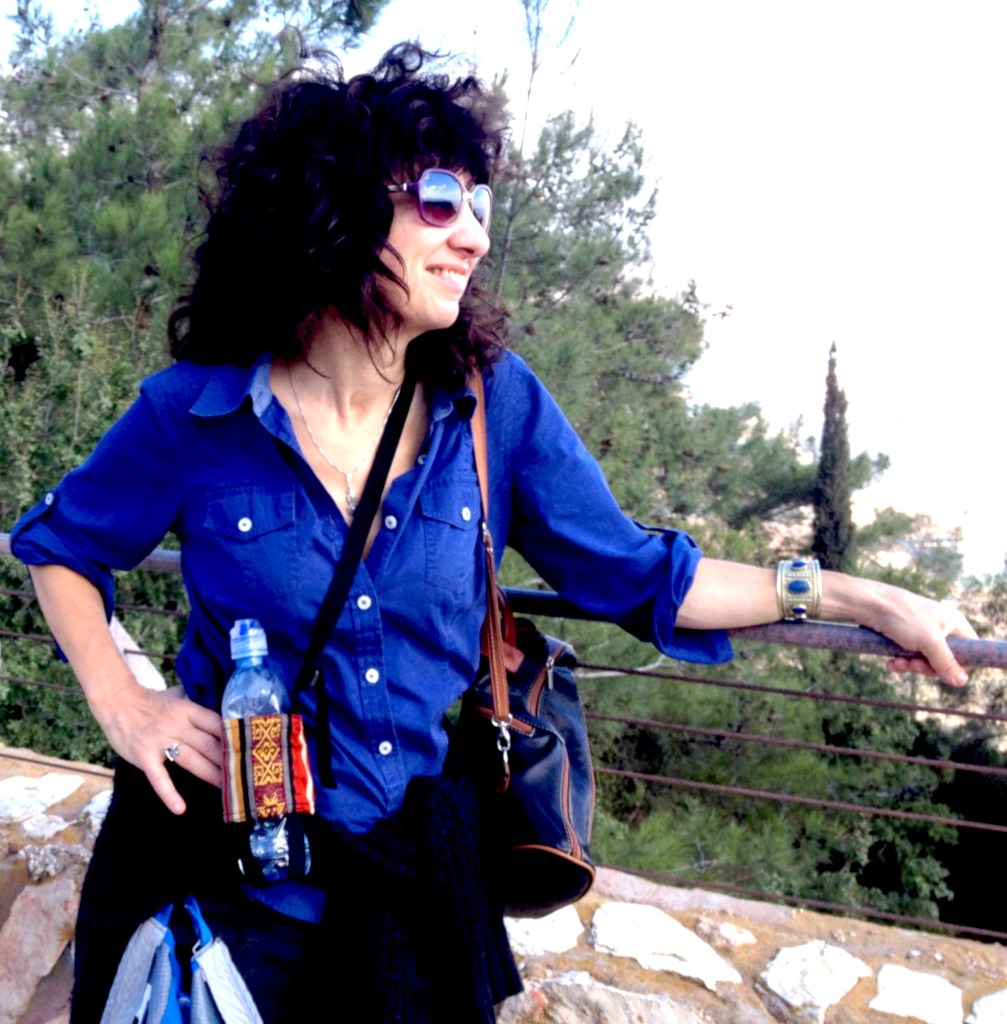
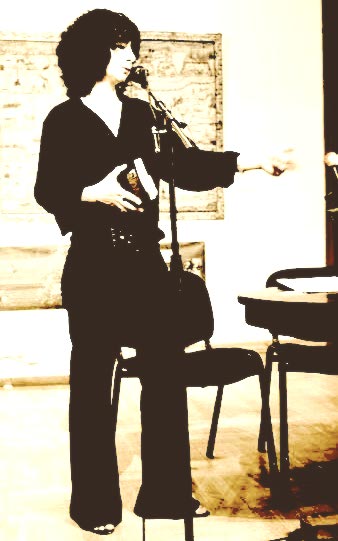
Irina Mashinski was born in Moscow. She graduated from Moscow University, where she completed her Ph.D. (Paleogeography and the Theory of Landscape). In 1991, she emigrated to the US, where she taught high school mathematics as well as history and meteorology at several universities. She is the author of The Naked World (MadHat Press, 2022) and Giornata (Červená Barva Press, 2022) and of eleven books of poetry and essays in Russian. She is co-editor, with Robert Chandler and Boris Dralyuk, of The Penguin Book of Russian Poetry (Penguin Classics, 2015). Her work has been translated into several languages and has appeared in Poetry International, World Literature Today, Asymptote, and elsewhere. A poem from Giornata has been nominated for the Pushcart Prize (2023).

Herb Randall‘s writing has been featured in the Los Angeles Review of Books, Apofenie, Punctured Lines, The Jerusalem Post, On the Seawall, and most recently at StatORec. Herb lives in the mountains of northern New Hampshire.

 Punctured Lines
This interview between Herb Randall and Irina Mashinski is a delightful dive into the world of poetry, translation, and more. It’s wonderful to see them back on Punctured Lines, where their previous contributions have been thought-provoking and engaging. Mashinski’s hybrid poetry and prose collection, “The Naked World,” is an absolute gem, and Randall’s review of it in the Los Angeles Review of Books is a must-read. Their in-depth conversation promises to be another enlightening addition to this platform
LikeLiked by 1 person
Thank you so much for reading and for your kind words.
LikeLike