Queering Peripheries: Lara Vapnyar’s “Lydia’s Grove”: Soviet-Born: The Afterlives of Migration in Jewish American Fiction by Karolina Krasuska

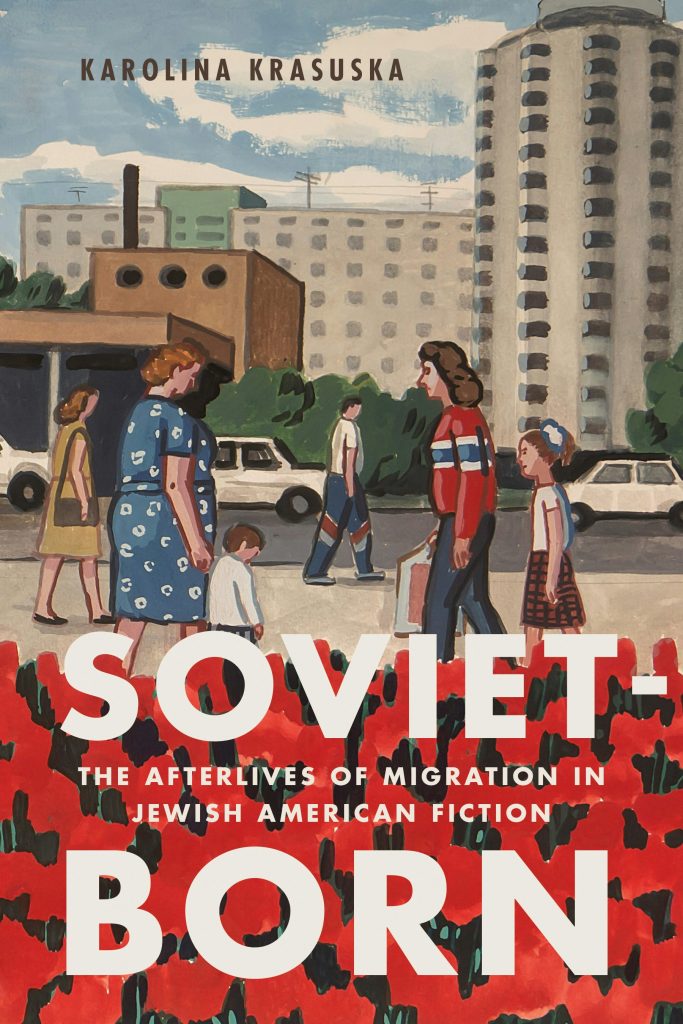
Today we are featuring an excerpt from Soviet-Born: The Afterlives of Migration in Jewish American Fiction (Rutgers UP, 2024) by Karolina Krasuska, associate professor at the American Studies Center and co-founder of the Gender and Sexuality MA Program at the University of Warsaw, Poland. Starting in the early 2000s, Jewish immigrant writers from the former Soviet Union have appeared on the US literary scene in increasing numbers. While Gary Shteyngart, who can give lessons in self-promotion, is the most well known, the list comprises more women, including Lara Vapnyar (a Q&A with whom we have featured on this blog), Anya Ulinich, Irina Reyn, and Ellen Litman, to name only a few. As their books continued to be published, academics began to take note, organizing conference panels and writing on the subject (I am happy to have contributed to this field of study from its inception). The first and foundational monograph was Adrian Wanner’s Out of Russia: Fictions of a New Translingual Diaspora (Northwestern UP, 2011), which discussed the global phenomenon of ex-Soviet immigrant writers in the various countries to which they immigrated. Krasuska’s is the first academic volume specifically devoted to ex-Soviet Jews living and writing in the US, where the largest number of such immigrants resides.

Continue reading “Queering Peripheries: Lara Vapnyar’s “Lydia’s Grove”: Soviet-Born: The Afterlives of Migration in Jewish American Fiction by Karolina Krasuska”
Video from Born in the USSR: Diaspora Writers Against War

Thanks to those of you who could attend our event, Born in the USSR: Diaspora Writers Against War, hosted by the Wende Museum on March 28. We loved having you as our audience and hope to continue the conversations in various ways.

Thank you for donating to Ukraine Trust Chain. Ukraine needs all of our support. Please continue to spread the word and donate here: https://www.ukrainetrustchain.org/

The video from our event is now online:

Continue reading “Video from Born in the USSR: Diaspora Writers Against War”

Born in the USSR: Diaspora Writers Against War

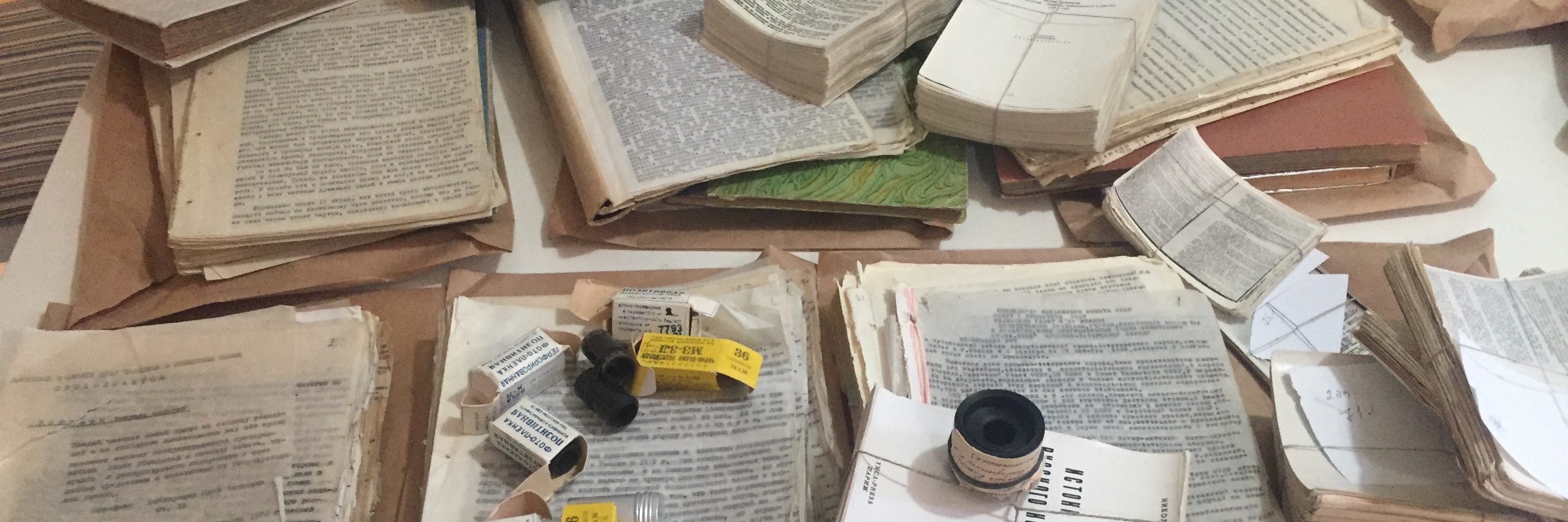
This one of a kind reading brings together Soviet-born writers as they weave together an intricate story of identity, memory, cultural intersections, immigration, and war. From fiction to poetry, memoir and journalism, and work in translation, the reading presents a deep dive into the individual and collective experiences of the Soviet-born diaspora in the U.S. This free event includes a fundraiser in support of humanitarian aid in Ukraine and aligns with The Wende Museum’s current exhibition “Undercurrents II: Archives and the Making of Soviet Jewish Identity.” Autographed books will be on sale, courtesy of Village Well.

Hosted by The Wende Museum, readers include poets, writers, and translators: Katya Apekina, Yelena Furman, Kristina Gorcheva-Newberry, Julia Kolchinsky, Arina Kole, Maria Kuznetsova, Olga Livshin, Ruth Madievsky, Ainsley Morse, Luisa Muradyan, Jane Muschenetz, Asya Partan, Irina Reyn, Diana Ruzova, Timmy Straw, Vlada Teper, Sasha Vasilyuk, and Olga Zilberbourg.

Continue reading “Born in the USSR: Diaspora Writers Against War”

Poems Betwixt Paths: Herb Randall in Conversation with Irina Mashinski

We are grateful to Herb Randall and Irina Mashinski for bringing us this interview about poetry, translation, music, and more. Both of them have appeared on Punctured Lines previously. An excerpt from Irina Mashinski’s hybrid poetry and prose collection The Naked World can be found here (while Herb Randall’s review of it in the Los Angeles Review of Books is here). At Punctured Lines, Herb Randall has contributed a personal essay about visiting Kharkiv and looking for traces of an English woman who moved there during Stalin’s reign and a review of Sana Krasikov’s The Patriots, about an American Jewish woman who also moves to Stalin’s Soviet Union (a clearly misguided endeavor from any country). We are very happy to have them back with the following in-depth discussion.

Continue reading “Poems Betwixt Paths: Herb Randall in Conversation with Irina Mashinski”

“Writing Fiction Allows Us to Build Bridges”: Ian Ross Singleton and Kristina Gorcheva-Newberry in Conversation

Punctured Lines is happy to host a conversation between Ian Ross Singleton, author of Two Big Differences (M-Graphics Publishing, 2021) and Kristina Gorcheva-Newberry, author of The Orchard (Ballantine Books, 2022). The novels’ synopses are below, and you can listen to the writers read excerpts here. Both of these works feature post-/late Soviet space, Ukraine in Two Big Differences and late Soviet/post-Soviet Russia in The Orchard. To support Ukraine in its fight against Russia, you can donate here and here, as well as to several other organizations doing work on the ground. If in addition you would like to support Russian protesters, you can donate for legal help here.

Continue reading ““Writing Fiction Allows Us to Build Bridges”: Ian Ross Singleton and Kristina Gorcheva-Newberry in Conversation”

To Fairyland: An Excerpt from Yelena Lembersky and Galina Lembersky’s Memoir Like a Drop of Ink in a Downpour

Like a Drop of Ink in a Downpour (Academic Studies Press, 2022) is a rare dual memoir co-written by Yelena Lembersky and her mother Galina. Born and raised in the USSR, following the death of her prominent painter father in 1970, Galina decides to emigrate with her young daughter and aging mother. In anticipation of her departure, Galina quits her job and becomes a refusenik. Yet, once her immigration papers go through, instead of boarding an airplane, she finds herself behind bars of a Leningrad prison on a criminal charge. Her mother has already left for the United States. Her young daughter Yelena–nicknamed Alëna in the book–is left in the care of friends, in danger of finding herself in an orphanage.

The chapter below is narrated by Yelena, eleven years old at the time of these events. We are deeply grateful to the author and publisher for permission to excerpt a chapter from this revealing and touching memoir. To continue reading, please buy the book from Academic Studies Press.

Continue reading “To Fairyland: An Excerpt from Yelena Lembersky and Galina Lembersky’s Memoir Like a Drop of Ink in a Downpour”

No One Is Guilty, Everyone Is Guilty: An Interview with Elena Gorokhova, by Sasha Vasilyuk

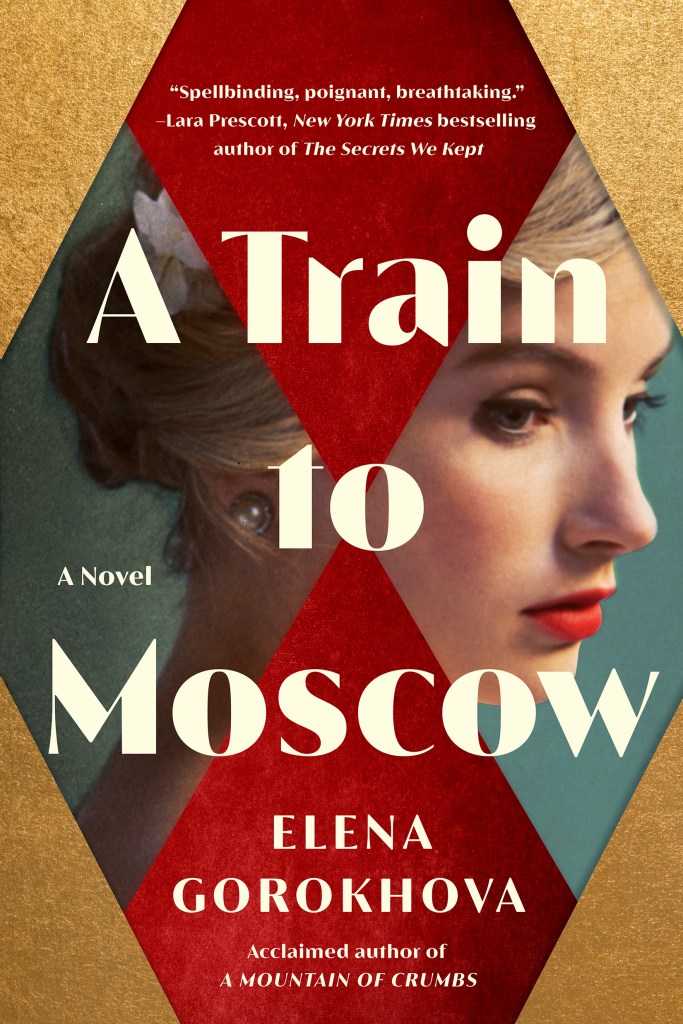
Elena Gorokhova’s A Train to Moscow (Lake Union Publishing) came out earlier this year to praise by J.M. Coetzee, Lara Prescott, and Kate Quinn, among others. Gorokhova was born and raised in Leningrad, Soviet Union, now St. Petersburg, Russia. After graduating from Leningrad State University, she moved to the United States, carrying one suitcase with twenty kilograms of what used to be her life. Elena is the author of two memoirs published by Simon & Schuster: A Mountain of Crumbs (2011) and Russian Tattoo (2015). A Train to Moscow is her first novel. Her work has appeared in The New York Times, The Daily Beast, New Jersey Monthly, and The Daily Telegraph, on NPR and BBC Radio, and in a number of literary magazines. She lives and teaches English as a Second Language in New Jersey.

Continue reading “No One Is Guilty, Everyone Is Guilty: An Interview with Elena Gorokhova, by Sasha Vasilyuk”

Irina Mashinski’s The Naked World, Three Excerpts

Irina Mashinski’s The Naked World, recently published by MadHat Press after many years in the making, is an impressive achievement in the hybrid genre. The collection combines pieces of original and translated poetry and prose that together illuminate not only the author’s past but also her way of seeing. Thematically, this book centers four generations of a Soviet family from the Stalin era to the 1990s and immigration to the United States. Writer, translator, and editor Irina Mashinski has penned ten books of poetry in Russian, and this is her English-language debut that also includes her Russian-language poems in translation by Maria Bloshteyn, Boris Dralyuk, Angela Livingstone, Tony Brinkley, Alexander Sumerkin, and Daniel Weissbort. Mashinski is co-editor, with Robert Chandler and Boris Dralyuk, of The Penguin Book of Russian Poetry and of the Cardinal Points Journal.

Continue reading “Irina Mashinski’s The Naked World, Three Excerpts”

Triple Axel by Yelena Furman, The Willesden Herald’s Story of the Month

Whether or not you watched figure skating at the Olympics this year, or are closely related to somebody suffering from arrhythmia, if you have read Aleksander Pushkin’s The Belkin Tales, this recently published story by our co-founder Yelena Furman is for you. And if you haven’t read Pushkin’s stories yet, you might want to read them, too!

Congratulations Yelena with your new fiction publication!

You Never Know When Speaking Russian Might Come in Handy …: An Essay by Alina Adams

It would be hard to overstate my love of both figure skating and detective fiction, which admittedly isn’t something one normally thinks of together. It is therefore beyond thrilling to feature this personal essay by Alina Adams, who has written a series of five figure skating murder mysteries (yes, really, and I plan to order every one of them). A prolific writer with several fiction and non-fiction titles, Alina’s most recent novel is The Nesting Dolls, which you can read about in the poignant and humor-filled conversation between her and Maria Kuznetsova that Olga recently organized on this blog. I loved reading the story Alina tells below about working as a Russian-speaking figure skating researcher (she must have had a hand in many of the broadcasts that I avidly watched), and I confess to losing, in the best possible way, some of my time to being nostalgically taken back to 1990s figure skating coverage through the two videos in the piece, one of which features Alina translating (for Irina Slutskaya! You all know who she is, right?! Right?!). Let yourself be transported to that marvelous skating era, get ready for all the figure skating at the Olympics next month . . . and watch out, there’s a murderer, or five, on the loose.

Continue reading “You Never Know When Speaking Russian Might Come in Handy …: An Essay by Alina Adams”