Owning Fear, Reaching for Freedom: Post-Soviet Writers + Translators Speak Out

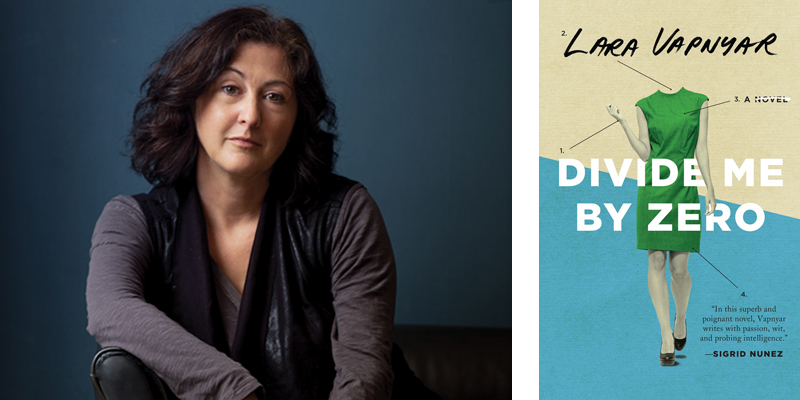
A flyer displaying ten author's photos alongside  three quarters perimeter. In the center left, in black, title of the event:
OWNING FEAR, REACHING FOR FREEDOM: POST-SOVIET WRITERS AND TRANSLATORS SPEAK OUT
on the right, in red: LIT CRAWL SAN FRANCISCO
Below, in Blue:
Sat OCTOBER 25TH 5-6 PM
AT RUTH'S TABLE
2160 21st Street
Sponsored by California Humanities and Ruth's Table

Dear Punctured Lines community — please help us spread the word about the next San Francisco Bay Area reading by writers born in the former USSR. This event is a part of San Francisco’s annual Lit Crawl festival and will take place at Ruth’s Table (3160 21st Street) on October 25, 2025 at 5 pm.

We’re a group of immigrant writers and translators from Ukraine, Russia, and Kazakhstan, coming together to share creative ways of speaking truth to power. Our fiction and non-fiction stems from our community’s memories of life under the USSR’s totalitarian regime and from our response to Russia’s authoritarian tactics of censorship and war. As artists working in the United States today, the growing threat to freedom of expression in this country is shocking in its familiarity. We have seen – and lived – all this before. This is why we believe it’s essential now to provide space to each other’s voices, to build our resilience to censorship and the self-censorship that often follows.

Book Sales provided by Globus Books.

Featured writers:

Evgeniya Dame is a former Stegner Fellow whose fiction and non-fiction have been published in Zoetrope: All-Story, Ploughshares, Virginia Quarterly Review, New England Review, Electric Literature, and elsewhere. Her work has been nominated for the Pushcart Prize and received support from the Maine Writers and Publishers Alliance and Monson Arts. Evgeniya holds an MFA from the University of New Hampshire where she was a Fulbright Scholar. She is the Associate Editor at The Threepenny Review and lives in Berkeley.

Elana Gomel was born in Ukraine and currently resides in California. Gomel is an academic, an award-winning writer, and a professional nomad. She is well-known in the academy for her work on speculative fiction and narrative theory, including books such as Science Fiction, Alien Encounters, and the Ethics of Posthumanism and The Palgrave Handbook of Global Fantasy. A member of Horror Writers of America (HWA), she is the author of many short stories, two collections, several novellas, and eight novels of dark fantasy and science fiction. Her stories appeared in Best Horror of the Year, The Dark magazine, Apex, and many anthologies. Her latest novels are Nightwood, a fairy tale about exile, marriage, and monsters (Silver Award in the Bookfest 2023 contest) and Nine Levels, a mythological fantasy.

Dmitri Manin‘s poetry translations from Russian to English have been published in books and journals. His translation of Nikolay Zabolotsky’s collection Columns (Arc Publications, 2023) was shortlisted for the ALTA First Translation Prize and the Northern California Book Awards. His translation of a poem by Gala Pushkarenko, first published in AzonaL, was selected for the Best Literary Translations anthology (Deep Vellum, 2024) He translated a number of poems for two anthologies of Russian anti-war poetry, Disbelief (Smokestack Books, 2023) and Dislocation (Slavica, 2024).

Maggie Levantovskaya was born in Ukraine and grew up in San Francisco. She works as a Teaching Professor in the English department at Santa Clara University in California. Her writing has appeared in The Los Angeles Times, Current Affairs, The Rumpus, Lithub, Michigan Quarterly Review, Longreads, and elsewhere. She’s currently at work on a memoir about lupus.

Margarita Meklina is a bilingual author born in Leningrad, USSR. She came to the US as a refugee in the early 1990s. The winner of several prestigious international literary prizes, Meklina saw her books vanish from bookshelves and her publishing contracts in Russia evaporate due to her positioning as a supporter of LGBTQ+ rights. With Anne Fisher, she co-curated “Life Stories, Death Sentences,” a folio of LGBTQ+ literature translated from Russian and, together with The Brooklyn Rail/In Translation, facilitated a multilingual reading in New York city, to coincide with the 50th Anniversary of the Stonewall riots. Her new chapbook printed in Berlin uses in its title a Yiddish word and the Jewish “lucky number” 18: 18 Shticks.

Mirgul Kali’s translations of short stories by classic and contemporary Kazakh writers have appeared in Tupelo Quarterly, Electric Literature, The Massachusetts Review, Gulf Coast, Words Without Borders, and other publications. She received a PEN/Heim Translation Fund Grant and a PEN Translates award for her translation of Baqytgul Sarmekova’s To Hell with Poets, a short story collection published by Tilted Axis Press in March 2024. She holds an MFA in Literary Translation from the University of Iowa, where she was an Iowa Arts Fellow.

Sasha Vasilyuk is a journalist and author of a debut novel YOUR PRESENCE IS MANDATORY (Bloomsbury, 2024), which is a finalist for the California Book Award and is translated into seven languages. Her nonfiction has been published in the New York Times, CNN, Harper’s Bazaar, Time, USA Today, and elsewhere. Sasha grew up between Ukraine and Russia before immigrating to the U.S. at the age of 13.

Yuliya Ilchuk is Associate Professor of Slavic Literature and Culture at Stanford University. She is the author of an award-winning book, Nikolai Gogol: Performing Hybrid Identity, and a translator of contemporary Ukrainian poetry, including Halyna Kruk’s A Crash Course in Molotov Cocktails, co-translated with Amelia Glaser. Ilchuk’s book project, The Vanished: Memory, Temporality, Identity in Post-Euromaidan Ukraine, revisits collective memory and trauma, post-memory, remembrance, memorials, and reconciliation in Ukraine. In 2025, HURI Books published Silence Dressed in Cyrillic Letters by Iya Kiva that Ilchuk co-translated with Glaser.

Yuliya Patsay is a Soviet-born, San Francisco-raised teller of stories, most of which are at least half true. On any given day you can find her in a padded room talking to herself (some people call this voice acting), driving carpool, or on the prowl for an unattended microphone and a captive audience. Her motto is “if you’re not laughing, you’re crying.”

Olga Zilberbourg is the author of LIKE WATER AND OTHER STORIES (WTAW Press) and four Russian-language story collections. She has published fiction and essays in Electric Literature, Lit Hub, Narrative, Alaska Quarterly Review, Confrontation, World Literature Today, and elsewhere. Her translation from the work of a Kyiv-based poet and writer Olga Bragina is forthcoming from Fence and Best Literary Translations 2026 from Deep Vellum Press. She co-edits Punctured Lines, a feminist blog on post-Soviet and diaspora literatures, and co-hosts the San Francisco Writers Workshop.

My Mother’s Teeth by Anna Fridlis

My Mother’s Teeth

were prone to cavities from childhood.

In my mind’s eye, I see her gaps-for-teeth, hand cupping mouth, handkerchief clasped to lips after an extraction — that euphemism that stinks of silent Soviet disappearances, people pulled from dark rooms at night, never returning.

Once healed, the gaps were filled variously with dental implants and partial dentures: my mother’s mouth is not quite her own.

The extracted people were never returned, which my mother made it her duty to remember. If she is passionate about anything, it is decrying Stalinism and its travesties. For years, her stories transfixed me, but by my teens they stoked a growing rage. There was not much more to her mothering than the passing down of Soviet horrors. I was starving for something which she couldn’t give. 

My mother drilled her coming-of-age, late-1970s, music-conservatory-student revelations about the Soviet dystopia — learned at the knee of a rather radical anti-communist professor — into my brain, into the new millennium, into a new hemisphere. 

My mother’s mouth is filled with ghosts.

My own cavities began before elementary school. Baba took me to the dentist, an old friend of hers, Eleanora Aleksanna, whose son had long before been Baba’s elementary school student. We entered a large open hall full of dental chairs and short-haired women in white lab coats and face masks leaning over screaming children.

I was praised for being so good and so brave and for my beautiful braid only to bite Eleanora Aleksanna’s finger to bleeding moments later.

We returned to her several times, without incident, before our own great extraction from Russia found us in the United States.

American dentists peered into my mouth, as into my mother’s, in awe, studying its contents as though it were an archeological site revealing pre-modern dental composites.

I was taking after my mother.

***

In 2019, a year after my mother and I became estranged, I had to have an incisor pulled. It had gotten infected and pain had grown beyond the treatment of all available drugs.
  

The procedure took hours. The dentist coaxed out my tooth little by little from my numbed gum. My partner held my hand, then drove me home to mashed potatoes and tea.

I smiled big for my phone, beaming almost to a scowl into the camera. It was tooth number 4 that they took — I had been so worried about how the gap would look — but it was barely visible on my American smile. I sent pictures to everyone but my mother. 

The gap left by my mother is surreal. It throbs and whirls to Tchaikovsky, it weeps to Chopin; it weeps so much more than it dances. I shut my mouth on the commotion.

The gap left by my mother is older than our estrangement.

It is a socket dressed in layers of scarlet and mauve scar tissue, pulsing and aching from time to time but calming, calming as the years tick by. 

I exorcise the ghosts from my mouth, my mother’s legacy, through the power of my breath, the vibration of my voice, the speaking of myself into being. I was never supposed to do these things: she raised me to carry on her burdens, to be an organ of her body, a part of her, not out of malice but limitation. A limitation I am still trying to parse. 

Sometimes I Google potential diagnoses to explain my mother’s absence — the way she seemed never really there even when she stood in front of me, the way she needed me to lead, even as a child, to parent her. When I find myself doing this futile exercise, I have learned it means I’m hurting, struggling, and it’s time to take care of me. 

In broad strokes, I know the problem: a combination of Soviet political oppression, anti-Semitism, patriarchy, family dysfunction, and a prolonged separation from Baba in Mama’s toddlerhood. When you put it all together, it’s called complex trauma. I know a lot about it because it was passed to me. Unconsciously, unintentionally, brutally, ceaselessly.
  

My teeth, my mother’s teeth: tombstones to the bones of Soviet ghosts who couldn’t find a way to scream but through our mouths. 
Anna Fridlis is a memoirist, poet, and essayist based in Newark, NJ on indigenous Lenape land. She lives and writes at the intersection of multiple identities: Jewish, Soviet immigrant, white, disabled, neurodivergent, and queer. Her work addresses the impact of intergenerational trauma on the trajectory of a life, tracking trauma’s creeping effects on mental and physical health, family relationships, creative output, and the scope of the imagination. Anna’s work captures one version of a Soviet Jewish immigrant story that both faces its utter devastation and searches for answers and deep healing in self-expression, nature, and somatics. Anna teaches first-year writing at Parsons the New School for Design and cohabits with her bunny Willow, who also happens to be her muse.

To Fairyland: An Excerpt from Yelena Lembersky and Galina Lembersky’s Memoir Like a Drop of Ink in a Downpour

Like a Drop of Ink in a Downpour (Academic Studies Press, 2022) is a rare dual memoir co-written by Yelena Lembersky and her mother Galina. Born and raised in the USSR, following the death of her prominent painter father in 1970, Galina decides to emigrate with her young daughter and aging mother. In anticipation of her departure, Galina quits her job and becomes a refusenik. Yet, once her immigration papers go through, instead of boarding an airplane, she finds herself behind bars of a Leningrad prison on a criminal charge. Her mother has already left for the United States. Her young daughter Yelena–nicknamed Alëna in the book–is left in the care of friends, in danger of finding herself in an orphanage.

The chapter below is narrated by Yelena, eleven years old at the time of these events. We are deeply grateful to the author and publisher for permission to excerpt a chapter from this revealing and touching memoir. To continue reading, please buy the book from Academic Studies Press.

Continue reading “To Fairyland: An Excerpt from Yelena Lembersky and Galina Lembersky’s Memoir Like a Drop of Ink in a Downpour”

Lara Vapnyar’s Essay: On Being a Cool Parent

*Post updated to include a second excerpt from Vapnyar’s Divide Me by Zero.

In a Facebook post, Lara Vapnyar mentioned that she adapted this touching, lyrical essay into a chapter in her new book, Divide Me by Zero. Read the piece and use Powells.com to order the novel.

Shortly after my mother died, the kids and I established the routine of taking long beach walks about an hour before sundown. We lived on Staten Island then, the long beautiful stretch of Great Kills beach was only seven minutes away by car. My husband and I had separated just a few months before my mother’s death, and all three of us were still reeling from these two blows. David was almost 18 then, Stephanie had just turned 15; I would look at our shadows and see that they were about the same lengths. We looked like three orphaned siblings rather than a mother and her kids.

https://www.powells.com/post/original-essays/on-being-a-cool-parent

An excerpt from a different chapter of Vapnyar’s Divide Me by Zero appears in Lit Hub:

One week before my mother died, I went to a Russian food store on Staten Island to buy caviar. I was brought up in the Soviet Union, where caviar was considered a special food reserved for children and dying parents. I never thought of it as extravagant or a romantic delicacy. My mother would offer me some before important tests in school, because it was chock-full of phosphorus that supposedly stimulated brain cells. I remember eating caviar before school, at seven am, still in my pajamas, shivering from the morning cold, seated in the untidy kitchen of our Moscow apartment, yawning and dangling my legs, bumping my knees against the boards of our folding table, holding that piece of bread spread with a thin layer of butter and thinner layer of caviar.

https://lithub.com/divide-me-by-zero/

On a personal note, this observation about caviar did hold up in my family, in part. When my grandmother was dying, my mother fed her caviar sandwiches. (Before the tests, though, I got a chocolate bar.) I’ve never seen this detail about caviar captured in prose before–it resonates so deeply.