Katherine Young, a poet and translator, gave this interview on BLARB, the blog of the esteemed Los Angeles Review of Books. In 2018, Academic Studies Press published Young’s translation of the trilogy, Farewell, Aylis, by Akram Aylisli, currently a political prisoner in his native Azerbaijan (Young has spearheaded efforts to free him, including a recent petition circulated on social media). Olga Zilberbourg reviewed this novel, which Punctured Lines noted in our post. As we also noted, an excerpt from his novella, A Fantastical Traffic Jam, translated by Young, can be found here.
Young’s latest project is the translation of Look at Him by Anna Starobinets (Slavica, forthcoming 2020), an open, unflinching account of her abortion that was controversial when it came out in Russia. As Young says, “Women don’t talk about these things, even with their partners, so to write a book in which you expose the most intimate details of your body and the choices you made medically is a violation of a lot of subtle taboos about women who are supposed to grin and bear their trials and tribulations.”
Young also talks about being a poet and how much Russian poetry has shaped her own: “I feel very much more informed by Russian poets than most American poets. I’ve read Walt Whitman, but I don’t identify with him the same way I might say Alexander Pushkin or Mikhail Lermontov or Anna Akhmatova.”
This week AWP, or Association of Writers and Writing Programs, is holding its annual conference in San Antonio, TX. Many of the attendees, however, have opted to stay home due to the increased risk of the corona virus outbreak. An important component of this conference is a massive book fair, at which hundreds of independent presses and literary journals sell their stock. To compensate for the losses of this already financially strained community, people are organizing several initiatives.
First of all, there’s #AWPVirtualBookfair Twitter hashtag, under which you will find links to lots of publishers who are offering significant discounts of their stock. Trevor Ketner started the #AWPVirtualBookfair Google Doc, where you can find a comprehensive list of participating publishers, and Natalie Eilbert creating the AWP Virtual Bookfair for Authors Doc. Justin Greene created a handy list of publishers on Entropy, that includes the discount codes. Point being: the best way to support literary arts and independent publishing is to buy our books.
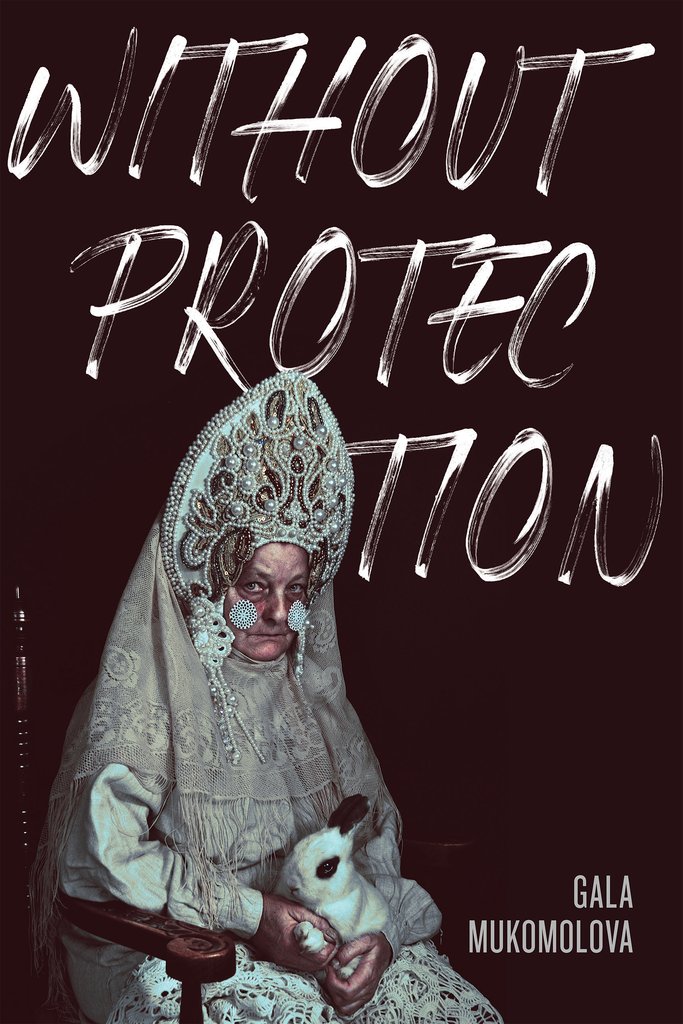
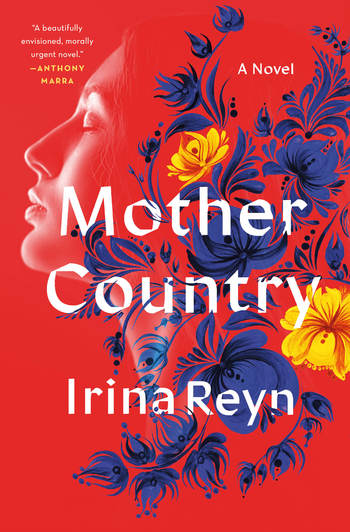
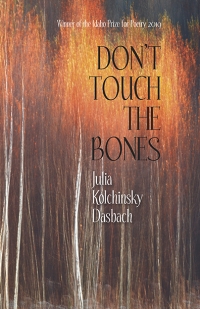
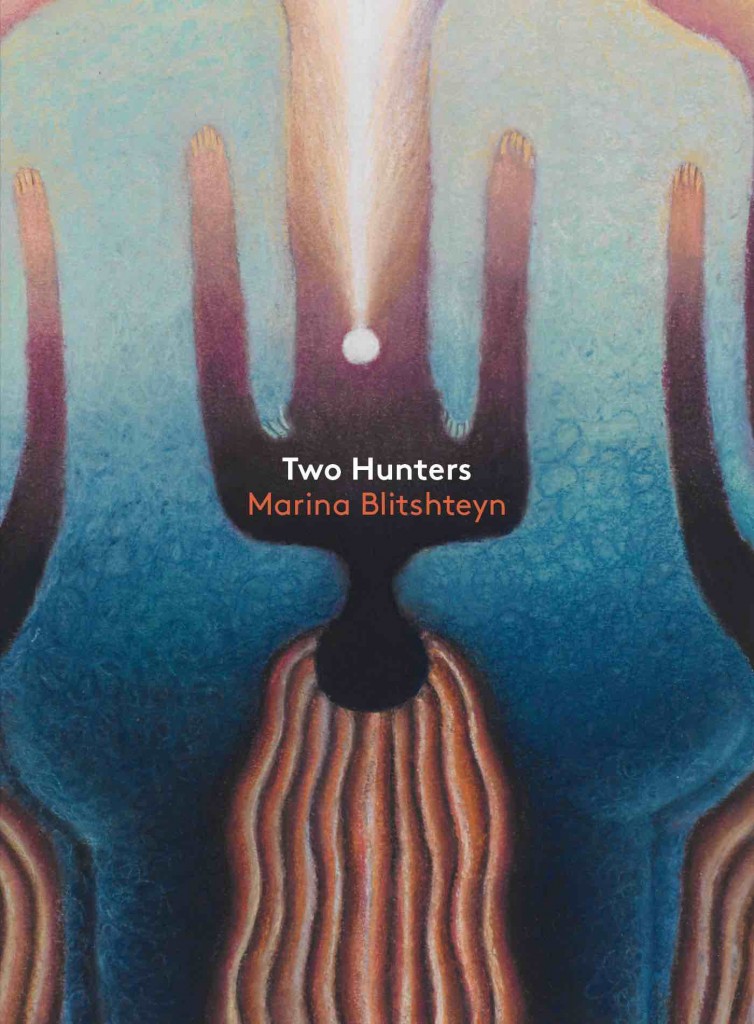
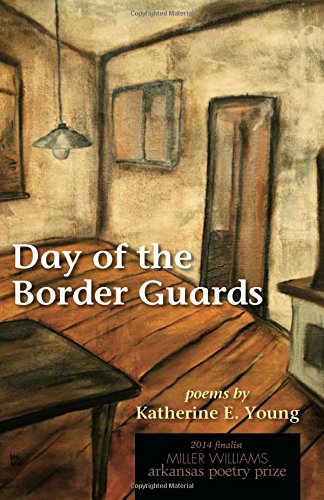
One of my plans for this conference was to co-host a happy hour for writers and translators working on material related to the former Soviet Union. Unfortunately, both my co-host Olga Livshin and I decided to cancel, as did most of the people we hoped would take part. I envisioned that this happy hour would help us, in part, to build a sense of community and help us brainstorm ways in which we can support each other’s work. So, in that spirit, here is an image gallery followed by a list of these titles with links, where you can buy the books.
You wrote a book in which you both translated Akhmatova’s and Gandelsman’s work and wrote original poems that are, directly or indirectly, in dialogue with them. Describe, briefly, your writing process.
I like the idea of going beyond the one voice–the idea of poetry as a play, and of a book as a porous object, absorbing other energies. There are three characters here: I translated two modernist Russian poets, and then I wrote responses to their work, some of which are imitations. Poets & Traitors Press has this format that fit what I was doing really well. They publish poems based on translations, poems that speak to these translations. So rather than publish a typical poetry collection, which, if you think about it, is this continuous solo for something like 50 or 80 pages, these Poets & Traitors books are a bit like jazz. They’re inclusive. They invent and improvise. Their dynamics are pluralistic and lively.
What were the differences in how you approached writing vs. translating poetry?
It’s pretty seamless. When I translate, it’s a bit like giving a voice, and it’s also implicit dialogue, of course, since translation is interpretation–it’s full of choices. And when I write back, or talk back, the dialogue goes further. All of this, though, is part of the same kind of play: where the characters depend on one another and echo each other.
What about translating/“talking to” Akhmatova?
Yeah, “talking to,” for sure! Akhmatova is an author that a lot of mothers who grew up in the 1960s and 1970s quoted to their daughters–my mom quoted her to me. And I think a lot of people thought–still think–of her as a symbol of stoicism and of grieving wisdom, a model for how to live with dignity and defend fellow others under repressive regimes. In our family, she was like this Lilith, great mother, forever strong and even raging. It was rather difficult: you know, she was someone you could quote, but never be, right? Then I went to grad school to get my PhD in Slavic Studies, and I learned that some prominent literary scholars had showed that she was no angel, she was a full human with flaws, and–they wished to show–that she was rather a monster. I think both of these extremes are kind of silly. In my book I don’t so much aim to dethrone as to discover. There’s a different Akhmatova than the one people know: brazen and humorous behind all that mighty moral raging. She’s a perpetual child, even in her later work, trusting love for love’s sake, no matter what life did to her. “To me, in poetry, everything should be out of line,” she writes, “Not how these things are done. / I wish you knew what garbage sprouts poems….” I want to know about this bold, hidden girl, and I want people to know her.
How about translating/“talking to” Gandelsman?
He is closer to me and thus less hidden. Vladimir Gandelsman was born in 1948 and came of age in Leningrad before it turned into St. Petersburg and before he left for the United States, where he lives now. He’s an immigrant like me, and he has similar instances of alienation. So when it comes to his work, I’m basically a devotee. I aim to push this writer forward and amplify his voice. Gandelsman’s work has such a unique way of balancing human emotions such as irritation and anxiety with this amazing appreciation of small joyful moments, which are just sublime in his work. Gandelsman, to my eye, transcends what so many poets and writers in Russia had: this hatred of byt, the everyday. There was a bunch of visionary philosophers a hundred years ago, they all wished to go beyond our biological and biographical limitations. Beyond the body, beyond the home. On the other hand, Gandelsman is the supreme discoverer of light in the dust of the domestic. And in nature, which he paints in some beautifully minimalist ways. And in one’s own family, even in some difficult moments. He is a very generous poet. Where I write in parallel are poems of small joy: he has a small bird in the sky, I have little mushrooms; he has a hallowed moment of immigrant recognition of oneself in an American-grown boy, I have recognition of a Syrian immigrant’s stories in our own tales of self. I want to help this voice be in the world and take on new forms, in English, and in my little sprouts off it.
Other than Gandelsman, what is your relationship with contemporary Russian literature in general?
I enjoy some voices. Maria Stepanova. Vassia Borodin. Polina Barskova, in the US. And then in Ukraine, so much great and heartbreaking poetry in Russian is coming out from people writing about the war. Boris Khersonsky and Lyudmyla Khersonska. I really like Anastasia Afanasieva’s work. Iya Kiva’s poetry. There is an incredible urgency to these voices, and they’re profoundly intertextual, in dialogue with other language about war and violence, going all the way back to the Bible and all the way forward to how Russian and Ukrainian TV talks about war.
In addition to the two in your book, who are some of the writers that inspire you?
There is a flowering of immigrant and first-generation American poetry now. So many rich voices. From the better known, such as Chen Chen and Ocean Vuong, to those that should be better known. Ahmad Almallah’s recent book Bitter English addresses issues of writing in English as an immigrant. Jenna Le has gorgeous poems that capture the intersection of girlhood and growing up Vietnamese-American in Minnesota. Ananda Lima has made fine, strange, surrealist prose as well as poetry that looks at issues of home and motherhood in the context of being an immigrant. I love how these poets echo certain ruins of their cultural past with not-quite utopias of their American present.
Do you find yourself working against some Russian cultural stereotypes?
Ha! I have carried so much shame about these for so many years. It’s kind of gone, but of course you can’t quite get rid of it. But that’s what writing is for–finding a voice that is more complicated than these stereotypes and insisting on maintaining that voice. Both in your writing and also, once you find it, the beautiful thing is, you can take it wherever you find it relevant.
As a writer one of whose major topics is immigration, do you find yourself connecting with other diaspora writers?
I like Boris Fishman’s prose. Julia Kolchinsky Dasbach is one of my favorite Russian American poets. A fellow Russian-speaking Ukrainian Jew, she just published a fiery poetry collection called The Many Names for Mother. It’s such a bittersweet exploration of motherhood and the infinite in the context of her origins, both feminine and Soviet/ Ukrainian/Jewish. It’s so, so good.
How do you relate to feminist ideas and navigate the gap between the different gender expectations in American vs. Russian cultures? Do you see any shift of Russian gender norms in the diaspora?
So I got pretty lucky: I grew up with a mother who has a strong personality and who worked at this beautiful glorious music school in Moscow, where we lived from when I was 7 to when I was 14 and we moved to the US. To me, she channeled powerful feminist thought, although that’s not language she used. Yes, we dressed up, but it was to strut our stuff and have fun, not in order to please a man. I also grew up in a family where everyone had worked: both grandmas, my mom, all her female ancestors were peasants. So there was a version of Soviet and Russian homespun feminism that may be problematic and all, it wasn’t perfect, the guys didn’t necessarily help out, but at least there’s that gender modeling of strong women. There is this concept of the matriarchy, and also of women working for generations.
I find it more irksome to navigate some situations with expectations for women from white Anglo-American upper middle class and upper class backgrounds. There’s an awful lot of stuff that I have trouble relating to, not only helicopter parenting or beautiful thin appearances in beautiful thin yoga pants, but also stay-at-home motherhood. That stuff is hard! It’s really a terrible thing when you know people who live according to those expectations–fraught with depression and with not being recognized as a human being. And when I was a stay-at-home–uh, poet–in our rather affluent suburb, I didn’t wear that identity, but the expectations were quite definite. But I think that the Russian strong woman, not unlike one that Akhmatova wanted people to think she was, wanted people to believe she could be, it’s an ideal and all, but it’s really a fantastic thing to embody. It’s a bigger expectation than the “little woman” that’s stuck around in our America. The resilient, powerful Russian lady–that’s a tall expectation, and it calls on us to stand tall, and I’m proud of that idea.
Today on Punctured Lines, we have a Q&A with Masha Rumer, author of Parenting with an Accent: An Immigrant’s Guide to Multicultural Parenting, whose arrival we previously announced here and are very excited about. Masha answered our questions by email.
Punctured Lines:Describe, briefly, your process in writing this book.
Masha Rumer: My decision to write the book was pretty simple: I wished there was something like that when I became a parent, and since there wasn’t, I figured I’d write it. I was born in Russia and my partner was born in the U.S., so in addition to navigating differences common to a multicultural relationship, having a baby brought up questions, nostalgia and my awareness of straddling multiple cultural identities. How do I teach my kids Russian, without forcing it? How do I connect with other parents, even if I lack certain shared childhood experiences? Is a peanut butter sandwich an acceptable meal? How much borscht is too much? The more I spoke to others, parents or not, the more I realized that these concerns are very much shared, but people don’t always feel comfortable discussing it.
Surprisingly, I found no nonfiction book about the contemporary immigrant parenting experience, even though there is a record high of 43 million immigrants in America today and over 18 million kids with at least one foreign-born parent.
I realized there needs to be a research-driven, accessible look at what it’s like for immigrants to raise kids in the U.S., not a “how-to” parenting manual, but a realistic portrait of sorts. The book will have a bit of everything: candid conversations with families across the U.S., personal narrative and interviews with experts in psychology, language development and sociology. And beets. Lots of beets.
PL:What is your relationship with contemporary Russian literature? Who are some of the writers that inspire you?
MR: I really wish I’d read more contemporary Russian literature, but a significant chunk of my reading is in English (unless we’re talking news or kid lit – I try to read Russian books with my children daily). That said, I’ve recently been enjoying the work of Dina Rubina and of the investigative journalist Svetlana Alexievich, and have been getting into translation more (just finished a delightful Russian translation of A Man Called Ove [PL: This Swedish title by Fredrik Backman has also been translated into English]).
PL:Do you find yourself working against some Russian cultural stereotypes?
MR: Sometimes I find myself dodging jokes about being a spy, especially in the wake of the 2016 presidential election (I’m not a spy). I’ve also been questioned whether I came to the U.S. “on my own” and “with papers” or if my husband ordered me via a catalog. The people who ask are demure and almost apologetic, but they want to know. Recently, though, a job recruiter was pretty explicit about questioning my immigration status and any political connections. And something many female-identifying Russian speakers have probably experienced – there’s often an assumption that our closets have this secret compartment where we stash sable fur coats and leather outfits from a James Bond movie.
PL:As a writer who addresses stories of immigrant families, do you find yourself connecting with other diaspora writers?
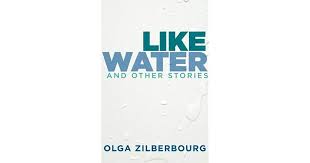
MR: I definitely find myself connecting with other diaspora writers. It’s probably due to the shared immigrant experiences of reinventing and translating yourself and the trauma of having been uprooted. I love the work of Lara Vapnyar and Dinaw Mengestu; they both write so incisively and honestly about diaspora realities. Eva Hoffman and Jhumpa Lahiri were among the first contemporary immigrant authors I read, and it felt so validating. Then there’s the work of Edwidge Danticat, Anya Ulinich and Natalia Sylvester, particularly her recent essay on being bilingual, and the Foreignish blog, run by Yaldaz Sadakova. I’m also excited to read the new collection Like Water by Olga Zilberbourg. It’s thrilling to see that the contemporary immigrant narratives are no longer othered as “niche,” but are becoming a part of the “mainstream” literary canon.
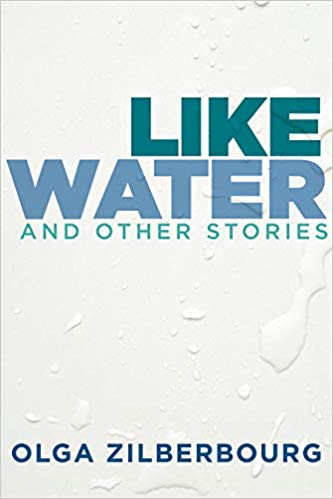
Olga Zilberbourg spoke with Jennifer Eremeeva about Like Water and Other Stories (WTAW Press) in a podcast for The New Books Network. It’s a fantastic interview, including about cultural misunderstandings, which starts with Olga reading the inventive and touching “Dandelion” from her collection. Listen to the conversation and follow Jennifer on Twitter @JWEremeeva – we do!
“A new generation of Russian emigres is blessed — or cursed — with the ease of long-haul flights and frequent flyer miles, Skype and FaceTime, Google translate, and regulations that seem anyway to be more forgiving about former citizens traveling to and fro. For them, the border has become far more porous than it ever was, and the choices are now more nuanced. However, there are still plenty of cultural minefields to navigate. To this generation that includes writers as disparate as Gary Shteyngart and Irina Reyn comes Olga Zilberbourg with a new collection of short stories, ‘Like Water and Other Stories.'”
A Q&A with Olga Zilberbourg in Epiphany Magazine about LIKE WATER AND OTHER STORIES (WTAW Press):
“As a writer, when I’m structuring a collection of stories, I make an assumption that, like me, my readers are interested in the human being who shows up most fully in the white spaces between one’s story ending and another’s beginning. From the information on the cover alone, my reader knows that I’m a woman, that I grew up in the Soviet Union, and that I live in the US and I write in English. So, yes, nearly automatically, my story is framed as an immigrant’s story. Then comes the interesting part.”
A recent review singing the richly deserved praises of our own Olga Zilberbourg’s debut English-language collection, LIKE WATER AND OTHER STORIES, out now:
“In an era of ‘short shorts’ hailed in by the venerable Lydia Davis—and culminating in ‘the fragmentary’ in the recent Nobel Prize-winning work of Olga Tokarczuk—one wonders if there remains space for a new collection of shorts: stories that up-end expectation and offer distinctive voice and lesser charted areas of exploration. San Francisco-based, Russian émigré writer Olga Zilberbourg, in her first story collection published in English, allays that concern. Zilberbourg is author of three Russian-language story collections; her fiction has been widely published in esteemed US literary journals; and she has won numerous prizes, including the Willesden Herald International Short Story Prize in 2016. A native of Leningrad, raised in St Petersburg, Zilberbourg moved to the US in 2006 to study at the Rochester Institute of Technology, later earning the MA in Comparative Literature at San Francisco State University.”
At the beginning of November 2019, the American Literary Translators Association hosted its annual conference in Rochester, NY. This annual conference is a delightful opportunity to hear about issues that concern translators across the board, and also to dive deeply into conversations about specific language tracks. We asked Dr. Muireann Maguire and Dr. Cathy McAteer, attending from the UK, to share Twitter log of their conference experience.
Drs. Cathy McAteer and Muireann Maguire’s visit to the conference was in conjunction with the project they’re running at the University of Exeter. It’s called RusTrans: ‘The Dark Side of Translation: 20th and 21st Century Translation from Russian as a Political Phenomenon in the UK, Ireland and the USA’ (Horizon 2020, Grant Agreement No.: 802437). This project looks at the practice of translation as a political activity, “often subverted by ideological prejudice or state interference.” They are using very creative and unexpected ways to analyze this political side to translation, looking at the reception of Russian literature in (primarily) English-speaking countries.
A vibrant, colourful reading. Feels like USSR meets Laura Esquivel. Excellent.
I’ll look forward to reading more back home #ALTA42
Fabulous and courageous impromptu poetry recital, Chukovsky's Мойдодыр becomes 'Gotta Scrub'. Anna, good luck with your pitch! #ALTA42pic.twitter.com/U3Qx9OafW4
#ALTA42
cold readings at the Rochester spirit room bar
Saturday 09th day at ALTA42:
At the #ALTA42 independent presses’ round table with editors from (left to right from second left)@FeministPress@NewDirections@CatapultStory and@nyrbclassics. They all welcome direct submissions from translators – hoping they get out of this room alive!
Acquisitions editor for @nyrbclassics being honest – "interesting manuscripts come in every day. They are a joy, but we are few, and sometimes we just cannot make a decision quickly. It takes about two years just to fit a new publication into our schedule". pic.twitter.com/erKPog8u39
Acquisitions editor for @nyrbclassics being honest – “interesting manuscripts come in every day. They are a joy, but we are few, and sometimes we just cannot make a decision quickly. It takes about two years just to fit a new publication into our schedule”.
And now it’s@OlgaLivshin‘s
turn to take the stage with #translations
of Akhmatova, Gandelsman and her own poetic treats. And the audience keeps growing!
#ALTA42
It was great. Well done @bowlga! I loved the short story about you staying at your grandmother’s in Karelia 🙂 Lovely to have coincided with you here!!
We (Russian literary translators) have very poor visibility, we don’t publish with the publishers that win prizes, our books don’t make it to the shortlists
Russian literature is a "goldmine, not a golden cage", says Olga Bukhina (far right) at the #ALTA42 "Russian Fiction Out of Its Gilded Cage" panel. Shelley Fairweather-Vega (far left) is about to talk about Uzbek and Central Asian authors. pic.twitter.com/7WtYNnjsUw
Russian literature is a “goldmine, not a golden cage”, says Olga Bukhina (far right) at the #ALTA42 “Russian Fiction Out of Its Gilded Cage” panel. Shelley Fairweather-Vega (far left) is about to talk about Uzbek and Central Asian authors.
First up, Olga Bukhina discussing the explosion of #YAfiction in Russia in last 10yrs and its invisibility outside of Russia in #translation#ALTA42
Translation publishing of #YAfiction still can't resist a #Russian stereotype even tho there's a huge cohort of Russian writers for teens, writing about normal, everybody kids
Translation publishing of #YAfiction still can’t resist a #Russian stereotype even tho there’s a huge cohort of Russian writers for teens, writing about normal, everybody kids
And now Shelley Fairweather-Vega speaking about her work translating #Russian, #Uzbek, #Kazakh literature into English. Complexities include relay translation, language overlap, no publishing infrastructure (beyond a Sovietised Writers’ Union). Fascinating!
And now it's @Hilah_Kohen speaking about new writers, new media: examining how we serve the writers we have, what writers publish outside of print, how they shape a persona digitally and using which media. An #alta42 tour de force! pic.twitter.com/NXTODRPWfI
And now it’s @Hilah_Kohen speaking about new writers, new media: examining how we serve the writers we have, what writers publish outside of print, how they shape a persona digitally and using which media. An #alta42 tour de force!
The Politics of Being Heard
Our panel started by going back in time for an overview of who translated and published what and why and when. Muireann started proceedings: she examined the political reasons behind Ireland’s era of translating Russian literature into Irish in the early 20th century, and homed in on the translation career of a young Irish woman called Daisy Mackin who had spent time in Stalin’s Russia and translated Turgenev and Chekhov for the Irish Free State’s literary translation project An Gum.
Cathy shifted the historical focus to the mid-twentieth century, examining Penguin’s contribution to Russian literature in Anglophone translation. She introduced the Penguin Russian Review, with its pro-Russian sentiments, the Penguin Russian Classics and the translators who aspired to project a more accurate image of Russia abroad via translation, and Penguin’s role in publishing Soviet literature: the (expensive and hasty) race to publish Solzhenitsyn.
Boris succeeded in succinctly summarising all eras of Russian literature in translation(!), reminding us that the first copy of Gogol’s Dead Souls was wrongly but quite deliberately depicted as real life, and that the doyenne of Russian literary translation Constance Garnett herself had been galvanised to become a translator because of the highly politicised Russian company she kept in London. Boris neatly brought us back to the present day with his thoughts on where Russian literary translation is currently at, and how the translator (rather than the author) can be a vehicle for selling books; trust in the translator can be all the encouragement a devoted reader needs to try an author they’ve never read before.. which led nicely to Kate Young’s overview of the industry today…
Kate discussed her own proximity to the politics of being heard, touching on the role her translation has played in publicising Azerbaijani author Akram Aylisli’s Farewell, Alys. Kate had also gathered a breadth of views from (absent) Ruth Akhmedzai Kemp and Lisa Hayden who both had observations and questions about the Russian literary translation industry. Discussion ranged from extolling the good work of small publishers and exploring reasons why big publishers are cautious to commission contemporary Russian literature (it’s the Classics that keep on selling!); the role of agents, prizes, and how maybe the time has come for publishers to set aside some of the funds for supporting bigger translation samples, in other words: compensating translators while they prepare for a pitch.
When: Monday, November 25, 2019 at 6:30 PM – 9 PM Where: Alley Cat Books, 3036 24th St, San Francisco, California 94110
This reading gathers together translators, writers, and scholars whose writing is connected, in various ways, with the literatures of the former Soviet Union.
We’re grateful to the Association for Slavic, East European, & Eurasian Studies that’s hosting its annual conference in San Francisco this year, which has allowed us to put this reading together with participants from across the United States.
A participatory reading means that, in addition to the announced readers, we’ll have a first come first served sign-up sheet for people who want to speak up and introduce their projects. We ask that each participant limits their reading or presentation to five minutes.
We’re delighted to have: Olga Breininger with her book There Was No Adderall in the Soviet Union Shelley Fairweather-Vega with A Life At Noon by Talasbek Asemkulov Yelena Furman with her story “Naming” from Narrative Magazine Wayne Goodman with an excerpt of his novel-in-progress Borimir: Serving the Tsars James Kates with Aigerim Tazhi‘s poetry collection Paper-thin Skin Maggie Levantovskaya with her essay “To Conjure Up the Dead” from Michigan Quarterly Review Dmitri Manin with translations of Nikolay Zabolotsky‘s Stolbtsy Masha Rumer with her book Parenting with an Accent: An Immigrant’s Guide to Multicultural Parenting Sasha Vasilyuk, with her novel in progress about a Soviet prisoner of war Mary Jane White with Marina Tsvetaeva translations Olga Zilberbourg with stories from her collection Like Water and Other Stories Josie von Zitzewitz introducing Russophone Literature by Young Writers
and more! Please reach out to puncturedlines [at] gmail.com if you want to be a part of this.
When: Saturday, November 9, 2019 at 7 PM – 10 PM EST Where: Java’s Cafe, 16 Gibbs St, Rochester, New York 14604
Join us for a lively evening of stories, poems, and performance art by nonconformist writers from the former Soviet Union, in English.
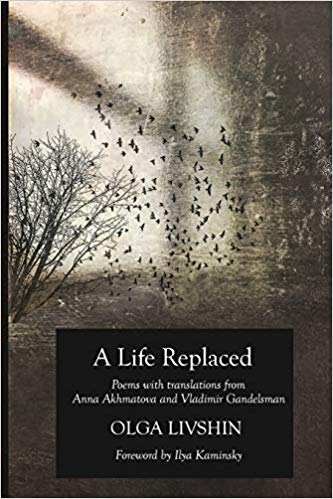
Olga Livshin‘s book A LIFE REPLACED braids together poems on immigration in America with translations from Anna Akhmatova and our contemporary Vladimir Gandelsman, winner of Russia’s highest award for poetry, the Moscow Reckoning. Many poems are responses to these two voices; some are stand-alone works. Maggie Smith comments: “Livshin, who immigrated to the US from Russia as a child, acknowledges the two Americas she knows firsthand: the one that fears and demonizes, and the one that welcomes. A LIFE REPLACED is astonishingly beautiful, intelligent, and important.”
A graduate of Rochester Institute of Technology, Olga Zilberbourg will introduce her English-language short story collection LIKE WATER AND OTHER STORIES. “The thread connecting these tales,” Anna Kasradze writes for The Moscow Times (ed. Michele Berdy), “is each protagonist’s attempt to come to terms with an identity that is always in flux, transitioning between various contexts such as emigration, motherhood, partnership, and employment.” Olga is the author of three Russian-language books (the latest of which “Хлоп-страна,” Издательство Время, 2016). She has published fiction and essays in Alaska Quarterly Review, Scoundrel Time, Narrative Magazine, Lit Hub, Electric Literature, the San Francisco Chronicle, and elsewhere. She co-moderates the San Francisco Writers Workshop.
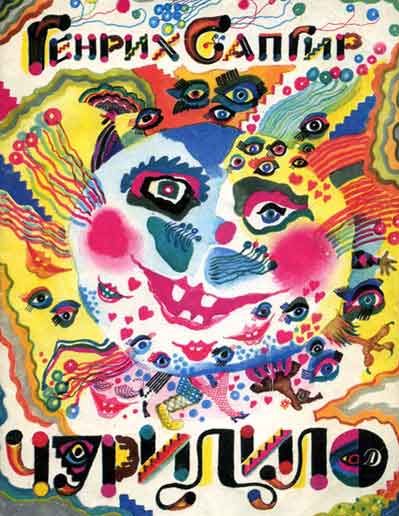
Opening for the two Olgas is a poetry performance by translator Dmitri Manin. Avant-garde sonnets by Genrikh Sapgir will be presented on shirts, worn by both Olgas and Dmitri. Sapgir (1928-1999), a hugely acclaimed poet in Russia, first presented his philosophical and funny Sonnets on Shirts–on actual men’s shirts–in 1975. His performance made a sensation amidst an atmosphere of official, staid, highly traditional, print-only Soviet literature. Manin revives his work and re-enacts it in English, using contemporary bodies and presences to channel Sapgir.
Java’s–a ten-minute walk or three-minute Lyft drive from the Floreano Convention Center–will have food and drink for us to regale us into the night with literature and pleasure.







 Punctured Lines