Welcome, MumberMag!

In April, as COVID19 was already changing our lives, a new literary magazine entered the world. “Literature pretends only to reflect the way things really are, and it is always there for you when everything else has failed,” writes Harry Leeds in his editor’s note to the first issue. “I hope that our magazine is a distraction while you are stuck the hell home.” Leeds is a writer, editor, a translator from Russian, “cat papa,” and is on his way to becoming a nurse. He has a sick sense of humor, he says, which I think gives him a leg up in the whole literary mag game.

We are so delighted to welcome MumberMag’s stellar Mumber One issue. (Gosh, some sense of humor really went into the making of this mag–and I LOVE IT!) Joining Harry in the editorial team is a much beloved poet D. A. Powell, who serves as a Founding Poetry Editor (here’s a profile of him in The New Yorker).

The first issue holds many wonderful gifts for the readers, and for us, interested in post-Soviet literature, there are Boris Dralyuk’s translations from Julia Nemirovskaya who lives in the U.S. and writes poetry and fiction in Russian, and teaches Russian literature and culture at the University of Oregon. Three poems appear in Mumber One, Lamp, Little Box, and Toilet Paper — “Kin to napkin and book.” (Poets really know what’s important in life, long before any crisis strikes.)

Also included in Mumber One is an interview with Maxim Matusevich, whom we at Punctured Lines had the joy to meet in person during our reading at Alley Cat Books in November of 2019. Matusevich lives in the US and writes fiction, essays, and academic work in English. His particular research interest is Russian-African relationships and I highly recommend the book that he edited in 2006: Africa in Russia, Russia in Africa: Three Centuries of Encounters. He has also published fiction in magazines such as The Kenyon Review and New England Review. In his conversation with Leeds, Matusevich talks about St. Petersburg’s legendary cafe Saigon, Soviet hippies, Soviet questionable attempt at being an ally of “the oppressed,” Russia’s current involvement in conflicts across Africa, and lots more. I recommend it!

Last but not least our MumberMag editors are working on creating their list of Top Literary Magazines Ranked By Influence on Social Media. As a huge literary magazine fan, I deeply appreciate the dedication that it takes to create a list like this — and a sense of joy from the fun of it all. Thank you, people!

Looking Back on Our First Event: Participatory Reading in Post-Soviet Literatures, in Pictures

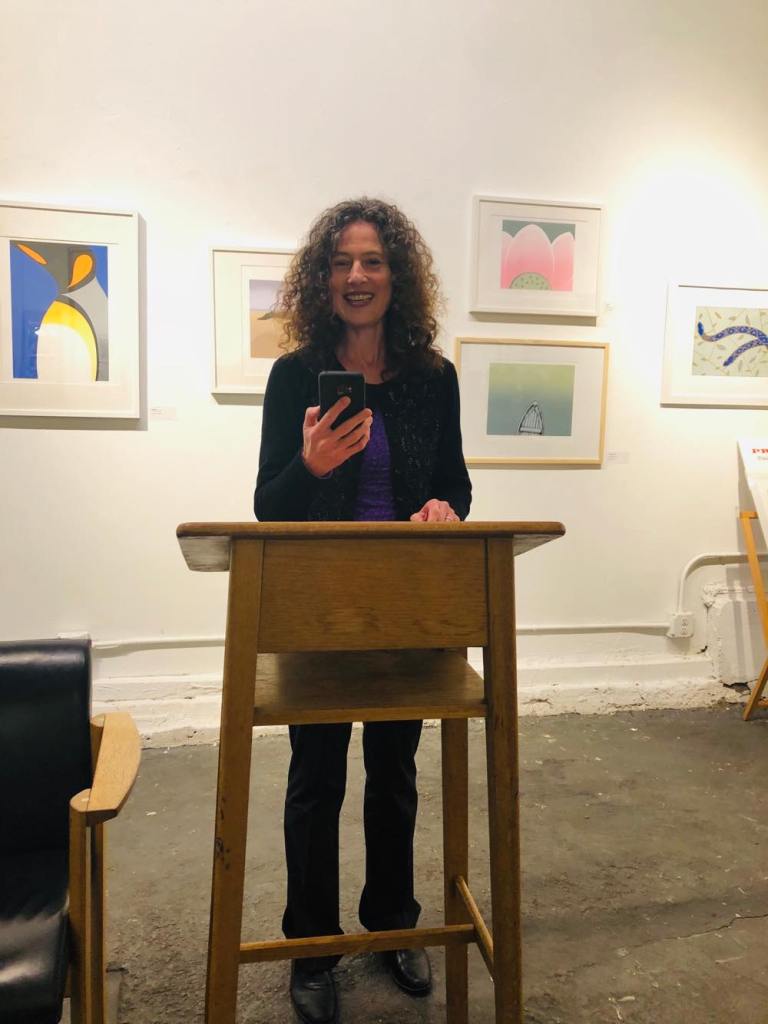
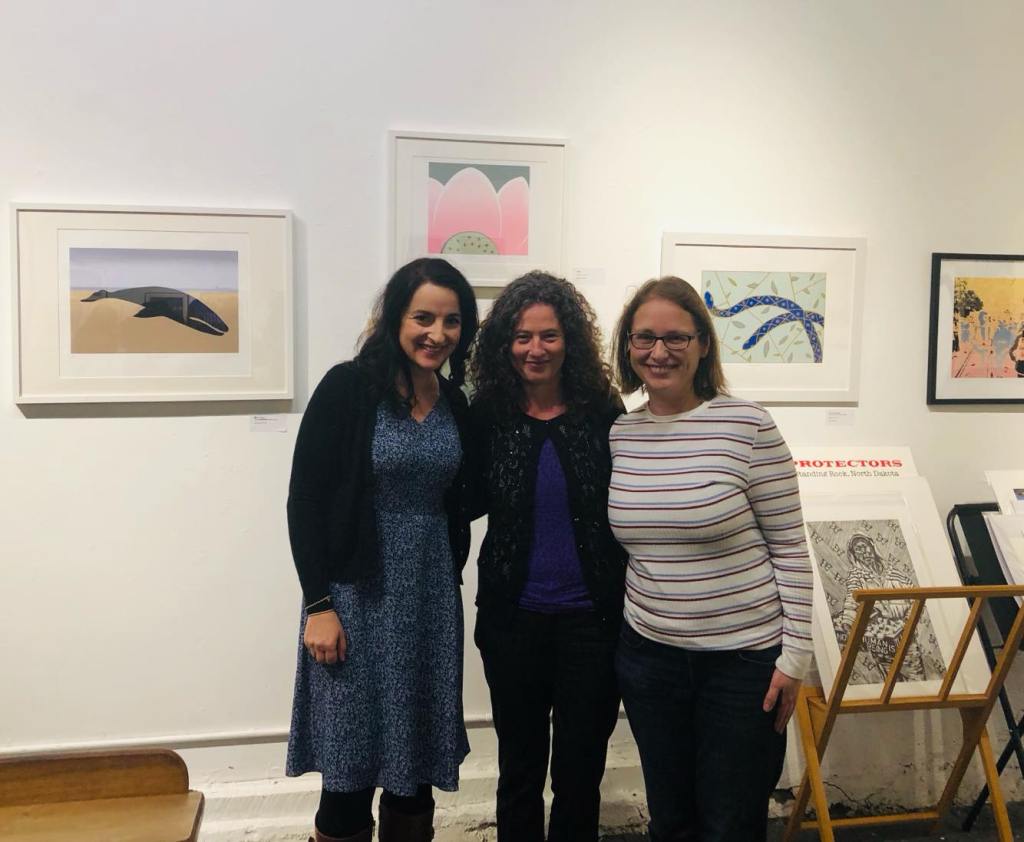
On November 25th, Punctured Lines hosted our first literary event in San Francisco. Thanks to a conference that brought to San Francisco scholars, translators, and writers in Slavic, East European, and Eurasian Studies, we were able to gather a star list of participants. A few of the readers have appeared in Punctured Lines, and we certainly hope to feature more of their work. Following the scheduled portion of the event, we hosted an open mic that turned out to be a great crowd-pleaser. Below are the pictures we captured that night and brief descriptions of everyone’s contributions.

Shelley Fairthweather-Vega opened with an excerpt from her recently published translation of Talasbek Asemkulov’s novel A Life at Noonavailable for purchase here. A story about a musician growing up in Soviet Kazakhastan and learning his art form from his father.

Yelena Furman read the opening from her short story “Naming,” recently published in Narrative Magazine, and available in full online (free, with free registration required).

Wayne Goodman read a few brief excerpts from his historical novel Borimir: Serving the Tsars that re-imagines gay romance in Imperial Russia. There’s lots of awkward flirting! This book is available for purchase on Amazon.

Maggie Levantovskaya read from her essay about a trip to Auschwitz concentration camp “To Conjure Up the Dead,” published in Michigan Quarterly Review. The bizarreness of Holocaust tourism with the post-Soviet twist. An excerpt from this essay appears online.

Dmitri Manin wore the T-shirt with Genrikh Sapgir’s poem on the back, and read to us his translations from Sapgir’s “Poems on Shirts” book. We have published three of these translations in an earlier post.

Masha Rumer shared an essay about exposing an unsuspecting date to the delights of pickled herring-and-boiled beet salad, aka “Seledka pod shuboj.” He lived long enough to propose. We’re hoping to read the follow up on this story in her upcoming book, Parenting with an Accent: An Immigrant’s Guide to Multicultural Parenting. More about Masha and her book in the Q&A she gave Punctured Lines.

Sasha Vasilyuk followed with an excerpt from her novel-in-progress about a Soviet prisoner of war. We will be following the development of this project closely.

Mary Jane White delighted us with her translations from Marina Tsvetaeva — her delivery of the “Ode to the Rich” landed particularly well with our audience. Mary Jane’s book of her own poetry and translations from Tsvetaeva Starry Sky to Starry Sky is available online. We will be following up with news of her upcoming book of translations from Tsvetaeva’s Berlin and Prague years, Poems of an Emigrant: After Russia, Poem of the Hill, Poem of the End, and New Year’s.

I read the opening of “Rubicon,” a short story from my collection Like Water and Other Stories.

Josie von Zitzewitz followed up on the thread of discussion about the lack of visibility of contemporary Russian literature in the United States, and introduced a project that she’s developing with Marian Schwartz and Hilah Cohen, soliciting work from young Russophone writers to create a feature publication in an American magazine (possibly more than one).

Joining us for the open mic portion of the show, we had Maxim Matusevich, a writer and a historian of USSR intersections with African countries. He delivered an excerpt from his hilarious short story about cultural encounters between American students going to study abroad in St. Petersburg.

Christopher Fort closed the evening with a poem that he read in both Uzbek and English, bringing our attention to a particular rhyming pattern of Turkic languages. We have previously linked to Christopher’s interview about translating Abdulhamid Sulaymon o’g’li Cho’lpon novel Night and Day. This novel is now available for purchase online.