Dear Punctured Lines community — please help us spread the word about the next San Francisco Bay Area reading by writers born in the former USSR. This event is a part of San Francisco’s annual Lit Crawl festival and will take place at Ruth’s Table (3160 21st Street) on October 25, 2025 at 5 pm.
On October 26, 5-6 pm at Manny’s in San Francisco, Punctured Lines will be hosting an event as a part of San Francisco’s annual Lit Crawl. Please join us if you’re able and help spread the word!
San Francisco Bay Area readers, take note: for the second year in a row, Punctured Lines is producing an event during San Francisco’s Lit Crawl.
On Saturday, October 21, 5 pm at 518 Valencia, a group of Bay Area authors will come together with poetry, stories and essays centered on Ukraine. Several of these authors have been regulars on our blog, and we’re delighted to introduce a few new names to our line up from last year.
Update: there has been a venue change. This event is now happening at Stage Werx Theatre, 446 Valencia Street.
Punctured Lines is co-hosting a Lit Crawl reading by six Bay Area writers born in Ukraine, Russia, and Moldova. Shaken by the horrific tragedy of the Russian invasion of Ukraine, we will read pieces exploring our connections, direct and indirect, to the part of the world we associate with home and exile, and where many of our friends and relatives are suffering as a result of the war. We work in the genres of nonfiction, literary and historical fiction, YA, flash, and other literary forms to tell our stories, and will read excerpts from our published and new work.
This event will take place at 5 pm on October 22nd at Blondie’s BarStage Werx Theatre, 446 Valencia Street in San Francisco .
Thanks to everyone who could attend our event on Saturday, December 4th, and thank you all for your engagement and for your wonderful questions. For those of you who couldn’t make it, here’s the video recording from the event and links to our work.
Seven immigrant writers read their fiction and nonfiction related to immigration, identity, family history and the mother tongue(s). Let’s talk about buckwheat and pickled herring with beets. What do you do if your children refuse to eat traditional foods? Or when your dying grandmother forgets English and Russian and begins speaking to you in Yiddish? Does a Soviet-era secret still matter when the country no longer exists? We explore love, life, loss and the nuances of living with a hybrid identity.
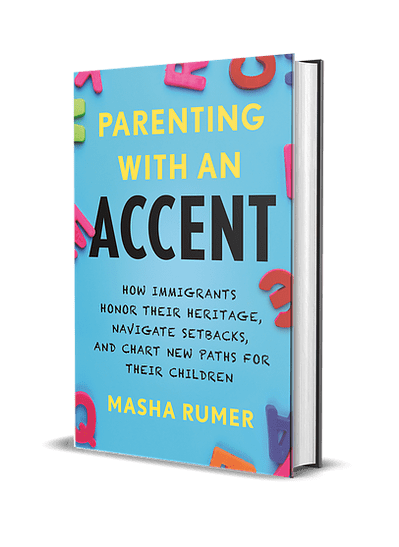
Dear Punctured Lines readers — come meet us on Zoom, and help us celebrate the publication of Masha Rumer’s book! (In San Francisco? Come meet us in person, details below.) We’re so happy to welcome Masha’s newly published Parenting With an Accent: How Immigrants Honor Their Heritage, Navigate Setbacks, and Chart New Paths for Their Children (Beacon Press). Punctured Lines published a Q&A with Masha when this book was still in the proposal stage, and we’ve been following Masha’s Twitter posts about its development with great interest and anticipation. Now that this book is out and available for all to read we are ready to party (and encourage all of our readers to buy it)!
Audre Lorde’s name and work is familiar to many of us who have studied feminist movements in high school and college. Some of her seminal essays, including “Poetry Is Not a Luxury” and “Uses of the Erotic: The Erotic as Power” are commonly included in syllabuses of literature classes and used as entry points into the conversation about the politics of literature and how combinations of race, gender, and sexuality affect one’s construction of self and point of view on the world.
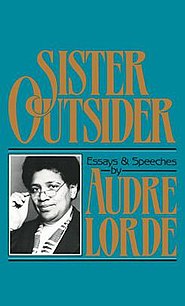
Less well known is Lorde’s essay “Notes from a Trip to Russia” that opens her book Sister Outsider. A footnote to this essay explains that Lorde spent two weeks in the Soviet Union in 1976 as an American observer to the African-Asian Writers Conference sponsored by the Union of Soviet Writers. Having returned from that trip, she finds herself haunted by it in her dreams, including a particular image of “making love to a woman behind a stack of clothing in Gumm’s Department Store in Moscow.” In Lorde’s dream, the woman falls ill and Lorde needs to seek medical help for her, and is floored by the realization that in Soviet Russia, medical treatment is free and available to all.
I read this essay just a few years ago and at first struggled with how to react to it. To me, everything starting from that opening image seemed both familiar and bizarre. It took me a moment, for instance, to recognize that Lorde is talking about GUM–an acronym for Gosudarstvennuiy Universalniy Magazin, a State Department Store–which in her version acquires an almost poetic personal quality, related to somebody named Gumm. I was born in 1979, three years after Lorde took this trip, and I had a personal mythology of GUM. As a child growing up in Leningrad, I had read about it in books and newspapers–as far as State Department Stores went, this one was well written about. I imagined it as a toy palace–I had an idea that that’s where most of the world’s toys were hidden from us kids. The keepers of the toys were, in my mind, not unlike the angry guards at the museums of the world or the tired, worn-out women working behind the counters of Leningrad’s stores: their job was to keep desirable items away from unworthy hands. To imagine a Soviet prodavshchitsa take part in a sex dream seemed unthinkable.
But then, I thought, why not? This is what it’s like to see the world I grew up in from a stranger’s eyes–it’s an opportunity to examine my premises. There must’ve been lesbians in the Soviet Union, even if I didn’t know anything about that until I was seventeen and living in the United States. So, my first approach to Lorde’s book took me into a completely unexpected direction: it sent me rethinking my relationships to all the women I had known growing up, imagining them as heroines of sexually charged international lesbian love stories. (I even started plotting a novel along these lines, thank you very much, Audre.)
During her trip to the Soviet Union, Lorde visited Moscow and from there traveled to Uzbekistan, the location of the Conference–she went to two towns there, Tashkent and Samarkand. The essay is very much a travelogue, the best of the genre, in which the writer is keenly aware of being a stranger to the places she’s moving through and as she’s documenting her experiences, she’s writing about her own thoughts and feelings and provides a window into her assumptions and biases. Reading the piece all of these years later, it feels like a gift of a guide into the study of Russian and Soviet literature and the field’s lingering struggle to include people of color and women into the conversation.
This essay champions the kind of work that we hope to do with Punctured Lines: bringing together unexpected voices and stories from and about the (post) Soviet space. Unfortunately, for rights reasons, we are unable to reprint the essay online, so to encourage a cross-cultural dialogue, we asked our Twitter followers to submit personal responses to this essay. We also reached out to a few scholars and writers who we expected might have unique insights into the issues that Lorde addresses. Below are responses we received from Emily Couch, Shelley Fairweather-Vega, Elena Gapova, and Maggie Levantovskaya. If you want to join this conversation, please comment below or reach out to puncturedlines [at] gmail.com.
We have been planning this post for several months, and are finishing it under conditions of quarantine. As I’m writing this, the world is struggling with the mounting numbers of COVID-19 cases and many of us have had to severely curb our activities–so the very nature of a travelogue feels radical at the moment. Universal medical care that, in Lorde’s notes of her trip to the Soviet Union, appeared too good to be true, today remains our most urgent need. Yet, as Levantovskaya mentions in her piece, the Soviet Union is a poor guide for a functional medical system–the conditions of care there were often inhumane and bribes were exchanged as a matter of course. We also want to acknowledge and honor the invisible, unpaid and low-paid women’s labor that goes into allowing each family and each hospital and each business and each state to keep going. We urgently need to change this situation so that the burden of this invisible labor does not disproportionately fall to women.
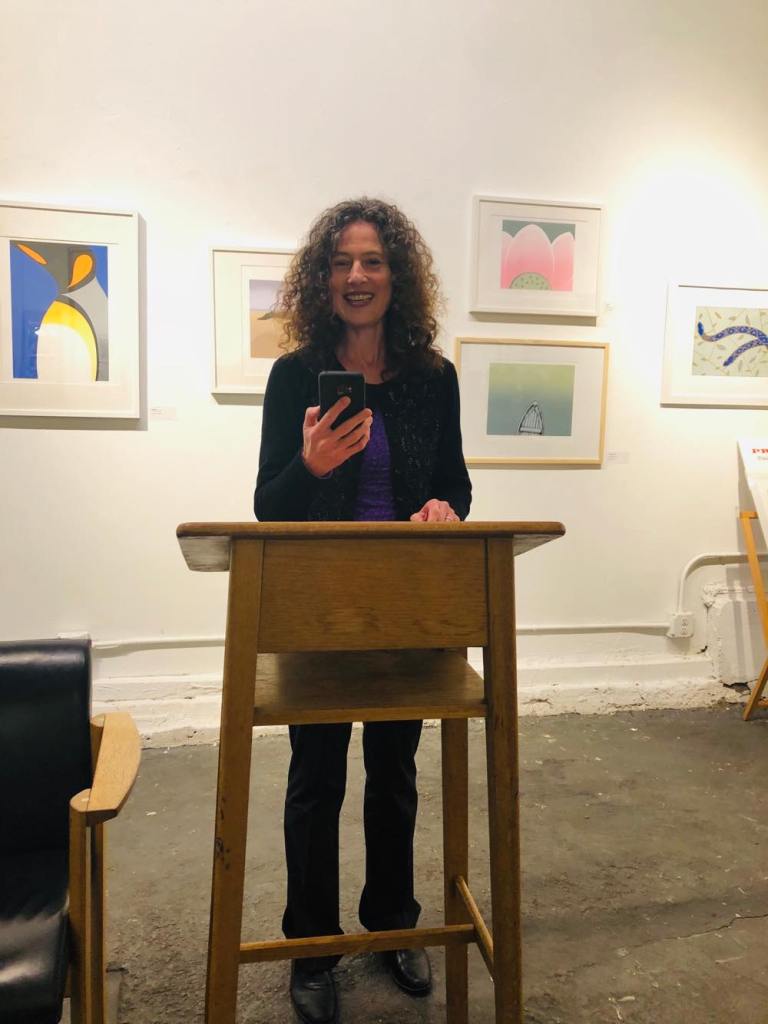
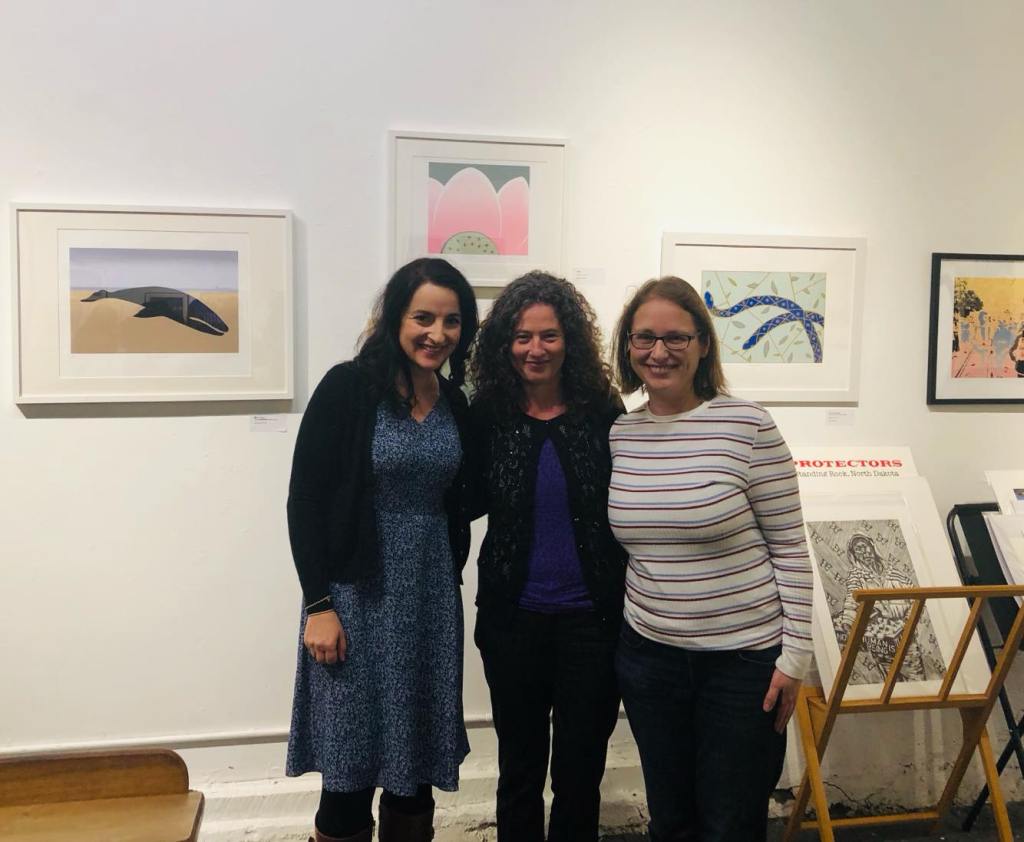
On November 25th, Punctured Lines hosted our first literary event in San Francisco. Thanks to a conference that brought to San Francisco scholars, translators, and writers in Slavic, East European, and Eurasian Studies, we were able to gather a star list of participants. A few of the readers have appeared in Punctured Lines, and we certainly hope to feature more of their work. Following the scheduled portion of the event, we hosted an open mic that turned out to be a great crowd-pleaser. Below are the pictures we captured that night and brief descriptions of everyone’s contributions.
Shelley Fairthweather-Vega opened with an excerpt from her recently published translation of Talasbek Asemkulov’s novel A Life at Noon — available for purchase here. A story about a musician growing up in Soviet Kazakhastan and learning his art form from his father.
Yelena Furman read the opening from her short story “Naming,” recently published in Narrative Magazine, and available in full online (free, with free registration required).
Wayne Goodman read a few brief excerpts from his historical novel Borimir: Serving the Tsars that re-imagines gay romance in Imperial Russia. There’s lots of awkward flirting! This book is available for purchase on Amazon.
Maggie Levantovskaya read from her essay about a trip to Auschwitz concentration camp “To Conjure Up the Dead,” published in Michigan Quarterly Review. The bizarreness of Holocaust tourism with the post-Soviet twist. An excerpt from this essay appears online.
Dmitri Manin wore the T-shirt with Genrikh Sapgir’s poem on the back, and read to us his translations from Sapgir’s “Poems on Shirts” book. We have published three of these translations in an earlier post.
Masha Rumer shared an essay about exposing an unsuspecting date to the delights of pickled herring-and-boiled beet salad, aka “Seledka pod shuboj.” He lived long enough to propose. We’re hoping to read the follow up on this story in her upcoming book, Parenting with an Accent: An Immigrant’s Guide to Multicultural Parenting. More about Masha and her book in the Q&A she gave Punctured Lines.
Sasha Vasilyuk followed with an excerpt from her novel-in-progress about a Soviet prisoner of war. We will be following the development of this project closely.
Mary Jane White delighted us with her translations from Marina Tsvetaeva — her delivery of the “Ode to the Rich” landed particularly well with our audience. Mary Jane’s book of her own poetry and translations from Tsvetaeva Starry Sky to Starry Sky is available online. We will be following up with news of her upcoming book of translations from Tsvetaeva’s Berlin and Prague years, Poems of an Emigrant: After Russia, Poem of the Hill, Poem of the End, and New Year’s.
I read the opening of “Rubicon,” a short story from my collection Like Water and Other Stories.
Josie von Zitzewitz followed up on the thread of discussion about the lack of visibility of contemporary Russian literature in the United States, and introduced a project that she’s developing with Marian Schwartz and Hilah Cohen, soliciting work from young Russophone writers to create a feature publication in an American magazine (possibly more than one).
Joining us for the open mic portion of the show, we had Maxim Matusevich, a writer and a historian of USSR intersections with African countries. He delivered an excerpt from his hilarious short story about cultural encounters between American students going to study abroad in St. Petersburg.
Christopher Fort closed the evening with a poem that he read in both Uzbek and English, bringing our attention to a particular rhyming pattern of Turkic languages. We have previously linked to Christopher’s interview about translating Abdulhamid Sulaymon o’g’li Cho’lpon novel Night and Day. This novel is now available for purchase online.
When: Monday, November 25, 2019 at 6:30 PM – 9 PM Where: Alley Cat Books, 3036 24th St, San Francisco, California 94110
This reading gathers together translators, writers, and scholars whose writing is connected, in various ways, with the literatures of the former Soviet Union.
We’re grateful to the Association for Slavic, East European, & Eurasian Studies that’s hosting its annual conference in San Francisco this year, which has allowed us to put this reading together with participants from across the United States.
A participatory reading means that, in addition to the announced readers, we’ll have a first come first served sign-up sheet for people who want to speak up and introduce their projects. We ask that each participant limits their reading or presentation to five minutes.
We’re delighted to have: Olga Breininger with her book There Was No Adderall in the Soviet Union Shelley Fairweather-Vega with A Life At Noon by Talasbek Asemkulov Yelena Furman with her story “Naming” from Narrative Magazine Wayne Goodman with an excerpt of his novel-in-progress Borimir: Serving the Tsars James Kates with Aigerim Tazhi‘s poetry collection Paper-thin Skin Maggie Levantovskaya with her essay “To Conjure Up the Dead” from Michigan Quarterly Review Dmitri Manin with translations of Nikolay Zabolotsky‘s Stolbtsy Masha Rumer with her book Parenting with an Accent: An Immigrant’s Guide to Multicultural Parenting Sasha Vasilyuk, with her novel in progress about a Soviet prisoner of war Mary Jane White with Marina Tsvetaeva translations Olga Zilberbourg with stories from her collection Like Water and Other Stories Josie von Zitzewitz introducing Russophone Literature by Young Writers
and more! Please reach out to puncturedlines [at] gmail.com if you want to be a part of this.









 Punctured Lines