Dear Punctured Lines community — please help us spread the word about the next San Francisco Bay Area reading by writers born in the former USSR. This event is a part of San Francisco’s annual Lit Crawl festival and will take place at Ruth’s Table (3160 21st Street) on October 25, 2025 at 5 pm.
Today we feature three poems from the Russian-language anthology Disbelief: 100 Russian Anti-War Poems (edited by Julia Nemirovskaya; various translators; Smokestack Books, 2023). We are grateful for the following introduction written for Punctured Lines by Maria Bloshteyn, one of the translators of the collection. As she notes below, one of the featured poets, Galina Itskovich, is a therapist helping those in Ukraine; you can donate here to support this work.
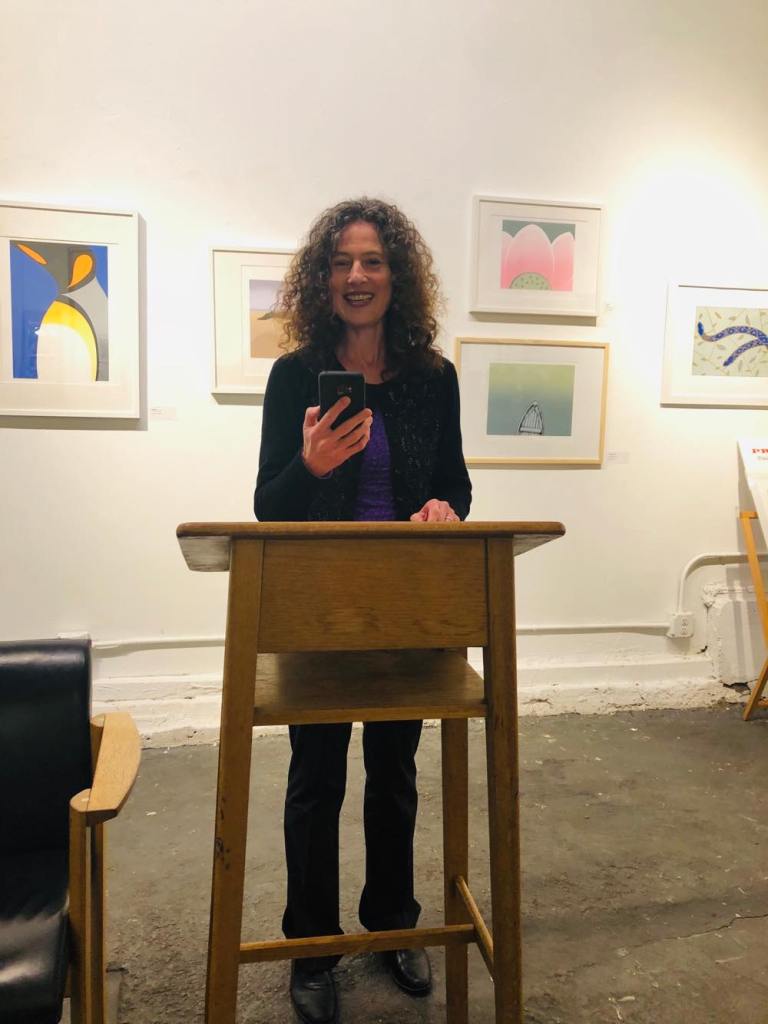
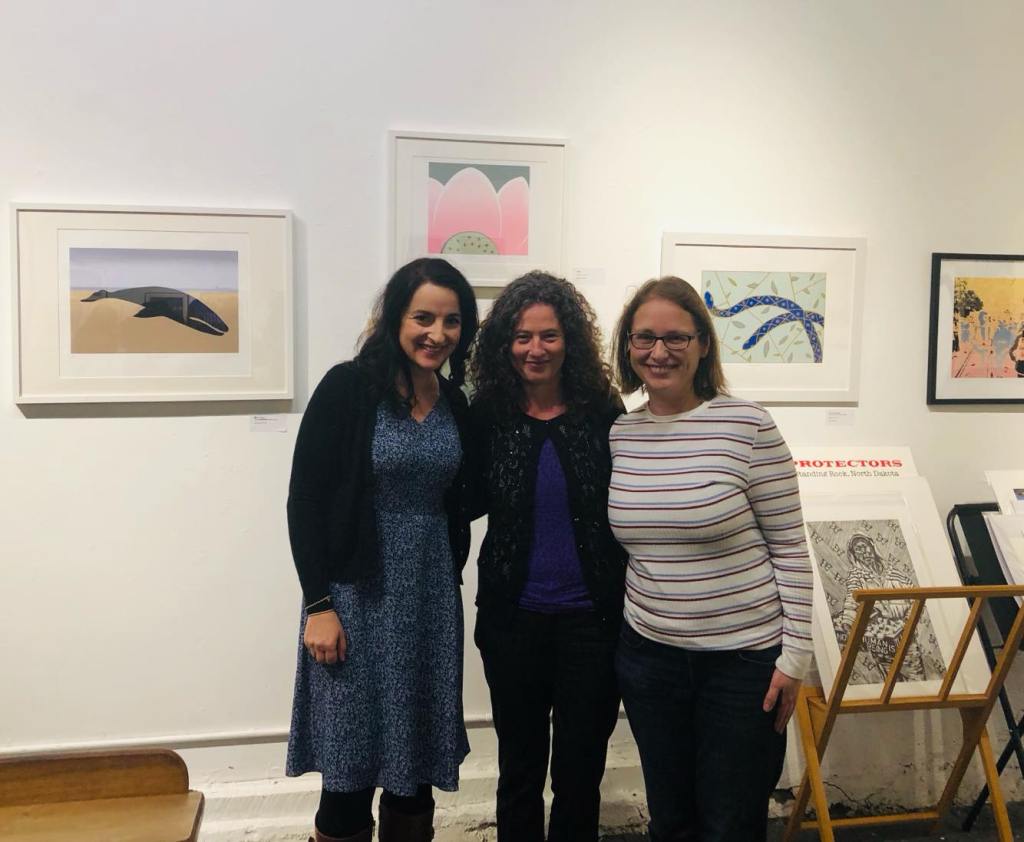
On November 25th, Punctured Lines hosted our first literary event in San Francisco. Thanks to a conference that brought to San Francisco scholars, translators, and writers in Slavic, East European, and Eurasian Studies, we were able to gather a star list of participants. A few of the readers have appeared in Punctured Lines, and we certainly hope to feature more of their work. Following the scheduled portion of the event, we hosted an open mic that turned out to be a great crowd-pleaser. Below are the pictures we captured that night and brief descriptions of everyone’s contributions.
Shelley Fairthweather-Vega opened with an excerpt from her recently published translation of Talasbek Asemkulov’s novel A Life at Noon — available for purchase here. A story about a musician growing up in Soviet Kazakhastan and learning his art form from his father.
Yelena Furman read the opening from her short story “Naming,” recently published in Narrative Magazine, and available in full online (free, with free registration required).
Wayne Goodman read a few brief excerpts from his historical novel Borimir: Serving the Tsars that re-imagines gay romance in Imperial Russia. There’s lots of awkward flirting! This book is available for purchase on Amazon.
Maggie Levantovskaya read from her essay about a trip to Auschwitz concentration camp “To Conjure Up the Dead,” published in Michigan Quarterly Review. The bizarreness of Holocaust tourism with the post-Soviet twist. An excerpt from this essay appears online.
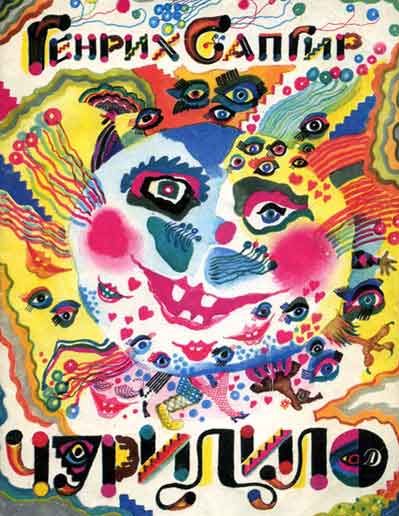
Dmitri Manin wore the T-shirt with Genrikh Sapgir’s poem on the back, and read to us his translations from Sapgir’s “Poems on Shirts” book. We have published three of these translations in an earlier post.
Masha Rumer shared an essay about exposing an unsuspecting date to the delights of pickled herring-and-boiled beet salad, aka “Seledka pod shuboj.” He lived long enough to propose. We’re hoping to read the follow up on this story in her upcoming book, Parenting with an Accent: An Immigrant’s Guide to Multicultural Parenting. More about Masha and her book in the Q&A she gave Punctured Lines.
Sasha Vasilyuk followed with an excerpt from her novel-in-progress about a Soviet prisoner of war. We will be following the development of this project closely.
Mary Jane White delighted us with her translations from Marina Tsvetaeva — her delivery of the “Ode to the Rich” landed particularly well with our audience. Mary Jane’s book of her own poetry and translations from Tsvetaeva Starry Sky to Starry Sky is available online. We will be following up with news of her upcoming book of translations from Tsvetaeva’s Berlin and Prague years, Poems of an Emigrant: After Russia, Poem of the Hill, Poem of the End, and New Year’s.
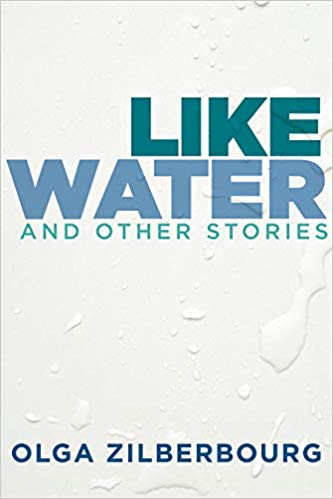
I read the opening of “Rubicon,” a short story from my collection Like Water and Other Stories.
Josie von Zitzewitz followed up on the thread of discussion about the lack of visibility of contemporary Russian literature in the United States, and introduced a project that she’s developing with Marian Schwartz and Hilah Cohen, soliciting work from young Russophone writers to create a feature publication in an American magazine (possibly more than one).
Joining us for the open mic portion of the show, we had Maxim Matusevich, a writer and a historian of USSR intersections with African countries. He delivered an excerpt from his hilarious short story about cultural encounters between American students going to study abroad in St. Petersburg.
Christopher Fort closed the evening with a poem that he read in both Uzbek and English, bringing our attention to a particular rhyming pattern of Turkic languages. We have previously linked to Christopher’s interview about translating Abdulhamid Sulaymon o’g’li Cho’lpon novel Night and Day. This novel is now available for purchase online.
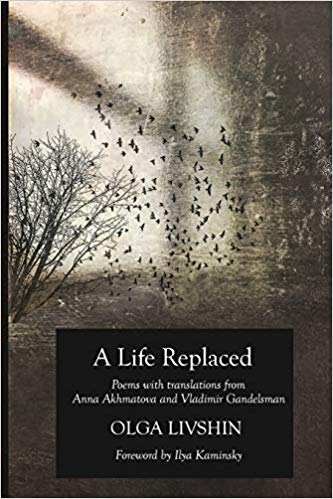
On November 9th, 2019, Olga Livshin, Dmitri Manin, and I hosted an off-off-site at ALTA (American Literary Translators Conference) in Rochester, NY. Olga Livshin introduced A LIFE REPLACED, her hybrid collection combining own and translated poems; and I introduced LIKE WATER AND OTHER STORIES, my English-language collection of fiction. Both books deal with issues around parent and children relationships, immigration, and processing the complex inheritance that we brought to the US from the Soviet Union.
To open the evening, we staged a brief performance of Dmitri Manin’s translations from the work of Genrikh Sapgir. A Soviet Jewish poet, Sapgir combines a whimsical imagination with the sharp eye for telling details. Watching this video a few weeks after the performance, I’m surprised to see how effectively Sapgir’s images and Dmitri Manin’s words helped us to recreate a certain spirit of the late Soviet Union, a kind of festive carnivalesque environment in the face of increasing challenges of everyday life and crumbling social structures. Obviously, none of us are trained actors, but we all reveled in the performative aspect of Sapgir’s work.
These poems come from Sapgir’s book “Sonnets on Shirts” that was first published outside of the Soviet Union, in Paris in 1978. Dmitri Manin is working on translating the complete manuscript, and we’re publishing these sonnets in English with his permission.
Thanks to Shelley Fairweather-Vega for recording the performance, and to our lovely and supportive audience! The sonnets below are reproduced in the order in which they appear in the video.
Sonnet of Things Gone Missing
To Ian Satunovsky
At times there is — no beef or ham or cheese Now hats are gone from store shelves everywhere But I have known calamities to spare No place to live. No health. No relatives
No happiness no moral sense no peace For one’s own labor no respect nor care No warm and comfy place to take a piss No prospects for a harvest come next year
But there are FISH-BASED MEATBALLS in a can And goals — both hazy and utopian Betrayal cosmos vodka boredom missiles
There’s forest, steppe, construction and ballet And even people — somewhere far away And God’s my witness! — though God’s also missing
Something — Nothing
A metaphysical sonnet
A sphere swings. Towards the sphere A sphere swings. Where they meet, they all Collapse: one — a pair, one — a pair, one — a pair We watch from a spherical mirror hall
Everything’s a reflection. A ball or a troll A thing or a cloudю It swells like a nightmare Then without a crash… a ball disappears a ball disappears a ball disappears Gobbled up by a ball
Streaking and splitting they fold and go — In the third — in the tenth — all the host to the faux Infinity: one after the next the next the next the next the next the next the next the next the next the next etc.*
Stop it! Enough! I can’t stand this ordeal! A ball on a thread in an infinite reel — A universal game on a childish pretext
*The line stretches to a misconceived infinity.
Chart of Life
Three wise old men bent over to review A chart of life in their benevolent wisdom “He’ll be a poet… under socialism…” “A wretched fate, indeed” said Lao Tzu
So I was born here not without a reason… Wartime… cat scavenging the yard for cukes… Oppression by the bastards and the crooks… The tedium was stifling like a prison!
And suddenly — a trip to Singapore On this sweet break from the routine and chore I saw a mural in a Buddhist temple
On which among pagodas and bamboo Three wise old men bent over to review A chart of life and smiled around the table
When: Monday, November 25, 2019 at 6:30 PM – 9 PM Where: Alley Cat Books, 3036 24th St, San Francisco, California 94110
This reading gathers together translators, writers, and scholars whose writing is connected, in various ways, with the literatures of the former Soviet Union.
We’re grateful to the Association for Slavic, East European, & Eurasian Studies that’s hosting its annual conference in San Francisco this year, which has allowed us to put this reading together with participants from across the United States.
A participatory reading means that, in addition to the announced readers, we’ll have a first come first served sign-up sheet for people who want to speak up and introduce their projects. We ask that each participant limits their reading or presentation to five minutes.
We’re delighted to have: Olga Breininger with her book There Was No Adderall in the Soviet Union Shelley Fairweather-Vega with A Life At Noon by Talasbek Asemkulov Yelena Furman with her story “Naming” from Narrative Magazine Wayne Goodman with an excerpt of his novel-in-progress Borimir: Serving the Tsars James Kates with Aigerim Tazhi‘s poetry collection Paper-thin Skin Maggie Levantovskaya with her essay “To Conjure Up the Dead” from Michigan Quarterly Review Dmitri Manin with translations of Nikolay Zabolotsky‘s Stolbtsy Masha Rumer with her book Parenting with an Accent: An Immigrant’s Guide to Multicultural Parenting Sasha Vasilyuk, with her novel in progress about a Soviet prisoner of war Mary Jane White with Marina Tsvetaeva translations Olga Zilberbourg with stories from her collection Like Water and Other Stories Josie von Zitzewitz introducing Russophone Literature by Young Writers
and more! Please reach out to puncturedlines [at] gmail.com if you want to be a part of this.
When: Saturday, November 9, 2019 at 7 PM – 10 PM EST Where: Java’s Cafe, 16 Gibbs St, Rochester, New York 14604
Join us for a lively evening of stories, poems, and performance art by nonconformist writers from the former Soviet Union, in English.
Olga Livshin‘s book A LIFE REPLACED braids together poems on immigration in America with translations from Anna Akhmatova and our contemporary Vladimir Gandelsman, winner of Russia’s highest award for poetry, the Moscow Reckoning. Many poems are responses to these two voices; some are stand-alone works. Maggie Smith comments: “Livshin, who immigrated to the US from Russia as a child, acknowledges the two Americas she knows firsthand: the one that fears and demonizes, and the one that welcomes. A LIFE REPLACED is astonishingly beautiful, intelligent, and important.”
A graduate of Rochester Institute of Technology, Olga Zilberbourg will introduce her English-language short story collection LIKE WATER AND OTHER STORIES. “The thread connecting these tales,” Anna Kasradze writes for The Moscow Times (ed. Michele Berdy), “is each protagonist’s attempt to come to terms with an identity that is always in flux, transitioning between various contexts such as emigration, motherhood, partnership, and employment.” Olga is the author of three Russian-language books (the latest of which “Хлоп-страна,” Издательство Время, 2016). She has published fiction and essays in Alaska Quarterly Review, Scoundrel Time, Narrative Magazine, Lit Hub, Electric Literature, the San Francisco Chronicle, and elsewhere. She co-moderates the San Francisco Writers Workshop.
Opening for the two Olgas is a poetry performance by translator Dmitri Manin. Avant-garde sonnets by Genrikh Sapgir will be presented on shirts, worn by both Olgas and Dmitri. Sapgir (1928-1999), a hugely acclaimed poet in Russia, first presented his philosophical and funny Sonnets on Shirts–on actual men’s shirts–in 1975. His performance made a sensation amidst an atmosphere of official, staid, highly traditional, print-only Soviet literature. Manin revives his work and re-enacts it in English, using contemporary bodies and presences to channel Sapgir.
Java’s–a ten-minute walk or three-minute Lyft drive from the Floreano Convention Center–will have food and drink for us to regale us into the night with literature and pleasure.






 Punctured Lines