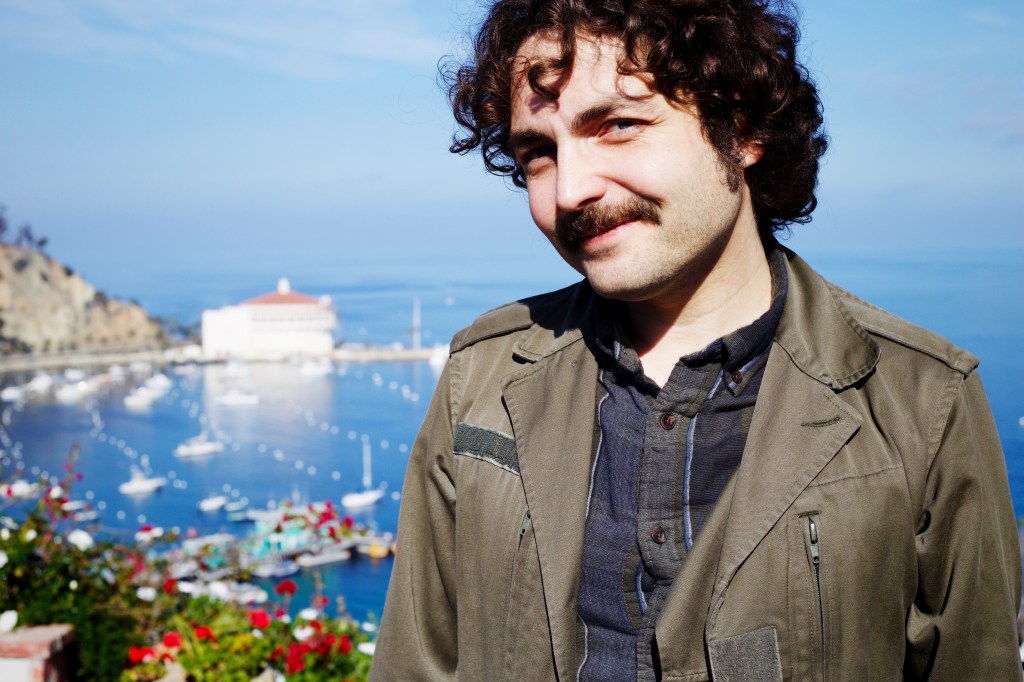
Today, we’re thrilled to present a Q&A with Boris Dralyuk — renowned translator, writer, LARB‘s Executive Editor (thank you for fine-tuning my reviews), former colleague, and old and dear friend. Based in Los Angeles, Boris has been instrumental in promoting Russian and Russophone literature in translation both in the United States and abroad. His recent poetry cycle can be found here. Boris answered our questions by email.
Punctured Lines: Your family emigrated from Odessa to Los Angeles when you were eight. In an interview with Melissa Beck on The Book Binder’s Daughter, you’ve told the story about turning to translation at the age of 14 in the hope of sharing a Pasternak poem with an English-speaking friend. You felt that translation was something of a calling for you. And yet there’s often a long path between that first desire to translate and professional translation. What were some of the challenges you’ve encountered at the beginning? What resources (mental, emotional, literary, etc.) did you draw on to keep going?
Boris Dralyuk: First, let me thank you both for inviting to review the path I’ve traveled. It seems, from here, to be longer and more winding than I usually imagine it to be. I tend to focus not on the path itself but on the small number of items I’ve picked up along the way. It’s these items – discrete memories, some pleasant and inspiring, others disappointing and embarrassing – that offer comfort and refine my perspective when I run into new challenges. A large part of professionalization is learning about yourself, about what you need – mentally, emotionally, physically – in order to do your best work. Is your mind clearest in the morning, the afternoon, or the evening? How quickly can you translate? How many words of prose can you render each day before losing steam? How much coffee do you need, and how much is too much?
One discovers these things over time, often the hard way. And they change – so it’s important to keep watching yourself, adjusting. When I was starting out, I translated omnivorously, at breakneck speed. The practice was useful, but the results were, as you can imagine, mixed… I learned soon enough that I can seldom translate, at a high level, more than 500 words of prose a day. It’s still the case that I move quickly when I translate poems, but two things have changed: I now translate only those poems that speak to me, that won’t let me go; and after I complete a draft, I share it with my most trusted readers, read it after the first blush of inspiration fades, let it sit as I wait for the second and third blushes to arrive, revisit it again – I put the poem through its paces. To sum up, I now have more faith in my personal taste in literature and less faith in my initial satisfaction with my own work.
I can’t imagine coming to any of these realizations earlier than I did – it all takes as long as it takes. What has helped me through every stumble, setback, and paralyzing fit of regret was the sympathy and encouragement of my mentors, who had cleared these hurdles before. The smartest thing I did in my early years as a translator was to seek out such mentors, and they all became dear friends – Mike Heim, Robert Chandler, Irina Mashinski, Maria Bloshteyn, and others.
PL: Some of us were lucky enough to study with Michael Heim at UCLA, but you also worked with him in terms of translation. You touched on this experience in your very poignant tribute when he passed away. Can you talk a bit more about what it was like to work with him?
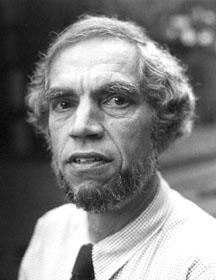
BD: As I wrote in my little piece, it was the time Mike devoted to my infantile efforts – the interest he showed, when he could well have shown me the door – that proved decisive. I wish I could say that I didn’t need encouragement, or that I don’t need it now, but I very much did and do. Yet I want to stress that Mike didn’t give me encouragement because he felt I needed it, he did it because he believed in translation itself, believed that it was an important art, that it was possible to improve one’s skills, and that I was dedicated to the work. His purity of intention was unmistakable. It was precisely what I was looking for in a teacher and reader, what I look for still, and what I try to manifest whenever I’m asked for feedback or advice. When Mike sat down with a student to go over a text, it isn’t that the world outside the text would disappear, it’s that the text would become the world’s center. And you’d leave his office with the sense that your work had, in its own small way, restored order to the world – had shaken it out as if it were a bedspread, revealing its true design. I feel that way every time I discuss a translation with Robert, Irina, Maria, and my wife, Jenny. Their tastes and sensibilities are even closer to my own than Mike’s were, but they all share the same world-shaking, order-restoring purity of intention.

PL: You’ve translated a range of writers from Russian, from Tolstoy to Babel and Zoshchenko to contemporary prose and poetry by Maxim Osipov and Julia Nemirovskaya (here, your translations of poetry are to be commended for often keeping the original meter and rhyme scheme, which is extraordinarily difficult in English but is precisely what lets these poems come through, as opposed to being rendered unrecognizable, in translation). What draws you to a particular author or project? What are the differences, and/or similarities, in the way you approach translating the various genres and sensibilities of the writers?
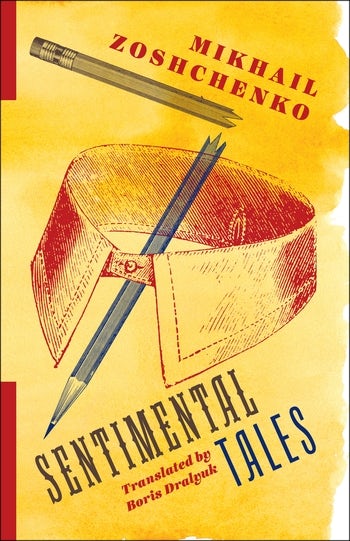
BD: The greatest training ground and door-opener of my career was the invitation, extended by Robert Chandler and Irina Mashinski, to coedit The Penguin Book of Russian Poetry. The correspondence we conducted over the nearly four years of work on that project led me to discover the range of voices inside me, voices capable of resonating with those of Vasily Zhukovsky, Afanasy Fet, Nikolai Gumilyov, Marina Petrovykh, Georgy Ivanov, Anna Prismanova, and other poets. I learned what I could and couldn’t do, my strengths and my weaknesses. Most importantly, I learned to listen closely in a hundred different ways, from every angle. Of course, when translating Isaac Babel, I don’t need to strain my ears – his Odessan language is the language of my family, of my childhood; and Zoshchenko’s tragic gags are also like mother’s milk. What I need to do, in both cases, is to find Anglophone equivalents for their voices, and, luckily, American literature is full of them. In the case of Babel, I was aided by Daniel Fuchs, Samuel Ornitz, Saul Bellow, Bernard Malamud, Cynthia Ozick, and, for good measure, Dashiell Hammett and Raymond Chandler. When Zoshchenko came knocking, Ring Lardner and Robert Benchley opened the door, with Damon Runyon peeking over their shoulders. In the case of Maxim Osipov and Julia Nemirovskaya, something rather different happened. The voices I use in my translations of their work are often versions of my everyday voice. Better versions, because they always have more important things to say than I myself do. I loved what Anna Aslanyan said in her TLS review of Maxim’s Rock, Paper, Scissors and Other Stories, which I co-translated with the brilliant Alex Fleming and Anne Marie Jackson: “Dralyuk’s idiom packs a punch, Anne Marie Jackson lends Osipov’s prose a gentle English timbre, and Alex Fleming meticulously recreates its cadences and wordplay.” We all make use of what we have inside us, of what we acquire from our reading and from our colleagues – the key is to make the very best use of it.

PL: In addition to translating, you also work with books in another way: as a frequent reviewer, including for the Times Literary Supplement, and of course as the Executive Editor of the Los Angeles Review of Books. It is thanks to you that this publication has come to amplify coverage of translations from the former Soviet countries, as well as diaspora literatures and scholarly works about the region. What do you look for in terms of the books/writers you feature in LARB?
BD: My editorial goal is, first and foremost, to empower and encourage the editors of our sections – which represent over a dozen genres – to cast as wide a net as possible, and to ensure that we’re covering a diverse array of books and uplifting the voices of critics and reviewers who may not have access to other major venues. We love giving authors their first break. I’m not interested in boilerplate reviews of the latest bestsellers or political exposés. I want our pieces to dig deeper, to be deeply informed but also deeply felt, and to come at books from unexpected angles. A good number of our reviewers are associated with colleges and universities, and their first drafts often bear the telltale signs of academic discourse: lots of jargon, sentences that are far more convoluted than they need to be, etc. The jargon may have its place, but one must remember that many readers are encountering these specialized terms for the first time. We always remind our contributors that they’re writing for a general audience of curious non-specialists; the goal is to welcome people into the discussion, not to stupefy them with a display of one’s erudition. The good news is that academics usually learn quickly – that’s why they’re academics.
PL: We talk a lot on Punctured Lines, and elsewhere, both about how to promote translations from Russian in general and of women writers in particular. In your essay “The Silver Age of Russian-to-English Translation” for Translation Review you name the stellar translators and publishers that have made translation from Russian an incredibly vibrant field. What are your thoughts on how we as a community – of translators, scholars, publishers, editors, reviewers, book bloggers, etc. – can work toward greater visibility of female authors within Russian-to-English translation overall?
BD: From Constance Garnett and Louise Maude on down, women have long been at the forefront of Russian-to-English literary translation. It seems to me that many, if not the majority, of our most prolific and accomplished contemporary translators are women. Among them are Marian Schwartz, Antonina W. Bouis, Lisa Hayden, Katherine E. Young, the late Jamey Gambrell, and Joanne Turnbull, whose shimmering translations of Sigizmund Krzhizhanovsky have restored that half-forgotten master of dark fables to his proper place, beside Borges and Calvino. But the work of male Russian authors has, until recently, dominated the market. When Anglophone readers think of a typical “Russian author,” I would bet many of them still imagine a bearded face… This is changing, slowly and steadily, because translators – both women and men – are more enthusiastically advocating Russian women’s writing. The resurgence of interest in Teffi, fueled by the efforts of Robert and Elizabeth Chandler and the team they’ve assembled, is just one indication of this shift – and may be one of the driving forces behind it. Pushkin Press, which releases the Chandlers’ Teffi volumes in the UK, has now also put out phenomenal books by two other émigré women authors, Irina Odoyevtseva’s Isolde, translated by Bryan Karetnyk and Irina Steinberg, and Banine’s (Umm El-Banu Assadullayeva) Days in the Caucuses, translated from the French by Anne Thompson-Ahmadova. The openness and dedication of small- and medium-sized publishers like Adam Freudenheim of Pushkin Press, Edwin Frank of NYRB Classics, and Will Evans of Deep Vellum, which has released two novels by Alisa Ganieva in Carol Apollonio’s translations, as well as of Christine Dunbar of Columbia University Press’s Russian Library, should be applauded without cease. And Lisa Hayden, who not only translates Guzel Yakhina and Margarita Khemlin but also highlights the work of countless other women authors on her indispensable Bookshelf, is a hero and an inspiration to us all. As members of the community, we must actively seek out the widest variety of Russian voices and, if any of these voices resonate with us individually, we should try to bring them across into English ourselves or to suggest them to other translators.
PL: Soviet and post-Soviet lives don’t always fit neatly into the contemporary American classification of identities. For instance, in conversation with Katya Michaels at Odessa Review, you described Babel as a Jewish-Ukrainian-Russian-Soviet writer. This sounds about right and yet in American parlance this often gets shortened to “Russian writer” or “Soviet writer.” How do you approach this work of identity constructions that critics and translators are often asked to do?
BD: Yes, this is always a challenge. I suppose the first and most important step is to determine how these authors see – or saw – themselves in their own time and within a given tradition or set of traditions. But once you establish that, what do you do with it? If your press allows you to supply the text with an introduction, or even a brief translator’s note, that’s an opportunity to enrich a reader’s understanding of an author’s identity. And there are, of course, decisions to be made within the text itself. Is it appropriate for Yiddishisms, both syntactic and lexical, to color a Russian text in English translation? If you ask me, Babel wouldn’t be Babel without them. And would Lev Ozerov, a Soviet Jewish poet who, although he wrote in Russian, was raised in Ukraine, counted Ukrainian intellectuals among his closest friends, and translated scores of Ukrainian poems object to our using the spelling “Kyiv” in our rendering of his work? I think he’d heartily approve. Needless to say, there’s no one-size-fits-all approach – and that’s the beauty of it.
PL: What are you working on now? What project(s) is/are on your wish list?

BD: Right now I’m awaiting the publication of my translation of Andrey Kurkov’s latest novel, Grey Bees – a moving, gently surreal picaresque set in Donbas and Crimea two years into the current war. (Talk about Ukrainian place names!) Alex Fleming, Nicolas Pasternak Slater, and I are also making great progress on a second volume of Maxim Osipov’s beguilingly nuanced stories and essays, and are relishing every minute of it. Julia Nemirovskaya’s humbly revelatory and incomparably humane verse continues to work its way through me, and I’m always on the lookout for little treasures to share on my blog – like this delightful poem by Sofiya Pregel.
Follow Boris’s work at https://bdralyuk.wordpress.com/


 Punctured Lines