Aikanush: An Excerpt from Akram Aylisli’s Stone Dreams, translated by Katherine E. Young

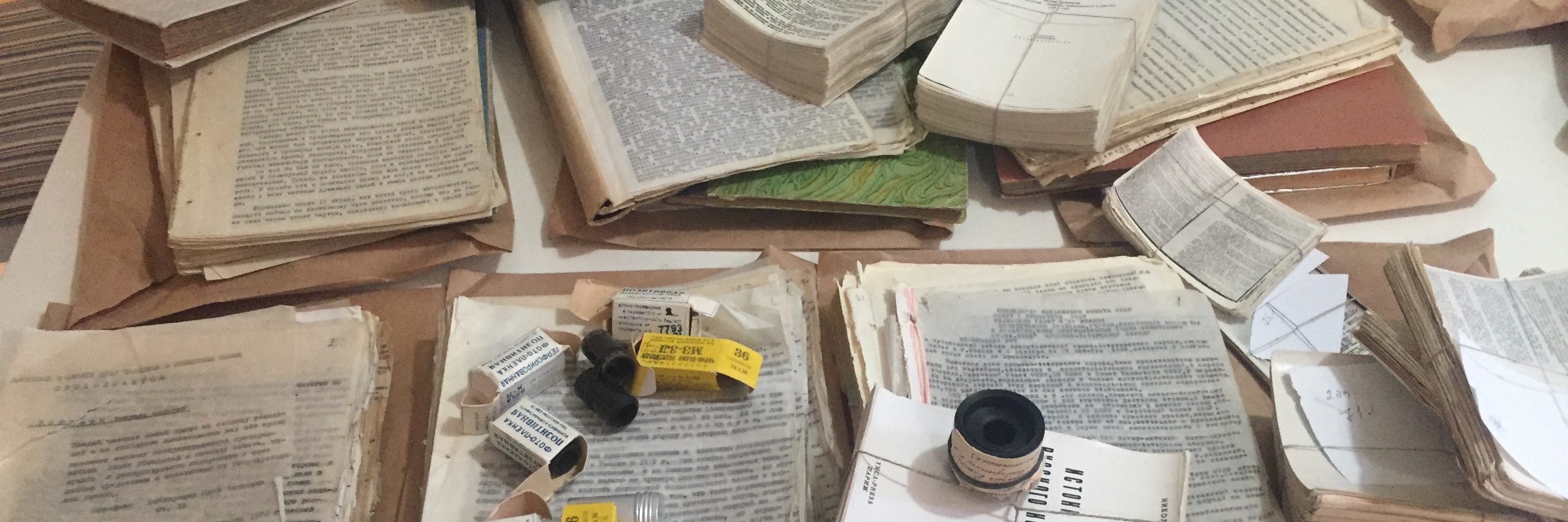
On February 9, 2013, Akram Aylisli’s books were burned in his native village. For more than six decades, Azerbaijan’s most prominent writer has written fiction about the mountain village of Aylis, from which he took his pen name; Aylisli called the day of the burning “the most terrible day of my life.” Why were his books burned? Aylisli had published a novella, Stone Dreams, that challenged official propaganda erasing the role played by Armenians in the history of Azerbaijan, a country currently dominated by ethnic Azeris (Azerbaijan and neighboring Armenia have engaged in military hostilities since before the collapse of the Soviet Union). Stone Dreams is among the first fictional works in the greater Turkic-speaking world to depict both historical and contemporary violence against ethnic Armenians, and it includes sympathetic portrayals of Armenian villagers residing in Azerbaijan. The novella also portrays the corruption and authoritarianism of modern-day Azerbaijan. In the uproar that greeted the novella’s publication, Aylisli was stripped of his presidential honors and pension. An empty coffin was paraded around the courtyard of his residence, and a bounty—later rescinded under international pressure—was offered to anyone who would cut off the writer’s ear. In 2014, international supporters nominated Aylisli for the Nobel Peace Prize for “his efforts to reconcile Azerbaijani and Armenian people.” In 2016, trumped-up legal charges were filed against Aylisli by the Azerbaijani government, a case that is still pending. Ten years after his books were burned, Akram Aylisli continues to live under de facto house arrest in Azerbaijan, unable to leave the city of Baku. He is 85.

Continue reading “Aikanush: An Excerpt from Akram Aylisli’s Stone Dreams, translated by Katherine E. Young”

Making People Feel Uneasy: Joanna Chen in Conversation with Katherine Young

Katherine Young, a poet and translator, gave this interview on BLARB, the blog of the esteemed Los Angeles Review of Books. In 2018, Academic Studies Press published Young’s translation of the trilogy, Farewell, Aylis, by Akram Aylisli, currently a political prisoner in his native Azerbaijan (Young has spearheaded efforts to free him, including a recent petition circulated on social media). Olga Zilberbourg reviewed this novel, which Punctured Lines noted in our post. As we also noted, an excerpt from his novella, A Fantastical Traffic Jam, translated by Young, can be found here.

Young’s latest project is the translation of Look at Him by Anna Starobinets (Slavica, forthcoming 2020), an open, unflinching account of her abortion that was controversial when it came out in Russia. As Young says, “Women don’t talk about these things, even with their partners, so to write a book in which you expose the most intimate details of your body and the choices you made medically is a violation of a lot of subtle taboos about women who are supposed to grin and bear their trials and tribulations.”

Young also talks about being a poet and how much Russian poetry has shaped her own: “I feel very much more informed by Russian poets than most American poets. I’ve read Walt Whitman, but I don’t identify with him the same way I might say Alexander Pushkin or Mikhail Lermontov or Anna Akhmatova.”

You can read the full interview here: https://blog.lareviewofbooks.org/interviews/making-people-feel-uneasy-joanna-chen-conversation-katherine-young/

A review of Akram Aylisli’s Farewell, Aylis

Here’s a review Olga wrote for The Common of a remarkable book that comes to us from Azerbaijan, published thanks to the advocacy of its translator, Katherine E. Young,

Contemporary books emerging from post-Soviet countries often deal with the dehumanizing effect of the region’s systems of government on its victims, seeking to trace and partially redeem the psychological and physical harm many have suffered. For understandable reasons, few authors care to look at the perpetrators, at the people who committed murders and mass murders, informed on and denounced their neighbors. Yet, in the post-Soviet reality, often it’s these people and their descendants who have risen to the top, taken charge of the new nation states, and written their laws.

It is in this context that Akram Aylisli, in post-Soviet Azerbaijan, gathers together the three novellas and closing essay that comprise his “non-traditional novel,” Farewell, Aylis. Born in 1937, Aylisli achieved fame in the Soviet Union for his earlier trilogy People and Trees. Though pieces of this new, remarkable book have appeared in Russia, the collected Farewell, Aylis, published as a result of the efforts of his American translator, Katherine E. Young, does not yet exist in any other language.

Click here to read the rest of the review.