2019 Warwick Prize in Translation, Long List

We congratulate Lisa Hayden, whose translation of Guzel Yakhina’s novel Zuleikha has been included among thirteen books longlisted for the third annual award of the Warwick Prize for Women in Translation. We love this book and we are delighted with this news.

Read the full announcement here.

The list of longlisted titles, in alphabetical order, is as follows:

· Brother In Ice by Alicia Kopf, translated from Catalan by Mara Faye Lethem (And Other Stories, 2018)

· Convenience Store Woman by Sayaka Murata, translated from Japanese by Ginny Tapley Takemori (Granta, 2018)

· Disoriental by Négar Djavadi, translated from French by Tina Kover (Europa Editions, 2018)

· Drive Your Plow Over the Bones of the Dead by Olga Tocarczuk, translated from Polish by Antonia Lloyd-Jones (Fitzcarraldo Editions, 2018)

· Katalin Street by Magda Szabó, translated from Hungarian by Len Rix (Maclehose Press, 2019)

· Negative of a Dual Photograph by Azita Ghahremann, translated from Farsi by Maura Dooley with Elhum Shakerifar (Bloodaxe, 2018)

· People in the Room by Norah Lange, translated from Spanish by Charlotte Whittle (And Other Stories, 2018)

· Picnic in the Storm by Yukiko Motoya, translated from Japanese by Asa Yoneda (Little, Brown Book Group (Corsair), 2018)

· Season of the Shadow by Léonora Miano, translated from French by Gila Walker (Seagull Books, 2018)

· Shadows on the Tundra by Dalia Grinkevičiūtė, translated from Lithuanian by Delija Valiukenas (Peirene, 2018)

· The Years by Annie Ernaux, translated from French by Alison L. Strayer (Fitzcarraldo Editions, 2018)

· Thick of It by Ulrike Almut Sandig, translated from German by Karen Leeder (Seagull Books, 2018)

· Zuleikha by Guzel Yakhina, translated from Russian by Lisa C. Hayden (Oneworld, 2019)
Zhivago’s great passion inspires plagiarism row | News | The Sunday Times

Here’s a bit of upsetting news. The Sunday Times (paywall) reports that Anna Pasternak, the author of Lara, a biography of Olga Ivinskaya, has accused Lara Prescott of plagiarism. Lara Prescott is the author of the recently published novel The Secrets We Kept that in fictional form follows the story of Olga Ivinskaya. Lara Prescott’s publisher is standing by her, and we will follow the story of the legal complaint as it develops, but I feel that the situation is unfortunate on many levels.

The story of Olga Ivinskaya, who was Boris Pasternak’s partner at the end of his life and through the writing of Doctor Zhivago, continues to fascinate writers and readers of Pasternak’s novel, in particular, for its parallels to that of Lara, the character of Pasternak’s novel. Olga Ivinskaya has told her story herself, in her memoir A Captive of Time that was translated to English by Max Hayward and published by HarperCollins in 1979, and there have been a number of retellings since then (not all of them translated to English).

Penguin Random House pointed out that the story of Olga Ivinskaya has been the subject of multiple books before Anna Pasternak’s, including Ivinskaya’s 1978 autobiography, a book by her daughter Irina Emelyanova, and Peter Finn and Petra Couvee’s 2014 book The Zhivago Affair.

https://www.theguardian.com/books/2019/oct/01/lara-prescott-doctor-zhivago-boris-pasternak-plagiarism-penguin-random-house

One of the reasons I find the legal complaint unfortunate is because it carries on the notes of scandal and sensationalism, associated with Doctor Zhivago from the beginning. I fear that the book and the nuance of the stories of the women behind it get lost in the fray.

On the other hand, given this interest to her story, I do hope that Olga Ivinskaya’s book might see a new English-language edition. And, perhaps, an enterprising English-language writer will take up Zinaida Pasternak’s story. If we’re writing the story of the affair, Zinaida’s side of it is no less captivating than Olga’s.

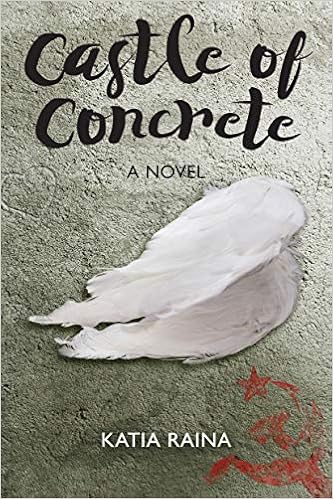
New Book: Katia Raina’s Castle of Concrete

Thanks to Lea Zeltserman and her Soviet Samovar newsletter for the mention of this novel. This is labeled as “Young Adult,” which means might fly under the radar when I look at reviews of contemporary fiction. This also means, it might be a gripping and fast-paced read. The description and preview of the first few pages are certainly promising.

Sonya is a daughter of a “dissident poetess moneyless famous jobless” mother, who had nearly aborted her. Jewish, too–being Jewish in the Soviet Union seems to be a major theme of this book. The novel takes place just before the collapse of the Soviet Union, and emigration looms large. Sounds both familiar and intriguing.

Publisher: Young Europe Books

Agent: Jessica Regel

Yuri Tynianov’s Permanent Evolution

Translators and scholars Ainsley Morse and Phillip Redko are bringing out a new volume of Yuri Tynianov’s work. Permanent Evolution contains his essays on literature, theory and film, many of which are translated here for the first time. Daria Khitrova of Harvard University penned the intro.

Publisher’s intro: “Yuri Tynianov was a key figure of Russian Formalism, an intellectual movement in early 20th century Russia that also included Viktor Shklovsky and Roman Jakobson. Tynianov developed a groundbreaking conceptualization of literature as a system within—and in constant interaction with—other cultural and social systems. His essays on Russian literary classics, like Pushkin’s Eugene Onegin and works by Dostoevsky and Gogol, as well as on the emerging art form of filmmaking, provide insight into the ways art and literature evolve and adapt new forms of expression. Although Tynianov was first a scholar of Russian literature, his ideas transcend the boundaries of any one genre or national tradition. Permanent Evolution gathers together for the first time Tynianov’s seminal articles on literary theory and film, including several articles never before translated into English.”

Russian Samizdat, Children’s Literature, and the Sunset Years of the Soviet Empire

Olga Bukhina wrote a fascinating piece on the C.S. Lewis’s Chronicles of Narnia in the Soviet Union. My parents were regular consumers of Samizdat, but I don’t remember seeing the Narnia books in their hands — perhaps, it’s the overtly Christian message that put them off. My parents weren’t interested in religion or science fiction, but I was, and just a few years later I devoured Lord of the Rings when it was officially published in 1991. (Of course, it’s entirely possible that my parents read it without my knowledge. Parents are apt to do things like that…)

https://childlitassn.wixsite.com/intlcommittee/single-post/2019/09/25/Russian-Samizdat-Children%E2%80%99s-Literature-and-the-Sunset-Years-of-the-Soviet-Empire

Narnia was not just a religious threat; in the Soviet context, it was clearly political. The message of these fairytales turned out to be much more dangerous than particular words and images that could be eliminated by censorship. The words of the faun Mr. Tumnus, “It is winter in Narnia, and has been for ever so long… Always winter and never Christmas; think of that,” in The Lion, the Witch and the Wardrobe (The Chronicles of Narnia. New York: HarperCollins Publisher, 2001, p. 118), resonated to the reader as an image of the Soviet political winter without any hope for change; the change being symbolized by Christmas.

Emerging Translators Reading

ALTA, American Literary Translators Association hosted a virtual reading with three translators who are completing their yearlong program as mentees of exprienced translators working in the field.

This recording offers a unique opportunity to get an early glimpse into stories that hopefully will eventually become books. Fiona Bell is working from Russian on translating Natalia Meshchaninova–a contemporary filmmaker who also published a book of autobiographical stories–in this excerpt, the narrator tells of her teenage experience of keeping a diary, the way she constructs her self on paper, based on examples from her reading more (in particular, The Secret Diary of Laura Palmer — a novel that was spun off from the Twin Peaks series!).

Mirgul Kali, translating from Kazakh, reads an excerpt from Mukhtar Magauin’s novella Kokbalaq, that tells of a life of a traditional Kazakh musician in the Soviet Union, and from this excerpt we get to understand something of his relationship with his art. In the interview after the reading, Mirgul talks about learning from this book about her own culture and all the reading she needed to do to convey the musical terms into English. The more I learn about her project, the more impressed I am with the amount of scholarship and thought that has gone into this translation.

Jennifer Kellogg reads to us from Book of Excercises II by a modern Greek poet, Geogre Seferis who won the Nobel Prize for Literature in 1963. This book was published postuhomsouly in 1976, and most of the poems in this volume have not been translated to English until now.

Please enjoy and if you feel inspired, donate to ALTA to support this fantastic fellowship program.

British Library hosts English-language presentation of Kazakh literature

The British Library held an event last month to promote literature from Kazakhstan as part of the project “Contemporary Kazakh Culture in The Global World.” It was the launch of two anthologies, one of prose and another of poetry, that were translated into English. The “anthologies, which are 500 pages each and include works by 60 Kazakh poets and writers, are being translated into the six official languages of the United Nations: Arabic, Chinese, English, French, Russian and Spanish.” Cambridge University Press is the publisher of the English translations. 

According to the article, the “Contemporary Kazakh Culture in The Global World project is part of the Ruhani Zhangyru (Modernisation of Kazakhstan’s Identity) programme, which seeks to preserve and popularise the country’s historical and cultural heritage.”

Promoting lesser-known literatures is a laudable goal and something sorely needed in the West. But as with all projects that seek to project an image of a particular country, we need to be asking what type of image is being projected and for what reason(s), which voices are included and which left out. Of course, it is impossible to answer these questions until these anthologies become available. A project to keep an eye out for.

https://astanatimes.com/2019/09/british-library-hosts-english-language-presentation-of-kazakh-literature/

Jennifer Eremeeva’s Lenin Lives Next Door: Marriage, Martinis, and Mayhem in Moscow

As a response to our first publicity efforts for this blog, Yelena and I received a tweet from Jennifer Eremeeva, an expat who moved from the US to Russia. In 2014, she published a book of short stories about her protagonist, also named Jennifer, who was a Russia super-fan in the 1980s, started learning the language and traveling around the Soviet Union on the eve of its dissolution–then met a man she fell in love with, and married him, and ended up staying for twenty years.

I’ve just started reading this book on Amazon, and this seems a page-turner. Jennifer is a keen observer and a natural storyteller, with a sharp sense of humor and attention to the nuance of language and culture. And she’s got so many interesting stories to tell!

Author: Jennifer Eremeeva

Title: Lenin Lives Next Door: Marriage, Martinis, and Mayhem in Moscow

Publisher: Small Batch Books

Pub date: February 3, 2014

How Should We Review Translations? Part II

Asymptote journal continues its discussion about translating and reviewing literature. The focus this time is on Korean poetry, but the issues raised are relevant to other translated literatures.

“To me, the most interesting aspect of reviewing a translation—above and beyond the accurate and thoughtful accounting of the book in question that all reviews require—is imagining how it will affect and be affected by its reception within the standards of specific reading communities. Or to put it another way: how the translation speaks to the context of a reading community and how that community speaks to the translation.”

https://www.asymptotejournal.com/blog/2019/09/25/how-should-we-review-translations-part-ii/

A profile of Ilya Kaminsky

The Guardian has published a lovely profile of Ilya Kaminsky, related to Deaf Republic, his second collection of poetry.

Odessa was a cosmopolitan place, a “city of laughter” in which poetry was revered, and from an early age Kaminsky wrote and learned it by heart. When he was 12 his prose writing was published in the local newspaper, after he answered a call-out to schoolchildren to contribute, because the paper had no money to pay journalists. At 15, though he thought of poetry as “a private thing”, he produced his first chapbook. He had graduated from school by the time the family was forced into exile.