This week AWP, or Association of Writers and Writing Programs, is holding its annual conference in San Antonio, TX. Many of the attendees, however, have opted to stay home due to the increased risk of the corona virus outbreak. An important component of this conference is a massive book fair, at which hundreds of independent presses and literary journals sell their stock. To compensate for the losses of this already financially strained community, people are organizing several initiatives.
First of all, there’s #AWPVirtualBookfair Twitter hashtag, under which you will find links to lots of publishers who are offering significant discounts of their stock. Trevor Ketner started the #AWPVirtualBookfair Google Doc, where you can find a comprehensive list of participating publishers, and Natalie Eilbert creating the AWP Virtual Bookfair for Authors Doc. Justin Greene created a handy list of publishers on Entropy, that includes the discount codes. Point being: the best way to support literary arts and independent publishing is to buy our books.
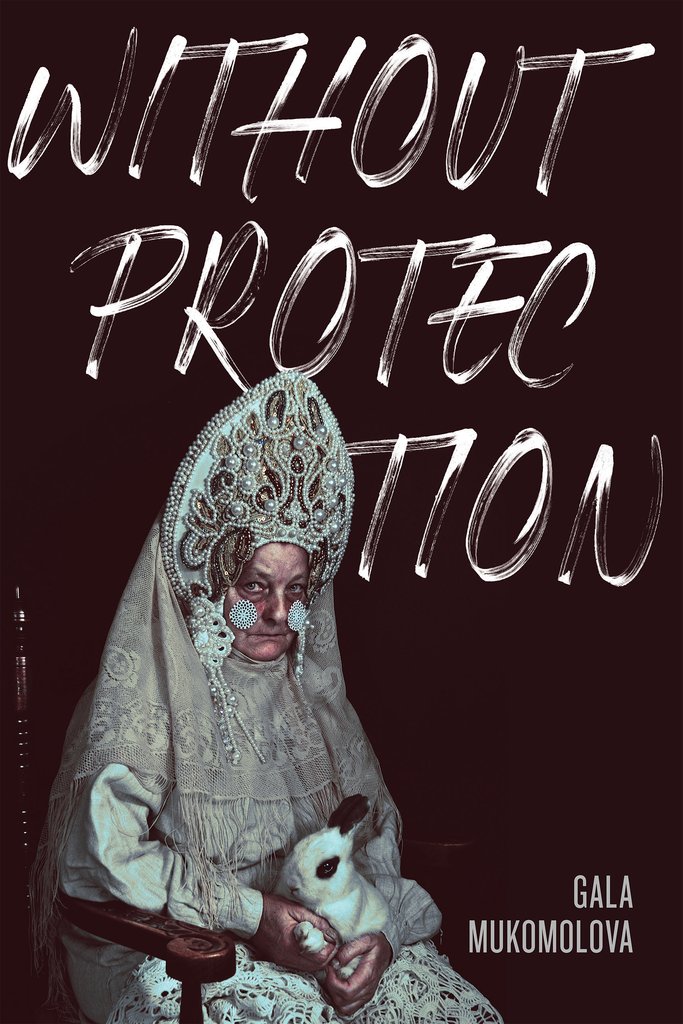
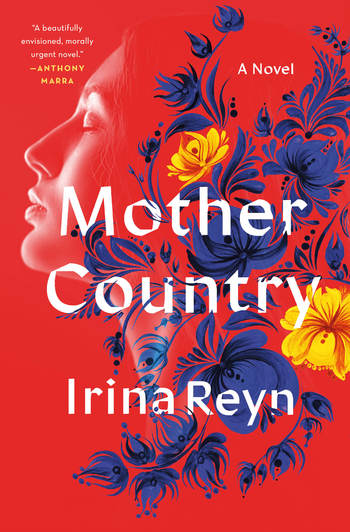
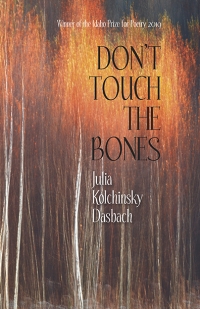
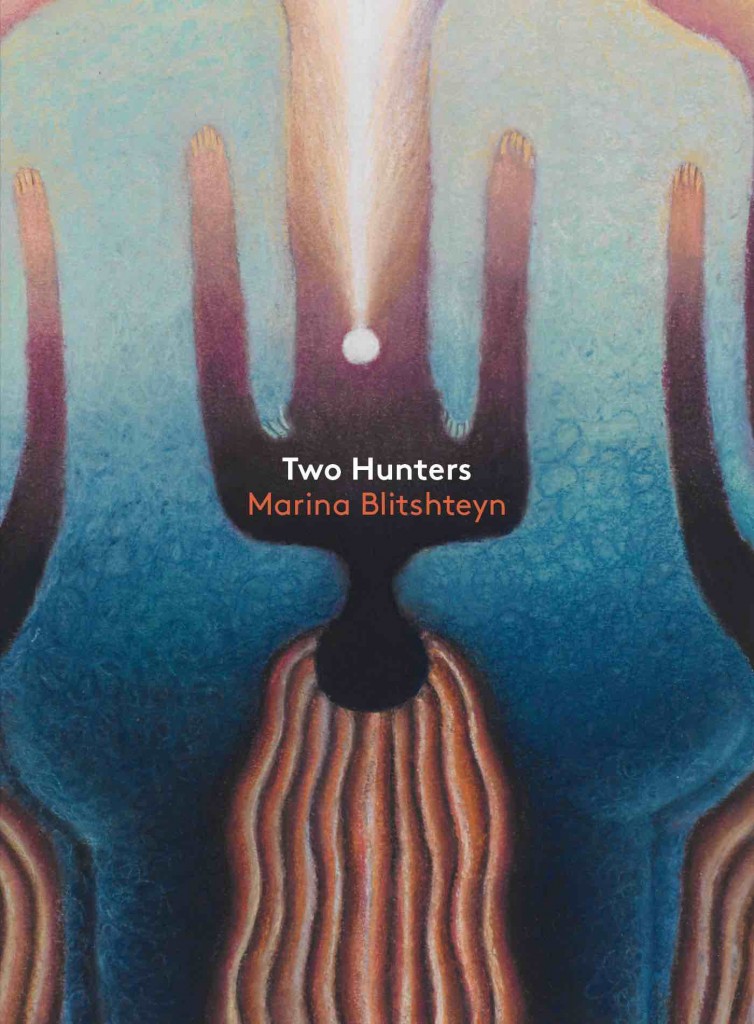
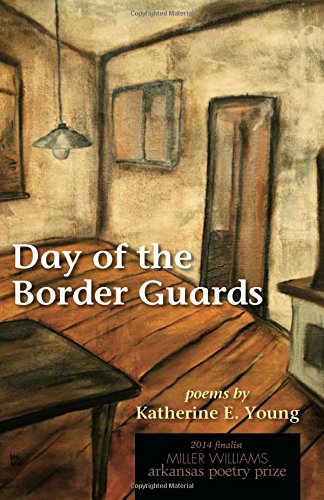
One of my plans for this conference was to co-host a happy hour for writers and translators working on material related to the former Soviet Union. Unfortunately, both my co-host Olga Livshin and I decided to cancel, as did most of the people we hoped would take part. I envisioned that this happy hour would help us, in part, to build a sense of community and help us brainstorm ways in which we can support each other’s work. So, in that spirit, here is an image gallery followed by a list of these titles with links, where you can buy the books.
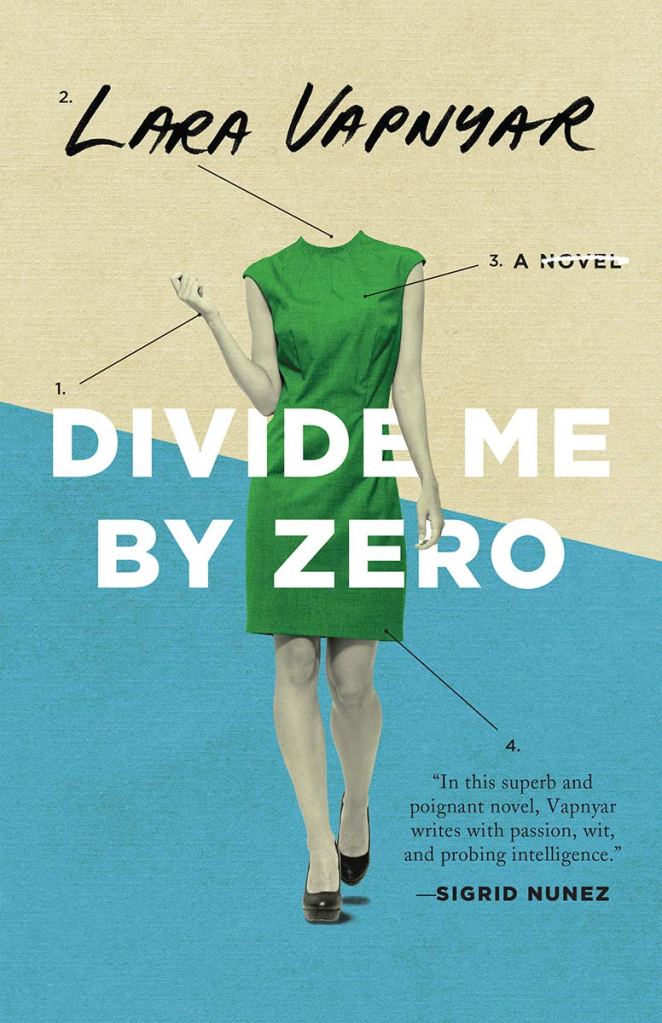
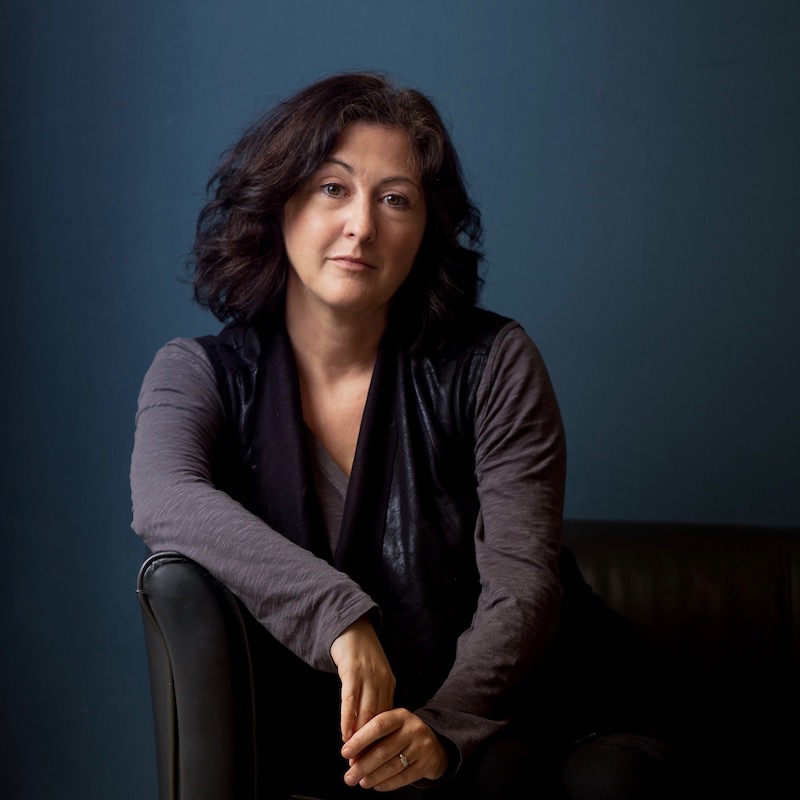
Punctured Lines is thrilled to present a Q&A with Lara Vapnyar, Russian-American writer and author of six works, including her latest novel, Divide Meby Zero. This is also personally meaningful, as I have been reading and writing on Russian-American fiction, very much including her work, for several years. Many thanks to Masha Rumer, whose Q&A we featured previously, for helping facilitate this exchange. Lara answered our questions by email.
Punctured Lines: Divide Me by Zero is your sixth book. In an interview with Svetlana Satchkova forThe Rumpus, you’ve called it your most intimate and biographical. Has your writing process changed during your work on this novel?
Lara Vapnyar:There is a scene in a Nancy Meyers’ film Something Gotta Give, where the main character played by Diane Keaton is working on a play, typing and sobbing, typing and sobbing… That’s how it went for me, except that I had long periods of just sobbing, and longer periods of paralyzing self-doubt – Is this even a novel? What if this is just a self-indulgent mess?
PL: English, the language of your stories and novels, is your second language, acquired later in life. In her essay for the New Yorker, “To Speak is to Blunder,” Yiyun Li, a writer whose first language is Chinese, talked about how “language is capable of sinking a mind.” “One’s thoughts are slavishly bound to language,” she wrote, and went on to talk about the difficulties she has articulating her feelings. “It is hard to feel in an adopted language, yet it is impossible in my native language,” Li says. In your essay, “The Writer as Tour Guide” in an anthology of contemporary Jewish exile literature, The Writer Uprooted, you said, “By the time I approached writing, I had been reading in English a lot, and whenever I thought about creating something of my own, I caught myself putting my images into words of the English language. I felt most comfortable when writing in English, even though I had to struggle with grammar and vocabulary […] I would even say that I wrote in American, which for me was the language of immigrants.” What opportunities has English provided you with that wouldn’t have existed in Russian? Alternatively, do you ever find English limiting? Do you negotiate the space between Russian and English when you write?
LV: English is my first “writing” language. Even though I only started to learn English as an adult, my first attempts to write fiction were in English (I’ve never written anything in Russian), so it feels completely natural. The only situation, when I feel frustrated, is when I have to translate speech from Russian into English. For example, I remember a specific joke my mother made in Russian, and I want to translate it and give it to my character, but it’s just not that funny in English!
PL: The relationship between mother and daughter that you describe in this novel is very touching yet clearly a very demanding one. The cultural conflict is not obviously stated, but it seems to define Katya’s judgment of her ability to mother her children. In Soviet households it was common for grandparents to participate fully in the everyday duties of raising children—and Katya herself grew up in a household presided over by her grandparents. Do you feel that life in the United States has affected Katya’s and her mother’s expectations of each other?
LV: In Soviet households it was common for grandparents to participate fully in the everyday duties of raising children –Absolutely! Katya would’ve probably felt less conflicted, if she was raising her children while relying so much on her mother’s help in Russia.
PL: Unlike works by many other Russian-American writers, male or female, your work directly engages with ideas of gender and feminism. Your novel Memoirs of a Muse charts the transformation of its female protagonist from subservient muse to her writer boyfriend to an independent woman engaged in artistic production; and while Dostoevsky is a key fictional figure in this work, the focus is on his lover, Apollinaria Suslova, herself a writer. Ružena in “Slicing Sautéed Spinach” in your short story collection Broccoli and Other Tales of Food and Love is a doctoral student in Women’s Studies. Your essay “Hillary’s Underpants: The Sad Tale of ‘Clintonsha,’ or She-Clinton” in Thirty Ways of Looking at Hillary directly calls out traditional Russian gender assumptions. How do you relate to feminist ideas and navigate the gap between the different gender expectations in American vs. Russian cultures? Do you see any shift of Russian gender norms in the diaspora?
LV: I was brought up in the Soviet Union, where accepted gender roles differed greatly from what we see in the US and contemporary Russia. Soviet Union was both a feminist and a deeply patriarchal society, where men had all the power, but women did all the work, but still longed for a man in the family like this prized object. My mother, a strong independent woman who made her career and brought me up all on her own, kept telling me that ANY husband is better than no husband.
I think there is a shift of gender norms [in the diaspora] toward the ideal situation, where men and women in the family are equal partners who depend on each other for support and understanding.
PL: As a writer one of whose major topics is immigration, do you find yourself working against Russian cultural stereotypes?
LV: Probably… But in this novel, I feel like I’m working with a Russian cultural stereotype – that you absolutely need true romantic love, that you can’t live without it – against a more pragmatic American view that romantic love is far from being the most important thing in life, and chasing after love is selfish and childish.
PL: Who are some of the writers that inspire you? Do you find yourself connecting with other diaspora writers?
LV: There are so many writers I deeply admire within the diaspora and beyond. But for this novel, the most influential was Elena Ferrante. She taught me how to turn yourself inside out for the sake of larger truth.
You wrote a book in which you both translated Akhmatova’s and Gandelsman’s work and wrote original poems that are, directly or indirectly, in dialogue with them. Describe, briefly, your writing process.
I like the idea of going beyond the one voice–the idea of poetry as a play, and of a book as a porous object, absorbing other energies. There are three characters here: I translated two modernist Russian poets, and then I wrote responses to their work, some of which are imitations. Poets & Traitors Press has this format that fit what I was doing really well. They publish poems based on translations, poems that speak to these translations. So rather than publish a typical poetry collection, which, if you think about it, is this continuous solo for something like 50 or 80 pages, these Poets & Traitors books are a bit like jazz. They’re inclusive. They invent and improvise. Their dynamics are pluralistic and lively.
What were the differences in how you approached writing vs. translating poetry?
It’s pretty seamless. When I translate, it’s a bit like giving a voice, and it’s also implicit dialogue, of course, since translation is interpretation–it’s full of choices. And when I write back, or talk back, the dialogue goes further. All of this, though, is part of the same kind of play: where the characters depend on one another and echo each other.
What about translating/“talking to” Akhmatova?
Yeah, “talking to,” for sure! Akhmatova is an author that a lot of mothers who grew up in the 1960s and 1970s quoted to their daughters–my mom quoted her to me. And I think a lot of people thought–still think–of her as a symbol of stoicism and of grieving wisdom, a model for how to live with dignity and defend fellow others under repressive regimes. In our family, she was like this Lilith, great mother, forever strong and even raging. It was rather difficult: you know, she was someone you could quote, but never be, right? Then I went to grad school to get my PhD in Slavic Studies, and I learned that some prominent literary scholars had showed that she was no angel, she was a full human with flaws, and–they wished to show–that she was rather a monster. I think both of these extremes are kind of silly. In my book I don’t so much aim to dethrone as to discover. There’s a different Akhmatova than the one people know: brazen and humorous behind all that mighty moral raging. She’s a perpetual child, even in her later work, trusting love for love’s sake, no matter what life did to her. “To me, in poetry, everything should be out of line,” she writes, “Not how these things are done. / I wish you knew what garbage sprouts poems….” I want to know about this bold, hidden girl, and I want people to know her.
How about translating/“talking to” Gandelsman?
He is closer to me and thus less hidden. Vladimir Gandelsman was born in 1948 and came of age in Leningrad before it turned into St. Petersburg and before he left for the United States, where he lives now. He’s an immigrant like me, and he has similar instances of alienation. So when it comes to his work, I’m basically a devotee. I aim to push this writer forward and amplify his voice. Gandelsman’s work has such a unique way of balancing human emotions such as irritation and anxiety with this amazing appreciation of small joyful moments, which are just sublime in his work. Gandelsman, to my eye, transcends what so many poets and writers in Russia had: this hatred of byt, the everyday. There was a bunch of visionary philosophers a hundred years ago, they all wished to go beyond our biological and biographical limitations. Beyond the body, beyond the home. On the other hand, Gandelsman is the supreme discoverer of light in the dust of the domestic. And in nature, which he paints in some beautifully minimalist ways. And in one’s own family, even in some difficult moments. He is a very generous poet. Where I write in parallel are poems of small joy: he has a small bird in the sky, I have little mushrooms; he has a hallowed moment of immigrant recognition of oneself in an American-grown boy, I have recognition of a Syrian immigrant’s stories in our own tales of self. I want to help this voice be in the world and take on new forms, in English, and in my little sprouts off it.
Other than Gandelsman, what is your relationship with contemporary Russian literature in general?
I enjoy some voices. Maria Stepanova. Vassia Borodin. Polina Barskova, in the US. And then in Ukraine, so much great and heartbreaking poetry in Russian is coming out from people writing about the war. Boris Khersonsky and Lyudmyla Khersonska. I really like Anastasia Afanasieva’s work. Iya Kiva’s poetry. There is an incredible urgency to these voices, and they’re profoundly intertextual, in dialogue with other language about war and violence, going all the way back to the Bible and all the way forward to how Russian and Ukrainian TV talks about war.
In addition to the two in your book, who are some of the writers that inspire you?
There is a flowering of immigrant and first-generation American poetry now. So many rich voices. From the better known, such as Chen Chen and Ocean Vuong, to those that should be better known. Ahmad Almallah’s recent book Bitter English addresses issues of writing in English as an immigrant. Jenna Le has gorgeous poems that capture the intersection of girlhood and growing up Vietnamese-American in Minnesota. Ananda Lima has made fine, strange, surrealist prose as well as poetry that looks at issues of home and motherhood in the context of being an immigrant. I love how these poets echo certain ruins of their cultural past with not-quite utopias of their American present.
Do you find yourself working against some Russian cultural stereotypes?
Ha! I have carried so much shame about these for so many years. It’s kind of gone, but of course you can’t quite get rid of it. But that’s what writing is for–finding a voice that is more complicated than these stereotypes and insisting on maintaining that voice. Both in your writing and also, once you find it, the beautiful thing is, you can take it wherever you find it relevant.
As a writer one of whose major topics is immigration, do you find yourself connecting with other diaspora writers?
I like Boris Fishman’s prose. Julia Kolchinsky Dasbach is one of my favorite Russian American poets. A fellow Russian-speaking Ukrainian Jew, she just published a fiery poetry collection called The Many Names for Mother. It’s such a bittersweet exploration of motherhood and the infinite in the context of her origins, both feminine and Soviet/ Ukrainian/Jewish. It’s so, so good.
How do you relate to feminist ideas and navigate the gap between the different gender expectations in American vs. Russian cultures? Do you see any shift of Russian gender norms in the diaspora?
So I got pretty lucky: I grew up with a mother who has a strong personality and who worked at this beautiful glorious music school in Moscow, where we lived from when I was 7 to when I was 14 and we moved to the US. To me, she channeled powerful feminist thought, although that’s not language she used. Yes, we dressed up, but it was to strut our stuff and have fun, not in order to please a man. I also grew up in a family where everyone had worked: both grandmas, my mom, all her female ancestors were peasants. So there was a version of Soviet and Russian homespun feminism that may be problematic and all, it wasn’t perfect, the guys didn’t necessarily help out, but at least there’s that gender modeling of strong women. There is this concept of the matriarchy, and also of women working for generations.
I find it more irksome to navigate some situations with expectations for women from white Anglo-American upper middle class and upper class backgrounds. There’s an awful lot of stuff that I have trouble relating to, not only helicopter parenting or beautiful thin appearances in beautiful thin yoga pants, but also stay-at-home motherhood. That stuff is hard! It’s really a terrible thing when you know people who live according to those expectations–fraught with depression and with not being recognized as a human being. And when I was a stay-at-home–uh, poet–in our rather affluent suburb, I didn’t wear that identity, but the expectations were quite definite. But I think that the Russian strong woman, not unlike one that Akhmatova wanted people to think she was, wanted people to believe she could be, it’s an ideal and all, but it’s really a fantastic thing to embody. It’s a bigger expectation than the “little woman” that’s stuck around in our America. The resilient, powerful Russian lady–that’s a tall expectation, and it calls on us to stand tall, and I’m proud of that idea.
Today on Punctured Lines, we have a Q&A with Masha Rumer, author of Parenting with an Accent: An Immigrant’s Guide to Multicultural Parenting, whose arrival we previously announced here and are very excited about. Masha answered our questions by email.
Punctured Lines:Describe, briefly, your process in writing this book.
Masha Rumer: My decision to write the book was pretty simple: I wished there was something like that when I became a parent, and since there wasn’t, I figured I’d write it. I was born in Russia and my partner was born in the U.S., so in addition to navigating differences common to a multicultural relationship, having a baby brought up questions, nostalgia and my awareness of straddling multiple cultural identities. How do I teach my kids Russian, without forcing it? How do I connect with other parents, even if I lack certain shared childhood experiences? Is a peanut butter sandwich an acceptable meal? How much borscht is too much? The more I spoke to others, parents or not, the more I realized that these concerns are very much shared, but people don’t always feel comfortable discussing it.
Surprisingly, I found no nonfiction book about the contemporary immigrant parenting experience, even though there is a record high of 43 million immigrants in America today and over 18 million kids with at least one foreign-born parent.
I realized there needs to be a research-driven, accessible look at what it’s like for immigrants to raise kids in the U.S., not a “how-to” parenting manual, but a realistic portrait of sorts. The book will have a bit of everything: candid conversations with families across the U.S., personal narrative and interviews with experts in psychology, language development and sociology. And beets. Lots of beets.
PL:What is your relationship with contemporary Russian literature? Who are some of the writers that inspire you?
MR: I really wish I’d read more contemporary Russian literature, but a significant chunk of my reading is in English (unless we’re talking news or kid lit – I try to read Russian books with my children daily). That said, I’ve recently been enjoying the work of Dina Rubina and of the investigative journalist Svetlana Alexievich, and have been getting into translation more (just finished a delightful Russian translation of A Man Called Ove [PL: This Swedish title by Fredrik Backman has also been translated into English]).
PL:Do you find yourself working against some Russian cultural stereotypes?
MR: Sometimes I find myself dodging jokes about being a spy, especially in the wake of the 2016 presidential election (I’m not a spy). I’ve also been questioned whether I came to the U.S. “on my own” and “with papers” or if my husband ordered me via a catalog. The people who ask are demure and almost apologetic, but they want to know. Recently, though, a job recruiter was pretty explicit about questioning my immigration status and any political connections. And something many female-identifying Russian speakers have probably experienced – there’s often an assumption that our closets have this secret compartment where we stash sable fur coats and leather outfits from a James Bond movie.
PL:As a writer who addresses stories of immigrant families, do you find yourself connecting with other diaspora writers?
MR: I definitely find myself connecting with other diaspora writers. It’s probably due to the shared immigrant experiences of reinventing and translating yourself and the trauma of having been uprooted. I love the work of Lara Vapnyar and Dinaw Mengestu; they both write so incisively and honestly about diaspora realities. Eva Hoffman and Jhumpa Lahiri were among the first contemporary immigrant authors I read, and it felt so validating. Then there’s the work of Edwidge Danticat, Anya Ulinich and Natalia Sylvester, particularly her recent essay on being bilingual, and the Foreignish blog, run by Yaldaz Sadakova. I’m also excited to read the new collection Like Water by Olga Zilberbourg. It’s thrilling to see that the contemporary immigrant narratives are no longer othered as “niche,” but are becoming a part of the “mainstream” literary canon.
Katja Petrowskaja grew up in Kiev, studied in Estonia and Moscow, and lives in Berlin. Maybe Esther was written in German and first published in Germany, in 2014. It was translated to English by Shelley Frisch and published in 2018. She came to the Bay Area Book Festival about a year ago, and I went to her talk and picked up this book. When I started reading it, frankly, I wasn’t sure I was going to finish it. As far as family stories go, this one felt too similar to my own–and why read about something I already know so well, from living it?
I stuck with it because Petrowskaja’s a good storyteller, and a tenacious one, because she has followed her family story several more steps than I have ever done with mine, and because on the page she’s able to capture the complex emotions of following these heartbreaking stories. Of course, in actuality, her family’s story isn’t anything like mine. The similarities begin and end with this: We both grew up in Jewish families in the Soviet Union and emigrated after the Soviet Union fell apart. I write in English, she in German. If it felt like a familiar story at first, it’s precisely because I haven’t read enough books like this. I’ve only read just a few that focus on the Soviet Jewish family saga with any degree of depth (Margarita Khemlin’s Klotsvog in Lisa C. Hayden’s translation being the most recent, and wildly different from Maybe Esther), and they feel the same only because the gap between Kiev and Leningrad Jews in the 1980s is a lot narrower than, say, between Petersburg Jews and New York Jews. That is, it feels close enough to home.
There are a few main characters in Petrowskaja’s family saga. The story of Grandmother Rosa provides the main through-line. She grew up in a Jewish family, and her father, Ozjel Krzewin was born in Vienna, lived in Poland, and then died in Kiev, and ran a private school for deaf-mute children throughout his life–Rosa, too, inherited the profession of educating deaf-mute children. Rosa’s husband and Katja’s grandfather, Ukrainian Vasily Ovdiyenko during WWII was captured and became a prisoner of war in German labor camps. When he returned from the war, he met his wife briefly, but then went to live with another woman and stayed with her for more than forty years. Shortly before his death, he came home to Rosa–who was still waiting for him.
In writing the book, Petrowskaja follows the story of the Jewish side of the family, and then she also traces Vasily’s journey through the German labor camp system throughout Austria–it was a brutal three-year journey that few survived. She visits several labor camps that also served as death camps for Hungarian Jews, to arrive at an epiphany: it must’ve been something that Vasily witnessed in the camps that made his return to his loving family, a wife and two children, impossible after the war.
I don’t know where this conviction stemmed from, but it was right here in this small camp that something happened after everything that had happened already that made my grandfather’s return home impossible, so that he, back in Kiev, could not stay with his family, not with his daughter and not with his wife, Rosa, whose mother and sister lie in Babi Yar, which makes a person Jewish forever, I know that his failure to return had something to do with the death march of the Hungarian Jews
That sentence doesn’t have a period and it doesn’t need one. I should add, that actually this relative’s experience Katja and I, too, have in common: my grandfather, Jewish, was a POW in a German labor camp, and survived. He did return to the family, and one of the things I’m forever trying to write about is what his survival looked to the rest of us, his family, living with him. I finished the book grateful to Katja Petrowskaja for finding the words to unpack some of her experiences.
There have been fewer children’s and teen books translated into English from Russian than you might imagine. Here’s what we’ve been able to find so far, published since 1991: fiction and non-fiction in translation from Russian authors and illustrators.We’ll list Soviet translations in a separate post, coming soon.Many thanks to the charity Outside in World for their help with this research.
We would love to hear of any we’ve missed: please email us about any Russian-language kid lit you know of in English translation, whether still in print or not, and especially forthcoming publications!russian.kid.lit @gmail.com
PICTURE BOOKS BY RUSSIAN WRITERS OR ILLUSTRATORS
THE RETURN, written and illustrated by Natalia Chernysheva (Groundwood, 2019) Ages 4-7
Two years ago, a prominent journalist and editor Yury Saprykin asked a number of Russian authors, editors, critics, educators, and so on, to nominate the works that they considered key in the Russian literary canon. On April 2, 2018, Saprykin’s launched the website, polka.academy with the resulting list of 108 books. It’s a gorgeous website, unfortunately available only in Russian. Another unfortunate part is that this list included only three books by women-authors: Akhmatova, Tsvetaeva, and Petrushevksaya.
Two years later, the editors addressed this problem. A team of writers created a new list that they call “Women’s Canon” of over 70 authors who deserve to be remembered. (This list, too, is unfortunately only available in Russian.) The authors include a thoughtful note that this list isn’t complete and promise to return to this work in the future. We’re delighted to welcome this list and look forward to seeing this work continued.
On a personal note from the creators of Punctured Lines, we’re particularly pleased to see a listing of Aleksandra Brushtein’s delightful young adult novel with a title that’s difficult to translate and that means something like “The road that will lead you to an unknown future.” This book was deeply influential to both of us, and on Twitter we’ve been actively advocating for its re-translation to English. Of the unfortunate omissions, we can point to Julia Voznesenskaya’s novel Women’s Decameron from 1985.
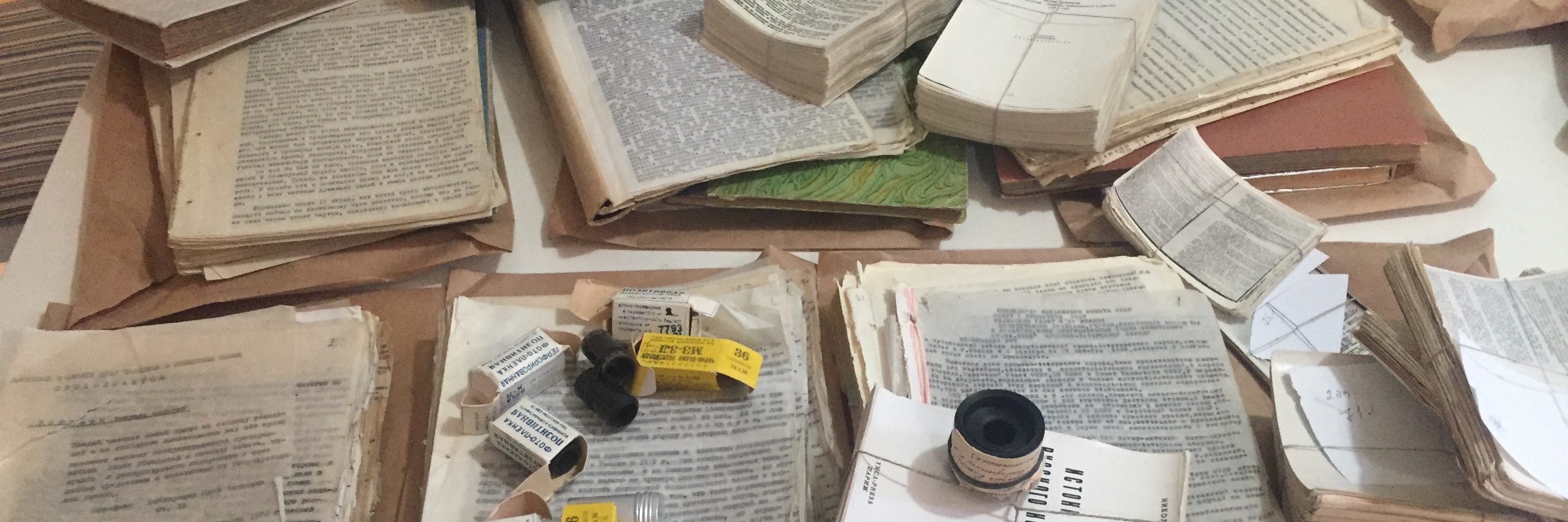
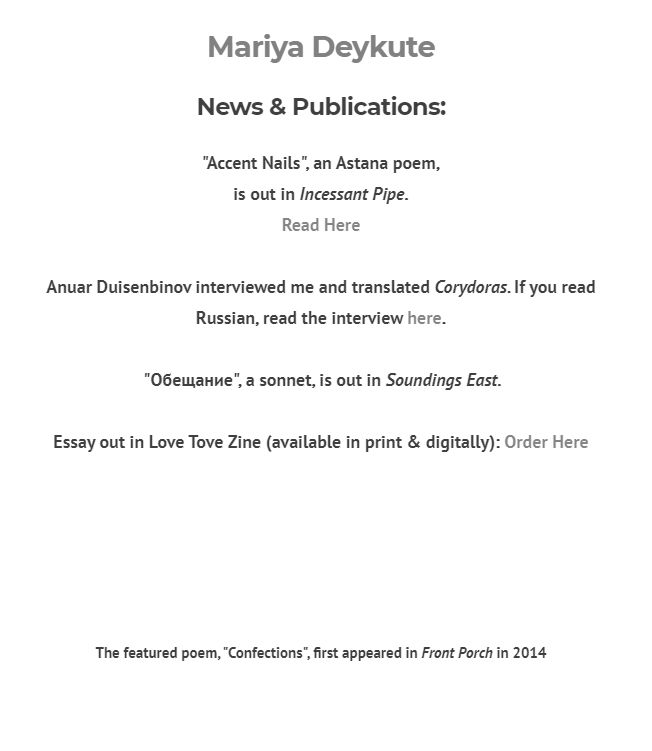
The Great Patriotic War is now nearly eighty years old, and yet it still resonates in the lives of the grandchildren of the surviving generation. This essay by Mariya Deykute attests to its power over our imaginations. Some of us continue to make decisions with that war in mind. I particularly admire how Deykute both personalizes the war and portrays her family’s lived experience of the war, touching on her grandmother’s and her mother’s stories. This war is both the environment in which people have lived and a character of our nightmares.
With gratitude to Olga Livshin for sharing this piece. Please click through to read the essay in full.
The Great Patriotic War came to visit me again today. I was throwing out wild raspberries. A week ago I had scrambled up the treacherous rocks of Narbona Pass to fetch a cupful. “Eat them,” my husband said. “Later,” I replied. The cup sat in the car on the trip back, full of small red not-spheres. They sat in the fridge for a week. “Should I toss them?” my husband asked. “No, I’ll make something with them,” I said. But today I found that white mold had claimed them, fuzzy rotting snowflakes…..
The impetus for creating this post came from a recent Twitter discussion. We at Punctured Lines decided to accept a dare and came up with a list of notable Russian titles available in English translation from the last decade. This has been an opportunity to take stock of the years 2009-2019, both to remember the books we’ve read and to look back at those that we might have missed.
In this task, we relied heavily on Lisa Hayden’s blog, Lizok’s Bookshelf, where Lisa keeps chronological track of the English translations – our deep gratitude for creating and maintaining this resource. Our methodology for choosing among all those works was based on several factors. Rather obviously, for our purposes we only considered works by women. We also wanted to highlight writers whose names may not be very familiar to English-speaking readers but whose work we feel deserves wider exposure and shows the range of contemporary Russian women’s literature.
One or both of us have read many of titles below, and we’re happy to report that the field is larger than our reading capacity. We included a few books we haven’t read because they sparked our curiosity and to encourage ourselves and our followers to return to these publications. An important factor for consideration was translators whose work we’re interested in. Here we would like to say a huge thank you to translators for their often unacknowledged efforts that allow English speakers to know Russian literature.
Our list has four categories: Contemporary Prose, Contemporary Poetry, Recent Translations of Earlier Prose Works, and a rather catch-all Drama, a Graphic Novel, and an Anthology. The titles in each category are given chronologically by year of the translation. This list reflects our personal opinions and is in no way meant to be comprehensive or conclusive. We welcome your comments and suggestions about these and other titles by Russian women who you think should be on this list. This is, hopefully, the beginning of that conversation.
Contemporary Prose
Elena Chizhova, The Time of Women, translated by Simon Patterson and Nina Chordas; Glagoslav, 2012.
Teffi, Memories: From Moscow to the Black Sea, translated by Robert Chandler and Elizabeth Chandler, Anne Marie Jackson, and Irina Steinberg; NYRB Classics and Pushkin Press, 2016.
Sofia Khvoshchinskaya, City Folk and Country Folk, translated by Nora Seligman Favorov; Columbia University Press, 2017.
Karolina Pavlova, A Double Life, translated by Barbara Heldt; Columbia University Press, 2019.
Irina Odoevtseva, Isolde, translated by Bryan Karetnyk and Irina Steinberg; Pushkin Press, 2019.
Drama, a Graphic Novel, and an Anthology
Yaroslava Pulinovich, Olga Rimsha, Ksenia Stepanycheva, Ekaterina Vasilyeva, Russian Drama: Four Young Female Voices, translated by Lisa Hayden; Glas, 2014.
Victoria, Lomasko, Other Russias, translated by Thomas Campbell; Penguin and n+1, 2017.
Teffi, Marina Tsvetaeva, Anna Akhmatova, Lydia Ginzburg, Galina Scherbakova, Ludmila Ulitskaya, Svetlana Alexievich, Olga Slavnikova, Irina Muravyova, Ludmila Petrushevskaya, Margarita Khemlin, Slav Sisters: The Dedalus Book of Russian Women’s Literature, edited by Natasha Perova; Dedalus, 2018.
In a post from a few weeks ago, I mentioned Completely Different — a Russian-language collection of queer science fiction published in Bishkek, and Calvert Journal’s publication of a translation of one of the pieces. In a series of Twitter posts, Hilah Kohen responded and partially reviewed this collection. Given how rare conversations about queer Russian-language science fiction are in the English-language russophone zone, and my delight in them, I asked for Hilah’s permission to put her response on Punctured Lines. Enjoy! (I’m preserving most of the Twitter grammar.)
Hilah Kohen:
Completely Different, the collection of queer Russophone sci-fi and fantasy that this story in @calvertjournal comes from, is available [on Academia.edu as a PDF]. I was late to the party and haven’t read all of it, but what’s really struck me so far is how many pieces center the aftermath of all queer feminists splitting off from society completely and (literally, cuz sci-fi) building their own world. (Sounds dead obvious, I know, but imo it’s not & says something really interesting about post-Soviet opposition politics).
In this piece, the queer separatist utopia is a planet where residents rebuild their own bodies rather than terraforming. In another, it’s a “dimension” that only special augmented reality glasses can see (the patriarchy has its own, mutually exclusive AR system).
(Worth nothing that “kvir-feminizm” works differently in Russian than in English. Even waaay outside scholarship/theory, people use it to label a worldview aligned with intersectional feminism and opposed to TERFism/”radical feminism” but in the same semantic category as both.)
Anyway, with earthly utopias so lacking, these stories could just indulge endlessly in their fictional utopias (since they did take the unexpected imaginative step of separating them out), but no, they have to struggle with the prospect that no matter what beautiful, willfully self-contradictory society Russophone queer feminism might build on its own, it’ll never be content without going back to the old world ~forever~ because the very fact of reproduction means some citizens of the utopia will always be abroad.







 Punctured Lines