British Library hosts English-language presentation of Kazakh literature

The British Library held an event last month to promote literature from Kazakhstan as part of the project “Contemporary Kazakh Culture in The Global World.” It was the launch of two anthologies, one of prose and another of poetry, that were translated into English. The “anthologies, which are 500 pages each and include works by 60 Kazakh poets and writers, are being translated into the six official languages of the United Nations: Arabic, Chinese, English, French, Russian and Spanish.” Cambridge University Press is the publisher of the English translations. 

According to the article, the “Contemporary Kazakh Culture in The Global World project is part of the Ruhani Zhangyru (Modernisation of Kazakhstan’s Identity) programme, which seeks to preserve and popularise the country’s historical and cultural heritage.”

Promoting lesser-known literatures is a laudable goal and something sorely needed in the West. But as with all projects that seek to project an image of a particular country, we need to be asking what type of image is being projected and for what reason(s), which voices are included and which left out. Of course, it is impossible to answer these questions until these anthologies become available. A project to keep an eye out for.
https://astanatimes.com/2019/09/british-library-hosts-english-language-presentation-of-kazakh-literature/

How Should We Review Translations? Part II

Asymptote journal continues its discussion about translating and reviewing literature. The focus this time is on Korean poetry, but the issues raised are relevant to other translated literatures.

“To me, the most interesting aspect of reviewing a translation—above and beyond the accurate and thoughtful accounting of the book in question that all reviews require—is imagining how it will affect and be affected by its reception within the standards of specific reading communities. Or to put it another way: how the translation speaks to the context of a reading community and how that community speaks to the translation.”

https://www.asymptotejournal.com/blog/2019/09/25/how-should-we-review-translations-part-ii/

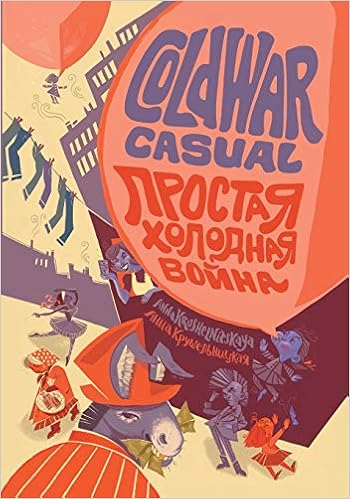
Upcoming Book: Cold War Casual

Anna Krushelnitskaya’s book, Cold War Casual/Простая холодная война is a bilingual work that collects oral testimony and interviews about the ways the events of the Cold War and the government propaganda affected people in the US and in the USSR. This seems of tremendous interest to all of us who have lived through that epoch and/or write about it.

Krushelnitskaya has translated the testimony and interviews so that each piece is available in both Russian and English. The announcement reads: “The interviews were conducted in the native languages of the respondents in a casual, friendly format to record the subjective evaluations of the Cold War period in an attempt to establish whether, and how, the lived experiences and memories of the respondents influenced their sense of national pride, instilled a fear of war or the enemy, invited cultural openness or isolation and participated in forming personal long-term ideological stances.”

This books is available for pre-order.

Pub date: October 22, 2019

Publisher: Front Edge Publishing, LLC

Olga Zilberbourg: To Understand Russia’s Complexities, Turn to Its Contemporary Literature

“A FRIEND’S TEN-YEAR-OLD SON son recently came up to me at a party to ask, ‘You’re from Russia, right?’ Sensing caution in my assent, the boy hesitated before asking the next question, clearly trying to phrase it in a way that wouldn’t cause offense but would express his curiosity. He finally came up with, ‘It’s a very violent place, isn’t it?'”

http://epiphanyzine.com/features/understand-russias-complexities?fbclid=IwAR35rzgR1U6dFXsYJM6ueL6nid8S9R6BR0Qr44elOeHnU2HwPtyzVpxJ0RY

Olga Zilberbourg on Teffi’s Memories: From Moscow to the Black Sea

“Teffi, nom de plume of Nadezhda Lokhvitskaya, was born in 1872 into a prominent Russian family. Following in the footsteps of her older sister Maria—poet Mirra Lokhvitskaya—Teffi published poetry and prose from the age of 29. She soon rose to fame by practicing a unique brand of self-deprecating humor and topical social satire.”

https://www.thecommononline.org/review-memories-from-moscow-to-the-black-sea/?fbclid=IwAR2VI663kHbmhMarVRRwhcusvCmxG_KFMLKu7MtIRnHLUpUTBZs7dZmQnK8

Lizok’s Bookshelf: Yasnaya Polyana Finalists, 2019

Previously, we posted Lisa Hayden’s blog post about the longlist for this prize, noting the gender disparity in terms of who is nominated for and, especially, awarded Russia’s literary prizes. The shortlist just came out and out of the six nominees, one is a woman. Of course, no one is suggesting nominations and/or awards should be based on gender alone nor is this meant to disparage the quality of the other nominated titles in any way. But it is important to note the imbalance, and even more so, to keep asking what can be done about it.

http://lizoksbooks.blogspot.com/2019/09/yasnaya-polyana-finalists-2019.html

Unfortunately, I Care: Joanna Chen Interviews Olga Livshin (BLARB)

Read Joanna Chen’s beautiful and insightful interview with poet and translator Olga Livshin about her just-released book A Life Replaced: Poems with translations from Anna Akhmatova and Vladimir Gandelsman:

“And so for me, even when I write in English, it’s as if I am writing in Russian because I’m releasing something that was the first fourteen years of my life, it’s like I carry this genie inside me and I need to let it out occasionally. Let it walk around a little before I bottle it back up.” https://blog.lareviewofbooks.org/poetry/unfortunately-care-joanna-chen-interviews-olga-livshin/

Yelena Furman on Elena Chizhova’s “Little Zinnobers”

“The English-language translation of The Time of Women, by Simon Patterson and Nina Chordas, came out in 2012 from Glagoslav Publications, who have now released Chizhova’s earlier novel Little Zinnobers (Kroshki Tsakhes, 2000). Translated by Carol Ermakova, the volume includes a translator’s note and a very useful critical essay by Rosalind Marsh.”

https://lareviewofbooks.org/article/torn-like-a-veil-before-me-on-elena-chizhovas-little-zinnobers/

Yelena Furman on Alisa Ganieva’s “Bride and Groom”

“ALISA GANIEVA’S APPEARANCE in the world of Russian literature took everyone by surprise, in the literal sense. A critic by training, she published her first work of fiction, the novella Salam, Dalgat! (Salam tebe, Dalgat!), when she was 25, under a male pseudonym; when the novella received the Debut Prize in 2009, Ganieva outed herself as a woman at the awards ceremony.”

https://lareviewofbooks.org/article/a-voice-from-the-caucasus-on-alisa-ganievas-bride-and-groom/


Yelena Furman on Sofia Khvoshchinskaya’s “City Folk and Country Folk”

“IN HER INFORMATIVE introduction to Sofia Khvoshchinskaya’s City Folk and Country Folk, Hilde Hoogenboom writes, ‘In the 1860s […] Russia had its own trio of writing sisters. Like the Brontës, the Khvoshchinskaya sisters wrote under male pseudonyms, endured hardships, and lived in the provinces.’ The analogy is fitting, but, as Hoogenboom notes, only to a point: ‘The Brontë sisters became well known not long after their deaths, [but t]he story of the Khvoshchinskaya sisters remains to be told.'”  https://lareviewofbooks.org/article/dont-we-know-our-own-minds-a-rediscovered-russian-woman-writer-of-the-19th-century/