Olga Zilberbourg on Michael Honig’s The Senility of Vladimir P.

“Nikolai Sheremetev, the protagonist of British novelist’s Michael Honig’s second book, is a Moscow nurse. For six years, he’s been looking after a private patient suffering from dementia. The patient’s condition is deteriorating. Prior to his illness, Vladimir P. had been a president of Russia.”

https://www.thecommononline.org/review-the-senility-of-vladimir-putin/?fbclid=IwAR0wjiXM582L9x-iBEY33OQKvmvJy5LAF4r4gpwErg3SZTeM743IhYvHPI4


Yelena Furman on Elena Chizhova’s “Little Zinnobers”

“The English-language translation of The Time of Women, by Simon Patterson and Nina Chordas, came out in 2012 from Glagoslav Publications, who have now released Chizhova’s earlier novel Little Zinnobers (Kroshki Tsakhes, 2000). Translated by Carol Ermakova, the volume includes a translator’s note and a very useful critical essay by Rosalind Marsh.”

https://lareviewofbooks.org/article/torn-like-a-veil-before-me-on-elena-chizhovas-little-zinnobers/

Yelena Furman on Alisa Ganieva’s “Bride and Groom”

“ALISA GANIEVA’S APPEARANCE in the world of Russian literature took everyone by surprise, in the literal sense. A critic by training, she published her first work of fiction, the novella Salam, Dalgat! (Salam tebe, Dalgat!), when she was 25, under a male pseudonym; when the novella received the Debut Prize in 2009, Ganieva outed herself as a woman at the awards ceremony.”

https://lareviewofbooks.org/article/a-voice-from-the-caucasus-on-alisa-ganievas-bride-and-groom/


Yelena Furman on Sofia Khvoshchinskaya’s “City Folk and Country Folk”

“IN HER INFORMATIVE introduction to Sofia Khvoshchinskaya’s City Folk and Country Folk, Hilde Hoogenboom writes, ‘In the 1860s […] Russia had its own trio of writing sisters. Like the Brontës, the Khvoshchinskaya sisters wrote under male pseudonyms, endured hardships, and lived in the provinces.’ The analogy is fitting, but, as Hoogenboom notes, only to a point: ‘The Brontë sisters became well known not long after their deaths, [but t]he story of the Khvoshchinskaya sisters remains to be told.'”  https://lareviewofbooks.org/article/dont-we-know-our-own-minds-a-rediscovered-russian-woman-writer-of-the-19th-century/

Yelena Furman on Elena Chizhova’s “The Time of Women”

THE TIME OF WOMEN is Simon Patterson and Nina Chordas’s translation of Elena Chizhova’s 2009 Russian Booker-winning novel Vremia zhenshchin. (Modeled on the Booker Prize in Britain, the Russian Booker is given to the best Russian-language text; Chizhova had been nominated for the award twice before). Set in Chizhova’s native St. Petersburg, mostly in the 1960s, when the city was known as Leningrad, this most beautiful, yet most maddening city emerges as a central focus of the narrative, as it often has in Russian literature, from Gogol to Dostoevsky to Andrey Bely.” https://lareviewofbooks.org/article/soviet-scars-yelena-furmans-the-time-of-women/

Olga Zilberbourg on Keith Gessen’s “A Terrible Country”

” Novels about Russia written in English for a U.S. audience are numerous enough that they could be grouped into a genre of their own. Keith Gessen’s second novel, “A Terrible Country,” is a solid contribution to this genre, particularly promising because of the author’s deep personal connection to the country and his prior body of work as a journalist, an analyst and a critic of Russia.”

https://www.sfchronicle.com/books/article/A-Terrible-Country-by-Keith-Gessen-13184005.php

How Should We Review Translations? Part I

The beginning of an important, thoughtful, and often maddening conversation by Asymptote journal about the state of translated literature in the U.S. and the role of reviewers writing about it. Shocker: there is relatively little international literature being translated, published, reviewed, and read in this country. There is even less by women/non-Western European writers. A question we have been asking ourselves, each other, and anyone who would listen is what can be done about changing this situation. It is one of the main reasons we started this blog. This is a collective endeavor, which doesn’t have a simple answer. Suggestions welcome.

“For instance, only six of the nearly one hundred books reviewed on my watch were written by African writers. A whole 17% were translated either from Spanish or French. Moreover, only 16% were books of poetry rather than prose […] exactly two thirds of contributors to the Criticism section were men, and […] close to two thirds of the authors reviewed were men.”

https://www.asymptotejournal.com/blog/2019/09/23/how-should-we-review-translations-part-i/?fbclid=IwAR3Qh_3jCPSwCo2iXqO9vSZ2Pb_Wdra4rCt7r5ds4BQvGY0pkrOkRbaul54
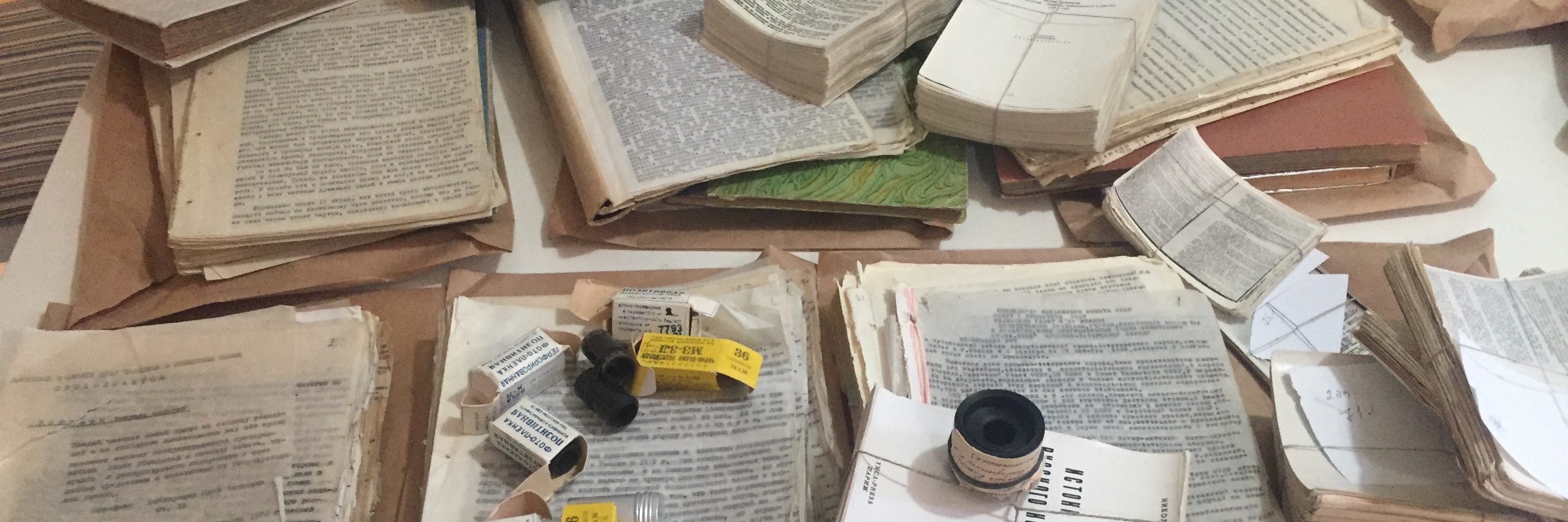
In Lara Prescott’s ‘The Secrets We Kept,’ the CIA takes a novel approach to Cold War spycraft – The Washington Post

The publication history behind Boris Pasternak’s Doctor Zhivago provides the backbone of this debut novel. Joan Frank, reviewing for The Washington Post, remarks:

Significantly, these are women’s stories. Pasternak’s, while not marginal, is told by his longtime mistress and muse, Olga Ivinskaya — she who inspired “Zhivago’s” famous romantic lead, Lara (for whom Prescott happens to be named). Sent twice to a Gulag labor camp (described in horrific detail) as a result of her affiliation with him, Olga’s own astonishing account nearly eclipses his.

https://www.washingtonpost.com/entertainment/books/in-lara-prescotts-the-secrets-we-kept-the-cia-takes-a-novel-approach-to-cold-war-spycraft/2019/09/13/1b7f8ff4-d633-11e9-9610-fb56c5522e1c_story.html

A review of Larissa Shmailo’s Sly Bang

Larissa Shmailo is a versatile poet and prose writer, editor and translator from Russian, with work in Brooklyn Rail, The Common, St. Petersburg Review, among other journals and anthologies.

Jefferson Hansen reviews her most recent novel for Rain Taxi: “This is a hilarious and horrifying novel. It depicts the worst humanity is capable of, but what keeps Sly Bang from becoming overwhelmed by the depravity it describes is the writerly energy of Shmailo. Wise cracks and madcap scenes burst one after another in a buoyant fashion—so it goes down easy in spite of the horrors it describes.”