Punctured Lines is grateful to Ivan Sokolov for the opportunity to publish his letter and a collection of links. Author’s idiom is preserved.
I am thankful to everyone who has reached out to me—I am safe and away from Russia at the moment. Let this post be an update for my anglophone contacts who have expressed concern about Russia’s ongoing war in Ukraine, possible sources of following the events and the lives, as well as means of giving aid.
I feel compelled to mention, however, just to be fair, that if I find myself displaced and unhinged in every sense of the word, it is far less so than the hundreds of thousands of other Russians evacuating these days to neighbouring countries—and doing so, unlike myself, without visas, academic affiliations, language skills or any experience of living abroad. I did not think I’d live to see (and run into!) my own acquaintances, mostly young, crowded in airports by random gates—the sheer extent of the exodus is mind-blowing. The fate of those who remain in Russia may look bleak—and even if a massive campaign of arrests and repressions does not ensue, the economic deterioration will hit everyone hard. But if we find our plans, ways of life and peace of mind disrupted and displaced, it is unthinkably more literal and cruel for the livelihoods of our friends within Ukraine and those that have managed to escape the war crimes being committed there.
Our friends The Cheburashki, “a growing collective of women & nonbinary writers who are emigres/refugees/first-generation from countries that were once a part of the Eastern bloc,” are hosting a reading in Philadelphia next week. Here’s a great place to find some camaraderie in this time of war and donate money for Ukrainian refugees.
This event is happening in conjunction with AWP, a poets and writers conference that will include several important events with USSR diaspora writers. We made a list.
Here’s a video from yesterday’s poetry reading featuring poets from Ukraine and their English-language translators. Thanks to poets Olga Livshin and Julia Kolchinsky Dasbach who organized this event 800 people from across the globe came together for Ukraine. This event, put together as a part of an ongoing poetry series Words Together Worlds Apart was a fundraiser, and it’s not too late to DONATE to UNICEF.
*Words Together Worlds Apart spearheaded by poet Julia Kolchinsky Dasbach is a virtual reading series. Its mission is: “To maintain & build literary community across distance through our shared love of words. Featured readers will share their work around a weekly theme, followed by interactive discussion.”
Many of us have been wondering how to help Ukrainians who are under a renewed attack from Russia. Poets Olga Livshin and Julia Kolchinsky Dasbach have put together a reading by poets from Ukraine writing in Ukrainian and Russian, and translated to English. Read the event description below and register for the event happening March 1 at 12:30pm ET. This message includes links to organizations where you can make donations to support Ukraine in this time of war.
*Words Together Worlds Apart spearheaded by poet Julia Kolchinsky Dasbach is a virtual reading series. Its mission is: “To maintain & build literary community across distance through our shared love of words. Featured readers will share their work around a weekly theme, followed by interactive discussion.”
From Olga and Julia:
Amid the current catastrophe in Ukraine, a brutal invasion of a sovereign nation, it is more urgent than ever to listen to the voices of its people. While media provides overwhelming coverage, literature, poetry, and art are just as important for processing, coping, and surviving trauma.
Hosts Julia Kolchinsky Dasbach and Olga Livshin unite Ukrainian poets and their translators alongside US poet-allies in Voices for Ukraine–a transatlantic reading spanning from Kyiv, Odesa, and Lviv, to LA, Atlanta, Philly, and Little Rock, as well as recordings Ukrainian poets have sent in the event they are unable to join us live due to internet outages and air raids.
Alla Gorbunova is a Russian poet, prose writer, translator, and critic. She has published six books of poetry and four books of prose, and her work regularly appears in major literary journals, including Znamia, Novoe literaturnoe obozrenie, Vozdukh, TextOnly, and others. Gorbunova’s poems and prose have been translated into many languages. She has taken part in Russian and international festivals of poetry and prose, and in 2012 participated in poetry readings in New York and Chicago. English-language translations of her poems and prose have appeared in Poetry, Words Without Borders, ColumbiaJournal, Modern Poetry in Translation, New England Review, and Nashville Review.
The English translation of her book of prose It’s the End of the World, My Love by Elina Alter is forthcoming from Deep Vellum Press in 2022. Gorbunova is a laureate of Russia’s most prestigious literary awards, including the Andrei Bely Prize, the NOS Literary Prize, and the Debut Prize. She is a graduate of the Faculty of Philosophy at St. Petersburg State University.
To mark National Poetry Month in the United States, Punctured Lines asked two poets with recently published collections to interview one another. Both poets have strong personal and professional connections to the larger Russophone world. Natalya Sukhonos’sA Stranger Home (Moon Pie Press) explores themes of the mother-daughter connection, grief and loss, and finding someone and something to love in locales ranging from Odessa to San Francisco. Katherine E. Young’sWoman Drinking Absinthe (Alan Squire Publishing) concerns itself with transgressions, examined through a series of masks, including Greek drama, folk tales, Japonisme, post-Impressionism, opera, geometry, and planetary geology. In addition to their written comments, Sukhonos and Young have also produced a short video conversation highlighting several poems from each collection.
Please support the poets by buying their books.
***
[Katherine E. Young interviews Natalya Sukhonos about A Stranger Home.]
Katherine E. Young: Your book is set in so many places: San Francisco, Odessa, Rome, New York City. And yet the theme of leaving old places and finding new ones, finding “home,” seemingly plays only a minor role in the book. This book doesn’t dwell on typical themes of emigration / immigration; instead, there are the constants of familial love, amorous love, and putting down roots wherever the earth will accept them. Even the ghosts in your book travel with the speaker and seem at home in multiple cultures. In that context, please talk a little about the line “Home. A dreamscape we flee until it consumes all others” from “The Red Farmhouse.”
Natalya Sukhonos: Thanks for this interesting question, Kate. I think that home is a very fraught concept for me. I’ve moved around a lot—from Odessa to New York, then to Boston and San Francisco, with Turkey and Rio de Janeiro as short sweet sojourns in between, and then back to New York. Each of these places romanced me, intrigued me, made me want to stay there forever—until it didn’t. San Francisco, for instance, was enchanting but forbidding in terms of living expenses, though I still find it very beautiful and have good friends there. And Naomi was born there, which makes it forever special. Why is home a “dreamscape we flee”? I guess I’ve always had that desire to flee, to carve my own path. I’m grateful to my family, but like many families, it imposed its own vision of me which I often longed to tweak or even contradict. But I ended up returning to New York—returning home with my own family, creating my own home, a kind of mise-en-abyme, if you will. Though “The Red Farmhouse” was written before the pandemic, you can see how home and family have become all-consuming entities especially now, for better or for worse.
Katherine E. Young:Mothers and daughters inhabit almost all of these poems, and sometimes the connection is fraught, as in “My Personal Vampire.” Other poems such as “Nadia” celebrate “the wild grasses of love.” The second section of the book contains poems that grieve the loss of a mother. Talk a little about the importance of the mother-daughter connection in these poems.
Natalya Sukhonos: We moved to New York City from San Francisco after my mother was diagnosed with stage 4 ovarian cancer. This collection came out of the process of grieving for her and remembering her. My mother read Gogol’s Dead Souls to me and recited Russian poetry, which she knew inside out—Pasternak, Akhmatova, Tsvetaeva, you name it. She was dramatic, a smart dresser, and had an easy laugh. My mother and I were really close, and four years later, I’m still grieving. The poems in this collection try to ask “why,” but they also try to remember. Simone Weil once said that attention is the purest form of prayer, and this resonates with me even though I’m agnostic. I wanted to pay attention to the little details about her life—her love of gardening, for instance—and also record the process of losing her. When she was gone, I felt really unmoored, as if I didn’t know who I was. But as I was writing the collection, I also had to mother my two-and-a-half year-old daughter Naomi, who is now six. In “Theater of Bones” and “The Lioness and the Wolf, or Words as Prehistoric Shells” I tried to record how she was processing death and grief through questions and magical thinking. And I wanted to be honest about how damn difficult it is to be a mother. Motherhood is often romanticized, but not enough attention is paid (especially by men) to the loneliness, the self-doubt, the very physical burdens that motherhood places on you (hence the comparison of a baby to a vampire). Almost two years ago, I had another baby, Nadia, who bears my mother’s name (Tamara) as a middle name. It’s been delightful to watch the beginning of another life, to do it all over again. And I felt like having this new baby and also reflecting on mothering Naomi has made me reclaim motherhood in a way that wasn’t painful or grieving. At the same time, motherhood made my connection to my mother stronger.
Katherine E. Young: Several of your poems speak of the body as a map, and the poems often feel as if bones, stones, shells, forests, and especially stars are of much more importance and permanence than human constructs of geography and cartography. Talk about the stars and other natural phenomena that inhabit so many of your poems.
Natalya Sukhonos: When I lived in the Bay Area, I was really awakened to the beauty and power of nature because it was everywhere: step seconds away from your house and be surrounded by a giant mountain and giant eucalyptus trees! And the cold sublime of the Pacific! I think that as someone who has lived in cities all her life, I’m puzzled by the natural world, and that gives me comfort—the fact that the ocean just IS, that it doesn’t have to fit into a human story. It has its own story, which we may or may not understand. Maybe this sounds too mystical or vague, but for me what can’t be put into language can provide a source of relief. There’s something important about the fact that my mother loved to garden, and I don’t practice this at all. Or that we witnessed the Pacific Ocean roaring on a remote beach together. Why is this significant? Well, only poems can tell.
Also, the poem where I am a lioness and my husband is a wolf speaks to the way children construct mini-narratives around everything they see, and those stories are often filled with magical, dangerous forests and nature that’s comprised of signs only they could decipher, a sort of Baudelairean forêt des symboles. I think Naomi has taught me a lot about seeing nature this way.
Katherine E. Young:Your poems often reference classical myths, as well as modern literature. In one of my favorite poems, the ekphrastic “Night Sky #16 by Vija Celmins,” the speaker remembers her mother reading from The Little Prince, interleaving references to Saint-Exupéry’s book with lines from Rainer Maria Rilke’s “Elegy 1.” You have a PhD in comparative literature. What is the importance of literature, both classical and modern, to your poems?
Natalya Sukhonos: Believe it or not, literature has always had a sensory or sensual appeal for me. When I was eight years old, I had a sudden epiphany that every book, every author has their own flavor. Since then, literature has always been a huge part of my life: the first time I met my husband, I recited Rilke’s first elegy on the street, for instance. Given that the book revolves around my mother’s life and her legacy, literature plays a vital role in this, too. My mother loved The Little Princewith a passion, and staged it at Camp “Idea” where she was the director and where I worked. The love of literature is something that she and I shared in a way that was rhapsodic and visceral. When I started to write seriously, I couldn’t help but interweave little strands of whichever author I was reading—Borges, Elena Ferrante, Baudelaire—into my poetry. I do this in ordinary conversation, and poetry is another such conversation. For me, literature poses essential questions about identity, existence, good and evil in a way that is liberating because it inspires you to look further. The Master and Margarita, which I’m teaching in the Fall for Stanford Continuing Studies, is one such book, so key to me that I reread it every five years or so. One of my favorite lines by Emily Dickinson is “Tell all the truth but tell it slant.” In The Master and Margarita, Woland does this by asking what the Earth would look like if it were stripped of its shadows. In a “slant,” indirect way, Bulgakov is talking to us about the interconnectedness of good and evil, and for me, this idea is interesting precisely because of the way in which it is conveyed—through slant, poetic meaning.
Katherine E. Young: While free verse is a part of contemporary Russian poetry, it’s a relatively recent formal development, and plenty of Russian poets still write in rhyme and meter—many more than do so in contemporary American poetry. Can you tell me about the formal choices you made in writing these poems and how you came to make them?
Natalya Sukhonos: Even though I grew up reading Pushkin, Pasternak, Akhmatova, Brodsky, and Khlebnikov, when I came of age as a poet writing in English, I was more captivated by the free verse of Mark Strand and Wallace Stevens. That said, T. S. Eliot’s Four Quartets and their mosaic of mythologies and truth-seeking has always fascinated me, and Eliot plays around with rhyme and meter quite a bit.
In my own writing I try to be cognizant of the length of my lines and stanzas, the end words on each line, and the “volume” of words on a page. This all contributes to the way I see sound as vital to any poem’s meaning. So in “Parachute” I play around with the length of the lines to imitate the falling parachute of the poem’s title. I let the form carry the tension of my grandfather jumping off a parachute exactly 94 times during World War II. But “Aphrodite,” for instance, is composed of tercets because it’s a love poem, and I’m harkening back to tercets in Romantic poetry.
I do have some poems in here that experiment with form. “Pantoum of Grief and Birth” is a pantoum because I wanted to get at the repetitive, obsessive nature of grieving my mother while giving birth to my youngest daughter. “Protect Me, Lord” came out of an assignment in a poetry class where I had to put a Shakespearean sonnet into Google Translate twice, choose the best lines from what resulted, and also incorporate several colors, animals, and trees of our own choosing into the poem. And “Lost Souls—After Rilke” is actually a golden shovel, spelling out the first stanza of Rilke’s First Duino Elegy in the ending words of its stanzas. I like to be playful with form, so “In Failing Light” has alternating couplets that are formatted differently and interweave the event of remembering my mother while cooking potatoes and ramps with the actual memory of visiting the Pacific Ocean with her in San Francisco.
Natalya Sukhonos: Especially in “Birdsong,” “The Bear,” and “Nakhla,” I noticed your interest in animals and animal imagery. Can you comment on the way that animals are linked to the theme of freedom vs. unfreedom in your poetry? On the one hand, they’re images of otherness, an alternate perspective, but on the other hand, they’re confined to particular places and spaces by their human subjects…
Katherine E. Young: Hm. I hadn’t thought about this at all before your question, but there are two main groups of animals in these poems. The first group includes birds, cats, the prehistoric sea creatures of “Nakhla,” snakes, a dissected frog, lizards, cicadas, monkeys, bats, the fig wasp, and an actual, historical dog who had an unfortunate encounter with an achondrite (a kind of meteorite). But with the possible exception of the fig wasp, these animals are mostly part of the background flora and fauna of the poems. The other group of animals is quite different: they’re talking animals, and they may not be animals at all. There’s the wish-granting fish of “The Golden Fish,” a tale I first read in Andrew Lang’s The Green Fairy Book (where the fish is an enchanted prince); I read Alexander Pushkin’s version of the tale much later. The enigmatic talking bear of “The Bear” is, of course, the performing bear of countless European folk tales, alternately menacing and pathetic, also possibly enchanted. For me, these creatures aren’t all that different from Bluebeard, the ogre who murders his wives, or the succuba who haunts a man’s waking hours, both of whom also appear in these poems. It’s these talking animals and monsters (or are they humans who have lost their essential human-ness?) who are truly unfree, trapped in enchantments, forced to perform for their supper, or condemned to fulfill various gruesome fates over and over again—they and the humans who become trapped in their tragic, endlessly repeating dramatic arcs.
Natalya Sukhonos: In “Nakhla” and “Euclidean Geometry” I was fascinated with your link between the macroscopic and the microscopic: cataclysmic events like the fall of a gigantic rock and human, intimate events such as a singular act of love. Please comment on this link in your poetry.
Katherine E. Young: Well, that’s the whole point, isn’t it? We go running around the world, eating, reproducing, defecating, dying, and from the biological perspective we’re doing just the same thing as ants. I don’t know what distinguishes one ant from another (although I’m told they sing to one another), and from a bird’s-eye perspective you can’t distinguish one human being from another, either. But when we write, when we make any kind of art, we’re saying “Stop! Look at me! I’m here!” Same for when we fall in love, which is also a kind of art. “Nakhla” started during a visit to the Smithsonian Air & Space Museum, where they have a fragment of this amazing achondrite from Mars that fell rather spectacularly in Egypt in 1911 (and apparently did kill a farmer’s dog). A run-of-the-mill igneous rock on Mars, 1.3 billion years old—the only thing unusual about it is that it got blasted off the Martian surface and ended up here on Earth. You can touch it! I was just charmed by the notion of this anonymous and yet singular rock—as anonymous and as singular as other such interplanetary travelers that brought things, including perhaps some of the elements of life, to Earth. Same for “Euclidean Geometry”: an act of love is both anonymous and singular, seemingly governed by laws and rules as ancient as the universe. Sometimes we mistakenly interpret those laws and rules, though—hence, logical fallacies such as circular logic.
Natalya Sukhonos: In “Today I’m Writing Love Songs” as well as “Place of Peace,” where you describe love as “bursting riotously into bloom,” you write beautifully about love as fruit. There is so much sensuality in your fruit metaphors! The poem “Fig” is a whole extended metaphor of love as a bloom as well, and it is stunning! And in “Succuba,” as well as “Today I’m Writing Love Songs” and “A Receipt to Cure Mad Dogs,” you connect love to herbs and their various flavors. Please say something about the ways in which the “tastes of love” resonate in your poetry through imagery of herbs and fruit.
Katherine E. Young: As I was writing these poems, just about everyone in my close circle, including me, was undergoing really big and often traumatic life changes. So, I was very much coming to the poems asking the hard questions: Who am I? Where am I in life? Am I the person I wanted to be, and if not, what can and should I do about that? The basic idea that one can more or less cultivate oneself as one cultivates a garden speaks to a certain kind of urgency one gets in midlife to take stock and make adjustments, sometimes radical ones. During that period, I was lucky enough to have some choices—not always easy ones, not always good ones, but real ones. To some degree, then, the notion of flowering in these poems is aspirational—what I hoped would happen if I took better, more conscious care of my garden, both for myself and for those I love. Also, I just really, really love figs!
Natalya Sukhonos: What’s the link between the mathematical and the erotic in your poetry? I’ve noticed many poems touching on math, and this was fascinating, maybe not least because I just finished Lara Vapnyar’s Divide Me by Zero.
Katherine E. Young: Excellent question! I don’t really have an answer, except to say that as a young person I wanted to be an astronaut—that’s also the reason I started studying Russian, by the way—and I felt very comfortable with math and science, at least until I ran afoul of a college calculus class. Much later, when I was getting my MFA, I took a wonderful course on the rhetoric of science, and I spent more time than I care to admit reading the Transactions of the Royal Society of London. I was fascinated by the mental steps that natural philosophers in the early nineteenth century had to take to be able to conceptualize dinosaurs out of a bunch of bone fragments stuck in rock. And you already know that I find odd bits of space debris decidedly erotic… Maybe I was seeking a system of beliefs and practices in math and science that might inspire me with more confidence than the beliefs and practices in human relationships that I had found simultaneously confining and unreliable—although true mathematicians and scientists would probably say that their laws and beliefs can be just as confining and unreliable…
Natalya Sukhonos: You are a professional literary translator who has received a National Endowment for the Arts Fellowship for translation. How does the work of translation inform your poetry (and I’m using “translation” here both in the literal sense of the word as well as the metaphorical process of translation)? Comment on the process of cultural translation, as your poetry includes intertextual references to Mrs. Pinkerton, the Golden Fish, Manet, Euclid, and so many other rich and unexpected sources.
Katherine E. Young: Honestly, I don’t really see much difference between writing “original” poetry and translating it. In both cases, making a poem starts with “translating” the impulse for that poem into words. Translating someone else’s impulse—as opposed to your own—is essentially the same process, although there are a few more steps involved. But I’m always trying to make music with words, whether the poem started in my own head or in someone else’s. There are particular benefits to being a translator, though: recently I was asked to translate a selection of poems by Boris Pasternak, and I found that every single one of Pasternak’s lines taught me something important about writing my own poetry in English.
As far as cultural translation, all the cultural flotsam and jetsam in this book comes from things I’ve squirreled away, from the mating habits of ancient sea creatures to Manet’s Bar at the Folies-Bergère, which I first saw in London as a teenager. A lot of my references come from the former Soviet Union, where I first traveled as a student. I didn’t really get serious about writing poetry until I lived in Russia in the 1990s, though—while there, I was lucky enough to read the entire canon of Russian poetry with a scholar who spoke no English. It was that immersion in Russian that helped me to hear my own language, English, with fresh ears—and it certainly helped make me a better poet. I like to joke that I’m the only American-born poet I know who owes more to Pushkin than to Walt Whitman—if that’s not cultural translation, what is?
Natalya Sukhonos is bilingual in Russian and English and also speaks Spanish, French, and Portuguese. She has taught at the Stanford Continuing Studies program for four years. She has a PhD in Comparative Literature from Harvard University. Her poems are published by The American Journal of Poetry, The Saint Ann’s Review, Driftwood Press, Literary Mama, Middle Gray Magazine, Really System, and other journals. Sukhonos was nominated for the Pushcart Prize in 2020 and 2015, and for the Best New Poets Anthology of 2015. Her first book Parachute was published in 2016 by Kelsay Books of Aldrich Press, and her second book A Stranger Home was published by Moon Pie Press. natalyasukhonos.com.
Katherine E. Young is the author of Woman Drinking Absinthe, Day of the Border Guards (2014 Miller Williams Arkansas Poetry Prize finalist), two chapbooks, and the editor of Written in Arlington. Her poems have appeared in Prairie Schooner, The Iowa Review, Subtropics, and many others. She has translated prose by Anna Starobinets and Akram Aylisli and two poetry collections by Inna Kabysh. Her translations of contemporary Russophone poetry and prose have won international awards. Young was named a 2020 Arlington, VA, individual artist grantee; a 2017 NEA translation fellow; and the inaugural poet laureate for Arlington, VA (2016-2018). https://katherine-young-poet.com
To find new Russian poetry, it is no longer enough to read literary journals (including online journals) and keep an eye on the catalogs of established publishing houses. Nowadays, many Russian poets first publish their new texts on their social media feeds (VKontakte, Facebook, Telegram, YouTube et al). The initial audience is curated by the poets themselves, and their connectedness – how many people subscribe to their feed, and who these people are – has a direct influence on the number of readers the text will find in the short term.
Popular writers do not only use social media to publish new texts and for other literary activities, such as promoting events and books – one’s own and those of others – and sharing critical articles and discussing aspects of literary form. Some also offer materials, ranging from commentary on current affairs to pictures of their pets or extended contemplations on matters close to their heart, to a broad public beyond their own network of “friends.” The poet Olga Sedakova has amassed over 15,000 Facebook followers who receive her public posts in their newsfeed. Dmitrii Vodennikov, one of the first generation of writers to use social media as a vehicle for literature, is followed by more than 26,000 people.
In the Russophone literary world, self-publication is no impediment to publishing the same text again in online journals or in print. On the contrary, publication on social media can heighten a writer’s visibility and fast-track both print publication and translation. The recent flurry of new international editions by feminist poets who publish prolifically on social media, like Oksana Vasyakina, Lida Yusupova, and Galina Rymbu, corroborates this thesis. While print publication remains an important goal, the tastes and power of a small number of editors no longer determine the opportunities for interaction between a poet and their audience.
Ksenia Zheludova is a poet from St. Petersburg who publishes her new poetry on her feed on the Russian social network VKontakte. She is the author of two collections of poetry. A selection of her poems in English translation appeared in the February issue of Words Without Borders. Here she is talking to her translator Josephine von Zitzewitz about social media and different strategies for interacting with her audience. The interview was conducted in Russian and translated by Josephine von Zitzewitz.
Josephine von Zitzewitz: What does it mean to you to publish your work on social media, as opposed to in books and journals?
Ksenia Zheludova: It’s important to me that, on social media, I can interact with my audience directly. To some degree I assume the role of editor and producer, and I create a space around myself through which I transmit my texts. In contrast, when I publish in a journal or other literary publication, I will be transmitted via an intermediary. There’s no universal gatekeeper for all authors, and it’s easier, in this case, to remain an individualist than to join a collective that you don’t know.
Josephine von Zitzewitz: Are you consciously aiming for print publications, or are those a coincidence? After all, you have published two collections of poetry.
Ksenia Zheludova: Yes indeed. My first collection, Slovno (2013), was a slim volume I published with the help of some friends at a new publishing house (Moscow: Yang Buk, Nulevaia Seriia). They were doing a series of poetry collections in a very small print run, around 100 copies. The whole thing was the kind of friendly collaboration that brings joy to everyone involved. We didn’t aim to sell the book or to use it for promoting my existence or my work. It was simply a fun thing to do, and it worked!
Josephine von Zitzewitz: It did indeed work – several titles of this series were on display at the well-known independent bookshop and event hub Poriadok slov in St Petersburg, and that’s how I first read your poetry! And your second collection, how did that come about?
Ksenia Zheludova: The second collection, Navernost’(2017), I self-published with the help of special software. I did the typesetting myself, using a template. The book is simply a collection of texts that were topical at that moment in time. It was uploaded to several online shops selling e-books, and one of them also offered print-on-demand copies. After that, I stopped doing collections. But now I dream of a real book, a high-quality, beautiful book with illustrations and a cover. A sort of “Best of the Best,” to bring together all those texts I’m definitely not ashamed of. That’s still at the planning stage. I’m slowly collecting the poems I want to include. And recently I had an idea for yet another book because, a while ago, I started publishing poems that naturally come together as a cycle: a cycle of terrifying tales for bedtime. These are more narrative and quite dark, like horror stories. And they fit together really well – they would make a great collection. And perhaps this collection will come into being if I pull myself together and step out into the field of print publishing, which still feels alien and not very inviting.
Josephine von Zitzewitz: What is the role of literary journals in Russia today?
Ksenia Zheludova: I can’t offer an expert opinion, because I don’t feel very at home in the world of print. Literary journals were very important and popular in the Soviet Union. They offered access to the world of publication and were a stepping stone towards publishing a single-author collection. In those circumstances, literary journals were the only way of promoting your texts, and the only way an author could reach their audience. Public readings are a different matter, as they reach only those who are present in the room where you’re reading. Now, with the Internet available, I have the impression that literary journals remain in the hands of a very narrow group of professionals – literary critics and publishers. So we’re talking about a very self-contained environment that doesn’t really touch upon the outside world, the world where the readers are. But the readers are the audience that I, as an author, want to address.
Josephine von Zitzewitz: Who is your target audience? Do you actively curate your audience?
Ksenia Zheludova: At first – about 15 years ago – my audience consisted of my close friends, who’d repost my poems. The texts would then spread through their respective networks to reach their friends. But over the last seven years, ever since VKontakte started doing “publics” (“public pages” where users can share content with followers – Punctured Lines), I collected around 3,700 followers. I must admit I didn’t always like communicating with my readers. I am a fairly serious introvert. I’d come, put up a new poem, and leave again. That was all I was capable of doing. Only lately have I started to get an energetic charge from communicating with my audience. I have understood that, paradoxically, interaction with the audience supports my creative process – I want to tell these people something. My readership is fairly random but, when I checked the statistics tool that shows the age and gender of the group members, I noticed an interesting thing: my audience and I are growing up together. Five years ago, the majority of my readers were women around 25, the same age as me. Today I can see that the majority are about 30 years old and female. This means I’m writing not just for my peers, but for my female coevals. It turns out I’m working within a circle of people who are close to me in age and worldview! I have pages on VKontakte, and I also have Facebook and Instagram pages. But the public on VKontakte was my first direct platform, and all my main readers follow that page.
Josephine von Zitzewitz: What is the role of sites such as stikhi.ru (a popular self-publishing poetry platform that allows a limited interaction between the author and the audience – Punctured Lines)? I’m asking because I found some of your earlier texts on it.
Ksenia Zheludova: Stikhi.ru was very popular 15 years ago – I mean, it’s still popular today, but back then many serious literary authors used it. And I used it myself as a kind of archive. It was convenient to put poems up on the site and divide them into sections or little collections, and for me it was a very useful digital archive. But I stopped publishing there a long time ago, because I realized that the audience is chaotic. I don’t understand who is reading my texts there and why; I don’t know how to work with this resource. And so I simply settled for my own social media feed, and stopped distinguishing between my personal life and my life as a poet.
Josephine von Zitzewitz: How do you organize your feed on VKontakte? I notice that it doesn’t just feature poems. How do you combine the public and the semi-private?
Ksenia Zheludova: I would put it like this: for a long time, I thought of my own poetry as my parallel, secret life. My life, my job, and my friends – that’s one thing. And then there are the nights when I sit and write poems that I then publish in places where people are likely to appreciate them. Previously that would have been on platforms like stikhi.ru, and various thematic forums that used to exist. And then, at some point, I came to the realization that I didn’t want to perpetuate this division; that I didn’t want to play Jekyll and Hyde. All of it is part of me, including my poetry. And, just as I can post a selfie or a pretty picture of the sky on Instagram, I can post a poem I’ve written. That poem also expresses my worldview. It represents my perspective. I can post a picture, or I can post a text. I don’t see a big difference there.
Josephine von Zitzewitz: I notice that your texts are often accompanied by photographs. Do you choose them specifically? Is it because posts that contain visuals are more likely to draw the eye?
Ksenia Zheludova: I arrived at this format by accident. At some point, I realized that people are divided into visual, aural, and other types. In any case, every text includes something bigger than itself. A poem is a little tale that invites you to imagine whatever you like, but the imagination needs something to anchor it. I choose images that complement whatever it is I’m expressing in the poem, and I also attach a musical track to each piece. I find this approach creates a unified picture … it’s a bit like going to the cinema. There’s a text beyond the screen which you read to yourself, perhaps even out loud, then there’s the photo, and then the soundtrack. It’s a piece that’s complete in itself.
Josephine von Zitzewitz: When a poet submits to journals, a lot of time passes between writing and publication. In contrast, the Internet allows you to publish instantly, even to react to current events in real time. Do you find that publishing on social media has an impact on your style? To put it another way, are your poems fairly spontaneous or do you spend a long time editing them?
Ksenia Zheludova: It’s different every time. Some poems are composed of fragments written years apart. Sometimes I return to my drafts and notebooks and find that, five years ago, I wrote three lines that didn’t grow into anything. But now I’m writing another text, and these old lines just fit there, like the missing piece of a puzzle. There are other poems I write in an evening from start to finish. The next day I look at them with fresh eyes to check whether I’ve hit the right tone, and edit a bit – and the text is ready for publication. With regard to current events – recently I wrote a poem that refers to the events in Belarus (i.e., the protests following the contested election in August 2020 –Josephine von Zitzewitz). Of course, I knew that I had to publish it on the spot, because a few days later it would no longer be necessary. So I put it up, and it did indeed trigger reactions from people who were also thinking about that situation. If the poem had come out a week or a month later, it would have been something else – a statement of fact, a response, a different kind of text. In this sense, social media is an amazing instrument that allows you to react quickly and be something akin to a reporter. I rarely write texts that touch on social and political topics, but sometimes topical texts come to me. Usually I write in a different genre that doesn’t require quick reactions. This means a poem can mature for a long time, and it can be a long time before it gets published. In addition, I now work to a different schedule: I decided to develop my VKontakte group and offer a paid subscription for exclusive content. Some readers pay a monthly donation, and I stay in closer contact with those readers. I suggest topics for debate, I share music and videos, and I show my new poems to this group first and then to all my other followers a week later. Working in this pattern has taught me something. My text is first of all seen by five people who might leave a “Like,” but not comment. That’s OK. All the rest only get to see it the following week, and then there might be more reactions or debate. But for me that’s no longer so important, because there’s already a new text in the wings. That’s more like a standard publication schedule, where texts reach the reader after some time has elapsed.
Josephine von Zitzewitz: Once you’ve published a text online, do you ever return to it and edit? Or is that the final version?
Ksenia Zheludova: That’s always the final version, because I never publish a text if there’s still something in it that makes me stumble. I always take a text to the stage where I know that it’s finished. That means that, as soon as a text appears to the outside world, I can no longer access it. It’s no longer my text; it’s now living its own life and I’ll never go back and edit it.
Josephine von Zitzewitz: Do you think that a writer, a poet, is necessarily involved in current affairs? Do you consider yourself involved? I’m asking because when I read your poem “an age-old female pastime” I feel that it’s a response to the war in Ukraine. But at the same time it’s simply a text about war, any war, and it could have been written at any point in time. This means it will never lose its topicality.
Ksenia Zheludova: That’s a good question. When you live within the current historical context – that is, when you don’t live in a bunker – you naturally react to what’s going on in the world. I don’t like poetry that’s too “concrete,” poetry that mentions individual names, toponyms, or furnishes descriptions of specific events. Texts like that make me uncomfortable. I always try to set my poems in a more universal context and to cleanse them of any ties to a specific time and place. But sometimes it’s the text itself that becomes attached to some event or other, as if drawn by a magnet. The poem you mention actually became part of the events in Ukraine because, at some point, somebody wrote it on the asphalt in Kyiv.
It seemed to fall into step with the events, and many people from Ukraine wrote to express their gratitude or simply make contact. The poem was in the right place at the right time, and it became important to those people. But did I write it specifically in response to the events? No, I didn’t. It’s not a reaction to the war in Ukraine. But perhaps the war had such an impact on my emotional state that the poem was born? In contrast, the poem on Belarus that I mentioned was written in reaction to a concrete situation, even a specific day. I kept reading the news, and it left a strong impression; it really shocked me. And so I sat down to write a poem. I really wanted to write it in one go and publish it in the morning, and that’s exactly what I did. And yet it doesn’t contain any references to a specific country, event, or date.
Josephine von Zitzewitz: Was there ever a moment where readers perceived your work in a way that was completely unexpected?
Ksenia Zheludova: Sometimes. It mostly happens with texts that aren’t my favorites, or not even very successful in my eyes. Those poems start circulating very widely. Conversely, some texts I like very much and that are quite good – if I do say so myself – provoke hardly any reaction at all. To give an example, one poem that circulates very widely on the web is “Memo” (“Pamiatka,” 2011) and it’s mostly this poem that I see under my hashtag. Even when I google myself, I’m likely to find “Memo” (589 hits – Josephine von Zitzewitz). It really isn’t a very relevant text for me; I wouldn’t read it at a poetry reading now. At this point, I don’t find “Memo” all that interesting or important.
Josephine von Zitzewitz: I didn’t know that about “Memo,” but I translated it (Modern Poetry in Translation no. 6, 2017). That’s the first poem of yours that got me hooked! Have your poems ever caused controversy?
Ksenia Zheludova: Here is one recent example of a negative reaction. At some point, I wrote a text in a form I hadn’t used for some time – not quite free verse, but close to it, a very relaxed form. So, quite a free text, and I like it very much. It resonated with my emotional state at the time I wrote it. I published it with a sense of real accomplishment and used it to promote my group. Most comments were positive, but one young woman wrote: “Aren’t you ashamed of putting up such a low-quality text?” I was sitting there and really wanted to write: “No, I’m not ashamed.” But then I decided it would be a bit weird to enter into dialogue with a commenter like that, because it would seem like I was justifying my right to publish certain texts and defending their right to exist. The fact that I published that poem means I’m no longer ashamed of it.
Ksenia Zheludova is a St. Petersburg-based poet and producer who has been publishing poetry on the Internet since 2007. She maintains a dedicated feed on VKontakte to promote her work, and also uses Facebook and Instagram for this purpose. Her poetry collections, Slovno and Navernost’, have appeared in print and online.
Josephine von Zitzewitz is a scholar of Russian literature and translator specializing in Russian poetry. She is currently Marie Skłodowska Curie Fellow at UIT The Arctic University of Norway with a research project on the phenomenon of contemporary Russian poetry on the Internet.
Alex Karsavin: Can you briefly give me the origin story of Pocket Samovar? How did a project that began as a localized conversation between two students at Naropa University’s Jack Kerouac School end up involving so many international actors? How did you go about establishing these lines of communication? And finally: how has Pocket Samovar been able to, in a remarkably short spate of time, reach such a dispersed and disparate audience?
Yevgeny Yevtushenko (1932-2017)
Konstantin Kulakov: It started in fall 2019, in Boulder, Colorado at the Jack Kerouac School. It was Kate Shylo, who’s from Yalta, Crimea, me from Russia, and Ryan Onders, who’s from Ohio. Late in the summer, Ryan and I struck a relationship over poetry performance, especially our obsession with Yevtushenko and the orality of Soviet poetry. Shortly, the three of us got together over borscht and spoke about a magazine dedicated specifically to diasporic communities. At first, the word we used was “Eurasia.” Later we realized that “post-Soviet” would be a more accurate term, and we brought it up to Jeffrey Pethybridge, who connected us with Matvei Yankelevich. Matvei was brilliant; he put us in contact with Boris Dralyuk and Eugene Ostashevsky, which ultimately led to the establishment of an advisory board. We didn’t just want this to be a trendy journal that’s translating East European writing. We wanted to highlight underrepresented writers of the post-Soviet space: queer, LGBTQ, Muslim, writers of color, including writers from Transcaucasia, Central Asia, and so on. The hardest part, of course, was to establish these links across time zones, languages, and cultures. Our advisory board proved extremely useful in finding people like Paata Shamugia and Hamid Ismailov. I myself found people like Evgeniy Abdullaev, whose pen-name is Suhbat Aflatuni; he’s based out of Tashkent. It is important to emphasize, for us, the diasporic part of our mission does not center writers in the west; instead, the magazine aspires to be rhizomatic, bridging the gap between North American and Eurasian literary communities.
Alex Karsavin: I was struck by the claim on your site that Pocket Samovar was influenced but not necessarily determined by its editors’ relationship to “Soviet cultural memory.” This is a very rich and arguably fraught territory. Before we go into the particulars, would you mind delving into your (or your colleagues’) relationship to the region at large (be it personal, literary, or academic)?
Konstantin Kulakov: I can only confidently speak for myself. I left Russia when I was 10 years old: a kind of identity rupture or separation at a formative time. And that longing for homeland is really what it’s about for me. The only way I could connect to Russian contemporary literature was online or books. And there was something missing in that, like: Oh, here’s a poem. Here’s an anthology of contemporary Russian poetry by Dalkey ArchivePress. And that’s it. I opened the book, and I never felt that it offered me an opportunity to improve my Russian, or to meet Russian people. (Before the pandemic hit we had hopes of actually having events and things of that nature.) So for Kate and me, it really was founded around diasporic longing for a connection to the post-Soviet space, and specifically the kind of literary culture where people can stand up and recite a poem by heart. Living and going to school in Russia as a kid, I hated recitation, because it was required and I wasn’t good at it. In my early childhood, I was moved between Russia, England, and America. I was bilingual and confused, often wonderstruck by language, and maybe that’s why I’m a poet. In many ways, for me, editing this magazine is a return to the language at a time when I feel ready to appreciate it. In Kate’s case, she was born in Yalta and also traveled; she has this nomadic sensibility. I think what interested her was the emphasis on publishing underrepresented voices (particularly feminist and queer). Ryan, of course, came to us via Yevtushenko and translation.
Alex Karsavin: Could you say a bit more about your personal relationship to Soviet cultural memory specifically (given the prominent role it plays in the site’s call for submissions)?
Konstantin Kulakov: Soviet cultural memory. Hmm. I mean, I was born in 1989 in Zaoksky, a town outside of Moscow.
Alex Karsavin: Right at the tipping point …
Bella Akhmadulina (1937-2010)
Konstantin Kulakov: Yeah. I entered a world of collapse, in a state of flux. My memory of that time is mostly of things falling apart and being built up. I actually grew up during the construction of the first Protestant seminary co-founded by my father. So there’s this idea of: “Look! Democracy, religious liberty, international dialogue, etc. are finally coming to Russia!” But at the same time, having been in the United States for 20 years (I’m 31), having experienced individualistic consumerism, there’s now this longing for the samovar, for the communal aspect of poetic memorization and recitation, a longing for something as immense as the stadium poetry of Yevtushenko and Bella Akhmadulina. The longing was also in part a reaction to this feeling among some exiles that Russia is authoritarian, that the arts are neglected or backwards, etc. And something in me always knew the latter was false. I thought: “I know there are poets in Russia and all over the post-Soviet space.”
Alex Karsavin: Why Pocket Samovar for the title? To my mind, the samovar draws obvious connotations to the Tsarist Empire, and nationalism more broadly. Yet, and correct me if I’m off mark, there seems to be a dislocation happening here (even in the simple reimagining of this bulky static object as something miniature and mobile). Am I wrong to interpret this as a sort of queering?
Konstantin Kulakov: There are some things to unpack here. In fact, the mission statement used to be a history of the samovar. It actually emerged in Azerbaijan. The samovar finds archeological origin in the tea drinking devices of Azerbaijan, not Russia. So we were not trying to center the Russian space but rather the region as a whole, its complex, boundary-crossing geography and culture. The communal aspect is also very important. The samovar is circular and presents a spatial situation that is meant to be enjoyed among friends, conversing as equals in a non-hierarchical, free, and spontaneous manner. In the end, we’re trying to be more like a tea room than just a competitive journal that publishes the best of post-Soviet writing. So, if the samovar, something bulky, fits in the pocket, you can definitely say this is a queering; in many ways, the situation of the diasporic writer demands an understanding of fluidity. For us, national identity can change overnight, and language, when queered, affords that fluidity.
Alex Karsavin: Pocket Samovar appears to be the newest in a series of recent publications which take this particular region as their focus (Mumber Mag, Alephi,to some degree Homintern). The magazine is unique, however, in its attempt to put the stateside literary diaspora in communication with its FSU (former Soviet Union — PL) roots. Why is this emphasis on dialogue so important for Pocket Samovar? How does it relate to the magazine’s stated desire (to paraphrase Madina Tlostanova) to reimagine the post-Soviet condition not as a lamentation of lost paradise, but as a way to re-existence?
Konstantin Kulakov: We emerged in Boulder, Colorado, although we are expanding now. One of our editors is in Brooklyn; I might be moving to Brooklyn soon, actually. And then two of our editors are based in Europe, specifically in Luxembourg and in Basel, Switzerland. Daily operation and editorial decisions present new limits and opportunities. So the idea behind Tlostanova’s quote is that we’ve already opened Pandora’s box, so to speak. We can’t go back. Globalization is everywhere. And I think the name “pocket samovar” speaks to that question very concretely. Being in this globalized, fast-paced world, everything is now pocket-sized, everything is mobile, it’s almost like you have to be that way to survive. Ryan Onders, our managing editor, asked me one day: How would the magazine exist physically as a print edition? And I said: It’s a diasporic thing. It’s nomadic. So it has to fit in the pocket, right? That’s when I realized it had to be Pocket Samovar.
The thing is, we can’t go back in time, nor can we escape the Soviet legacy. The “re-existence” Tlostanova speaks of is the ability to create something new and necessary, something that’s based around community in an individualistic and competitive globalized world. For this reason, our new issue emphasized the virtual tea room recordings (of which Stanislava Mogileva‘s was my favorite). We strategically decided to put the video at the top of the page to make it central, and the text secondary. So when you click the link and open the video, there’s this feeling that we’re still honoring that tradition of orality and community, a re-existence of sorts.
Alex Karsavin: Perhaps it’s too early to tell, but what kind of international reception has Pocket Samovar had so far? Also, I want to dive a little deeper into the question of inter-scene dialogue. Given that your contributors represent such disparate literary (and feminist) movements, what kind of exchange (intellectual or affective) have you noticed cropping up in your virtual tea room? Do you think the formal arsenal and thematic concerns of the writers featured in the first issue coalesce into some sort of recognizable whole? Particularly I’m interested in the way writers deal with the theme of dislocation (for example, Stanislava Mogileva appears to recoup the folk song and oral epic genre in the service of Russian feminism, while Elena Georgievskaya queers the biblical language of Revelation).
Bulat Okudzhava (1924-1997)
Konstantin Kulakov: It’s interesting. International communication is definitely happening, even as we speak, on social media. That’s where I’m seeing it and I can’t really talk about the nature of the dialogue yet because we first need to have more events. But it’s generally a sense of excitement that I’m seeing. To borrow a term from Durkheim, it was something of a collective effervescence, albeit virtual. At first, there was this fear among the editors that in calling ourselves post-Soviet, people would freak out and not want to be affiliated with that authoritarian, violent legacy to which we all have our own complicated relationship. However, I think the nature of the post-Soviet space is integrated in such weird ways that there is always literal and discursive travel occurring between the various republics and Russia. For example, Evgeniy Abdullaev is based in Tashkent and has a manifesto called “Tashkent Poets,” but he writes in Russian (not dissimilar to the Soviet-era poet, Bulat Okudzhava, who was of Georgian and Armenian descent). So there’s always this traversing of borders going on. In terms of the response to Pocket Samovar (going off the website traffic), it’s clear that it went completely international. It hit every continent. Because some of the contributors shared it in Azerbaijan, it ended up going all over Central Asia, Transcaucasia, and even to parts of the Middle East, like Afghanistan and Iraq. That, to me, was really encouraging.
It is important to emphasize how literature of the post-Soviet space and literature of the post-Soviet diaspora define the issue. In regards to writing from the region, I would like to highlight Stanislava Mogileva, Elena Georgievskya, Vitaliy Yukhimenko. They are all queer/non-binary poets. Although they have differences, they are united by the similar role sociality, orality, and free verse plays in their work. Learning from these writers and movements–through their work, talks, essays, interviews– is exactly what future issues of Pocket Samovar will be devoted to.
The post-Soviet diasporic writer, on the other hand, finds themselves in a contrasting position to homeland. The post-Soviet diasporic writer may reject their homeland, share an ambivalent attitude to it, adopt a hyphenated identity, or alternate between all of these. Alina Stefanescu’s poetry definitely does not shy away from the brutality of the Soviet experience, but nor does she reject it. “Pickled Plums” celebrates familial traditions illustrating how a planted sapling or thimble of tuica can impart her diasporic life with a sense of safety or vitality of speech. Anatoly Molotkov’s “Poison in the DNA” is aware of the powerful role of the past, but the speaker firmly resists identification with his Russian roots because the roots are “rotten.” However, after reading his poem, “Letting the Past In,” we see Molotkov’s more positive kinship to another Soviet artist: Andrei Tarkovsky. Nonetheless, given the complexities of nationality, our magazine conceives of diaspora very broadly. For example, Steve Nickman’s poetry concerns itself not with land, but with the lives of post-Soviets in the United States. It is too soon to tell, but I can only expect that such literary encounters will continue to demonstrate the need for further exchange and connection, especially given the global challenges we face.
Alex Karsavin: What’s the long-term vision for the magazine?
Konstantin Kulakov: We eventually want to turn the magazine into a nonprofit similar in format to that of Brooklyn Poets. We of course want to grow in funding. We imagine ourselves as a platform for the diasporic community that features poetry and translation workshops, reading events, and conferences. We want to serve as our own social platform, where poets can comment on each other’s published poems. We want to optimize interaction and user experience. The fact is that everything nowadays is becoming more mobile; for example, 60% of the people visiting the website are using phones. At the same time, we don’t want to lose the physicality of a print magazine, of literary evenings (to use a Russian term), which is why our current emphasis is on raising funds for the print issue.
Konstantin Kulakov is a Russian-American poet, educator, and translator born in Zaoksky, former Soviet Union. His debut chapbook, Excavating the Sky, was published by Dialogue Foundation Books (2015). Kulakov is the recipient of the Greg Grummer Poetry Award judged by Brian Teare and holds a Master of Divinity degree from Union Theological Seminary in the City of New York. His poems and translations have appeared in Spillway, Phoebe, Harvard Journal of African American Policy, and Loch Raven Review, among others. He is currently an MFA candidate at Naropa University’s Jack Kerouac School in Boulder, Colorado and co-founding editor of Pocket Samovar magazine.
Alex Karsavin is a Russian-American literary translator, with translations and writing published in the F Letter: New Russian Feminist Poetry anthology, PEN America, Columbia Journal, New Inquiry, Sreda, and HOMINTERN magazine. Ilya Danishevsky’s hybrid prose-poetry novel Mannelig v tsepyakh (Mannelig in Chains) forms Alex’s main translation project, a collaboration with veteran Russian-English translator Anne Fisher, funded by the University of Exeter’s RusTrans project. They are currently pursuing a Ph.D. in Slavic Languages and Literatures at UIUC. They are a 2020 ALTA travel fellow.
In the spring of 2007, in St. Petersburg to visit my parents and to promote my first collection of stories, I decided to attend a graduation party of the Gender Studies program at the European University. I’d been a semi-active participant in the Russian-language feminist blogs, where I learned about this program. I contemplated applying; or, at least, since by then I lived in San Francisco, I dreamed about befriending the students and the faculty and making myself useful to them. I had just graduated from a Master’s program in Comparative Literature in San Francisco, where I learned a few things about feminism. I thought my experience could be useful and interesting to my Russian peers. My ideas were somewhat far-fetched.
European University building until 2017
Established in 1994, European University had the reputation of a progressive institution, focusing on social studies, including history, anthropology, economics, politics. I had never been there before, and I was imagining something akin the American universities that I knew: welcoming signage, flyers everywhere, friendly faces ready to help. I forgot to account for one small thing: my native city’s culture.
The address of European University took me to a grand old palace in the old part of town. The entrance should’ve been obvious, but there were a few young men smoking right outside. Intimidated by the smokers (there was very little smoking on campus in the San Francisco by then) and confused by where one palace ended and another began, I’d walked past the door, before eventually turning around. The smokers–students, presumably there for their exams–stared at me in a way that was evaluative and none too friendly. Once finally inside, I had instructions about where to go, but the instructions simply said “auditorium,” or some such thing; not very descriptive. I remember walking up and down the halls and stairs of this labyrinthine building, feeling very sorry for myself. Did I ask somebody for directions? I can’t remember, but I remember my fear that if I did, the response would be dismissive. “If you don’t know where you’re going, you’ll never get there”–something along these lines. I never made it to the auditorium. I was doomed to being an outsider.
Ok, this was a low moment, but I wasn’t really doomed. The next day, I turned to my aunt Maya for help. She, a librarian, helped me find a bookstore where I could buy the books written by the program’s faculty, and later still I was able to meet some of my LiveJournal friends at cafes and conferences in Russia, Ukraine, in the US. These relationships shaped much of my writing.
Many years later, continuing to lurk on the Russian-language feminist sites, I came across Lida Yusupova’s poem “the center for gender problems” (link to the Russian-language version):
i called an organization by the name of the center for gender problems could i come to your library it was January of 1999 i had come back to Russia from Canada where i had read a whole lot of books about feminism in English i thought i had a lot of useful knowledge i could share
Though it’s not set in European University, the space that the poet describes is socially and geographically very much adjacent to it (the poem includes a physical address!). I felt absolutely seen by this poem; moreover, the poet had managed to capture and deliver lines I’d been too scared to even fully form in my head: Yusupova’s poem is also about the speaker’s realization that she’s a lesbian and the desire to meet other lesbians. Her words gave me courage and opened a few doors in my mind for me. I became a devotee and sought out Yusupova’s Russian-language book Dead Dad and read everything I could find online.
Given the above, you can imagine what an honor it was to be asked to contribute a blurb to Yusupova’s first English-language collection, The Scar We Know, forthcoming from Cicada Press on March 1, 2021. I had to hold myself back from gushing, and nevertheless wrote the three paragraphs below. The editors, advisedly, picked one sentence for the book cover. One benefit of co-editing a feminist blog is that Punctured Lines gives me lots of space to gush…
Arriving to the literary scene as the USSR disintegrated into the new Russia, Yusupova gathered her poetic influences both from within and from far outside the mainstream Russian literary tradition. Writing in free verse and relying on line breaks and the blank space of the page for emotional effect, Yusupova anchors her poems in the physical human body. Edited by Ainsley Morse, The Scar We Know is a celebration of Lida Yusupova’s groundbreaking poetry by a community of translators. Madeline Kinkel, Hilah Kohen, Ainsley Morse, Bela Shayevich, Sibelan Forrester, Martha Kelly, Brendan Kiernan, Joseph Schlegel, Stephanie Sandler all contributed to this collection.
The bodies in this book have vaginas and penises, they suffer from dog bites and rape and mental illness and brutal murder, they deliver dead children and alive children that they don’t know what to do with; and they experience occasional bursts of joy, those, too, provoked by the physical bodily sensations: a touch, a look, a good fuck. The poet brings the dead close to us and allows us to grieve for the ways they died, no matter how far away and long ago. Yusupova frequently draws on the language of news reports and court summaries, transforming our relationship with the bureaucratese. In English, her translators juxtapose vocabulary from different registers and patterns of speech and incorporate Russian to insist that the reader looks closely at the subjects of these poems in both their familiarity and uniqueness.
Yusupova has become a leading voice for the new generation of feminist and queer poets in Russia and in the global Russian diaspora, and this translation is a radical gift for the English-language readers, offering us an opportunity to draw deeper connections with the transnational humans who have been marginalized and othered, and to do so while dismantling the accepted patriarchal narratives and systems of value.
Finally, three more links:
In October, Punctured Lines ran a piece about contemporary feminist and queer Russophone poetry, and it included an in-depth interview with Ainsley Morse, the editor and one of the translators of The Scar We Know. Lots more there about Yusupova and the way this book came together.
On January 25, 2021, Globus Books will be holding an online event to celebrate the publication of this book. This event will be held on Zoom at 9.00 am PDT, 12.00 pm EDT and will be streaming on the Globus Books YouTube channel. To register for the Zoom conference, please send a private message to Globus Books Facebook page.
This year, English-speaking readers will be introduced to three books in translation from Russian, each of which is groundbreaking on its own terms; taken together, these books showcase the aesthetic potential of feminism in contemporary Russian-language poetry. The feminist and queer voices in these books are amplified by the group of poet-translators, whose own politics and identities allow them to negotiate the cultural gap between russophone and anglophone contexts, enriching both. Punctured Lines is proud to introduce the three books and our conversation with Ainsley Morse, Eugene Ostashevsky, and Joan Brooks, who as editors and translators served to bring these books to English-language readers.
Update: This post was originally published on October 14, 2020. Subsequently, Joan Brooks asked us to remove their answers to the questionnaire, and we’ve done so on December 11, 2020.
The Books
Lida Yusupova’s collection, The Scar We Know, edited by Ainsley Morse, with translations by Madeline Kinkel, Hilah Kohen, Ainsley Morse, Bela Shayevich, Sibelan Forrester, Martha Kelly, Brendan Kiernan, Joseph Schlegel and Stephanie Sandler (Cicada Press, Winter 2020/21)
F Letter: New Russian Feminist Poetry, an anthology edited by Galina Rymbu, Eugene Ostashevsky and Ainsley Morse, with original poems by Lolita Agamalova, Oksana Vasyakina, Elena Georgievskaya, Egana Dzhabbarova, Nastya Denisova, Elena Kostyleva, Stanislava Mogileva, Yulia Podlubnova, Galina Rymbu, Daria Serenko, Ekaterina Simonova and Lida Yusupova; translated by Eugene Ostashevsky, Ainsley Morse, Helena Kernan, Kit Eginton, Alex Karsavin, Kevin M. F. Platt, and Valzhyna Mort (isolarii, October 2020)
Galina Rymbu’s collection, Life in Space, translated by Joan Brooks with an introduction by Eugene Ostashevsky and contributions by other translators (Ugly Duckling Presse, 2020)
NB: Dear readers, please pre-order and buy these books and request that your local libraries purchase them for their collections. This directly supports the work of everyone involved in their making.
Conversation
PL: These are Rymbu’s and Yusupova’s first poetry collections in English, and many authors in the anthology are being published in English for the first time. How did these books come to be? What’s the story–or stories–behind their near simultaneous publication in the US?
Ainsley Morse: I met Yusupova in 2017, when we invited her as the “poetic guest” to AATSEEL (the annual conference of the Association of American Teachers of Slavic and East European Languages)–when funds allow, we like to invite a poet to have translators workshop some of their poems and to give a reading. The idea of making a book started then but really took shape as, over the ensuing couple of years, I kept encountering other translators who were interested in Lida’s work and wanted to take on various texts. (I am the editor of the book and did some of the translations, but really couldn’t have done this project on my own.) Most of the other books I’ve done have been labors of love–me wanting to bring something strange that I love into English, but not always with a huge resonance–but my sense of Yusupova’s book is that it almost made itself; it sensed its English-language audience ready and waiting.
Eugene Ostashevsky: It’s both a coincidence and not a coincidence. Historically, it’s not a coincidence. It has to do with the emergence of feminist and queer poetry in Russia in this decade, mostly written by the young poetry generation, i.e. by people who did not live in the USSR. Yusupova, who is older and did live in the USSR, was the inspiration for some of this poetry. Rymbu is currently its most visible representative. I first came across a poem of hers by chance, online: it was during Maidan, in February 2014. It was the Lesbia poem, about the coming of fascism to Russia. It was obviously the work of somebody who had a vast poetic erudition but was doing something new with it, and something wildly compelling. So I did a feature on her in Music and Literature with Joan’s translations. Sebastian and India, the publishers ofisolarii, read the feature and contacted me. We decided to do an anthology that she would edit and that would represent some of the people from her circle. It just so happened that all three books–the anthology and Rymbu’s and Yusupova’s English-language books–are coming out simultaneously. I think we have COVID to thank for it, because they all got held up by the lockdown in different ways.
PL: There have been a number of writers in the russophone space who wrote to queer and feminist themes in the past, including Yusupova herself, who published her first collection in 1995. In 2017, a collective of poet-activists launched “Ф-Письмо [F-Writing],” an online platform, specifically dedicated to feminist poetry. F Letter: New Russian Feminist Poetry gathers the work of poets associated with the F-Writing collective who intentionally blur the lines between poetry and activism. They do this both by breaching taboo topics–for instance, the physiology of the female body (as in Galina Rymbu’s recently published poem “My Vagina”)–as well as by breaking with tradition in Russian-language poetry by moving away from rhyme and meter. What do you see as some of the most exciting and innovative aspects of the poems you worked with?
Ainsley Morse: A noticeable shift away from rhyme and meter has been underway in Russian poetry for at least twenty years now, probably more like thirty (depending on how you understand “noticeable”). But this shift has had a political charge, since it certainly coincided with other, more noticeable rapprochements with the West, and to this day the majority of Russians would certainly tell you that poetry is something that rhymes. Some of the poets in the anthology, particularly the ones with personal experience of life in the USSR–Ekaterina Simonova, or Elena Georgievskaya, for instance–started out writing much more traditional-sounding verse. Lida Yusupova (b. 1963) certainly grew up in a poetic environment dominated by rhyme and meter, but her years of living (and reading) abroad have also surely affected her general sense of poetry. In any case, when she gives specific instructions to translators / editors to “let the lines run on as long as the page will let them”–you know this is someone who has a sense of the constrictions imposed by a neat stanza, such that these unhinged rambling lines are a really meaningful part of her poetics. I’d say, though, that most of the poets represented in the anthology came of age as poets in an (admittedly rarefied) environment that saw free-verse as the new normal; as Eugene describes, their innovations are happening more in the realm of selfhood, subjectivity, identity.
Eugene Ostashevsky: Feminist and queer work–and left-wing political work in general–is what’s exciting in Russian poetry now, at least as far as movements are concerned. Russian poetry has for many generations generally tended to avoid politics. There were a number of deep reasons for it, from the cultural policy of the state to ideologies about poetry held even by people who were deeply anti-establishment. Of course, the aim of the state was to knock out the political instinct altogether, or rather the critical political instinct, to make people believe that politics is corrupt, so that conformism may rule. (This is still the current strategy because it works.) At the same time, stylistic experimentation sufficed to demonstrate your anti-establishment colors, because stylistically interesting work generally could not be published under the Soviets. In the aughts, during Putin’s first decade, some poetry started to break away from the general aversion to political engagement. And it was also a poetry that started breaking other taboos–including talking about the body, and about sexuality in ways that ultimately turned out to be socially impermissible and politically volatile. This poetry moved towards reflecting upon the self in new ways, towards constructing the self differently, and that self would very obviously no longer be a Soviet self, and not even a post-Soviet self. So it was anthropologically innovative, which made it politically innovative also.
However, it was the state that took the crucial step of making such poetry necessarily and obviously political. The state politicized sexuality by associating LGBTQ+ issues with the decadent West, pretending that LGBTQ+ posed a danger to Russian society, as if they were some sort of rainbow-colored NATO special forces, largely criminalizing them and positioning itself as the defender of family values. Once that happened–once Putin, as dictators everywhere, consciously threw in his lot with defense of patriarchy–feminist and queer poetry automatically got shoved onto the political frontline, and automatically became–it’s perhaps unsuitable to use military metaphors here but in Russia we/they like military metaphors–the vanguard of resistance to Putin or the putative Putin or the state.
PL: Most of the poets included in the three books are closely connected to each other by personal and artistic ties. F Letter: New Russian Feminist Poetry was edited and includes work by Galina Rymbu as well as Lida Yusupova’s poetry. What connections between the three books strike you as the most meaningful?
Ainsley Morse: As someone who teaches / tries to teach Russian poetry to American undergraduates, I love that these books are coming out in hot succession–it’s a rare moment when the slow and painstaking world of translation publishing comes a little closer to the pace of the “real life” of this subset of Russian poetry, where these poets are all constantly releasing work that is in conversation with, responding to, each other. Single-author books always give a broader and deeper sense of a writer than a couple of poems in an anthology, but here we also have this anthology providing a whole additional level of context to both Rymbu’s and Yusupova’s work; I would hope, too, that readers intrigued by some of the anthology authors might feel empowered to suggest further translations of some of them. Another rare treat (pedagogical and otherwise) is the possibility, at least with the anthology and Yusupova’s solo book, to compare the voices of different translators grappling with the same poet’s work. I’m also excited and curious about the way English-language readers will react to all three of them being available at once: it seems like an unusual opportunity for a more in-depth and nuanced cross-cultural poetic dialogue, more or less in real time.
Eugene Ostashevsky: Well, it’s the same corpus. Poems don’t really get written individually. They are always collaborations. When you’re a loner, you collaborate with dead people. But here you have work by contemporaries responding to each other–you have a conversation of the living, who are trying to make sense of themselves and of their surroundings. The F Letter: New Russian Feminist Poetry anthology has an incredible poem by Oksana Vasyakina, “These People Didn’t Know My Father,”which starts by talking about the importance of Yusupova as a catalyst. For me, I love Galya Rymbu’s slightly earlier, more anthemic poems in White Bread, that Joan translated, and it’s really interesting to see her return to the same area in “My Vagina” but years later, as a different person. But she works in a number of different directions, and another direction picks up, for example, on the poetics of Arkadii Dragomoshchenko, a Petersburg poet of an older generation, who died a decade ago, and a lot of whose images are apophatic, nonvisualizable.
PL: Despite their similarities, these are three very distinct books, published by three separate presses and presumably aimed at different, albeit partially overlapping audiences. What are some of the unique aspects of each of these books?
Ainsley Morse: As I said earlier, I really have this sense that the Yusupova book “made itself”–I don’t ever remember having a serious conversation about the contents, it just came together in what now feels like a strikingly harmonious and well-balanced structure. All the texts were proposed by the individual translators, with the exception of one poem (“Patchwork Quilt”) that Lida asked us to add (otherwise she did not comment on the contents, except to say how delighted she was). I suspect that the excellent quality of the translations and the overall pleasing shape of the book comes out of this shared creative satisfaction, the fact that everyone was following individual inspiration. Perhaps I should also add that we took our time and agreed on deadlines collectively–no one was rushed.
Eugene Ostashevsky: One aspect that F Letter: New Russian Feminist Poetry shares with Rymbu’s Life in Space, as well as with Yusupova’s collection, is that all three are bilingual. The bilingualism of the books means they are addressed to several audiences at once–to poetry audiences in the US and UK (not at all the same audience), as well as to English-speakers globally, because we, or at least I, aren’t writing for just American readers now. Being bilingual, the books are also addressed to Russians–to global Russians also, meaning to Russians outside of Russia, to people fluent in Russian, and to people just beginning to learn Russian. I ended the introduction to Life in Space with a request that readers who don’t read Russian at least learn the letters so that they can pick up some of the materiality of the language on the facing page. It’s not because I have a Russian fetish, it’s because I think poems are material things, and especially material in the original. Just reading the translation is not enough for me. But I digressed and said nothing about the differences between the books, only the similarities. Sorry.
PL: Though Russian is the common language from which these poems originated, most of the poets have lived experiences in a number of cultural and linguistic contexts. Having grown up in Petrozavodsk, Karelia, Lida Yusupova lived in St. Petersburg and Jerusalem, and currently divides her time between Canada and Belize. Galina Rymbu was born in Omsk, Siberia, and Oksana Vasyakina further East, in Ust-Ilimsk, Irkutsk oblast. Lolita Agamalova was born in Chechnya and Egana Dzhabbarova spent her childhood in Georgia and currently lives in Yekaterinburg. What do you think these complex mobilities contribute to their poetics?
Ainsley Morse: In Yusupova’s case, I would say complex mobility makes her poetics. A lot of the poems in her 2013 book Ritual C-4 (excerpts from which open The Scar We Know) are outright multilingual and/or strongly gesturing toward other cultures, histories, languages, etc. This is a really interesting problem for translation, since part of what makes these poems powerful and strange is the simple fact that they tell these stories in Russian, and Yusupova–as someone who spent several decades living in Russia–is fully aware of how dramatically different these (Belizean, Canadian, American, etc.) scenarios and names sound and mean when they are transplanted into Russian. To some extent she is playing around with exoticism in a way that can seem not entirely politically correct. But both in Ritual and in more recent work, she also uses the distance gained from her own personal displacement to look back to Russia (to her own past and the present day alike) from an estranged position. I think this crucial shift in viewpoint is one of the moves that made Lida’s work so inspiring for some of the younger poets in the anthology.
Eugene Ostashevsky: It makes them modern. Modernity is displacement. But, on the less slogany level, it also shows that Russia is not just Moscow and Petersburg anymore, because Russia, with its history of absolutism, used to be like France–just Paris.
PL: Translators have played a very active role in bringing these books to English-language audiences. Some of the translators are themselves poets and activists, and many were born in the Soviet Union or to USSR-born parents. Considering that poetry translation is the act of co-creation in the new language, what do you think these complex identities of the translators contribute to the shape of these books?
Ainsley Morse: I have to say that I still don’t know very much about the personal background of the translators who did the bulk of the work on the Yusupova book–Madeline Kinkel and Hilah Kohen. I know that they’re both younger than me (by how much, I don’t know), hard-working, bright, responsive, creative and generous, and driven by a vested interest in the work.
With the anthology, I do remember feeling that we needed to involve younger translators–many of the poets there were born in the 1990s, and it seemed important to me that the English come from people reasonably coeval with them. But that was an easy task because there are so many fantastic young(er) Ru-En translators out there right now! I suppose that does bring the conversation back around to the question of family background, since for some of the translators growing up with Russian in the family probably means they achieved a greater degree of bilingual fluency at a younger age (without years of study). But we also worked with several marvelous translators who have just learned Russian from scratch.
The question of translators-cum-activists is interesting. In some ways the history of twentieth-century Ru-En translation is one of activism, since the Cold War narrative of oppressed writers drove much Russian literature publishing for a long time. To some extent this anthology will draw attention precisely because of the persistence of the Cold War model: Russia’s government is still/again villainous, and some of these poems call direct attention to this fact. In the internet age, though, translators have an easier time finding writers they find compelling for whatever reason–they don’t just automatically translate prominent dissidents and Nobel Prize winners. Also, although many of the translators whose work is featured in these books identify as queer, the problems that are relevant for queer poets in the US right now are not necessarily the same ones being grappled with in Russia. So it’s probably more important that the translator has a connection with the poems than necessarily with the poet / the poet’s self-identification.
Eugene Ostashevsky: Since translation is, at bottom, work with language, before you get to gender, ethnic or other identities, the translator needs to know how to write in the target language and how to read in the source language. The translator also needs self-control–you need to check even things you think you understand and you need to make sure you are not smothering the text with your own ideas. Having said that, it is also important–in fact, it’s crucial–for the translator to have an internal connection with the author. This can happen on any level. It can happen on the more existential level of shared, say, gender or sexual preference, although this kind of internal connection strikes me as impossibly broad if unsupported by others.
I personally need a connection through poetics. I really wanted to translate Lolita Agamalova’s Dilige, et quod vis fac, although it’s a lesbian sex poem, and I’m neither young nor a lesbian. But I also know what it’s like to use philosophy, even Neoplatonic philosophy, to talk about sex, I am at home in the kind of metaphysical poetry that she writes. And my job is not to imitate what she, as a character, is doing with another character, but to imitate in English what she, as a poet, is doing with the Russian language. We did aim for a range of “complex identities” of translators in our anthology but I don’t know to what extent that shows up on the page. Like, my “complex identity” is probably differently complex from the “complex identity” of Alex Karsavin, who is a terrific translator I first met working on this book–inventive, thoughtful, precise–but can you read the difference in our word choice? Translation is not the same as original poetry. It’s not about the translator, or rather it’s about the translator very, very obliquely. So identities don’t work in the same way.
PL: In the anglophone world, we have seen a growing interest on the part of translators and editors to give space to Russian queer and female writers. In 2019, for instance, Brooklyn Rail’s InTranslation folio “Life Stories, Death Sentences,”was co-edited by Anne O. Fisher and Margarita Meklina. This increased interest came on the wings of the reportage about the socially regressive laws passed in Russia that decriminalize domestic violence and criminalize “gay propaganda” (conveniently loosely defined), and most notoriously the persecution of gay men in Chechnya. On the geopolitical scale, we’re seeing Russian leadership align itself with the socially conservative values maintained in the US by the political far-right, upholding patriarchy and heteronormativity. In the Russian context, many if not most of these authors have engaged in acts of dissent. What do you think of the potential for these books to also act as works of activism in the anglophone context by, for instance, helping to build socially progressive alliances?
Ainsley Morse: I don’t know how much activism these books are capable of bringing about in the anglophone context. I am very glad they are all bilingual, because I think they are definitely capable of sending small shock-waves out into the Russian-reading community–because many of these texts really are earth-shaking and unprecedented in Russian. But my sense is that many of the poems come across as much less shocking in English, where women in particular have been writing the body and sex, etc. for a while now. I’d make an exception for Yusupova’s cycle “Verdicts,” composed of found poems made using court documents she accessed on various Russian legal websites. Several of these are extremely graphic and brutal, in English just as much as in Russian. But I worry too that the English-language poetry reading public has this special category for “brutal Eastern European art” and there’s a kind of automatic distancing that neatly sections off the visceral violence and pain there as the sort of thing that happens elsewhere. Ironically, I think the more programmatic work, which highlights the legal and social differences between the US and Russia, can be less effective at bridging that gap. That said, I recently taught Vasyakina’s “These People Didn’t Know my Father” to a class of non-Russian-speaking students and several people really responded–not as much to the narrator’s fantasies of an underground feminist-terrorist organization, but to her nuanced portrait of economic disparities and social-medical stigma. The “feminist poets” in the anthology are really addressing so much in their work–their “feminism” is often so far-reaching in its calls for human rights and general decency, it almost seems limiting to use that designation (even as we can see the crucial importance of specific demands for women’s rights).
Eugene Ostashevsky: Especially now, given Russian interference in elections in the US, the EU, and elsewhere, and given international cooperation among extreme-right-wing parties and the Russians, the enemy seems to be the same in many locations all over the world, and the systems seem increasingly similar. But that may be an optical illusion. Let me think about it. Well, Russia is just more patriarchal than the US, because the Russian state depends on the traumatization of men–of all of its male citizens–during army service, as well as by the casual violence of the family, of the street. Being a Russian man–a “common,” “normal” Russian man–has to do with the internalization of violence directed at you, with directing violence at others, with accepting it as the natural economy of manhood. I think in the US, which does not have the draft, but does have gun ownership, there exists systematic abuse of men in order to rule them, but it’s directed at a smaller subset of men and it’s organized differently. Just think of American prisons and of the likelihood that an African-American man will go to prison, as opposed to a representative of another group. But it’s less obvious how it works in the US, because oppression in the US tends to be by the indirect, alienated violence of money, rather than by simple beatings or shootings. I understand about police brutality, but there is also money brutality, and I hope I am not downplaying real physical violence if I say that money brutality is more in charge. Anyway, I don’t live in Russia and I don’t even live in the US now, and I’m not a sociologist, so my pontificating is not to be taken too seriously. What I was trying to get at is the obvious point–well, obvious to you and me but clearly not for everybody–that feminism and queerness are extremely good for “straight” men also, because these ideologies aim at constructing a different body politic, one where the men also would not be brutalized, where the state would not depend on the brutalization of men, and of others by means of men, to survive. As it does in Russia. As it does in part in the US, although the violence of money is so much more complicated and less clear cut, and maybe to some extent compatible with nonpatriarchal thinking. Maybe. I don’t know.
But I didn’t answer your question. Do I think these books can act as a work of resistance in an anglophone context? No doubt. I never say “no doubt,” but this is really no doubt. Much of the material in all three books translates pragmatically as well as semantically.
PL: In the process of translating and editing these books, what images, concepts, and/or words have emerged as some of the trickiest to carry over into English?
Ainsley Morse: Encroaching multilingualism! I talked about this some in relation to Yusupova above; her poems have words from English, Spanish, Kriol (in one poem, Inuktitut), as well as a persistent orientation toward a kind of “other” or foreign space (even when they’re written in plain Russian). Likewise some of the anthology poets use foreign words or phrases, and it’s always so hard to get–and then convey–a sense of how that feels and means in Russian (especially since the “other” language is so often English).
The legal language in Yusupova’s “Verdicts” cycle also offered a technically tricky problem. We, non-lawyers, were not familiar with this kind of language in English, and the Russian legal code is just different. In one case we had to redo a significant chunk because Lida pointed out that there isn’t a manslaughter charge (this had been our approximation of what was, crucially, “causing death by negligence”). Even “Verdicts” should technically be “Rulings,” but we went for the etymological rhyme (the root of the Russian word, Prigovory, is speaking or saying, di(c)t-).
For me, the “Verdicts” cycle also entailed a different kind of difficulty because of the extremely brutal and graphic violence toward women and LGBT+ people depicted in most of the poems. I should acknowledge right away that Madeline Kinkel is the translator of the cycle, for which I’m very grateful–I always knew they would need to be a big part of the book, but was reticent to translate them myself because simply reading them was such a viscerally wrenching experience. Since translating entails getting deep inside of texts and reading them over and over again, translating the “Verdicts” was sure to be hard going (of course, as editor of the book, I ended up working closely with them anyway). I remember Bela Shayevich told me that while she was translating Svetlana Alexievich’s Secondhand Time, which abounds in tales of relentless and horrific suffering, she would cry pretty much every day.
Eugene Ostashevsky: Relatively speaking, this is not hard material to translate. Older poetry is much harder, both because of greater linguistic materiality, especially in the case of classical forms, and because of greater conceptual dissimilarity. With contemporary Russian feminist poetry, though, we all live more or less in the same world, or at least we live in a world whose parts are kind of legible from the vantage point of other parts. Maybe the hardest part of the anthology was the title. F-pis’mo really translates as F-Writing, referring to écriture feminine, but to translate it as F-Writing into English would be like living in the 70s all over again, because the idea of poetry as écriture, which appeared in Russia only recently, becomes a key idea in experimental poetry in the US with Language poetry. So I translated F-pis’mo materially, because pis’mo originally means letter, the kind you send, but if you combine it with F, its meaning alters once again, to letter like ABC. So the title became F Letter: New Russian Feminist Poetry. The F is actually a Russian F, Ф, because it’s a what’s-the-f-you-lookin-at letter, and there’s even an obsolete expression, стоять фертом, to stand like an Ф, which is to have your elbows out and your hands by your waist, but figuratively it means to stand in a what’s-the-f-you-lookin-at pose. It’ll be a tiny book with an Ф on the cover. This kind of translation may be called a double sdvig.
Ainsley Morse translates from Russian and Bosnian/Croatian/Serbian and teaches at Dartmouth College. In addition to F Letter and The Scar We Know, she has worked mostly on Soviet-era poetry, prose and theory, including Vsevolod Nekrasov’s I Live I See and Igor Kholin’s Kholin 66: Diaries and Poems (both with Bela Shayevich, published by Ugly Duckling Presse), Andrei Egunov-Nikolev’s Beyond Tula: A Soviet Pastoral and Yuri Tynianov’s Permanent Evolution: Selected Essays on Literature, Theory and Film (with Philip Redko, published by Academic Studies Press).
Image credit: Una Ostashevsky
Eugene Ostashevsky‘s books of poetry include The Pirate Who Does Not Know the Value of Pi (NYRB 2017), wonderfully translated into the language of German by Uljana Wolf and Monika Rinck, and into the language of music by Lucia Ronchetti, and The Life and Opinions of DJ Spinoza (UDP 2008), now available in digital copy here. As translator from Russian, he works primarily with OBERIU, the 1920s-1930s underground circle led by Daniil Kharms and Alexander Vvedensky. He has edited the first English-language collection of their writings, called OBERIU: An Anthology of Russian Absurdism (Northwestern UP, 2006). His collection of Alexander Vvedensky’s poetry, An Invitation for Me to Think (NYRB Poets, 2013), with contributions by Matvei Yankelevich, won the 2014 National Translation Award from the American Literary Translators Association. He is “against translation.”
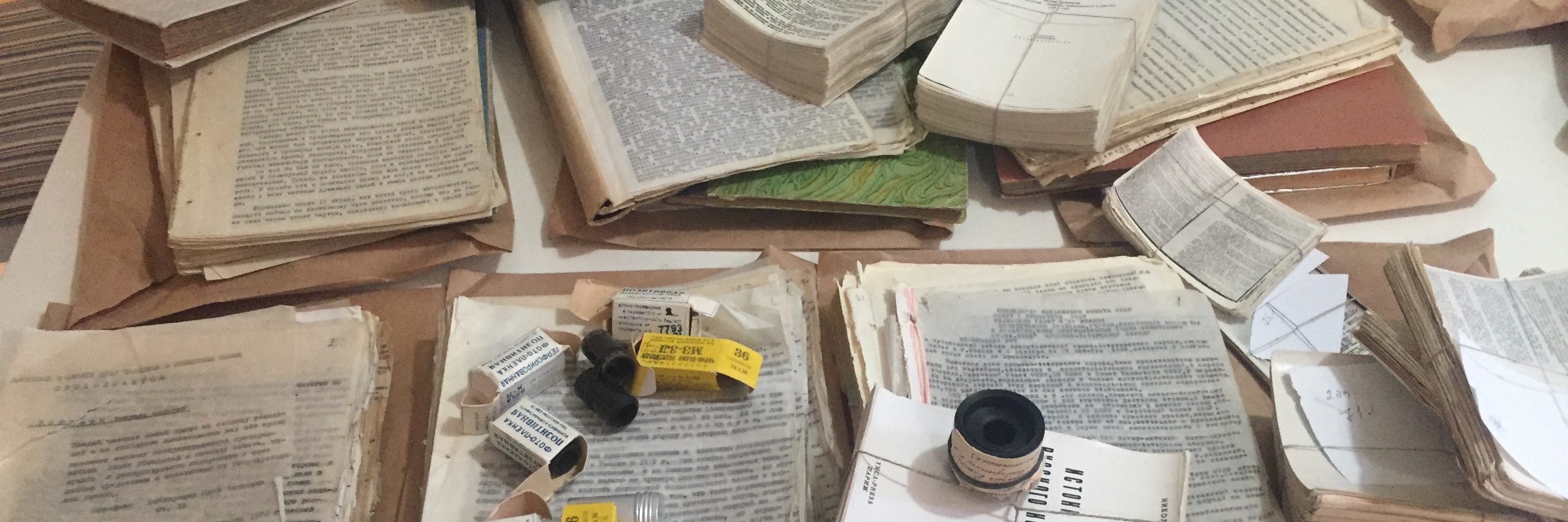




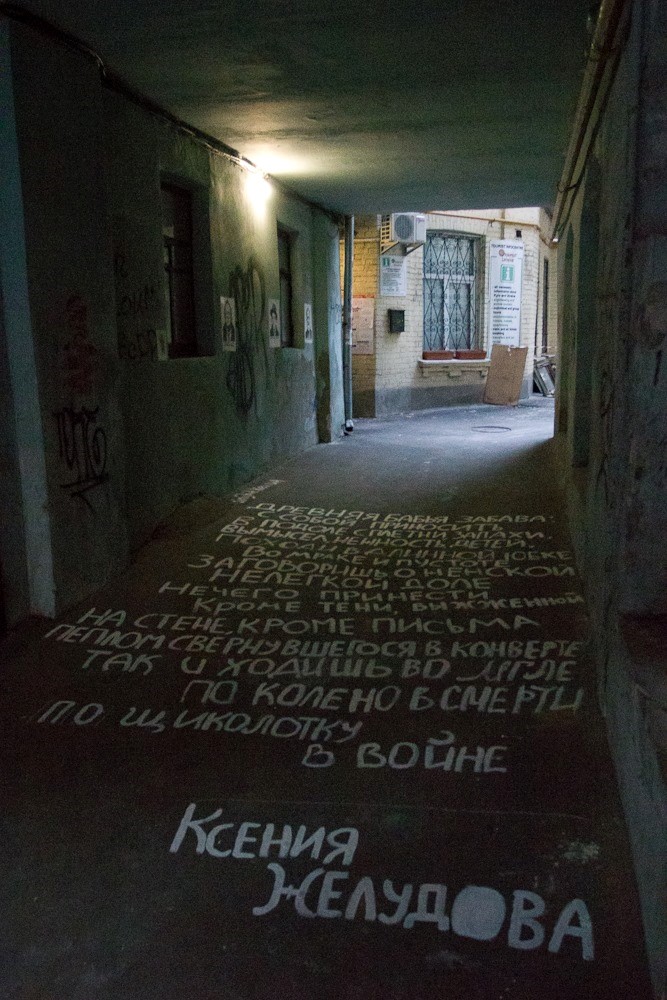

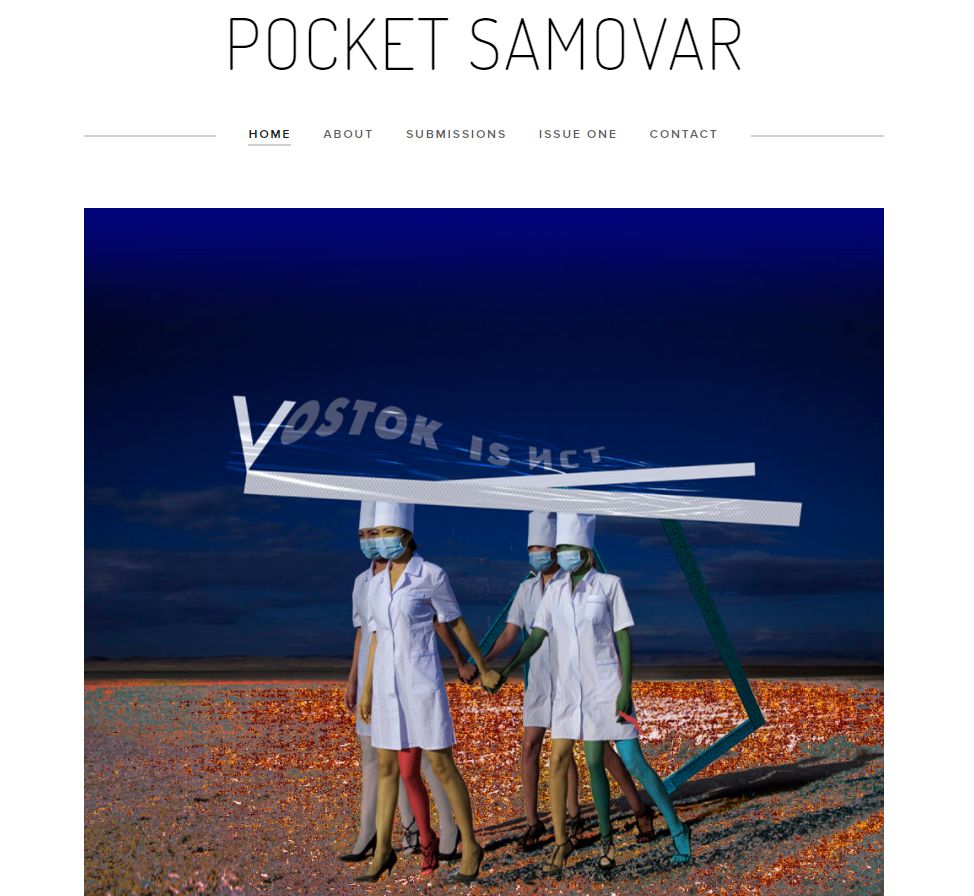


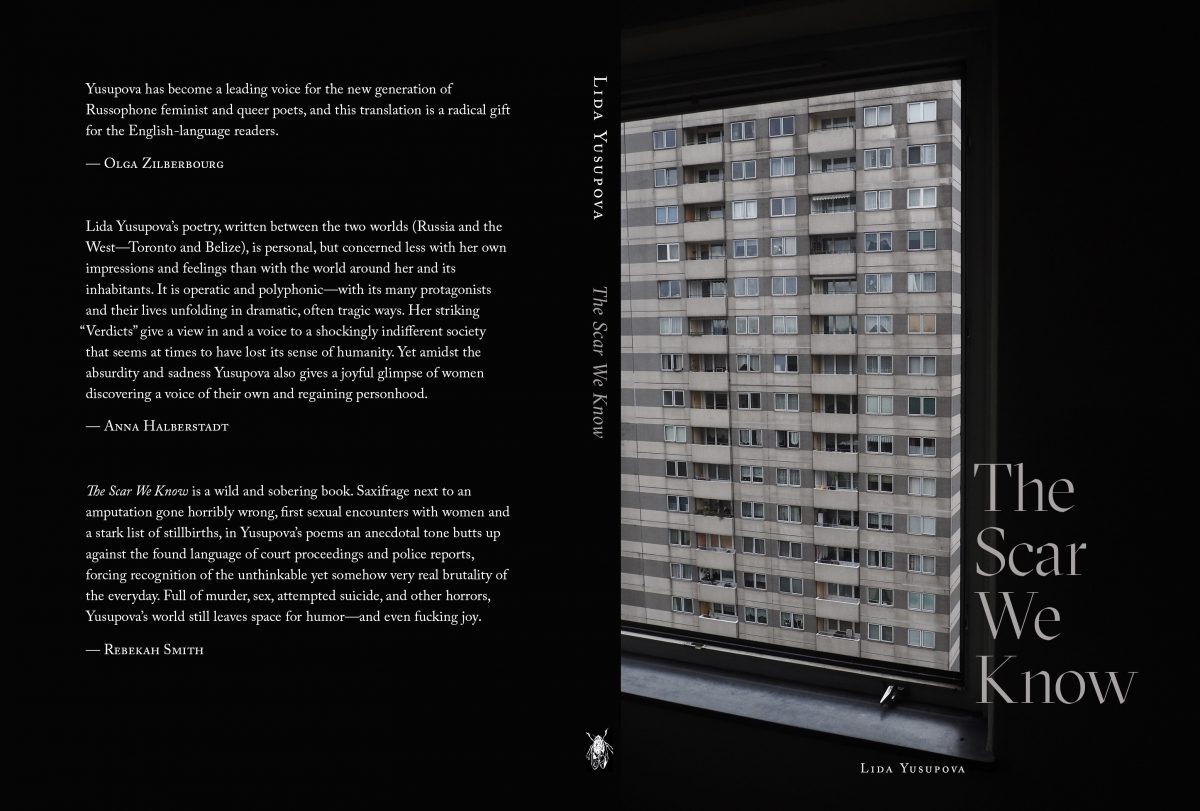

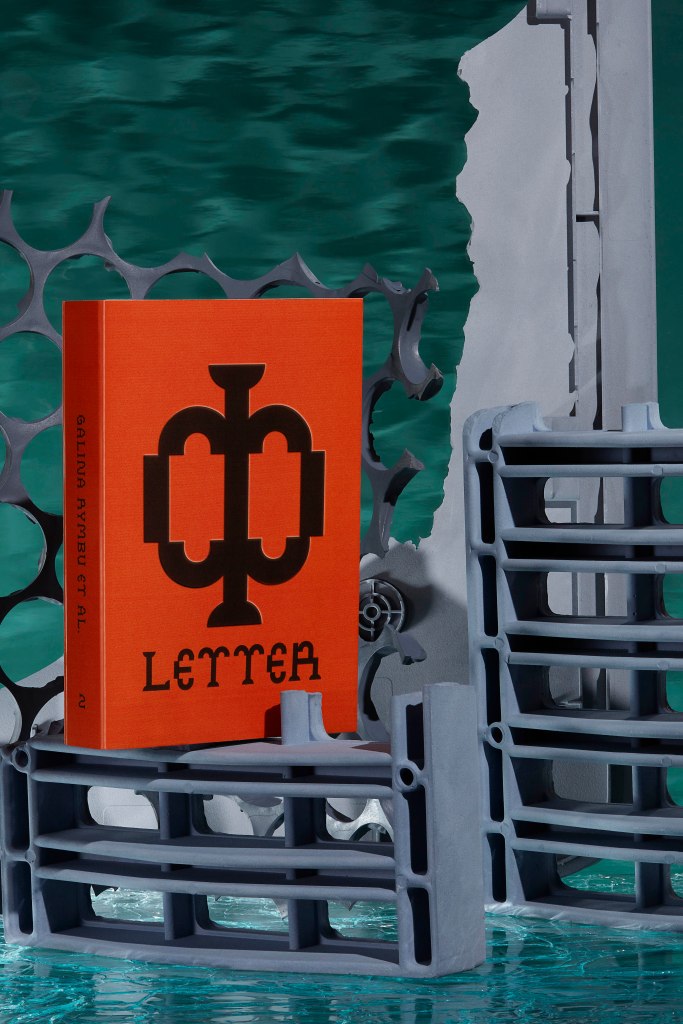


 Punctured Lines