Graphic Memoirs and Novels of Soviet Trauma

I didn’t grow up reading graphic novels. Back in the USSR and Russia comics did not exist as a genre. To this day, some of my contemporaries from that part of the world might occasionally dismiss the whole field of graphic literature as meant only for children. But as time goes on, this genre has been asserting itself within the field of literary studies and has been taken up by an ever-increasing number of creators from the countries of the former USSR and diaspora. It’s become a vibrant source of nuanced, memorable narratives. Many contemporary artists and writers are turning to graphic forms of storytelling to explore creative possibilities that the form has to offer.

Continue reading “Graphic Memoirs and Novels of Soviet Trauma”

2025 Books by Post-Soviet Authors

2025 is going to be a big year for books written by immigrant authors hailing from the Soviet Union who now call North America home. Since 2021, I’ve kept a running list of books coming out from our community as a way to keep tabs and, frankly, because no one else was doing it. Last year, when my own debut novel came out, there were only 7 books out from our community, a couple of them paperback editions of 2023 novels. This year, however, we have twelve new titles, plus three books–including my own–being released in paperback. A recent record! I imagine the war in Ukraine might have had something to do with this increased output as several of the authors below engage with the war and the resulting refugee crisis. As the war drags on and the public’s attention on it wanes, this feels like an especially critical time for our voices to be heard. This is why I’m glad to see that our books are finding publishers and readers, and I hope that the incredible variety of books on this list is encouraging to other writers in our community. From poetry to dystopian novels to short story collections, nonfiction, and a cookbook memoir, check out the list of FSU books and please support these authors by pre-ordering.

Continue reading “2025 Books by Post-Soviet Authors”

Books for Review, 2022

Punctured Lines is looking for reviews of the following recent and upcoming titles. Reviewers should have some expertise in terms of their chosen work, engaging substantively with its themes, structure, and techniques and using direct citation to back up claims. Each piece we receive for review undergoes a rigorous editing process, and we will provide potential reviewers with the guidelines. If you are interested in reviewing a work not on the list but that fits our overall themes of feminism, LGBT, diaspora, decolonialism, etc., please let us know. Thank you, and we look forward to working with you. Email us at PuncturedLines [at] gmail [dot] com.

We especially welcome reviews of Ukrainian titles.

Continue reading “Books for Review, 2022”

Books for Review

Punctured Lines is looking for reviews of the following recent titles. Reviewers should have some expertise in terms of their chosen work, engaging substantively with its themes and techniques and bringing in direct citation to back up claims. If you are interested in reviewing a work not on the list but that fits our overall themes of feminism, LGBT, diaspora, etc., please let us know. Thank you, and we look forward to working with you.

Fiction:

Alina Adams, The Nesting Dolls (Harper, 2020)***

Nina Berberova, The Last and the First, translated by Marian Schwarz (Pushkin Press, 2021)

Continue reading “Books for Review”

Readings on Blackness, Racism, and Russian and Eurasian Studies

This post reproduces and documents a Twitter thread that began on June 3, 2020, with articles by Aisha Powell, Sarah Valentine, B. Amarilis Lugo de Fabritz, and Jennifer Wilson. Various members of the Eurasian Studies community gradually added to the thread, creating an informal list of resources that, while useful, would also be ephemeral and difficult to find if left on social media. Here, in Punctured Lines’s more easily searchable archive, these resources are available for you to use and remix through a Creative Commons Attribution 4.0 International License. This license applies only to the tweets by Hilah Kohen below and not to any of the content linked to them. You can use the license to create your own version of this resource list for a specific community or publication.

Both the Jordan Center for the Advanced Study of Russia at NYU and the American Association of Teachers of Slavic and East European Languages (AATSEEL) have also published organized lists of texts, lectures, and podcasts relating to race and racism. While these databases intersect with the Twitter thread reproduced here, they focus on offering additional materials that are relevant to scholars and teachers of Eurasian languages and cultures.

To keep things maximally readable, we chose to preserve Twitter’s format for some posts and to transpose others to a text-based layout. We welcome all feedback and links to additional resources. To access the thread below directly on Twitter, click here.

Especially for fellow Eurasianists just starting out, tho, this is work to read as we wade into the bs going forward. Not comprehensive– just what comes to mind re: student experiences, teaching, and what our field does on a systemic level. Less material here on research. /2

Black Bread: A look inside the world of black Slavic studies scholars” by @AishaPowell_ for @trumplandiamag /3

Russian Studies’ Alt-Right Problem” by Sarah Valentine for the Chronicle (paywalled but important– if anyone has a non-paywalled link or is willing to share access, please say so) /4

“Race, Diversity, and Our Students in Russia” by @boricuaslavist for @NYUJordanCenter /5

.@JenLouiseWilson‘s 2014-2015 series “Teaching Race in Russia” plus “Is Slavic ready for Minorities?” for @NYUJordanCenter (more links below) /6

“Teaching Race in Russia: Dispatches from ‘The Harlem Renaissance: From New York to Tashkent'” by @JenLouiseWilson /7

“Teaching Race in Russia Part II: From Harlem to the ‘Soviet South'” by Jennifer Wilson /8

“Teaching Race in Russia Part III: Sartre, Jazz, and the Cossack Dance” by Jennifer Wilson /9

“Teaching Race in Russia: Some Conclusions” by Jennifer Wilson /10

Material for listening & then further research: “The Global Alt-Right: Race and U.S.-Russia Relations” @NYUJordanCenter: http://youtube.com/watch?v=4DeKIKG-HX0… /11

Loads of posts and articles on @raceineurasia /12

Please add more if you have time/energy somehow (I’ve only read narrowly & also haven’t included any books here) and add your essential readings related to research on race in Eurasian and Russian studies /13

One last “goes without saying” is that this thread is an addendum to concrete monetary/physical/logistical action right now and in the coming weeks. Thanks for reading /15

Adding “#BlackOctober Reading List: The Russian Revolution and the African Diaspora” by @JenLouiseWilson and @mightykale. Super thorough starting point for reading on the Black diaspora and the USSR plus some temporally broader pieces

Am learning that I don’t know how to keep up with Twitter replies very well, so I’m sorry if I miss something! I really appreciate the words of thanks, but they should be directed elsewhere. I respect all of you beyond words, but there’s a misunderstanding of scale here.

For white scholars who want the field to change, these conversations about race in the field have so far meant working on ourselves, supporting students, and responding to individual incidents. Necessary steps. This category of responses to the thread is passing by another:

Black scholars and scholars of color have worked constantly for years against the racism of a thousands-strong field and gotten crap in return. Our field’s record is one of forcing all Black scholars out. That there are still meaningful experiences to be had doesn’t change this.

That’s the scale we’ve got to be on. I don’t know how to frame this rhetorically– I fit into the first tweet above, not the second. This is just a total split in the responses to this thread, and it’s also (quite sickeningly) evident in the thread itself.

Our colleagues have pushed the field’s leadership & their mentors out of personal necessity and at daily personal cost; built successful, growing programs at their institutions from precarious positions; written numerous papers about the concept of them having room in the field.

Sometimes, we don’t know we even can do things on that scale because we don’t have to be on that scale to stay in the field, plus the field doesn’t ask it of us. Meanwhile, there’s prolific work being done under extreme pressure. We have to be on that scale.

I feel ill writing these things in this bizarre tone and as if from outside. Obviously, nobody has denied all this; you know this; everybody here is being so supportive. The question is what’s next & can it possibly be enough.

I should add– useful assuming a considerate and broadly informed approach.

Creative Commons License

Archipelagic Model of Global post-Soviet Cultures (*)

About a year ago, when Yelena Furman and I decided to get serious about our ongoing Twitter conversation about Russian literature and to start this blog, I read Maria Rubins’s essay “A Century of Russian Culture(s) ‘Abroad’: The Unfolding of Literary Geography,” published in Global Russian Cultures (edited by Kevin M. F. Platt; a volume in which Yelena Furman’s own essay “Rewriting Gender: Russian-American Women Writers and the Challenge to Russian Femininity” also appears). In this programmatic essay, Rubins argues that “A polycentric, nonhierarchical model of global Russian cultures may be visualized as an archipelago, a chain of islands that appear independent and isolated but in fact are interconnected in space, as well as time, often owing their origins to a series of volcanic eruptions.” In this model, Rubins argues, “the metropolitan Russian ‘continent,’ … can be seen as just the largest island within the global archipelago of Russian culture.”

Prior to encountering this essay, I had heard of archipelagic studies from a friend and a colleague, Olga Blomgren, who is working on her dissertation in Comparative Literature. Olga pointed me toward this theory and to the ideas of de-colonization, as distinct from post-colonization, as promising ways of conceptualizing literatures born of multiple languages and cultural influences. In her own work, Olga discusses the writing of the multilingual authors from the Caribbean, Rosario Ferré and Edwidge Danticat. The notion of an “archipelago” offers a compelling vision and a path to undoing the hierarchies of values imposed by colonial regimes. “Landmasses traditionally conceived of as continents may be reframed as islands that are constituent parts, rather than continental administrators, of the global meta-archipelago,” write scholars Brian Russel Roberts and Michelle Stephens in their essay “Archipelagic American Studies and the Caribbean.” Just because a traditionally conceived continent is physically larger than an island, its claim on culture and influence isn’t more valid than that of an island.

Rubins applies these ideas to Russophone literature, including in Paris during the interwar period, literature created in the US during the Cold War Era, and in Israel in the more recent times. She quotes from the famed theorist Homi Bhabha, who argued in his book The Location of Culture that “peripheral locations are rich in innovation and can destabilize and refashion stagnating ‘centers’.” In fact, with the introduction of the archipelagic model, the very terms for “center” and “periphery” (so important to the 19th Century Russian writers, from Gogol to Chekhov) may become obsolete. “Diasporic authors and communities contest their alleged marginality and assert their hybrid character. Yet diasporic consciousness and patterns of writing inevitably spill over into the metropolitan world, eroding monolithic identities and discourses even as they participate in transnational literary systems,” Rubins suggests.

These ideas deeply influenced my thinking about what I wanted to accomplish with Punctured Lines, and it was exciting to find that Yelena was thinking along the same lines. In her draft of our mission statement, she wrote that we want to amplify the traditionally underrepresented voices from the post-Soviet diasporas. If I were to translate this into the language of the archipelagic theory, the idea is to unsettle the colonial maps of literary value that tend to place Russia at the center of the Soviet literary space and that of the Russian Empire, and to treat Russophone literature as one island among many of the metaphorical post-Soviet archipelago. This work feels all the more necessary to me on the personal level because in the earlier draft of this post (displayed in the comments), I have unconsciously defaulted to the colonialist language while actively seeking to avoid it. I’m very grateful to the comments that Shelley Fairweather-Vega, Christopher Fort, Mirgul Kali, and Kevin M. F. Platt offered on this post that helped me to unpack my own unconscious bias and tendency to conflate “Russia” and “the Soviet Union.”

(*) Title and content have been edited; the original version is in the comments below.

Moving from theory to practice, here’s a few recently published and upcoming books from the post-Soviet archipelago to read this summer.

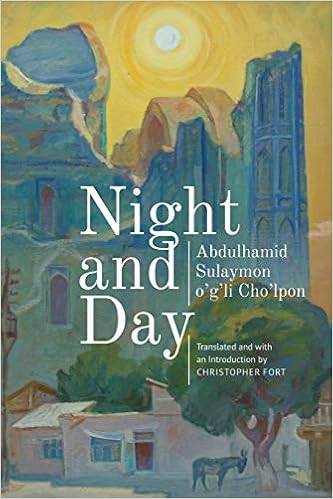
Night and Day by Abdulhamid Sulaymon o’g’li Cho’lpon, translated from Uzbek by Christopher Fort. This novel comes to us from the 1930s and is set at an earlier time, in Turkestan under Russian Imperial rule. “Despite increasing censorship and previous arrests by Soviet authorities, Cholpon subtly employs a variety of techniques including satire and farce to undermine the legitimacy of the Soviet government that was being established around him. Bitterly portraying the hypocrisy and collusion of jadid reformists, Muslim clerics and local Russian officials, this unfinished novel, which was halted by the author’s execution in 1938, remains as one of the darkest comments on Soviet Central Asian history in the Uzbek language,” wrote Shawn T. Lyon about this novel. An illuminating interview with the translator aired on a podcast New Books Network.

Pub Date: November 26, 2019
Publisher: Academic Studies Press

Translated from Uzbek by Shelley Fairweather-Vega, Hamid Ismailov’s GAIA, Queen of Ants is set in England in the milieu of Central Asian immigrants. ” The pivotal relationship in the novel is that between septuagenarian Uzbek émigré Gaia and Domrul, her young Turkish carer. Readers may recognize hints of Harold and Maude,” writes Joshua Bird in a review of this novel. “Contact with Gaia brings up [for Domrul] conflicting feelings of lust, shame and longing, and through their complex relationship, Gaia draws the young man into her dark world of infidelity, sexuality and secrets.”

Pub date: February 11, 2020
Publisher: Syracuse University Press

Good Citizens Need Not Fear is the first book by Maria Reva, who was born in Ukraine and grew up in Canada, and has published a number of the stories from this linked collection in the most prestigious journals of the English-language world, including Electric Literature, Granta, McSweeney’s, The Atlantic, and others. “Set in the Ukrainian town of Kirovka in the 1980s and starring a set of characters who live in the same block of flats, Maria Reva’s enthralling debut of interlinked short stories achieves the double effect of timelessness and timeliness,” Kapka Kassabova writes in The Guardian.

In addition to her fiction writing, Reva translates from French and writes opera libertti!

Pub date: March 10, 2020
Publisher: Doubleday Books

Nino Haratishvili’s The Eighth Life, translated from German by Ruth Martin and Charlotte Collins has been probably the best publicized book on my list. It is currently listed as #11 in “Russian Literature” on Amazon — woo hoo! This book opens in contemporary Berlin, but the family saga begins in Georgia, at the turn of the 20th Century, and follows the central characters to St. Petersburg during the Russian Revolution, and then on through time and geographical locations. “The Eighth Life is narrated by Niza Jashi, a Georgian expatriate living in Berlin, as she writes a history of her family for Brilka, her niece. The novel explores the ways that various characters are fated not only by the political tumult and government brutality of 20th-century Georgia but also by the legacy of a family curse,” explains Lori Feathers in an interview with Haratishvili on Lit Hub.

Pub Date: April 14, 2020
Publisher: Scribe US

Three Apples Fell From the Sky by Narine Abgaryan comes to English in translation by Lisa C. Hayden. Abgaryan was born in a small town in Soviet Armenia, and later moved to the capital of Armenia, Yerevan, and from there, to Moscow. Abgaryan fictionalizes her hometown in her work with tenderness and care, showing us a range of fascinating characters and a lifestyle that seems as though of a different century. This is Abgaryan’s seventh novel, and the first to be translated to English. Due to the pandemic, the pub date for this novel has been delayed to late August, but I encourage all of our readers to pre-order this book (it is already available for pre-order).

While we wait, read Katherine E. Young’s translation of an excerpt from Abgaryan’s earlier novel, People Who Are Always With Me, in Two Lines 31.

Pub Date: August 4, 2020
Publisher: ONEWorld Publications

Don’t forget to order from your favorite local bookshop, they need our help! Bookshop.org is a good second choice.

Virtual Happy Hour of writers with the former Soviet Union connection

This week AWP, or Association of Writers and Writing Programs, is holding its annual conference in San Antonio, TX. Many of the attendees, however, have opted to stay home due to the increased risk of the corona virus outbreak. An important component of this conference is a massive book fair, at which hundreds of independent presses and literary journals sell their stock. To compensate for the losses of this already financially strained community, people are organizing several initiatives.

First of all, there’s #AWPVirtualBookfair Twitter hashtag, under which you will find links to lots of publishers who are offering significant discounts of their stock. Trevor Ketner started the #AWPVirtualBookfair Google Doc, where you can find a comprehensive list of participating publishers, and Natalie Eilbert creating the AWP Virtual Bookfair for Authors Doc. Justin Greene created a handy list of publishers on Entropy, that includes the discount codes. Point being: the best way to support literary arts and independent publishing is to buy our books.

One of my plans for this conference was to co-host a happy hour for writers and translators working on material related to the former Soviet Union. Unfortunately, both my co-host Olga Livshin and I decided to cancel, as did most of the people we hoped would take part. I envisioned that this happy hour would help us, in part, to build a sense of community and help us brainstorm ways in which we can support each other’s work. So, in that spirit, here is an image gallery followed by a list of these titles with links, where you can buy the books.

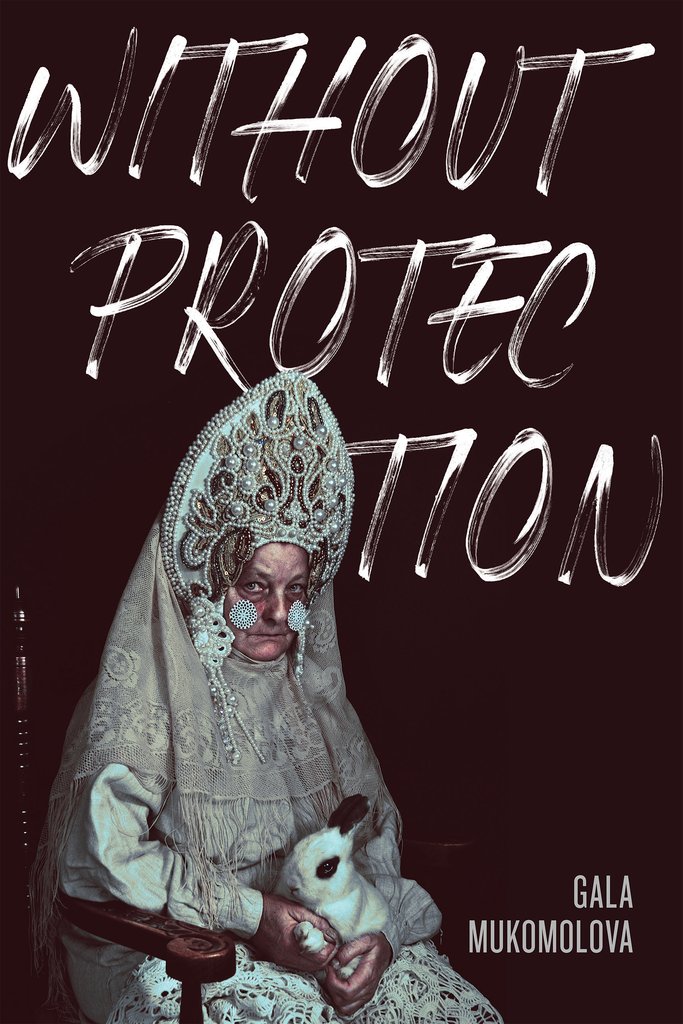
Gala Mukomolova, Without Protection, from Coffee House Press

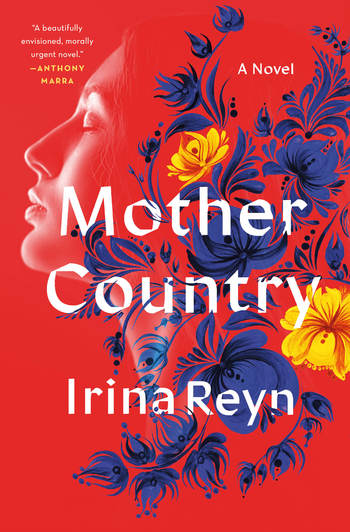
Irina Reyn, Mother Country, from St. Martin’s Publishing Group

Julia Kolchinsky Dasbach, Don’t Touch the Bones, from Lost Horse Press

Olga Livshin, A Life Replaced, from Poets & Traitors Press

Olga Zilberbourg, Like Water and Other Stories, from WTAW Press

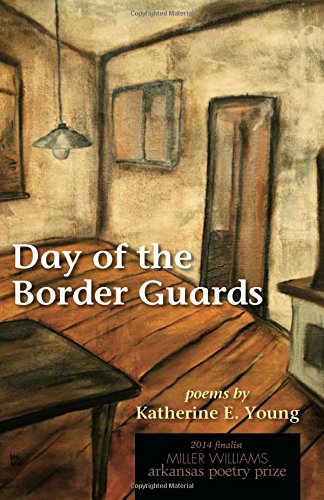
Katherine E. Young, Day of the Border Guards, The University of Arkansas Press

Larissa Shmailo, Sly Bang, from Spuyten Duyvil

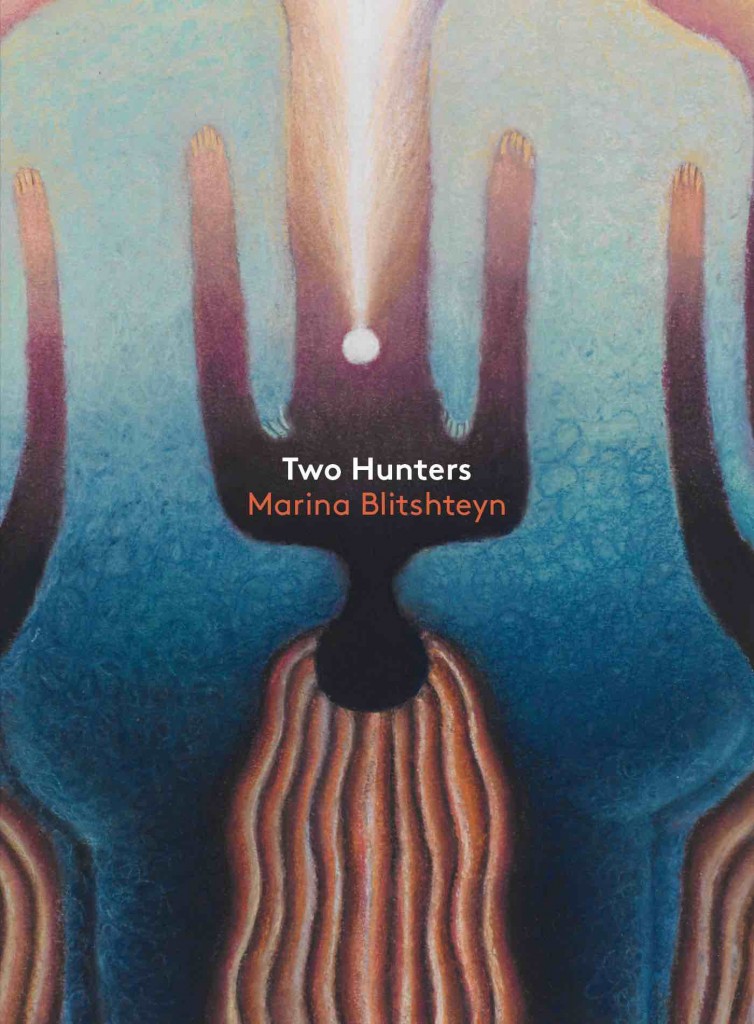
Marina Blitshteyn, Two Hunters, from Argos Press

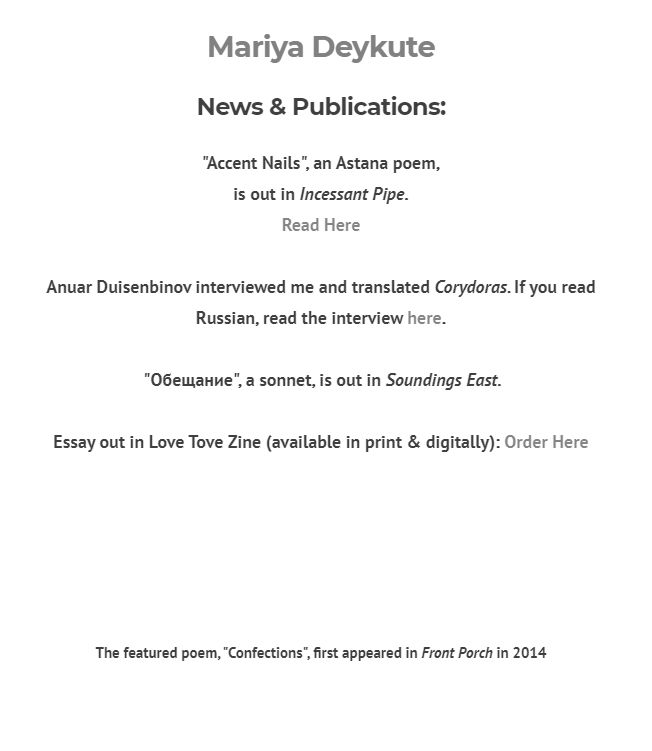
Mariya Deykute, her website

Mary Jane White, Starry Sky to Starry Sky, from Holy Cow! press

Ruth Madievsky, Emergency Brake, from Tavern Press

Valzhyna Mort, Music for the Dead and Resurrected, from FSG

* If you don’t see a book that you wish to be included, please leave a comment!

Russian kid lit in translation

We welcome a wonderful new blog that focuses on Russian children’s literature in translation to English.

Ruth Ahmedzai Kemp's avatarRussophone Kid Lit

There have been fewer children’s and teen books translated into English from Russian than you might imagine. Here’s what we’ve been able to find so far, published since 1991: fiction and non-fiction in translation from Russian authors and illustrators.We’ll list Soviet translations in a separate post, coming soon.Many thanks to the charity Outside in World for their help with this research.

We would love to hear of any we’ve missed: please email us about any Russian-language kid lit you know of in English translation, whether still in print or not, and especially forthcoming publications!russian.kid.lit @gmail.com

PICTURE BOOKS BY RUSSIAN WRITERS OR ILLUSTRATORS

THE RETURN, written and illustrated by Natalia Chernysheva (Groundwood, 2019) Ages 4-7

As comforting as a home-cooked meal”~ Kirkus Reviews

THE REAL BOAT, by Marina Aromshtam, illustrated by Victoria Semykina, translated by Olga Varshaver (Templar, 2019) Ages 5-8

Shortlisted for…

View original post 862 more words

The new canon of Russophone women-authors, according to the editors of Polka

Two years ago, a prominent journalist and editor Yury Saprykin asked a number of Russian authors, editors, critics, educators, and so on, to nominate the works that they considered key in the Russian literary canon. On April 2, 2018, Saprykin’s launched the website, polka.academy with the resulting list of 108 books. It’s a gorgeous website, unfortunately available only in Russian. Another unfortunate part is that this list included only three books by women-authors: Akhmatova, Tsvetaeva, and Petrushevksaya.

Two years later, the editors addressed this problem. A team of writers created a new list that they call “Women’s Canon” of over 70 authors who deserve to be remembered. (This list, too, is unfortunately only available in Russian.) The authors include a thoughtful note that this list isn’t complete and promise to return to this work in the future. We’re delighted to welcome this list and look forward to seeing this work continued.

On a personal note from the creators of Punctured Lines, we’re particularly pleased to see a listing of Aleksandra Brushtein’s delightful young adult novel with a title that’s difficult to translate and that means something like “The road that will lead you to an unknown future.” This book was deeply influential to both of us, and on Twitter we’ve been actively advocating for its re-translation to English. Of the unfortunate omissions, we can point to Julia Voznesenskaya’s novel Women’s Decameron from 1985.

Notable Books: Russian Titles in English Translation, 2009-2019

The impetus for creating this post came from a recent Twitter discussion. We at Punctured Lines decided to accept a dare and came up with a list of notable Russian titles available in English translation from the last decade. This has been an opportunity to take stock of the years 2009-2019, both to remember the books we’ve read and to look back at those that we might have missed.

In this task, we relied heavily on Lisa Hayden’s blog, Lizok’s Bookshelf, where Lisa keeps chronological track of the English translations – our deep gratitude for creating and maintaining this resource. Our methodology for choosing among all those works was based on several factors. Rather obviously, for our purposes we only considered works by women. We also wanted to highlight writers whose names may not be very familiar to English-speaking readers but whose work we feel deserves wider exposure and shows the range of contemporary Russian women’s literature.

For this reason, we chose not to include writers who are well-known in the Anglophone world, but of course we love them too. We note proudly the women whose work has been translated into English numerous times: Anna Akhmatova, Svetlana Alexievich, Eugenia Ginzburg, Ludmilla Petrushevskaya, Dina Rubina, Olga Slavnikova, Marina Tsvetaeva, Ludmila Ulitskaya, and Tatyana Tolstaya (whose problematic views on women and feminism may be less known).

One or both of us have read many of titles below, and we’re happy to report that the field is larger than our reading capacity. We included a few books we haven’t read because they sparked our curiosity and to encourage ourselves and our followers to return to these publications. An important factor for consideration was translators whose work we’re interested in. Here we would like to say a huge thank you to translators for their often unacknowledged efforts that allow English speakers to know Russian literature.

Our list has four categories: Contemporary Prose, Contemporary Poetry, Recent Translations of Earlier Prose Works, and a rather catch-all Drama, a Graphic Novel, and an Anthology. The titles in each category are given chronologically by year of the translation. This list reflects our personal opinions and is in no way meant to be comprehensive or conclusive. We welcome your comments and suggestions about these and other titles by Russian women who you think should be on this list. This is, hopefully, the beginning of that conversation.

Contemporary Prose

Elena Chizhova, The Time of Women, translated by Simon Patterson and Nina Chordas; Glagoslav, 2012. 

Linor Goralik, Found Life: Poems, Stories, Comics, a Play, and an Interview, edited by Ainsley Morse, Maria Vassileva, and Maya Vinokur; Columbia University Press, 2017.

Ksenia Buksha, The Freedom Factory, translated by Anne Fisher; Phoneme Media, 2018.

Alisa Ganieva, Bride and Groom, translated by Carol Apollonio; Deep Vellum, 2018.

Margarita Khemlin, Klotsvog, translated by Lisa C. Hayden; Columbia University Press, 2019.

Guzel Yakhina, Zuleikha, translated by Lisa C. Hayden; Oneworld Publications, 2019.

Contemporary Poetry

Anzhelina Polonskaya, Paul Klee’s Boat, translated by Andrew Wachtel; Zephyr Press, 2012. 

Polina Barskova, Anna Glazova, and Maria Stepanova, Relocations: Three Contemporary Russian Women Poets, translated by Catherine Ciepiela, Anna Khasin, and Sibelan Forrester; Zephyr Press, 2013.

Maria Rybakova, Gnedich, translated by Elena Dimova; Glagoslav, 2015.

Inna Kabysh, Blue Birds and Red Horses, translated by Katherine E. Young; Toad Press, 2018.

Aigerim Tazhi, Paper-Thin Skin, translated by James Kates; Zephyr Press, 2019.

Olga Livshin, A Life Replaced: Poems with Translations from Anna Akhmatova and Vladimir Gandelsman, Poets & Traitors Press, 2019.

Recent Translations of Earlier Prose Works

Teffi, Memories: From Moscow to the Black Sea, translated by Robert Chandler and Elizabeth Chandler, Anne Marie Jackson, and Irina Steinberg; NYRB Classics and Pushkin Press, 2016.

Sofia Khvoshchinskaya, City Folk and Country Folk, translated by Nora Seligman Favorov; Columbia University Press, 2017.

Olga Berggolts, Daytime Stars: A Poet’s Memoir of the Revolution, the Siege of Leningrad, and the Thaw, translated by Lisa A. Kirschenbaum; University of Wisconsin Press, 2018.

Doba-Mera Medvedeva, Daughter of the Shtetl: The Memoirs of Doba-Mera Medvedeva, translated by Alice Nakhimovsky; Academic Studies Press, 2019.

Karolina Pavlova, A Double Life, translated by Barbara Heldt; Columbia University Press, 2019.

Irina Odoevtseva, Isolde, translated by Bryan Karetnyk and Irina Steinberg; Pushkin Press, 2019.

Drama, a Graphic Novel, and an Anthology

Yaroslava Pulinovich, Olga Rimsha, Ksenia Stepanycheva, Ekaterina Vasilyeva, Russian Drama: Four Young Female Voices, translated by Lisa Hayden; Glas, 2014.

Victoria, Lomasko, Other Russias, translated by Thomas Campbell; Penguin and n+1, 2017.

Teffi, Marina Tsvetaeva, Anna Akhmatova, Lydia Ginzburg, Galina Scherbakova, Ludmila Ulitskaya, Svetlana Alexievich, Olga Slavnikova, Irina Muravyova, Ludmila Petrushevskaya, Margarita Khemlin, Slav Sisters: The Dedalus Book of Russian Women’s Literature, edited by Natasha Perova; Dedalus, 2018.