“I felt that it was my social mission”: an Interview with Anna Starobinets

By Svetlana Satchkova

Anna Starobinets is a Russian journalist, novelist, screenwriter, and children’s book author. Her only book of non-fiction, Look at Him, is coming out in September from Slavica Publishers in Katherine E. Young’s translation. It was originally published in Russia in 2017 and caused an extraordinary public discussion. In Look at Him, Starobinets describes how, in 2012, she found out that the baby she was carrying had a congenital condition incompatible with life, and how, following a dehumanizing experience with the medical system in her own country, she had to travel to Germany to terminate her pregnancy and to receive grief counseling – a thing practically unheard of in Russia at the time.

The incredible outpouring of outrage and vicious criticism that followed the book’s publication is perhaps explained by the fact that it was the first of its kind: in Russia, it’s still the norm to keep silent about one’s grief. I spoke with Anna about her book in order to better understand why it had created such a scandal and what changes in medical practices it had helped bring about.

When did you come up with the idea of writing this book?

The thought first occurred to me when I spoke to a psychologist in Berlin and I saw all the books she had on her shelves about losing a child, in many different languages. I guessed that there were no books of this kind in Russian, which later proved to be true. After I terminated my pregnancy, I felt a need to absorb somebody else’s experience that was similar to mine, so I read a couple of books in English, but, even though my English is pretty good, there’s still an invisible wall between me and a text in this language. That’s when I started seriously thinking about writing about my own experience – I felt that it was my social mission. After the book came out, the most benign criticism I received was that I’d written it in order to sublimate my suffering and to dump it onto other people. I have no idea if there’s any truth to this accusation: you never know where the subconscious is concerned. But I can tell you that that was not my conscious goal. I felt that I had a duty to change the world using the only power I had – the power of the written word. My overarching goal was to break the silence, and I also had some smaller goals. For example, I wanted the doctors who had behaved unprofessionally towards me to stop working with women. That’s why I decided to use their real names.
Have these micro goals been accomplished?

Partially. One doctor I’d written about left his job. I don’t know if my book was the reason, but I know for certain that his reputation suffered. The clinic he’d worked in also organized a training session for their staff with the purpose of teaching them how to deliver bad news to pregnant women. I know that the director of one large private clinic in Moscow made all the obstetricians and gynecologists on his staff read my book. Also, some time later, a hospice was founded in Moscow for women who are pregnant with babies with congenital conditions. There, the women can receive medical help, no matter what decision they ultimately make.

I feel that we have to explain to American readers why everything that has to do with obstetrics and gynecology in Russia carries so much violence towards women. What are your thoughts on that?

There are historical reasons for that. In the USSR, a spartan outlook on life was widespread and almost official: only the strongest were supposed to survive. If you were weak, you couldn’t be a part of the great Soviet system. If you were in pain, you had to keep a low profile. This spartan ideology was curiously fused with even more ancient concepts. For instance, childbirth was considered to be a punishment for pleasure: if you’d been with a man, you had to bear the consequences. A woman in labor wasn’t supposed to cry out in pain and ask for special treatment, more so because this whole sphere was viewed as obscene and dirty, connected to blood and slime. All of that had come from the depths of a conservative peasant mentality. A lot of traditional cultures hold similar views, but in developed countries these have been replaced by modern-day values.

In Look at Him, you write about coming to a state women’s clinic in Moscow together with your husband for a consultation and him not being allowed inside. Why do you think men are barred from entering these clinics in Russia?

This, of course, is true only of state clinics [vs. privately funded – PL] that are still under the influence of old Soviet traditions. It was believed that no woman who had any sense would want her man to see her under those indecent circumstances where she gave birth or underwent a gynecological checkup. And if, for some reason, her man would actually want to be there with her, he’d embarrass all the other women, because he’d see them in this awkward indelicate situation: he’d know that, in a couple of minutes, they’d go in and spread their legs in front of a doctor. Presumably, men were and are barred from the clinics to protect the women.

As a result, Russian men are often separated from women’s experiences. When a woman loses a baby, her own husband often tells her to forget about it as soon as possible. Why do you think most well-wishers in Russia are so bent on making you forget about your loss instead of live through it?

Because we still lack the language to talk about it, and most people, medical professionals included, don’t realize that to talk about your pain is much more therapeutic than to keep silent about it. Paradoxically, when they tell you to forget, they are being helpful. If you don’t talk about it, they believe, the thing will just disappear. For example, my relatives told my 8-year-old daughter not to talk to me about the baby I’d lost, and I was stunned by her silence. I kept wondering if she didn’t care about what happened, and then I found out that she was trying to protect me.

What are your views on psychotherapy? There’s still a lot of prejudice against it in Russia.

Speaking abstractly, I’m all for it, of course. But I’ve encountered a huge number of ignorant and unprofessional psychotherapists in Russia. Finally, I got lucky – I did meet a great psychologist after a long while. The thing is, there isn’t a system in place that certifies therapists and makes sure that if somebody shows you a psychotherapist’s diploma, they are adequately trained to treat you. Anyone in Russia can take a three-month course, call themselves a therapist, and start taking clients.

Let’s talk about the scandal your book caused. How did it develop?

First of all, no publisher wanted to publish my book: they were scared of the subject matter. When it did finally find a home, I was worried that people wouldn’t buy it and that my work would turn out to have been for nothing. When Look at Him was ready to come out, journalists became very interested in it, and fragments of it appeared in various media outlets. I began to read the comments, and my hair stood up! There was so much hate: people were insulting me, saying that I was a disgrace to my country and that I should go and live in Germany if I liked it so much. The commenters also said that our doctors were not overly emotional, but that they had hearts of gold, and that I was demonstrating my dirty bloody underwear. I was shocked. I’d been preparing for a backlash from the medical community, but I’d thought that regular people, especially women, would be on my side because we were all patients, we all had similar experiences with our medical system. It turned out that I’d been mistaken: regular women were my most violent haters, and those who’d lost their children were especially vicious. In the public space, at least: privately, I received hundreds of messages where other women shared their own stories and thanked me for writing about what nobody else wanted to address.

What happened after the book came out?

It sold out in a month, and additional copies had to be printed. Most journalists reacted positively to it, but I would say that fifty percent of regular readers reacted negatively. Then the book was nominated for the National Bestseller award. I knew the people who worked on the committee and was on friendly terms with them: I’d been on the jury several times over the years, and we’d met at various literary events. Those people were outraged by my book too. When it was shortlisted, the judges who were supposed to make the selection among the books on the shortlist violated ethical norms by lashing out against me publicly. Which is ironic, because the book is about ethics, among other things. For example, Aglaya Toporova who is a journalist and who’d lost a three-year-old daughter, wrote a review of my book (you can still see it on the National Bestseller website) where she called my baby a fragment of my body and my book socially dangerous. What most of these people held against me was that I was, in their opinion, trying to capitalize on my grief.

How exactly?

Here, I have to explain to the American audience that the money one makes in Russia as a writer is laughable, and these people knew it perfectly well because they were part of the book industry. At first, I didn’t understand what they meant, but soon it dawned on me: they meant that I was trying to become famous by demonstrating my dirty underwear. The bottom line was that I lost a lot of friends after the book had come out. Fun fact: I live in the same building with a family of writers, and we used to be very friendly. Now, they behave as though I don’t exist.

How did you feel while all of that was going on?

It hurt a great deal, of course – I’m a live human being. But I’d accomplished my goal, and that made me feel better. The public discussion I’d been hoping to start not only happened, but turned out to be huge. My book was everywhere. I remember, someone said during that time that if you turned on the tap at home, Anna Starobinets and her book would start pouring out.

Did the doctors you’d mentioned in the book try to reach out to you?

Their friends and acquaintances did. They tried to shame me: how dare I tarnish the image of those great people? A lady from the clinic called me about Dr. Demidov, who’d brought fifteen students into the examination room without my consent, while I was lying there naked with my legs spread out, and proceeded to talk to them about the “interesting pathology” as though I wasn’t there at all. The lady said that I’d lied in my book. I said, okay, what did I say that wasn’t true? That Demidov hadn’t brought the students into the room? She said that she didn’t doubt that he had, but that I’d written that I had to buy plastic overshoes while those were free of charge at their clinic! I just laughed. I asked her if she wanted an official retraction where I’d say that the clinic confirmed all the facts except for overshoes, and she said no.

Did you get any positive feedback?

There appeared a couple of publications by medical professionals who thanked me for my book and said that everything I’d described in it was true and needed to be changed. And, as I’ve mentioned, I received a lot of personal messages with words of support from women who’d experienced something similar to what I’d gone through. But the overall situation still seemed to me sort of crazy, because the medical community reacted mostly positively, and most of the regular readers were scandalized.

I know that Look at Him has been made into a theater production. Tell me about that.

Roman Kaganovich, a young theater director from Saint Petersburg, wrote to me and said that he’d read the book and that it had changed his outlook on life. He wanted to adapt it for the stage, and the idea seemed plain crazy to me, but I liked him so much that I agreed. In a few months, I came to see the production and was absolutely blown away by it. It was incredible: the actors sang and danced, and the show was not only poignant, but also very funny – I would say it had elements of burlesque. It turned out to be very entertaining and, at the same time, very true to the spirit of my book. It was about personal grief and the Kafkian absurdity of our medical system. Roman said that during the very first performances the audience had been silent the whole time, and he realized that people had been afraid to laugh because the theme was so serious. So, he started saying before every performance that it was okay to laugh – and people started laughing.

Do you think you’ll write any more non-fiction?

I won’t. When I started writing Look at Him, I did it knowing that it would be my only non-fiction book.

Why?

First of all, I’m an active Facebook user, and I post on my page whenever I feel like sharing something of my life. Secondly, I love to make up my own stories and to create my own reality – I do it not just for the money, but because it brings me joy. For me, a book of non-fiction isn’t a creative act, but rather community service. I write speculative fiction and horror fiction for adults, and I’ve been writing a lot for children. I have a very popular children’s book series that’s called Beastly Crime Chronicles and that’s been translated into several languages. These are crime mysteries that take place in a forest, and all the characters are animals. There are two detectives: a middle-aged Chief Badger and his assistant Badgercat, who’s undergoing a personal identity crisis. This is my most successful project to date: it’s being made into a cartoon and a show for the stage.

You also write for film and TV. How do you manage to do so many things at once?

I have catastrophically little time: I work a lot. I have two kids; my daughter is a teenager, so she doesn’t care about spending time with me, but my son is five, and he really misses me. But I love writing – it’s the only thing I know how to do. Screenwriting is basically the same thing – you’re creating a story. It differs from fiction writing only in some technical aspects.

I read your Facebook on a regular basis, and I remember reading about a trip you made to China because you needed some material for a novel. What was that about?

I’m writing a novel for adults, and it takes place in 1945 in Manchuria. I’d tried to research online, of course: I didn’t want to go to China at first because I had to spend my own money, and the trip took a lot of time and effort. But I finally realized that I had to go there because I couldn’t feel what I was writing about. I had a feeling that I was writing while wearing thick rubber gloves, and that nothing would change if I didn’t go there.

Why didn’t you just change the place?

I couldn’t because there’s a story behind this novel. In 2008, my husband Alexander Garros [Alexander Garros died in 2017 – PL] and I wrote a script for Russian Channel Two. It was a 20-episode fantastic series that took place in Manchuria in 1945, with demons and werefoxes – a mix of historical truth and mythology. For two years, we lived off the money they’d paid us, but they never actually produced it because the 2008 crisis happened, and the story was really expensive to make. They thought of it as the Russian Game of Thrones. To this day, it hasn’t been produced, and possibly never will be. This gnawed at me for years because I really liked the story and I wanted it to be realized in some way, so I started to talk the producers into giving me the right to write it in the form of a novel. It took a long time, but finally they gave in. This is really ironic because when you’re a writer, the most money you can hope to make is when you sell the screen rights to your novel, and in this case it’s already happened. So, I’m only doing it because I want to tell the story. When you’re writing for the screen, however, you don’t really need a lot of details, but with a novel, you need to dive into the atmosphere. I couldn’t travel back in time to 1945, obviously, but I needed at least something – to see the landscapes, the faces that populated the land, to smell the smells, things like that. Sometimes I teach creative writing to teenagers, and I always tell them the same thing: write what you know, otherwise it won’t sound true. This is especially important in science fiction or fantasy. To make the reader believe you, you need to be true to life in every possible detail, then they’ll believe in werefoxes and demons, too.

This interview was conducted in Russian and translated by the interviewer Svetlana Satchkova.
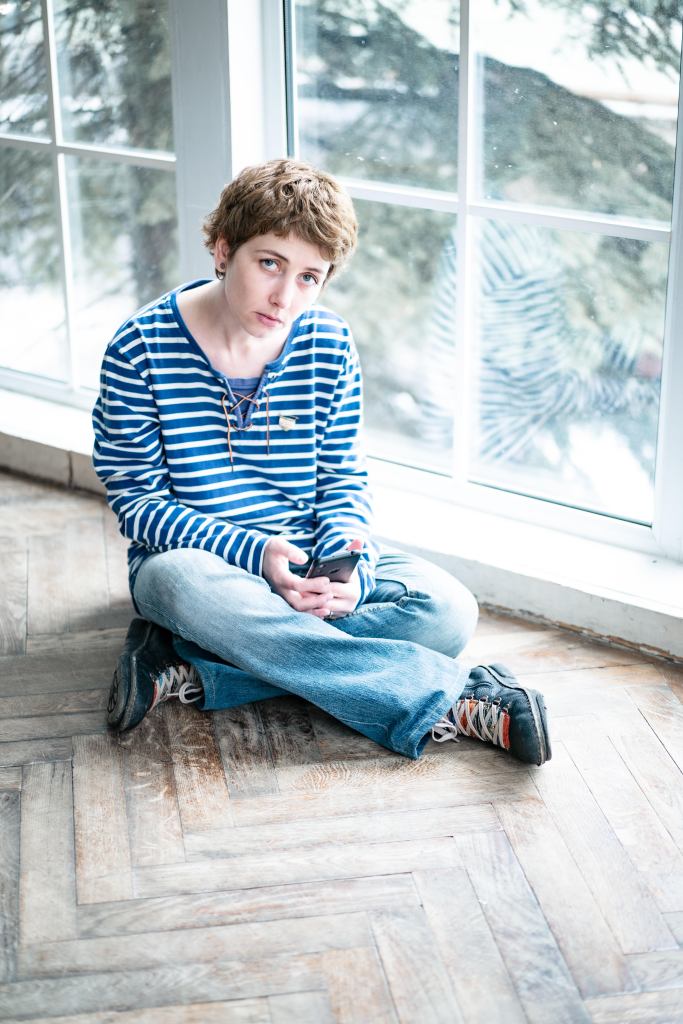
Anna Starobinets is a writer and scriptwriter. She writes horror and supernatural fiction for adults, and also fairy tales and detective stories for children. Awarded with several Russian and European literature prizes, her books have been translated into many world languages.

Her website is: https://starobinets.ru/eng/

Svetlana Satchkova is a writer and journalist from Moscow, Russia, who currently lives in New York City and is working on her MFA at Brooklyn College. Her new novel People and Birds is coming out from Eksmo in September.

Facebook: https://www.facebook.com/svetlana.satchkova

“Just because Belarusians write in Russian doesn’t mean they’re a part of Russian culture”: An Interview with Tatsiana Zamirovskaya

This is a translation of a Russian-language interview conducted by Svetlana Satchkova and published by Storytel on June 16, 2020. The translation is by Fiona Bell.

Tatsiana Zamirovskaya is a writer from Belarus who has lived in New York for the past five years. She writes in Russian and English. Her short story collection, The Land of Random Numbers (Земля случайных чисел, AST, Russia, 2019) was nominated for the National Bestseller prize and compared by critics to works by premier authors of metaphysical science fiction, from Ursula K. Le Guin to the Strugatskii brothers. She recently completed a new novel about memory and digital immortality.

Svetlana Satchkova spoke with Tatsiana about how her interest in fantasy developed, how she came up with the idea to move to the United States, and what the Belarusian language means to her.

Photo: Furkan Uzunsac

What was your childhood like?

I was born in Borisov, a small city where Napoleon’s army was defeated in 1812. Nothing else has happened there, which is why all local culture revolves around Napoleon: there are regular battle reenactments on the floodplain of the Berezina river, where the army drowned, and guys walk around with metal detectors looking for Napoleon’s golden carriage, and drunk high school graduates go to Brilevskoe field to watch the sunrise. Borisov is also famous because Hitler came there during his only visit to the Nazi-occupied parts of the Soviet Union, in 1943. When I was a kid, the neighbors once told me that he probably stayed in our house, since it was one of the only brick houses in the city at that time…

My parents were pretty ordinary: in Soviet times, my mother was a music teacher at a music school and my dad was an engineer at a factory, where he designed tanks. After the collapse of the Soviet Union, he tried to survive in any way he could. Belarus is a transit territory, which is why Belarusians survived thanks to these huge overnight bags, which they used to carry all sorts of junk to sell across the border in Poland. So I grew up among mountains of junk: for example, thousands of crystal swans from the Borisov Crystal Factory, or boxes of dichlorvos.

I went to a great school that specialized in English. We periodically went on exchange trips to London. The British kids also visited us, bringing all the new music on cassette tapes, which we then copied from each other. I listened to all the Brit Pop albums of the nineties right when they came out, and back then, that was a huge accomplishment – living in contemporary music culture. Borisov was also a hub for violent youth groups, kids who actually lived by the laws of the street. So, my childhood was a mix of prison aesthetics, elite education, and difficult, post-perestroika life.

What did you want to be when you grew up?

I always wanted to become a writer or a musician. My parents hung out with a great crowd of rock-intellectuals. One of them, the famous musician Oleg Minakov, who sang in the German group Inspector back then, told me I should study journalism because, with my interest in music and desire to write, I could become a music critic. I thought that sounded like a really cool life, so I decided to study journalism at Belarusian State University in Minsk.

Then, at the end of the 90s, Lukashenko changed the constitution so that he could be president without interruption or term limits — in fact, Russia recently took a page from his book. But the journalism department at my university was very liberal: I was accepted, writing in my entrance exam essay about how I dreamed of working for the opposition newspaper Name (Имя). When my mom found out, she cried for two days. Then we heard that I’d gotten the highest score of all the applicants. The journalism department was a cool crowd, everything was suffused with the spirit of freedom and hope for a different future. I went to protest rallies, rock concerts – basically, it was a great time.

When did you become a working journalist?

The same time I started doing everything else – university. When I was 19, my friends and I published a completely out-there newspaper for an opposition party that got a grant for it. One time we were paid in NATO pilot jumpsuits, since humanitarian aid had been sent that consisted of canned food and these jumpsuits. I only published one article in Name (Имя) I handed it over to the legendary journalist Irina Khalip, she published it, and two weeks later the newspaper closed down. The article was about a Rolling Stones concert in Moscow, and Khalip even remembered me later. In one of her interviews she said: “I remember this first-year student Zamirovskaya coming to me with her article on a sheet of paper.” It made me so happy to read that.

Even at that time, professional music media in Belarus was well-established, in the spirit of publications like Q and NME: Music News Weekly (Музыкальная газета), the magazine Legion (Легион), and the magazine Jazz Quad (Джаз-квадрат). I wrote for all three and was the editor at Jazz Quad. That was my first job after university. We worked directly with labels, who had a lot of respect for us and sent us new albums to review. You have to remember that in 1997 Minsk, getting a review copy of OK Computer, when no one else had heard it, was very cool. I spent hours on the phone and did interviews with all sorts of famous musicians, which allowed me to make up for the English I hadn’t been taught in school.

When did you start writing prose?

While I was studying journalism, I wrote short surrealist stories and, without telling my friends, sent them to the Dnipropetrovsk cult contemporary art magazine, Ours (Hаш). People like Linor Goralik and Mikhail Elizarov started publishing there. I didn’t get a response, but one day the magazine sent all its contacts a letter saying that their work mail had gotten messed up and everything had been lost, but that some girl from Minsk’s journalism department had sent them a story about a guy who fucked a pyramid. They wanted to publish that story but didn’t know how to find the girl.

The next day, everyone in the department kept looking at me. It turns out we had all been secretly sending things to Ours (Hаш). My piece was an homage to Ray Bradbury, who had a story about a man and a woman who give birth to a pyramid and then decide to move to the land of pyramids to live on the same wavelength as their child. Now I have three published short story collections, the most recent of which, The Land of Random Numbers, came out in 2019 with AST, Moscow.

What made you decide to move to the U.S.?

At 35, I felt like I had already lived a full life. I didn’t know where to go next. I’d worked as a journalist for a long time, applying an apocalyptic perspective to everything: first to music, then politics, culture, and contemporary art. I’d hosted a jazz program on Polish radio and edited a glossy men’s magazine with friends. We’d even had Sergey Mostovshchikov, who we all idolized at the time, as a guest editor in a joint issue with Crocodile (Крокодил).

My time in Belarusian journalism had run its course and I thought it would be cool to get an education in the arts – I worried that I wasn’t writing deeply enough about contemporary art – and simultaneously improve as a writer. I set out to do an MFA in New York because it was my favorite city, where I’d been as a tourist but wanted to live.

Was it difficult to adapt to a new place?

My friends couldn’t understand my decision to move, since in Minsk I lived in my own apartment and worked as a content editor at an ad agency – my life was great. And now I’d decided to spend all the money I had saved to go to some art school and live in a tiny, screened-off corner of a puppeteer’s apartment in Bushwick. While I was earning my MFA, I had all kinds of weird side hustles: writing texts and sometimes even being a pet sitter. It was really cool because I got to spend time in the fancy apartments of some artist or another, lying on their couch with their dog and looking at their art books. But I always saw this as forward movement: I immediately realized that in the U.S., education is a huge investment in yourself, even if it’s not the sort of education that gives you the opportunity to find the perfect job right now.

What types of opportunities does it offer?

A Master of Fine Arts degree legitimizes you as a practitioner in an artistic field. This degree is so expensive because it gives you access to circles that you wouldn’t otherwise be able to get into. After I graduated from Bard College, I went to several prestigious writers’ residencies, where people would ask me who I was and where I was from. “Belarus,” I’d say. “Oh, they kill journalists there, don’t they? Or is that Bulgaria?” they’d say. “Alexievich, Chernobyl,” I’d say. They would nod, still unsure. Then I started saying that I’d graduated from Bard, and they would immediately reply, “Oh, Bard!” Their attitude towards me changed instantly: they no longer needed to know what I wrote or whether I was any good.

The fact that I’d received an MFA meant that I had already been verified by someone somewhere and that I was, roughly speaking, part of their circle. This program also helped me understand what I do more generally. At Bard MFA, they teach you to be aware of all the stages of creative work: so, it’s not that I sit down, and the universe hands me a text because thus is its divine will. They teach you to understand your own practices, how they relate to your life story and your identity, what is borrowed and what is your own. I learned how to write grant applications, to put myself in context, and basically to understand what I want. If I hadn’t gone there, I’m not sure I would still be writing.

What’s special about Bard College?

Bard is one of the oldest liberal arts colleges in New York and it has a Graduate School of the Arts with a focus on interdisciplinarity. Its founders decided to bring together professors from various disciplines – sculpture, painting, photography, film and video, music, and literature – and educate students so that they interact as much as possible. There aren’t many students, so people from various faculties can visit each other’s caucuses. It really opens up your perspective, especially as a writer. For instance, I’ve never done normal readings of my texts – they’ve always been performances.

Could you describe one of them?

I did a performance on the impossibility of translation. I handed audience members pages of a surrealist short story that I – someone with very synthetic English – had self-translated into English and told them to follow along with the text. Then I took the microphone and read the story in Russian with periodic pauses. My classmate Anastasia Kolas, who was hiding in a closet, translated each phrase live. She emigrated from Belarus as a teenager and knows English like a native speaker, but she has kind of torn herself away from Russian. This was the first time she had heard my story. Naturally, my translation was very different from what Anastasia came up with. In this way, the audience simultaneously heard three different versions of this text through three different channels of perception. I was later told that this was a totally psychedelic experience.

Do MFA graduates manage to make a living as artists?

I don’t have the naïve belief that if I make good art, that means I can make a living off of it. But at the same time, I don’t think that if you can’t make money off of it, that means you should be ashamed of it. For artists, generally speaking, it’s normal to be poor and unsettled – maybe it was actually Bard that taught me to feel this way. Basically, I see it like a sort of gambling: you can win the jackpot or not win anything at all, but that’s where the nice sense of excitement comes from.

There are people who have achieved conventional success: Salley Rooney, for example. She clearly didn’t set out to write a bestseller, her prose just coincided with something and set off a reaction. It’s all about chance and synchronicity, themes that are very close to me. But, as far as I know, some of my former classmates work as assistants to more successful artists or writers, teach at colleges, or work as copywriters, journalists, or PR professionals. But some are lucky: they get a book contract or are exhibited in MoMA, like Martine Syms – a classmate of mine who is a superstar in the contemporary art world.

What are you writing now, in Russian and in English?

I’m finishing a novella in English that was originally my thesis project. It’s about false testimonies: people who talk about persecutions and abuse that they never actually experienced. It’s experimental prose – something at the intersection of prose and poetry. Since I’ve been writing it for a long time, my English has evolved in the process. The reader can trace the improvement of the author’s language. The first chapters are really shaky, and now I can’t even edit those because my English has noticeably improved. Maybe by the end it will be quite natural.

Anna Moschovakis, my professor, came up with the idea. She said that I would never have another chance to write a text in a language that was poor at the beginning, but then improved. To waste that transitional moment would be stupid. In Russian, I wrote a novel about how a person’s consciousness continues to exist after their death, or rather, not the consciousness itself, but its digital copy. This is a very important difference because it’s impossible to maintain consciousness after death – you completely disappear. But if you have a digital copy, it considers itself to be you. It’s a kind of post-apocalyptic utopia about people who copy their consciousness, and the copies go to some sort of afterlife, thinking that they themselves are people.

You are from Belarus and identify as a Belarusian writer, but you write in Russian and English. Why?

I can’t write literary prose in Belarusian because I only learned it at school as a second language, although I consider it my native language and that’s something I always emphasize. Like many Belarusians, I grew up in a Russian-speaking environment and I think in Russian, and I respect Belarusian too much for it to just be a target language for mental translations from Russian. I’m planning to write something in Belarusian that won’t require this sort of code conversion – maybe a memoir about working as a journalist in Minsk.

I think it’s important to note that the identity of a Russian-speaking Belarusian is that of a person who, though they grew up in a Russian-speaking culture, very clearly separates themselves from Russia because Russophone culture doesn’t only include Russia. When I studied journalism in the nineties, if you spoke Belarusian, it meant that you were against Lukashenko, that you went to protests and, more often than not, wrote poetry. This was the language of the artistic intelligentsia. I worked at Belarusian radio stations for many years, I speak Belarusian as well as I would a first language, and I always switch to it when I’m with Belarusians. But I haven’t used it in literature. I’ve always thought it would be an opportunistic act on my part, since authors who write in Belarusian are rightly given more support. Svetlana Alexievich, for example, also writes in Russian and, in so doing, emphasizes the fact that she is not Russian.

Belarusian has been in a difficult position for a long time, since Stalin destroyed practically the entire Belarusian cultural elite in 1937. Perhaps our culture would be different if those hundreds of writers and poets hadn’t been taken to the forest and shot. Nowadays it’s very important to understand the terminology at play. The way I see it, I work in the field of international culture and Russian is a convenient tool I use. Just because Belarusians write in Russian doesn’t mean they’re a part of Russian culture. I want to be treated in Russia – and for other Belarusian authors to be treated – like any other foreign author, one who happens to write in Russian simply due to historical circumstance. In any case, native speakers of Russian are lucky – they can read our work in the original.

The Russian-language original of this interview is available on Storytel.

Svetlana Satchkova is a writer and journalist from Moscow, Russia, who currently lives in New York City and is working on her MFA at Brooklyn College. Her new novel People and Birds is coming out from Eksmo in September.

Facebook: https://www.facebook.com/svetlana.satchkova

Fiona Bell is a literary translator and scholar of Russophone literature. Her translation of Stories by Nataliya Meshchaninova received a 2020 PEN/Heim Translation Fund grant. She is from St. Petersburg, Florida and currently lives in New Haven, Connecticut.

Twitter: @fiona_ina_bell

Welcome, MumberMag!

In April, as COVID19 was already changing our lives, a new literary magazine entered the world. “Literature pretends only to reflect the way things really are, and it is always there for you when everything else has failed,” writes Harry Leeds in his editor’s note to the first issue. “I hope that our magazine is a distraction while you are stuck the hell home.” Leeds is a writer, editor, a translator from Russian, “cat papa,” and is on his way to becoming a nurse. He has a sick sense of humor, he says, which I think gives him a leg up in the whole literary mag game.

We are so delighted to welcome MumberMag’s stellar Mumber One issue. (Gosh, some sense of humor really went into the making of this mag–and I LOVE IT!) Joining Harry in the editorial team is a much beloved poet D. A. Powell, who serves as a Founding Poetry Editor (here’s a profile of him in The New Yorker).

The first issue holds many wonderful gifts for the readers, and for us, interested in post-Soviet literature, there are Boris Dralyuk’s translations from Julia Nemirovskaya who lives in the U.S. and writes poetry and fiction in Russian, and teaches Russian literature and culture at the University of Oregon. Three poems appear in Mumber One, Lamp, Little Box, and Toilet Paper — “Kin to napkin and book.” (Poets really know what’s important in life, long before any crisis strikes.)

Also included in Mumber One is an interview with Maxim Matusevich, whom we at Punctured Lines had the joy to meet in person during our reading at Alley Cat Books in November of 2019. Matusevich lives in the US and writes fiction, essays, and academic work in English. His particular research interest is Russian-African relationships and I highly recommend the book that he edited in 2006: Africa in Russia, Russia in Africa: Three Centuries of Encounters. He has also published fiction in magazines such as The Kenyon Review and New England Review. In his conversation with Leeds, Matusevich talks about St. Petersburg’s legendary cafe Saigon, Soviet hippies, Soviet questionable attempt at being an ally of “the oppressed,” Russia’s current involvement in conflicts across Africa, and lots more. I recommend it!

Last but not least our MumberMag editors are working on creating their list of Top Literary Magazines Ranked By Influence on Social Media. As a huge literary magazine fan, I deeply appreciate the dedication that it takes to create a list like this — and a sense of joy from the fun of it all. Thank you, people!

Making People Feel Uneasy: Joanna Chen in Conversation with Katherine Young

Katherine Young, a poet and translator, gave this interview on BLARB, the blog of the esteemed Los Angeles Review of Books. In 2018, Academic Studies Press published Young’s translation of the trilogy, Farewell, Aylis, by Akram Aylisli, currently a political prisoner in his native Azerbaijan (Young has spearheaded efforts to free him, including a recent petition circulated on social media). Olga Zilberbourg reviewed this novel, which Punctured Lines noted in our post. As we also noted, an excerpt from his novella, A Fantastical Traffic Jam, translated by Young, can be found here.

Young’s latest project is the translation of Look at Him by Anna Starobinets (Slavica, forthcoming 2020), an open, unflinching account of her abortion that was controversial when it came out in Russia. As Young says, “Women don’t talk about these things, even with their partners, so to write a book in which you expose the most intimate details of your body and the choices you made medically is a violation of a lot of subtle taboos about women who are supposed to grin and bear their trials and tribulations.”

Young also talks about being a poet and how much Russian poetry has shaped her own: “I feel very much more informed by Russian poets than most American poets. I’ve read Walt Whitman, but I don’t identify with him the same way I might say Alexander Pushkin or Mikhail Lermontov or Anna Akhmatova.”

You can read the full interview here: https://blog.lareviewofbooks.org/interviews/making-people-feel-uneasy-joanna-chen-conversation-katherine-young/

Q&A with Lea Zeltserman: Looking at Soviet-Jewish Immigration through Soviet-Jewish Food

Today Punctured Lines features a Q&A with Lea Zeltserman, a Toronto-based writer focusing on, among other things, Soviet-Jewish immigration and food. Lea is a contributor to The 100 Most Jewish Foods: A Highly Debatable List (Artisan, 2019) with her piece “The Secrets of Soviet Cuisine.” Her two most recent food-related pieces are “TweetYourShabbat is all about embracing diverse – and imperfect – Shabbat dinners” and “Where the Russian Grocery Store Means Abundance,” whereas her “Announcing the Soviet-Jewish Decade: A 2010s Top 10” is a round-up of books, plus a documentary and an album, about Soviet-Jewish culture. Lea answered our questions by email.

Punctured Lines: You publish a newsletter, The Soviet Samovar, “a monthly round-up of Russian-Jewish news, events and culture,” with the emphasis on (ex-)Soviet Jews in the North American diaspora. What motivated you to start this project? What audience(s) is it aimed at and what do you hope they get out of it?

Lea Zeltserman: When I first started writing about Russian-Jewish issues, there was nothing out there. We were all just starting to get online, starting to come into ourselves as a community. I was excited each time I saw an article about Russian Jews in the media, and I simultaneously realized that there are many things we ourselves don’t know about our history. The Soviet Samovar was a way to bring that together. By now, there’s so much great work coming out of the Russian-Jewish world that I can be more selective. It’s shifted into a more literary, culture and book-focused round-up.

A lot of my work is for broader North American audiences, but the newsletter is aimed at Russian Jews. Though of course everyone should subscribe! The content is for everyone, and articles featured are often published in mainstream publications. But when I’m writing my commentary, there’s a distinct sense of “we, Russian Jews and our experiences, and here’s what we think about the world and our place in it.” I don’t tiptoe around, or hold back if I think something is damaging to our community. Which is not to suggest that it’s a monthly rant. Not even close. There is lots of thoughtful, smart, insightful writing out there, which I’m always excited to feature. There’s much to be proud of in our accomplishments, and The Soviet Samovar is a way to bring that together, draw attention to one another, and hopefully, give us all something to think about – about our history and the people and events that shaped us.

PL: You write a lot about Soviet-Jewish food, specifically how it reflects Soviet-Jewish culture and history. As you say in your essay for Tablet Magazine, “Defining Soviet Jewish Cuisine,” “For most Jews, the first bite of pork is a transgressive, often formative, moment. But for Soviet Jews, pork-laden sosiski [PL: wieners/hot dogs] were an everyday food.” Why the focus on food – what can looking at what Soviet Jews ate and continue to eat tell us more broadly about Soviet-Jewish life, both in the former Soviet countries and in the diaspora? 

LZ: I’ve always been interested in food. When Tablet published their “100 Jewish Foods” feature online, I was surprised to see everyday Russian food on the list (borsch, cabbage rolls, rye bread, pickles, herring) associated instead with “Old World Russia.” This food might be “Old World” for many Jews whose Russianness lies several generations in the past, but for us, this is the food we grew up on. It’s our “now food.” This oversight is symbolic of the frozen-in-time understanding of Russian Jewry that habitually ignores the existence of the contemporary Russian-Jewish community. That really bothered me. So I wrote them, and they were great and very interested, and my article came out of that (and then was included in the 100 Jewish Foods book).

The sosiski, of course. They’re such a powerful image for Jews. For Russian Jews they’re real and nostalgic, and for North American Jews, they were something that was used dismissively toward Russian Jews to question our legitimacy. So yes, you start with jokes about sosiski and suddenly, there’s a whole story about who we are and what we overcame, why we stopped keeping kosher but still felt so strongly about our Jewish identity. And that happens over and over – you ask a few questions about our food and, because everything was so centralized and controlled, entire historical episodes, Jewish and not, come tumbling out.

Many Russian Jews don’t reflect on our food either. I’ve been so touched by the reactions to my writing and my talks on the subject. People really respond to hearing that this everyday “stuff” matters. That what their mothers and grandmothers do (or did) is relevant and weighty, and has significance to Jewish history and Jewish lives. Our dishes get at the story of our lives in a different way, especially for Soviet families, where getting and preparing food was such a major part of daily routine, never mind bigger moments like war, famines, the Shoah.

I also think about it as a parent, and what I want my children to know of their heritage. Kugel, brisket, and knishes aren’t our recent history. I don’t want them thinking that’s their food, or wondering why their food isn’t legitimately Jewish. Our stock list of Jewish food needs a shaking up and I strongly believe that our Soviet-era food, from all the republics, has a rightful place on that list. As for why are we still eating it? That’s something I’m still exploring, that intimate relationship between comfort and familiarity, how it fits into immigration and being refugees, all mixed up with the worst parts of the USSR. It reflects all the complexity and contradictions of our heritage, which we, quite literally, fill our bellies with every day. It’s part of our identity. It would be a betrayal to sweep it away and replace it with knishes and bagels (well, maybe the bagels).

Food is a little scrap of the past that I can touch and taste. I’ll never hear the sounds of the train station from which my paternal grandmother escaped the coming Nazis when she evacuated from Zhitomir. But a pot of soup, I can make an attempt at.

PL: The discussion of Soviet-Jewish pork consumption brings up something else you’ve written about, namely, the often stark differences between (ex-)Soviet and North American Jews. These differences exist not only in terms of food, but more generally: as you point out, they manifest themselves in terms of attitudes toward Soviet-Jewish immigration (“Why Russian Jews Don’t Want to Hear About Being Saved”), experiences of the Holocaust (“On #FirstSurvivor and the Russian-Jewish Holocaust experience”), and more playfully, treasured customs like New Year trees (“O Yolka Tree, O Yolka Tree”). Can you talk about what you see as the main differences between the two communities and also what, if anything, can be done to bring them closer together – or whether this is necessary?

LZ: Hmm, that’s a great question. And an unexpectedly difficult one. I’m going to start with the second question. Which is that, I don’t know anymore what will “work.” As time passes, we naturally become more integrated. Even myself, as an example – I grew up in the mainstream Canadian Jewish community, but always feeling like an outsider. My kids will feel less that way, I imagine. There are more writers now in Jewish media who straddle both worlds and bring a Soviet perspective as the norm – look at someone like Avital Chizhik-Goldschmidt at the Forward. But, I still get comments about going back where I came from in response to my work. There are still separate Limmud conferences, as one major example of communal non-integration. If you go to Jewish events, at least in Toronto, there’s rarely anything Russian/Soviet – you have to go to the Russian-Jewish events for that. That’s not always about exclusion though. Those types of communal spaces and events are important for Russian Jews too. It’s a space for us to talk among ourselves, to share experiences and find commonalities (and stop explaining ourselves). There are programs like the J-Academy camp in Toronto, which build Russian-Jewish culture and identity. There’s tremendous value in that separation, too.

On the flip side, there are great examples of “cross-cultural moments,” like Yiddish Glory, spearheaded by Anna Shternshis and Psoy Korolenko, which has been rightfully recognized all over the world and brought legitimacy to our experiences, especially in the Holocaust. (Yad Vashem has a special focus on the Holocaust on Soviet territories, for example; writers like Izabella Tabarovsky have done a lot of work in bringing that history to broader audiences.) I think that it’s partly because Yiddish Glory taps into the Holocaust and yiddishkeit and nostalgia. And to be clear, it’s an amazing project and I talk it up at every opportunity – I’m thrilled it’s received the acclaim it has. But I do think its popularity in the wider Jewish community is partially tied into the reasons above. Hopefully though, these types of projects will start to bridge that gap. It’s changing, but slowly.

There’s increasing interest in Soviet Jews and our experiences. My “Soviet-Jewish Decade” series generated strong interest from a Russian and non-Russian Jewish audience. At the same time, I still see frequent reminders that we’re not part of the mainstream. Minor things like headlines about “old world borsch,” as if we’re not eating that in the here and now. It’s disconcerting to see your everyday discussed as if it’s some relic left behind, belonging to impoverished shtetl immigrants. Other examples are more blatant and angering, but I don’t want to get into a list of outrages here. We remain an afterthought; not part of a broader understanding of what the Jewish community is. We don’t fit tidily into existing narratives of Jewishness. Occasionally, I’ll see a writer who isn’t a Russian Jew mention us as a matter of course in articles about the American-Jewish community. And standout examples like Rokhl Kafrissen, whose Tablet column on Yiddish culture and history regularly includes Soviet Jewry as a “normal” topic. I suspect that this feeling exists across other minority groups within the Jewish community too.

To the first part of your question, I think our differences are muting over time. But we’re still seen as an Other, someone to be remembered or included, but not a group that’s inherently part of the North American-Jewish world. And we’re still referenced as a means to an end, part of the narrative that the Soviet Jewry movement enabled US Jewry to grow, which, well, no one wants their suffering to be someone else’s stage of development. Anecdotally, I’ve talked to many Russian Jews who feel that they’re looked down upon and seen as inferior. Highly successful people in their careers and lives, and yet, this feeling persists. And culturally, there are genuine differences. Language, obviously. Food, history, family stories. Anekdoty [PL: jokes] – those never fully translate. Our fundamental definition of Jewish identity is still different, though that’s several articles in itself.

PL: As a writer one of whose major topics is Soviet-Jewish immigration, do you find yourself connecting with other diaspora writers?

LZ: Absolutely! I’m still amazed at finding all these people, and the many, many points of connection among our experiences. I never had that growing up. Though I mostly felt very Canadian, there were always gaps and differences that I tried to ignore – or often took as a sign there was something wrong with me or my family. I’m still exploring that and still finding a lot of meaning in those connections and the realization that my experiences weren’t alone.

I read a lot of other immigrant writing and I often share it online and find those pieces that I can relate to. But in terms of what I’d consider my writing circle, it tends to be Russian-Jewish online, and more generally friends and other writers in my physical life.

PL: How do you relate to feminist ideas and navigate the gap between the different gender expectations in Canadian vs. Russian cultures? Do you see any shift of Russian gender norms in the diaspora?

LZ: I’ve been fortunate in that regard. I grew up in a city that didn’t have a large Russian community, and we didn’t have a lot of family around. So I was generally shielded from the worst parts of Russian misogyny, and had more of that stereotypical Soviet intellectual experience where everyone was expected to function at a high level, to be well-read, successful in school, go to university and so forth. Most of the gender issues I encounter are more broadly Canadian issues, and will be familiar to anyone in the US.

I get irate when people cheer about how feminist the USSR was, or talk it up on March 8, in particular. And that’s where my food work comes in – the more I delve into food, and read about Russian households and kitchens and labor, I see more clearly how deeply gendered the roles were. Russian women started working and got to “lean in” that much sooner. In fact, I’m working on a personal essay right now about my grandmothers and Russian food, so I’m full of facts and stories about just how hard they worked on keeping their families alive. (Though, to be fair, my grandfathers did too.)

There’s a great book that came out last year, called Seasoned Socialism: Gender and Food in Late Soviet Everyday Life, edited by Anastasia Lakhtikova, Angela Brintlinger and Irina Glushchenko, with a foreword from Darra Goldstein. It’s a fantastic book, and it talks about food through the lens of literature, film, and popular Soviet culture, so it ticks all the boxes for me.

I’m not sure I can speak to how the broader community has changed. I’m sorry to disappoint but I don’t have direct, personal experience with it, and I think the people I interact with the most are a self-selecting group. With gender issues, I’m just more tuned into, and concerned about, Canada than the Russian community specifically.

PL: Lastly, what are some of your favorite Soviet-Russian-Jewish dishes? If our readers want to find out more about this cuisine – and/or make it themselves – where would you recommend they look?

LZ: Top of my list are tinned sprats, pelmeni [PL: meat dumplings], and grechnevaya kasha [PL: buckwheat] fried up with butter. And then soups – kharcho, solyanka, shchi and rassolnik are all in our basic rotation. My loyalty to mayonnaise as a life essential, I’ve learned, is very Russian, so I have to include that.

For basics, start with Anya von Bremzen and Darra Goldstein. von Bremzen’s Please to the Table: The Russian Cookbook, is a go-to in our household, along with Darra Goldstein’s books, A Taste of Russia: A Cookbook of Russian Hospitality, The Georgian Feast: The Vibrant Culture and Savory Food of the Republic of Georgia, and her newest, Beyond the North Wind: Russia in Recipes and Lore. That’ll give you a thorough grounding in Russian/Soviet cuisine.

And Bonnie Frumkin Morales’ Kachka: A Return to Russian Cooking (with Deena Prichep) is a great book and Soviet food explainer. She speaks to a North American audience in a highly accessible way. (Morales has a restaurant and now small shop in Portland – a growing, mini- empire, which I desperately want to visit.) In the UK, there’s Alissa Timoshkina’s Salt and Time: Recipes from a Modern Russian Kitchen, which has just been nominated for an IACP cookbook award. Both of these are more “nashi,” representing the immigrant, diaspora generation. Morales was born in the US, and Timoshkina left her native Siberia for the UK as a teen.

And of course, I’d be remiss if I don’t plug my own work – in addition to my article in Tablet, I recently published a piece on Soviet history as reflected in the Russian grocery store, in Heated. I’ve given several talks on defining Soviet-Jewish food and I’m speaking at a few upcoming conferences this spring.

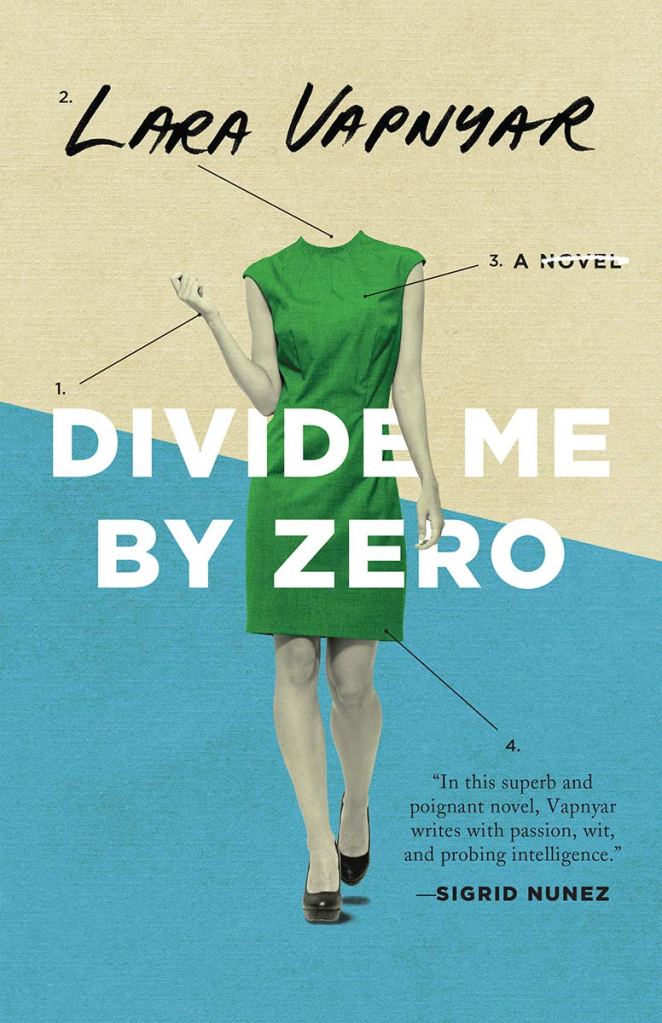
Q&A with Lara Vapnyar: Divide Me by Zero (Tin House Books, 2019)

Punctured Lines is thrilled to present a Q&A with Lara Vapnyar, Russian-American writer and author of six works, including her latest novel, Divide Me by Zero. This is also personally meaningful, as I have been reading and writing on Russian-American fiction, very much including her work, for several years. Many thanks to Masha Rumer, whose Q&A we featured previously, for helping facilitate this exchange. Lara answered our questions by email.

Punctured Lines: Divide Me by Zero is your sixth book. In an interview with Svetlana Satchkova forThe Rumpus, you’ve called it your most intimate and biographical. Has your writing process changed during your work on this novel?

Lara Vapnyar: There is a scene in a Nancy Meyers’ film Something Gotta Give, where the main character played by Diane Keaton is working on a play, typing and sobbing, typing and sobbing… That’s how it went for me, except that I had long periods of just sobbing, and longer periods of paralyzing self-doubt – Is this even a novel? What if this is just a self-indulgent mess?

PL: English, the language of your stories and novels, is your second language, acquired later in life. In her essay for the New Yorker, “To Speak is to Blunder,” Yiyun Li, a writer whose first language is Chinese, talked about how “language is capable of sinking a mind.” “One’s thoughts are slavishly bound to language,” she wrote, and went on to talk about the difficulties she has articulating her feelings. “It is hard to feel in an adopted language, yet it is impossible in my native language,” Li says. In your essay, “The Writer as Tour Guide” in an anthology of contemporary Jewish exile literature, The Writer Uprooted, you said, “By the time I approached writing, I had been reading in English a lot, and whenever I thought about creating something of my own, I caught myself putting my images into words of the English language. I felt most comfortable when writing in English, even though I had to struggle with grammar and vocabulary […] I would even say that I wrote in American, which for me was the language of immigrants.” What opportunities has English provided you with that wouldn’t have existed in Russian?  Alternatively, do you ever find English limiting?  Do you negotiate the space between Russian and English when you write?

LV: English is my first “writing” language. Even though I only started to learn English as an adult, my first attempts to write fiction were in English (I’ve never written anything in Russian), so it feels completely natural. The only situation, when I feel frustrated, is when I have to translate speech from Russian into English. For example, I remember a specific joke my mother made in Russian, and I want to translate it and give it to my character, but it’s just not that funny in English!

PL: The relationship between mother and daughter that you describe in this novel is very touching yet clearly a very demanding one. The cultural conflict is not obviously stated, but it seems to define Katya’s judgment of her ability to mother her children. In Soviet households it was common for grandparents to participate fully in the everyday duties of raising children—and Katya herself grew up in a household presided over by her grandparents. Do you feel that life in the United States has affected Katya’s and her mother’s expectations of each other?

LV: In Soviet households it was common for grandparents to participate fully in the everyday duties of raising children –Absolutely! Katya would’ve probably felt less conflicted, if she was raising her children while relying so much on her mother’s help in Russia.

PL: Unlike works by many other Russian-American writers, male or female, your work directly engages with ideas of gender and feminism. Your novel Memoirs of a Muse charts the transformation of its female protagonist from subservient muse to her writer boyfriend to an independent woman engaged in artistic production; and while Dostoevsky is a key fictional figure in this work, the focus is on his lover, Apollinaria Suslova, herself a writer. Ružena in “Slicing Sautéed Spinach” in your short story collection Broccoli and Other Tales of Food and Love is a doctoral student in Women’s Studies. Your essay “Hillary’s Underpants: The Sad Tale of ‘Clintonsha,’ or She-Clinton” in Thirty Ways of Looking at Hillary directly calls out traditional Russian gender assumptions. How do you relate to feminist ideas and navigate the gap between the different gender expectations in American vs. Russian cultures? Do you see any shift of Russian gender norms in the diaspora?

LV: I was brought up in the Soviet Union, where accepted gender roles differed greatly from what we see in the US and contemporary Russia. Soviet Union was both a feminist and a deeply patriarchal society, where men had all the power, but women did all the work, but still longed for a man in the family like this prized object. My mother, a strong independent woman who made her career and brought me up all on her own, kept telling me that ANY husband is better than no husband.

I think there is a shift of gender norms [in the diaspora] toward the ideal situation, where men and women in the family are equal partners who depend on each other for support and understanding.

PL: As a writer one of whose major topics is immigration, do you find yourself working against Russian cultural stereotypes?

LV: Probably… But in this novel, I feel like I’m working with a Russian cultural stereotype – that you absolutely need true romantic love, that you can’t live without it – against a more pragmatic American view that romantic love is far from being the most important thing in life, and chasing after love is selfish and childish.

PL: Who are some of the writers that inspire you? Do you find yourself connecting with other diaspora writers?

LV: There are so many writers I deeply admire within the diaspora and beyond. But for this novel, the most influential was Elena Ferrante. She taught me how to turn yourself inside out for the sake of larger truth.

Q&A with Olga Livshin: A Life Replaced (Poets and Traitors Press, 2019)

Today on Punctured Lines, our Q&A with Olga Livshin, author of the recently released A Life Replaced: Poems with translations from Anna Akhmatova and Vladimir Gandelsman. We announced the book’s arrival here and you can listen to a podcast discussing it here. She and Olga Zilberbourg will be reading from their collections at an upcoming event in Rochester, NY on November 9, 2019. Olga answered our questions by email.

You wrote a book in which you both translated Akhmatova’s and Gandelsman’s work and wrote original poems that are, directly or indirectly, in dialogue with them. Describe, briefly, your writing process. 

I like the idea of going beyond the one voice–the idea of poetry as a play, and of a book as a porous object, absorbing other energies. There are three characters here: I translated two modernist Russian poets, and then I wrote responses to their work, some of which are imitations. Poets & Traitors Press has this format that fit what I was doing really well. They publish poems based on translations, poems that speak to these translations. So rather than publish a typical poetry collection, which, if you think about it, is this continuous solo for something like 50 or 80 pages, these Poets & Traitors books are a bit like jazz. They’re inclusive. They invent and improvise. Their dynamics are pluralistic and lively.

What were the differences in how you approached writing vs. translating poetry? 

It’s pretty seamless. When I translate, it’s a bit like giving a voice, and it’s also implicit dialogue, of course, since translation is interpretation–it’s full of choices. And when I write back, or talk back, the dialogue goes further. All of this, though, is part of the same kind of play: where the characters depend on one another and echo each other.  

What about translating/“talking to” Akhmatova? 

Yeah, “talking to,” for sure! Akhmatova is an author that a lot of mothers who grew up in the 1960s and 1970s quoted to their daughters–my mom quoted her to me. And I think a lot of people thought–still think–of her as a symbol of stoicism and of grieving wisdom, a model for how to live with dignity and defend fellow others under repressive regimes. In our family, she was like this Lilith, great mother, forever strong and even raging. It was rather difficult: you know, she was someone you could quote, but never be, right? Then I went to grad school to get my PhD in Slavic Studies, and I learned that some prominent literary scholars had showed that she was no angel, she was a full human with flaws, and–they wished to show–that she was rather a monster. I think both of these extremes are kind of silly. In my book I don’t so much aim to dethrone as to discover.  There’s a different Akhmatova than the one people know: brazen and humorous behind all that mighty moral raging. She’s a perpetual child, even in her later work, trusting love for love’s sake, no matter what life did to her. “To me, in poetry, everything should be out of line,” she writes, “Not how these things are done. / I wish you knew what garbage sprouts poems….” I want to know about this bold, hidden girl, and I want people to know her.

How about translating/“talking to” Gandelsman?

He is closer to me and thus less hidden. Vladimir Gandelsman was born in 1948 and came of age in Leningrad before it turned into St. Petersburg and before he left for the United States, where he lives now. He’s an immigrant like me, and he has similar instances of alienation. So when it comes to his work, I’m basically a devotee. I aim to push this writer forward and amplify his voice. Gandelsman’s work has such a unique way of balancing human emotions such as irritation and anxiety with this amazing appreciation of small joyful moments, which are just sublime in his work. Gandelsman, to my eye, transcends what so many poets and writers in Russia had: this hatred of byt, the everyday.  There was a bunch of visionary philosophers a hundred years ago, they all wished to go beyond our biological and biographical limitations. Beyond the body, beyond the home. On the other hand, Gandelsman is the supreme discoverer of light in the dust of the domestic. And in nature, which he paints in some beautifully minimalist ways. And in one’s own family, even in some difficult moments. He is a very generous poet. Where I write in parallel are poems of small joy: he has a small bird in the sky, I have little mushrooms; he has a hallowed moment of immigrant recognition of oneself in an American-grown boy, I have recognition of a Syrian immigrant’s stories in our own tales of self. I want to help this voice be in the world and take on new forms, in English, and in my little sprouts off it.

Other than Gandelsman, what is your relationship with contemporary Russian literature in general?

I enjoy some voices. Maria Stepanova. Vassia Borodin. Polina Barskova, in the US. And then in Ukraine, so much great and heartbreaking poetry in Russian is coming out from people writing about the war. Boris Khersonsky and Lyudmyla Khersonska. I really like Anastasia Afanasieva’s work. Iya Kiva’s poetry. There is an incredible urgency to these voices, and they’re profoundly intertextual, in dialogue with other language about war and violence, going all the way back to the Bible and all the way forward to how Russian and Ukrainian TV talks about war.

In addition to the two in your book, who are some of the writers that inspire you?

There is a flowering of immigrant and first-generation American poetry now. So many rich voices. From the better known, such as Chen Chen and Ocean Vuong, to those that should be better known. Ahmad Almallah’s recent book Bitter English addresses issues of writing in English as an immigrant. Jenna Le has gorgeous poems that capture the intersection of girlhood and growing up Vietnamese-American in Minnesota. Ananda Lima has made fine, strange, surrealist prose as well as poetry that looks at issues of home and motherhood in the context of being an immigrant. I love how these poets echo certain ruins of their cultural past with not-quite utopias of their American present. 

Do you find yourself working against some Russian cultural stereotypes?

Ha! I have carried so much shame about these for so many years. It’s kind of gone, but of course you can’t quite get rid of it. But that’s what writing is for–finding a voice that is more complicated than these stereotypes and insisting on maintaining that voice. Both in your writing and also, once you find it, the beautiful thing is, you can take it wherever you find it relevant. 

As a writer one of whose major topics is immigration, do you find yourself connecting with other diaspora writers?

I like Boris Fishman’s prose. Julia Kolchinsky Dasbach is one of my favorite Russian American poets. A fellow Russian-speaking Ukrainian Jew, she just published a fiery poetry collection called The Many Names for Mother. It’s such a bittersweet exploration of motherhood and the infinite in the context of her origins, both feminine and Soviet/ Ukrainian/Jewish. It’s so, so good.

How do you relate to feminist ideas and navigate the gap between the different gender expectations in American vs. Russian cultures? Do you see any shift of Russian gender norms in the diaspora?

So I got pretty lucky: I grew up with a mother who has a strong personality and who worked at this beautiful glorious music school in Moscow, where we lived from when I was 7 to when I was 14 and we moved to the US. To me, she channeled powerful feminist thought, although that’s not language she used. Yes, we dressed up, but it was to strut our stuff and have fun, not in order to please a man. I also grew up in a family where everyone had worked: both grandmas, my mom, all her female ancestors were peasants. So there was a version of Soviet and Russian homespun feminism that may be problematic and all, it wasn’t perfect, the guys didn’t necessarily help out, but at least there’s that gender modeling of strong women. There is this concept of the matriarchy, and also of women working for generations. 

I find it more irksome to navigate some situations with expectations for women from white Anglo-American upper middle class and upper class backgrounds. There’s an awful lot of stuff that I have trouble relating to, not only helicopter parenting or beautiful thin appearances in beautiful thin yoga pants, but also stay-at-home motherhood. That stuff is hard! It’s really a terrible thing when you know people who live according to those expectations–fraught with depression and with not being recognized as a human being. And when I was a stay-at-home–uh, poet–in our rather affluent suburb, I didn’t wear that identity, but the expectations were quite definite. But I think that the Russian strong woman, not unlike one that Akhmatova wanted people to think she was, wanted people to believe she could be, it’s an ideal and all, but it’s really a fantastic thing to embody. It’s a bigger expectation than the “little woman” that’s stuck around in our America. The resilient, powerful Russian lady–that’s a tall expectation, and it calls on us to stand tall, and I’m proud of that idea.

Q&A with Masha Rumer: Parenting with an Accent (forthcoming from Beacon Press)

Today on Punctured Lines, we have a Q&A with Masha Rumer, author of Parenting with an Accent: An Immigrant’s Guide to Multicultural Parenting, whose arrival we previously announced here and are very excited about. Masha answered our questions by email.

Punctured Lines: Describe, briefly, your process in writing this book.

Masha Rumer: My decision to write the book was pretty simple: I wished there was something like that when I became a parent, and since there wasn’t, I figured I’d write it. I was born in Russia and my partner was born in the U.S., so in addition to navigating differences common to a multicultural relationship, having a baby brought up questions, nostalgia and my awareness of straddling multiple cultural identities. How do I teach my kids Russian, without forcing it?  How do I connect with other parents, even if I lack certain shared childhood experiences? Is a peanut butter sandwich an acceptable meal? How much borscht is too much? The more I spoke to others, parents or not, the more I realized that these concerns are very much shared, but people don’t always feel comfortable discussing it.

Surprisingly, I found no nonfiction book about the contemporary immigrant parenting experience, even though there is a record high of 43 million immigrants in America today and over 18 million kids with at least one foreign-born parent.

I realized there needs to be a research-driven, accessible look at what it’s like for immigrants to raise kids in the U.S., not a “how-to” parenting manual, but a realistic portrait of sorts. The book will have a bit of everything: candid conversations with families across the U.S., personal narrative and interviews with experts in psychology, language development and sociology. And beets. Lots of beets.

PL: What is your relationship with contemporary Russian literature? Who are some of the writers that inspire you?

MR: I really wish I’d read more contemporary Russian literature, but a significant chunk of my reading is in English (unless we’re talking news or kid lit – I try to read Russian books with my children daily). That said, I’ve recently been enjoying the work of Dina Rubina and of the investigative journalist Svetlana Alexievich, and have been getting into translation more (just finished a delightful Russian translation of A Man Called Ove [PL: This Swedish title by Fredrik Backman has also been translated into English]).

PL: Do you find yourself working against some Russian cultural stereotypes?

MR: Sometimes I find myself dodging jokes about being a spy, especially in the wake of the 2016 presidential election (I’m not a spy). I’ve also been questioned whether I came to the U.S. “on my own” and “with papers” or if my husband ordered me via a catalog. The people who ask are demure and almost apologetic, but they want to know. Recently, though, a job recruiter was pretty explicit about questioning my immigration status and any political connections. And something many female-identifying Russian speakers have probably experienced – there’s often an assumption that our closets have this secret compartment where we stash sable fur coats and leather outfits from a James Bond movie.

PL: As a writer who addresses stories of immigrant families, do you find yourself connecting with other diaspora writers?

MR: I definitely find myself connecting with other diaspora writers. It’s probably due to the shared immigrant experiences of reinventing and translating yourself and the trauma of having been uprooted. I love the work of Lara Vapnyar and Dinaw Mengestu; they both write so incisively and honestly about diaspora realities. Eva Hoffman and Jhumpa Lahiri were among the first contemporary immigrant authors I read, and it felt so validating. Then there’s the work of Edwidge Danticat, Anya Ulinich and Natalia Sylvester, particularly her recent essay on being bilingual, and the Foreignish blog, run by Yaldaz Sadakova. I’m also excited to read the new collection Like Water by Olga Zilberbourg. It’s thrilling to see that the contemporary immigrant narratives are no longer othered as “niche,” but are becoming a part of the “mainstream” literary canon. 

Podcast: Olga Zilberbourg in Conversation with Jennifer Eremeeva

Olga Zilberbourg spoke with Jennifer Eremeeva about Like Water and Other Stories (WTAW Press) in a podcast for The New Books Network. It’s a fantastic interview, including about cultural misunderstandings, which starts with Olga reading the inventive and touching “Dandelion” from her collection. Listen to the conversation and follow Jennifer on Twitter @JWEremeeva – we do!

“A new generation of Russian emigres is blessed — or cursed — with the ease of long-haul flights and frequent flyer miles, Skype and FaceTime, Google translate, and regulations that seem anyway to be more forgiving about former citizens traveling to and fro. For them, the border has become far more porous than it ever was, and the choices are now more nuanced. However, there are still plenty of cultural minefields to navigate. To this generation that includes writers as disparate as Gary Shteyngart and Irina Reyn comes Olga Zilberbourg with a new collection of short stories, ‘Like Water and Other Stories.'”

https://jennifereremeeva.com/like-water/

Interview with Olga Zilberbourg by Odette Heideman

A Q&A with Olga Zilberbourg in Epiphany Magazine about LIKE WATER AND OTHER STORIES (WTAW Press):

“As a writer, when I’m structuring a collection of stories, I make an assumption that, like me, my readers are interested in the human being who shows up most fully in the white spaces between one’s story ending and another’s beginning. From the information on the cover alone, my reader knows that I’m a woman, that I grew up in the Soviet Union, and that I live in the US and I write in English. So, yes, nearly automatically, my story is framed as an immigrant’s story. Then comes the interesting part.”

http://epiphanyzine.com/features/2019/11/27/short-form-olga-zilberbourg  

Image result for like water and other stories images