Today we welcome Alina Adams back to the blog with an essay about her interracial family’s trip to Moscow (before the war in Ukraine) and its connection to her recently released novel, Go On Pretending (History Through Fiction, 2025), featuring a fictional interracial family. You can read our previous conversations with Alina here and here. As one of the excerpts below shows, a key element in her novel is the 1957 World Youth Festival in Moscow, during Khrushchev’s Thaw, which was meant to demonstrate the Soviet Union’s liberalization and racial tolerance (you can guess how that turned out). The reference to the festival immediately made me think of a different novel by another ex-Soviet Jewish immigrant writer in which it is an important plot element: Petropolis (Penguin Random House, 2008) by Anya Ulinich. If you would like to know more about this lesser-known event and about the Soviet Union/post-Soviet Russia and race, let Alina explain below and then order Go On Pretending (and Petropolis).
A new novel set in World War II enters a crowded and hotly contested field. It is a particularly remarkable feat for a debut novelist that Sasha Vasilyuk’s Your Presence Is Mandatory (Bloomsbury, 2024) earned universal praise from celebrated writers across the former USSR diaspora community and far beyond. Gary Shteyngart wrote, “Wonderfully written, elegiac and necessary, Sasha Vasilyuk uncovers the history behind the recent headlines with great skill and grace.” Susanne Pari, author of In the Time of Our History and The Fortune Catcher, wrote, “An outstanding novel of sacrifice, love, and forgiveness.”
We celebrate this novel’s arrival with particular pleasure. A contributor to Punctured Lines, Vasilyuk participated in a number of events we’ve hosted over the years, and we’ve heard excerpts from this novel as she was working on one draft after another. In May 2024, Olga Zilberbourg interviewed Vasilyuk during a book release event at Telegraph Hill Books in San Francisco. The following Q&A is a follow-up to that in-person conversation.
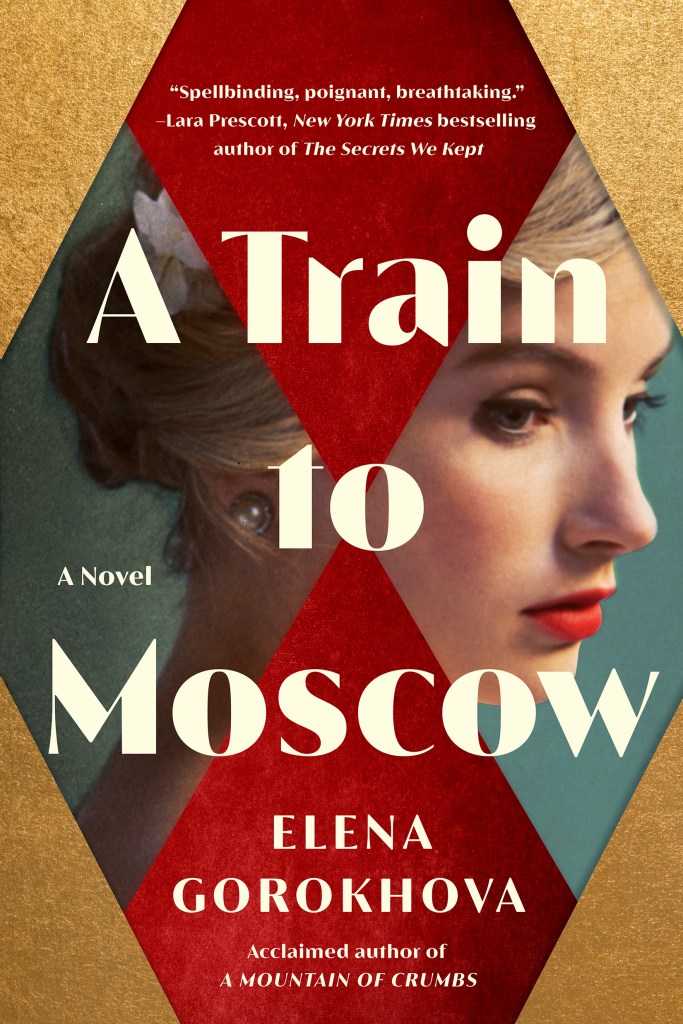
Elena Gorokhova’sA Train to Moscow (Lake Union Publishing) came out earlier this year to praise by J.M. Coetzee, Lara Prescott, and Kate Quinn, among others. Gorokhova was born and raised in Leningrad, Soviet Union, now St. Petersburg, Russia. After graduating from Leningrad State University, she moved to the United States, carrying one suitcase with twenty kilograms of what used to be her life. Elena is the author of two memoirs published by Simon & Schuster: A Mountain of Crumbs (2011) and Russian Tattoo (2015). A Train to Moscow is her first novel. Her work has appeared in The New York Times, The Daily Beast, New Jersey Monthly, and The Daily Telegraph, on NPR and BBC Radio, and in a number of literary magazines. She lives and teaches English as a Second Language in New Jersey.
We are delighted to present a conversation between Alina Adams and Maria Kuznetsova, whose recent critically acclaimed novels make significant contributions to the body of Russian-American literature. Both Adams and Kuznetsova were born in the USSR and immigrated to the US with their families as children, though some years apart. In their novels, the authors turn to USSR’s history to tell their stories. Adams is a professional writer on topics from figure skating to parenthood and a New York Times bestselling author of soap-opera tie-ins. In The Nesting Dolls(Harper, 2020), she focuses on three generations of Soviet-Jewish women in a story that moves from Odessa to Siberian exile to the Brighton Beach immigrant community. Kuznetsova is a writer, an academic, and a literary editor. In her second novel, Something Unbelievable (Random House, 2021), she alternates between the perspectives of a grandmother and a granddaughter: between the story of a WWII-era escape from the Nazis taking over Kiev and the experiences of a contemporary New Yorker adjusting to new motherhood.
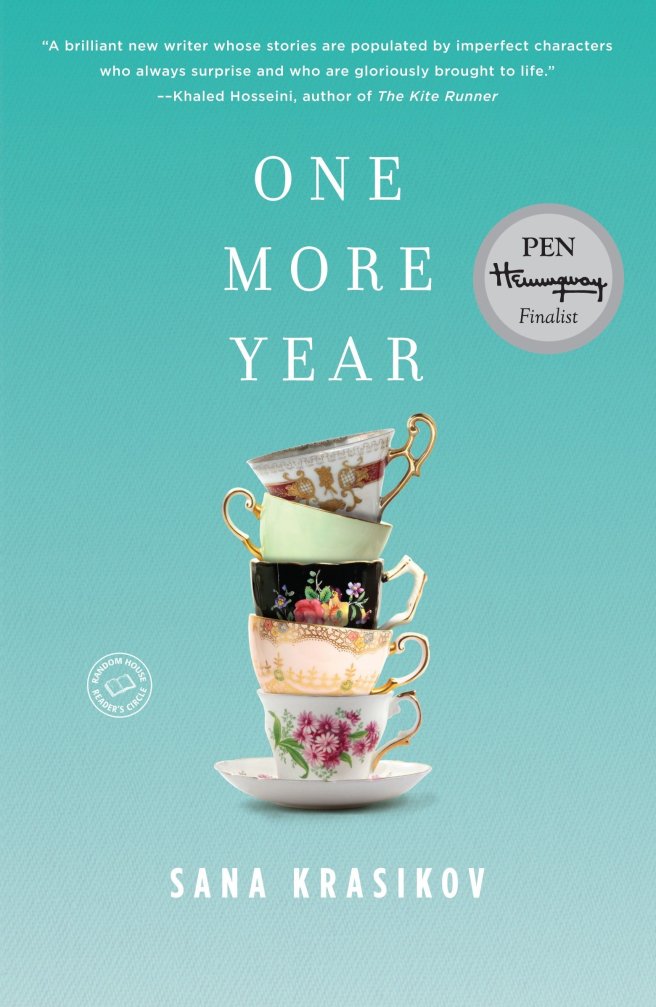
Herb Randall, whose essay, “A Question in Tchaikovsky Lane,” Punctured Lines was delighted to publish last year, is back with a review of Sana Krasikov‘s monumental novel, The Patriots (Spiegel & Grau, 2017). Krasikov was born in Ukraine, lived in Georgia, and immigrated to the United States; like other contemporary ex-Soviet Jewish writers, she writes in English on Russian/Soviet-related themes. Her first book, the short-story collection One More Year (Spiegel & Grau, 2009), with settings and characters alternating between the U.S. and the former Soviet space, was highly critically acclaimed, and she has won, or been nominated for, several prestigious awards. The Patriots is her second work and first novel, which has also been lauded by critics and readers.
If you are interested in reviewing a title for Punctured Lines, please see our Books for Reviewand get in touch.
Sana Krasikov, The Patriots, by Herb Randall
…політика — це далі жити в своїй країні. любити її такою, якою вона є насправді. політика — це знаходити слова: важкі, єдині і лагодити все життя небеса несправні.
…politics is to continue living in one’s own country. to love it as it really is. politics is to find words: difficult, unique and to repair one’s whole life this broken heaven.
— Serhiy Zhadan, “Hospitallers” (trans. Maria Kinash for this review)
One question that has troubled humans for generations is how much of a person’s life is determined by the choices they make, and how much by the environment that surrounds them. This tension between free will and external forces like family, society, and history, has been explored in various literary, religious, political, and philosophical works. Sana Krasikov’s The Patriots is notable for its focus on the consequences of an individual’s choices in the face of near-impossible circumstances, and how the consequences affect subsequent generations.
The Patriots is a gripping, often suspenseful read, despite the reader learning key plot elements early as its parallel narratives wind between generations and continents. The novel focuses on Florence Fein, the granddaughter of Jewish emigrants from the Russian Empire to Brooklyn, and her decision to jettison family and country to live in Stalin’s Soviet Union as the ultimate commitment to her socialist ideals. The second plot line concerns Florence’s son Julian and his own son, Lenny, who, as an American, follows a similar journey to Florence to live in post-Soviet Russia. Much of this plot line focuses on Julian’s reflections on his mother’s choices that left him confined to an orphanage and alienated from her even after they are reunited.
Krasikov weaves real historical events throughout her narrative, so readers familiar with the era will appreciate how skillfully she renders the paranoid, conspiratorial milieu at the personal level of her characters, while unobtrusively explaining context for those less familiar with the Soviet Union’s tumultuous history. Florence’s journey from middle-class Flatbush to Soviet life and the Gulag, her clever subversion of the system that imprisons her to save her own life, and her uneasy return with her Soviet-born family to the United States are all so engagingly told that the reader may occasionally yearn for the return to that plot line during the interlacing chapters about Julian and Lenny. These chapters, though, are crucial for a better understanding of Florence’s character and how her decisions impact not only her own life but the subsequent strained relationship with Julian, which in turn affects his connection with Lenny.
Coming of age during the Great Depression, Florence finds a job at the Soviet trade mission in New York thanks to her Russian-language skills. A temporary assignment lands her in the path of Sergey, a handsome young Soviet engineer who is part of a delegation visiting the U.S., on whose account she loses her virginity, and later her job. Left without work, nursing a deep sense of injustice in terms of American society, and feeling trapped in her parents’ home, she looks to the Soviet Union to find “a life of meaning and consequence.” Florence rejects the incremental politics of reform in the U.S. for her own great leap forward. As the narrator says:
Yes, she could have stayed and waited for all the changes to happen— the decades-long march toward progress. She could have stayed and become part of that march. But she’d had no patience for all that. She had wanted to skip past all those prohibitions and obstructions, all the prejudice and correctness, and leap straight into the future. That’s what the Soviet Union had meant to her back then—a place where the future was already being lived. And so she had fled the Land of the Free to feel free.
However, the third-person objective narrator of the Florence chapters makes it evident that she is a master of self-justification. For although her ideals and hopes for the future are her rationale for the decision to live in the Soviet Union, there is another, much more personal motive:
But she was too proud to admit to herself […] a fact that might recast her entire noble journey not by the lantern of courage but by the murkier bed lamp of longing.
Leaving behind her parents, whom she would never see again, Florence severs her connection to America, save for corresponding with her beloved younger brother, Sidney. Florence’s journey across the Atlantic finds her in sympathetic company when she meets another young Jewish woman, Essie, from a decidedly less comfortable upbringing in the Bronx, on her way to Moscow to follow similar ideals. Their friendship lasts for years, until Florence becomes bound to Essie by a moral crisis that engulfs them both.
However, unlike Essie, Florence first lives not in Moscow, but Magnitogorsk. She goes there to search for Sergey, but also as a self-imposed trial by fire to remake herself into a true member of the proletariat, worthy of her new home and hoped-for match. It’s a cleverly chosen detail by Krasikov because it encapsulates Florence’s personality: novelty-seeking, serious, brave, clever, but not as clever as she sometimes thinks. The bustling industrial city being forged there is not the proletariat playground of Katayev’s Time, Forward! Instead, Florence finds chaos, squalid living conditions, indifference from her new compatriots, foreshadowing of political problems, and to her horror, bedbugs. What she doesn’t find is Sergey, who has been forced to relocate to Moscow after complaining about corruption at his workplace.
Florence decides to flee Magnitogorsk for Moscow, where she does finally, very briefly encounter Sergey. It is not the reunion she longs for, and in fact he scolds her for her ill-advised decision to come to the Soviet Union. After his rebuke and rejection, Florence reconnects with Essie and is drawn into her circle of friends, including Leon, another idealistic New York Jewish émigré. Florence is initially repulsed by his brash manner, but gradually falls in love with him and they marry. Florence and Leon adopt the Soviet Union as their home by choice, and the Soviet Union in return abducts them by force.
The realization that she and Leon are trapped in the Soviet Union hits Florence suddenly during the late 1930s at a time of increased prewar tension with America and Europe. She hands over her U.S. passport to a Soviet office clerk while applying for continued residency, and it is never returned despite several attempts to regain it. Leon’s passport is also confiscated. It is only after having lost her passport and reading a letter from her brother that Florence feels an urgent desire to return to the U.S. to visit. Issued a receipt with her passport number and told by the residency office she must renew it at the American embassy, she attempts to do that, but the Soviet police blocking the embassy entrance will not allow her through without the original document. She desperately shouts through the gate but in vain.
Even for those lucky few who manage to pass through the Soviet guards outside, the American embassy is unable and unwilling to help, as Julian subsequently relates:
My parents were hardly the only Americans to be stranded in Moscow after 1936. Hundreds like them were cut adrift in the Soviet Union, comprehending too late that they’d fallen from the grace of the American government. The U.S. Embassy seems to have found every excuse to deny or delay reissuing these citizens their American passports—passports they had lost through no fault other than their naïveté.
Krasikov’s highlighting of this lesser-known aspect of relations between the Soviet Union and America during these years adds further nuance to understanding how little control these expatriates would have over their future after placing themselves in such a precarious position.
Not only is Florence abandoned by the American government in Stalin’s Soviet Union, but, as she later realizes, the Soviet authorities place her under surveillance when she attempts to enter the embassy. She had taken a series of jobs utilizing her native English skills that make her more conspicuous and vulnerable to co-option by the NKVD, Stalin’s secret police. Her handler, Subotin, holds out the possibility that her collaboration will earn her an exit visa. She gradually reveals more information about her colleagues and acquaintances, mistakenly thinking she is manipulating him and keeping her family safe from the terror raging around them. However, like the real-life foreigners who were suddenly trapped in Stalin’s Soviet Union, Florence and Leon, although forcibly turned into Soviet citizens, are still seen as outsiders and therefore suspect by Stalin’s regime.
***
The characters’ outsidedness, in various ways, is a crucial theme in The Patriots. Florence, Leon, Julian, and their friends keenly feel the disconnectedness of multiple identities, of “otherness,” most notably in being Jewish. A child of immigrants in America, an American among Soviets, yet seen everywhere as a Jew, Florence never belongs anywhere entirely, even in the country to which she voluntarily devotes her life:
“Amerikantsi,” Subotin said as he wrote it down. He was smiling to himself, a smile that suggested he knew just as well as Florence did that—American or not— they had the double blessing of being Jews.
During the Second World War, Florence, Leon, Essie, and their friend, Seldon, work for the Jewish Anti-Fascist Committee, organized by the Soviet government to create propaganda to galvanize political and financial support in the West for the war effort. As victory nears and their usefulness to the regime diminishes, there comes a fresh wave of anti-Jewish sentiment. Florence and Essie recount the sudden rise in antisemitic attitudes even from their close colleagues:
“After all these years, I thought I was finally…” “One of them,” said Florence. Essie nodded, her eyes dry now. “But we never will be, will we?”
A generation later, Julian also experiences discrimination, less virulent but still institutionalized in the Soviet Union, when his doctoral thesis is rejected, the quota of Jewish doctorates having already been filled. When necessary to further their aims, the Soviets overlook Florence’s dual identities as “disloyal” Jew and “dangerous” foreigner, while using them as tools to control her, but as Stalin’s regime grows ever more paranoid, she becomes expendable. Florence’s enthusiastic decision to settle in the Soviet Union and devote her life to building communism is not enough to shield her and her family from the midnight knock on the door that all along the reader suspects is coming.
***
Unlike Florence, Julian is a first-person narrator who movingly recounts the story of his abandonment after his parents’ arrests. Spending seven years in a state orphanage, as an adult Julian struggles not so much with that desertion as with Florence’s inability to denounce the system that held them both captive and to admit her mistakes. His yearning to comprehend how Florence could choose to live in Soviet Russia, marry and have a child, while not doing everything possible to protect him is the primary source of momentum in The Patriots, keeping the reader engaged even as the outline of this story is revealed at the outset of the novel. Reflecting on his mother’s actions, he says, “The defining tragedy of my mother’s life was that she’d never had an instinct for family preservation.” When Florence reveals that an old friend had offered them help to flee Moscow and “stay with her relatives for a while, keep low after Papa was arrested,” he is shocked by his mother’s lack of concern for their well being:
“So why didn’t we go?” I said. But she’d laughed at my dismay. “What was I going to do in a village? Pick turnips? Grow potatoes?”
Compounding Julian’s internal conflict is his adult son, Lenny, who is in Moscow not for any supposed high ideals like Florence, but merely to chase his fortune, precariously and only partially successfully. Julian routinely travels to Russia for business, but he also uses his visits to clumsily try to convince Lenny to return home to America. However, Lenny, who had a special bond with his grandmother, shares her stubbornness:
“Baba Flora didn’t regret her life. And neither do I. She had a front seat on history.” I thought my jaw might drop. “Is that what she called it?” “She always said, ‘The only way to learn who you are is to leave home.’”
Like his grandmother, Lenny will not admit defeat regardless of the difficulties. He feels his life in Russia has been an adventure, just as Florence did. Julian, on the other hand, sees only the resulting catastrophe:
“Adventure?” I said. “That’s what they call it when everyone comes back alive. Otherwise it’s called a tragedy. That’s what my father’s life was—a tragedy. And my mother’s, too, for that matter.” “Yeah? She didn’t seem to think so.” “That’s because she was a narcissist, Lenny,” I said. “She didn’t think about anybody but herself. She was a grade-A delusional narcissist. Like you.”
The selfishness may have skipped a generation, but Julian must bear the consequences from both mother and son. Just as Florence minimized the many privations and persecutions of her life in the Soviet Union in order to maintain her own fantasy of living with greater meaning there, Lenny is unconcerned about the rough treatment he endures in contemporary Russia and the justified worries of his parents. He is oblivious to both Julian’s childhood traumas and to the fact that, like a child, he still needs his father’s help to escape troubles of his own devising.
***
The catastrophe, when it comes, finds Florence trapped in an impossible moral dilemma, which is largely a product of trying to live in her own idealized image of the Soviet Union. She throws her best friend Essie to the NKVD in a desperate last bid to save herself and her family. However, the net of Stalin’s repressions and paranoia inexorably draws tighter around Florence, her husband, and remaining friends. It is a testament to Krasikov’s skill in creating a truly complex character like Florence that readers will find themselves sometimes sympathizing with her even if she is not entirely sympathetic. They might empathize with her decision to settle in a country with a recent revolution, violence, and state terror in the context of naïve political idealism and the lure of a first romance. However, Florence is unable even decades after her imprisonment in the Gulag to fully admit to herself or her son the extent of the damage she caused by her decision to live in the Soviet Union. Worse still, as Julian points out, the consequences could have been avoided entirely:
“And what about me, Mama? Did you ever think about what would happen to me when they came for you?” […] “Yes, I did think about it. Your father and I talked about it […] [W]e knew that, no matter what happened to either of us, they would never let anything bad happen to the children here. The children were always going to be taken care of.” […] “No matter what happened to you, Mama? […] [B]ut, Mama,” I said, “it didn’t have to happen to you at all! Don’t you get it? None of it had to happen to you, or to anybody.”
Eventually, while in Moscow for work, Julian gains access to his mother’s criminal file that confirms what he already suspected: his mother had been an informer, albeit with the goal of staving off disaster for herself and her family:
[A] victim of her times, of her political beliefs, a victim of her stubbornness and of her illusions. And, certainly, she had been a victim, but until this night I had not considered how she might also have been something else. An accomplice to that very same system that preyed on her. Only now did I allow myself to consider the alternate explanation: that her muteness was not the submissiveness of a slave but the silence of an accessory.
Julian finally realizes that his mother’s inability to renounce her choice to live in the Soviet Union despite the tragic outcome for everyone she cared about was not a rejection of him in favor of her political beliefs. Rather, it was a way for her to deal with the guilt of having been a part of that system of collaboration, denunciations, and betrayals. Tragically, this understanding of her motivations comes too late to repair their strained relationship. Yet Florence unknowingly bequeaths Julian a legacy that brings not only peace to a grieving son, but a way for him to break the generational cycle that he and Lenny are repeating, where now, like Florence’s parents, he is the disapproving father of a child seeking a new life in a foreign country. In her police file, Julian discovers that Florence’s interrogation had ended abruptly, and what could have resulted in a death sentence instead became time in the Gulag with a chance to survive and see her son again. The reason is unclear as Julian reads her file, but Sidney explains how Florence was able to game the system and escape with her life by pitting one of her tormentors against the other. Inspired and impressed by her audacity, Julian uses the same method to extricate Lenny from his legal troubles in Putin’s corrupt Russia. More importantly, Julian comes to understand that, like Florence, full of “[w]anderlust and stubbornness,” Lenny must be left free to follow his own path, even if he feels it is misguided.
***
The final section of The Patriots opens with an abrupt shift to the story of Henry, an American F-86 Sabre pilot in the Korean War, who is downed and ends up in the same camp as Florence, subject to intense interrogation to reveal the secrets of the advanced technology of the fighter jet. Fluent in English, Florence becomes his interpreter, an act that saves her life once again as she uses the circumstances to receive extra rations, rest from physical exertion, and receive necessary medical attention by drawing out the interrogation, with Henry’s cooperation. The pact Henry and Florence make to keep her alive, though, is not entirely sincere on her part. Florence’s symbiosis with the unfortunate pilot highlights the extent to which the life she chose in the Soviet Union results not only in her traumatization by, but her assimilation into, that brutal system. The conclusion of Henry’s story offers a heartrending reflection on the meaning of the novel’s title, as well as a stark personification of the theme of personal responsibility in conflict with the grand sweep of history.
Julian’s uncle advocates the view that the individual is no match for those forces of history that constantly push and pull and sometimes smash:
“The point, my friend,” Sidney said sharply, “is we’re all leashed pretty tightly to the era we’re living through. To the tyranny of our time. Even me. Even you. We’re none of us as free as we’d like to think. I’m not saying it as an excuse. But very few of us can push up against the weight of all that probability. And those that do—who’s to say their lives are any better for it?” I knew he meant Florence—unpinning herself from one set of circumstances, only to be pinned down by another.
The struggle between fate and free will finds no simple answer in The Patriots. Julian develops a more nuanced understanding of Florence’s tragic life, informed by Sidney’s argument for the inescapability of the system that nearly obliterated their young family. This is not to discount Florence’s responsibility in making her decisions, however: while youthful and naive, they were still hers alone to make. The novel begins with Florence’s creed, “[b]reaking your family’s heart was the price you paid for rescuing your own,” and the enormous, generation-spanning price paid for this outlook lingers in readers’ minds long after reaching the closing pages of Krasikov’s captivating, sensitive work.
Herb Randall lives among the idyllic mountains, forests, and waters of rural New Hampshire and has travelled extensively in Ukraine, Poland, Sweden, and Estonia. He enjoys exploring lesser-known places, reading with a special focus on fiction in translation, and writing about forgotten people and places. His writing can be found in Punctured Lines and Apofenie. Twitter: @herbrandall
You can buy The Patriots here and One More Yearhere, and of course from your favorite independent bookstore.
Exciting news from the exciting RusTrans project. As its website explains, “’The Dark Side of Translation: 20th and 21st Century Translation from Russian as a Political Phenomenon in the UK, Ireland, and the USA’ (RusTrans for short) is a project funded by the European Research Council (ERC) under the European Union’s Horizon 2020 research and innovation programme (grant agreement no. 802437), and located at the University of Exeter. The project is led by Dr Muireann Maguire (Principal Investigator) and Dr Cathy McAteer (Post-doctoral Fellow).
What is the dark side of translation? Most of us think of translation as a universal good. Translation is valued, taught, and often funded as a deterrent to monolingual nationalism and cultural parochialism. Yet the praxis of translation – the actual processes of selecting and translating literary texts, and of publishing and publicizing translations – is highly politicized, often subverted by ideological prejudice or state interference. Translators necessarily have a personal agenda, as do editors, publishers, and other agents. Every translation is an act of cultural appropriation, reinventing the thoughts of one language in the words of another.
[…] RusTrans investigates how individuals, and governments, exploit this ‘dark side’ of translation to reap cultural capital by translating lesser-known literature into global languages (and the reverse).
[…] The project’s main aim is to research why translators, publishers, and funding bodies support the translation of certain texts, and not others.”
Ealier this year, RusTrans held a competition for funding English translations of contemporary literary fiction written in Russian and have just announced the twelve winning projects by fourteen translators (two are co-translations). The conditions for these awards, which will fund excerpts of larger works, are rather unique. RusTrans is asking the translators to keep them posted over the next two years about the process to secure publication for the works in their entirety: as they explain, “we plan to follow selected translators through the process of pitching and/or submitting a new translation to publishers in real time” to gain a fuller understanding of the “dark side” of translation, driven by politics, economics, and personal biases.
One of RusTrans’ stated criteria for picking the projects was diversity, and the final list has a number of women writers, a queer writer, writers from non-Russian parts of the former Soviet Union, as well as those who now live outside of the post-Soviet space. Punctured Lines joins RusTrans in congratulating the winners below (as listed on the RusTrans website) and looks forward to following this fantastic endeavor:
William Barclay, with Bulat Khanov’s novel about an angry academic, Gnev.
Michele Berdy, with various stories and a novella by Tasha Karlyuka.
Huw Davies, with Dmitry Bykov’s historical novel June.
Shelley Fairweather-Vega, with short fiction “Aslan’s Bride” by Nadezhda Chernova and “Black Snow of December” by Asel Omar.
Annie Fisher and Alex Karsavin, co-translating Ilya Danishevsky’s queer modernist experimental novel Mannelig inChains.
Polly Gannon, with Sana Valiulina’s Soviet-Estonian historical novel, I’m Not Afraid of Bluebeard.
Lisa Hayden, with Alexei Salnikov’s debut novel The Department.
Alex Shvartsman, with K.A. Teryna’s science fiction novella The Factory.
Isaac Sligh and Viktoria Malik, co-translating Viktor Pelevin’s novel iPhuck10.
Sian Valvis, with Narine Abgaryan’s semi-autobiographical novel of an Armenian childhood, Manunia.
Sarah Vitali, with Figgle-Miggle (Ekaterina Chebotaryova)’s novel You Love These Films So Much.
Lucy Webster, with Andrei Astvatsaturov’s satirical novel on Russian academia, People in Nude.
About a year ago, when Yelena Furman and I decided to get serious about our ongoing Twitter conversation about Russian literature and to start this blog, I read Maria Rubins’s essay “A Century of Russian Culture(s) ‘Abroad’: The Unfolding of Literary Geography,” published in Global Russian Cultures (edited by Kevin M. F. Platt; a volume in which Yelena Furman’s own essay “Rewriting Gender: Russian-American Women Writers and the Challenge to Russian Femininity” also appears). In this programmatic essay, Rubins argues that “A polycentric, nonhierarchical model of global Russian cultures may be visualized as an archipelago, a chain of islands that appear independent and isolated but in fact are interconnected in space, as well as time, often owing their origins to a series of volcanic eruptions.” In this model, Rubins argues, “the metropolitan Russian ‘continent,’ … can be seen as just the largest island within the global archipelago of Russian culture.”
Prior to encountering this essay, I had heard of archipelagic studies from a friend and a colleague, Olga Blomgren, who is working on her dissertation in Comparative Literature. Olga pointed me toward this theory and to the ideas of de-colonization, as distinct from post-colonization, as promising ways of conceptualizing literatures born of multiple languages and cultural influences. In her own work, Olga discusses the writing of the multilingual authors from the Caribbean, Rosario Ferré and Edwidge Danticat. The notion of an “archipelago” offers a compelling vision and a path to undoing the hierarchies of values imposed by colonial regimes. “Landmasses traditionally conceived of as continents may be reframed as islands that are constituent parts, rather than continental administrators, of the global meta-archipelago,” write scholars Brian Russel Roberts and Michelle Stephens in their essay “Archipelagic American Studies and the Caribbean.” Just because a traditionally conceived continent is physically larger than an island, its claim on culture and influence isn’t more valid than that of an island.
Rubins applies these ideas to Russophone literature, including in Paris during the interwar period, literature created in the US during the Cold War Era, and in Israel in the more recent times. She quotes from the famed theorist Homi Bhabha, who argued in his book The Location of Culture that “peripheral locations are rich in innovation and can destabilize and refashion stagnating ‘centers’.” In fact, with the introduction of the archipelagic model, the very terms for “center” and “periphery” (so important to the 19th Century Russian writers, from Gogol to Chekhov) may become obsolete. “Diasporic authors and communities contest their alleged marginality and assert their hybrid character. Yet diasporic consciousness and patterns of writing inevitably spill over into the metropolitan world, eroding monolithic identities and discourses even as they participate in transnational literary systems,” Rubins suggests.
These ideas deeply influenced my thinking about what I wanted to accomplish with Punctured Lines, and it was exciting to find that Yelena was thinking along the same lines. In her draft of our mission statement, she wrote that we want to amplify the traditionally underrepresented voices from the post-Soviet diasporas. If I were to translate this into the language of the archipelagic theory, the idea is to unsettle the colonial maps of literary value that tend to place Russia at the center of the Soviet literary space and that of the Russian Empire, and to treat Russophone literature as one island among many of the metaphorical post-Soviet archipelago. This work feels all the more necessary to me on the personal level because in the earlier draft of this post (displayed in the comments), I have unconsciously defaulted to the colonialist language while actively seeking to avoid it. I’m very grateful to the comments that Shelley Fairweather-Vega, Christopher Fort, Mirgul Kali, and Kevin M. F. Platt offered on this post that helped me to unpack my own unconscious bias and tendency to conflate “Russia” and “the Soviet Union.”
(*) Title and content have been edited; the original version is in the comments below.
Moving from theory to practice, here’s a few recently published and upcoming books from the post-Soviet archipelago to read this summer.
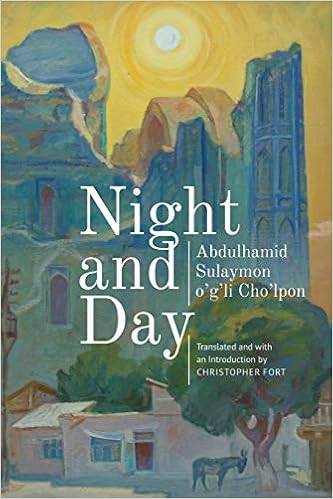
Night and Day by Abdulhamid Sulaymon o’g’li Cho’lpon, translated from Uzbek by Christopher Fort. This novel comes to us from the 1930s and is set at an earlier time, in Turkestan under Russian Imperial rule. “Despite increasing censorship and previous arrests by Soviet authorities, Cholpon subtly employs a variety of techniques including satire and farce to undermine the legitimacy of the Soviet government that was being established around him. Bitterly portraying the hypocrisy and collusion of jadid reformists, Muslim clerics and local Russian officials, this unfinished novel, which was halted by the author’s execution in 1938, remains as one of the darkest comments on Soviet Central Asian history in the Uzbek language,” wrote Shawn T. Lyon about this novel. An illuminating interview with the translator aired on a podcast New Books Network.
Pub Date: November 26, 2019 Publisher: Academic Studies Press
Translated from Uzbek by Shelley Fairweather-Vega, Hamid Ismailov’s GAIA, Queen of Ants is set in England in the milieu of Central Asian immigrants. ” The pivotal relationship in the novel is that between septuagenarian Uzbek émigré Gaia and Domrul, her young Turkish carer. Readers may recognize hints of Harold and Maude,” writes Joshua Bird in a review of this novel. “Contact with Gaia brings up [for Domrul] conflicting feelings of lust, shame and longing, and through their complex relationship, Gaia draws the young man into her dark world of infidelity, sexuality and secrets.”
Pub date: February 11, 2020 Publisher: Syracuse University Press
Good Citizens Need Not Fear is the first book by Maria Reva, who was born in Ukraine and grew up in Canada, and has published a number of the stories from this linked collection in the most prestigious journals of the English-language world, including Electric Literature, Granta, McSweeney’s, The Atlantic, and others. “Set in the Ukrainian town of Kirovka in the 1980s and starring a set of characters who live in the same block of flats, Maria Reva’s enthralling debut of interlinked short stories achieves the double effect of timelessness and timeliness,” Kapka Kassabova writes in The Guardian.
In addition to her fiction writing, Reva translates from French and writes opera libertti!
Pub date: March 10, 2020 Publisher: Doubleday Books
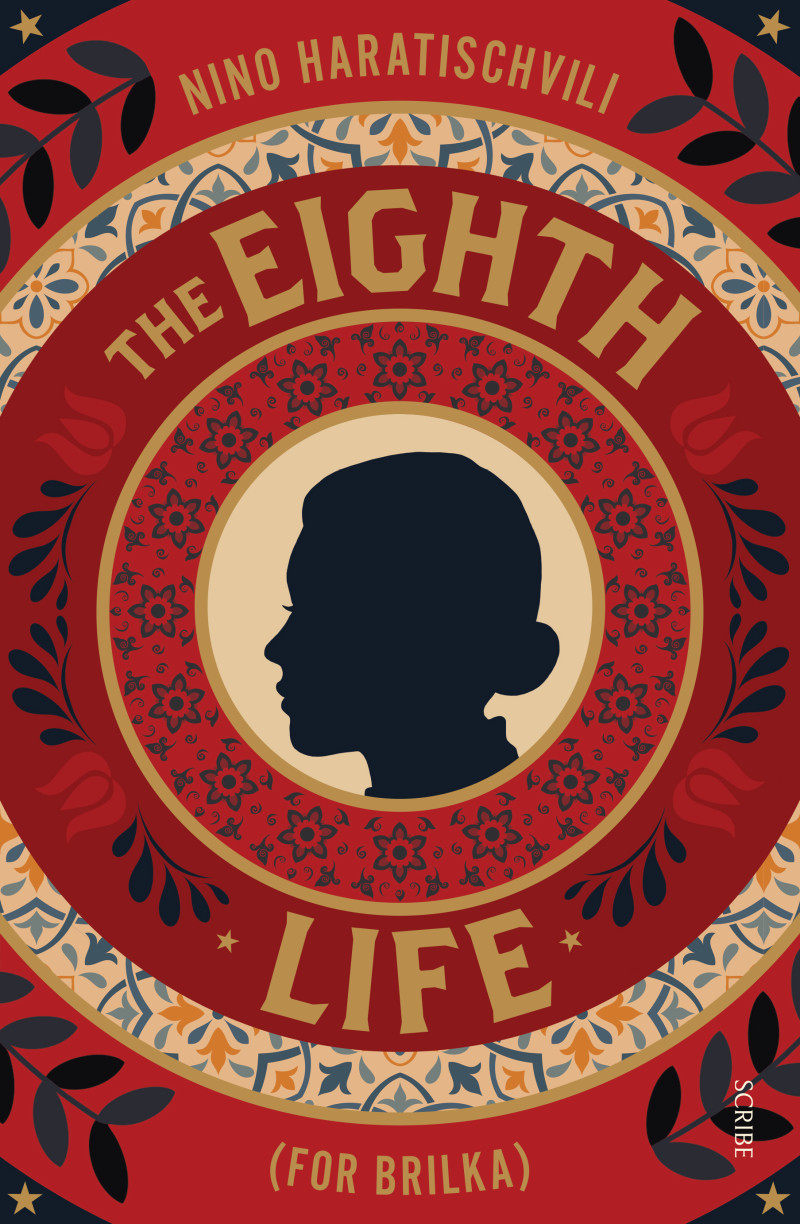
Nino Haratishvili’s The Eighth Life, translated from German by Ruth Martin and Charlotte Collins has been probably the best publicized book on my list. It is currently listed as #11 in “Russian Literature” on Amazon — woo hoo! This book opens in contemporary Berlin, but the family saga begins in Georgia, at the turn of the 20th Century, and follows the central characters to St. Petersburg during the Russian Revolution, and then on through time and geographical locations. “The Eighth Life is narrated by Niza Jashi, a Georgian expatriate living in Berlin, as she writes a history of her family for Brilka, her niece. The novel explores the ways that various characters are fated not only by the political tumult and government brutality of 20th-century Georgia but also by the legacy of a family curse,” explains Lori Feathers in an interview with Haratishvili on Lit Hub.
Pub Date: April 14, 2020 Publisher: Scribe US
Three Apples Fell From the Sky by Narine Abgaryan comes to English in translation by Lisa C. Hayden. Abgaryan was born in a small town in Soviet Armenia, and later moved to the capital of Armenia, Yerevan, and from there, to Moscow. Abgaryan fictionalizes her hometown in her work with tenderness and care, showing us a range of fascinating characters and a lifestyle that seems as though of a different century. This is Abgaryan’s seventh novel, and the first to be translated to English. Due to the pandemic, the pub date for this novel has been delayed to late August, but I encourage all of our readers to pre-order this book (it is already available for pre-order).
While we wait, read Katherine E. Young’s translation of an excerpt from Abgaryan’s earlier novel, People Who Are Always With Me, in Two Lines 31.
Pub Date: August 4, 2020 Publisher: ONEWorld Publications
Don’t forget to order from your favorite local bookshop, they need our help! Bookshop.org is a good second choice.
This reading recommendation comes to us via Jennifer Eremeeva’s Twitter feed. (Thank you the amazing Russian literary twitter!) Nino Haratischvili was born in Georgia in 1983 (according to Wikipedia), and lives and writes in German. She has been publishing fiction and drama since approx. 2001, and her novel The Eighth Life (for Brilka) was recently translated to English by Charlotte Collins and published by Scribe–Australia and UK based publisher.
Brief description from the publisher: “At the start of the twentieth century, on the edge of the Russian Empire, a family prospers. It owes its success to a delicious chocolate recipe, passed down the generations with great solemnity and caution. A caution which is justified: this is a recipe for ecstasy that carries a very bitter aftertaste …”
Note: In German, Nino’s last name is spelled “Haratischwili,” but in the English publication, it’s “v” instead of “w”: Haratischvili.
“Translated into 29 languages, The Secrets We Kept is a thrilling tale of secretaries turned spies, of love, duty, and sacrifice. Inspired by the CIA plot to infiltrate the hearts of Soviet Russia, not with propaganda, but with the greatest love story of the 20th century: Doctor Zhivago. From Moscow and the Gulag to D.C. and Paris, The Secrets We Kept captures a watershed moment in the history of literature. Told with soaring emotional intensity and captivating historical detail, and centered on the belief that a piece of art can change the world.”
Publisher: Knopf
Editor: Jordan Pavlin
Pub Date: September 3, 2019
Agent: Jeff Kleinman and Jamie Chambliss at Folio Literary Management
The publication history behind Boris Pasternak’s Doctor Zhivago provides the backbone of this debut novel. Joan Frank, reviewing for The Washington Post, remarks:
Significantly, these are women’s stories. Pasternak’s, while not marginal, is told by his longtime mistress and muse, Olga Ivinskaya — she who inspired “Zhivago’s” famous romantic lead, Lara (for whom Prescott happens to be named). Sent twice to a Gulag labor camp (described in horrific detail) as a result of her affiliation with him, Olga’s own astonishing account nearly eclipses his.






 Punctured Lines