The Scent of Empires: Channel No. 5 and Red Moscow by Karl Schlögel (trans. Jessica Spengler; Polity, 2021), reviewed by Emily Couch

Punctured Lines is grateful to Emily Couch for her review of Karl Schlögel’s The Scent of Empires: Channel No. 5 and Red Moscow, translated by Jessica Spengler. This book held a particular interest for me because I firmly associate the perfume Red Moscow (Krasnaya Moskva) with my grandmother, who, like many in the Soviet Union, wore this scent. At the same time, I have a memory of standing in a Paris perfumery at the end of my study-abroad program buying a small bottle of Chanel No. 5 to bring back to her as a gift. In one sense, this seems very odd to me, since I can’t remember her wearing perfume in the U.S. and I can’t totally say that I’ve remembered this accurately. But this book and review makes me think I’m right: perhaps my grandmother did like the French perfume because it reminded her of the Soviet one since, as it turns out, there was a connection between them.

Karl Schlögel’s The Scent of Empires: Channel No. 5 and Red Moscow (translated by Jessica Spengler), Review by Emily Couch

I wanted to love The Scent of Empires.  When I happened upon it in the flagship Waterstones store in London, I felt a burst of excitement.  Here was a book that united many of my personal passions: Russian and French history, fashion, design. The blurb announced that the reader should expect “the interconnected histories of two of the world’s most celebrated perfumes” and “a surprising story of power, intrigue and betrayal.” Yet, unlike the two headline perfumes whose boldly designed bottles represented the revolutionary nature of the scent within, Schlögel’s book does not live up to the promise of its packaging. Despite its diminutive length, The Scent of Empires is not an easy book to distil because it lacks a single essence.

In Chapter 1, Schlögel describes the genesis of the two related scents, charting the trajectories of Ernest Beaux and Auguste Ippolitovich Michel – French perfumers who made their careers in Imperial Russia working for Rallet & Co., purveyor of perfume to the imperial court. Beaux remained with Rallet & Co. until the Russian Revolution in 1917, when he returned to his native France, whereas Michel moved to Brocard, a rival Russian perfumery (which, upon its nationalization became Novaya Zarya). In 1912, to mark the 100th anniversary of the Battle of Borodino, Rallet & Co. released the scent “Bouquet de Napoleon,” and both Beaux and Michel took the formula of the “Bouquet” into their post-revolutionary lives. In Beaux’s hands in France, it became Chanel No. 5; in Michel’s in the Soviet Union, it became Red Moscow.

In Chapter 2 the author takes a theoretical turn, examining the place of scent in Western philosophical thought. The Western attitude towards the olfactory, writes Schlögel, was shaped by the Enlightenment, whose thinkers posited smell as “all that is non-conscious, unconscious, non-rational, irrational, uncontrollable, archaic, dangerous.” Despite this antipathy, however, “we cannot simply catapult ourselves out of the realm of scent. We perceive the world not only with our eyes, but also with our nose.” In Chapter 3, he characterizes the Russian Revolution as an event that not only shattered the social pedestal of the elite, but also their sensory world. The smell of cabbage soup, factories, and overcrowded train carriages “breached the walls of the hermetically sealed and orderly olfactory world of the ancien régime.”  In the tumultuous years of World War I, the Russian Civil War, and the mass social upheaval that these phenomena entailed, the “odour of the front lines and the bivouac, the sweat of factory work, the stench of overcrowded train carriages – it all forces its way into the perfumed and deodorized realm of high culture.”

Chapter 4 examines how Russia and France – the former through revolution and the latter through World War I – experienced radical breaks with their pasts and dramatic leaps into their own forms of modernity, which manifested itself in fashion and material culture. Schlögel demonstrates how this post-war, post-revolutionary tendency was seen in women’s fashion, drawing parallels between Gabrielle (Coco) Chanel and the leading Soviet couturier, Nadezhda Lamanova, whose designs rejected flounces and adornment in favor of bold, clean lines that allowed freedom of movement to the body. Both “stood for a type of fashion that combined taste and quality and was intended to be accessible even to ordinary people.”

Chapters 5, 6, and 7 outline the cultural and political connections between Russia and France both pre-and post-1918. Chapters 5 and 6 examine the movement of people and ideas between France and Russia. The first highlights how pre-war France was a popular destination for Russia’s elite and dissidents alike: “Paris stood alongside Italy as the most important destination for Russian travellers prior to World War I […] Russian colonies sprang up on the Côte d’Azur in Cannes, San Remo, Antibes, and Nice, and on the Atlantic in Biarritz and Deauville.” Meanwhile, “Paris became a place of exile for Russian revolutionaries […] Revolutionary democrats and oppositionists of all stripes turned Paris […] into a locus of anti-tsarist resistance.” In the second, Schlögel shows how, after the revolution, leading French cultural figures such as Christian Dior, Elsa Schiaparelli, and Le Corbusier, visited the Soviet Union, viewing it as “an ally against capitalism and the impending war.” Chapter 7 pays particular attention to Frenchman Auguste Michel’s rehabilitation by the Soviet authorities, one of the “valuable examples of the Soviet state’s successful deployment of the old intelligentsia,” and his attempts to create perfumes – with names like “1 May” and “Palace of Soviets” to embody the new order.

Schlögel dedicates Chapter 8 to the biographies of Coco Chanel (1883-1971) and Polina Zhemchuzhina (1897-1970), elucidating the unexpected parallels in their life trajectories despite their wildly differing social circumstances. While the general contours of Chanel’s career are likely well-known to the Western reader, those of Zhemchuzhina’s are probably less so. “[F]rom the impoverished environs of the Jewish shtetl” in what is now eastern Ukraine, she rose through the Communist Party ranks until she became the People’s Commissar for the Food Industry in 1939. More well-known to history is the man who became her husband – Vyacheslav Molotov, Stalin’s Minister of Foreign Affairs. The chapter is born of good intentions, presenting both Chanel and Zhemchuzhina as “iron women” who made their way in a male-dominated world. The vaguely feminist approach to their biographies is, unfortunately, lost in the somewhat contrived points of comparison between two individuals who, as the author himself admits, “were disparate to the point of antagonism.”

Chanel’s biography contains a somewhat disturbing attempt by the author to excuse her well-documented collaboration with the Nazis: “What the documents do not tell us is whether her activities ever caused anyone great personal harm”.  While the book should certainly not attempt to put Chanel on trial for her actions during the occupation, this one-line attempt to brush any criticism of the designer aside is unsettling and detracts from the overall narrative. Schlögel’s account of how the designer used her connections with the Nazi high command to further her business interests – while a well-intentioned attempt to portray her as a strong woman making the best of dire circumstances – is off-putting.  In the same vein, Chapter 9’s jarringly brief reflection on the sensory facet of Soviet and Nazi camps brings an unintentional glibness to these horrifying forms of repression and death. “We have the smell of scorched earth and mass graves,” Schlögel luridly writes, “bodies crammed together in deportation trains, pyres of burning books, the smell of the gas piped into the gas chambers and the smoke rising from the crematoria.”

In Chapters 10, 11, and 12, the author ambitiously attempts to cover the nearly seventy years between Stalin’s death and the present day.  In Chapter 10 he describes the boom in Soviet consumer culture post-1953, which gave rise to the “Golden Age of Soviet perfumery.” Then, he takes a rather unexpected detour – titled “Excursus,” which appears to be sandwiched between the two chapters –into the life of Olga Chekhova, an actress-cum-cosmetics entrepreneur who founded a perfumery in Munich (not to be confused with her aunt, Olga Knipper, Anton Chekhov’s wife). Schlögel devotes Chapter 11, a mere five pages, to the life of Soviet perfumes in the post-Soviet era. The explosive emergence of Western designer brands after the collapse of the Soviet Union triggered a “reaction against what some viewed as a foreign invasion [that] was not long in coming. Many set off on a search for the lost time that had taken the scents of the Soviet epoch with it.” The revival of Red Moscow, and the proliferation of old Soviet perfume bottles for sale in makeshift markets, symbolized this nostalgia for the recent past. The final chapter, rather oddly, goes back to the early 20th century and the long-unknown foray of avant-garde artist Kazimir Malevich into perfume bottle design. In the early 1910s, the artist who would later go on to create the Black Square designed a bottle for the Brocard fragrance – “Severny (North)” – shaped like a polar bear standing atop an iceberg. The design, writes Schlögel, reflected “the spirit of the times” in which nations scrambled to explore and claim the North Pole, “the last remaining terra incognita.” Despite being the premise of the book, Chanel No. 5 and Red Moscow appear as a mere afterthought in the final chapter.

As the above discussion shows, one of the book’s principle flaws is its disjointedness. Instead of a sweeping historical narrative, with the stories of each perfume blended as sublimely as the eponymous scents, Schlögel offers a tale in fits and starts. Just as readers begin to lose themselves in the fascinating, if somewhat hard to follow, origin of the smell that defined two very different societies, they find themselves blown suddenly of course. Chapters 5, 6, 7, and 11, while presenting material of undoubted interest, bear little relation to the story that Schlögel sets out to tell. Chanel No. 5 and Red Moscow scarcely feature in these chapters, which make up a substantial portion of the book. His imagined “museum of fragrances,” in which “Krasnaya Moskva, and even Kazimir Malevich’s polar bear on an iceberg, could take their place alongside Chanel No. 5,” is an intriguing flight of fancy, but there is a distinct sense that the two perfumes on which the work is premised are something of an afterthought, thrown haphazardly into the book’s final sentence to close the narrative circle.

The Scent of Empires is a mere 163 pages, not including the reference and index sections. The readers’ senses have been stimulated, but not satisfied. There is a distinct feeling that much of the story remains untold. It is a shame, for example, that Schlögel does not provide greater insight into his research process. In the prologue, he piques the reader’s curiosity by noting that “[w]hen you rove the bazaars of Russian cities and start collecting bottles […] you encounter amateurs everywhere who have turned themselves into experts,” but this tantalizing sentence remains without follow-up. What kind of Soviet citizen wore Red Moscow? What lives did this state-generated commodity lead after it left the laboratory and reached the apartments of the populace? Now that the scent has been “re-booted” for the post-Soviet era, how has its use and meaning changed? These are just some of the questions which Schlögel leads the reader to ponder but which he leaves unanswered.

The book’s fault lies not in the decision to tell these intertwined stories – even if the connections are, at times, a little contrived – but rather in the superficial treatment that Schlögel gives to them. All this being said, this book is worth reading, containing as it does elements to draw in Russianists, Francophiles, and design aficionados alike and encouraging readers to understand an époque that many believe they know so well through an unexpected medium.  The Scent of Empires contains a myriad fascinating notes – the aesthetic embodiment of post-war modernity, Polina Zhemchuzhina’s leading role in the Soviet cosmetics industry, the philosophy of scent – but the author does not quite manage to connect them into a single narrative.

Emily Couch is a Program Consultant for Eurasia at PEN America. Prior to this position, she worked as Program Assistant for Europe at the National Endowment for Democracy (NED), where she worked on Eastern Europe and the Western Balkans. She also previously worked at the Kennan Institute, where she regularly organized events featuring high-profile academics, practitioners, and political figures from the region, and frequently wrote blogs and reports on political developments in the region. She holds a double M.A. in Russian and Eastern European studies from University College London and the Higher School of Economics. She is a passionate advocate for fostering greater diversity and inclusion in the Eurasia field, and has spoken on and written about this topic for multiple conferences and platforms, including the Association for Slavic, Eurasian, and East European Studies (ASEEES).

You can purchase the book here and in your favorite independent bookstore. If you are interested in reviewing one of the titles on our Books for Review list, please get in touch at PuncturedLines@gmail.com

Cultivating the Habit of Looking: A Q&A with Julia Zarankin

Julia Zarankin is the author of a memoir Field Notes from an Unintentional Birder (Douglas & McIntyre, 2020) that was warmly welcomed by both the birding and the literary communities. She was born in the Soviet Union and as a child immigrated to Canada with her family as part of the Jewish refugee movement. She received her Ph.D. in Comparative Literature and taught in the US before returning to Canada. She lives in Toronto and publishes essays and short fiction in English-language magazines both in Canada and in the United States.

Continue reading “Cultivating the Habit of Looking: A Q&A with Julia Zarankin”

Crowded Lives and Crowded Stories: Alina Adams and Maria Kuznetsova Discuss their Recent Novels

We are delighted to present a conversation between Alina Adams and Maria Kuznetsova, whose recent critically acclaimed novels make significant contributions to the body of Russian-American literature. Both Adams and Kuznetsova were born in the USSR and immigrated to the US with their families as children, though some years apart. In their novels, the authors turn to USSR’s history to tell their stories. Adams is a professional writer on topics from figure skating to parenthood and a New York Times bestselling author of soap-opera tie-ins. In The Nesting Dolls (Harper, 2020), she focuses on three generations of Soviet-Jewish women in a story that moves from Odessa to Siberian exile to the Brighton Beach immigrant community. Kuznetsova is a writer, an academic, and a literary editor. In her second novel, Something Unbelievable (Random House, 2021), she alternates between the perspectives of a grandmother and a granddaughter: between the story of a WWII-era escape from the Nazis taking over Kiev and the experiences of a contemporary New Yorker adjusting to new motherhood. 

Continue reading “Crowded Lives and Crowded Stories: Alina Adams and Maria Kuznetsova Discuss their Recent Novels”

Avdot’ia Panaeva’s Feminist Metafiction: An Excerpt from Margarita Vaysman’s Self-Conscious Realism

We’re proud to present an excerpt from Margarita Vaysman’s book-length study Self-Conscious Realism: Metafiction and the Nineteenth-Century Russian Novel. Published by Legenda, an imprint of the Modern Humanities Research Association (where it is available to order), this book focuses on the role of metafiction in the Russian novelistic tradition. The excerpt below is but a small taste of the depth and breadth of this project and highlights the work of one important practitioner of this technique, Avdot’ia Panaeva.

Avdot’ia Panaeva (1819-1893) was a successful novelist and short story writer, who made significant contributions to the development of ideas on education equality, marriage, women’s financial and property rights, and the problem of domestic violence. She was also a common-law wife of poet Nikolai Nekrasov, who was valorized in Soviet literary criticism and the popular canon. We are deeply grateful to Vaysman that, as a part of her research, she illuminates the process through which Panaeva’s legacy as a novelist and short story author has been excised from the canon of nineteenth-century Russian literature and begins the work of restoring it to its rightful place.   

Continue reading “Avdot’ia Panaeva’s Feminist Metafiction: An Excerpt from Margarita Vaysman’s Self-Conscious Realism”

Sana Krasikov’s The Patriots: Review by Herb Randall

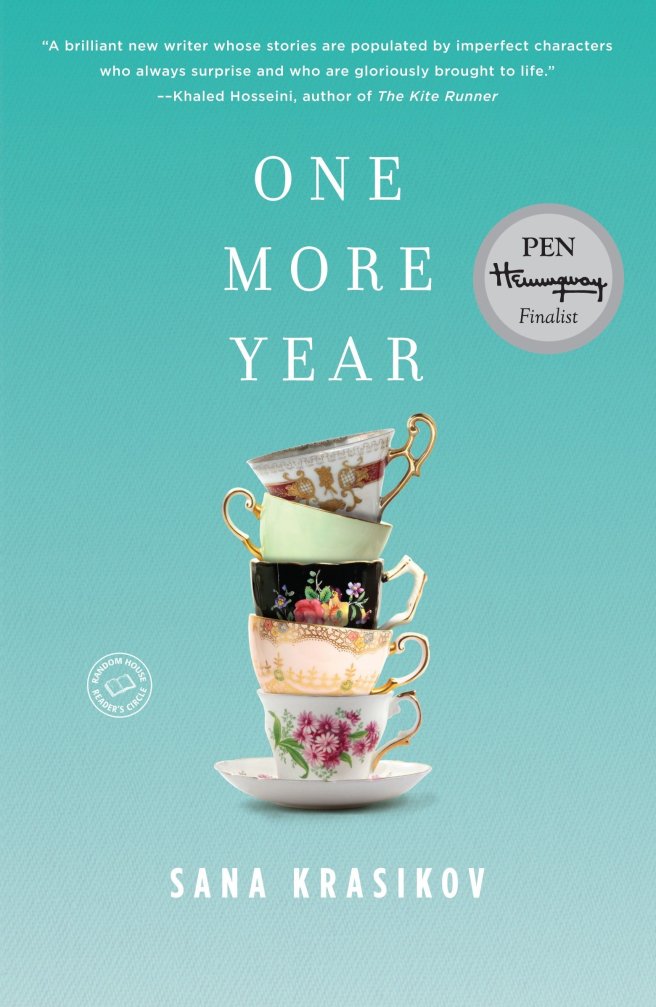
Herb Randall, whose essay, “A Question in Tchaikovsky Lane,” Punctured Lines was delighted to publish last year, is back with a review of Sana Krasikov‘s monumental novel, The Patriots (Spiegel & Grau, 2017). Krasikov was born in Ukraine, lived in Georgia, and immigrated to the United States; like other contemporary ex-Soviet Jewish writers, she writes in English on Russian/Soviet-related themes. Her first book, the short-story collection One More Year (Spiegel & Grau, 2009), with settings and characters alternating between the U.S. and the former Soviet space, was highly critically acclaimed, and she has won, or been nominated for, several prestigious awards. The Patriots is her second work and first novel, which has also been lauded by critics and readers.

If you are interested in reviewing a title for Punctured Lines, please see our Books for Review and get in touch.

Sana Krasikov, The Patriots, by Herb Randall

…політика — це далі жити в своїй країні.
любити її такою, якою вона є насправді.
політика — це знаходити слова: важкі, єдині
і лагодити все життя небеса несправні.

…politics is to continue living in one’s own country.
to love it as it really is.
politics is to find words: difficult, unique
and to repair one’s whole life this broken heaven.

— Serhiy Zhadan, “Hospitallers” (trans. Maria Kinash for this review)

One question that has troubled humans for generations is how much of a person’s life is determined by the choices they make, and how much by the environment that surrounds them. This tension between free will and external forces like family, society, and history, has been explored in various literary, religious, political, and philosophical works. Sana Krasikov’s The Patriots is notable for its focus on the consequences of an individual’s choices in the face of near-impossible circumstances, and how the consequences affect subsequent generations.

The Patriots is a gripping, often suspenseful read, despite the reader learning key plot elements early as its parallel narratives wind between generations and continents. The novel focuses on Florence Fein, the granddaughter of Jewish emigrants from the Russian Empire to Brooklyn, and her decision to jettison family and country to live in Stalin’s Soviet Union as the ultimate commitment to her socialist ideals. The second plot line concerns Florence’s son Julian and his own son, Lenny, who, as an American, follows a similar journey to Florence to live in post-Soviet Russia. Much of this plot line focuses on Julian’s reflections on his mother’s choices that left him confined to an orphanage and alienated from her even after they are reunited.

Krasikov weaves real historical events throughout her narrative, so readers familiar with the era will appreciate how skillfully she renders the paranoid, conspiratorial milieu at the personal level of her characters, while unobtrusively explaining context for those less familiar with the Soviet Union’s tumultuous history. Florence’s journey from middle-class Flatbush to Soviet life and the Gulag, her clever subversion of the system that imprisons her to save her own life, and her uneasy return with her Soviet-born family to the United States are all so engagingly told that the reader may occasionally yearn for the return to that plot line during the interlacing chapters about Julian and Lenny. These chapters, though, are crucial for a better understanding of Florence’s character and how her decisions impact not only her own life but the subsequent strained relationship with Julian, which in turn affects his connection with Lenny.

Coming of age during the Great Depression, Florence finds a job at the Soviet trade mission in New York thanks to her Russian-language skills. A temporary assignment lands her in the path of Sergey, a handsome young Soviet engineer who is part of a delegation visiting the U.S., on whose account she loses her virginity, and later her job. Left without work, nursing a deep sense of injustice in terms of American society, and feeling trapped in her parents’ home, she looks to the Soviet Union to find “a life of meaning and consequence.” Florence rejects the incremental politics of reform in the U.S. for her own great leap forward. As the narrator says:

Yes, she could have stayed and waited for all the changes to happen— the decades-long march toward progress. She could have stayed and become part of that march. But she’d had no patience for all that. She had wanted to skip past all those prohibitions and obstructions, all the prejudice and correctness, and leap straight into the future. That’s what the Soviet Union had meant to her back then—a place where the future was already being lived. And so she had fled the Land of the Free to feel free.

However, the third-person objective narrator of the Florence chapters makes it evident that she is a master of self-justification. For although her ideals and hopes for the future are her rationale for the decision to live in the Soviet Union, there is another, much more personal motive:  

But she was too proud to admit to herself […] a fact that might recast her entire noble journey not by the lantern of courage but by the murkier bed lamp of longing.

Leaving behind her parents, whom she would never see again, Florence severs her connection to America, save for corresponding with her beloved younger brother, Sidney. Florence’s journey across the Atlantic finds her in sympathetic company when she meets another young Jewish woman, Essie, from a decidedly less comfortable upbringing in the Bronx, on her way to Moscow to follow similar ideals. Their friendship lasts for years, until Florence becomes bound to Essie by a moral crisis that engulfs them both.

However, unlike Essie, Florence first lives not in Moscow, but Magnitogorsk. She goes there to search for Sergey, but also as a self-imposed trial by fire to remake herself into a true member of the proletariat, worthy of her new home and hoped-for match. It’s a cleverly chosen detail by Krasikov because it encapsulates Florence’s personality: novelty-seeking, serious, brave, clever, but not as clever as she sometimes thinks. The bustling industrial city being forged there is not the proletariat playground of Katayev’s Time, Forward! Instead, Florence finds chaos, squalid living conditions, indifference from her new compatriots, foreshadowing of political problems, and to her horror, bedbugs. What she doesn’t find is Sergey, who has been forced to relocate to Moscow after complaining about corruption at his workplace.

Florence decides to flee Magnitogorsk for Moscow, where she does finally, very briefly encounter Sergey. It is not the reunion she longs for, and in fact he scolds her for her ill-advised decision to come to the Soviet Union. After his rebuke and rejection, Florence reconnects with Essie and is drawn into her circle of friends, including Leon, another idealistic New York Jewish émigré. Florence is initially repulsed by his brash manner, but gradually falls in love with him and they marry. Florence and Leon adopt the Soviet Union as their home by choice, and the Soviet Union in return abducts them by force.

The realization that she and Leon are trapped in the Soviet Union hits Florence suddenly during the late 1930s at a time of increased prewar tension with America and Europe. She hands over her U.S. passport to a Soviet office clerk while applying for continued residency, and it is never returned despite several attempts to regain it. Leon’s passport is also confiscated. It is only after having lost her passport and reading a letter from her brother that Florence feels an urgent desire to return to the U.S. to visit. Issued a receipt with her passport number and told by the residency office she must renew it at the American embassy, she attempts to do that, but the Soviet police blocking the embassy entrance will not allow her through without the original document. She desperately shouts through the gate but in vain.

Even for those lucky few who manage to pass through the Soviet guards outside, the American embassy is unable and unwilling to help, as Julian subsequently relates: 

My parents were hardly the only Americans to be stranded in Moscow after 1936. Hundreds like them were cut adrift in the Soviet Union, comprehending too late that they’d fallen from the grace of the American government. The U.S. Embassy seems to have found every excuse to deny or delay reissuing these citizens their American passports—passports they had lost through no fault other than their naïveté.

Krasikov’s highlighting of this lesser-known aspect of relations between the Soviet Union and America during these years adds further nuance to understanding how little control these expatriates would have over their future after placing themselves in such a precarious position.

Not only is Florence abandoned by the American government in Stalin’s Soviet Union, but, as she later realizes, the Soviet authorities place her under surveillance when she attempts to enter the embassy. She had taken a series of jobs utilizing her native English skills that make her more conspicuous and vulnerable to co-option by the NKVD, Stalin’s secret police. Her handler, Subotin, holds out the possibility that her collaboration will earn her an exit visa. She gradually reveals more information about her colleagues and acquaintances, mistakenly thinking she is manipulating him and keeping her family safe from the terror raging around them. However, like the real-life foreigners who were suddenly trapped in Stalin’s Soviet Union, Florence and Leon, although forcibly turned into Soviet citizens, are still seen as outsiders and therefore suspect by Stalin’s regime.

***

The characters’ outsidedness, in various ways, is a crucial theme in The Patriots. Florence, Leon, Julian, and their friends keenly feel the disconnectedness of multiple identities, of “otherness,” most notably in being Jewish. A child of immigrants in America, an American among Soviets, yet seen everywhere as a Jew, Florence never belongs anywhere entirely, even in the country to which she voluntarily devotes her life:

Amerikantsi,” Subotin said as he wrote it down. He was smiling to himself, a smile that suggested he knew just as well as Florence did that—American or not— they had the double blessing of being Jews.

During the Second World War, Florence, Leon, Essie, and their friend, Seldon, work for the Jewish Anti-Fascist Committee, organized by the Soviet government to create propaganda to galvanize political and financial support in the West for the war effort. As victory nears and their usefulness to the regime diminishes, there comes a fresh wave of anti-Jewish sentiment. Florence and Essie recount the sudden rise in antisemitic attitudes even from their close colleagues:

“After all these years, I thought I was finally…”
“One of them,” said Florence.
Essie nodded, her eyes dry now. “But we never will be, will we?”

A generation later, Julian also experiences discrimination, less virulent but still institutionalized in the Soviet Union, when his doctoral thesis is rejected, the quota of Jewish doctorates having already been filled. When necessary to further their aims, the Soviets overlook Florence’s dual identities as “disloyal” Jew and “dangerous” foreigner, while using them as tools to control her, but as Stalin’s regime grows ever more paranoid, she becomes expendable. Florence’s enthusiastic decision to settle in the Soviet Union and devote her life to building communism is not enough to shield her and her family from the midnight knock on the door that all along the reader suspects is coming.

***

Unlike Florence, Julian is a first-person narrator who movingly recounts the story of his abandonment after his parents’ arrests. Spending seven years in a state orphanage, as an adult Julian struggles not so much with that desertion as with Florence’s inability to denounce the system that held them both captive and to admit her mistakes. His yearning to comprehend how Florence could choose to live in Soviet Russia, marry and have a child, while not doing everything possible to protect him is the primary source of momentum in The Patriots, keeping the reader engaged even as the outline of this story is revealed at the outset of the novel. Reflecting on his mother’s actions, he says, “The defining tragedy of my mother’s life was that she’d never had an instinct for family preservation.” When Florence reveals that an old friend had offered them help to flee Moscow and “stay with her relatives for a while, keep low after Papa was arrested,” he is shocked by his mother’s lack of concern for their well being:

“So why didn’t we go?” I said.
But she’d laughed at my dismay. “What was I going to do in a village? Pick turnips? Grow potatoes?”

Compounding Julian’s internal conflict is his adult son, Lenny, who is in Moscow not for any supposed high ideals like Florence, but merely to chase his fortune, precariously and only partially successfully. Julian routinely travels to Russia for business, but he also uses his visits to clumsily try to convince Lenny to return home to America. However, Lenny, who had a special bond with his grandmother, shares her stubbornness:

“Baba Flora didn’t regret her life. And neither do I. She had a front seat on history.”
I thought my jaw might drop. “Is that what she called it?”
“She always said, ‘The only way to learn who you are is to leave home.’”

Like his grandmother, Lenny will not admit defeat regardless of the difficulties. He feels his life in Russia has been an adventure, just as Florence did. Julian, on the other hand, sees only the resulting catastrophe:

“Adventure?” I said. “That’s what they call it when everyone comes back alive. Otherwise it’s called a tragedy. That’s what my father’s life was—a tragedy. And my mother’s, too, for that matter.”
“Yeah? She didn’t seem to think so.”
“That’s because she was a narcissist, Lenny,” I said. “She didn’t think about anybody but herself. She was a grade-A delusional narcissist. Like you.”

The selfishness may have skipped a generation, but Julian must bear the consequences from both mother and son. Just as Florence minimized the many privations and persecutions of her life in the Soviet Union in order to maintain her own fantasy of living with greater meaning there, Lenny is unconcerned about the rough treatment he endures in contemporary Russia and the justified worries of his parents. He is oblivious to both Julian’s childhood traumas and to the fact that, like a child, he still needs his father’s help to escape troubles of his own devising.

***

The catastrophe, when it comes, finds Florence trapped in an impossible moral dilemma, which is largely a product of trying to live in her own idealized image of the Soviet Union. She throws her best friend Essie to the NKVD in a desperate last bid to save herself and her family. However, the net of Stalin’s repressions and paranoia inexorably draws tighter around Florence, her husband, and remaining friends. It is a testament to Krasikov’s skill in creating a truly complex character like Florence that readers will find themselves sometimes sympathizing with her even if she is not entirely sympathetic. They might empathize with her decision to settle in a country with a recent revolution, violence, and state terror in the context of naïve political idealism and the lure of a first romance. However, Florence is unable even decades after her imprisonment in the Gulag to fully admit to herself or her son the extent of the damage she caused by her decision to live in the Soviet Union. Worse still, as Julian points out, the consequences could have been avoided entirely:

“And what about me, Mama? Did you ever think about what would happen to me when they came for you?”
[…]
“Yes, I did think about it. Your father and I talked about it […] [W]e knew that, no matter what happened to either of us, they would never let anything bad happen to the children here. The children were always going to be taken care of.”
[…]
“No matter what happened to you, Mama? […] [B]ut, Mama,” I said, “it didn’t have to happen to you at all! Don’t you get it? None of it had to happen to you, or to anybody.”

Eventually, while in Moscow for work, Julian gains access to his mother’s criminal file that confirms what he already suspected: his mother had been an informer, albeit with the goal of staving off disaster for herself and her family:

[A] victim of her times, of her political beliefs, a victim of her stubbornness and of her illusions. And, certainly, she had been a victim, but until this night I had not considered how she might also have been something else. An accomplice to that very same system that preyed on her. Only now did I allow myself to consider the alternate explanation: that her muteness was not the submissiveness of a slave but the silence of an accessory.

Julian finally realizes that his mother’s inability to renounce her choice to live in the Soviet Union despite the tragic outcome for everyone she cared about was not a rejection of him in favor of her political beliefs. Rather, it was a way for her to deal with the guilt of having been a part of that system of collaboration, denunciations, and betrayals. Tragically, this understanding of her motivations comes too late to repair their strained relationship. Yet Florence unknowingly bequeaths Julian a legacy that brings not only peace to a grieving son, but a way for him to break the generational cycle that he and Lenny are repeating, where now, like Florence’s parents, he is the disapproving father of a child seeking a new life in a foreign country. In her police file, Julian discovers that Florence’s interrogation had ended abruptly, and what could have resulted in a death sentence instead became time in the Gulag with a chance to survive and see her son again. The reason is unclear as Julian reads her file, but Sidney explains how Florence was able to game the system and escape with her life by pitting one of her tormentors against the other. Inspired and impressed by her audacity, Julian uses the same method to extricate Lenny from his legal troubles in Putin’s corrupt Russia. More importantly, Julian comes to understand that, like Florence, full of “[w]anderlust and stubbornness,” Lenny must be left free to follow his own path, even if he feels it is misguided.

***

The final section of The Patriots opens with an abrupt shift to the story of Henry, an American F-86 Sabre pilot in the Korean War, who is downed and ends up in the same camp as Florence, subject to intense interrogation to reveal the secrets of the advanced technology of the fighter jet. Fluent in English, Florence becomes his interpreter, an act that saves her life once again as she uses the circumstances to receive extra rations, rest from physical exertion, and receive necessary medical attention by drawing out the interrogation, with Henry’s cooperation. The pact Henry and Florence make to keep her alive, though, is not entirely sincere on her part. Florence’s symbiosis with the unfortunate pilot highlights the extent to which the life she chose in the Soviet Union results not only in her traumatization by, but her assimilation into, that brutal system. The conclusion of Henry’s story offers a heartrending reflection on the meaning of the novel’s title, as well as a stark personification of the theme of personal responsibility in conflict with the grand sweep of history.

Julian’s uncle advocates the view that the individual is no match for those forces of history that constantly push and pull and sometimes smash:

“The point, my friend,” Sidney said sharply, “is we’re all leashed pretty tightly to the era we’re living through. To the tyranny of our time. Even me. Even you. We’re none of us as free as we’d like to think. I’m not saying it as an excuse. But very few of us can push up against the weight of all that probability. And those that do—who’s to say their lives are any better for it?”
I knew he meant Florence—unpinning herself from one set of circumstances, only to be pinned down by another.

The struggle between fate and free will finds no simple answer in The Patriots. Julian develops a more nuanced understanding of Florence’s tragic life, informed by Sidney’s argument for the inescapability of the system that nearly obliterated their young family. This is not to discount Florence’s responsibility in making her decisions, however: while youthful and naive, they were still hers alone to make. The novel begins with Florence’s creed, “[b]reaking your family’s heart was the price you paid for rescuing your own,” and the enormous, generation-spanning price paid for this outlook lingers in readers’ minds long after reaching the closing pages of Krasikov’s captivating, sensitive work.

Herb Randall lives among the idyllic mountains, forests, and waters of rural New Hampshire and has travelled extensively in Ukraine, Poland, Sweden, and Estonia. He enjoys exploring lesser-known places, reading with a special focus on fiction in translation, and writing about forgotten people and places. His writing can be found in Punctured Lines and Apofenie. Twitter: @herbrandall

You can buy The Patriots here and One More Year here, and of course from your favorite independent bookstore.

Books for Review

Punctured Lines is looking for reviews of the following recent titles. Reviewers should have some expertise in terms of their chosen work, engaging substantively with its themes and techniques and bringing in direct citation to back up claims. If you are interested in reviewing a work not on the list but that fits our overall themes of feminism, LGBT, diaspora, etc., please let us know. Thank you, and we look forward to working with you.

Fiction:

Alina Adams, The Nesting Dolls (Harper, 2020)***

Nina Berberova, The Last and the First, translated by Marian Schwarz (Pushkin Press, 2021)

Continue reading “Books for Review”

“…he cast no shadow in the shimmering silver gloom.” @Muireann @russianlife #WhiteMagic

kaggsysbookishramblings's avatarKaggsy's Bookish Ramblings

Back in 2015, when I was on the hunt for every bit of Bulgakov writing in translation that I could find, I stumbled across (and was presented with as Christmas gift!) the marvellous collection of short stories, “Red Spectres”. Translated from the Russian by Muireann Maguire, it’s a wonderful anthology which I loved to bits; so when I found out that she had a new collection out, entitled “White Magic”, I was, needless to say, very interested. Muireann very kindly arranged for a review copy for me, which was absolutely lovely of her, and I’m pleased to report that the new book is just as great as her first anthology!

“Red Spectres” focused on ‘Russian Gothic Tales from the Twentieth Century’, as the subtitle stated; however, “White Magic” takes as its basis writing by émigré authors, and the consistent thread running through the stories is that of…

View original post 875 more words

Olga Mark’s “The Lighter”: An Excerpt from Amanat, a Collection-in-Progress of Recent Women’s Writing from Kazakhstan

Shelley Fairweather-Vega on Amanat: Women’s Writing from Kazakhstan

The idea to translate and publish a collection of recent women’s writing from Kazakhstan grew out of my collaboration with Zaure Batayeva, a Kazakh writer and translator living in Belgium. Zaure contacted me in October 2016 when she wanted to hire someone to edit her English translation of a novella by Aigul Kemelbayeva. We eventually submitted the final version to Words Without Borders, whose editor, Susan Harris, was looking for “post-Soviet” literature from different places. Excerpts from the Kemelbayeva novella and two other pieces appeared in a WWB feature in January 2018. By that time, Zaure and I were thinking seriously about collecting writing by more authors and publishing an anthology. Ever since, she and I have been trading stories, checking each other’s translations (she translated the Kazakh-language stories, and I translated the Russian-language pieces), and querying publishers. We won some much-needed funding and publicity from the generous RusTrans program, and our collection is now nearly complete.

Continue reading “Olga Mark’s “The Lighter”: An Excerpt from Amanat, a Collection-in-Progress of Recent Women’s Writing from Kazakhstan”

Writing and Reviewing Queer Russian Literature: A Conversation with Konstantin Kropotkin

We’re delighted to publish our conversation with Konstantin Kropotkin, an author and literary and film critic who reviews LGBT books and movies, as well as trends in Russian culture. Kropotkin’s novels and collections of short stories centering queer lives are available on Amazon, in Russian. His commentary on queer culture appears daily on his Telegram blog “Sodom i umora,” and he contributes full-form critical essays to top Russian-language publications. Kropotkin lives in Germany and this conversation was conducted in English and Russian over email, and subsequently translated by the interviewer.

Olga Zilberbourg: Much of your fiction has been focused on portraying the lives of gay men, and as a critic you pay particular attention to LGBT literature and film. Your popular Telegram blog “Sodom i umora” is dedicated to queer books and movies in Russian or in translation to Russian. Despite the retrograde homophobic laws that Russia has passed in recent years, and horrific persecution of gay people in Chechnya, you have shown that Russophone queer literature is a vibrant field. In your blog you seem to strive for balance: you write about various forms of homophobia and also about the many creators that are participating in Russophone queer culture. How would you describe your cultural project as a critic? Does this project change in any way when you turn to fiction?

Continue reading “Writing and Reviewing Queer Russian Literature: A Conversation with Konstantin Kropotkin”

“Our Favorite Things”: Natalya Sukhonos and Katherine E. Young Discuss Their New Poetry Collections

To mark National Poetry Month in the United States, Punctured Lines asked two poets with recently published collections to interview one another.  Both poets have strong personal and professional connections to the larger Russophone world. Natalya Sukhonos’s A Stranger Home (Moon Pie Press) explores themes of the mother-daughter connection, grief and loss, and finding someone and something to love in locales ranging from Odessa to San Francisco. Katherine E. Young’s Woman Drinking Absinthe (Alan Squire Publishing) concerns itself with transgressions, examined through a series of masks, including Greek drama, folk tales, Japonisme, post-Impressionism, opera, geometry, and planetary geology. In addition to their written comments, Sukhonos and Young have also produced a short video conversation highlighting several poems from each collection.

Please support the poets by buying their books.

***

[Katherine E. Young interviews Natalya Sukhonos about A Stranger Home.]

Katherine E. Young: Your book is set in so many places: San Francisco, Odessa, Rome, New York City. And yet the theme of leaving old places and finding new ones, finding “home,” seemingly plays only a minor role in the book. This book doesn’t dwell on typical themes of emigration / immigration; instead, there are the constants of familial love, amorous love, and putting down roots wherever the earth will accept them. Even the ghosts in your book travel with the speaker and seem at home in multiple cultures. In that context, please talk a little about the line “Home. A dreamscape we flee until it consumes all others” from “The Red Farmhouse.”

Natalya Sukhonos: Thanks for this interesting question, Kate. I think that home is a very fraught concept for me. I’ve moved around a lot—from Odessa to New York, then to Boston and San Francisco, with Turkey and Rio de Janeiro as short sweet sojourns in between, and then back to New York. Each of these places romanced me, intrigued me, made me want to stay there forever—until it didn’t. San Francisco, for instance, was enchanting but forbidding in terms of living expenses, though I still find it very beautiful and have good friends there. And Naomi was born there, which makes it forever special. Why is home a “dreamscape we flee”? I guess I’ve always had that desire to flee, to carve my own path. I’m grateful to my family, but like many families, it imposed its own vision of me which I often longed to tweak or even contradict. But I ended up returning to New York—returning home with my own family, creating my own home, a kind of mise-en-abyme, if you will. Though “The Red Farmhouse” was written before the pandemic, you can see how home and family have become all-consuming entities especially now, for better or for worse.

Katherine E. Young: Mothers and daughters inhabit almost all of these poems, and sometimes the connection is fraught, as in “My Personal Vampire.” Other poems such as “Nadia” celebrate “the wild grasses of love.” The second section of the book contains poems that grieve the loss of a mother. Talk a little about the importance of the mother-daughter connection in these poems. 

Natalya Sukhonos: We moved to New York City from San Francisco after my mother was diagnosed with stage 4 ovarian cancer. This collection came out of the process of grieving for her and remembering her. My mother read Gogol’s Dead Souls to me and recited Russian poetry, which she knew inside out—Pasternak, Akhmatova, Tsvetaeva, you name it. She was dramatic, a smart dresser, and had an easy laugh. My mother and I were really close, and four years later, I’m still grieving. The poems in this collection try to ask “why,” but they also try to remember. Simone Weil once said that attention is the purest form of prayer, and this resonates with me even though I’m agnostic. I wanted to pay attention to the little details about her life—her love of gardening, for instance—and also record the process of losing her. When she was gone, I felt really unmoored, as if I didn’t know who I was. But as I was writing the collection, I also had to mother my two-and-a-half year-old daughter Naomi, who is now six. In “Theater of Bones” and “The Lioness and the Wolf, or Words as Prehistoric Shells” I tried to record how she was processing death and grief through questions and magical thinking. And I wanted to be honest about how damn difficult it is to be a mother. Motherhood is often romanticized, but not enough attention is paid (especially by men) to the loneliness, the self-doubt, the very physical burdens that motherhood places on you (hence the comparison of a baby to a vampire). Almost two years ago, I had another baby, Nadia, who bears my mother’s name (Tamara) as a middle name. It’s been delightful to watch the beginning of another life, to do it all over again. And I felt like having this new baby and also reflecting on mothering Naomi has made me reclaim motherhood in a way that wasn’t painful or grieving. At the same time, motherhood made my connection to my mother stronger.

Katherine E. Young: Several of your poems speak of the body as a map, and the poems often feel as if bones, stones, shells, forests, and especially stars are of much more importance and permanence than human constructs of geography and cartography. Talk about the stars and other natural phenomena that inhabit so many of your poems.

Natalya Sukhonos: When I lived in the Bay Area, I was really awakened to the beauty and power of nature because it was everywhere: step seconds away from your house and be surrounded by a giant mountain and giant eucalyptus trees! And the cold sublime of the Pacific! I think that as someone who has lived in cities all her life, I’m puzzled by the natural world, and that gives me comfort—the fact that the ocean just IS, that it doesn’t have to fit into a human story. It has its own story, which we may or may not understand. Maybe this sounds too mystical or vague, but for me what can’t be put into language can provide a source of relief. There’s something important about the fact that my mother loved to garden, and I don’t practice this at all. Or that we witnessed the Pacific Ocean roaring on a remote beach together. Why is this significant? Well, only poems can tell. 

Also, the poem where I am a lioness and my husband is a wolf speaks to the way children construct mini-narratives around everything they see, and those stories are often filled with magical, dangerous forests and nature that’s comprised of signs only they could decipher, a sort of Baudelairean forêt des symboles. I think Naomi has taught me a lot about seeing nature this way.

Katherine E. Young: Your poems often reference classical myths, as well as modern literature. In one of my favorite poems, the ekphrastic “Night Sky #16 by Vija Celmins,” the speaker remembers her mother reading from The Little Prince, interleaving references to Saint-Exupéry’s book with lines from Rainer Maria Rilke’s “Elegy 1.” You have a PhD in comparative literature. What is the importance of literature, both classical and modern, to your poems? 

Natalya Sukhonos: Believe it or not, literature has always had a sensory or sensual appeal for me. When I was eight years old, I had a sudden epiphany that every book, every author has their own flavor. Since then, literature has always been a huge part of my life: the first time I met my husband, I recited Rilke’s first elegy on the street, for instance. Given that the book revolves around my mother’s life and her legacy, literature plays a vital role in this, too. My mother loved The Little Prince with a passion, and staged it at Camp “Idea” where she was the director and where I worked. The love of literature is something that she and I shared in a way that was rhapsodic and visceral. When I started to write seriously, I couldn’t help but interweave little strands of whichever author I was reading—Borges, Elena Ferrante, Baudelaire—into my poetry. I do this in ordinary conversation, and poetry is another such conversation. For me, literature poses essential questions about identity, existence, good and evil in a way that is liberating because it inspires you to look further. The Master and Margarita, which I’m teaching in the Fall for Stanford Continuing Studies, is one such book, so key to me that I reread it every five years or so. One of my favorite lines by Emily Dickinson is “Tell all the truth but tell it slant.” In The Master and Margarita, Woland does this by asking what the Earth would look like if it were stripped of its shadows. In a “slant,” indirect way, Bulgakov is talking to us about the interconnectedness of good and evil, and for me, this idea is interesting precisely because of the way in which it is conveyed—through slant, poetic meaning. 

Katherine E. Young: While free verse is a part of contemporary Russian poetry, it’s a relatively recent formal development, and plenty of Russian poets still write in rhyme and meter—many more than do so in contemporary American poetry. Can you tell me about the formal choices you made in writing these poems and how you came to make them?

Natalya Sukhonos: Even though I grew up reading Pushkin, Pasternak, Akhmatova, Brodsky, and Khlebnikov, when I came of age as a poet writing in English, I was more captivated by the free verse of Mark Strand and Wallace Stevens. That said, T. S. Eliot’s Four Quartets and their mosaic of mythologies and truth-seeking has always fascinated me, and Eliot plays around with rhyme and meter quite a bit. 

In my own writing I try to be cognizant of the length of my lines and stanzas, the end words on each line, and the “volume” of words on a page. This all contributes to the way I see sound as vital to any poem’s meaning. So in “Parachute” I play around with the length of the lines to imitate the falling parachute of the poem’s title. I let the form carry the tension of my grandfather jumping off a parachute exactly 94 times during World War II. But “Aphrodite,” for instance, is composed of tercets because it’s a love poem, and I’m harkening back to tercets in Romantic poetry.

I do have some poems in here that experiment with form. “Pantoum of Grief and Birth” is a pantoum because I wanted to get at the repetitive, obsessive nature of grieving my mother while giving birth to my youngest daughter. “Protect Me, Lord” came out of an assignment in a poetry class where I had to put a Shakespearean sonnet into Google Translate twice, choose the best lines from what resulted, and also incorporate several colors, animals, and trees of our own choosing into the poem. And “Lost Souls—After Rilke” is actually a golden shovel, spelling out the first stanza of Rilke’s First Duino Elegy in the ending words of its stanzas. I like to be playful with form, so “In Failing Light” has alternating couplets that are formatted differently and interweave the event of remembering my mother while cooking potatoes and ramps with the actual memory of visiting the Pacific Ocean with her in San Francisco.

***

[Natalya Sukhonos interviews Katherine E. Young about Woman Drinking Absinthe.]

Natalya Sukhonos: Especially in “Birdsong,” “The Bear,” and “Nakhla,” I noticed your interest in animals and animal imagery. Can you comment on the way that animals are linked to the theme of freedom vs. unfreedom in your poetry? On the one hand, they’re images of otherness, an alternate perspective, but on the other hand, they’re confined to particular places and spaces by their human subjects…

Katherine E. Young: Hm. I hadn’t thought about this at all before your question, but there are two main groups of animals in these poems. The first group includes birds, cats, the prehistoric sea creatures of “Nakhla,” snakes, a dissected frog, lizards, cicadas, monkeys, bats, the fig wasp, and an actual, historical dog who had an unfortunate encounter with an achondrite (a kind of meteorite). But with the possible exception of the fig wasp, these animals are mostly part of the background flora and fauna of the poems. The other group of animals is quite different: they’re talking animals, and they may not be animals at all. There’s the wish-granting fish of “The Golden Fish,” a tale I first read in Andrew Lang’s The Green Fairy Book (where the fish is an enchanted prince); I read Alexander Pushkin’s version of the tale much later. The enigmatic talking bear of “The Bear” is, of course, the performing bear of countless European folk tales, alternately menacing and pathetic, also possibly enchanted. For me, these creatures aren’t all that different from Bluebeard, the ogre who murders his wives, or the succuba who haunts a man’s waking hours, both of whom also appear in these poems. It’s these talking animals and monsters (or are they humans who have lost their essential human-ness?) who are truly unfree, trapped in enchantments, forced to perform for their supper, or condemned to fulfill various gruesome fates over and over again—they and the humans who become trapped in their tragic, endlessly repeating dramatic arcs.

Natalya Sukhonos: In “Nakhla” and “Euclidean Geometry” I was fascinated with your link between the macroscopic and the microscopic: cataclysmic events like the fall of a gigantic rock and human, intimate events such as a singular act of love. Please comment on this link in your poetry.

Katherine E. Young: Well, that’s the whole point, isn’t it? We go running around the world, eating, reproducing, defecating, dying, and from the biological perspective we’re doing just the same thing as ants. I don’t know what distinguishes one ant from another (although I’m told they sing to one another), and from a bird’s-eye perspective you can’t distinguish one human being from another, either. But when we write, when we make any kind of art, we’re saying “Stop! Look at me! I’m here!” Same for when we fall in love, which is also a kind of art. “Nakhla” started during a visit to the Smithsonian Air & Space Museum, where they have a fragment of this amazing achondrite from Mars that fell rather spectacularly in Egypt in 1911 (and apparently did kill a farmer’s dog). A run-of-the-mill igneous rock on Mars, 1.3 billion years old—the only thing unusual about it is that it got blasted off the Martian surface and ended up here on Earth. You can touch it! I was just charmed by the notion of this anonymous and yet singular rock—as anonymous and as singular as other such interplanetary travelers that brought things, including perhaps some of the elements of life, to Earth. Same for “Euclidean Geometry”: an act of love is both anonymous and singular, seemingly governed by laws and rules as ancient as the universe. Sometimes we mistakenly interpret those laws and rules, though—hence, logical fallacies such as circular logic.

Natalya Sukhonos: In “Today I’m Writing Love Songs” as well as “Place of Peace,” where you describe love as “bursting riotously into bloom,” you write beautifully about love as fruit. There is so much sensuality in your fruit metaphors! The poem “Fig” is a whole extended metaphor of love as a bloom as well, and it is stunning! And in “Succuba,” as well as “Today I’m Writing Love Songs” and “A Receipt to Cure Mad Dogs,” you connect love to herbs and their various flavors. Please say something about the ways in which the “tastes of love” resonate in your poetry through imagery of herbs and fruit.

Katherine E. Young: As I was writing these poems, just about everyone in my close circle, including me, was undergoing really big and often traumatic life changes. So, I was very much coming to the poems asking the hard questions: Who am I? Where am I in life? Am I the person I wanted to be, and if not, what can and should I do about that? The basic idea that one can more or less cultivate oneself as one cultivates a garden speaks to a certain kind of urgency one gets in midlife to take stock and make adjustments, sometimes radical ones. During that period, I was lucky enough to have some choices—not always easy ones, not always good ones, but real ones. To some degree, then, the notion of flowering in these poems is aspirational—what I hoped would happen if I took better, more conscious care of my garden, both for myself and for those I love. Also, I just really, really love figs!

Natalya Sukhonos: What’s the link between the mathematical and the erotic in your poetry? I’ve noticed many poems touching on math, and this was fascinating, maybe not least because I just finished Lara Vapnyar’s Divide Me by Zero.

Katherine E. Young: Excellent question! I don’t really have an answer, except to say that as a young person I wanted to be an astronaut—that’s also the reason I started studying Russian, by the way—and I felt very comfortable with math and science, at least until I ran afoul of a college calculus class. Much later, when I was getting my MFA, I took a wonderful course on the rhetoric of science, and I spent more time than I care to admit reading the Transactions of the Royal Society of London. I was fascinated by the mental steps that natural philosophers in the early nineteenth century had to take to be able to conceptualize dinosaurs out of a bunch of bone fragments stuck in rock. And you already know that I find odd bits of space debris decidedly erotic… Maybe I was seeking a system of beliefs and practices in math and science that might inspire me with more confidence than the beliefs and practices in human relationships that I had found simultaneously confining and unreliable—although true mathematicians and scientists would probably say that their laws and beliefs can be just as confining and unreliable… 

Natalya Sukhonos: You are a professional literary translator who has received a National Endowment for the Arts Fellowship for translation. How does the work of translation inform your poetry (and I’m using “translation” here both in the literal sense of the word as well as the metaphorical process of translation)? Comment on the process of cultural translation, as your poetry includes intertextual references to Mrs. Pinkerton, the Golden Fish, Manet, Euclid, and so many other rich and unexpected sources.

Katherine E. Young: Honestly, I don’t really see much difference between writing “original” poetry and translating it. In both cases, making a poem starts with “translating” the impulse for that poem into words. Translating someone else’s impulse—as opposed to your own—is essentially the same process, although there are a few more steps involved. But I’m always trying to make music with words, whether the poem started in my own head or in someone else’s. There are particular benefits to being a translator, though: recently I was asked to translate a selection of poems by Boris Pasternak, and I found that every single one of Pasternak’s lines taught me something important about writing my own poetry in English. 

As far as cultural translation, all the cultural flotsam and jetsam in this book comes from things I’ve squirreled away, from the mating habits of ancient sea creatures to Manet’s Bar at the Folies-Bergère, which I first saw in London as a teenager. A lot of my references come from the former Soviet Union, where I first traveled as a student. I didn’t really get serious about writing poetry until I lived in Russia in the 1990s, though—while there, I was lucky enough to read the entire canon of Russian poetry with a scholar who spoke no English. It was that immersion in Russian that helped me to hear my own language, English, with fresh ears—and it certainly helped make me a better poet. I like to joke that I’m the only American-born poet I know who owes more to Pushkin than to Walt Whitman—if that’s not cultural translation, what is?

Natalya Sukhonos is bilingual in Russian and English and also speaks Spanish, French, and Portuguese. She has taught at the Stanford Continuing Studies program for four years. She has a PhD in Comparative Literature from Harvard University. Her poems are published by The American Journal of Poetry, The Saint Ann’s Review, Driftwood Press, Literary Mama, Middle Gray Magazine, Really System, and other journals. Sukhonos was nominated for the Pushcart Prize in 2020 and 2015, and for the Best New Poets Anthology of 2015. Her first book Parachute was published in 2016 by Kelsay Books of Aldrich Press, and her second book A Stranger Home was published by Moon Pie Press. natalyasukhonos.com.

Katherine E. Young is the author of Woman Drinking Absinthe, Day of the Border Guards (2014 Miller Williams Arkansas Poetry Prize finalist), two chapbooks, and the editor of Written in Arlington. Her poems have appeared in Prairie Schooner, The Iowa Review, Subtropics, and many others. She has translated prose by Anna Starobinets and Akram Aylisli and two poetry collections by Inna Kabysh. Her translations of contemporary Russophone poetry and prose have won international awards. Young was named a 2020 Arlington, VA, individual artist grantee; a 2017 NEA translation fellow; and the inaugural poet laureate for Arlington, VA (2016-2018). https://katherine-young-poet.com