“Обстрел прекратился в 11:30. Пока всё тихо. У нас в квартире тепло, работает водопровод и центральное отопление. Нет электричества, но светит солнце и на улице тает снег.” [The shelling stopped at 11:30. For now everything is quiet. Our apartment is warm, and there’s running water and central heating. No electricity, but the sun is shining and the snow is melting outside.]
—my friend Olga Krauze writes from Kharkiv, the second largest city in Ukraine. I was interviewing her on Zoom for this profile and we got interrupted. Olga is a poet and singer and I’ve known her since 1991. She has lived in Kharkiv for 12 years with her partner Elina, who is Ukrainian.
On February 9, 2013, Akram Aylisli’s books were burned in his native village. For more than six decades, Azerbaijan’s most prominent writer has written fiction about the mountain village of Aylis, from which he took his pen name; Aylisli called the day of the burning “the most terrible day of my life.” Why were his books burned? Aylisli had published a novella, Stone Dreams, that challenged official propaganda erasing the role played by Armenians in the history of Azerbaijan, a country currently dominated by ethnic Azeris (Azerbaijan and neighboring Armenia have engaged in military hostilities since before the collapse of the Soviet Union). Stone Dreams is among the first fictional works in the greater Turkic-speaking world to depict both historical and contemporary violence against ethnic Armenians, and it includes sympathetic portrayals of Armenian villagers residing in Azerbaijan. The novella also portrays the corruption and authoritarianism of modern-day Azerbaijan. In the uproar that greeted the novella’s publication, Aylisli was stripped of his presidential honors and pension. An empty coffin was paraded around the courtyard of his residence, and a bounty—later rescinded under international pressure—was offered to anyone who would cut off the writer’s ear. In 2014, international supporters nominated Aylisli for the Nobel Peace Prize for “his efforts to reconcile Azerbaijani and Armenian people.” In 2016, trumped-up legal charges were filed against Aylisli by the Azerbaijani government, a case that is still pending. Ten years after his books were burned, Akram Aylisli continues to live under de facto house arrest in Azerbaijan, unable to leave the city of Baku. He is 85.
Lars Horn’s Voice of the Fish(Graywolf Press, 2022) is a collection of lyric essays in which the author enters into a dialogue with ancient writers and contemporary artists, contributing personal reflections on the elusiveness of the trans body. The book is made up of 23 sections that converge on the theme of water. Most sections are further broken up into short segments or sentences set off by Roman numerals. In the first section, “In Water Disjointed from Me,” the author describes the way in which a mysterious illness upended their life and their ability to communicate. Four pages later, in “Last Night, A Pike Swam Up the Stairs,” Horn speaks to the experience of their trans body through short segments. This is the opening page of this section:
Odessa was a cosmopolitan place, a “city of laughter” in which poetry was revered, and from an early age Kaminsky wrote and learned it by heart. When he was 12 his prose writing was published in the local newspaper, after he answered a call-out to schoolchildren to contribute, because the paper had no money to pay journalists. At 15, though he thought of poetry as “a private thing”, he produced his first chapbook. He had graduated from school by the time the family was forced into exile.
An excerpt in the Guardian of Peter Pomerantsev’s new book, This Is Not Propaganda: Adventures in the War Against Reality.
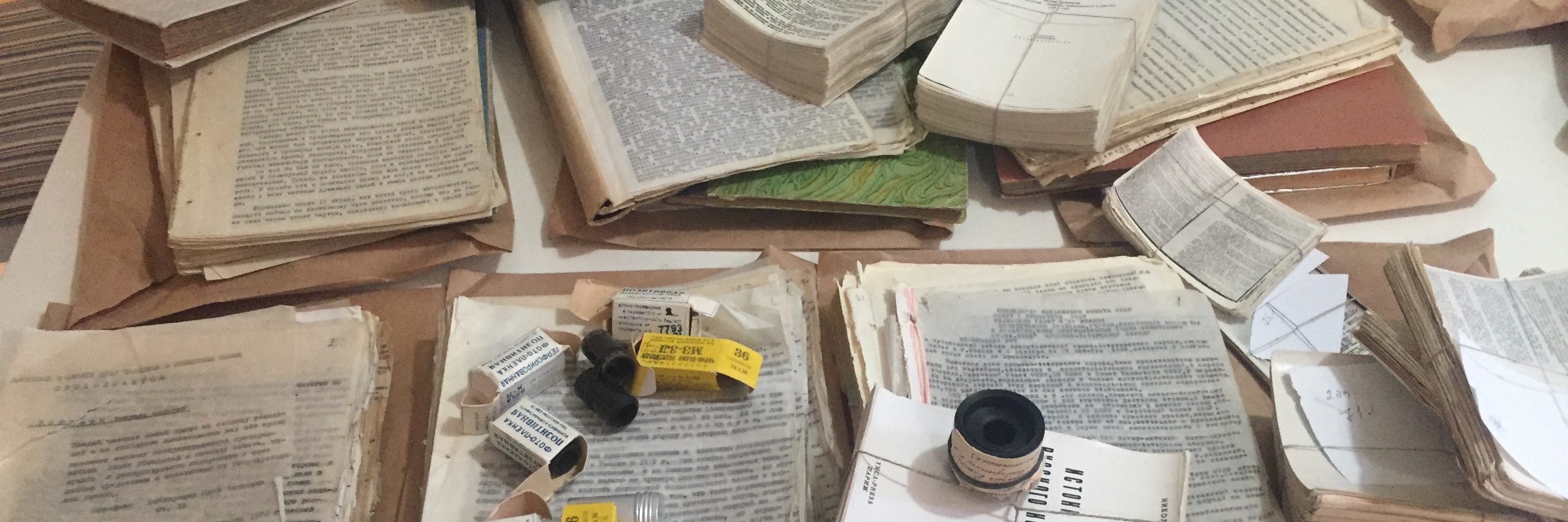
It was 1976, in Odessa, Soviet Ukraine, and my father, Igor, a writer and poet, had been detained for “distributing copies of harmful literature to friends and acquaintances”: books censored for telling the truth about the Soviet Gulag (Solzhenitsyn) or for being written by exiles (Nabokov). He was threatened with seven years’ prison and five in exile. One after another, his friends were called in to confess whether he had ever spoken “anti-Soviet fabrications of a defamatory nature, such as that creative people cannot realise their potential in the USSR”.
The book comes out on August 6, 2019, from PublicAffairs.

 Punctured Lines