Archipelagic Model of Global post-Soviet Cultures (*)

About a year ago, when Yelena Furman and I decided to get serious about our ongoing Twitter conversation about Russian literature and to start this blog, I read Maria Rubins’s essay “A Century of Russian Culture(s) ‘Abroad’: The Unfolding of Literary Geography,” published in Global Russian Cultures (edited by Kevin M. F. Platt; a volume in which Yelena Furman’s own essay “Rewriting Gender: Russian-American Women Writers and the Challenge to Russian Femininity” also appears). In this programmatic essay, Rubins argues that “A polycentric, nonhierarchical model of global Russian cultures may be visualized as an archipelago, a chain of islands that appear independent and isolated but in fact are interconnected in space, as well as time, often owing their origins to a series of volcanic eruptions.” In this model, Rubins argues, “the metropolitan Russian ‘continent,’ … can be seen as just the largest island within the global archipelago of Russian culture.”

Prior to encountering this essay, I had heard of archipelagic studies from a friend and a colleague, Olga Blomgren, who is working on her dissertation in Comparative Literature. Olga pointed me toward this theory and to the ideas of de-colonization, as distinct from post-colonization, as promising ways of conceptualizing literatures born of multiple languages and cultural influences. In her own work, Olga discusses the writing of the multilingual authors from the Caribbean, Rosario Ferré and Edwidge Danticat. The notion of an “archipelago” offers a compelling vision and a path to undoing the hierarchies of values imposed by colonial regimes. “Landmasses traditionally conceived of as continents may be reframed as islands that are constituent parts, rather than continental administrators, of the global meta-archipelago,” write scholars Brian Russel Roberts and Michelle Stephens in their essay “Archipelagic American Studies and the Caribbean.” Just because a traditionally conceived continent is physically larger than an island, its claim on culture and influence isn’t more valid than that of an island.

Rubins applies these ideas to Russophone literature, including in Paris during the interwar period, literature created in the US during the Cold War Era, and in Israel in the more recent times. She quotes from the famed theorist Homi Bhabha, who argued in his book The Location of Culture that “peripheral locations are rich in innovation and can destabilize and refashion stagnating ‘centers’.” In fact, with the introduction of the archipelagic model, the very terms for “center” and “periphery” (so important to the 19th Century Russian writers, from Gogol to Chekhov) may become obsolete. “Diasporic authors and communities contest their alleged marginality and assert their hybrid character. Yet diasporic consciousness and patterns of writing inevitably spill over into the metropolitan world, eroding monolithic identities and discourses even as they participate in transnational literary systems,” Rubins suggests.

These ideas deeply influenced my thinking about what I wanted to accomplish with Punctured Lines, and it was exciting to find that Yelena was thinking along the same lines. In her draft of our mission statement, she wrote that we want to amplify the traditionally underrepresented voices from the post-Soviet diasporas. If I were to translate this into the language of the archipelagic theory, the idea is to unsettle the colonial maps of literary value that tend to place Russia at the center of the Soviet literary space and that of the Russian Empire, and to treat Russophone literature as one island among many of the metaphorical post-Soviet archipelago. This work feels all the more necessary to me on the personal level because in the earlier draft of this post (displayed in the comments), I have unconsciously defaulted to the colonialist language while actively seeking to avoid it. I’m very grateful to the comments that Shelley Fairweather-Vega, Christopher Fort, Mirgul Kali, and Kevin M. F. Platt offered on this post that helped me to unpack my own unconscious bias and tendency to conflate “Russia” and “the Soviet Union.”

(*) Title and content have been edited; the original version is in the comments below.

Moving from theory to practice, here’s a few recently published and upcoming books from the post-Soviet archipelago to read this summer.

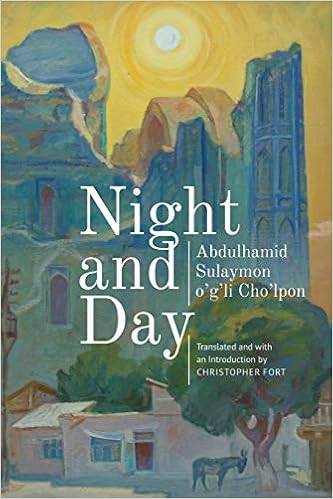
Night and Day by Abdulhamid Sulaymon o’g’li Cho’lpon, translated from Uzbek by Christopher Fort. This novel comes to us from the 1930s and is set at an earlier time, in Turkestan under Russian Imperial rule. “Despite increasing censorship and previous arrests by Soviet authorities, Cholpon subtly employs a variety of techniques including satire and farce to undermine the legitimacy of the Soviet government that was being established around him. Bitterly portraying the hypocrisy and collusion of jadid reformists, Muslim clerics and local Russian officials, this unfinished novel, which was halted by the author’s execution in 1938, remains as one of the darkest comments on Soviet Central Asian history in the Uzbek language,” wrote Shawn T. Lyon about this novel. An illuminating interview with the translator aired on a podcast New Books Network.

Pub Date: November 26, 2019
Publisher: Academic Studies Press

Translated from Uzbek by Shelley Fairweather-Vega, Hamid Ismailov’s GAIA, Queen of Ants is set in England in the milieu of Central Asian immigrants. ” The pivotal relationship in the novel is that between septuagenarian Uzbek émigré Gaia and Domrul, her young Turkish carer. Readers may recognize hints of Harold and Maude,” writes Joshua Bird in a review of this novel. “Contact with Gaia brings up [for Domrul] conflicting feelings of lust, shame and longing, and through their complex relationship, Gaia draws the young man into her dark world of infidelity, sexuality and secrets.”

Pub date: February 11, 2020
Publisher: Syracuse University Press

Good Citizens Need Not Fear is the first book by Maria Reva, who was born in Ukraine and grew up in Canada, and has published a number of the stories from this linked collection in the most prestigious journals of the English-language world, including Electric Literature, Granta, McSweeney’s, The Atlantic, and others. “Set in the Ukrainian town of Kirovka in the 1980s and starring a set of characters who live in the same block of flats, Maria Reva’s enthralling debut of interlinked short stories achieves the double effect of timelessness and timeliness,” Kapka Kassabova writes in The Guardian.

In addition to her fiction writing, Reva translates from French and writes opera libertti!

Pub date: March 10, 2020
Publisher: Doubleday Books

Nino Haratishvili’s The Eighth Life, translated from German by Ruth Martin and Charlotte Collins has been probably the best publicized book on my list. It is currently listed as #11 in “Russian Literature” on Amazon — woo hoo! This book opens in contemporary Berlin, but the family saga begins in Georgia, at the turn of the 20th Century, and follows the central characters to St. Petersburg during the Russian Revolution, and then on through time and geographical locations. “The Eighth Life is narrated by Niza Jashi, a Georgian expatriate living in Berlin, as she writes a history of her family for Brilka, her niece. The novel explores the ways that various characters are fated not only by the political tumult and government brutality of 20th-century Georgia but also by the legacy of a family curse,” explains Lori Feathers in an interview with Haratishvili on Lit Hub.

Pub Date: April 14, 2020
Publisher: Scribe US

Three Apples Fell From the Sky by Narine Abgaryan comes to English in translation by Lisa C. Hayden. Abgaryan was born in a small town in Soviet Armenia, and later moved to the capital of Armenia, Yerevan, and from there, to Moscow. Abgaryan fictionalizes her hometown in her work with tenderness and care, showing us a range of fascinating characters and a lifestyle that seems as though of a different century. This is Abgaryan’s seventh novel, and the first to be translated to English. Due to the pandemic, the pub date for this novel has been delayed to late August, but I encourage all of our readers to pre-order this book (it is already available for pre-order).

While we wait, read Katherine E. Young’s translation of an excerpt from Abgaryan’s earlier novel, People Who Are Always With Me, in Two Lines 31.

Pub Date: August 4, 2020
Publisher: ONEWorld Publications

Don’t forget to order from your favorite local bookshop, they need our help! Bookshop.org is a good second choice.

Welcome, MumberMag!

In April, as COVID19 was already changing our lives, a new literary magazine entered the world. “Literature pretends only to reflect the way things really are, and it is always there for you when everything else has failed,” writes Harry Leeds in his editor’s note to the first issue. “I hope that our magazine is a distraction while you are stuck the hell home.” Leeds is a writer, editor, a translator from Russian, “cat papa,” and is on his way to becoming a nurse. He has a sick sense of humor, he says, which I think gives him a leg up in the whole literary mag game.

We are so delighted to welcome MumberMag’s stellar Mumber One issue. (Gosh, some sense of humor really went into the making of this mag–and I LOVE IT!) Joining Harry in the editorial team is a much beloved poet D. A. Powell, who serves as a Founding Poetry Editor (here’s a profile of him in The New Yorker).

The first issue holds many wonderful gifts for the readers, and for us, interested in post-Soviet literature, there are Boris Dralyuk’s translations from Julia Nemirovskaya who lives in the U.S. and writes poetry and fiction in Russian, and teaches Russian literature and culture at the University of Oregon. Three poems appear in Mumber One, Lamp, Little Box, and Toilet Paper — “Kin to napkin and book.” (Poets really know what’s important in life, long before any crisis strikes.)

Also included in Mumber One is an interview with Maxim Matusevich, whom we at Punctured Lines had the joy to meet in person during our reading at Alley Cat Books in November of 2019. Matusevich lives in the US and writes fiction, essays, and academic work in English. His particular research interest is Russian-African relationships and I highly recommend the book that he edited in 2006: Africa in Russia, Russia in Africa: Three Centuries of Encounters. He has also published fiction in magazines such as The Kenyon Review and New England Review. In his conversation with Leeds, Matusevich talks about St. Petersburg’s legendary cafe Saigon, Soviet hippies, Soviet questionable attempt at being an ally of “the oppressed,” Russia’s current involvement in conflicts across Africa, and lots more. I recommend it!

Last but not least our MumberMag editors are working on creating their list of Top Literary Magazines Ranked By Influence on Social Media. As a huge literary magazine fan, I deeply appreciate the dedication that it takes to create a list like this — and a sense of joy from the fun of it all. Thank you, people!

Queer Science Fiction in Russian, a Meduza podcast with Hilah Kohen

We are very grateful to Hilah Kohen for investigating and reporting on one of the most fascinating developments in contemporary Russian literature: a few weeks ago, she hosted an episode of Meduza’s The Naked Pravda, where she talked to a writer, an editor, and a scholar about the intriguing place that science fiction–and queer science fiction–play in the contemporary literary landscape in the Russophone world.

We have been following the story of Совсем другие, the anthology under discussion on this podcast, in previous Punctured Lines posts (here and here), and we love seeing this conversation develop further.

LGBTQ activists in the Russophone world face obstacles that many in the Anglophone world do not, but that means they also find ways to survive that defy the imagination. One way queer Russian speakers have found to work through those life-and-death decisions is writing science fiction. Through stories about augmented reality, lesbian seduction in space, sentient plants, and more, activists have offered political commentary on post-Soviet oppression that’s impossible to find in the mainstream opposition.

https://meduza.io/en/episodes/2020/03/28/queer-science-fiction-in-russian-what-space-epics-and-tech-dystopias-tell-us-about-post-soviet-minority-activism

It is absolutely delightful to hear Syinat Sultanalieva’s voice as she reads from her story Element 174, translated to English by Lesya Myata and Samuel Goff. I loved learning from the podcast that the narrator’s name, Ambassador Jenry, is an homage to Ursula Le Guin’s Genly Ai, the beloved protagonist of The Left Hand of Darkness.

I was also fascinated by the thread of the conversation with Mikhail Suslov, a professor at the University of Copenhagen, that situates this anthology against the socially conservative mainstream of contemporary Russian-language science fiction, and points to the history of how contemporary science fiction diverged from its anti-authoritarian and relatively progressive (anti) Soviet roots.

All of this mind-blowing content–and more!– is packed into 30 minutes of airtime. If you haven’t heard it already, listen to it here, and subscribe to The Naked Pravda. Kevin Rothrock, Meduza’s English-language editor, has been producing lots of creative content here.

A Forum of Reflections on Audre Lorde’s Notes from a Trip to Russia

Audre Lorde’s name and work is familiar to many of us who have studied feminist movements in high school and college. Some of her seminal essays, including “Poetry Is Not a Luxury” and “Uses of the Erotic: The Erotic as Power” are commonly included in syllabuses of literature classes and used as entry points into the conversation about the politics of literature and how combinations of race, gender, and sexuality affect one’s construction of self and point of view on the world.

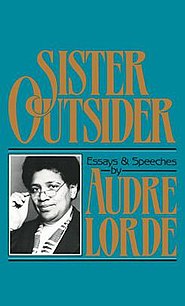
Less well known is Lorde’s essay “Notes from a Trip to Russia” that opens her book Sister Outsider. A footnote to this essay explains that Lorde spent two weeks in the Soviet Union in 1976 as an American observer to the African-Asian Writers Conference sponsored by the Union of Soviet Writers. Having returned from that trip, she finds herself haunted by it in her dreams, including a particular image of “making love to a woman behind a stack of clothing in Gumm’s Department Store in Moscow.” In Lorde’s dream, the woman falls ill and Lorde needs to seek medical help for her, and is floored by the realization that in Soviet Russia, medical treatment is free and available to all.

I read this essay just a few years ago and at first struggled with how to react to it. To me, everything starting from that opening image seemed both familiar and bizarre. It took me a moment, for instance, to recognize that Lorde is talking about GUM–an acronym for Gosudarstvennuiy Universalniy Magazin, a State Department Store–which in her version acquires an almost poetic personal quality, related to somebody named Gumm. I was born in 1979, three years after Lorde took this trip, and I had a personal mythology of GUM. As a child growing up in Leningrad, I had read about it in books and newspapers–as far as State Department Stores went, this one was well written about. I imagined it as a toy palace–I had an idea that that’s where most of the world’s toys were hidden from us kids. The keepers of the toys were, in my mind, not unlike the angry guards at the museums of the world or the tired, worn-out women working behind the counters of Leningrad’s stores: their job was to keep desirable items away from unworthy hands. To imagine a Soviet prodavshchitsa take part in a sex dream seemed unthinkable.

But then, I thought, why not? This is what it’s like to see the world I grew up in from a stranger’s eyes–it’s an opportunity to examine my premises. There must’ve been lesbians in the Soviet Union, even if I didn’t know anything about that until I was seventeen and living in the United States. So, my first approach to Lorde’s book took me into a completely unexpected direction: it sent me rethinking my relationships to all the women I had known growing up, imagining them as heroines of sexually charged international lesbian love stories. (I even started plotting a novel along these lines, thank you very much, Audre.)

During her trip to the Soviet Union, Lorde visited Moscow and from there traveled to Uzbekistan, the location of the Conference–she went to two towns there, Tashkent and Samarkand. The essay is very much a travelogue, the best of the genre, in which the writer is keenly aware of being a stranger to the places she’s moving through and as she’s documenting her experiences, she’s writing about her own thoughts and feelings and provides a window into her assumptions and biases. Reading the piece all of these years later, it feels like a gift of a guide into the study of Russian and Soviet literature and the field’s lingering struggle to include people of color and women into the conversation.

This essay champions the kind of work that we hope to do with Punctured Lines: bringing together unexpected voices and stories from and about the (post) Soviet space. Unfortunately, for rights reasons, we are unable to reprint the essay online, so to encourage a cross-cultural dialogue, we asked our Twitter followers to submit personal responses to this essay. We also reached out to a few scholars and writers who we expected might have unique insights into the issues that Lorde addresses. Below are responses we received from Emily Couch, Shelley Fairweather-Vega, Elena Gapova, and Maggie Levantovskaya. If you want to join this conversation, please comment below or reach out to puncturedlines [at] gmail.com.

We have been planning this post for several months, and are finishing it under conditions of quarantine. As I’m writing this, the world is struggling with the mounting numbers of COVID-19 cases and many of us have had to severely curb our activities–so the very nature of a travelogue feels radical at the moment. Universal medical care that, in Lorde’s notes of her trip to the Soviet Union, appeared too good to be true, today remains our most urgent need. Yet, as Levantovskaya mentions in her piece, the Soviet Union is a poor guide for a functional medical system–the conditions of care there were often inhumane and bribes were exchanged as a matter of course. We also want to acknowledge and honor the invisible, unpaid and low-paid women’s labor that goes into allowing each family and each hospital and each business and each state to keep going. We urgently need to change this situation so that the burden of this invisible labor does not disproportionately fall to women.

(Continued)

Soviet Diaspora Poetry Reading by the Cheburashka Collective

We love seeing creative artists adjust to the current time. Being on the West Coast, I have often regretted not having access to the literary events that take place on the East Coast (to speak nothing of events in Russia proper.) Here comes the recording of the Cheburashka Collective reading recorded on April 1st, 2020 on Zoom, via Kelly Writers House at the University of Pennsylvania.

Virtual Happy Hour of writers with the former Soviet Union connection

This week AWP, or Association of Writers and Writing Programs, is holding its annual conference in San Antonio, TX. Many of the attendees, however, have opted to stay home due to the increased risk of the corona virus outbreak. An important component of this conference is a massive book fair, at which hundreds of independent presses and literary journals sell their stock. To compensate for the losses of this already financially strained community, people are organizing several initiatives.

First of all, there’s #AWPVirtualBookfair Twitter hashtag, under which you will find links to lots of publishers who are offering significant discounts of their stock. Trevor Ketner started the #AWPVirtualBookfair Google Doc, where you can find a comprehensive list of participating publishers, and Natalie Eilbert creating the AWP Virtual Bookfair for Authors Doc. Justin Greene created a handy list of publishers on Entropy, that includes the discount codes. Point being: the best way to support literary arts and independent publishing is to buy our books.

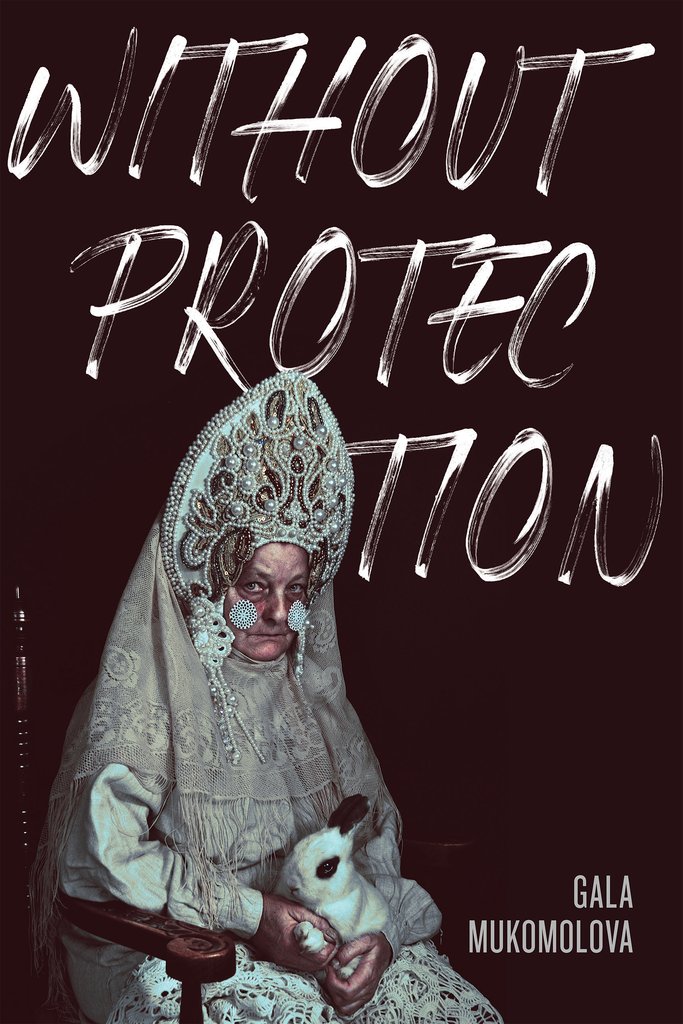
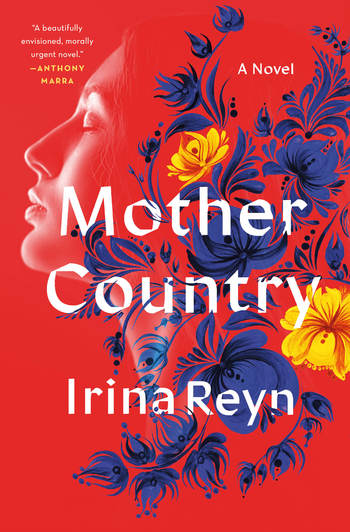
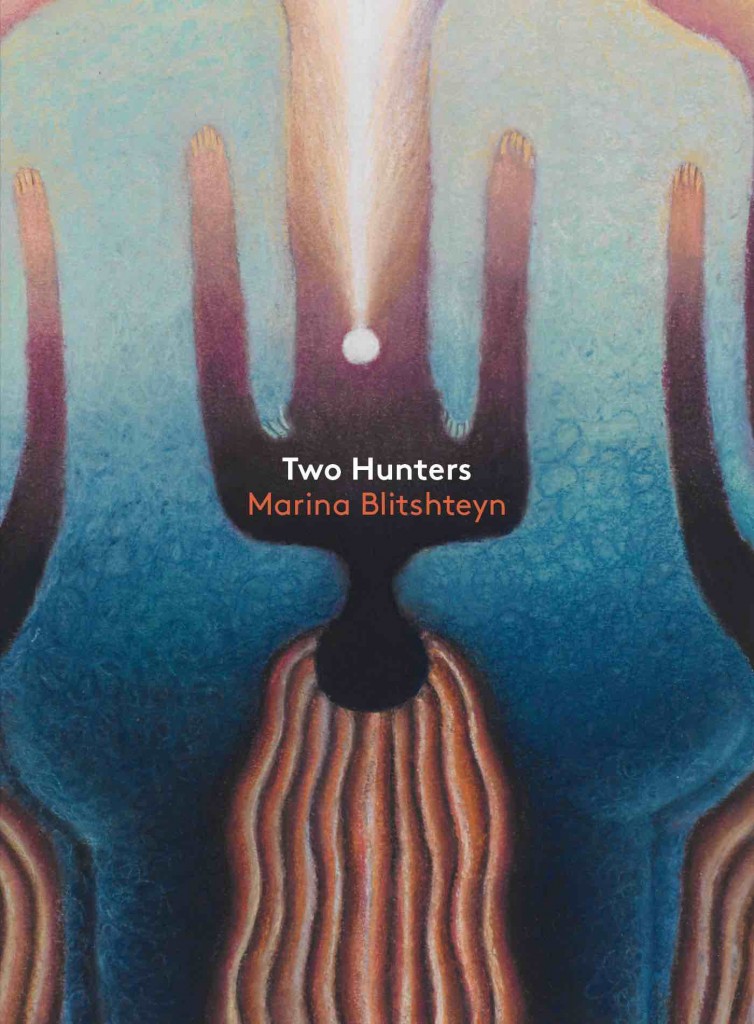
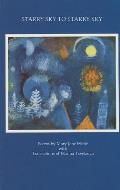
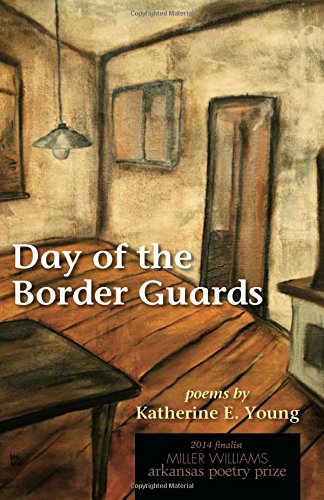
One of my plans for this conference was to co-host a happy hour for writers and translators working on material related to the former Soviet Union. Unfortunately, both my co-host Olga Livshin and I decided to cancel, as did most of the people we hoped would take part. I envisioned that this happy hour would help us, in part, to build a sense of community and help us brainstorm ways in which we can support each other’s work. So, in that spirit, here is an image gallery followed by a list of these titles with links, where you can buy the books.

Gala Mukomolova, Without Protection, from Coffee House Press

Irina Reyn, Mother Country, from St. Martin’s Publishing Group

Julia Kolchinsky Dasbach, Don’t Touch the Bones, from Lost Horse Press

Olga Livshin, A Life Replaced, from Poets & Traitors Press

Olga Zilberbourg, Like Water and Other Stories, from WTAW Press

Katherine E. Young, Day of the Border Guards, The University of Arkansas Press

Larissa Shmailo, Sly Bang, from Spuyten Duyvil

Marina Blitshteyn, Two Hunters, from Argos Press

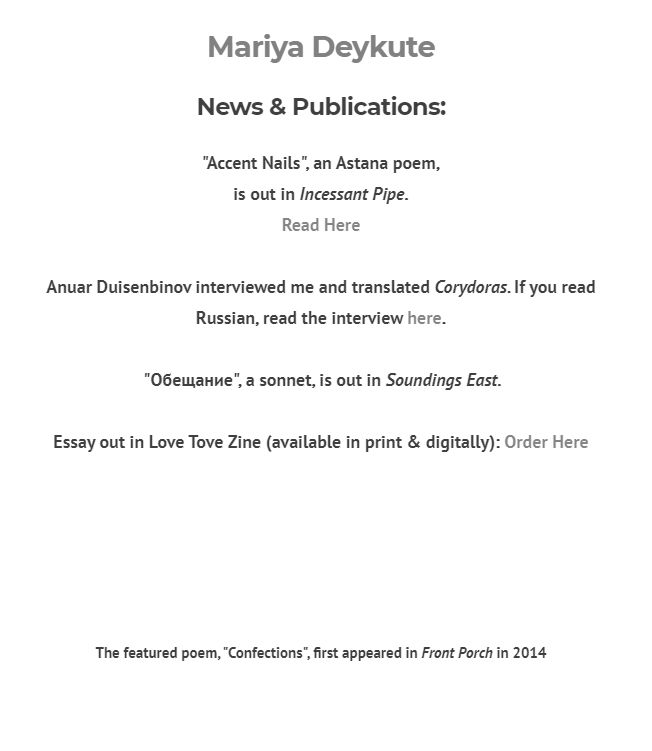
Mariya Deykute, her website

Mary Jane White, Starry Sky to Starry Sky, from Holy Cow! press

Ruth Madievsky, Emergency Brake, from Tavern Press

Valzhyna Mort, Music for the Dead and Resurrected, from FSG

* If you don’t see a book that you wish to be included, please leave a comment!

Maybe Esther, A Family Story by Katja Petrowskaja, translated from the German by Shelley Frisch

Katja Petrowskaja grew up in Kiev, studied in Estonia and Moscow, and lives in Berlin. Maybe Esther was written in German and first published in Germany, in 2014. It was translated to English by Shelley Frisch and published in 2018. She came to the Bay Area Book Festival about a year ago, and I went to her talk and picked up this book. When I started reading it, frankly, I wasn’t sure I was going to finish it. As far as family stories go, this one felt too similar to my own–and why read about something I already know so well, from living it?

I stuck with it because Petrowskaja’s a good storyteller, and a tenacious one, because she has followed her family story several more steps than I have ever done with mine, and because on the page she’s able to capture the complex emotions of following these heartbreaking stories. Of course, in actuality, her family’s story isn’t anything like mine. The similarities begin and end with this: We both grew up in Jewish families in the Soviet Union and emigrated after the Soviet Union fell apart. I write in English, she in German. If it felt like a familiar story at first, it’s precisely because I haven’t read enough books like this. I’ve only read just a few that focus on the Soviet Jewish family saga with any degree of depth (Margarita Khemlin’s Klotsvog in Lisa C. Hayden’s translation being the most recent, and wildly different from Maybe Esther), and they feel the same only because the gap between Kiev and Leningrad Jews in the 1980s is a lot narrower than, say, between Petersburg Jews and New York Jews. That is, it feels close enough to home.

There are a few main characters in Petrowskaja’s family saga. The story of Grandmother Rosa provides the main through-line. She grew up in a Jewish family, and her father, Ozjel Krzewin was born in Vienna, lived in Poland, and then died in Kiev, and ran a private school for deaf-mute children throughout his life–Rosa, too, inherited the profession of educating deaf-mute children. Rosa’s husband and Katja’s grandfather, Ukrainian Vasily Ovdiyenko during WWII was captured and became a prisoner of war in German labor camps. When he returned from the war, he met his wife briefly, but then went to live with another woman and stayed with her for more than forty years. Shortly before his death, he came home to Rosa–who was still waiting for him.

In writing the book, Petrowskaja follows the story of the Jewish side of the family, and then she also traces Vasily’s journey through the German labor camp system throughout Austria–it was a brutal three-year journey that few survived. She visits several labor camps that also served as death camps for Hungarian Jews, to arrive at an epiphany: it must’ve been something that Vasily witnessed in the camps that made his return to his loving family, a wife and two children, impossible after the war.

I don’t know where this conviction stemmed from, but it was right here in this small camp that something happened after everything that had happened already that made my grandfather’s return home impossible, so that he, back in Kiev, could not stay with his family, not with his daughter and not with his wife, Rosa, whose mother and sister lie in Babi Yar, which makes a person Jewish forever, I know that his failure to return had something to do with the death march of the Hungarian Jews

That sentence doesn’t have a period and it doesn’t need one. I should add, that actually this relative’s experience Katja and I, too, have in common: my grandfather, Jewish, was a POW in a German labor camp, and survived. He did return to the family, and one of the things I’m forever trying to write about is what his survival looked to the rest of us, his family, living with him. I finished the book grateful to Katja Petrowskaja for finding the words to unpack some of her experiences.

For a more formal review of this book, please read Linda Kinstler’s review in LARB.

Russian kid lit in translation

We welcome a wonderful new blog that focuses on Russian children’s literature in translation to English.

Ruth Ahmedzai Kemp's avatarRussophone Kid Lit

There have been fewer children’s and teen books translated into English from Russian than you might imagine. Here’s what we’ve been able to find so far, published since 1991: fiction and non-fiction in translation from Russian authors and illustrators.We’ll list Soviet translations in a separate post, coming soon.Many thanks to the charity Outside in World for their help with this research.

We would love to hear of any we’ve missed: please email us about any Russian-language kid lit you know of in English translation, whether still in print or not, and especially forthcoming publications!russian.kid.lit @gmail.com

PICTURE BOOKS BY RUSSIAN WRITERS OR ILLUSTRATORS

THE RETURN, written and illustrated by Natalia Chernysheva (Groundwood, 2019) Ages 4-7

As comforting as a home-cooked meal”~ Kirkus Reviews

THE REAL BOAT, by Marina Aromshtam, illustrated by Victoria Semykina, translated by Olga Varshaver (Templar, 2019) Ages 5-8

Shortlisted for…

View original post 862 more words

The new canon of Russophone women-authors, according to the editors of Polka

Two years ago, a prominent journalist and editor Yury Saprykin asked a number of Russian authors, editors, critics, educators, and so on, to nominate the works that they considered key in the Russian literary canon. On April 2, 2018, Saprykin’s launched the website, polka.academy with the resulting list of 108 books. It’s a gorgeous website, unfortunately available only in Russian. Another unfortunate part is that this list included only three books by women-authors: Akhmatova, Tsvetaeva, and Petrushevksaya.

Two years later, the editors addressed this problem. A team of writers created a new list that they call “Women’s Canon” of over 70 authors who deserve to be remembered. (This list, too, is unfortunately only available in Russian.) The authors include a thoughtful note that this list isn’t complete and promise to return to this work in the future. We’re delighted to welcome this list and look forward to seeing this work continued.

On a personal note from the creators of Punctured Lines, we’re particularly pleased to see a listing of Aleksandra Brushtein’s delightful young adult novel with a title that’s difficult to translate and that means something like “The road that will lead you to an unknown future.” This book was deeply influential to both of us, and on Twitter we’ve been actively advocating for its re-translation to English. Of the unfortunate omissions, we can point to Julia Voznesenskaya’s novel Women’s Decameron from 1985.

Inheritance, an essay by Mariya Deykute from The Seventh Wave

The Great Patriotic War is now nearly eighty years old, and yet it still resonates in the lives of the grandchildren of the surviving generation. This essay by Mariya Deykute attests to its power over our imaginations. Some of us continue to make decisions with that war in mind. I particularly admire how Deykute both personalizes the war and portrays her family’s lived experience of the war, touching on her grandmother’s and her mother’s stories. This war is both the environment in which people have lived and a character of our nightmares.

With gratitude to Olga Livshin for sharing this piece. Please click through to read the essay in full.

The Great Patriotic War came to visit me again today. I was throwing out wild raspberries. A week ago I had scrambled up the treacherous rocks of Narbona Pass to fetch a cupful. “Eat them,” my husband said. “Later,” I replied. The cup sat in the car on the trip back, full of small red not-spheres. They sat in the fridge for a week. “Should I toss them?” my husband asked. “No, I’ll make something with them,” I said. But today I found that white mold had claimed them, fuzzy rotting snowflakes…..

http://theseventhwave.co/inheritance-mariya-deykute/